9 Best InfluencersClub Alternatives in 2026 (Free & Paid)
InfluencersClub is strong on creator data and thin on B2B contacts. Here are 9 InfluencersClub alternatives across creator discovery, enrichment APIs and email finding, with honest pricing notes and who each one actually fits.
TL;DR — the best InfluencersClub alternatives at a glance
- InfluencersClub is a creator-data platform. It indexes social profiles and attaches contact details. It is not a B2B contact database, so teams churn when their ICP shifts from creators to companies.
- Need creator discovery and vetting? Look at Modash, HypeAuditor, Upfluence, Heepsy or Aspire.
- Need a raw data pipe? Phyllo (creator APIs) or Clay (orchestration) fit better than another seat-based UI.
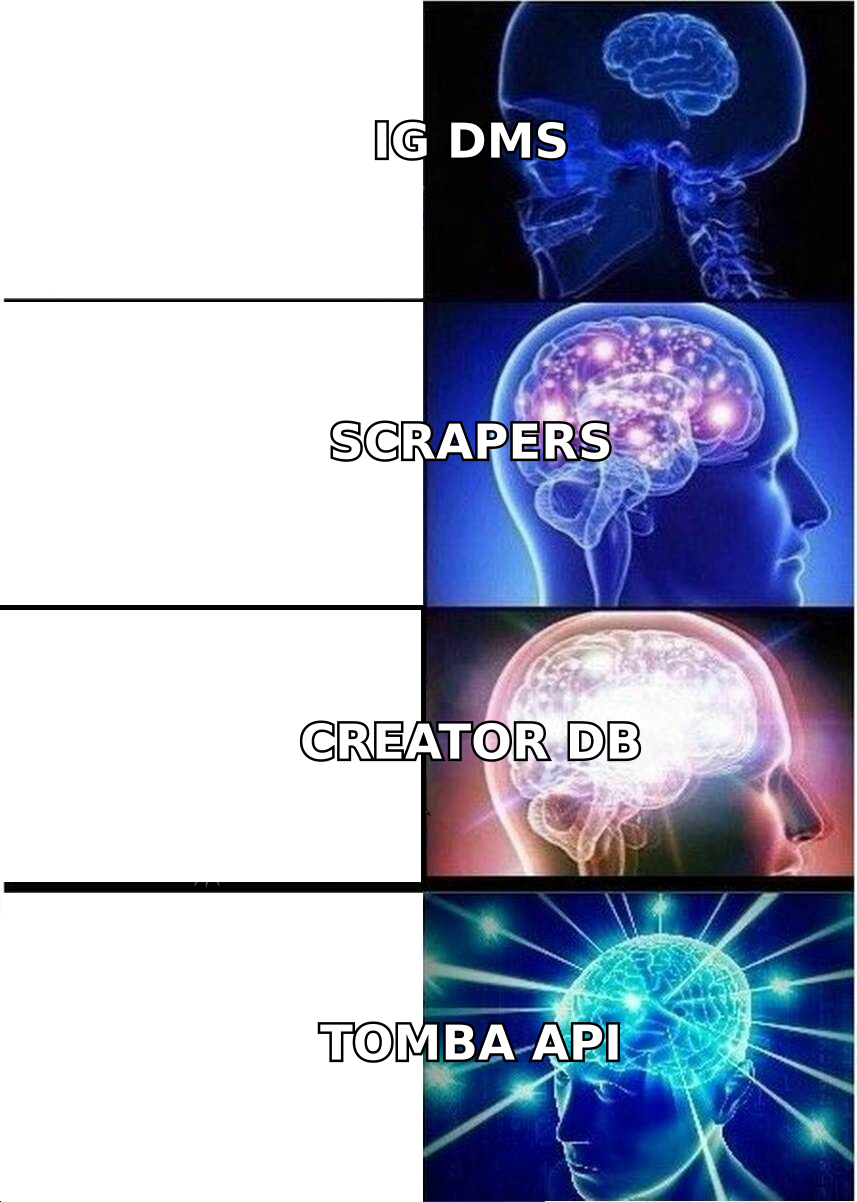
- If your real problem is "I have a name and a company and I need a working email," a dedicated email finder like Tomba costs a fraction of a creator platform. It also verifies each address before you send.
- Nobody publishes honest match rates. Run the same 100 rows through every candidate before you sign anything.
If you searched influencersclub alternatives, you probably hit one of three walls. The credits ran out faster than you expected. The emails you pulled bounced. Or your ICP moved from TikTok creators to SaaS buyers, and the tool stopped being useful. Those are three different problems with three different fixes. Most "top 10" lists ignore that. This one does not.
What is InfluencersClub, and what is it actually good at?#
InfluencersClub is a creator-data platform. It crawls Instagram, TikTok and YouTube and builds profiles for tens of millions of accounts. It then adds filters the social platforms do not expose: follower count bands, engagement rate, audience country, audience age, brand affinity, and the part people actually pay for — contact details pulled from bios, business account fields and linked sites.
The strong use case is narrow and real. Say you are a DTC brand or an agency. You need 500 fitness micro-creators in Germany with a 3%+ engagement rate and a reachable email. You want them this afternoon, not after two weeks of scrolling. For that job it works.
The weak spots show up when you push past that lane:
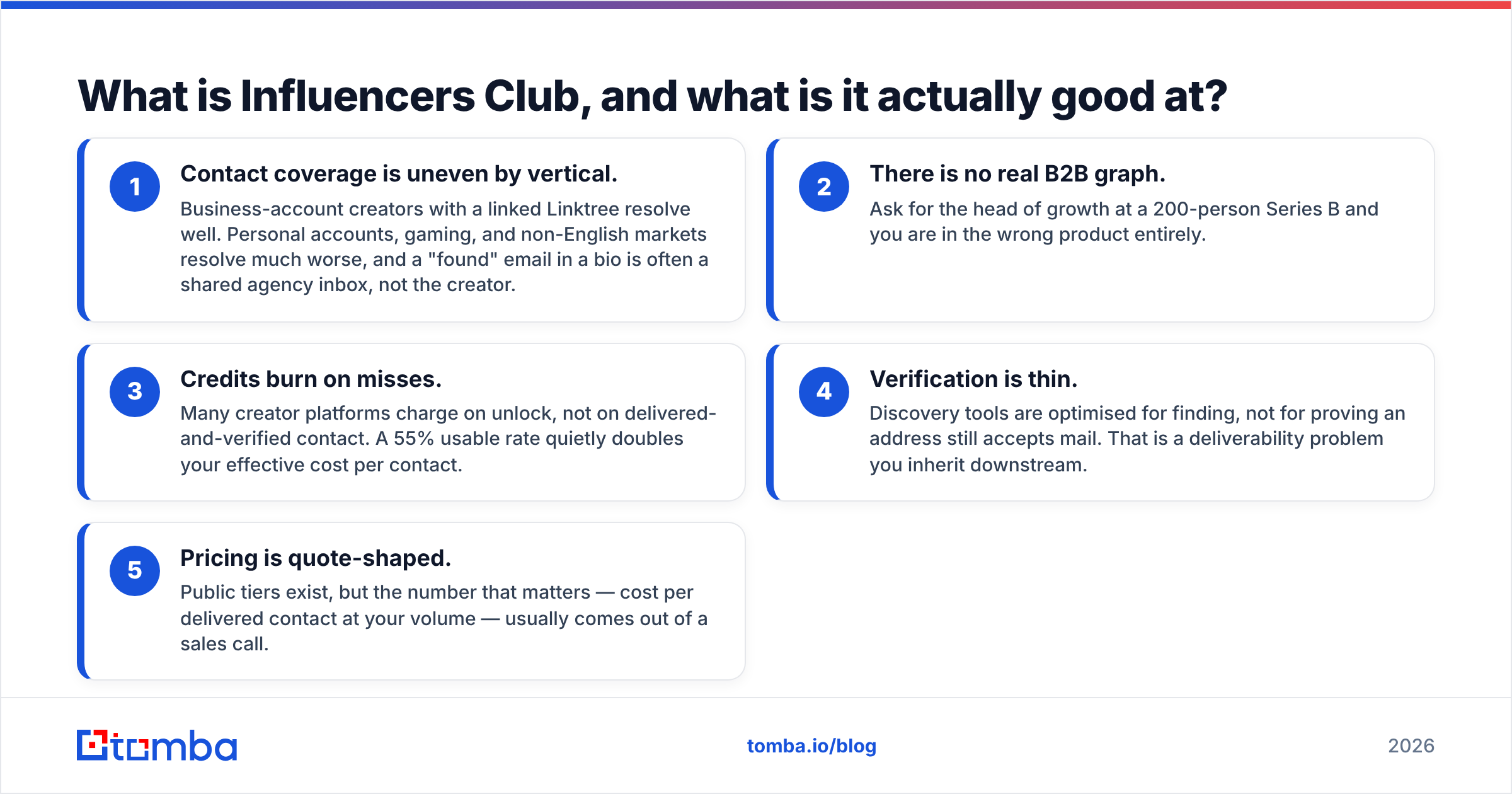
- Contact coverage is uneven by vertical. Business-account creators with a linked Linktree resolve well. Personal accounts, gaming and non-English markets resolve much worse. And a "found" email in a bio is often a shared agency inbox, not the creator.
- There is no real B2B graph. Ask for the head of growth at a 200-person Series B and you are in the wrong product entirely.
- Credits burn on misses. Many creator platforms charge on unlock, not on a delivered and verified contact. A 55% usable rate quietly doubles your cost per contact.
- Verification is thin. Discovery tools are built to find addresses, not to prove an address still accepts mail. That becomes your deliverability problem downstream.
- Pricing is quote-shaped. Public tiers exist. But the number that matters — cost per delivered contact at your volume — usually comes out of a sales call.
None of that makes it a bad product. It makes it a specialist. The question is whether your job is still the specialist's job.
Why do teams look for InfluencersClub alternatives?#
Four patterns come up again and again when teams shortlist InfluencersClub alternatives, both in review threads on G2 and in outbound communities:
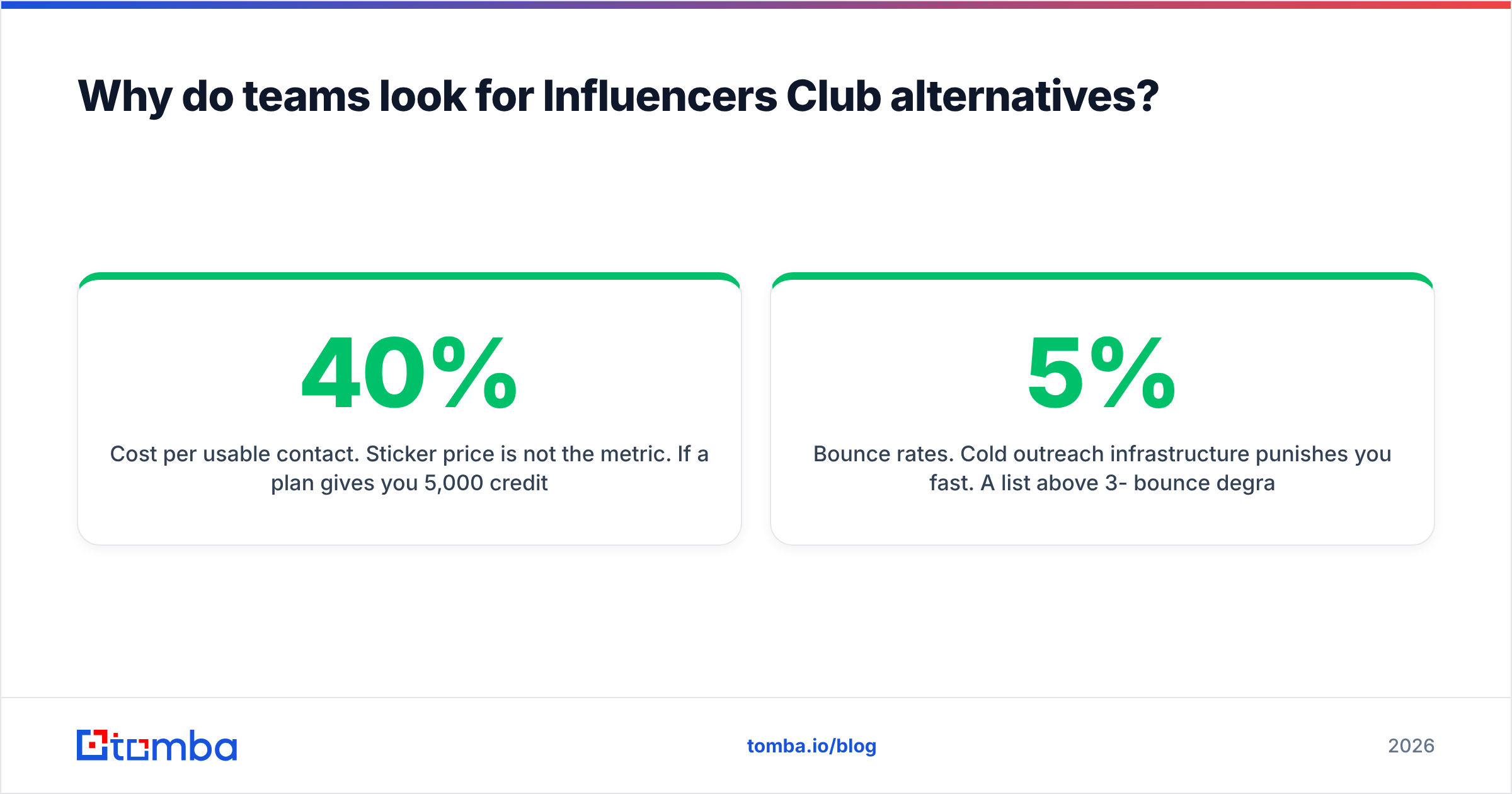
Cost per usable contact. Sticker price is not the metric. Say a plan gives you 5,000 credits and 40% of unlocks return nothing you can mail. Your real rate is roughly 1.7x the advertised one. Always divide by verified results.
ICP drift. A creator-marketing motion at a consumer brand often grows into a partnerships or B2B motion. The moment you need "VP Marketing at mid-market ecommerce brands" instead of "creator with 40k followers," a creator database is dead weight.
Bounce rates. Cold outreach punishes you fast. A list above 3-5% bounce hurts your sender reputation and drags down the whole domain, not just one campaign. Discovery tools rarely promise a bounce ceiling.
Workflow gravity. Teams standardise on a CRM and an enrichment layer. A siloed creator tool that only exports CSVs loses to anything with a clean API.
How should you compare InfluencersClub alternatives?#
Score every candidate on these five axes before you open a single price page.
- Data type, not data volume. "300M profiles" means nothing if you need 300 emails at one company. Decide first: creator graph, B2B contact graph, or company firmographics. Few tools do two of those well, and none do all three.
- Delivered accuracy, not claimed accuracy. Every vendor claims 95%+. The only number that counts is your own. Seed the same 100 known-good rows into each tool, then measure match rate and bounce rate separately.
- Billing model. Are you charged per search, per unlock, per valid result, or per seat? Pay-per-valid-result is the kindest to a small team. Seat-based pricing punishes you for adding an SDR.
The last two axes decide whether a tool survives contact with your stack.
- Verification depth. Does the tool run SMTP checks, catch-all handling and role-address flagging? Or does it hand you a raw string? Catch-all domains are where most "verified" lists quietly rot.
- API and integration surface. If it cannot push to your CRM or run from a script, it turns into a manual chore within a month. Check for native integrations and a documented REST API.
What are the 9 best InfluencersClub alternatives in 2026?#
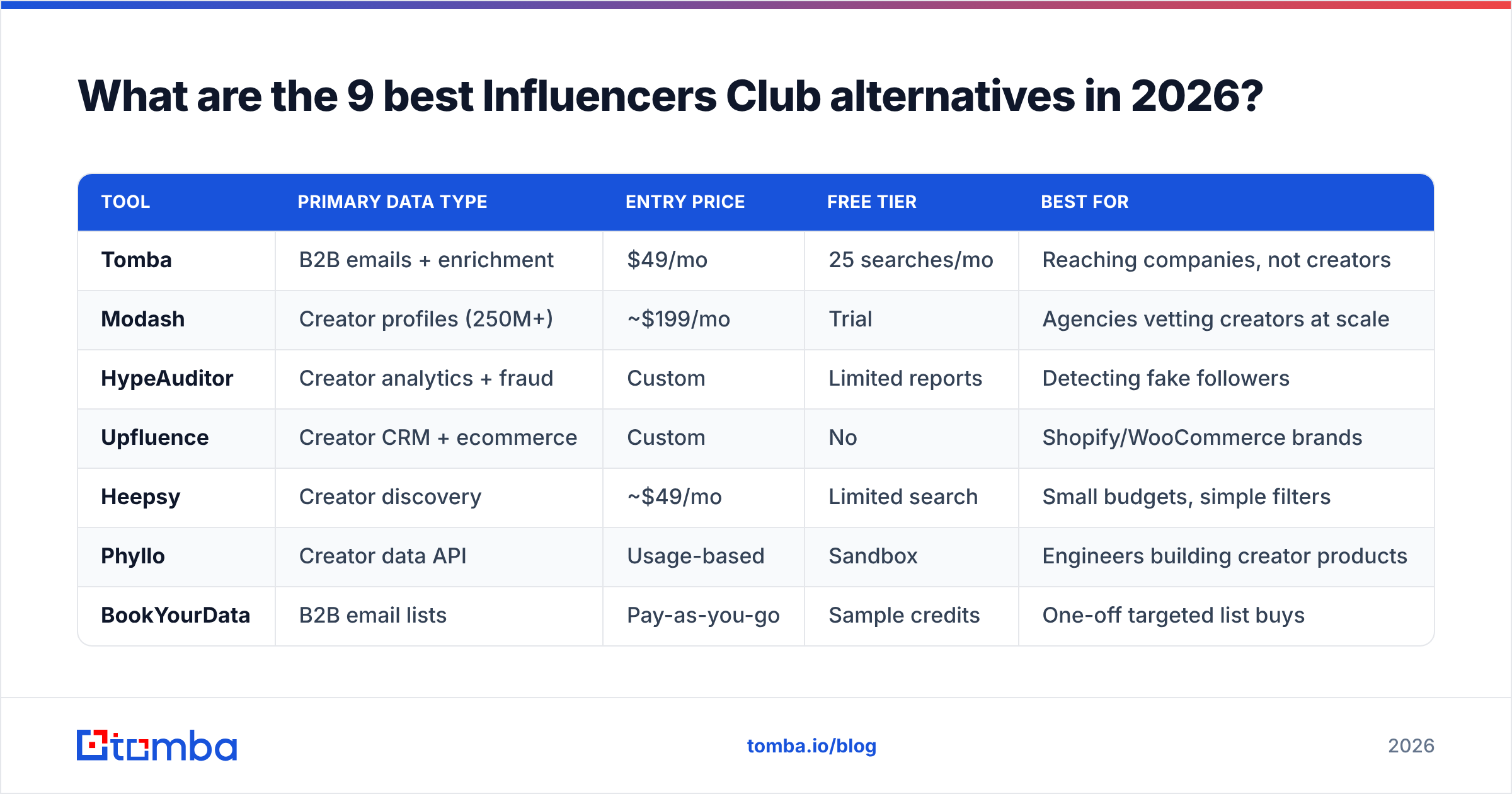
Here are the nine InfluencersClub alternatives side by side. Prices are entry-level published rates at the time of writing and they move often, so treat them as an ordering signal, not a quote. "Custom" means you will be talking to a salesperson.
| Tool | Primary data type | Entry price | Free tier | Best for |
|---|---|---|---|---|
| Tomba | B2B emails + enrichment | $49/mo | 25 searches/mo | Reaching companies, not creators |
| Modash | Creator profiles (250M+) | ~$199/mo | Trial | Agencies vetting creators at scale |
| HypeAuditor | Creator analytics + fraud | Custom | Limited reports | Detecting fake followers |
| Upfluence | Creator CRM + ecommerce | Custom | No | Shopify/WooCommerce brands |
| Heepsy | Creator discovery | ~$49/mo | Limited search | Small budgets, simple filters |
| Phyllo | Creator data API | Usage-based | Sandbox | Engineers building creator products |
| BookYourData | B2B email lists | Pay-as-you-go | Sample credits | One-off targeted list buys |
| Aspire | Creator program management | Custom | No | Enterprise ambassador programs |
| Clay | Enrichment orchestration | ~$149/mo | Free plan | Chaining multiple data providers |
1. Tomba — best if your ICP is companies, not creators#
Tomba is the answer when the real job is "find and verify a business email." Give it a domain, a name, or both. It returns the address, a confidence score, and the sources it found the pattern in. The email verifier runs syntax, MX, SMTP and catch-all checks separately, so you set your own risk threshold instead of trusting a vendor's binary verdict.
Pricing is public and unusually flat for this category: free at 25 searches/month, then $49/mo Starter, $99/mo Growth, $249/mo Pro, and custom Enterprise. The full Tomba pricing sits on one page with no seat multiplier. You also get a REST API, a CLI, Chrome and Sheets add-ons, and bulk processing for list work.
What it is not: a creator database. It will not tell you a TikToker's engagement rate. If half your pipeline is creators and half is brands, run Tomba for the brand half and a discovery tool for the creator half.
2. Modash — the closest like-for-like on creator discovery#
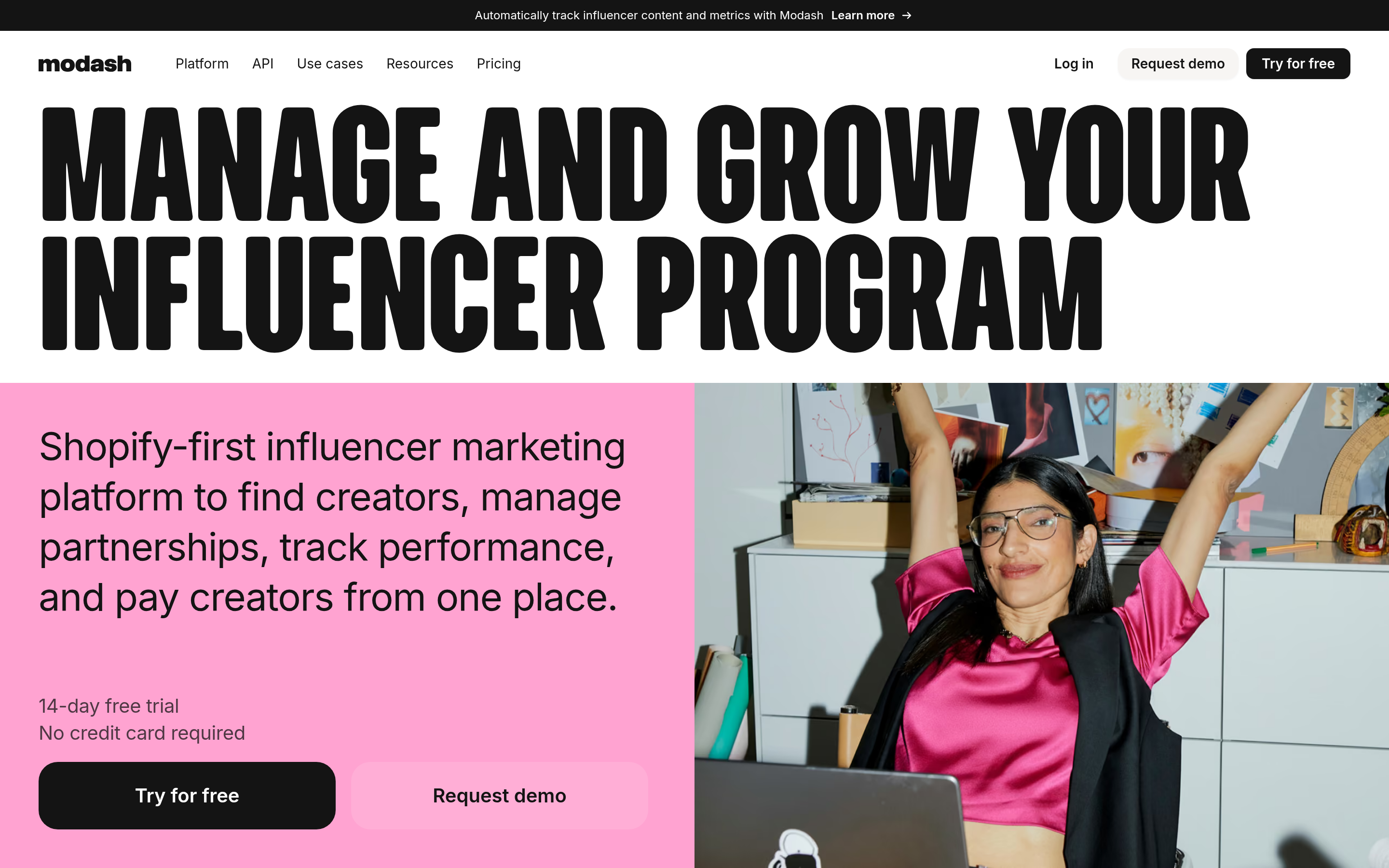
Modash indexes a very large creator universe across Instagram, TikTok and YouTube. The filter set is comparable to InfluencersClub, plus audience credibility scoring and performance tracking for live campaigns. Contact coverage is strong on business accounts and thinner elsewhere — the same structural limit every creator tool has.
Entry pricing sits in the low hundreds per month with unlock-based credits. Best fit: agencies running continuous discovery who want reporting in the same product.
3. HypeAuditor — best for vetting before you spend#
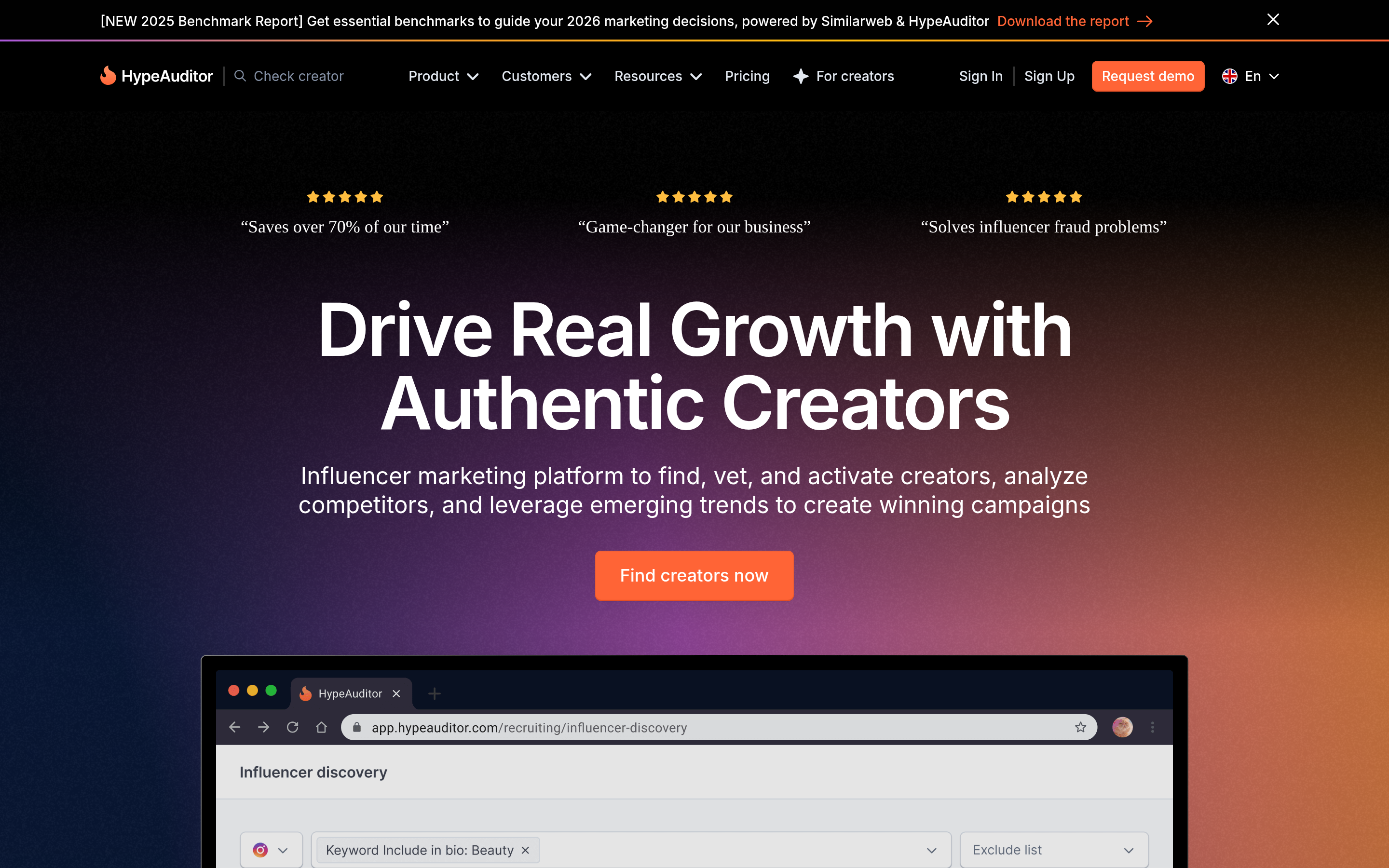
HypeAuditor's edge is fraud detection: follower authenticity, engagement anomalies and audience quality grades. If your problem is not "find creators" but "stop paying creators with bought audiences," it is the sharper instrument. Contact data is there, but it is secondary. Pricing is quote-based and lands above most of this list.
4. Upfluence — best if you sell on Shopify#
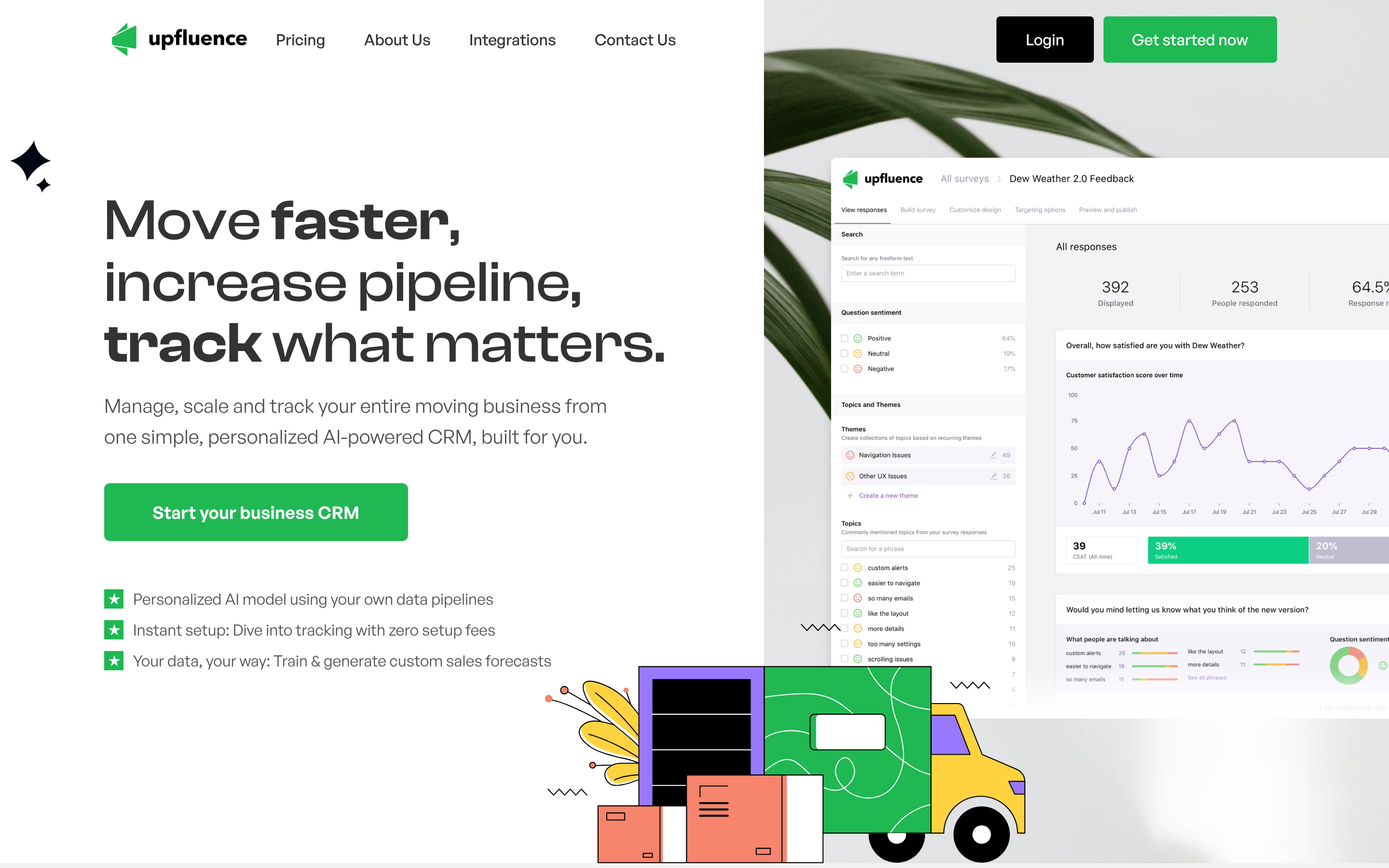
Upfluence leans hard into ecommerce. It connects to your store, spots existing customers who happen to be creators, and runs the whole affiliate and payment cycle. That customer-as-creator angle is genuinely different. Cost is enterprise-shaped and onboarding takes time, so it fits brands running a permanent program rather than one-off pushes.
5. Heepsy — best budget option#
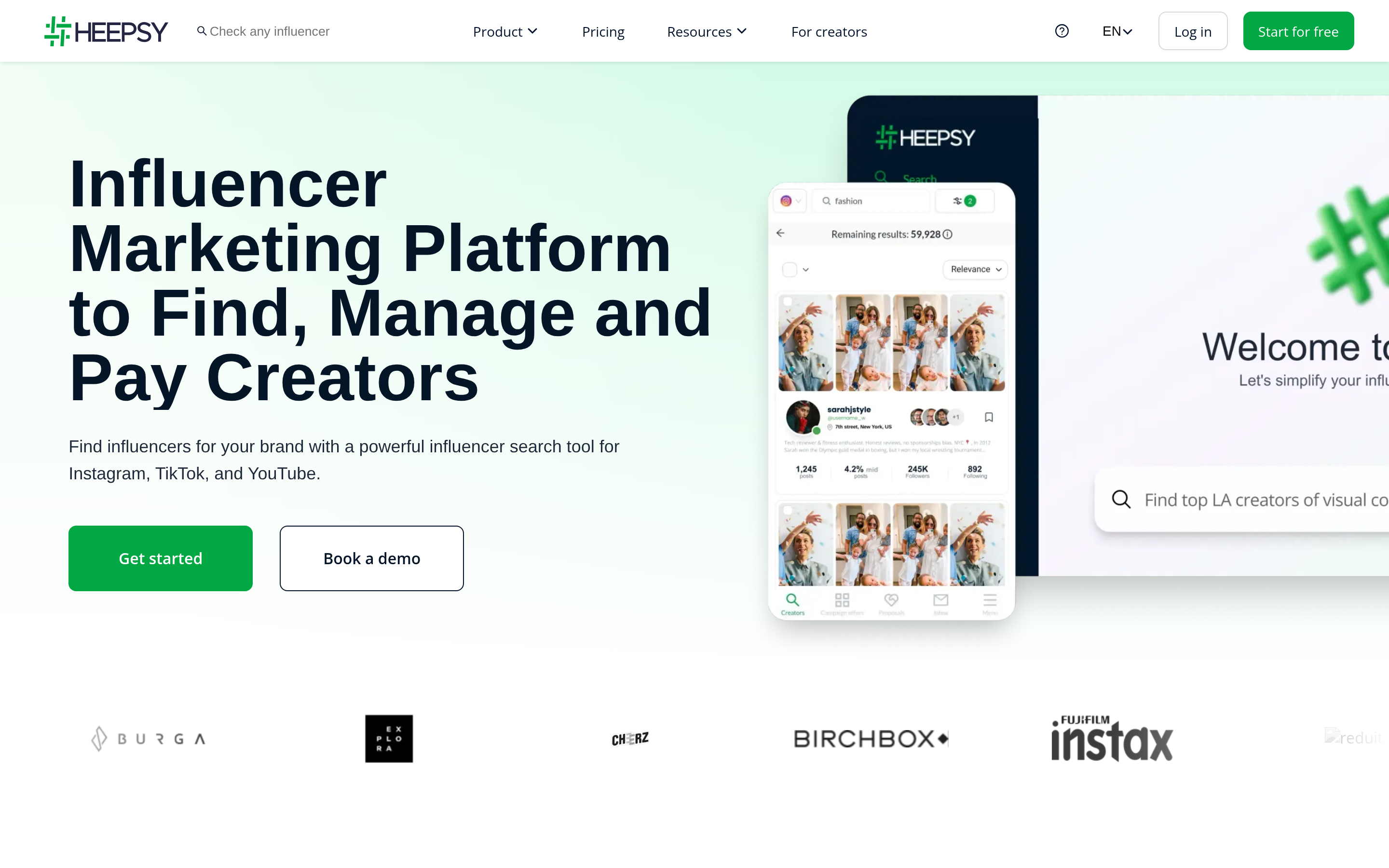
Heepsy is the cheapest credible creator search here. Plans start near the price of a Tomba Starter seat. Filters are simpler, the index is smaller and analytics are basic. For a founder-led brand doing 20 creator outreaches a month, that trade is fine. An agency will outgrow it in a quarter.
6. Phyllo — best for engineers#
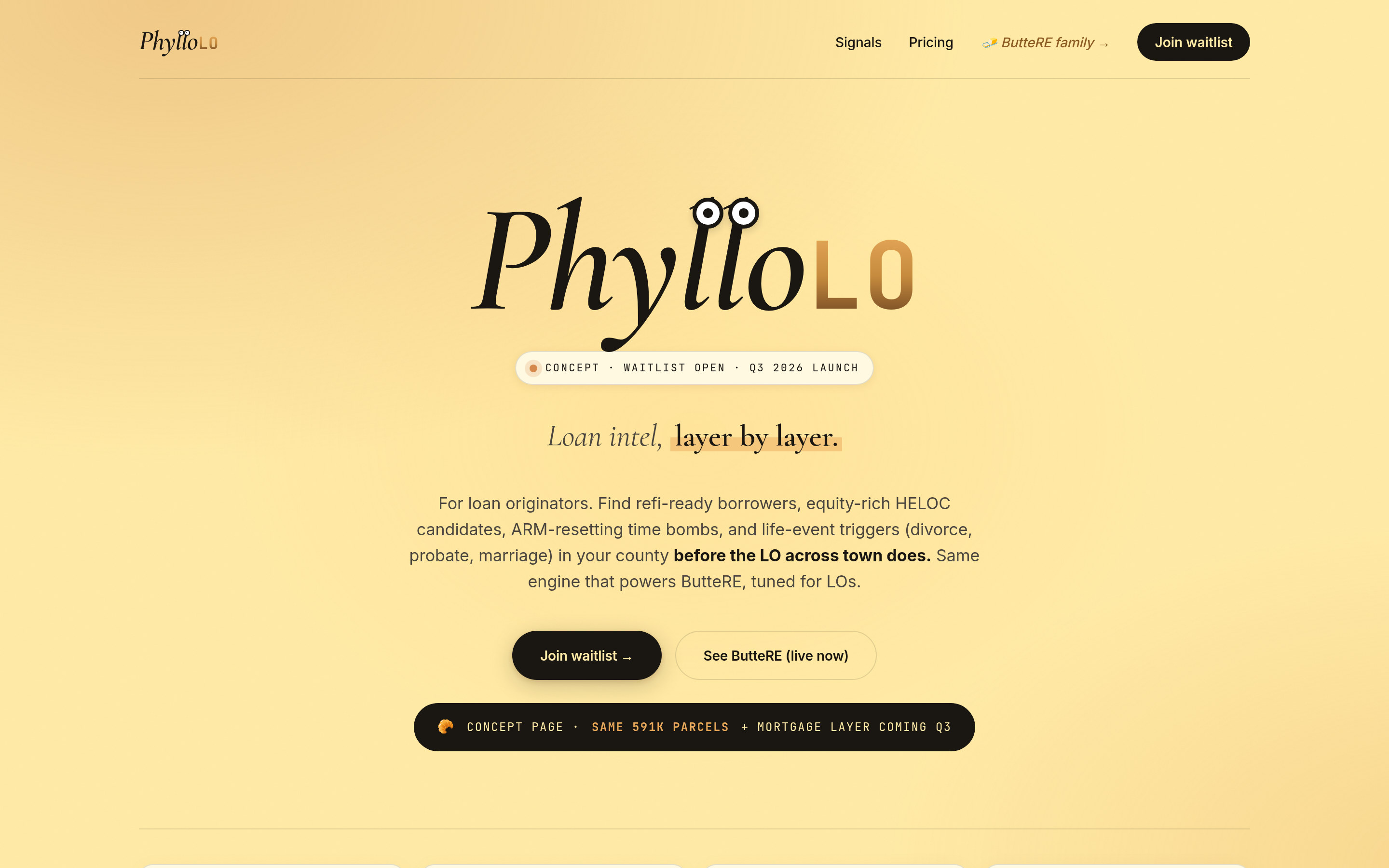
Phyllo is not a UI product. It is a creator-data API: consented account connections, income and audience data, webhooks. If you are building a product that needs creator data as a primitive, this replaces a scraping stack. If you are a marketer who wants a list today, it does not.
7. BookYourData — best for a clean one-off B2B list#
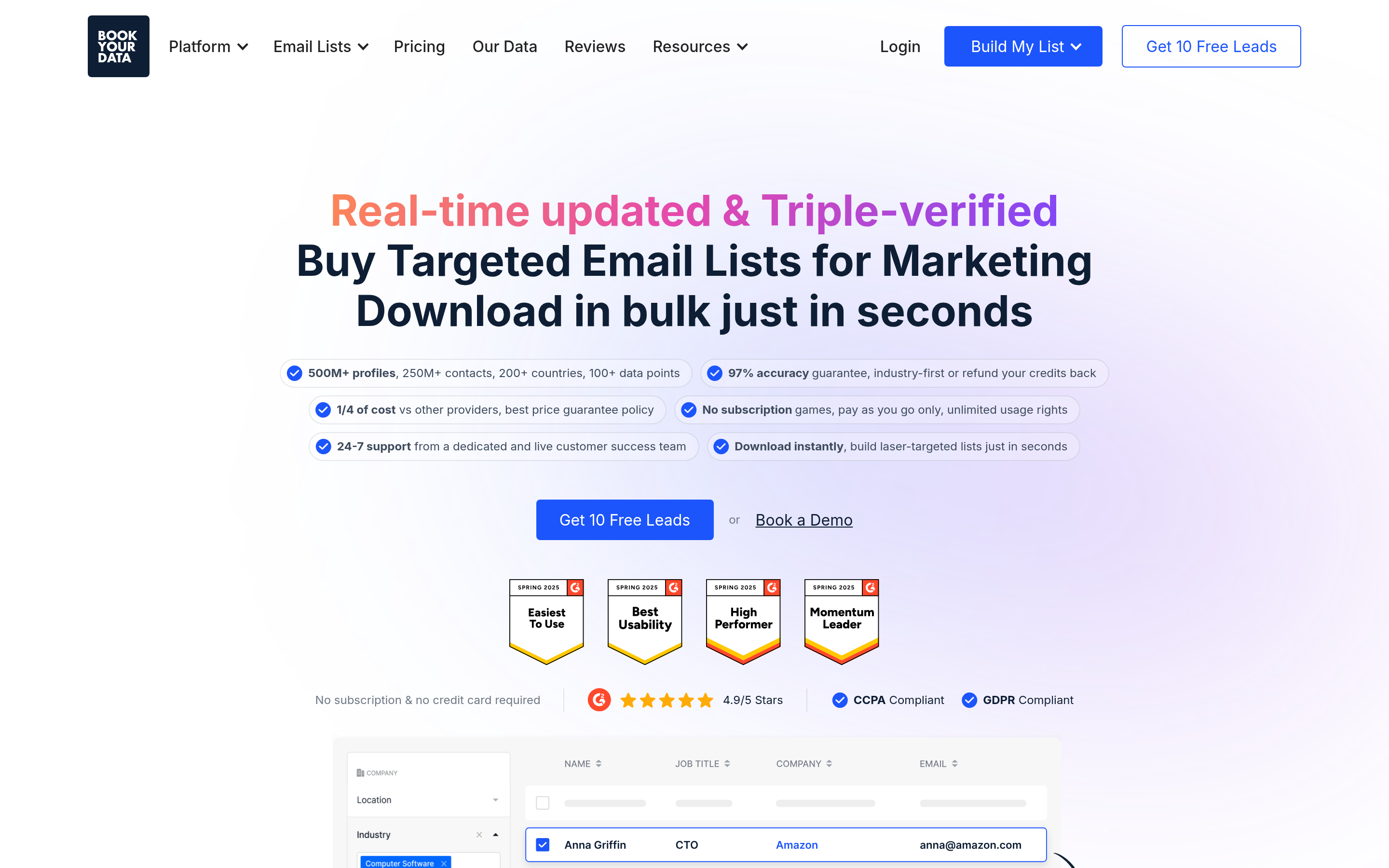
BookYourData has a different shape from everything above. You build a targeted B2B list by industry, title, geography and company size, then buy only the credits you need. There is no subscription. The pay-as-you-go model and an accuracy guarantee make it a solid pick when you need one defined list rather than a continuous feed, and it pairs well with a verifier before you send. It is a very different tool from a creator database — which is exactly why it belongs here once your ICP has moved to businesses.
8. Aspire — best for large ambassador programs#
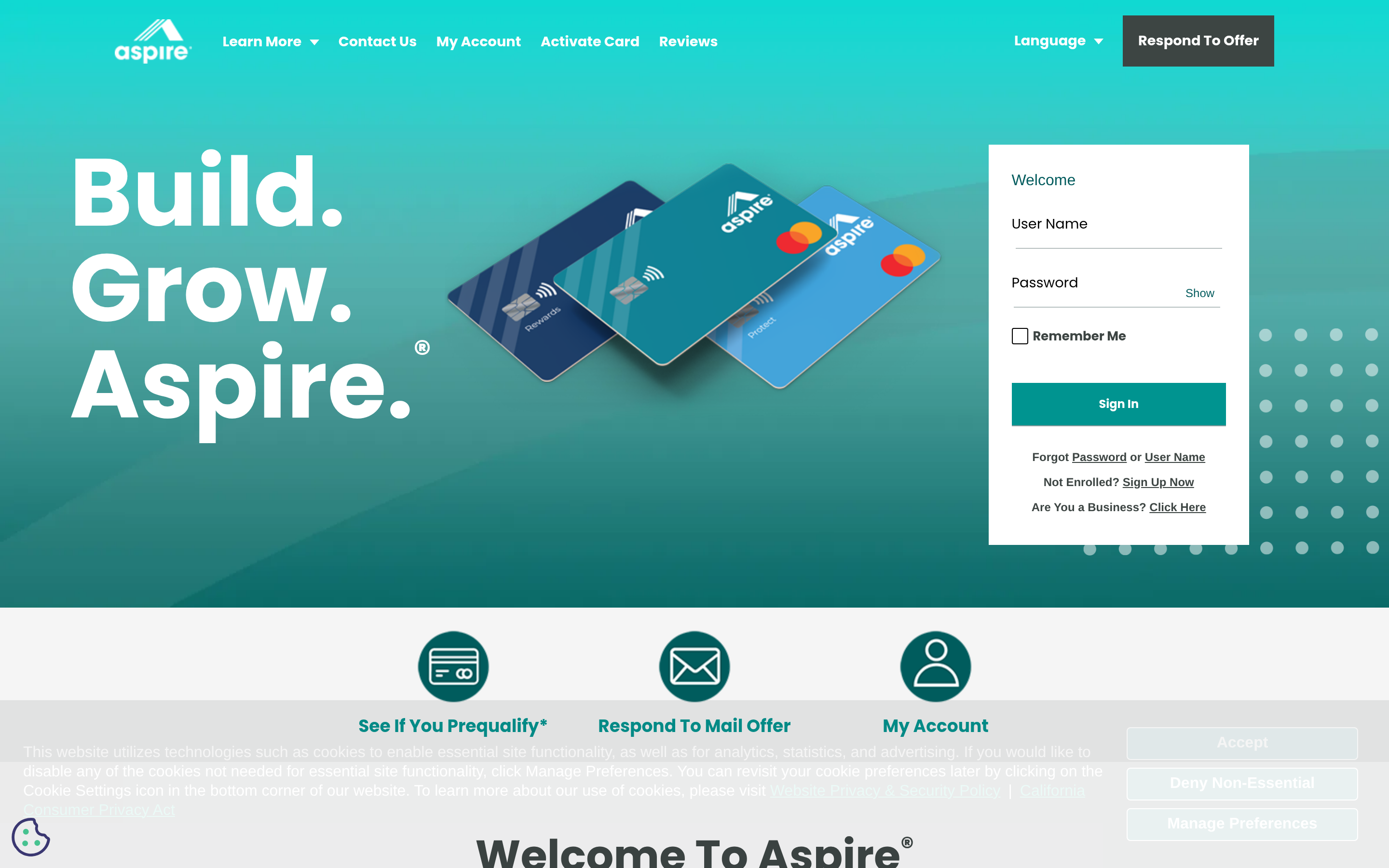
Aspire (formerly AspireIQ) is program-management-first: briefs, contracts, content approvals, payments, affiliate links and reporting. Discovery is included, but it is not why anyone buys it. Enterprise pricing, enterprise onboarding, enterprise value — worth it only if you run dozens of creator relationships at once.
9. Clay — best for stitching providers together#
Clay is a spreadsheet-shaped orchestration layer. It calls dozens of data providers in sequence ("waterfall" enrichment), so a miss at provider one falls through to providers two and three. That lifts match rates a lot, and one of those steps can be an email-finding API. The catch: you still pay each underlying provider, and the learning curve is real. Treat it as a multiplier on tools you already have, not a replacement.
Is a B2B email finder a real replacement for creator data?#
Only if your target changed. Be honest about which of these three you are before you pick from the InfluencersClub alternatives above:
- Still doing creator marketing. You need a creator graph. Pick Modash, Heepsy or HypeAuditor by budget, and by whether vetting or discovery is the bottleneck. An email finder cannot filter by engagement rate.
- Doing brand partnerships and BD. Your targets are companies with websites. A domain search plus verification beats any creator index. The underlying source — public web and mail infrastructure — is far denser for businesses than for individuals.
- Doing both. Split the stack. A creator tool for discovery, an email finder for the brand-side contacts, and one verifier in front of your sending platform so nothing unverified reaches an inbox.
The third pattern is the most common in 2026. It is also usually cheaper than the single all-in-one contract it replaces.
How do you switch without breaking outreach?#
Run the move to any of these InfluencersClub alternatives as a two-week test, not a cutover.
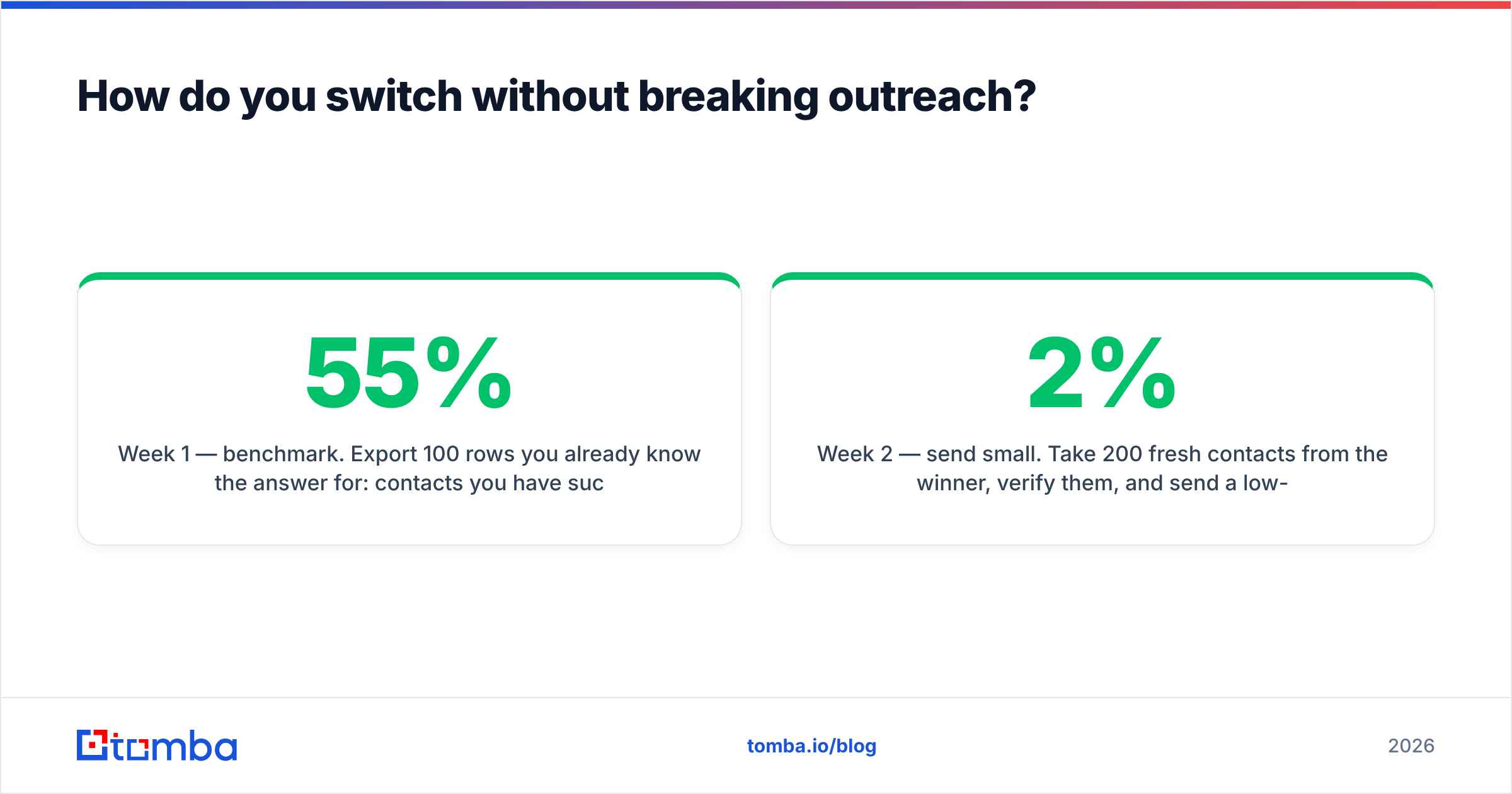
Week 1 — benchmark. Export 100 rows you already know the answer for: contacts you have mailed successfully. Run them through each shortlisted tool. Record the match rate. Then record separately how many of the returned addresses survive a verification pass. A tool that "finds" 90 and delivers 55 is a 55% tool.
Week 2 — send small. Take 200 fresh contacts from the winner, verify them, and send a low-volume campaign from a secondary domain. Watch the bounce rate. Under 2% is healthy. Over 5% means the source is stale, whatever the dashboard claimed. Use bulk verification rather than spot checks so the sample means something.
Then decide on cost per verified contact. Take total monthly spend and divide it by contacts that passed verification. That number is your comparison metric, not the plan name. It often reorders a shortlist completely.
One more thing to budget for: catch-all domains. A large share of corporate mail servers accept everything, so a naive verifier marks them "valid" and you learn the truth from your bounce report. Handle them with a catch-all verifier, or accept that a slice of your list is a coin flip.
Which alternative should you pick?#
Short version, by situation:
- Creator discovery is still your core job, budget is healthy → Modash.
- Creator discovery, tight budget → Heepsy.
- You are being defrauded by fake audiences → HypeAuditor.
- Shopify brand turning customers into creators → Upfluence.
- You are building software on creator data → Phyllo.
- You need one clean, targeted B2B list without a subscription → BookYourData.
- Large, ongoing ambassador program → Aspire.
- You want to combine several providers and lift match rate → Clay.
- Your ICP is now companies and you need working, verified business emails → Tomba.
No tool here wins on every axis, and any vendor who says otherwise is selling. Pick between InfluencersClub alternatives by the data type you actually need, then prove it with your own 100 rows.
If your outreach has moved from creators to companies, start with the Tomba Email Finder. The free tier gives you 25 searches a month with no card. That is enough to benchmark it against whatever you pay for today. If the match and bounce numbers beat your current stack, Starter is $49/mo — and the API, bulk tools and verifier come in the same account. No seat math, no sales call.
Related guides#
// get started
Find, verify and enrich your first contacts today
Start on the free plan with 25 searches a month, then scale when your team is ready.
Free plan · No credit card required · GDPR & CCPA
// about the author