Inside Sales Funnel: How to Build One That Converts in 2026
Most inside sales funnels leak at stages nobody measures. Here's the full stage-by-stage breakdown, the conversion benchmarks that matter, and the fixes that actually move pipeline.
TL;DR
- An inside sales funnel is the remote-selling version of a pipeline: everything from list build to closed-won happens over email, phone, and video — no field visits, no travel budget.
- The funnel has six working stages, not four. The two most teams skip — list quality and meeting-held — are where the biggest leaks live.
- Benchmark reality for 2026: roughly 1-3% of cold contacts book a meeting, 60-75% of booked meetings actually get held, and 15-25% of held meetings become qualified opportunities.
- Bad contact data destroys the top of the funnel before any messaging problem does. A 20% bounce rate is not a copy problem, it's a data problem.
- Fix the funnel in stage order. Optimizing your demo deck while your list is 30% invalid is rearranging furniture in a burning building.
What is an inside sales funnel?#
An inside sales funnel is the sequence of stages a remote-sold deal passes through, from an unknown contact record to a signed contract, where every interaction happens through email, phone, video, or chat.
The distinction from a generic sales funnel matters more than it sounds. Field sales funnels are relationship-paced: a rep meets someone at a conference, follows up over months, and the funnel bends around human availability. Inside sales funnels are volume-paced and instrumented. Every stage transition is a timestamp in a CRM. That means you can measure them — and it also means every structural flaw shows up as a number, not a hunch.
Think of it like a water treatment plant. Raw water comes in at one end, passes through a series of filters, and drinkable water comes out. If the output tastes bad, you don't add flavoring at the tap. You find which filter failed. Most inside sales teams add flavoring at the tap: new subject lines, a new demo deck, a new objection-handling script — while the intake filter is passing sediment.
Inside sales grew from a cost-efficiency play into the default motion for most B2B software. The economics are straightforward: an inside rep can run 8-12 conversations a day versus 3-4 for a field rep, at roughly a third of the fully loaded cost. But that leverage only works when the funnel is built correctly. Volume applied to a broken funnel just produces expensive noise.
What are the stages of an inside sales funnel?#
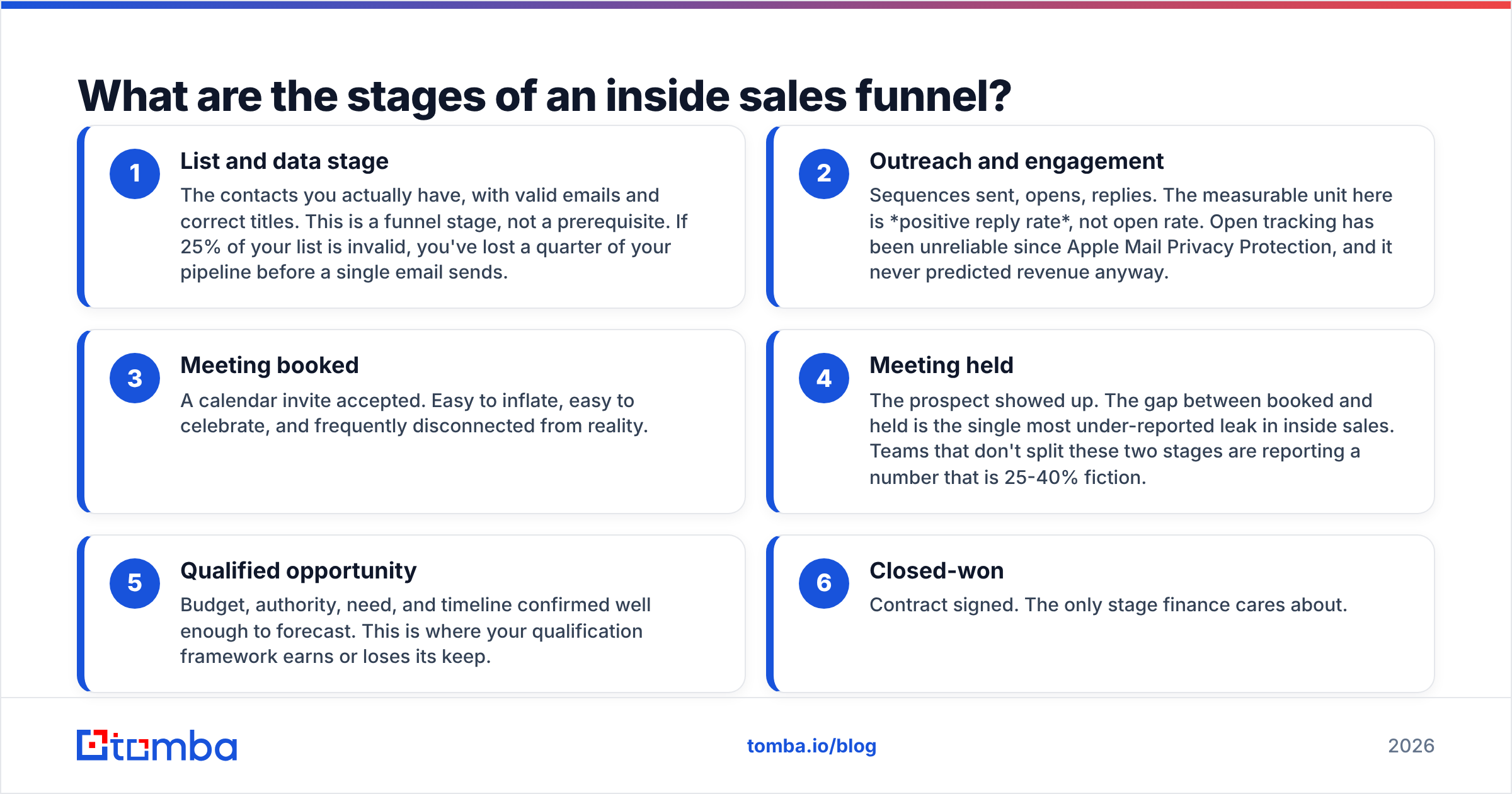
Most funnel diagrams show four stages. Real inside sales funnels have six, and the two extra ones are where the money hides.
- List and data stage — The contacts you actually have, with valid emails and correct titles. This is a funnel stage, not a prerequisite. If 25% of your list is invalid, you've lost a quarter of your pipeline before a single email sends.
- Outreach and engagement — Sequences sent, opens, replies. The measurable unit here is positive reply rate, not open rate. Open tracking has been unreliable since Apple Mail Privacy Protection, and it never predicted revenue anyway.
- Meeting booked — A calendar invite accepted. Easy to inflate, easy to celebrate, and frequently disconnected from reality.
- Meeting held — The prospect showed up. The gap between booked and held is the single most under-reported leak in inside sales. Teams that don't split these two stages are reporting a number that is 25-40% fiction.
- Qualified opportunity — Budget, authority, need, and timeline confirmed well enough to forecast. This is where your qualification framework earns or loses its keep.
- Closed-won — Contract signed. The only stage finance cares about.
Each stage needs a written exit criterion that two different reps would apply identically. "Feels interested" is not an exit criterion. "Confirmed they have a budget line for this category in the current fiscal year" is.
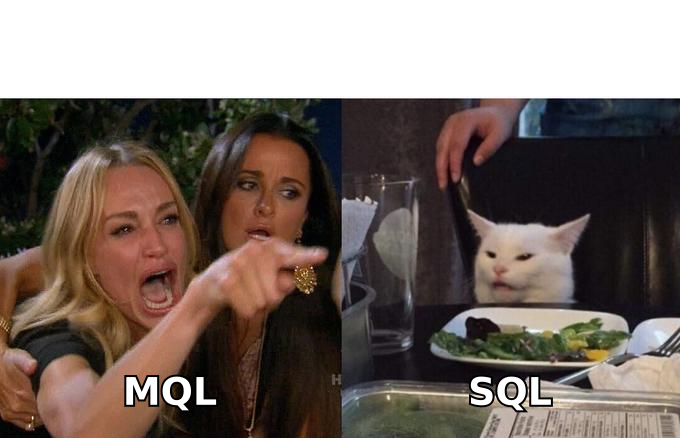
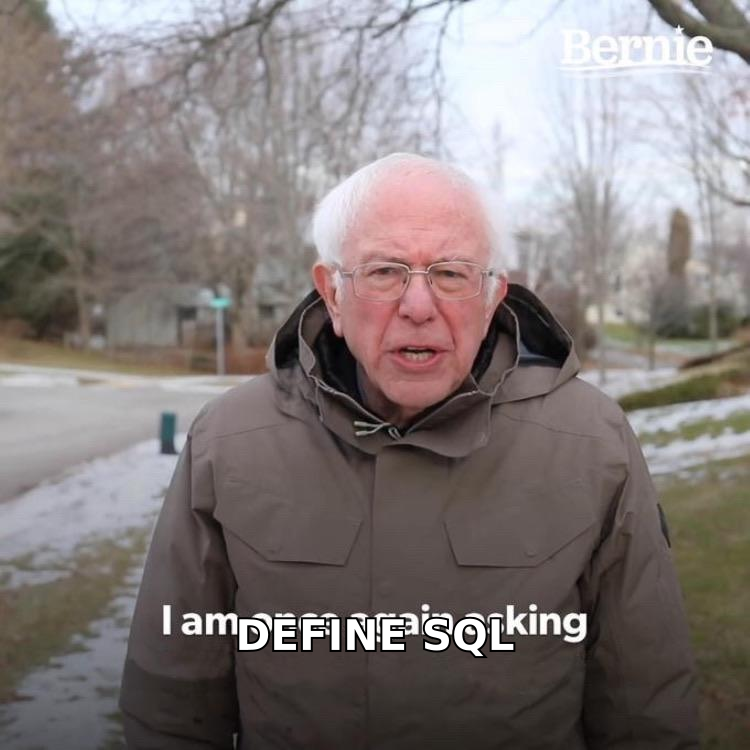
The definitional fight in that meme is not a joke — it's the most common root cause of unreliable inside sales forecasts. When marketing's MQL definition and sales' SQL definition don't chain together cleanly, your funnel has a gap between stage 2 and stage 5 that nobody owns. Write both definitions on one page. Make both teams sign it. Revisit quarterly.
How does an inside sales funnel compare to other funnel models?#
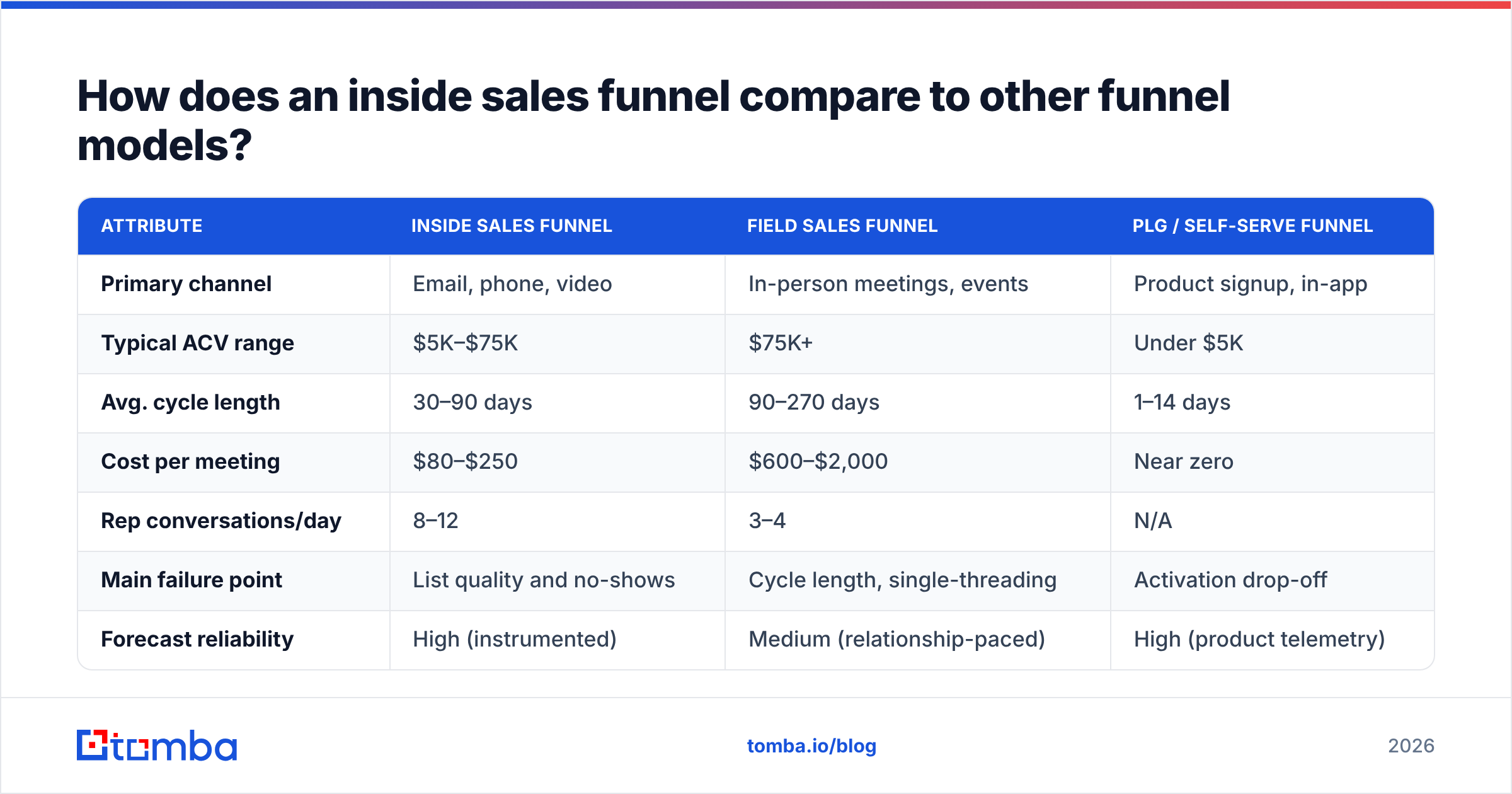
Different go-to-market motions produce structurally different funnels. Picking the wrong model for your business means benchmarking against numbers that were never going to apply to you.
| Attribute | Inside Sales Funnel | Field Sales Funnel | PLG / Self-Serve Funnel |
|---|---|---|---|
| Primary channel | Email, phone, video | In-person meetings, events | Product signup, in-app |
| Typical ACV range | $5K–$75K | $75K+ | Under $5K |
| Avg. cycle length | 30–90 days | 90–270 days | 1–14 days |
| Cost per meeting | $80–$250 | $600–$2,000 | Near zero |
| Rep conversations/day | 8–12 | 3–4 | N/A |
| Main failure point | List quality and no-shows | Cycle length, single-threading | Activation drop-off |
| Forecast reliability | High (instrumented) | Medium (relationship-paced) | High (product telemetry) |
| Scales by | Adding reps + data volume | Adding territories | Adding traffic |
Notice the "main failure point" row. Field sellers lose deals in the middle. Inside sellers lose deals at the top. That asymmetry should dictate where you spend your improvement budget, and for most inside teams it doesn't. Ask yourself honestly: when did your team last spend a full sprint on contact data quality versus on pitch refinement?
Hybrid motions muddy this, and that's fine — plenty of teams run PLG for self-serve and an inside funnel for expansion into the same accounts. Just don't average the two funnels into one dashboard. You'll get a number that describes neither.
Why does the top of the inside sales funnel leak the most?#
Because the inputs are unverified and the failure is silent.
When a rep sends 500 emails and 120 bounce, the CRM shows 500 "contacted." The rep's activity metric looks fine. The manager's dashboard looks fine. The 120 contacts that never existed just quietly disappear from the denominator, and three weeks later everyone is confused about why reply rate dropped.
Worse, bounces are not neutral. Mailbox providers read a high bounce rate as a signal that you're sending to a scraped or stale list, and they throttle you accordingly. So invalid data doesn't just waste the invalid records — it degrades delivery for the valid ones too. One bad list can suppress a domain's email deliverability for weeks.
Three concrete data problems, in order of how much damage they do:
- Invalid addresses. The person left, the alias was retired, the domain changed after an acquisition. B2B contact data decays at roughly 22-30% per year depending on the segment, and it decays fastest in exactly the fast-growing companies you most want to sell to.
- Wrong person, valid address. Harder to catch, more expensive. The email lands, nobody replies, and you conclude your messaging failed. It didn't — you pitched a procurement analyst on a developer tool.
- Catch-all domains. The server accepts everything, so standard verification returns "unknown." Most teams either send blindly (risking bounces) or discard them entirely (discarding real buyers). Neither is right. A dedicated catch-all verifier resolves a meaningful share of these to a definite answer, which is the difference between guessing and knowing.
The fix sequence is unglamorous: source contacts from a provider that shows confidence scores and sources, verify emails before the sequence launches rather than after bounces teach you the hard way, and re-verify anything older than 90 days. Teams that do this routinely see bounce rates under 2% and get to spend their debugging energy on messaging, where it belongs.
What conversion rates should an inside sales funnel hit in 2026?#
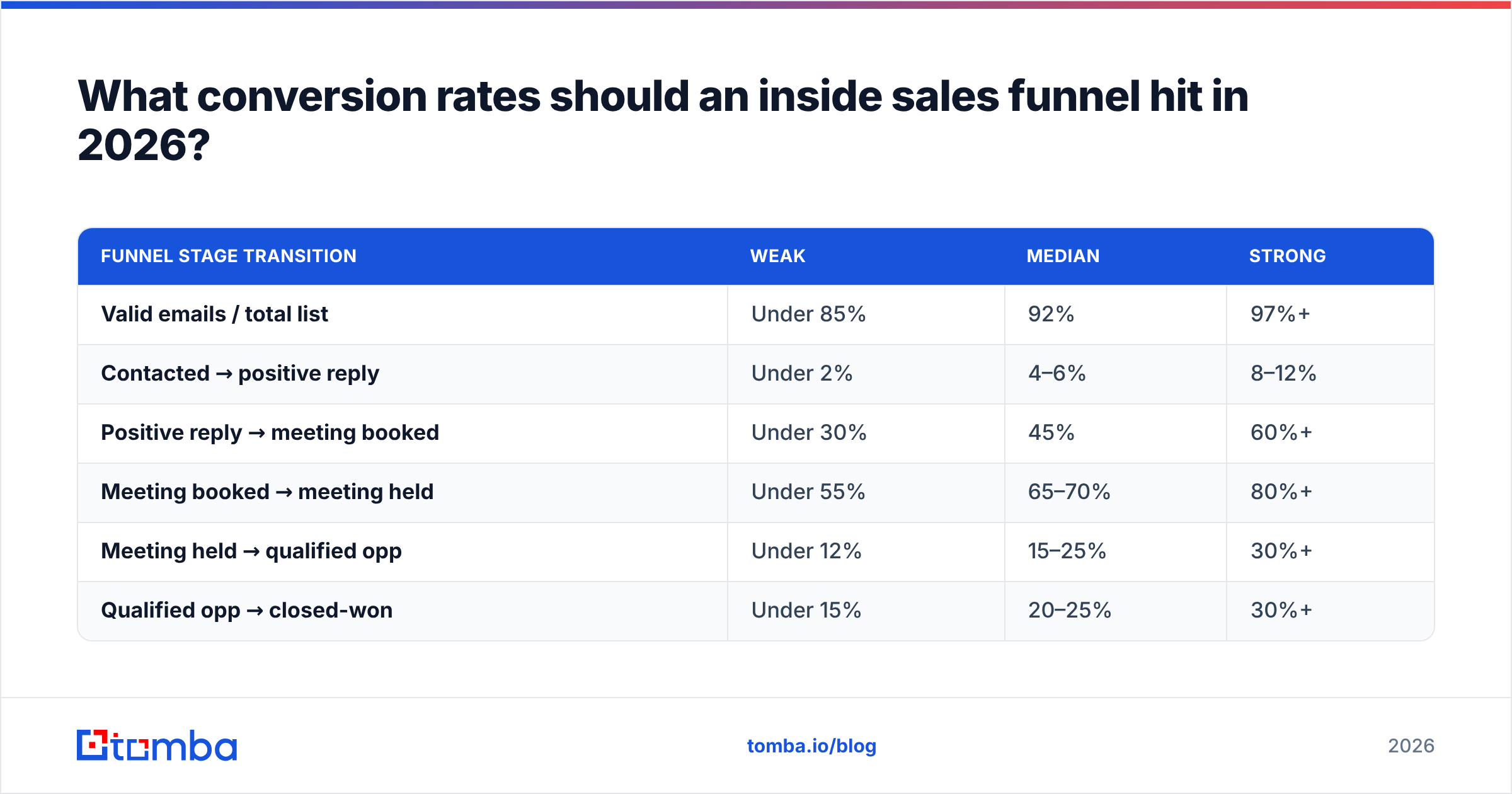
Here are working benchmarks for mid-market B2B SaaS. Treat them as a diagnostic starting point, not a target — your segment, ACV, and category maturity will shift every one of them.
| Funnel stage transition | Weak | Median | Strong |
|---|---|---|---|
| Valid emails / total list | Under 85% | 92% | 97%+ |
| Contacted → positive reply | Under 2% | 4–6% | 8–12% |
| Positive reply → meeting booked | Under 30% | 45% | 60%+ |
| Meeting booked → meeting held | Under 55% | 65–70% | 80%+ |
| Meeting held → qualified opp | Under 12% | 15–25% | 30%+ |
| Qualified opp → closed-won | Under 15% | 20–25% | 30%+ |
Run your own numbers against this table and find your worst relative stage. That's your project for the quarter. Not the stage with the lowest absolute number — the lowest number is almost always the first one, by arithmetic. The stage that's furthest below its own median is the one costing you the most.
The booked-to-held row is the one that surprises people. A team booking 100 meetings a month at a 55% hold rate is functionally a team booking 55 meetings. The lost 45 cost full outbound spend and returned nothing. Fixes here are cheap and fast: a confirmation message within an hour of booking, a same-day reminder with an agenda, a one-tap reschedule link, and a calendar invite that names the specific problem you'll discuss rather than "Intro Call." Teams that implement all four typically add 10-15 points to hold rate within a month. Gartner's research on B2B buying behavior is a useful frame for why: buyers are juggling six to ten stakeholders, and your unconfirmed meeting is the easiest thing on their calendar to drop.
How do you build an inside sales funnel from scratch?#
Build it in the order the leads flow, not the order that's most fun.
1. Define the ICP narrowly enough to be falsifiable. "Mid-market SaaS companies" isn't an ICP. "B2B SaaS, 50-300 employees, US or UK, using HubSpot, with at least two open SDR roles" is — you can test every clause against a real company and get a yes or no.
2. Build the list against that definition. Use domain search to pull the contact structure at target accounts, then filter to the titles that match. Sourcing at the domain level rather than buying a pre-built list keeps you honest about ICP fit, because you see who actually works there instead of who a vendor decided to include.
3. Verify before you send, always. This is a 20-minute step that protects months of sender reputation. Bulk verification on the full list, drop the hard fails, resolve the catch-alls, then send.
4. Write sequences per persona, not per campaign. A VP of Sales and a RevOps manager at the same company have different problems. One sequence addressed to "you" is addressed to nobody.
5. Instrument every stage transition in the CRM. Separate fields for booked and held. Separate timestamps. If your CRM can't distinguish them, fix the CRM before you optimize anything else — you're flying without instruments.
6. Review the funnel weekly at stage level. Not total pipeline. Stage-to-stage conversion, week over week, with one named owner per stage.
The repetition is the point. Stage definitions drift. New reps interpret them loosely, managers approve exceptions under quota pressure, and within two quarters your "qualified opportunity" stage means something different than it did. Re-ratify definitions every quarter and audit twenty random records against them.
What tools does an inside sales funnel actually need?#
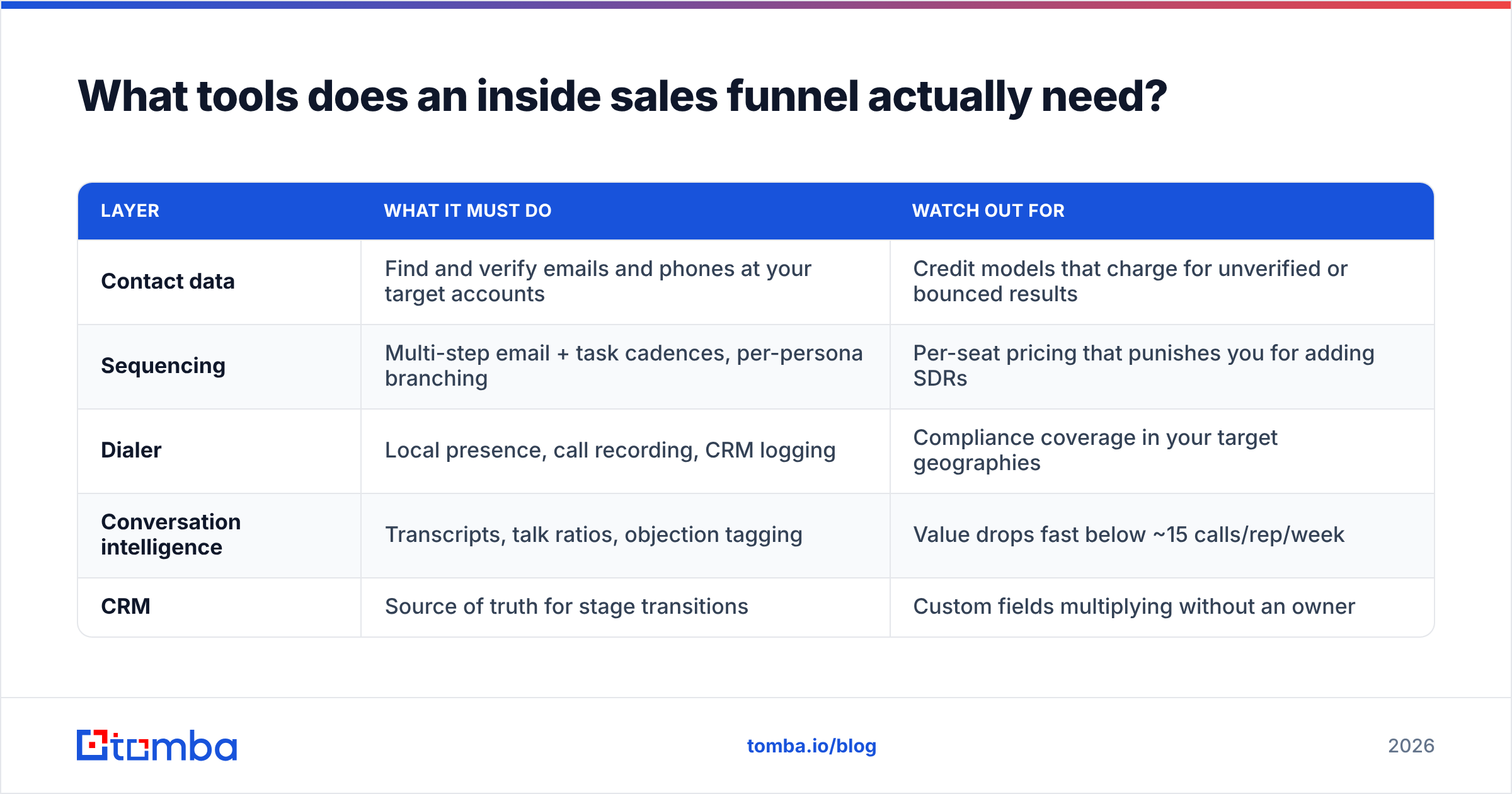
Fewer than most stacks contain. The functional requirements are: find contacts, verify contacts, sequence outreach, dial, record and analyze calls, and store everything in a CRM. Five categories. Many teams own fifteen tools covering them, with overlapping data models and a monthly bill nobody has audited since the last budget cycle.
| Layer | What it must do | Watch out for |
|---|---|---|
| Contact data | Find and verify emails and phones at your target accounts | Credit models that charge for unverified or bounced results |
| Sequencing | Multi-step email + task cadences, per-persona branching | Per-seat pricing that punishes you for adding SDRs |
| Dialer | Local presence, call recording, CRM logging | Compliance coverage in your target geographies |
| Conversation intelligence | Transcripts, talk ratios, objection tagging | Value drops fast below ~15 calls/rep/week |
| CRM | Source of truth for stage transitions | Custom fields multiplying without an owner |
On the data layer, evaluate three things: coverage in your specific segment, whether the vendor charges for results it couldn't verify, and whether the API lets you verify inside your own workflow rather than through a UI export loop. Run a blind test — take 200 contacts you already know are good, run them through each candidate, and compare. Vendor-published accuracy figures are marketing; your own list is evidence. G2's category listings are useful for building the shortlist, less useful for picking the winner.
Worth noting that credit models differ sharply between vendors. Some charge per lookup regardless of outcome, some charge only for verified results. Across a year and a few hundred thousand lookups, that difference is larger than the sticker price gap between plans. Tomba's pricing runs from a free tier at 25 searches/month through Starter at $49/mo and Growth at $99/mo, with Pro at $249/mo for teams running higher volume. BookYourData takes a different and equally valid approach — pay-as-you-go credits with a bounce guarantee, which suits teams with lumpy, campaign-driven demand rather than steady monthly usage. Match the billing model to your actual usage pattern, not to the headline price.
What breaks an inside sales funnel that's already working?#
Three failure modes, all of them gradual enough to miss until the quarter's already lost.
Volume without data refresh. The team scales sends 3x while the list stays the same age. Bounce rate climbs, domain reputation sags, and reply rate falls across every sequence simultaneously. The tell is that all campaigns degrade at once — messaging problems are campaign-specific, deliverability problems are global.
Stage definition drift. Covered above, worth repeating. If your qualified-opp count rises while closed-won stays flat, your definition loosened. Nobody decided to loosen it.
Rep tenure churn without documented process. Inside sales turnover runs high. When your best rep leaves, their sequence variants, objection responses, and account notes leave too — unless they live in a shared system. Document during good quarters; you won't have time during bad ones.
The remedy for all three is the same weekly stage-level review. Not because the review itself fixes anything, but because it makes degradation visible while it's still cheap to reverse.
Where should you start this week?#
Pull your last 90 days of funnel data, compute each of the six stage transitions, and compare them to the benchmark table above. Then pick the single stage furthest below its median and give it a two-week project with one owner.
If that stage turns out to be at the top — and for most inside sales teams it is — start with the contact data before touching anything else. Run your current list through the Tomba Email Finder and its verification layer, see what percentage comes back invalid, and you'll have your answer about whether your problem is copy or data. The free tier covers 25 searches a month, which is enough to sample a list and find out. Most teams discover the leak was never where they were looking.
Related guides#
// get started
Find, verify and enrich your first contacts today
Start on the free plan with 25 searches a month, then scale when your team is ready.
Free plan · No credit card required · GDPR & CCPA
// about the author