9 Best Intellizence Alternatives for Sales Signals in 2026
Intellizence turns funding rounds, layoffs and executive hires into sales triggers, but coverage gaps and quote-only pricing push teams to look elsewhere. Here are 9 alternatives compared on signals, contact data and cost.
TL;DR
- Intellizence is a signal-intelligence feed, not a contact database. It tells you when to reach out, never who to email. That single gap is why most buyers end up running two tools anyway.
- The best replacement depends on which signal you actually sell against: funding (Crunchbase), headcount and tech change (ZoomInfo, Similarweb), European company events (Vainu), or custom trigger logic (Clay).
- Quote-only pricing is the second most common reason teams leave. Four of the nine alternatives below publish real numbers.
- Whatever signal source you pick, you still need verified work emails and phone numbers to act on it. Tomba's email finder starts free (25 searches/mo) and runs $49/mo on Starter.
- Skip the "all-in-one" fantasy. The cheapest high-performing stack in 2026 is one signal feed plus one contact layer, wired together over an API.
What is Intellizence and what does it actually do?#
Intellizence is a B2B signal-intelligence platform. It monitors news, regulatory filings, job boards and press releases, then converts those events into structured sales triggers: funding rounds, mergers and acquisitions, layoffs, executive hires, expansions, partnerships, awards and legal actions. You get the events as a dashboard feed, an API, or pushed into your CRM.
Think of it like a police scanner for your target accounts. It does not tell you who lives at the address or give you their phone number. It tells you something just happened there, and that you should probably go look.
That framing matters, because it explains both the value and the ceiling. A company that closed a Series B three days ago has budget, urgency and a mandate to spend. Reaching them in week one beats reaching them in month six by a wide margin. But Intellizence hands you a company name and an event. Turning that into a sent email still requires a contact database, a verification step, and a sequencer.
Intellizence sells primarily to enterprise sales, marketing and risk teams, with quote-based pricing and annual contracts. Reviews on G2 consistently praise the breadth of event types and flag two things: the cost of entry for small teams, and the fact that signal volume without prioritization becomes noise fast.
Why do teams look for Intellizence alternatives?#
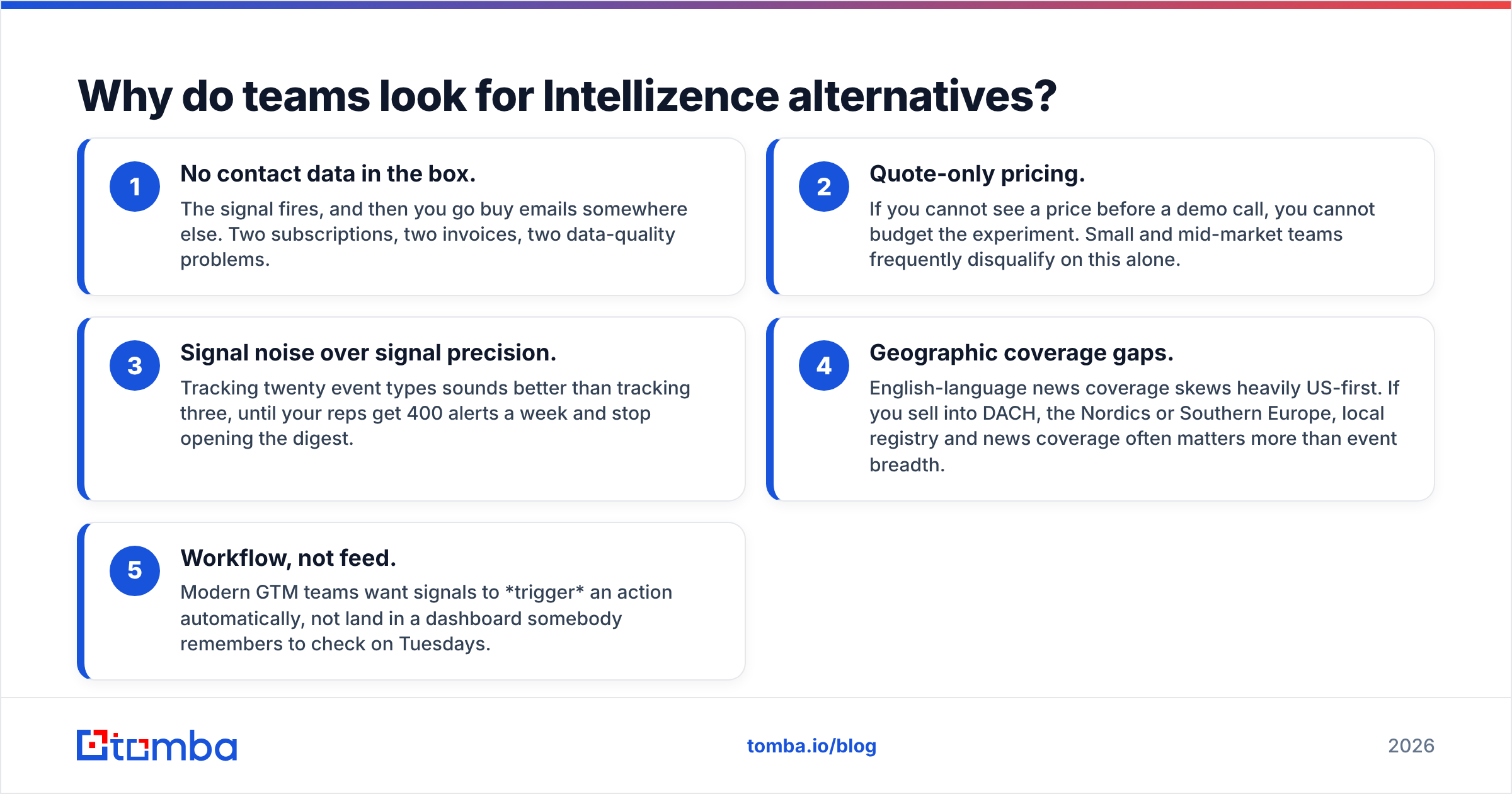
Five patterns show up over and over in switching conversations:
- No contact data in the box. The signal fires, and then you go buy emails somewhere else. Two subscriptions, two invoices, two data-quality problems.
- Quote-only pricing. If you cannot see a price before a demo call, you cannot budget the experiment. Small and mid-market teams frequently disqualify on this alone.
- Signal noise over signal precision. Tracking twenty event types sounds better than tracking three, until your reps get 400 alerts a week and stop opening the digest.
- Geographic coverage gaps. English-language news coverage skews heavily US-first. If you sell into DACH, the Nordics or Southern Europe, local registry and news coverage often matters more than event breadth.
- Workflow, not feed. Modern GTM teams want signals to trigger an action automatically, not land in a dashboard somebody remembers to check on Tuesdays.
Your reason determines your replacement. If it is price, a self-serve tool wins. If it is workflow, an orchestration platform wins. If it is contact data, you do not need a different signal tool at all; you need an enrichment layer underneath the one you have.
How do the top Intellizence alternatives compare?#
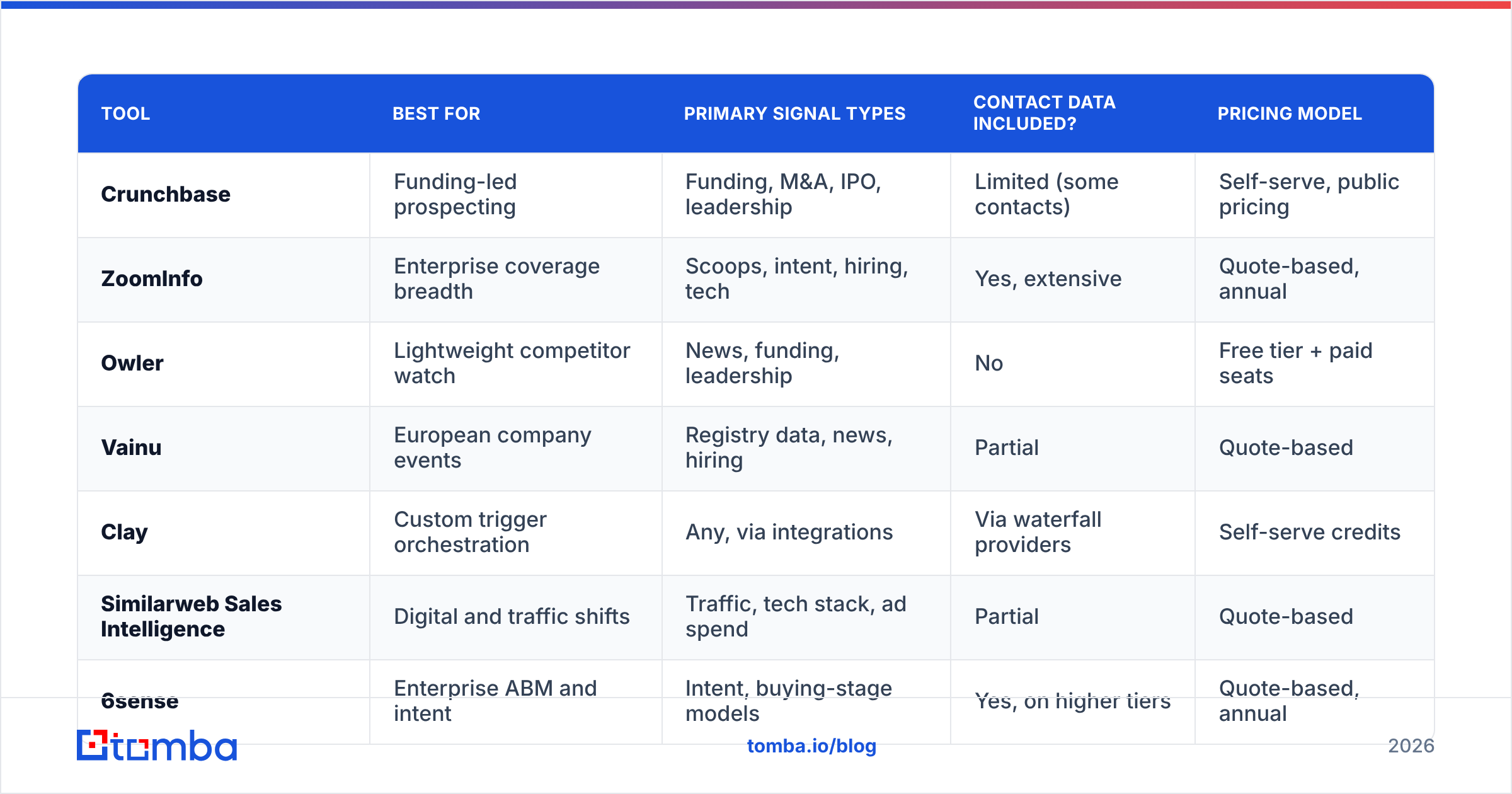
| Tool | Best for | Primary signal types | Contact data included? | Pricing model |
|---|---|---|---|---|
| Crunchbase | Funding-led prospecting | Funding, M&A, IPO, leadership | Limited (some contacts) | Self-serve, public pricing |
| ZoomInfo | Enterprise coverage breadth | Scoops, intent, hiring, tech | Yes, extensive | Quote-based, annual |
| Owler | Lightweight competitor watch | News, funding, leadership | No | Free tier + paid seats |
| Vainu | European company events | Registry data, news, hiring | Partial | Quote-based |
| Clay | Custom trigger orchestration | Any, via integrations | Via waterfall providers | Self-serve credits |
| Similarweb Sales Intelligence | Digital and traffic shifts | Traffic, tech stack, ad spend | Partial | Quote-based |
| 6sense | Enterprise ABM and intent | Intent, buying-stage models | Yes, on higher tiers | Quote-based, annual |
| BookYourData | Ready-to-use verified lists | Static firmographic targeting | Yes, verified | Pay-as-you-go |
| Tomba | Contact layer under any signal | N/A (enrichment layer) | Yes, verified emails + phones | Free tier, $49–$249/mo public |
Two honest notes on that table. First, several of these are not direct Intellizence replacements; they solve an adjacent slice of the same job. Second, the row that matters most for your pipeline is usually the "contact data" column, because a signal you cannot act on is trivia.
Which Intellizence alternatives are worth testing in 2026?#
1. Crunchbase — best for funding-triggered outbound#
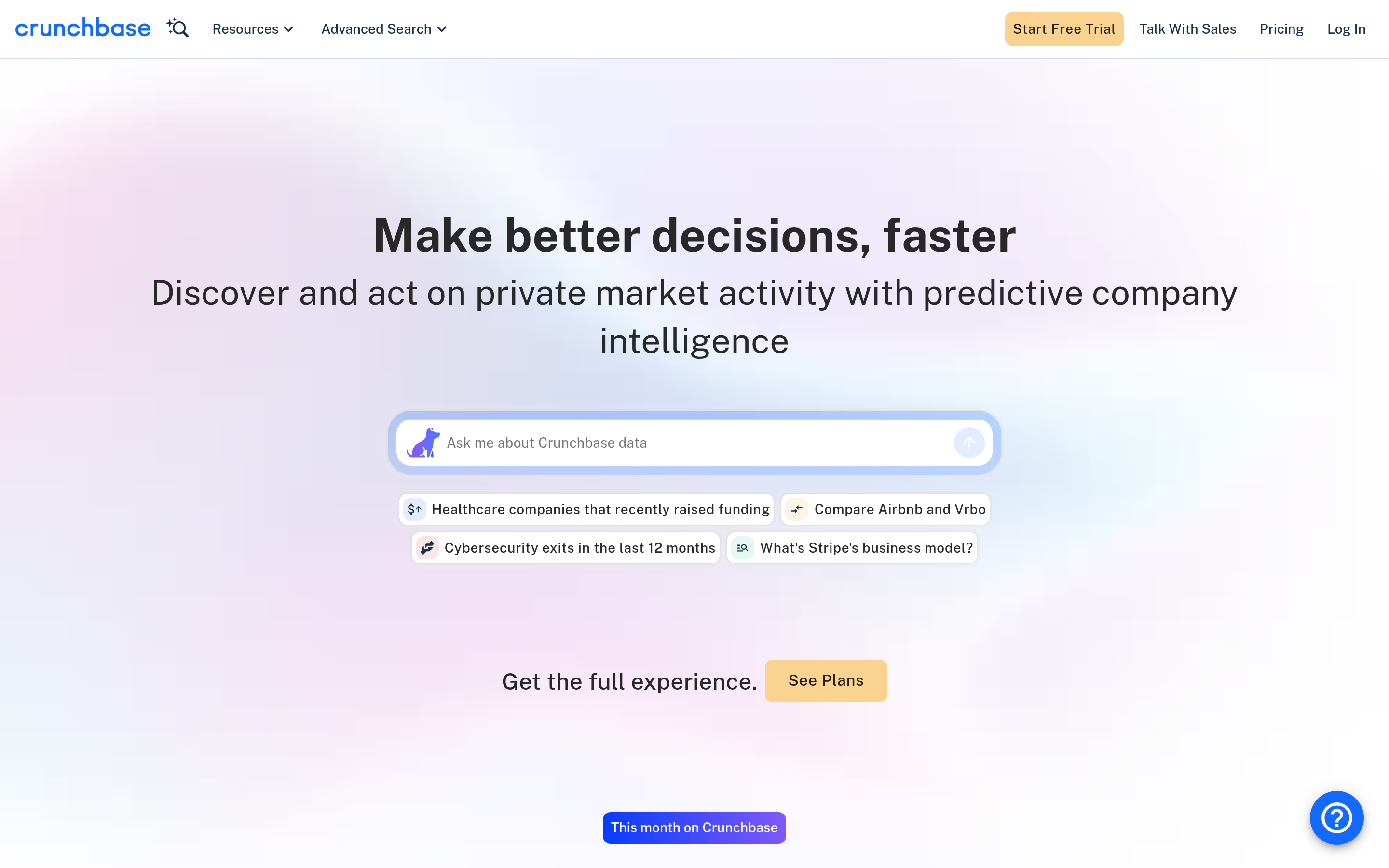
Crunchbase remains the default for funding signals, and for good reason: the dataset is deep, the alerts are reliable, and the pricing is published. You can build a saved search for "Series A, SaaS, US, last 30 days" and get a clean weekly list.
Where it wins: funding and M&A precision, self-serve entry, a well-documented API. Where it loses: it is a funding database first. Layoffs, litigation, regulatory events and partnership announcements are thin or absent. Contact coverage exists but is not the product's strength.
2. ZoomInfo — best for teams that want one enterprise vendor#

ZoomInfo's Scoops feature is the closest enterprise analogue to Intellizence: sourced intelligence about initiatives, budget changes and org shifts, bundled with the largest commercial contact database in the category.
Where it wins: breadth. Signals, contacts, intent and a sequencer under one contract. Where it loses: price and contract rigidity. Annual commitments, seat minimums and quote-only pricing make it a poor fit under ~10 reps. Data freshness on long-tail accounts is inconsistent, which is why so many teams still run a verification pass before sending.
3. Owler — best free-tier competitor and account monitoring#
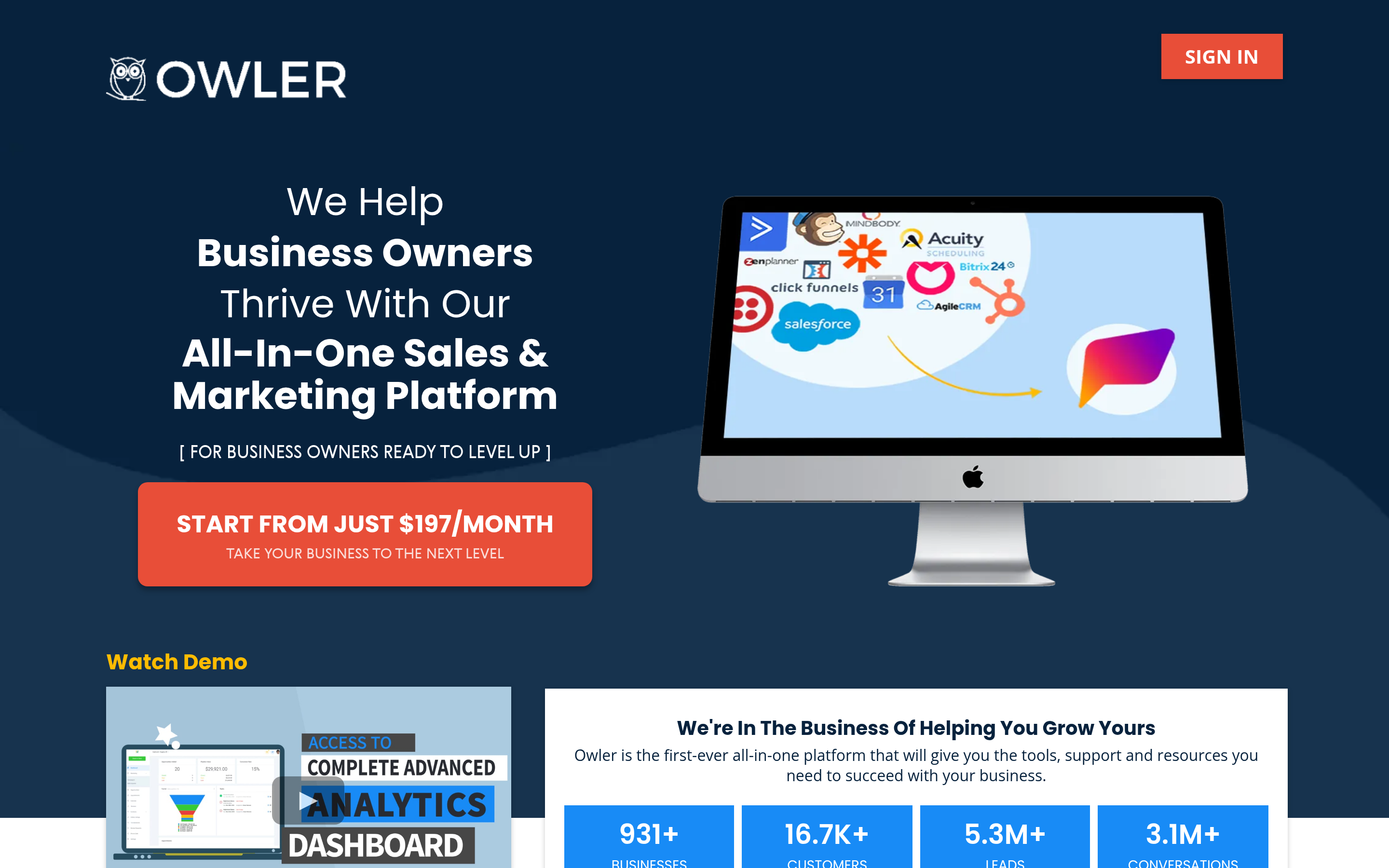
Owler gives you a followable feed of company news, funding and leadership changes with a genuinely usable free tier. It is not an enterprise signal engine, but for a rep managing 200 named accounts it does most of the job.
Where it wins: cost, simplicity, fast setup. Where it loses: no real API workflow, shallow event taxonomy, no contact data.
4. Vainu — best for European market coverage#
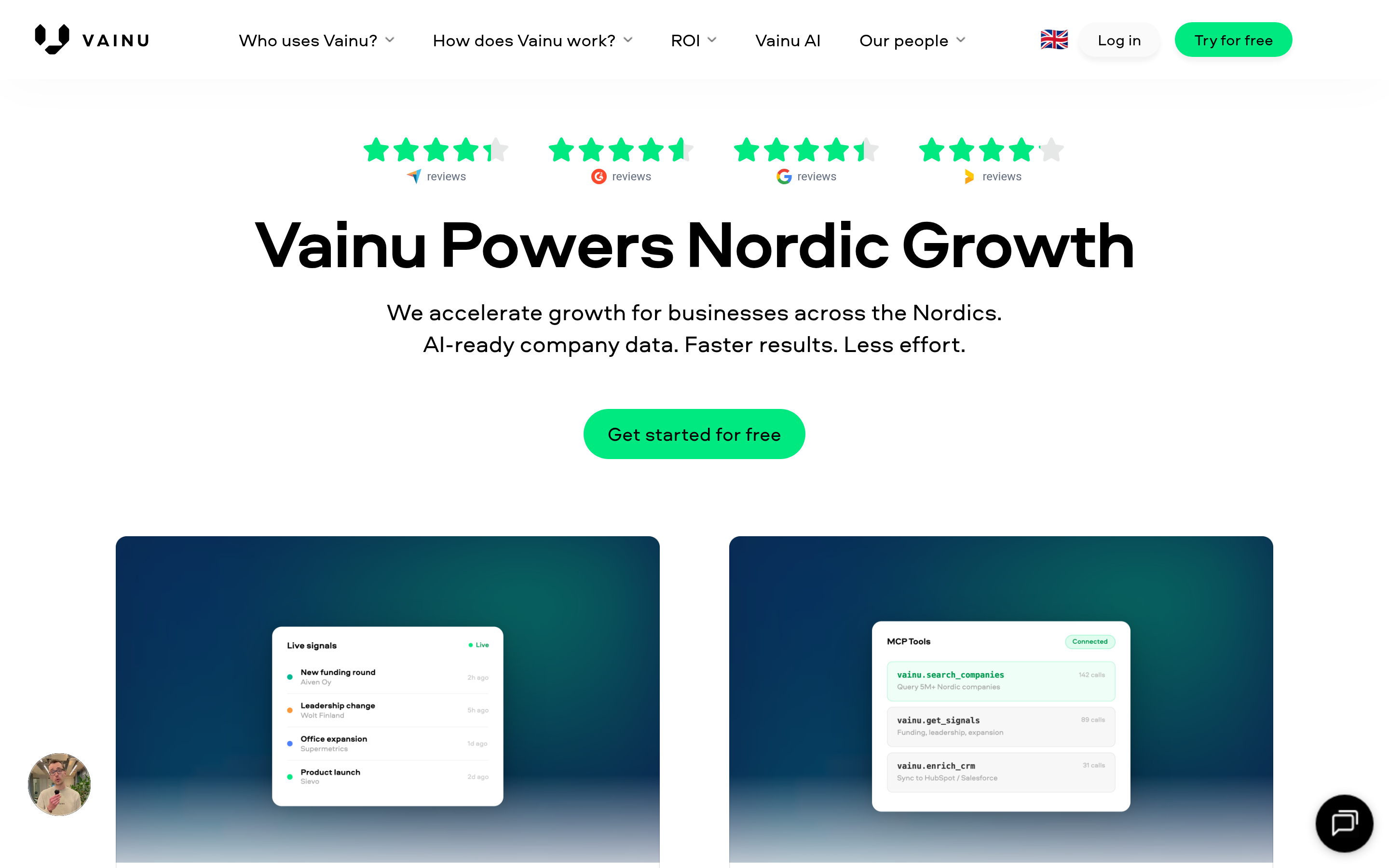
Vainu pulls from company registries, financial filings and local news across Europe, which makes it materially better than US-centric tools if your ICP sits in the Nordics, Benelux or DACH. Trigger types include hiring, financial changes and organizational events.
Where it wins: registry-grade European firmographics, strong CRM integrations. Where it loses: thinner coverage outside Europe, quote-based pricing, contact data that usually needs supplementing.
5. Clay — best for building your own signal logic#
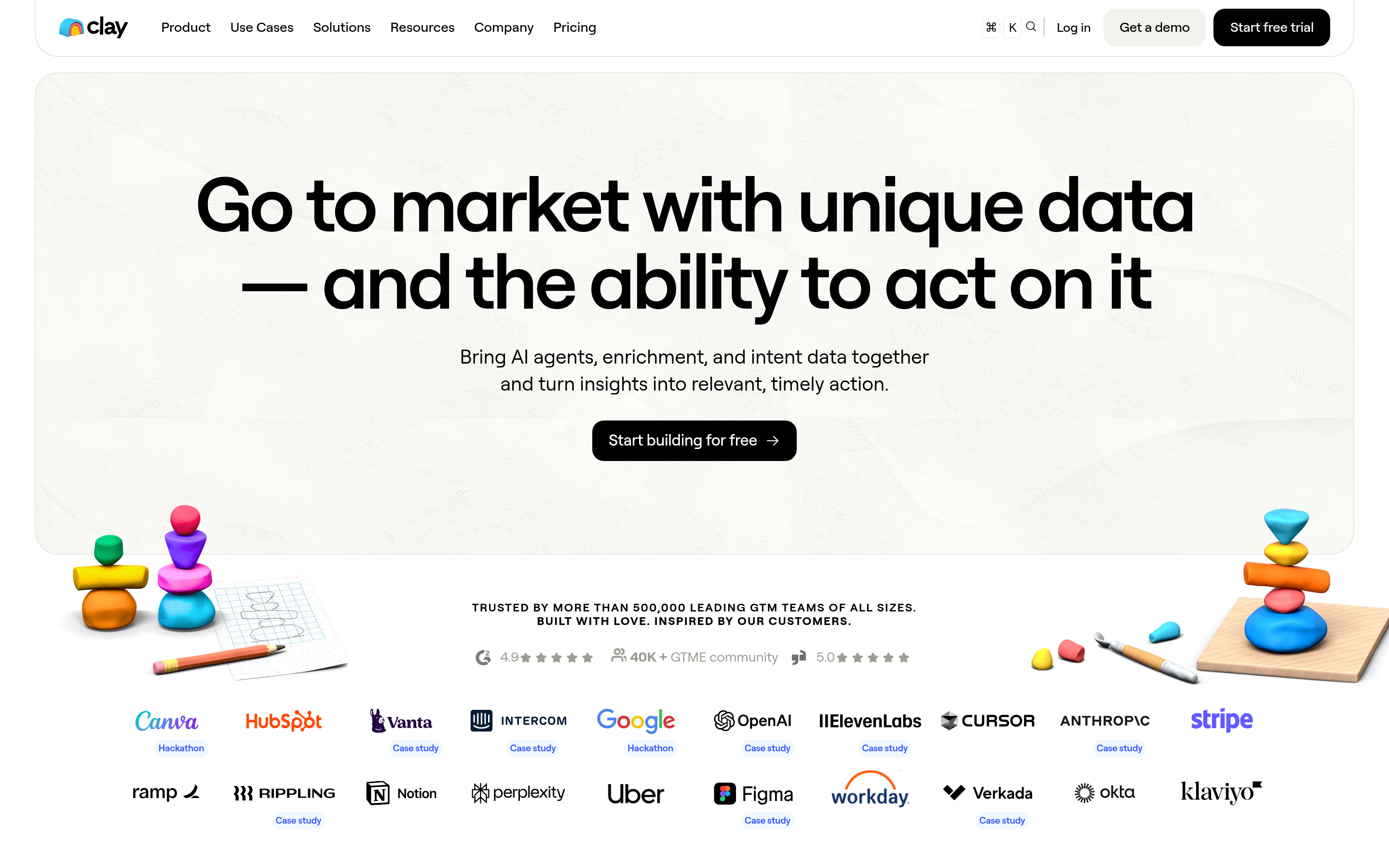
Clay is not a signal database; it is a table where you compose signals. Pull a list from anywhere, run it through enrichment providers in a waterfall, apply AI research prompts, and fire a webhook when your custom condition is met. If your trigger is "hired a second RevOps person and switched to Snowflake," Clay is the only tool on this list that can express that.
Where it wins: flexibility, credit-based self-serve pricing, composability with every other tool here. Where it loses: it is a build-it-yourself platform. Expect a real learning curve and ongoing maintenance. Credits get expensive at volume if you do not gate your waterfalls carefully.
6. Similarweb Sales Intelligence — best for digital-behavior signals#
If your product's buying trigger is a website change rather than a press release, Similarweb reads a different layer entirely: traffic shifts, ad spend changes, tech-stack adoption and app performance. Excellent for selling into ecommerce, media and performance-marketing teams.
Where it wins: signals nobody else sees, strong for ecommerce ICPs. Where it loses: irrelevant for most offline or enterprise-software ICPs, quote-based pricing, estimated (not exact) metrics.
7. 6sense — best for enterprise intent and account scoring#
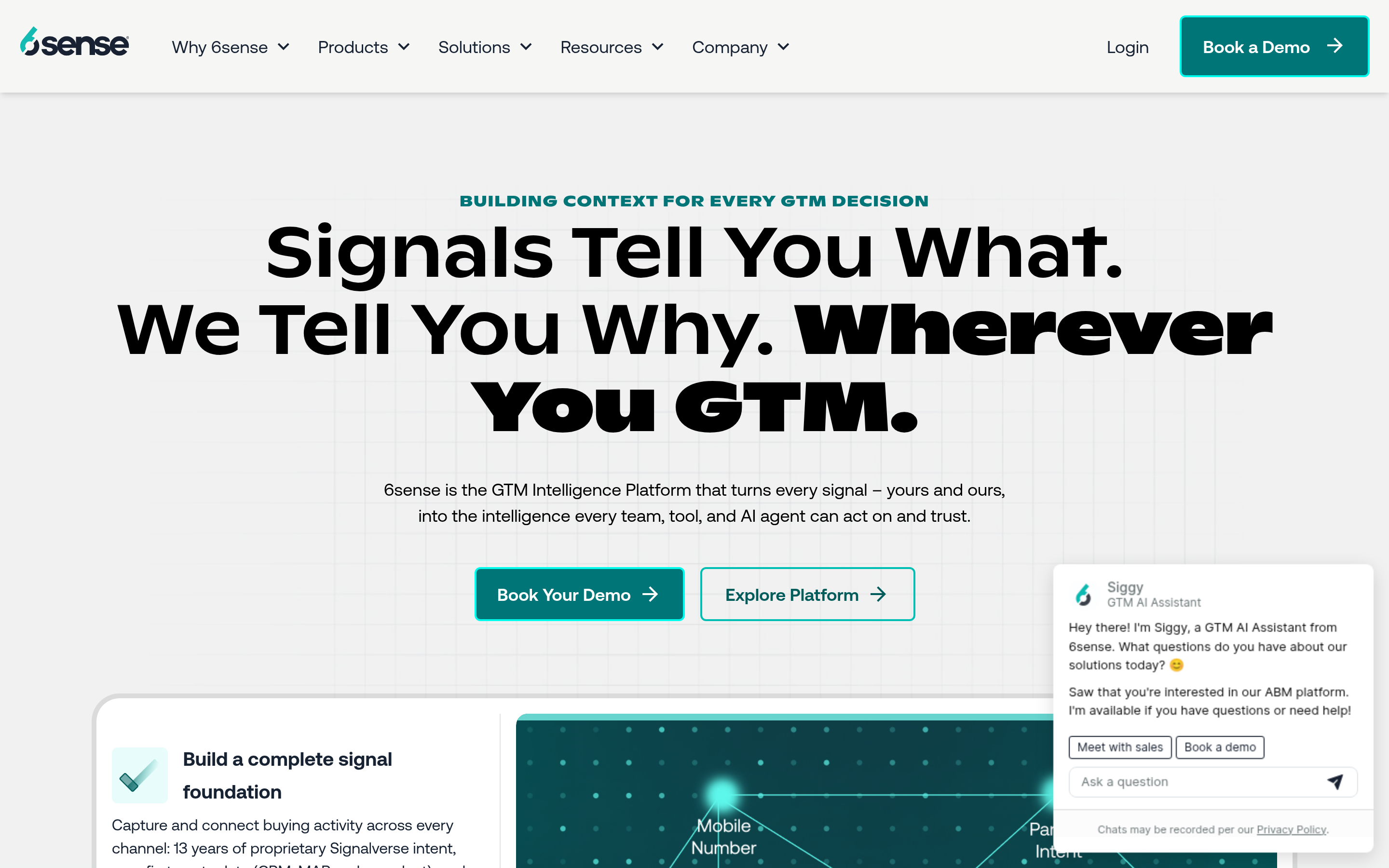
6sense models buying stage across your total addressable market using anonymous intent, engagement and firmographics. It answers "which accounts are in-market right now," which is a different and often more valuable question than "which accounts had an event."
Where it wins: predictive scoring, full ABM orchestration, mature enterprise integrations. Where it loses: cost and complexity. This is a six-figure category with a multi-month implementation. Overkill unless you have a marketing ops function. Our 6sense alternative breakdown covers the lighter-weight paths.
8. BookYourData — best for verified list-building without a subscription#
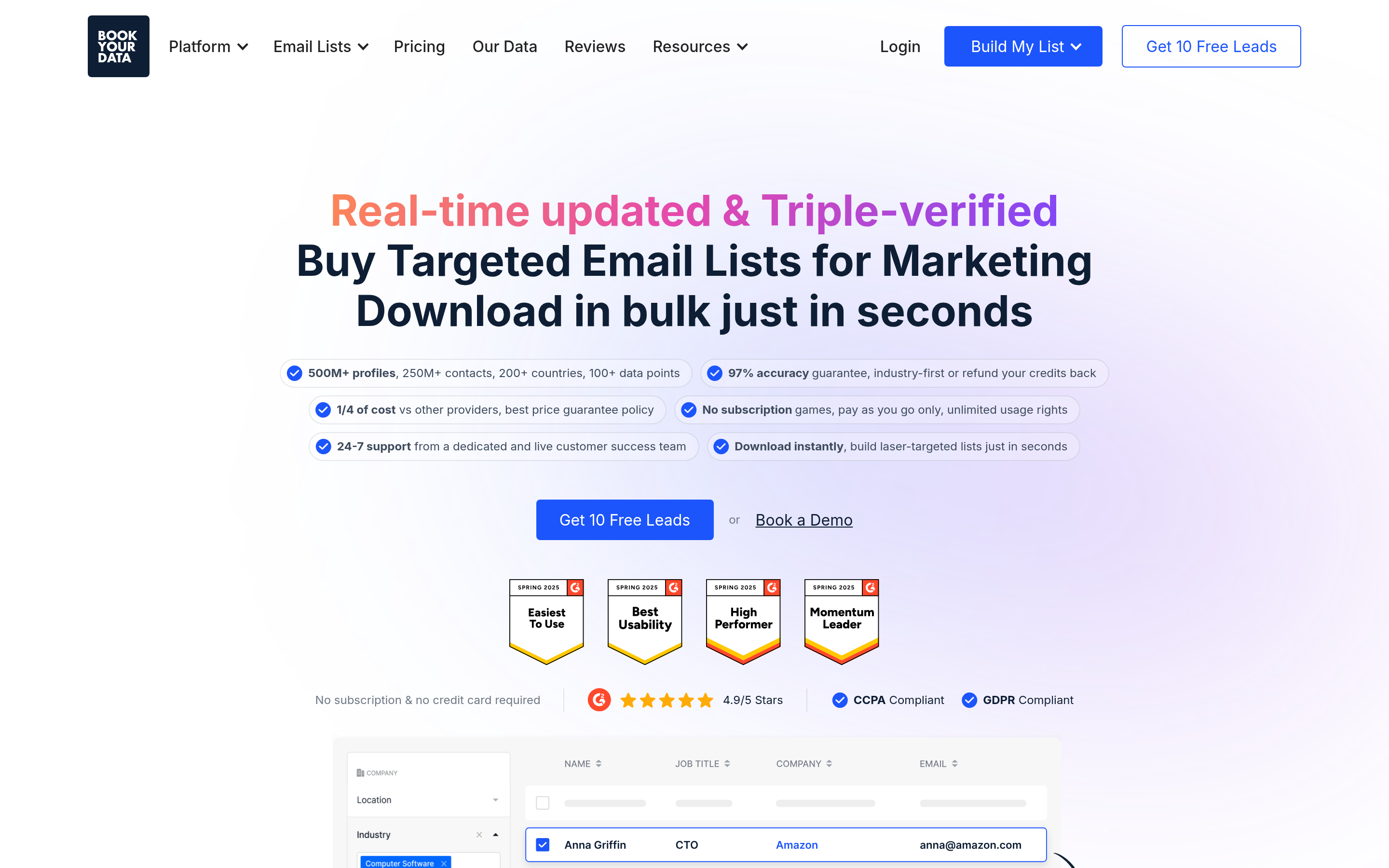
BookYourData takes a different approach from every signal tool above: instead of monitoring events, it sells verified B2B contact lists on a pay-as-you-go basis with an accuracy guarantee. There is no monthly commitment, which makes it a practical option when you need a clean targeted list for a specific campaign rather than an always-on feed.
Where it wins: no subscription lock-in, verified records, straightforward filtering by role, industry and geography. Where it loses: it is deliberately not a real-time trigger product. Pair it with a signal source if timing is your edge.
9. Tomba — best contact layer underneath any signal source#
Tomba does not compete with Intellizence on signals. It fixes the step that comes right after one. You have the company, the event and the target role; Tomba returns the verified work email, and where available the direct phone number.
The workflow is boring and effective: signal fires, domain search returns the people at that company matching your target titles, the verifier drops anything risky, and the enriched record lands in your sequencer. All of it runs over the Tomba API, so it fits under Intellizence, Crunchbase, Clay or a homegrown scraper equally well.
Where it wins: published pricing, a free tier for testing, verification built in rather than bolted on, broad integration surface. Where it loses: it is not a signal feed. If you want event monitoring, you still need one of the tools above.
Do sales signals convert without verified contact data?#
No, and the numbers are not subtle. A funding announcement gives you maybe a two-week window of elevated attention. If half your sends bounce because the contact record was 14 months stale, you burned the window and part of your sender reputation with it.
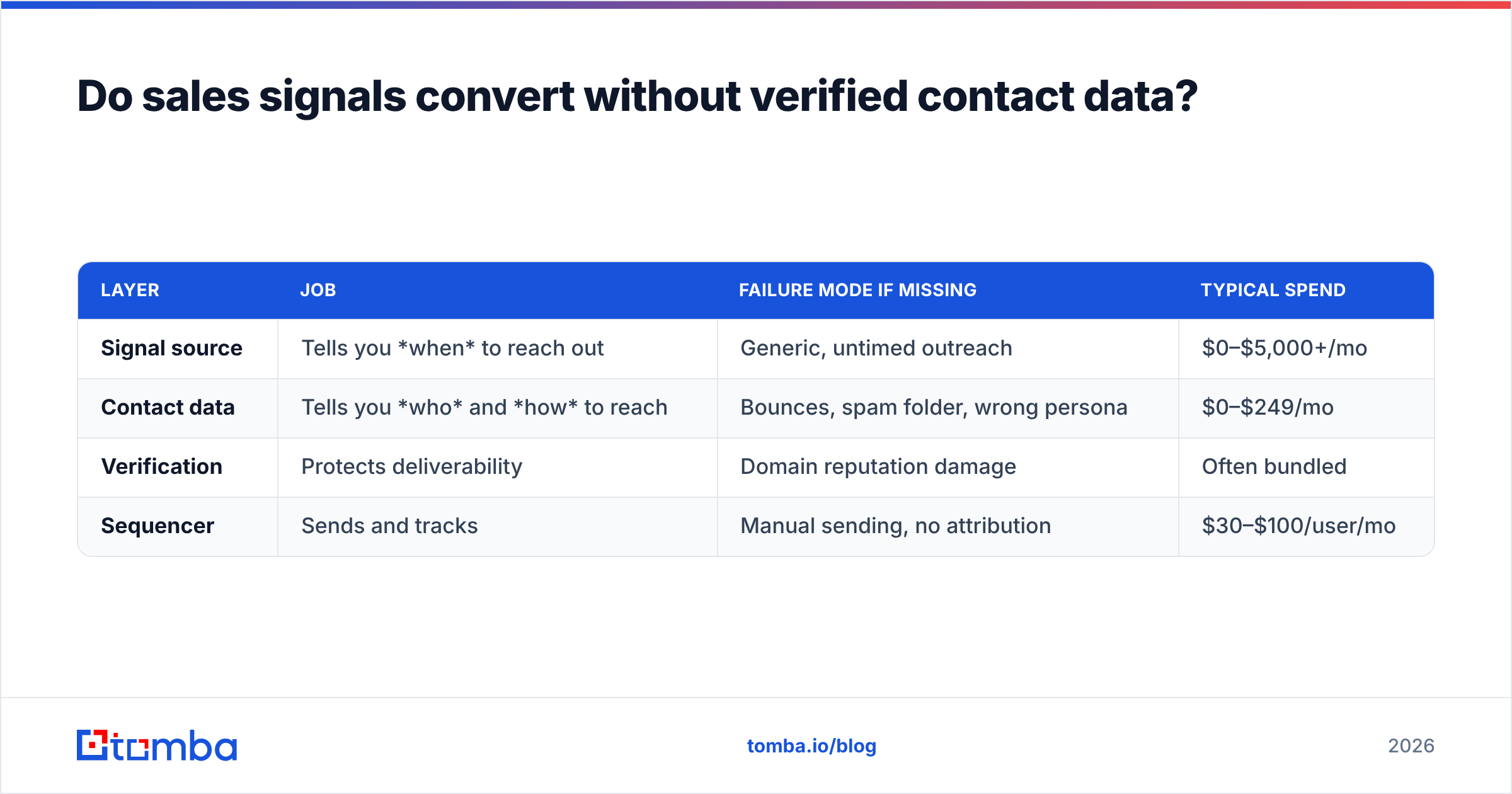
Here is what the two halves of the stack actually cost and do:
| Layer | Job | Failure mode if missing | Typical spend |
|---|---|---|---|
| Signal source | Tells you when to reach out | Generic, untimed outreach | $0–$5,000+/mo |
| Contact data | Tells you who and how to reach | Bounces, spam folder, wrong persona | $0–$249/mo |
| Verification | Protects deliverability | Domain reputation damage | Often bundled |
| Sequencer | Sends and tracks | Manual sending, no attribution | $30–$100/user/mo |
Most teams overspend wildly on layer one and underspend on layers two and three, then blame the signal vendor when reply rates stay flat. A $2,000/month signal feed feeding an unverified contact list is a $2,000/month way to hit spam filters.
Run the sequence in this order: source the signal, resolve the people, verify the addresses, then send. Tomba's email verifier and bulk email finder exist specifically for the middle two steps, and the catch-all handling matters more than most buyers realize, since a meaningful share of enterprise domains accept everything at the SMTP layer and reveal nothing.
How should you choose between these Intellizence alternatives?#
Pick by the constraint that actually binds you:
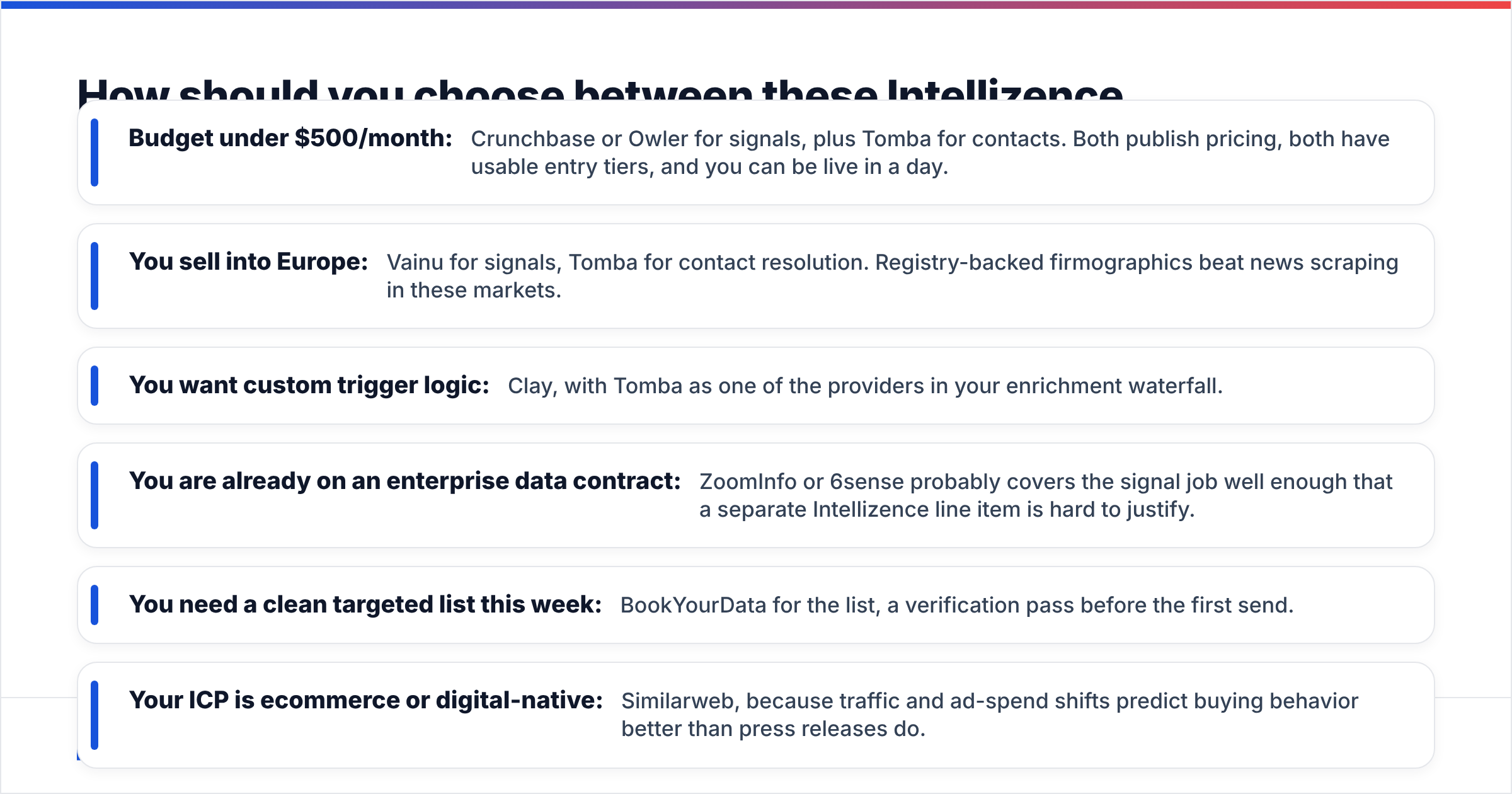
- Budget under $500/month: Crunchbase or Owler for signals, plus Tomba for contacts. Both publish pricing, both have usable entry tiers, and you can be live in a day.
- You sell into Europe: Vainu for signals, Tomba for contact resolution. Registry-backed firmographics beat news scraping in these markets.
- You want custom trigger logic: Clay, with Tomba as one of the providers in your enrichment waterfall.
- You are already on an enterprise data contract: ZoomInfo or 6sense probably covers the signal job well enough that a separate Intellizence line item is hard to justify.
- You need a clean targeted list this week: BookYourData for the list, a verification pass before the first send.
- Your ICP is ecommerce or digital-native: Similarweb, because traffic and ad-spend shifts predict buying behavior better than press releases do.
One more test before you sign anything: run the vendor's trial against 50 accounts you already know well. If the feed surfaces events you had not heard about, it is earning its price. If it mostly reports things you read on LinkedIn last week, you are paying for a news reader.
Ready to turn signals into replies?#
Signals are only half the machine. The other half is a verified email address for the exact person who owns the budget at the exact company that just triggered your alert.
Start with Tomba Email Finder. The free tier gives you 25 searches a month to test accuracy against accounts you can verify yourself, and paid plans start at $49/mo with the verifier, domain search and API access included. See full Tomba pricing before you commit to anything annual, and keep your signal budget for the tool that genuinely earns it.
Related guides#
// get started
Find, verify and enrich your first contacts today
Start on the free plan with 25 searches a month, then scale when your team is ready.
Free plan · No credit card required · GDPR & CCPA
// about the author