Intent Data Marketing: How B2B Teams Use It in 2026
Intent data promises to tell you who is shopping before they raise a hand. Here is what the signals actually measure, what the main vendors cost, and the contact-data gap that quietly kills most programs.
TL;DR
- Intent data marketing means using behavioral signals — content consumption, review-site browsing, search patterns, site visits — to decide who to contact and when, instead of contacting an entire ICP list at once.
- Third-party intent (Bombora, G2, 6sense) tells you an account is researching. It almost never tells you which person to email. That gap is where most programs stall.
- Realistic pricing in 2026: $12k–$25k/year for standalone topic intent, $40k–$120k+ for full ABM platforms with predictive scoring. First-party signals cost close to nothing and usually convert better.
- The measurable lift comes from timing and prioritization, not from magic. Expect 1.5x–3x reply rates on intent-surged accounts versus cold ICP — not 10x.
- Budget for the last mile: turning a surging domain into a verified, role-matched contact. Without that step you have an expensive dashboard.
What is intent data marketing?#
Intent data marketing is the practice of ranking and timing your outbound and advertising based on observed buying behavior rather than static firmographics.
Think of it like a bookstore owner watching the aisles. Firmographic targeting says "this customer is 35, lives nearby, and buys hardbacks" — useful, but it describes a type of person, not a moment. Intent data is watching someone stand in the business section for eleven minutes, pick up three competing titles, and check the price on their phone. Same person, radically different moment. Technically, intent data is a stream of aggregated behavioral events — content downloads, search queries, review-site page views, ad engagement, website visits — mapped back to a company (usually via IP-to-company resolution or cookie/ID graphs) and scored against a baseline to detect a "surge."
The category has been around for a decade, but two things changed by 2026. First, third-party cookie deprecation pushed vendors toward IP resolution, publisher co-ops, and first-party data sharing — which shifted accuracy profiles. Second, AI-assisted research means buyers do far more anonymous investigation before filling in a form. Gartner has written extensively about buying groups completing most of their evaluation before contacting a vendor, which is precisely the window intent data tries to open.
The practical promise is simple: stop emailing 5,000 accounts at equal priority. Email the 180 that are actually in-market this month.
Where does intent data actually come from?#
Not all intent is the same signal wearing different branding. These are the five real sources, ranked roughly from strongest to weakest:
- First-party site behavior — pricing page views, docs visits, repeated demo-page loads from the same company. Strongest signal you will ever get, because it is about you, and it costs nothing beyond a visitor-identification layer. Tools like website visitor reveal resolve anonymous traffic to company domains so you can act on it.
- Review-site intent — someone at Acme Corp compared you against two competitors on a review platform. G2 pioneered this, and it remains the highest-conviction third-party signal because the behavior is explicitly evaluative, not incidental.
- Topic/content co-op intent — Bombora and similar networks aggregate consumption across thousands of B2B publishers and flag when a company's consumption of a topic exceeds its own baseline. Broad coverage, medium precision.
- Bidstream intent — derived from programmatic ad auction logs. Enormous volume, cheapest to license, and the noisiest of the bunch. Treat it as a tiebreaker, not a trigger.
- Predictive/AI-modeled intent — platforms like 6sense blend the above with CRM history and model a "buying stage." Useful for enterprise ABM, opaque by design, and the hardest to audit when it is wrong.
A rule that survives contact with reality: the closer the signal is to your own product, the more you should trust it. A pricing-page visit beats a topic surge every time.
How do the intent data types compare?#
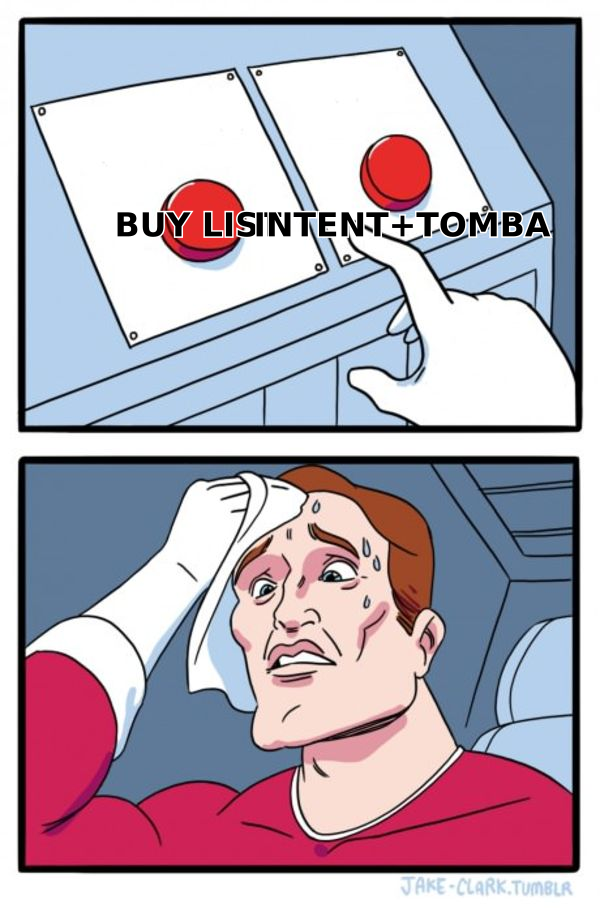
| Dimension | First-party site data | Review-site intent | Topic co-op intent | Predictive ABM platform |
|---|---|---|---|---|
| Typical annual cost | $0–$6k | $8k–$30k | $12k–$25k | $40k–$120k+ |
| Signal precision | Very high | High | Medium | Medium-high (opaque) |
| Account coverage | Only current traffic | Category shoppers only | Very broad | Broad |
| Person-level identity | Rare (domain only) | Sometimes (opt-in) | No | No |
| Time to first value | Days | 2–4 weeks | 4–8 weeks | 8–16 weeks |
| Best for | PLG, inbound-heavy teams | Competitive displacement | Top-of-funnel ABM | Enterprise ABM with big TAM |
| Biggest failure mode | Low volume | Narrow scope | Topic bloat, false surges | Cost vs. attributable pipeline |
The honest read: most teams under 50 employees should exhaust first-party signals before licensing anything. Most teams over 200 should run review-site plus one co-op source and skip the full platform until they have an ABM motion that already works manually.
Does intent data marketing actually work?#
Yes, but the mechanism is narrower than the pitch.
Intent data does not create demand and it does not tell you what to say. What it reliably does is reorder your queue. When you send the same sequence to the same ICP but prioritize surging accounts first, you catch more buyers inside their evaluation window. That is the entire value, and it is a real one.
What to expect from a well-run program:
- Reply rate lift of 1.5x–3x on surged accounts versus a matched cold segment. Teams reporting 10x are usually comparing against a badly targeted baseline.
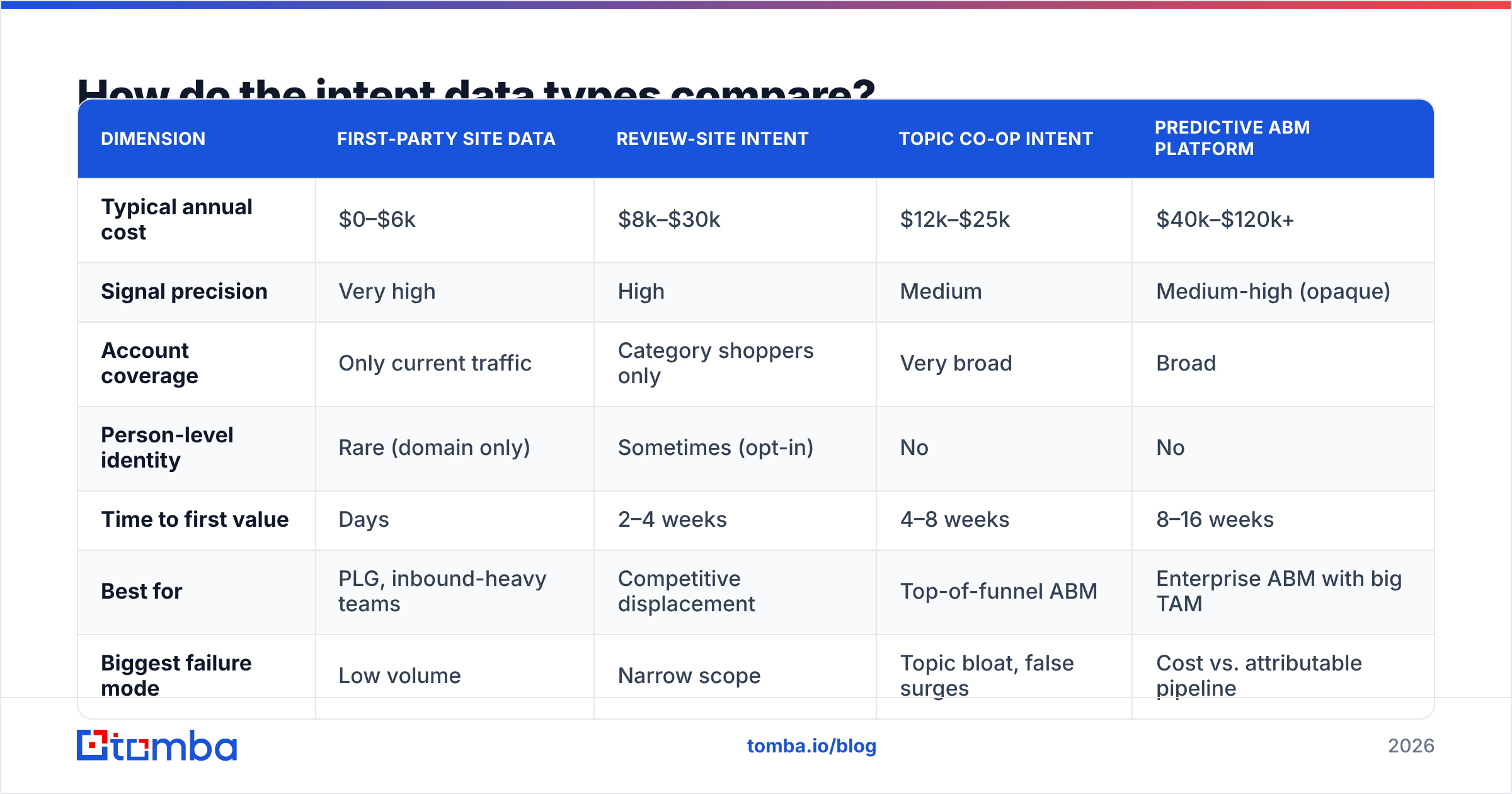
- Meeting-to-opportunity conversion up 20–40%, because you are catching accounts mid-evaluation rather than mid-nothing.
- No change in win rate from intent alone. Intent gets you into the room earlier; it does not make your product better.
The accuracy caveats matter. IP-to-company resolution degrades with remote work and VPN use — a signal attributed to "Acme Corp HQ" may be one contractor on a coffee-shop network. Topic surges fire on curiosity as often as on budget. And nearly every third-party source reports at the account level, so a surge at a 4,000-person enterprise narrows your target from "everyone" to "4,000 people." That is progress, not a contact.
Build a control group from day one. Split your ICP, run intent-prioritized sequencing on half, run your standard cadence on the other, and compare replies and opportunities after a full sales cycle. If you cannot see the lift in that test, you are paying for a dashboard.
How do you turn an intent signal into an actual contact?#
This is the step that gets skipped, and it is where budgets die.
A surge alert arrives as a company domain plus a topic plus a score. To act on it, you need a named person with a verified email, in the right function, at that domain — within days, while the signal is still warm. Your options:
- Check your CRM first. Roughly 20–40% of surging accounts already have a contact record. Free, instant, and frequently ignored.
- Resolve the domain to a contact set. A domain search returns the known email addresses at that company along with the org's email pattern, so you can filter to the roles that matter for the surging topic.
- Find named buyers directly. When you know the persona from the topic — a security topic surge points at a CISO or head of infrastructure — an email finder takes first name, last name, and domain and returns the verified address.
- Verify before you send. Intent windows are short and your sending reputation is not disposable. Every address pulled from a third-party source should pass email verification before it enters a sequence.
- Enrich for context. Title, seniority, location, and tech stack from contact enrichment let you decide whether this is a one-to-one email or an ad-only account.
- Batch it. If you are processing hundreds of surged domains weekly, do it with a bulk email finder run or via API rather than one lookup at a time.
The cost asymmetry here is stark. Teams routinely spend $60,000 on a predictive platform and then balk at a few hundred dollars a month for the contact layer that makes the signals actionable — which is like buying a telescope and refusing to pay for the eyepiece.

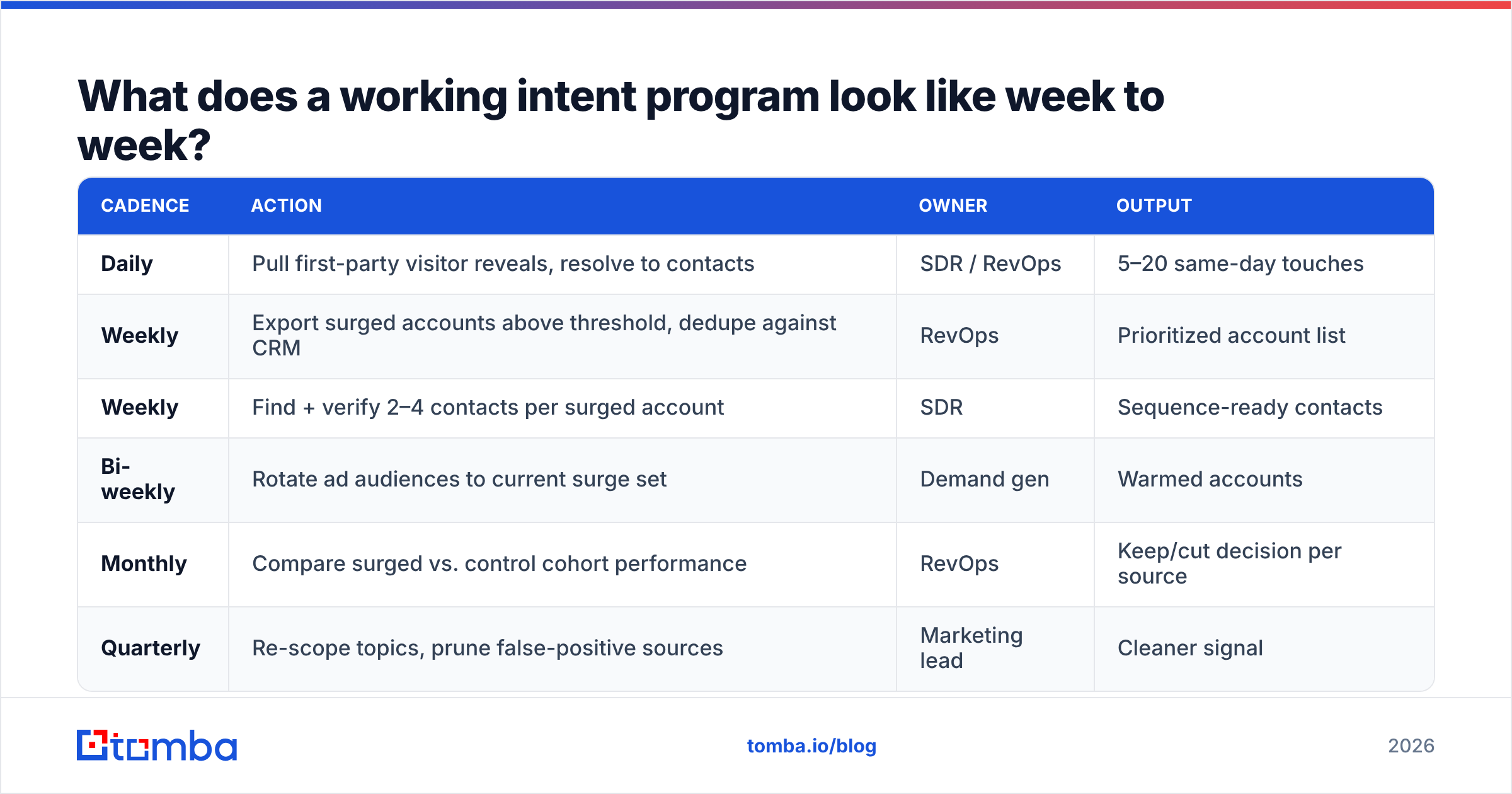
What does a working intent program look like week to week?#
Keep the operating model boring. Complexity is where intent programs go to die.
| Cadence | Action | Owner | Output |
|---|---|---|---|
| Daily | Pull first-party visitor reveals, resolve to contacts | SDR / RevOps | 5–20 same-day touches |
| Weekly | Export surged accounts above threshold, dedupe against CRM | RevOps | Prioritized account list |
| Weekly | Find + verify 2–4 contacts per surged account | SDR | Sequence-ready contacts |
| Bi-weekly | Rotate ad audiences to current surge set | Demand gen | Warmed accounts |
| Monthly | Compare surged vs. control cohort performance | RevOps | Keep/cut decision per source |
| Quarterly | Re-scope topics, prune false-positive sources | Marketing lead | Cleaner signal |
Two thresholds worth setting explicitly. First, a minimum surge score — most teams start far too permissive and end up sequencing 80% of their TAM, which is just spray with extra steps. Second, a signal expiry: a surge older than 14 days is a historical fact, not a sales trigger.
For teams already running revenue operations processes, intent slots neatly into existing lead routing. For teams without that discipline, adding intent first usually makes the mess worse, not better.
What are the most common intent data mistakes?#
Treating account intent as person intent. The single most expensive error. A surge means someone at the company looked at something. Your job is still to identify the buying group and reach them individually.
Tracking too many topics. Fifty tracked topics produce constant surges and zero prioritization. Start with three to five topics that map to a real pain your product solves, and one competitor-name topic.
Writing emails that reveal the surveillance. "I noticed your team has been researching data warehouses" reads as creepy and, when the signal is wrong, as incompetent. Use intent to decide who and when. Use normal, specific, human copy for what. If you need a starting point, generic cold email templates adapted to the topic beat any "I saw you were researching" opener.
No control group. Without one you cannot distinguish intent lift from seasonality, a new sequence, or a good quarter.
Ignoring first-party signals because they are unglamorous. Your own pricing page is the highest-intent property you own. Many teams license third-party intent while leaving anonymous traffic entirely unidentified.
Letting the contact data rot. B2B contact data decays roughly 2–3% per month through job changes. An intent-surged account matched to an 18-month-old CRM contact is a bounce waiting to happen. Re-verify before every campaign.
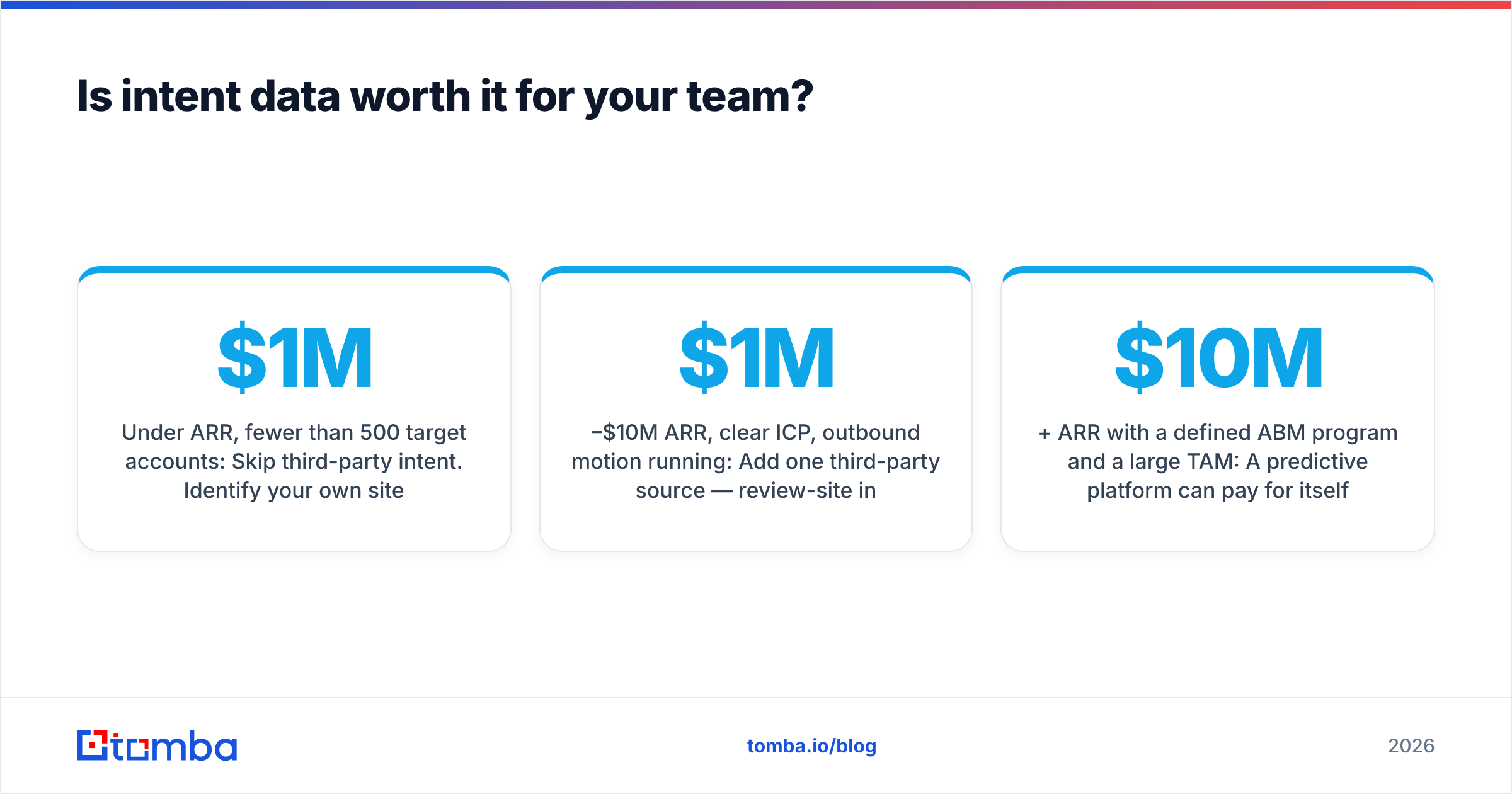
Is intent data worth it for your team?#
A quick decision framework:
- Under $1M ARR, fewer than 500 target accounts: Skip third-party intent. Identify your own site traffic, work your existing pipeline, and put the budget into contact data quality and sales headcount.
- $1M–$10M ARR, clear ICP, outbound motion running: Add one third-party source — review-site intent if you have direct competitors, topic intent if the category is broad. Keep first-party as the primary trigger.
- $10M+ ARR with a defined ABM program and a large TAM: A predictive platform can pay for itself, provided you already have functioning account plans and a team that will actually work the list.
- Any stage, if outbound is currently not working: Fix messaging, targeting, and email deliverability first. Intent data amplifies whatever system you already have, including a broken one.
The pattern across successful programs is consistent: modest spend on signals, disciplined thresholds, and serious investment in the contact layer that converts a domain into a verified human.
Start with the last mile#
Intent tells you which company is in-market. It will not tell you who to email, whether that address is still live, or what their role is. That translation step — domain to named, verified, role-matched contact — is what determines whether your intent budget produces meetings or dashboards.
The Tomba Email Finder is built for exactly that handoff: feed it a surging domain and a target persona, get back verified professional email addresses with confidence scores and sources, through the UI, a spreadsheet add-on, or the API. The free tier covers 25 searches a month if you want to test it against a handful of surged accounts before committing; paid plans start at $49/month, with Growth at $99/month for teams processing intent lists in bulk — full Tomba pricing is public, no sales call required.
Prove the lift on 50 accounts first. Then scale the signal spend.
Related guides#
// get started
Find, verify and enrich your first contacts today
Start on the free plan with 25 searches a month, then scale when your team is ready.
Free plan · No credit card required · GDPR & CCPA
Get the Tomba newsletter
Product and data updates
// about the author