Jeeva AI vs ZoomInfo (2026): Which One Should You Buy?
Jeeva AI sells autonomous SDR agents. ZoomInfo sells the deepest B2B database on the market. They solve different halves of the same problem — here is how to pick without overpaying for either.
TL;DR
- They are not the same category. Jeeva AI is an AI SDR layer — agents that research, write, and send. ZoomInfo is a data and intelligence platform — the contact records, intent signals, and org charts underneath.
- ZoomInfo wins on depth and coverage, especially for US enterprise accounts, org hierarchy, and intent data. It also wins on price in the worst possible way: annual contracts commonly land in five figures.
- Jeeva AI wins on speed to first sequence. You get pipeline motion in days, not a quarter, and the pricing is designed for teams that do not have a RevOps department.
- Neither is a good fit if your only real problem is "I need accurate email addresses." That is a $49/mo problem, not a $15,000/yr one.
- The 2026 pattern most teams land on: a lean data source for contacts, a verification step before send, and one AI layer on top — rather than one vendor for everything.
What is Jeeva AI, and what does it actually do?#
Jeeva AI positions itself as an AI SDR platform: autonomous agents that handle the repetitive top-of-funnel work a junior rep would otherwise do. In practice that means lead sourcing, account research, personalized first-touch copy, multichannel sequencing across email and LinkedIn, inbox monitoring, and reply triage.
The pitch is headcount substitution. Instead of hiring two SDRs at roughly $70K base each, you deploy agents that run 24/7 and never need ramp time. That framing is aggressive, and you should discount it — but the underlying product category is real, and it has matured considerably since 2024.
What Jeeva AI does well:
- Research-to-copy in one step. The agent pulls context (funding news, job posts, tech stack) and drafts a first line without you building a Clay table to do it.
- Fast setup. Most teams are sending inside a week. Compare that to a ZoomInfo implementation, which usually involves a CRM sync project.
- Multichannel by default. Email plus LinkedIn in one sequence, without stitching two tools together.
- Priced for SMB and mid-market. You are not signing a committed annual spend before you have seen a single reply.
- Reply handling. Classification of out-of-office, referral, and interested replies saves real rep hours.
Where it is weaker: the data underneath. AI SDR platforms generally license or aggregate contact data rather than building it themselves, which means coverage outside North America and Western Europe gets thin, and the "verified" label on a record deserves scrutiny. Check Jeeva AI's own site for current agent capabilities, since this category ships features monthly.
What is ZoomInfo, and why do enterprises still pay for it?#
ZoomInfo is the incumbent. It has been the default B2B data platform for enterprise sales orgs for over a decade, and it earns that position on a few specific dimensions that are genuinely hard to replicate.
The moat is not the email addresses. It is everything around them: org charts that show who reports to whom, technographic data, buying-committee mapping, Scoops (human-sourced intelligence about org changes and initiatives), and intent signals derived from a very large content-consumption network. If your ACV is $80K and a deal requires mapping seven stakeholders across two business units, ZoomInfo is doing work that a simple contact finder cannot.
ZoomInfo also owns the workflow layer now — ZoomInfo Copilot, Engage for sequencing, and deep native sync into Salesforce and HubSpot. Functionally, it has been moving toward Jeeva AI's territory, which is exactly why this comparison exists.
The cost is the problem. ZoomInfo does not publish pricing, sells annual contracts with per-seat and per-credit components, and negotiates hard. Public reports on G2 and buyer communities consistently put entry contracts in the low five figures per year, with enterprise deployments well beyond that. Credit overage and auto-renewal terms are the two line items that surprise buyers most often.
Jeeva AI vs ZoomInfo: how do they compare head to head?#
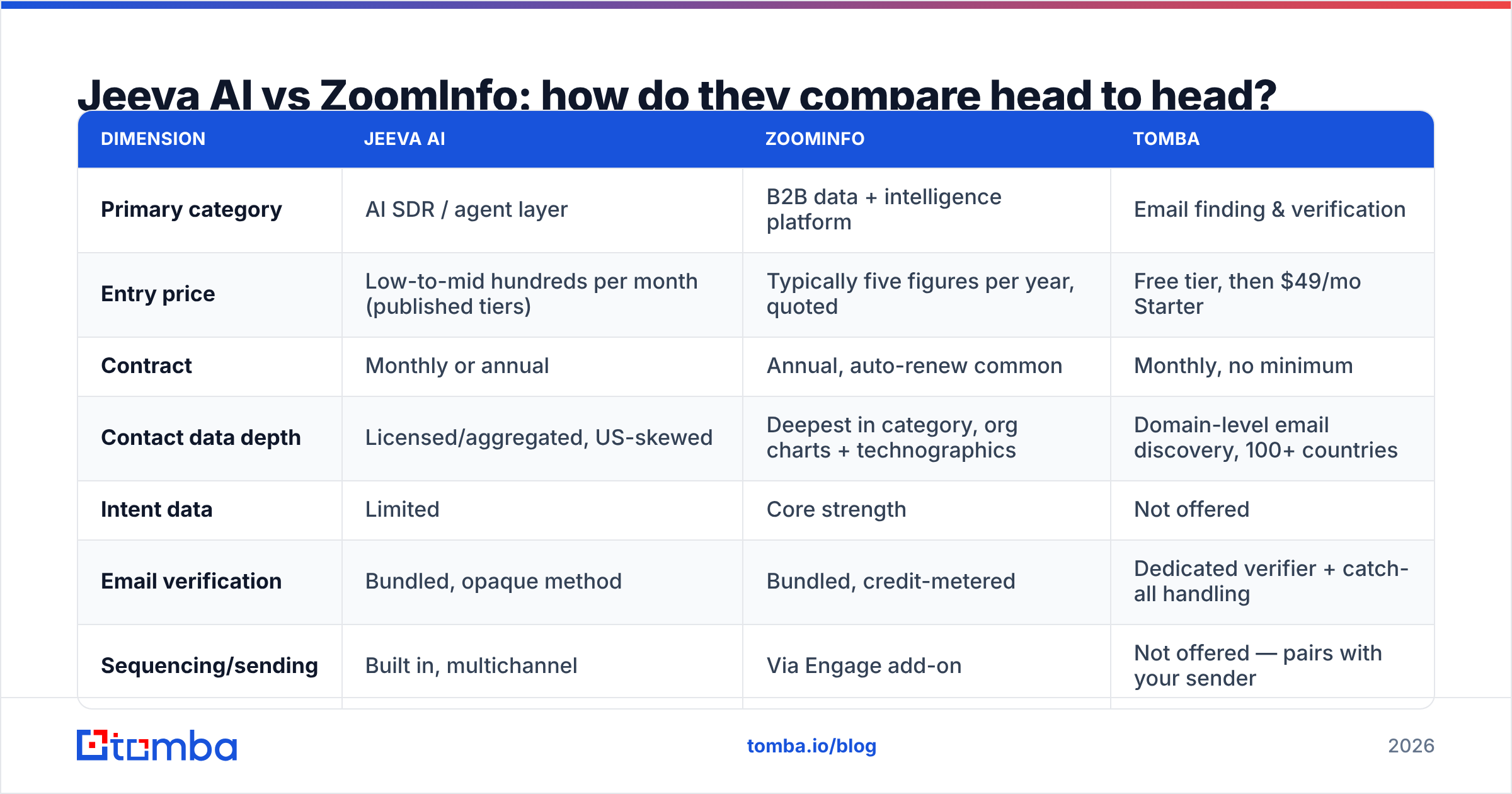
| Dimension | Jeeva AI | ZoomInfo | Tomba |
|---|---|---|---|
| Primary category | AI SDR / agent layer | B2B data + intelligence platform | Email finding & verification |
| Entry price | Low-to-mid hundreds per month (published tiers) | Typically five figures per year, quoted | Free tier, then $49/mo Starter |
| Contract | Monthly or annual | Annual, auto-renew common | Monthly, no minimum |
| Contact data depth | Licensed/aggregated, US-skewed | Deepest in category, org charts + technographics | Domain-level email discovery, 100+ countries |
| Intent data | Limited | Core strength | Not offered |
| Email verification | Bundled, opaque method | Bundled, credit-metered | Dedicated verifier + catch-all handling |
| Sequencing/sending | Built in, multichannel | Via Engage add-on | Not offered — pairs with your sender |
| API access | Available | Available, priced separately | Included from Starter, documented |
| Time to first send | Days | Weeks to a quarter | Same day |
| Best for | Lean teams without SDR headcount | Enterprise ABM and complex buying committees | Teams who need accurate contacts, not a suite |
The table makes the real distinction obvious: these tools overlap at the edges but sit at different layers of the stack. Jeeva AI is the action layer. ZoomInfo is the knowledge layer. Tomba — and tools like it — sit at the contact acquisition layer, which is the piece both of the larger platforms mark up heavily.
Which one has better data accuracy?#
ZoomInfo, on breadth. Jeeva AI, sometimes, on freshness for a narrow ICP. Neither number should be taken at face value.
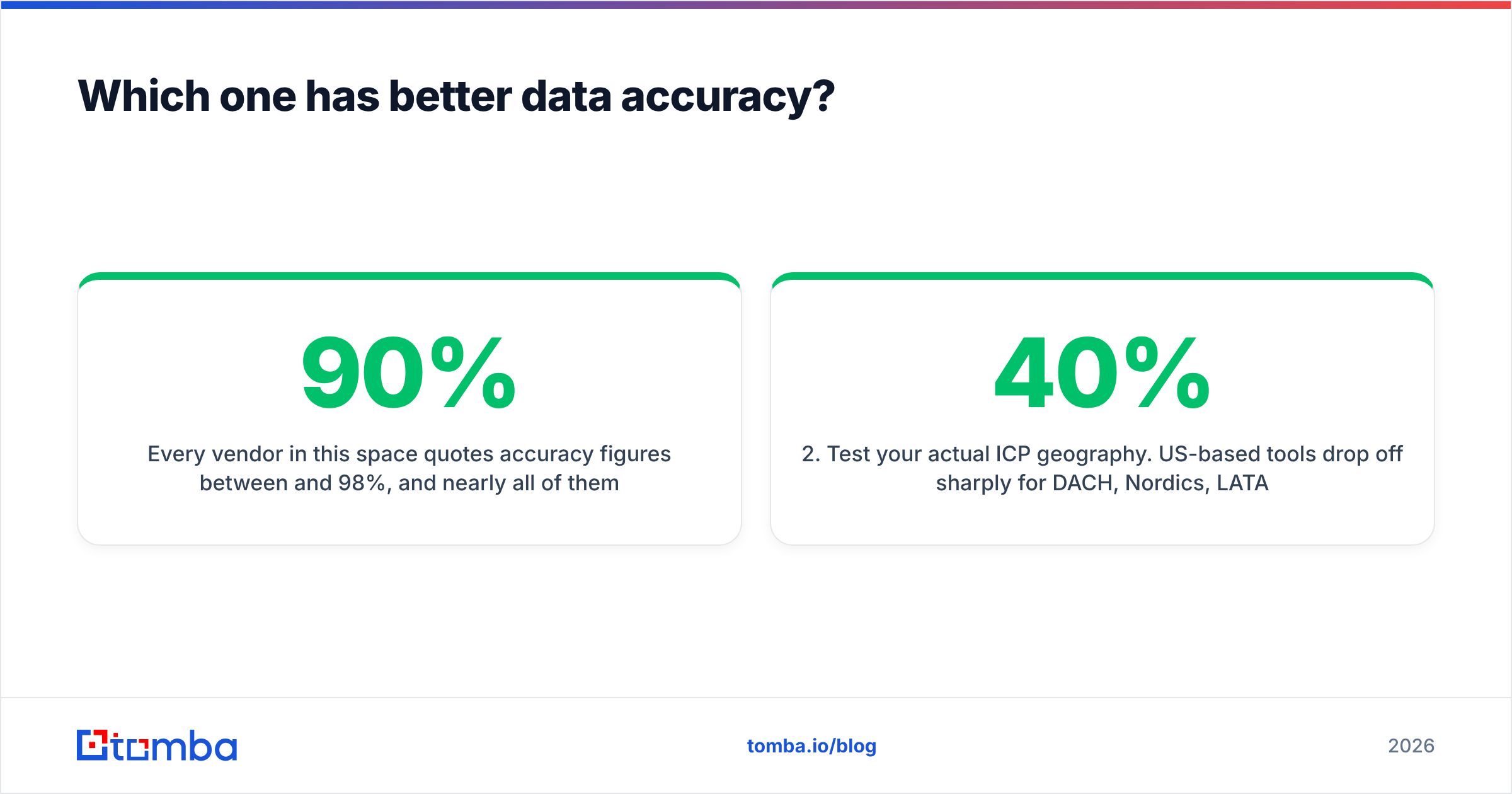
Every vendor in this space quotes accuracy figures between 90% and 98%, and nearly all of them are measuring different things. Some count a record as accurate if the domain resolves and the SMTP server does not hard-bounce. Some count it if a human confirmed the title within the last 18 months. Those are not comparable claims.
Three tests are worth running before you sign anything:
- Bring your own list. Take 200 contacts you already have verified through actual replies. Run them through each platform's enrichment. Measure the match rate and the field-level agreement, not the vendor's dashboard.
- Test your actual ICP geography. US-based tools drop off sharply for DACH, Nordics, LATAM, and APAC. If 40% of your pipeline is European, a 95% global average tells you nothing.
- Check catch-all handling. Catch-all domains accept every address at the SMTP layer, which makes naive verification useless. Ask each vendor explicitly what they return for a catch-all domain — "valid" is the wrong answer. A dedicated catch-all verifier exists precisely because this failure mode wrecks bounce rates.
If you take one operational habit from this post, take this one: never trust a platform's own "verified" flag as your only gate before sending. Route the final list through an independent email verifier. It costs cents per thousand and it protects the asset that actually matters — your sender reputation.
How do the pricing models really differ?#
This is where the decision usually gets made, and where the two vendors are least comparable.
Jeeva AI publishes tiers. You can see roughly what you will pay before you talk to a human, and the commitment window is short enough that a bad fit costs you a month rather than a year. Credits are consumed by agent actions — research, enrichment, sends — which means cost scales with volume in a way that is predictable once you have run a month.
ZoomInfo quotes. There is no self-serve path to a meaningful plan, seats and credits are priced separately, and the contract is annual with renewal terms that buyers routinely describe as inflexible. Budget for the negotiation itself: most buyers who report their numbers publicly say the first quote is not the final quote, and that end-of-quarter timing moves it materially.
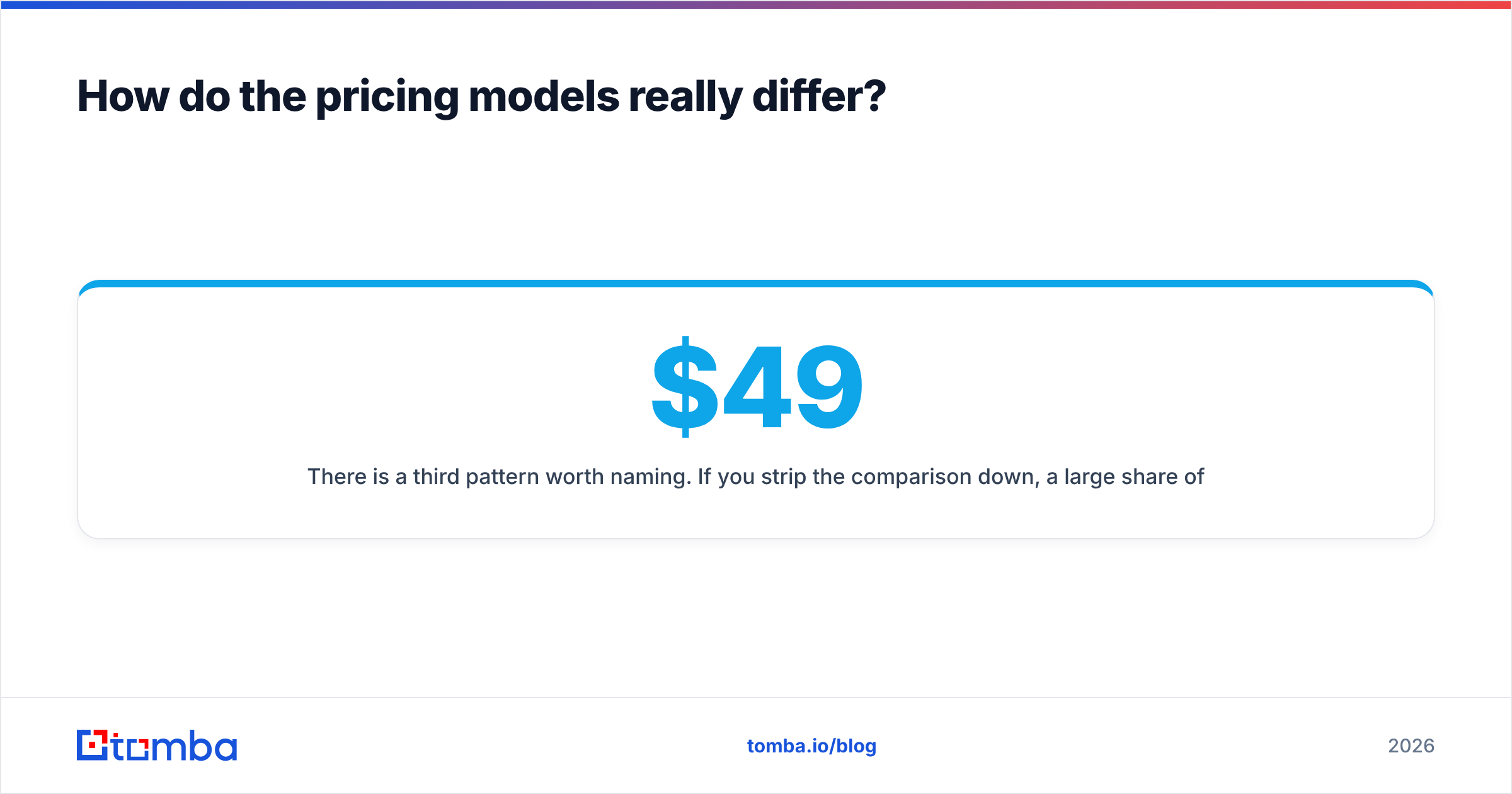
There is a third pattern worth naming. If you strip the comparison down, a large share of what both platforms charge for is "give me the right email address for this person at this company." Priced standalone, that function runs from a free tier through $49/mo Starter, $99/mo Growth, and $249/mo Pro at Tomba pricing. That is not an argument that Tomba replaces ZoomInfo's intent graph — it does not. It is an argument that you should know which parts of a $15,000 contract you are actually going to use.

Who should choose Jeeva AI?#
Pick Jeeva AI if most of these describe you:
- You have fewer than 50 employees and no dedicated SDR team, or you are trying to avoid hiring one.
- Your ACV is between $5K and $50K and your buying committee is one to three people.
- You need pipeline motion this quarter, not after an implementation project.
- Your ICP is concentrated in North America or Western Europe, where licensed data holds up.
- You value one system that does research, writing, and sending over best-of-breed pieces.
Do not pick it if your GTM depends on intent signals, account hierarchy mapping, or CRM-native workflows that your enterprise RevOps team has already built around a data platform.
Who should choose ZoomInfo?#
Pick ZoomInfo if:
- Your ACV justifies the contract — as a rough test, if $15K/yr is more than 2% of new ARR target, it is hard to defend.
- You run account-based motions where knowing the reporting structure changes your play.
- You need intent data as a routing input for lead scoring or territory prioritization.
- You have the RevOps capacity to administer credits, seats, and CRM sync properly. Unadministered ZoomInfo deployments are where budget goes to die.
- Compliance and procurement require a vendor with enterprise security posture and a long operating history.
What does a realistic 2026 stack actually look like?#
Most teams that have run this comparison twice end up unbundling rather than picking a winner. The composable pattern:
- Contact acquisition — a focused email finder or domain search for building target lists from company domains, plus data enrichment to fill in titles and firmographics.
- Verification gate — an independent verification pass before anything enters a sequence. Non-negotiable.
- Intelligence — a data platform only if intent and org charts change your decisions. For many mid-market teams, they do not.
- Execution — an AI SDR layer or a conventional sequencer, depending on how much you trust agents to write in your voice.
- Routing — your CRM as the source of truth, with everything writing into it rather than around it.
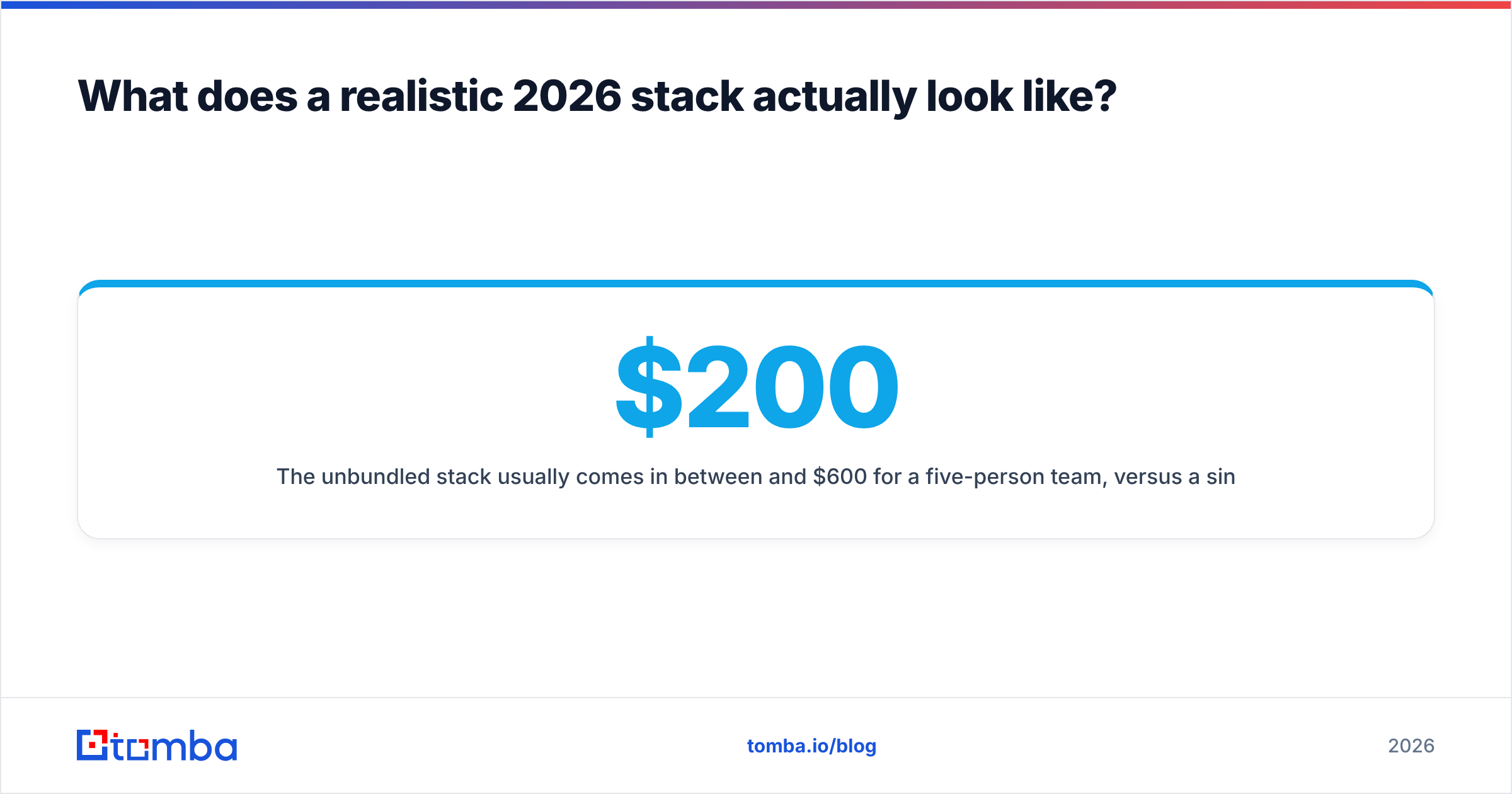
The unbundled stack usually comes in between $200 and $600/mo for a five-person team, versus a single enterprise contract at 5–20x that. The trade-off is real — you own the integration work, and there is no single throat to choke. For teams under 100 people, that trade has been worth taking more often than not.
One honest caveat: if you genuinely need a large pre-built database with filtering rather than domain-by-domain discovery, look at purpose-built list providers like BookYourData alongside the platforms above. Different tools, different buying motion, and the list-purchase model still has a legitimate place when your ICP is broad and well-defined.
What is the verdict on Jeeva AI vs ZoomInfo?#
If you are an enterprise running complex ABM, ZoomInfo is still the safer buy — and you should negotiate harder than you plan to. Its data depth and intent layer do things no AI SDR tool replicates, and that justifies the price when your deal sizes are large enough to absorb it.
If you are a lean team trying to generate pipeline without hiring, Jeeva AI is the better starting point. Faster to value, cheaper to be wrong about, and the agent layer removes real work rather than adding a dashboard.
If your actual bottleneck is contact data quality, buy neither yet. Fix the input first. A clean, verified list run through a modest sequencer beats a premium platform feeding stale records into a well-designed sequence, every single time.
Start where the leverage is. Tomba's Email Finder gives you accurate, verified professional emails from a name and domain — with a free tier at 25 searches/mo to test against your own ICP, and $49/mo Starter when you are ready to scale. Run 200 of your target accounts through it, compare the match rate to whatever quote is sitting in your inbox, and let the numbers make the decision for you.
Related guides#
// get started
Find, verify and enrich your first contacts today
Start on the free plan with 25 searches a month, then scale when your team is ready.
Free plan · No credit card required · GDPR & CCPA
// about the author