Kaspr vs Sparklane (2026): Which B2B Data Tool Should You Pick?
Kaspr hands you direct dials off a LinkedIn profile. Sparklane tells you which accounts to chase before you dial anyone. Here is where each one actually earns its seat price in 2026.
Kaspr vs Sparklane comes down to one question: do you need phone numbers, or do you need a better target list? Kaspr gives you the number. Sparklane picks the account.
TL;DR
- Kaspr is a contact-data tool. It runs as a LinkedIn Chrome extension. It returns mobile numbers and emails for the profile on screen. Buy it when your reps already know who to call.
- Sparklane is a targeting tool. It scores French and European accounts on business signals: hiring, funding, filings, growth. Buy it when list-building is the bottleneck.
- They barely overlap. A feature-by-feature match-up misses the point. Most teams buy one and pair it with something else.
- Pricing models differ sharply. Kaspr sells seats with credit caps. Sparklane sells annual, quote-based deals. Seat cost is not comparable without a credit audit.
- Neither is cheap for bulk email. If that is the real job, Tomba Email Finder does it at $49/mo.
What are Kaspr and Sparklane, exactly?#
Kaspr is a prospecting data tool built around a browser extension. You open a LinkedIn profile or a Sales Navigator list and click the widget. It returns phone numbers, work emails, and company details. From there you push the record to your CRM or a Kaspr list. Kaspr was founded in Paris and bought by Cognism in 2022. Its phone data now sits inside a bigger European data and privacy operation. The sweet spot is SDR teams doing high-volume LinkedIn outbound in Europe.
Sparklane is a different animal. It is a French sales-intelligence platform, and the core promise is smart targeting. It reads public business signals: job ads, financial filings, exec changes, expansion news. It scores each account against your ideal customer profile. Then it hands reps a ranked list with a reason next to every name. Contact data is in the product, but it is the wrapper, not the point. Sparklane sells mostly to French-speaking mid-market and enterprise teams.
So the honest framing of Kaspr vs Sparklane is not "which tool has better data." It is this: is your problem knowing who to contact, or knowing how to reach them?
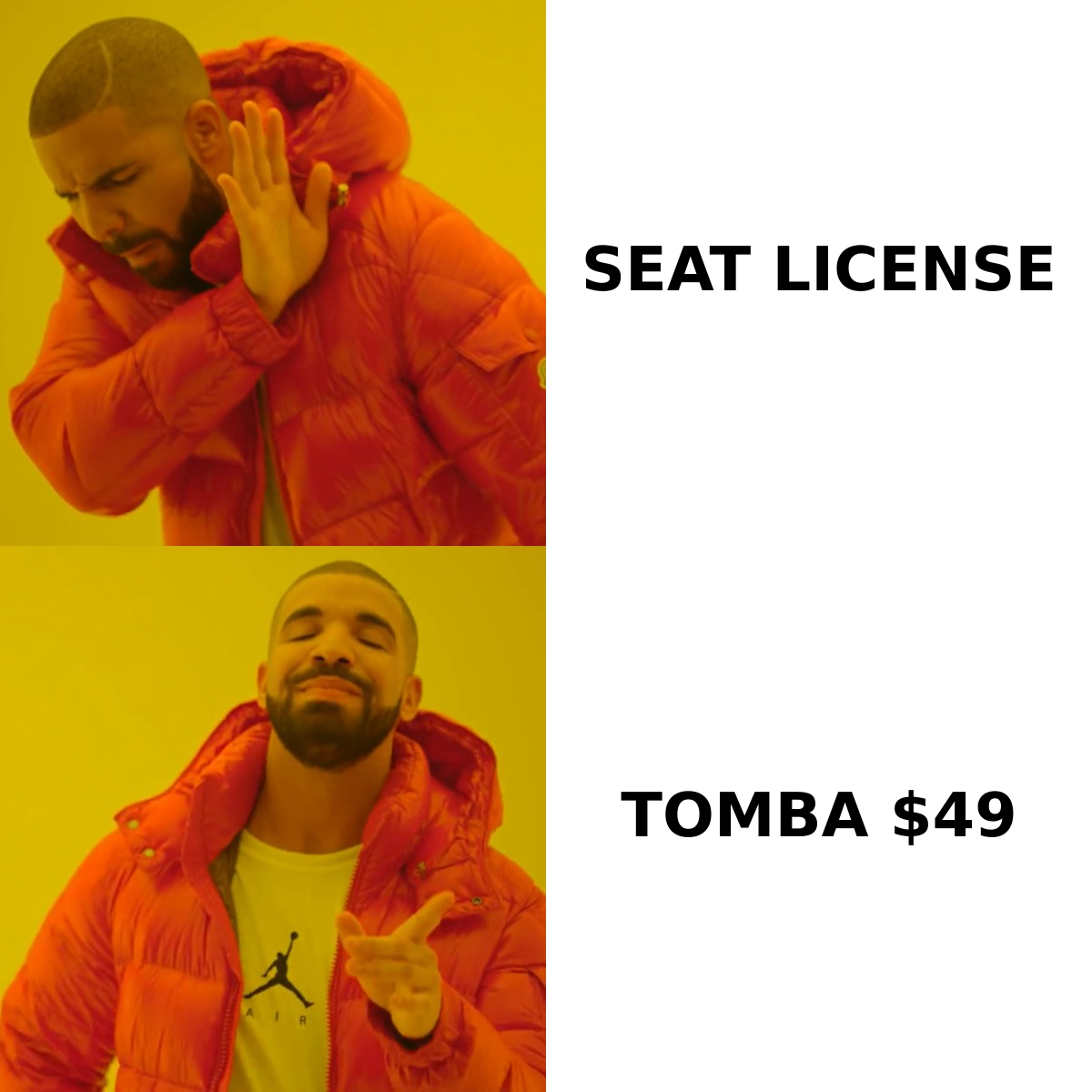
Kaspr vs Sparklane: how do they compare head-to-head?#
| Dimension | Kaspr | Sparklane |
|---|---|---|
| Primary job | Find mobile numbers and emails for known people | Identify and rank accounts worth pursuing |
| Core interface | LinkedIn Chrome extension + web app | Web app with account feeds and alerts |
| Data type | Contact-level (phone, email, title) | Company-level signals + scoring, plus contacts |
| Geographic strength | Europe, strong on FR/UK/DACH mobiles | France and French-speaking Europe, strong on legal/financial filings |
| Triggers and intent | Minimal | Central to the product |
| CRM push | HubSpot, Pipedrive, Salesforce, Lemlist, Zapier | Salesforce, HubSpot, MS Dynamics, Sellsy |
| Pricing model | Per-seat, credit-capped tiers, free plan exists | Annual, quote-based, mid-market oriented |
| Typical buyer | SDR / BDR team lead | Sales ops, marketing, or a CRO doing account planning |
| Fastest time-to-value | Same day (install extension, pull contacts) | Two to four weeks (ICP definition, scoring calibration) |
| API availability | Yes, on higher tiers | Yes, integration-focused |
Read that table as two budget lines. Kaspr replaces the twenty minutes a rep spends guessing at an email format. Sparklane replaces the half-day a manager spends building a target list in a spreadsheet.
Who has the better data, Kaspr or Sparklane?#
It depends on which field you mean. On raw data, Kaspr vs Sparklane is not one contest but three.
Mobile phone numbers: Kaspr wins, and it is not close. Phone data is its founding product, backed by Cognism's verified dataset. European direct dials are hard to source. Kaspr's hit rate on French, UK, and Benelux mobiles is why most of its customers stay. Coverage in North America and Asia is thinner than a US-first vendor would give you.
Company data and signals: Sparklane wins. It pulls from official French registries and financial filings. That gives it depth on small and mid-size French firms that global databases skip. If your territory is France, that depth is real and hard to copy.
Work email addresses: This is the weak spot for both. Kaspr returns emails, but its checking layer is thin. Run an email verifier pass before any cold sequence. Sparklane's emails are a side dataset, and coverage swings a lot by company size. Neither tool is priced like an email tool. That matters when you buy thousands of addresses a month.
Run this test during your trial. Take 200 known-good contacts from your closed-won accounts. Push them through both tools. Then measure three numbers on their own: match rate, verified-deliverable rate, and phone-connect rate. Vendors quote the first one. Your pipeline lives on the other two.
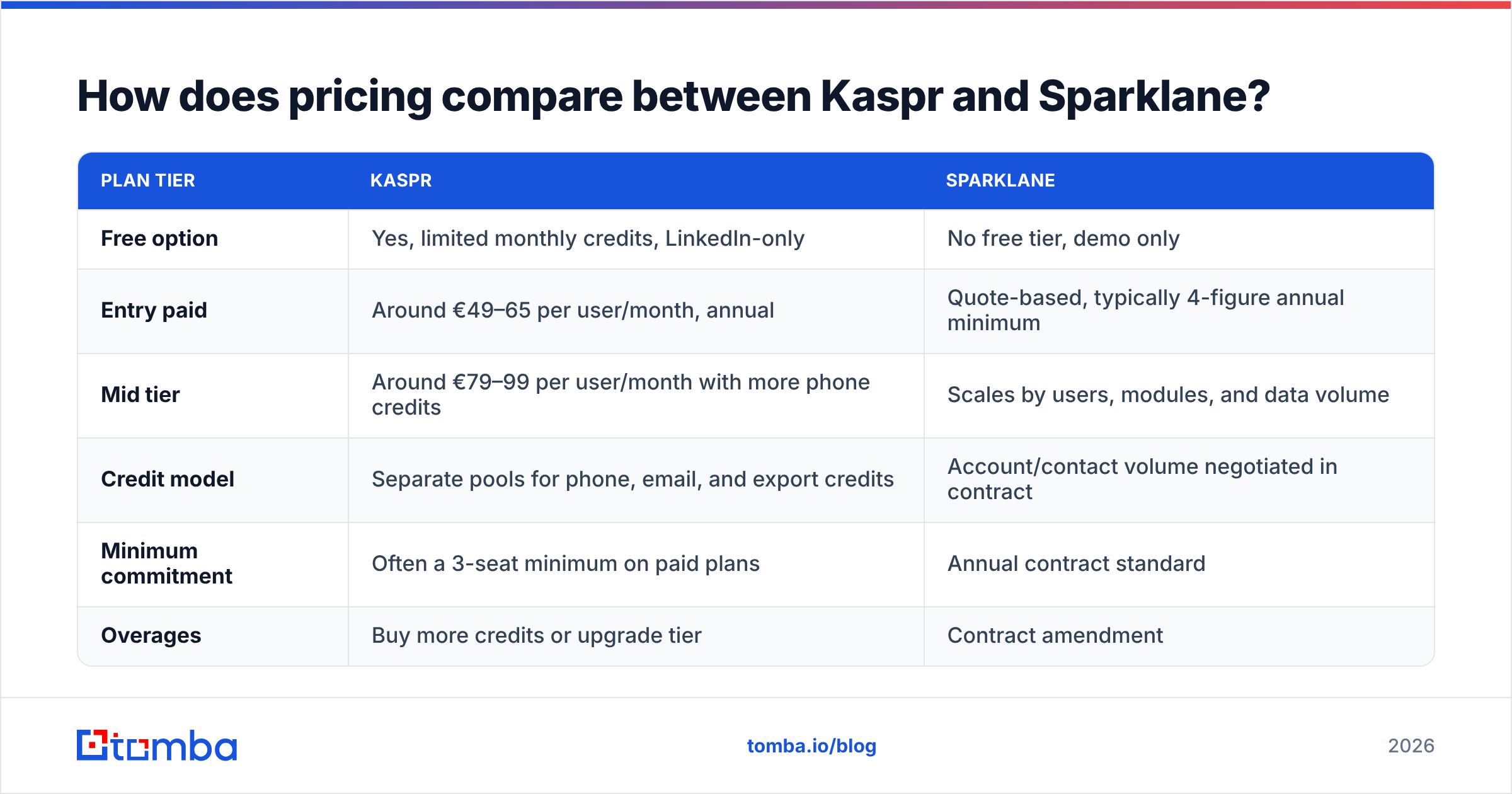
Kaspr vs Sparklane pricing: what will you actually pay?#
Both vendors have changed their packaging more than once. Treat any published number as a starting point. Check their own pricing pages before you sign. Here is the shape of it in early 2026:
| Plan tier | Kaspr | Sparklane |
|---|---|---|
| Free option | Yes, limited monthly credits, LinkedIn-only | No free tier, demo only |
| Entry paid | Around €49–65 per user/month, annual | Quote-based, typically 4-figure annual minimum |
| Mid tier | Around €79–99 per user/month with more phone credits | Scales by users, modules, and data volume |
| Credit model | Separate pools for phone, email, and export credits | Account/contact volume negotiated in contract |
| Minimum commitment | Often a 3-seat minimum on paid plans | Annual contract standard |
| Overages | Buy more credits or upgrade tier | Contract amendment |
Two traps to watch.
The first is Kaspr's split credit pools. A plan that advertises "1,200 credits" may split them across phone, email, and export. Phone credits burn fastest. Price the plan against the one field you need, not the headline number.
The second is Sparklane's setup cost. A scoring model only pays back once it matches your real ICP. If nobody can own the setup phase, you are paying enterprise money for a fancy list builder. Read the rollout timelines in customer reviews on G2 first.
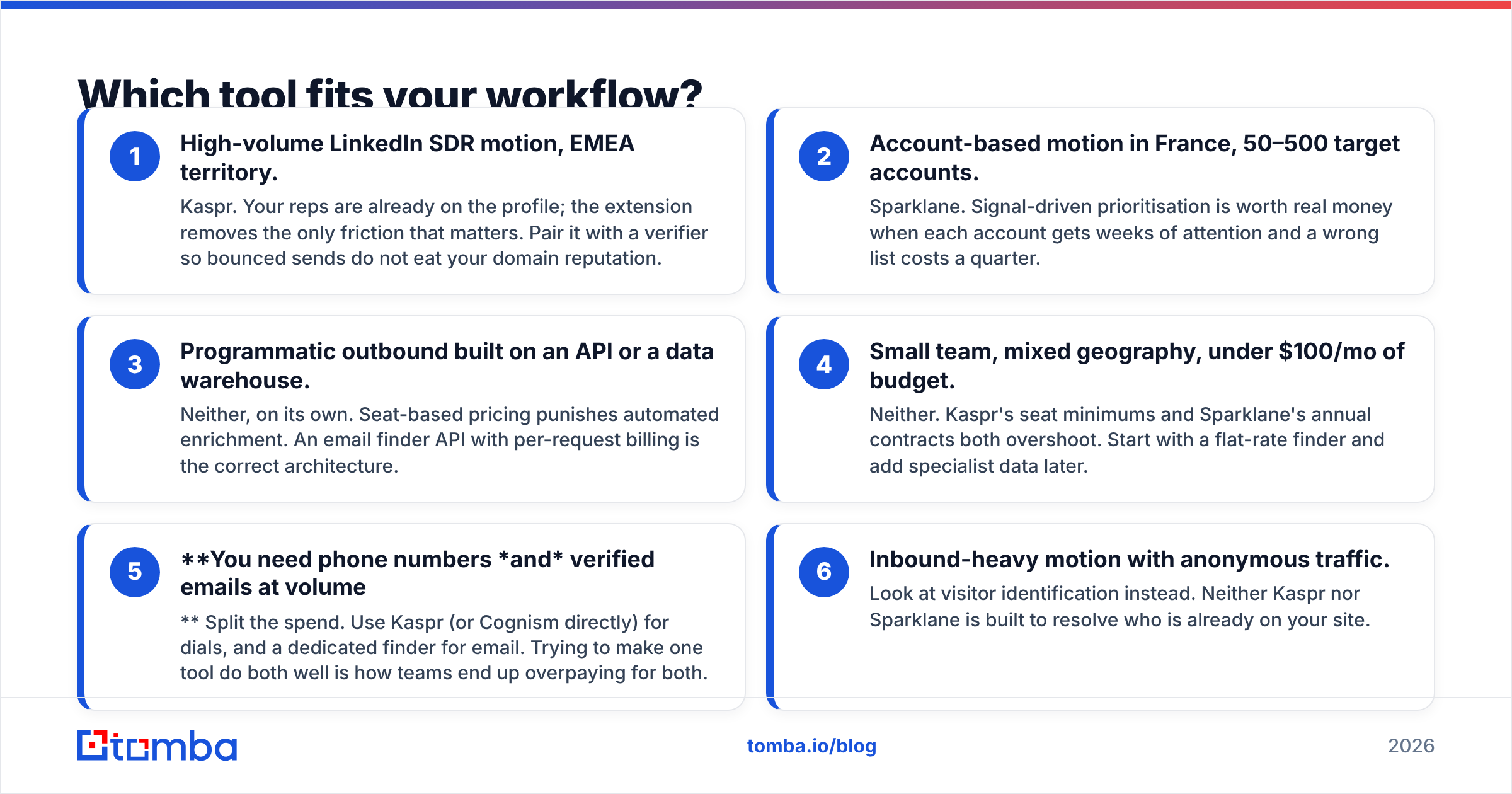
Which tool fits your workflow?#
Pick by the shape of your motion, not the feature list:
- High-volume LinkedIn SDR work in Europe. Kaspr. Your reps are already on the profile. Add a verifier so bounces do not hurt your domain.
- Account-based selling in France, 50–500 accounts. Sparklane. Good sorting pays off when each account gets weeks of work.
- Programmatic outbound on an API or a warehouse. Neither. Seat pricing punishes machine enrichment. Use an email finder API with per-call billing.
- Small team, mixed regions, under $100/mo. Neither. Seat minimums and annual deals both overshoot. Start flat-rate.
- Phones and verified email at volume. Split the spend: Kaspr for dials, a finder for email.
- Inbound-heavy motion. Look at visitor identification. Neither tool resolves who is already on your site.

Is Kaspr better than Sparklane for outbound teams?#
For classic outbound, yes, with one caveat.
Kaspr cuts the gap between "I found a person on LinkedIn" and "I am dialling that person" to about four seconds. For a team running 60+ touches per rep per day, that is a real unlock. You can see it within a week. Sparklane pays off over a quarter. You get better-picked accounts and a higher response rate per touch. That is harder to track and slower to prove.
The caveat: Kaspr speeds up the wrong end of the funnel if your list is bad. Faster dials into a bad list just get you to "no" sooner. Teams with a sharp ICP and weak execution should buy Kaspr. Teams with strong execution and a fuzzy ICP should look at Sparklane, or at better segmentation with tools they already own.
There is a third path many teams take. Keep targeting in-house with domain search and enrichment against a known account list. Spend the savings on the tools reps touch every day.
What limits should you know before buying either?#
Kaspr limits:
- LinkedIn dependency. If your buyers are not active there, or your reps get rate-limited, the workflow breaks down. Sales Navigator is close to required for list pulls.
- Credit anxiety is real. Reps who fear burning credits prospect less, which is the opposite of what you bought.
- Coverage outside Europe is thinner than the marketing implies. Test your own territory.
- Email checking is not its strength. Budget for a separate verify step.
Sparklane limits:
- France-weighted. Signal quality drops outside French-speaking markets. Selling into the US? Wrong tool.
- Setup cost. The model needs ICP input, closed-won history, and a human owner. Without those, the output is generic.
- Opaque pricing. Quote-based selling means your cost tracks your leverage, and renewals can move.
- Contact data is secondary. Do not expect finder-grade email coverage.
Shared limit: both are sold by the seat or by contract. Neither is cheap if the real job is "enrich 50,000 rows once." That is a per-credit job, not a per-seat job.
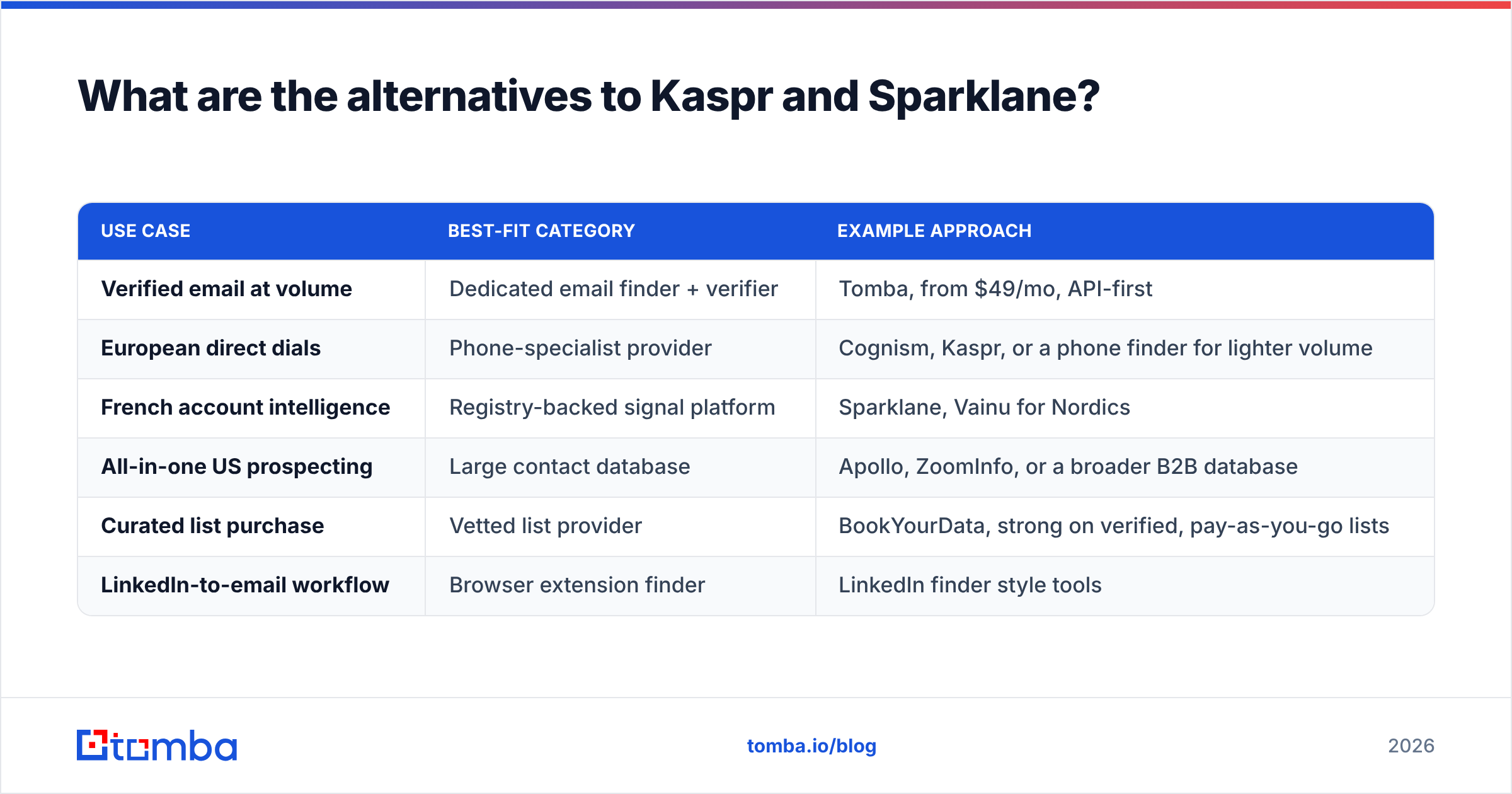
What are the alternatives to Kaspr and Sparklane?#
| Use case | Best-fit category | Example approach |
|---|---|---|
| Verified email at volume | Dedicated email finder + verifier | Tomba, from $49/mo, API-first |
| European direct dials | Phone-specialist provider | Cognism, Kaspr, or a phone finder for lighter volume |
| French account intelligence | Registry-backed signal platform | Sparklane, Vainu for Nordics |
| All-in-one US prospecting | Large contact database | Apollo, ZoomInfo, or a broader B2B database |
| Curated list purchase | Vetted list provider | BookYourData, strong on verified, pay-as-you-go lists |
| LinkedIn-to-email workflow | Browser extension finder | LinkedIn finder style tools |
BookYourData is worth a look if you want a clean, bought list instead of a subscription. Pay-as-you-go pricing with verification guarantees solves a different problem. It also skips the seat-minimum issue.
Kaspr vs Sparklane: so which should you buy?#
Buy Kaspr if your reps live on LinkedIn, your territory is Europe, and phone connects drive your pipeline. Add a verify layer on top. Audit credit use after month one.
Buy Sparklane if you sell into France, run an account-based motion, and have someone to own the ICP setup. Ask for a pilot on one segment before you sign a year.
Buy neither if what you need is verified business email at scale with a price you can predict. That is the most common outcome of a Kaspr vs Sparklane review, and it is not a knock on either product. It just means the question was wrong.
If email is the job, start with Tomba Email Finder. Find work addresses by domain, name, or company. Verify them in the same flow. Run it from the browser extension, the API, Google Sheets, or in bulk. The free tier gives you 25 searches a month to test coverage on your own territory. Paid plans start at $49/mo with no seat minimum. Check the full Tomba pricing, run your 200-contact test, and let the match rate decide.
Related guides#
// get started
Find, verify and enrich your first contacts today
Start on the free plan with 25 searches a month, then scale when your team is ready.
Free plan · No credit card required · GDPR & CCPA
// about the author