Kipplo vs Apollo.io: Honest 2026 Comparison and Verdict
Kipplo is lean and cheap. Apollo.io is huge and complicated. We compare data accuracy, credit math, seat pricing and real-world fit — plus where a dedicated email finder beats both.
Kipplo vs Apollo.io comes down to one question: do you want a tool or a platform? Both find business emails. Only one of them also wants to run your entire outbound motion. Here's the short version first.
TL;DR
- Apollo.io is a platform; Kipplo is a tool. Apollo bundles a 200M+ contact database, sequencing, dialer, and CRM-lite features. Kipplo is a lean contact-finding layer with far less surface area — and far less to configure.
- Seat pricing is the real decision. Apollo charges per user per month, so a five-rep team multiplies fast. Lean tools (Kipplo included) price closer to credits than seats.
- Neither vendor's "accuracy" number is neutral. Both publish self-reported rates. What matters is your bounce rate on your ICP — test both on the same 200 domains.
- Apollo wins on breadth, filters, and intent signals. Kipplo wins on speed, simplicity, and cost per verified contact.
- If you only need clean emails and an API, a dedicated finder like Tomba is cheaper than both — Tomba pricing starts at $49/mo with a free 25-search tier, no seat tax.
What are Kipplo and Apollo.io?#
Apollo.io is a go-to-market platform. It started as a contact database. Today it also does prospect search, email finding and verification, multi-channel sequences, a power dialer, call recording, meeting scheduling, and two-way CRM sync. It's one of the most-reviewed sales tools on G2. Adoption is huge. Opinions are split.
Kipplo sits at the other end of the spectrum. It's a newer, lighter contact-finding tool built around a narrow job: give it a name and a company (or a domain), get back a deliverable business email. There's no dialer, no sequencer, no forecasting module. Public documentation is thinner than Apollo's. Treat any pricing or limit you read in a comparison post — including this one — as a starting point. Confirm the current numbers on the vendor's own site before you buy.
That asymmetry is the whole story of Kipplo vs Apollo.io. You are not choosing between two versions of the same product. You are choosing between buying a suite and assembling a stack.
Kipplo vs Apollo.io: how do they compare head-to-head?#
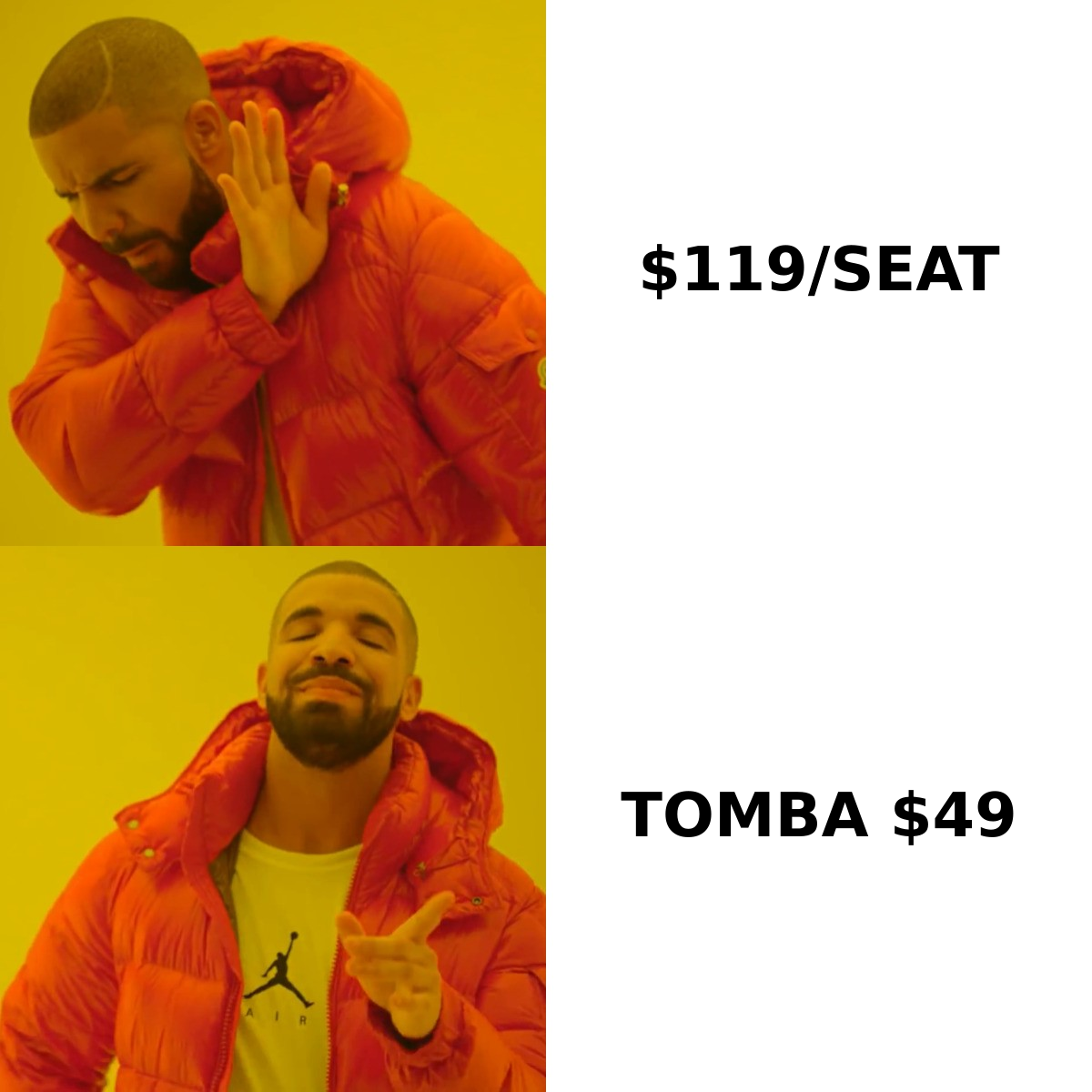
| Dimension | Kipplo | Apollo.io |
|---|---|---|
| Product type | Focused contact finder | Full GTM platform |
| Core job | Find + verify business emails | Search, enrich, sequence, dial, report |
| Database size | Smaller, search-driven | 200M+ contacts, 35M+ companies |
| Sequencing / dialer | No | Yes (included on paid tiers) |
| Search filters | Basic (name, domain, company) | Deep (intent, tech stack, hiring, funding) |
| CRM sync | Via export / integrations | Native two-way (Salesforce, HubSpot) |
| Pricing model | Credit-led, low seat friction | Per user, per month + credit limits |
| Free tier | Limited trial credits | Free plan with capped credits |
| Setup time | Minutes | Days to weeks for full rollout |
| Best for | Solo founders, lean SDR teams, agencies | Mid-market and enterprise sales orgs |
Read that table twice. Most people who end up unhappy with Apollo bought it for row two and paid for rows three through seven.
Which tool has better data accuracy?#
Short answer: Apollo has more coverage, and neither vendor's published accuracy number should decide your purchase.
Coverage and accuracy are different metrics, and vendors love to blur them. Coverage is "what percentage of my list did you return something for." Accuracy is "what percentage of what you returned actually lands in an inbox." A tool can return an email for 95% of your list and still burn your domain if a third of those are guesses.
Apollo's database is enormous, which means high coverage on mainstream B2B roles at companies with 50+ employees. It thins out on small European firms, regional agencies, and non-English markets — a consistent complaint across review sites. Kipplo leans on real-time lookup instead of a static database. That usually means lower coverage, but fresher results on the records it does return.

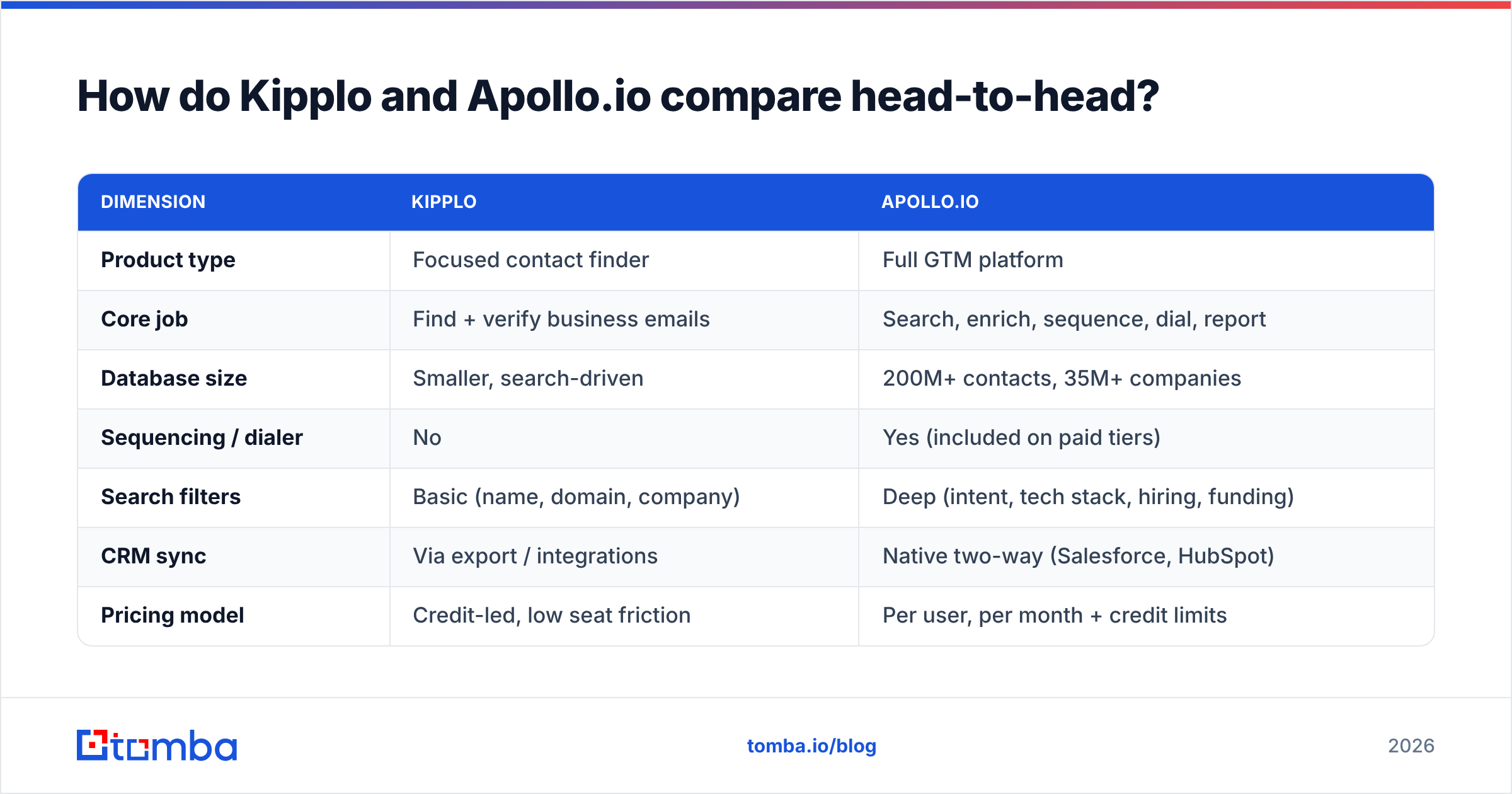
Here's the test that actually settles it. It takes an afternoon:
- Build one control list. 200 contacts from your real ICP — same industries, same company sizes, same regions you actually sell into. Not a curated sample.
- Run the identical list through both tools. Export raw results with no manual cleanup.
- Measure coverage separately from accuracy. Coverage = rows returned. Accuracy = rows that survive a third-party email verifier you don't buy from either vendor.
- Send a small, warmed batch. 50 contacts per tool, from a separate domain. Record hard bounces at 72 hours.
- Divide cost by verified contacts, not by credits. A tool at half the price that returns a third as many usable emails is more expensive.
- Check the catch-all bucket. Catch-all domains are where accuracy claims quietly die — most tools mark them "valid" and let you find out the hard way.
That last point deserves emphasis. If 20% of your target domains are catch-all, your real deliverability depends entirely on how each tool handles them. A dedicated catch-all verifier resolves what a generic "valid/invalid" flag cannot.
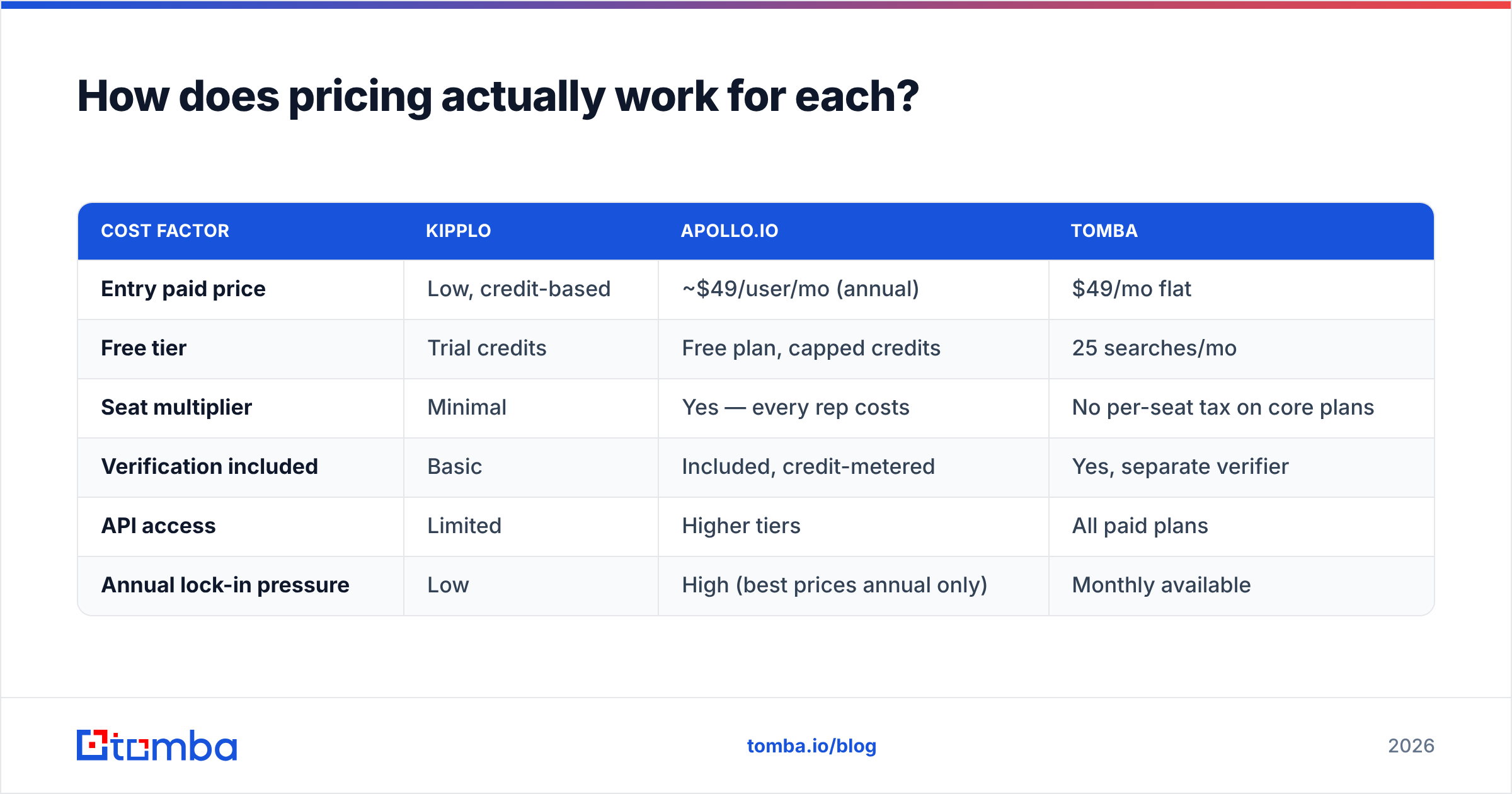
How does pricing actually work for each?#
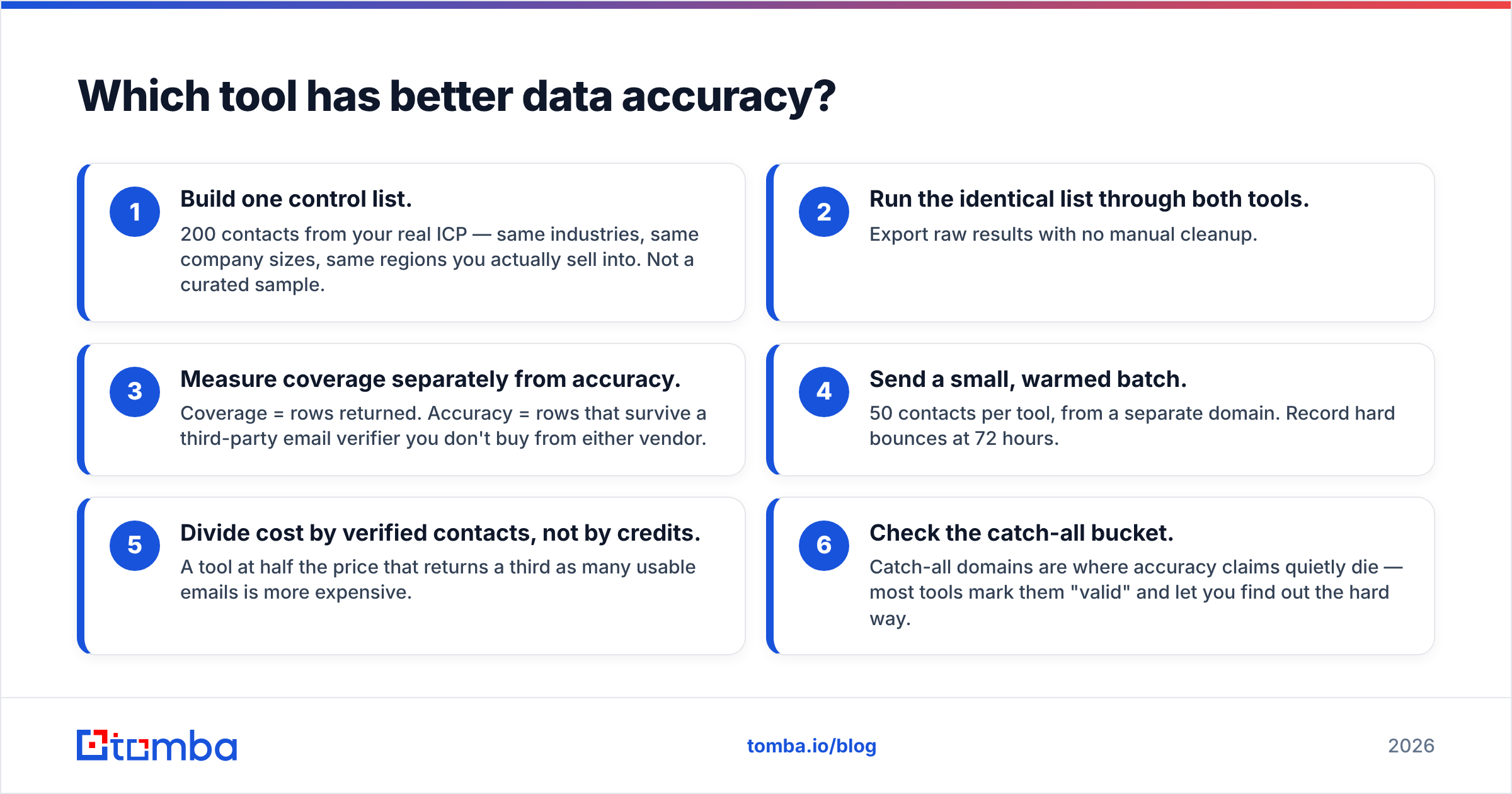
Apollo prices per user per month, with credit ceilings layered on top. At the time of writing, published tiers run roughly: a free plan with limited monthly credits, Basic around $49/user/mo, Professional around $79/user/mo, and Organization around $119/user/mo. Those are annual prices. Month-to-month costs more. Confirm on Apollo's pricing page; these move.
Kipplo prices closer to a credit bundle, with seats treated as a secondary concern. For a two-person team, that gap is small. For a ten-person team, it's the entire budget conversation.
| Cost factor | Kipplo | Apollo.io | Tomba |
|---|---|---|---|
| Entry paid price | Low, credit-based | ~$49/user/mo (annual) | $49/mo flat |
| Free tier | Trial credits | Free plan, capped credits | 25 searches/mo |
| Seat multiplier | Minimal | Yes — every rep costs | No per-seat tax on core plans |
| Verification included | Basic | Included, credit-metered | Yes, separate verifier |
| API access | Limited | Higher tiers | All paid plans |
| Annual lock-in pressure | Low | High (best prices annual only) | Monthly available |
The hidden cost in per-seat tools is the rep who logs in twice a month. You pay $79 for them anyway. The hidden cost in credit-based tools is the export that burns 4,000 credits because a filter was wrong. Pick the failure mode you can live with.

What does Apollo.io do that Kipplo doesn't?#
A lot — and that's the honest case for paying more.
- Intent and signal filters. Hiring activity, technology installs, funding events, job changes. If your play is "reach out when they hire a new VP of Ops," Apollo gives you that trigger natively. Kipplo does not.
- Native sequencing and a dialer. Apollo will find the contact and send the seven-step sequence and log the call. With Kipplo you're wiring an outreach tool alongside it.
- Two-way CRM sync. Real field mapping into Salesforce and HubSpot, not a CSV round-trip. For a RevOps team this is not a nice-to-have.
- Reporting across the funnel. Because Apollo owns the sends, it can report reply rates by sequence, by rep, by persona. A standalone finder can't see any of that.
- Team governance. Shared lists, permissions, credit allocation per user, admin controls.
If three or more of those bullets describe a problem you have right now, stop comparing and buy Apollo. The consolidation is worth it.
Where does Kipplo win?#
- Time to first value. Sign up, paste a domain, get contacts. No onboarding call, no field mapping workshop, no three-week rollout that stalls when your Salesforce admin goes on leave.
- Cost per contact for small teams. One or two people doing focused outbound rarely touch 20% of Apollo's feature set. Kipplo removes what they don't use and prices accordingly.
- Lower bloat, fewer distractions. Apollo's UI is dense. Reps get lost in it. A narrow tool has a narrow learning curve.
- Easier to rip out. If it underperforms, you switch in a day. Migrating off a platform that owns your sequences, call logs, and CRM sync is a quarter-long project.
The uncomfortable truth about suites: the thing that makes them valuable — everything in one place — is the same thing that makes leaving expensive. That's not a criticism of Apollo specifically. It's how platforms work.
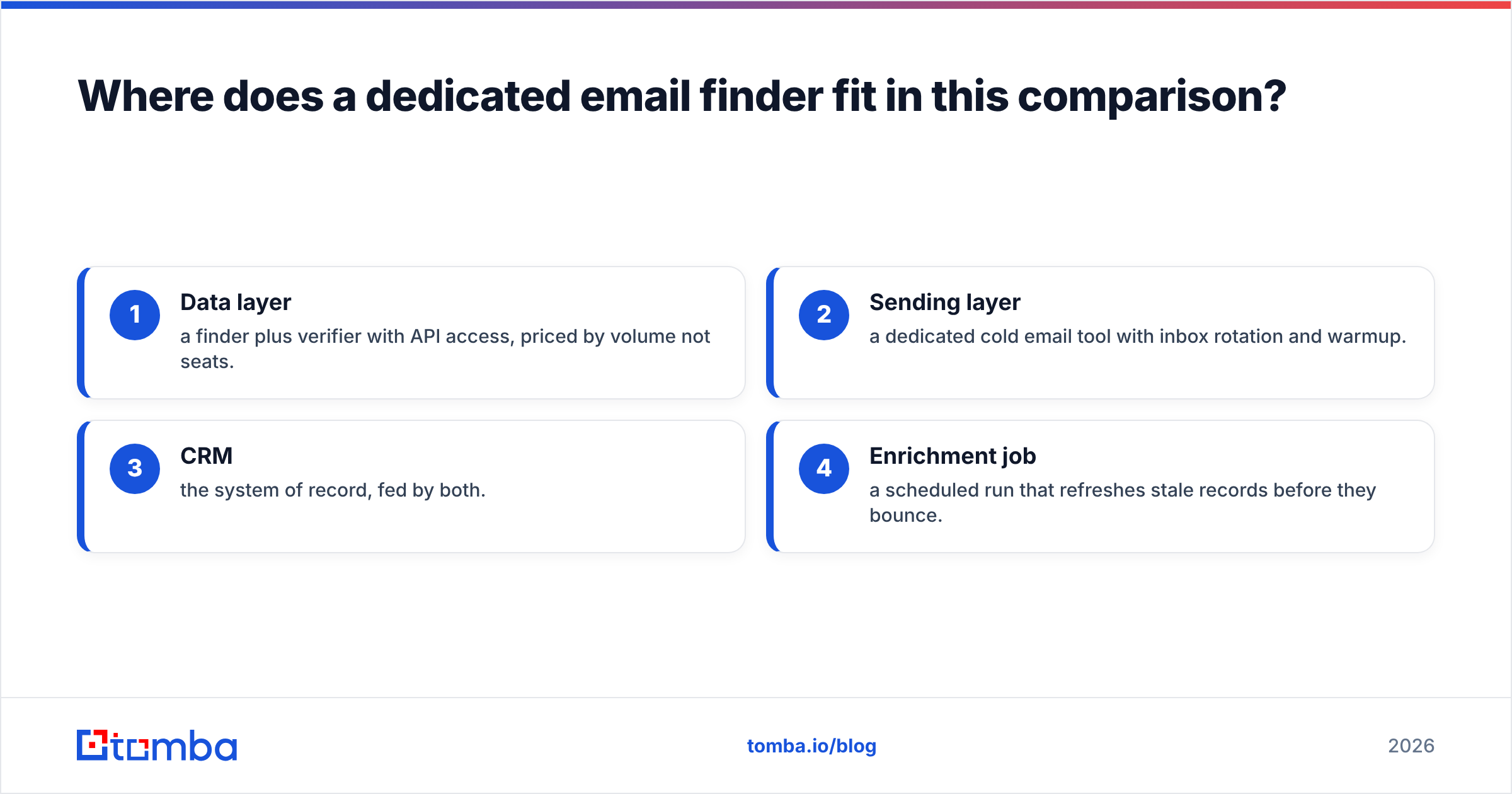
Where does a dedicated email finder fit in this comparison?#
There's a third option most "X vs Y" posts skip, and it's the one a lot of teams actually land on: use a best-in-class data layer, and keep your outreach tool separate.
The argument is unsexy but holds up. Outreach tools are cheap and mostly alike. Contact data is neither. Bundle them, and you pay platform prices for data quality you never tested on your own list. Switching data providers then means switching your whole sending setup too.
Keep the two apart and you can swap the data source when accuracy drops. Your sequences never move. Tools like Tomba's email finder are built for exactly that role: find, verify, enrich, push via API, and stay out of the way. That's why the Apollo alternative search usually starts with teams who liked Apollo's database. They just didn't want to pay per seat for a dialer nobody used.
Concretely, the decoupled stack looks like:
- Data layer — a finder plus verifier with API access, priced by volume not seats.
- Sending layer — a dedicated cold email tool with inbox rotation and warmup.
- CRM — the system of record, fed by both.
- Enrichment job — a scheduled run that refreshes stale records before they bounce.
The Tomba API covers layer one on every paid plan, including the $49/mo Starter. API access is not gated behind an enterprise tier, which is a common complaint about larger platforms.
Which should you choose in 2026?#
Kipplo vs Apollo.io really comes down to team size and how much of a platform you will use.
Choose Apollo.io if: you have five or more reps, you need intent signals and sequencing in one system, you have a RevOps person who can actually configure it, and the annual commitment doesn't scare your CFO. Apollo rewards teams that use the whole thing.
Choose Kipplo if: you're one to three people, you already have an outreach tool you like, your volume is moderate, and you want to stop paying for features you've never opened. Verify current limits and pricing directly with the vendor first — public documentation is still maturing.
Choose a dedicated data layer if: your bottleneck is email quality rather than workflow, you want API-first access, you refuse to pay per seat, or you've already been burned by a platform migration and want your data source to be replaceable.
There's no universal winner here, and anyone who tells you otherwise is selling something. Every team that gets this right does two things. They run the 200-contact test before they sign anything. And they measure cost per verified contact, not cost per credit.
Ready to test the data layer separately? Run your next 25 prospects through the Tomba Email Finder free — no card, no seat minimum, no annual contract. Compare the bounce rate against whatever Apollo or Kipplo returns for the same list. Then decide with your own numbers, not a vendor's accuracy chart.
Related guides#
// get started
Find, verify and enrich your first contacts today
Start on the free plan with 25 searches a month, then scale when your team is ready.
Free plan · No credit card required · GDPR & CCPA
// about the author