9 Best Kompyte Alternatives in 2026: Ranked and Compared
Kompyte automates competitor tracking and battlecards, but the annual contract and Semrush-bundled roadmap push plenty of teams to shop around. Here are nine alternatives ranked by what they actually do well.
TL;DR
- Kompyte is a competitive intelligence automation platform (owned by Semrush since 2021) that tracks competitor sites, pricing pages, ads, and reviews, then pushes updates into battlecards and Slack.
- Most teams leave for one of three reasons: opaque annual pricing, a roadmap now tied to the Semrush ecosystem, or the fact that they only needed 20% of the feature set.
- Klue and Crayon are the closest like-for-like replacements. Contify and AlphaSense win for research depth. Visualping and Owler are the budget escape hatches.
- No competitive intelligence tool tells you who to contact at a competitor's churning customer — that's a separate data layer, and it's where an email finder API earns its keep.
- Budget reality: real CI platforms land in the $12k–$40k/year range. Lightweight monitoring stacks do 70% of the job for under $150/month.
What does Kompyte actually do?#
Kompyte is an automated competitor-tracking system. You give it a list of competitor domains, and it crawls their websites, pricing pages, job boards, ad copy, review profiles, and social accounts on a schedule. When something changes — a new pricing tier, a repositioned homepage, a fresh G2 review — it flags the change, scores it for relevance, and drops it into a feed.
The second half of the product is enablement. Kompyte auto-generates and updates battlecards, syncs them into Slack, Salesforce, and HubSpot, and tracks which cards reps actually open. That "does the field use this?" telemetry is the piece that separates a CI platform from a folder of Google Docs.
Semrush acquired Kompyte in 2021, and the product now sits inside Semrush's broader competitive-research suite. For some buyers that's a bonus — SEO and CI data under one login. For others it's the exact reason they're reading this page.
Why are teams looking for Kompyte alternatives in 2026?#
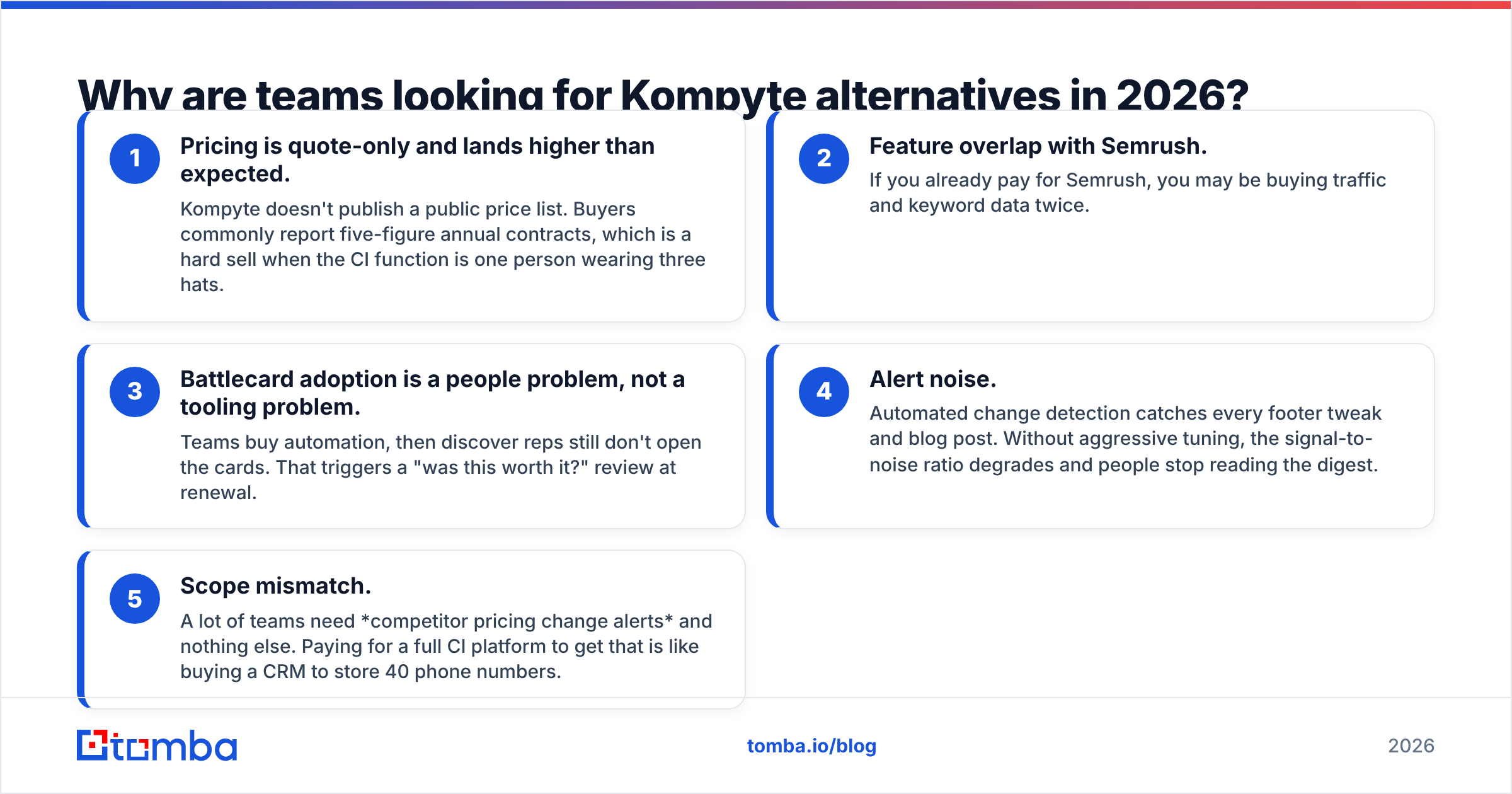
Five patterns come up repeatedly in buyer conversations and in G2 review threads:
- Pricing is quote-only and lands higher than expected. Kompyte doesn't publish a public price list. Buyers commonly report five-figure annual contracts, which is a hard sell when the CI function is one person wearing three hats.
- Feature overlap with Semrush. If you already pay for Semrush, you may be buying traffic and keyword data twice.
- Battlecard adoption is a people problem, not a tooling problem. Teams buy automation, then discover reps still don't open the cards. That triggers a "was this worth it?" review at renewal.
- Alert noise. Automated change detection catches every footer tweak and blog post. Without aggressive tuning, the signal-to-noise ratio degrades and people stop reading the digest.
- Scope mismatch. A lot of teams need competitor pricing change alerts and nothing else. Paying for a full CI platform to get that is like buying a CRM to store 40 phone numbers.
What should a Kompyte alternative include?#
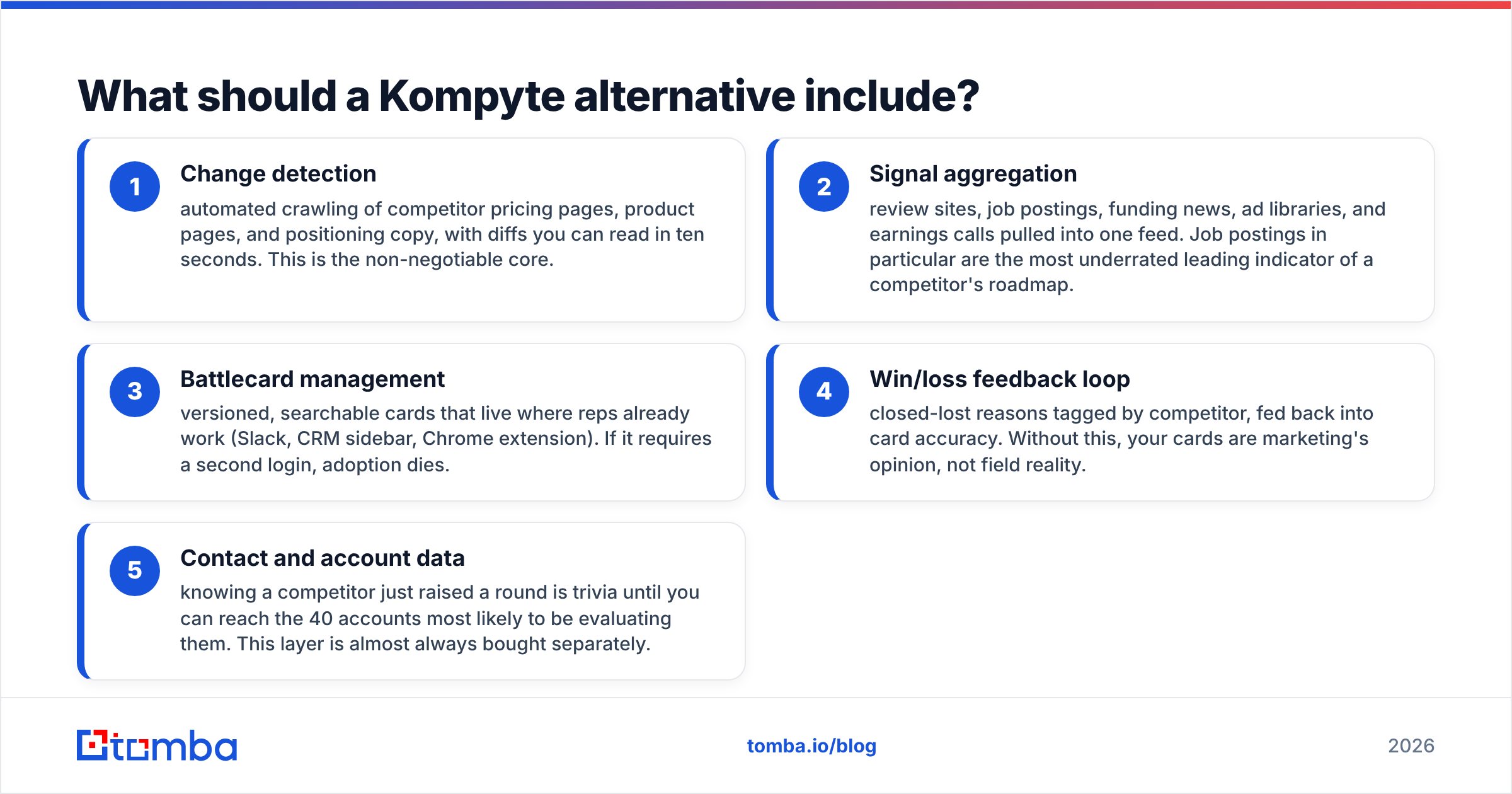
Before you compare logos, decide which of these five layers you actually need. Most teams need two or three, not all five — and that decision is worth more than any feature matrix.
- Change detection — automated crawling of competitor pricing pages, product pages, and positioning copy, with diffs you can read in ten seconds. This is the non-negotiable core.
- Signal aggregation — review sites, job postings, funding news, ad libraries, and earnings calls pulled into one feed. Job postings in particular are the most underrated leading indicator of a competitor's roadmap.
- Battlecard management — versioned, searchable cards that live where reps already work (Slack, CRM sidebar, Chrome extension). If it requires a second login, adoption dies.
- Win/loss feedback loop — closed-lost reasons tagged by competitor, fed back into card accuracy. Without this, your cards are marketing's opinion, not field reality.
- Contact and account data — knowing a competitor just raised a round is trivia until you can reach the 40 accounts most likely to be evaluating them. This layer is almost always bought separately.
Which Kompyte alternatives are worth testing in 2026?#
Here's the shortlist, with the honest "who it's for" attached to each.
Klue#

The enterprise standard for competitive enablement. Klue leans harder into the consumption side than Kompyte does: rep-facing cards, Chrome extension, CRM integration, and analytics on which cards influence deals. It also has strong win/loss and field-intel capture — reps submit competitor mentions from Slack, and those become card updates.
Pick Klue if: you have 50+ reps and the real problem is getting intel used, not collecting it. Skip Klue if: you're a five-person team. The pricing floor won't make sense.
Crayon#
Crayon is the other name that shows up in every Kompyte evaluation. Its collection engine is broad — website changes, pricing, messaging, reviews, ads, social — and its AI summarization has gotten genuinely good at turning raw diffs into "here's what changed and why it matters." Crayon's battlecards are solid, though the enablement analytics are a half-step behind Klue's.
Pick Crayon if: your center of gravity is product marketing and you want the widest collection net.
Contify#
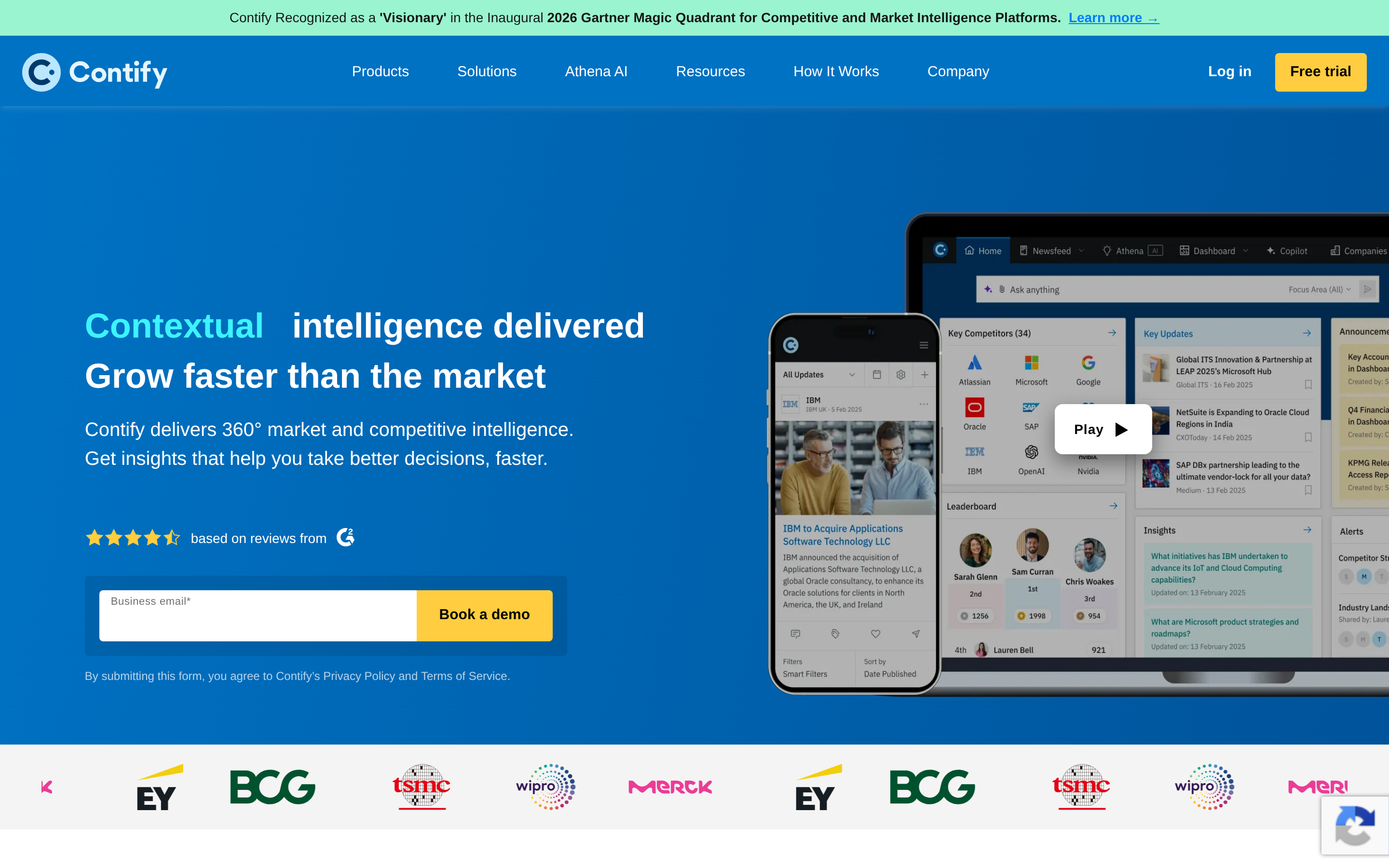
A market and competitive intelligence platform aimed at research-heavy teams. Contify's strength is taxonomy: it tags intel by competitor, topic, business event, and custom signal types, which makes it far better than most tools at answering "show me every pricing-related move in this category over 18 months." Weaker on rep-facing enablement.
Pick Contify if: you produce intel reports, not battlecards.
AlphaSense#
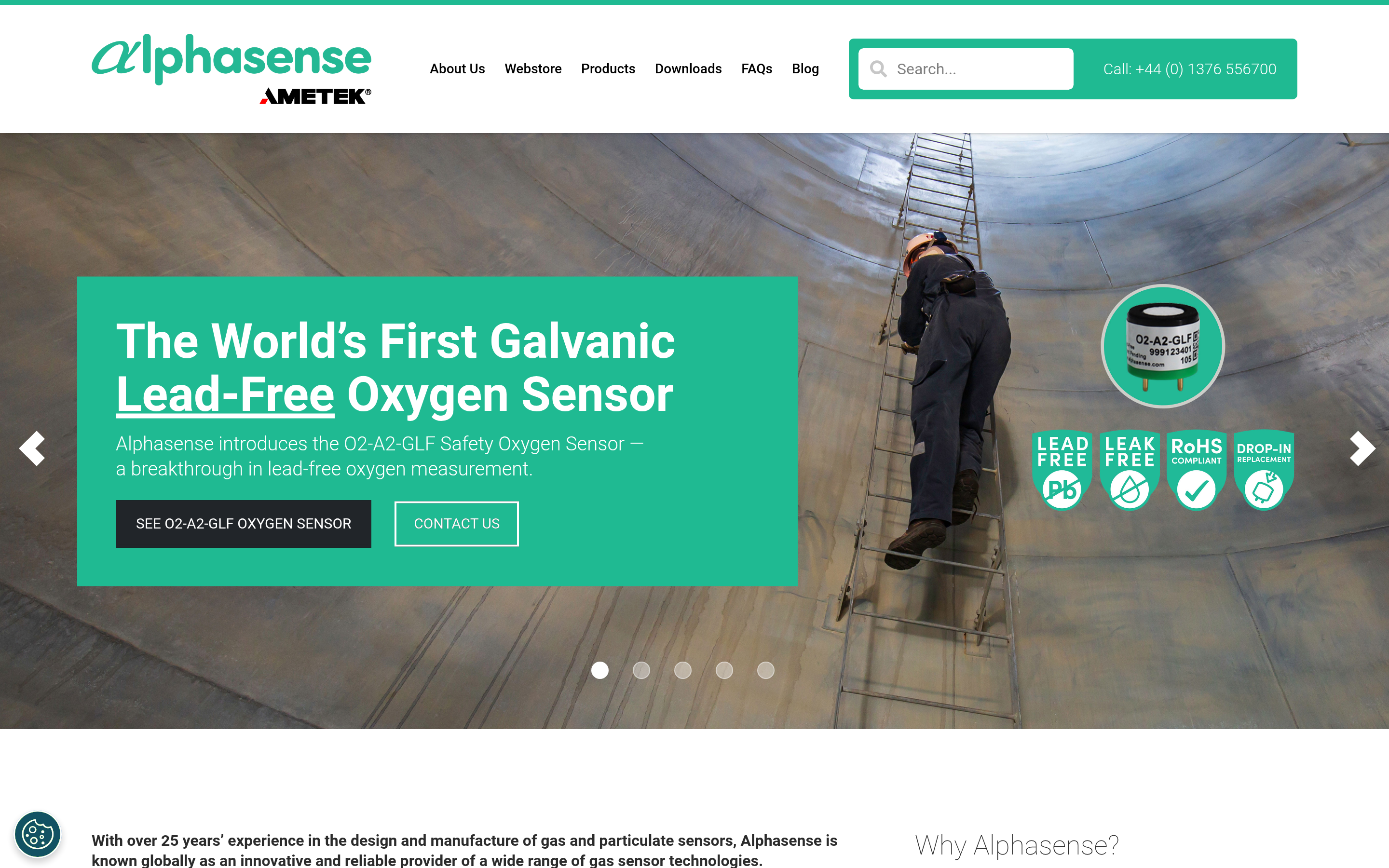
Not a direct Kompyte competitor — it's a research platform indexing earnings calls, broker research, expert call transcripts, and filings. If your competitors are public companies or well-covered private ones, AlphaSense surfaces things no web crawler will. It's also the most expensive item on this list by a wide margin.
Pick AlphaSense if: you sell into enterprise and your CI audience includes the exec team and corp dev.
Similarweb#
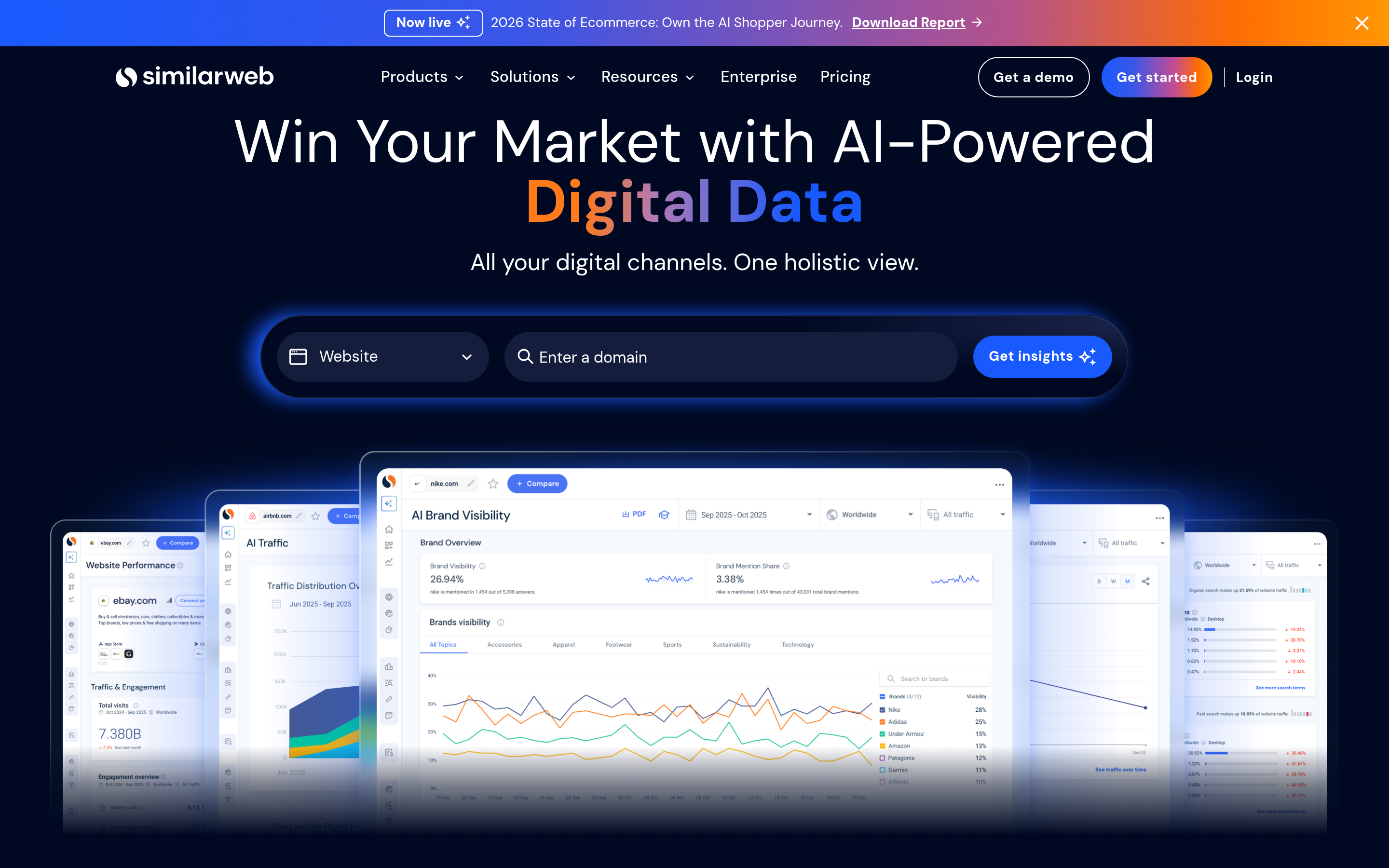
Traffic, channel mix, audience overlap, and (on higher tiers) app and keyword data. It answers "is this competitor growing?" better than any battlecard tool. It does not do battlecards.
Pick Similarweb if: your CI questions are quantitative — share of voice, traffic trends, channel shifts.
Visualping#
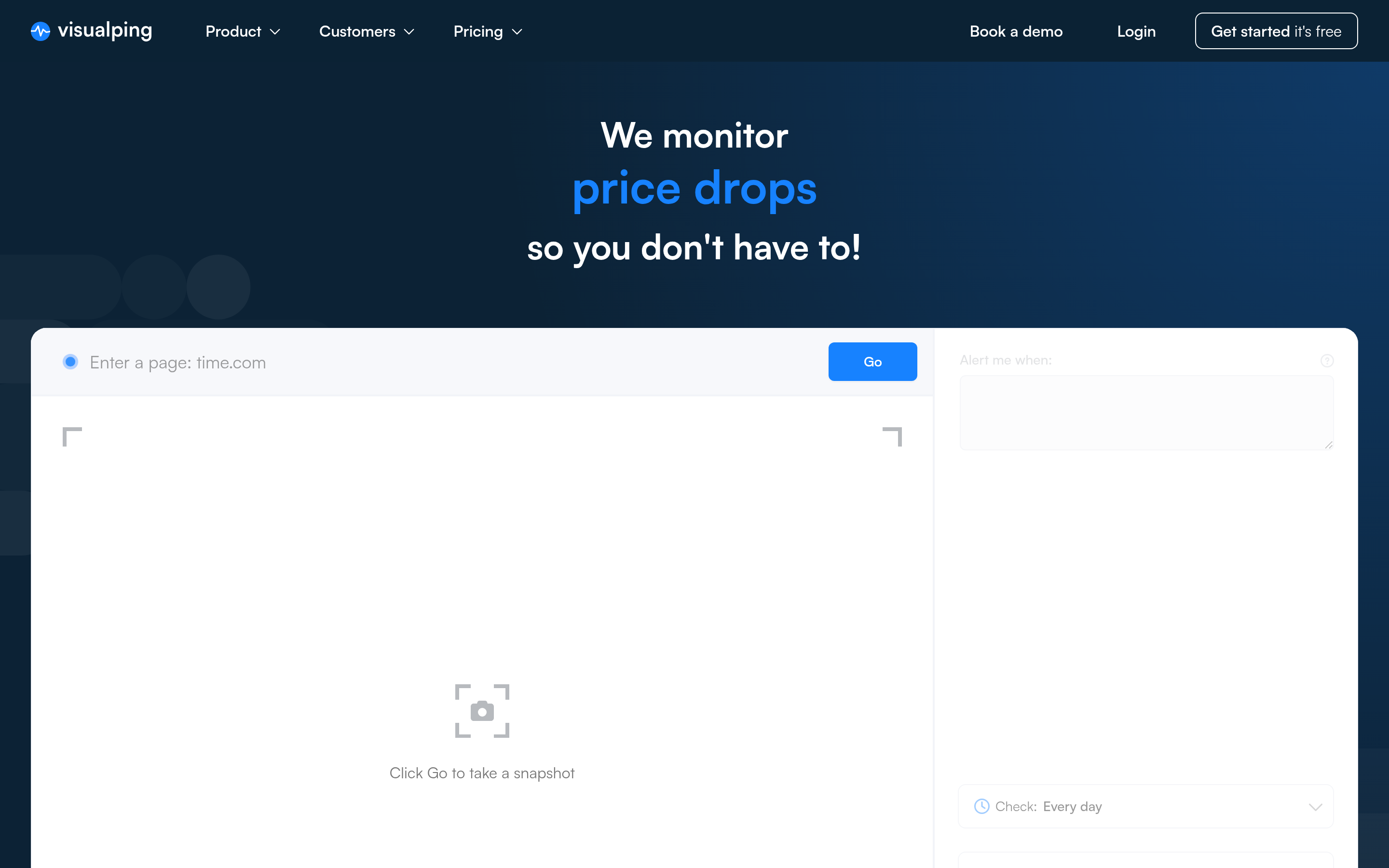
The pragmatic escape hatch. Point it at competitor pricing pages and get a diff email when anything changes. It costs a rounding error compared to a CI platform and covers the single highest-value signal most teams track.
Pick Visualping if: you want 70% of the value for under $100/month and you're willing to write your own battlecards.
Owler#
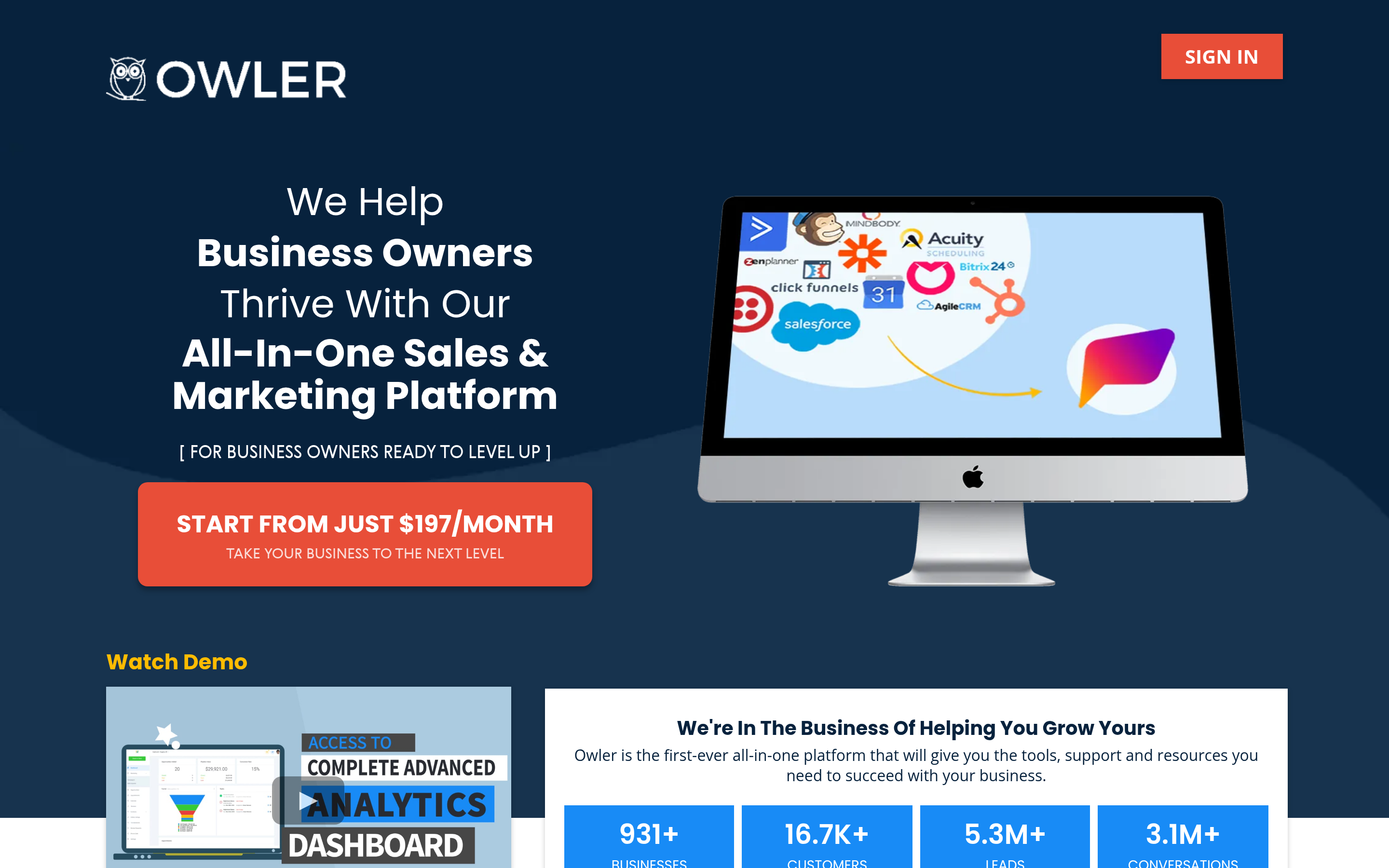
Company profiles, funding, headcount, news, and competitor sets, with a free tier. Useful as an account-research layer and a light news feed. Thin on the product-change monitoring that makes Kompyte useful.
Pick Owler if: you need competitor company news, not competitor product news.
Semrush .Trends#
If you like Kompyte's data but resent paying twice, consolidating into Semrush's own competitive suite is a legitimate move. You lose the battlecard workflow and gain digital-marketing depth.
Tomba (the data layer under all of them)#
Tomba isn't a CI platform and won't pretend to be. What it does is solve the step after the intel: turning "these 60 accounts look like they're evaluating our competitor" into reachable contacts. Domain search returns the email pattern and named contacts for any company domain, the email finder API wires that into your own workflow, and data enrichment fills in titles and seniority so you can route to the right persona. Most CI programs die at the "great insight, now what?" step — this is the cheapest fix for that.
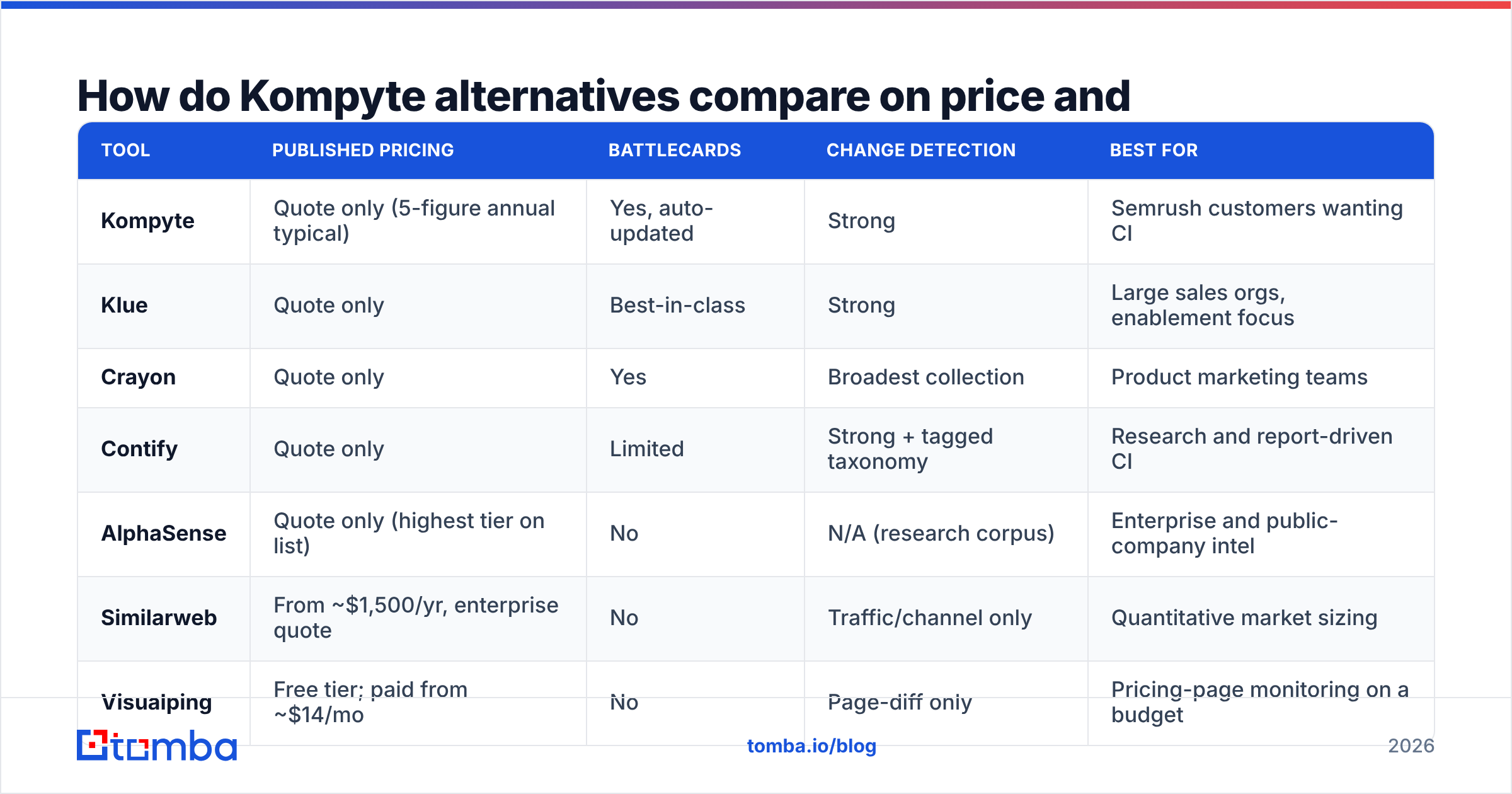
How do Kompyte alternatives compare on price and features?#
| Tool | Published pricing | Battlecards | Change detection | Best for |
|---|---|---|---|---|
| Kompyte | Quote only (5-figure annual typical) | Yes, auto-updated | Strong | Semrush customers wanting CI |
| Klue | Quote only | Best-in-class | Strong | Large sales orgs, enablement focus |
| Crayon | Quote only | Yes | Broadest collection | Product marketing teams |
| Contify | Quote only | Limited | Strong + tagged taxonomy | Research and report-driven CI |
| AlphaSense | Quote only (highest tier on list) | No | N/A (research corpus) | Enterprise and public-company intel |
| Similarweb | From ~$1,500/yr, enterprise quote | No | Traffic/channel only | Quantitative market sizing |
| Visualping | Free tier; paid from ~$14/mo | No | Page-diff only | Pricing-page monitoring on a budget |
| Owler | Free tier; Pro ~$35/user/mo | No | Company news only | Account research |
| Tomba | Free (25/mo), $49, $99, $249/mo | No | N/A (contact data) | Turning intel into outreach |
Two things jump out. First, every serious CI platform hides its pricing, which means your negotiating position depends entirely on having a credible alternative in the room. Second, the gap between "full platform" and "monitoring stack" is roughly 20x in cost — and for a team of under 15 reps, the monitoring stack usually wins on ROI.
Is Klue or Crayon the better Kompyte replacement?#
Short answer: Klue if the bottleneck is adoption, Crayon if the bottleneck is coverage.
Kompyte's differentiator was always automation-first collection with decent enablement bolted on. Klue inverts that — its collection is good, but its real product is the rep experience and the analytics proving cards influence win rate. If your CFO asks "what did CI do for us," Klue gives you the chart.
Crayon sits closest to Kompyte philosophically. Broad automated collection, AI summarization on top, battlecards as the output. If your team liked Kompyte's feed and just wants better summarization and a vendor whose roadmap isn't downstream of an SEO suite, Crayon is the lateral move.
Both will quote you more than you want to pay. Both will discount meaningfully if you're evaluating the other. Run them in parallel on the same three competitors for two weeks and compare the actual alert feeds — not the demo.
Where does contact data fit into a competitive intelligence stack?#
This is the part every CI evaluation skips, and it's the part that determines whether the program generates pipeline.
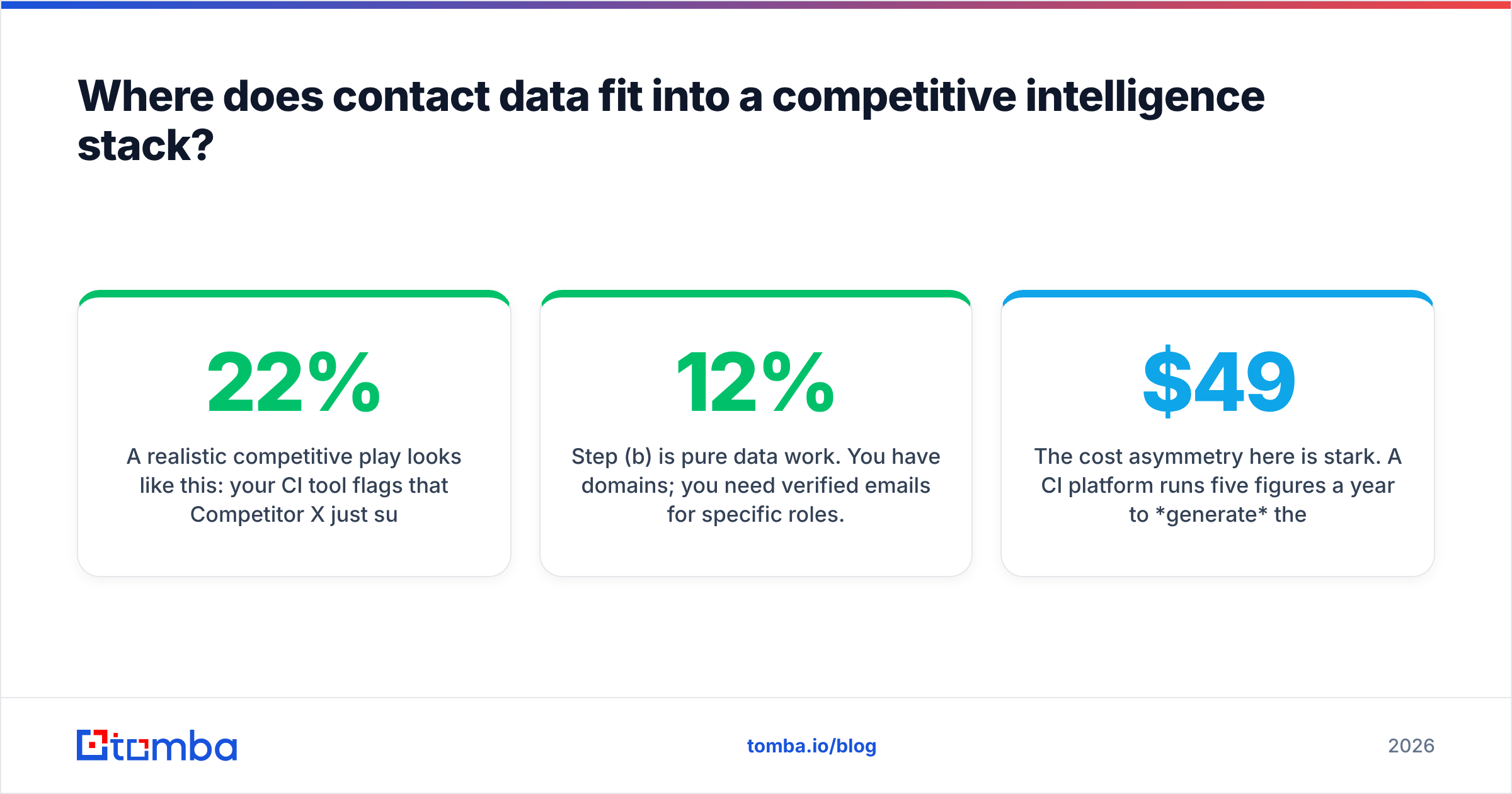
A realistic competitive play looks like this: your CI tool flags that Competitor X just sunset a product line, raised prices 22%, or shipped a migration that broke workflows. Now you need to reach the people affected. That means (a) building a list of companies likely using Competitor X, and (b) finding reachable contacts inside them in the 48-hour window where the news is still fresh.
Step (b) is pure data work. You have domains; you need verified emails for specific roles. That's a bulk email finder run, or an API call per domain if you're automating it. Verify before sending — competitor-triggered campaigns go out fast, and a rushed list with a 12% bounce rate will cost you more in sender reputation than the play is worth. Run the list through an email verifier first, every time.
The cost asymmetry here is stark. A CI platform runs five figures a year to generate the signal. The layer that converts that signal into contactable pipeline starts at $49/month on Tomba pricing. Teams routinely overinvest in the first and skip the second entirely.
How do you migrate off Kompyte without losing your battlecards?#
Four steps, in order:
- Export everything before your renewal date. Battlecards, saved competitor lists, historical change logs. Some vendors make historical data hard to extract after the contract lapses — do it while you're still a paying customer.
- Audit card usage first. Pull the analytics on which cards were opened in the last 90 days. In most orgs, three to five cards account for nearly all usage. You're migrating those, not all forty.
- Rebuild your competitor list from win/loss data, not from memory. The competitors you talk about internally and the ones actually showing up in deals diverge fast. Pull closed-lost reasons from your CRM.
- Run the new tool in parallel for 30 days. Same competitors, same alert settings. Compare what each caught. This is the only evaluation that produces a defensible answer.
Budget two to three weeks of a product marketer's time. The tool swap is easy; rewriting cards so the field trusts them is the actual work.
What's the honest verdict on Kompyte alternatives?#
If you're a mid-market or enterprise team where competitive deals are a meaningful share of pipeline, Klue and Crayon are the two names worth a real evaluation, and you should run them against each other to get sane pricing. If your CI function is one person and the deliverable is a monthly report, Contify or a Similarweb-plus-Visualping stack will serve you better at a fraction of the cost. If you're already deep in Semrush, consolidating there is defensible.
And if the reason you're shopping is that Kompyte's insights never turned into conversations — the problem was never the CI tool. It was the missing step between "we know something" and "we contacted someone."
Close that gap with the Tomba Email Finder. Feed it the domains your competitive intel surfaces and get verified, role-matched contacts back — by name, by domain, or in bulk through the API. Start on the free tier with 25 searches a month, and only scale up once the plays are actually producing replies.
Related guides#
// get started
Find, verify and enrich your first contacts today
Start on the free plan with 25 searches a month, then scale when your team is ready.
Free plan · No credit card required · GDPR & CCPA
Get the Tomba newsletter
Product and data updates
// about the author