Lead Generation for Digital Agencies: The 2026 Playbook
Referrals dry up, Upwork races to the bottom, and paid ads eat your margin. Here is an honest breakdown of which lead generation channels actually fill a digital agency pipeline in 2026 — with costs, timelines, and the numbers behind each one.
TL;DR
- Referrals are the highest-converting agency channel and the worst one to depend on — they are unforecastable, so treat them as a bonus, not a pipeline.
- Targeted outbound is the only channel a sub-20-person agency can turn on in under two weeks and control end to end. It lives or dies on list quality, not copy.
- Niching down is not a branding exercise. It is what makes a 200-contact outbound list possible instead of a 20,000-contact spray.
- Paid search works for agencies with a proven offer and a $6K+ average contract value. Below that, CAC eats the retainer.
- Budget 8–12 hours a week of senior time on pipeline. Agencies that only prospect when utilization drops live in a permanent feast-famine loop.
Why is lead generation for digital agencies harder than it looks?#
Because you are selling a promise, not a product. A SaaS buyer can trial the thing. An agency buyer has to wire you $8,000 a month based on a deck, a case study, and a hunch about whether your team will still care in month four.
That changes the math on every channel. Trust-heavy channels (referrals, communities, partner networks) convert well but scale badly. Volume channels (cold email, paid, LinkedIn outreach) scale fine but start from zero trust, so they need more touches and better proof.
Most agencies never resolve that tension. They coast on referrals until a big client churns, panic, spend six weeks building an outbound motion, land two projects, get busy, and stop. Twelve months later, same panic. According to HubSpot's research on marketing and sales priorities, generating enough qualified leads remains the number one reported challenge for service businesses — and the pattern above is why.
The fix is boring: pick two channels, run them continuously at a volume you can sustain during busy months, and measure cost per booked call instead of cost per lead.
Which lead generation channels actually work for agencies in 2026?#
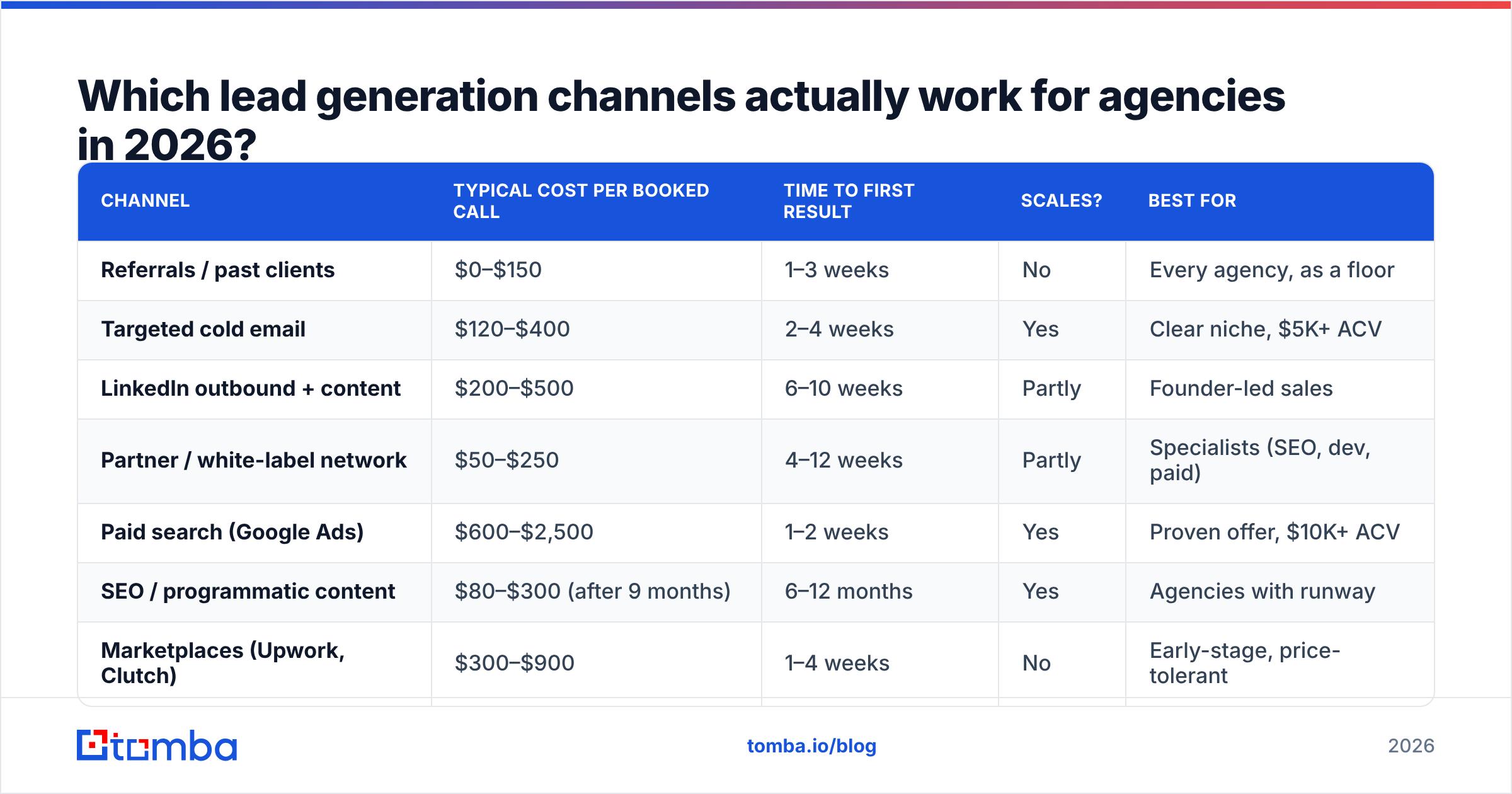
Here is an honest comparison. "Cost per booked call" assumes a mid-size agency with a $6K–$15K average contract value and one person owning pipeline part-time. Your numbers will move, but the relative ranking holds across most agencies I have seen operate.
| Channel | Typical cost per booked call | Time to first result | Scales? | Best for |
|---|---|---|---|---|
| Referrals / past clients | $0–$150 | 1–3 weeks | No | Every agency, as a floor |
| Targeted cold email | $120–$400 | 2–4 weeks | Yes | Clear niche, $5K+ ACV |
| LinkedIn outbound + content | $200–$500 | 6–10 weeks | Partly | Founder-led sales |
| Partner / white-label network | $50–$250 | 4–12 weeks | Partly | Specialists (SEO, dev, paid) |
| Paid search (Google Ads) | $600–$2,500 | 1–2 weeks | Yes | Proven offer, $10K+ ACV |
| SEO / programmatic content | $80–$300 (after 9 months) | 6–12 months | Yes | Agencies with runway |
| Marketplaces (Upwork, Clutch) | $300–$900 | 1–4 weeks | No | Early-stage, price-tolerant |
Two things jump out. First, paid search is the fastest to start and the most expensive to sustain — agency keywords like "shopify development agency" routinely clear $25 a click, and you need roughly 40 clicks to get a form fill. Second, SEO has the best long-run economics and the worst cash-flow profile. If you have less than nine months of runway, SEO is a hobby, not a channel.

Marketplaces deserve a specific warning. Upwork and similar platforms put you in a live price auction against agencies with a $9/hour cost base. They are a fine bridge while you build owned channels, and a terrible destination. Clutch and G2-style directories are better — buyers there have budget and are comparing on proof rather than rate — but you are still renting the relationship. Check how your category actually converts on G2's software and services categories before you commit spend.
How narrow does your niche need to be?#
Narrow enough that you can name the companies. That is the test.
If your answer to "who do you serve" is "B2B SaaS," you cannot build a list, you cannot write a subject line, and you cannot charge a premium. If your answer is "Series A vertical SaaS companies in healthcare with 20–80 employees and an in-house content person," everything downstream gets easier.
Here is the practical sequence:
- Start from your last 10 closed deals. Sort by profit margin, not revenue. Look for what the top three have in common — industry, company size, the trigger event that made them buy, the internal role who championed you.
- Write the trigger, not just the profile. "Just raised a Series A," "just hired a VP of Marketing," "just migrated to Shopify Plus," "just lost their agency." Triggers are what make cold outreach feel like timing instead of spam.
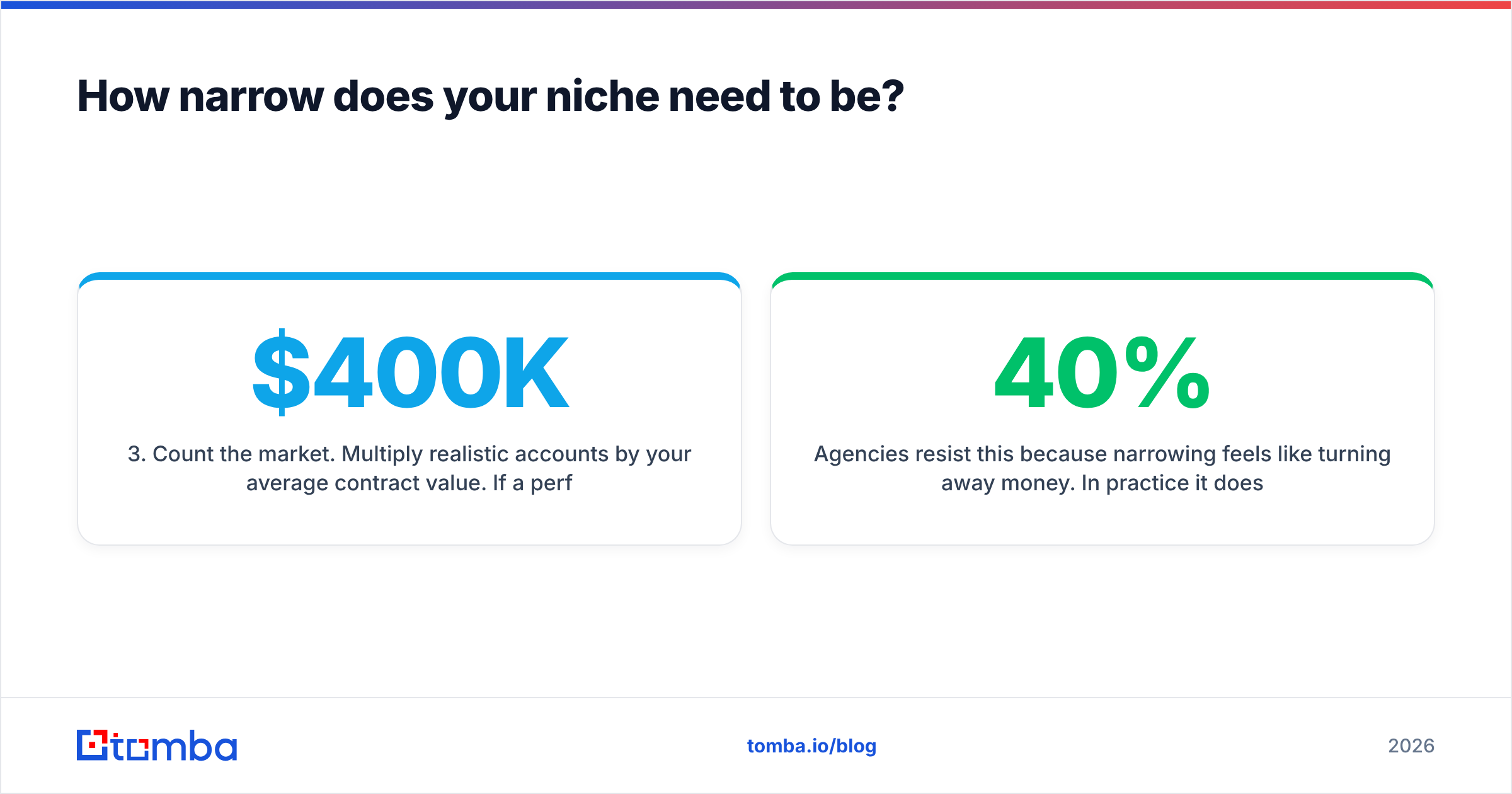
- Count the market. Multiply realistic accounts by your average contract value. If a perfectly-executed year in that niche caps out at $400K and you need $1.2M, the niche is too small — widen by geography, not by service.
- Name 100 target accounts by hand. If you cannot list 100 companies that match without a database, your ICP is a vibe, not a segment.
- Pick the one role who signs. Founder, Head of Growth, Marketing Director, CTO. Different roles need different proof — a CTO wants architecture, a CMO wants pipeline numbers.
- Rewrite your homepage to match. If your site says "full-service digital agency," your cold emails and your landing page are telling contradictory stories, and the click-through-to-close rate collapses.
Agencies resist this because narrowing feels like turning away money. In practice it does the opposite: a narrow positioning is what lets you charge 40% more and spend a third of the time on discovery calls that go nowhere.
How do you build the actual target list?#
This is where most agency outbound quietly fails. The copy gets three rewrites and the list gets none.
A usable agency prospecting list has four layers:
Layer 1 — Account selection. Start from your trigger. Job boards, funding announcements, tech-stack changes, review-site activity, and LinkedIn hiring signals all work. Export the company domains, not the company names.
Layer 2 — Contact discovery. For each domain, you need the one or two people who own the outcome you sell. A domain search pass returns the published addresses and the company's email pattern, which is usually enough to resolve the specific person you found on LinkedIn. For named prospects, an email finder run against first name, last name, and domain is faster than guessing permutations by hand.
Layer 3 — Verification. Never send to an unverified list. Agency domains skew small, and small companies churn addresses fast. Run the list through an email verifier and cut anything that comes back invalid or risky. A 3% bounce rate is the informal ceiling before mailbox providers start treating your domain as a problem.
Layer 4 — Enrichment for personalization. Company size, funding stage, tech stack, and recent news. You need one specific, checkable detail per prospect — not a compliment about their "impressive growth."
You can also buy lists from reputable providers — BookYourData sells pay-as-you-go B2B contacts with verification baked in, which suits agencies that prospect in bursts rather than continuously. The tradeoff is the same as always: a purchased list is fast and a built list is yours. Many agencies run both, using a purchased set to test a new vertical before investing in a repeatable build.
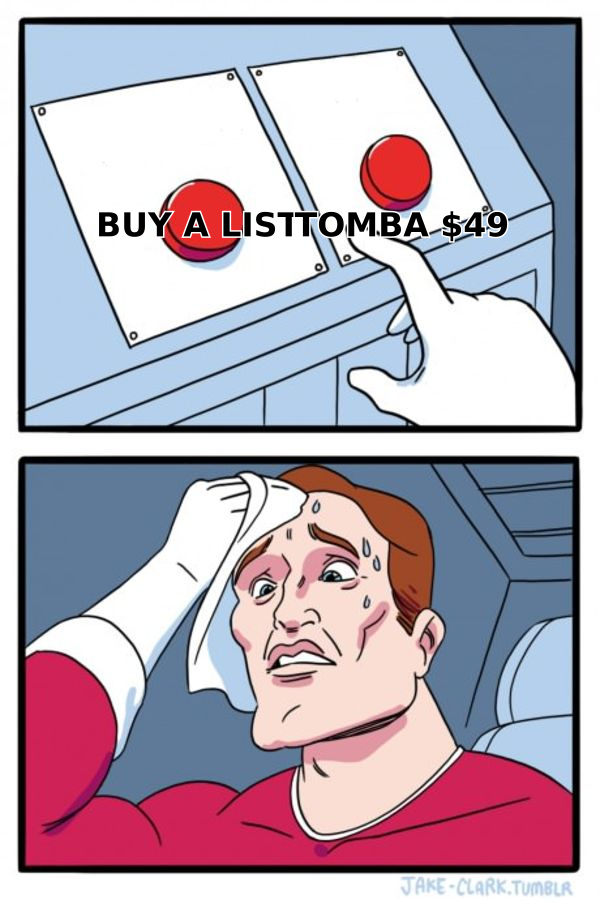
For ongoing volume, the build path is cheaper than it looks. At the $49/mo Starter tier on Tomba's pricing, a solo founder can source and verify enough contacts for a 400-prospect monthly campaign — which, at agency conversion rates, is roughly 8–12 booked calls.
What does a working agency outbound sequence look like?#
Short, specific, and low-commitment. The single biggest mistake in agency cold email is asking for a 30-minute call in email one. You have no trust; a calendar link is a big ask.
A sequence that consistently books calls for service businesses looks like this:
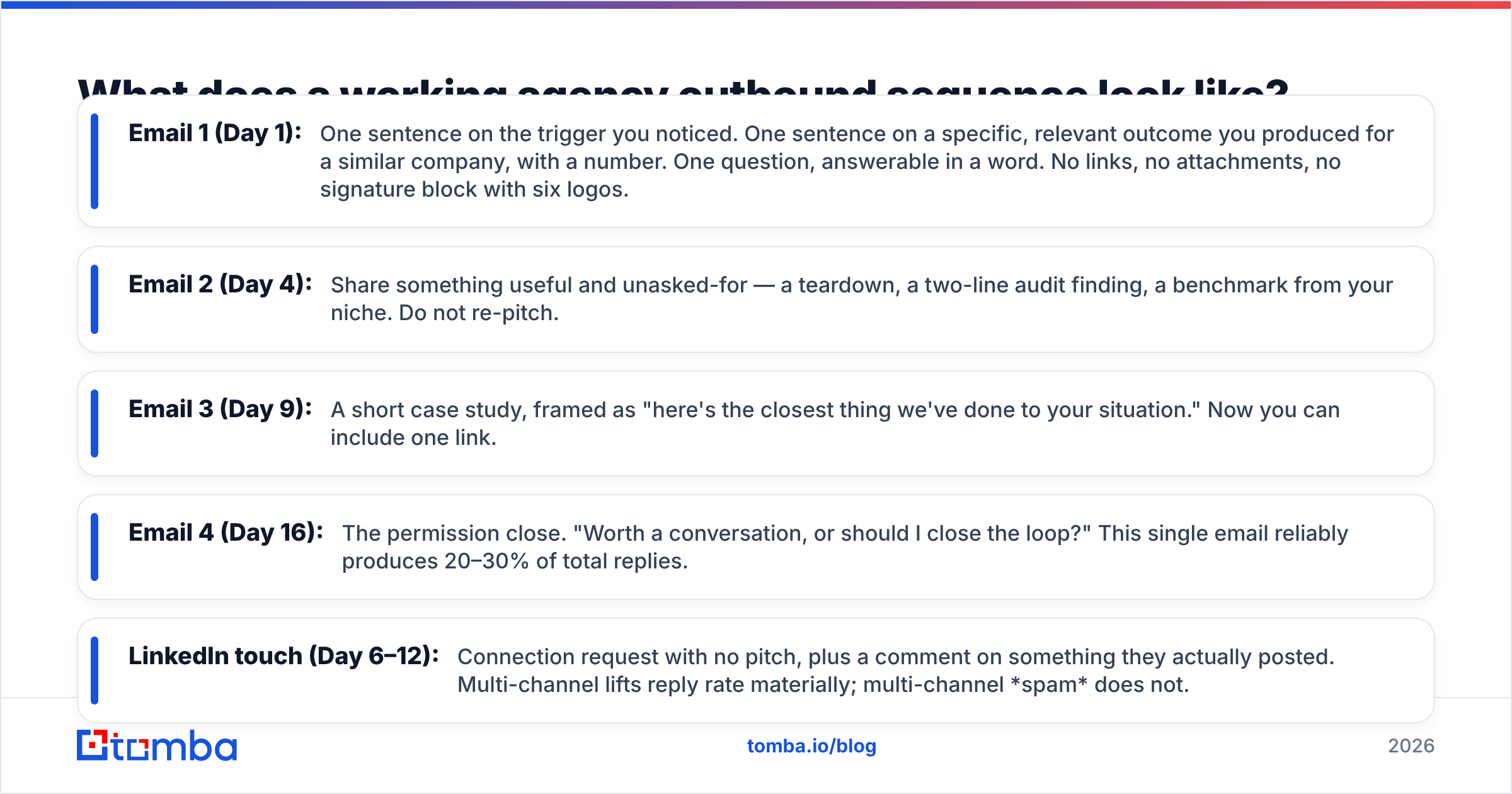
- Email 1 (Day 1): One sentence on the trigger you noticed. One sentence on a specific, relevant outcome you produced for a similar company, with a number. One question, answerable in a word. No links, no attachments, no signature block with six logos.
- Email 2 (Day 4): Share something useful and unasked-for — a teardown, a two-line audit finding, a benchmark from your niche. Do not re-pitch.
- Email 3 (Day 9): A short case study, framed as "here's the closest thing we've done to your situation." Now you can include one link.
- Email 4 (Day 16): The permission close. "Worth a conversation, or should I close the loop?" This single email reliably produces 20–30% of total replies.
- LinkedIn touch (Day 6–12): Connection request with no pitch, plus a comment on something they actually posted. Multi-channel lifts reply rate materially; multi-channel spam does not.
Keep the whole sequence under 300 words total. If your average email is longer than a text message you would send a colleague, cut it.
One more thing: send from a secondary domain, not your primary. Agencies live and die by client email threads, and burning your main domain's sender reputation to chase 400 cold prospects a month is a bad trade.
Should agencies invest in inbound or double down on outbound?#
Both, in that order of patience and the reverse order of urgency.
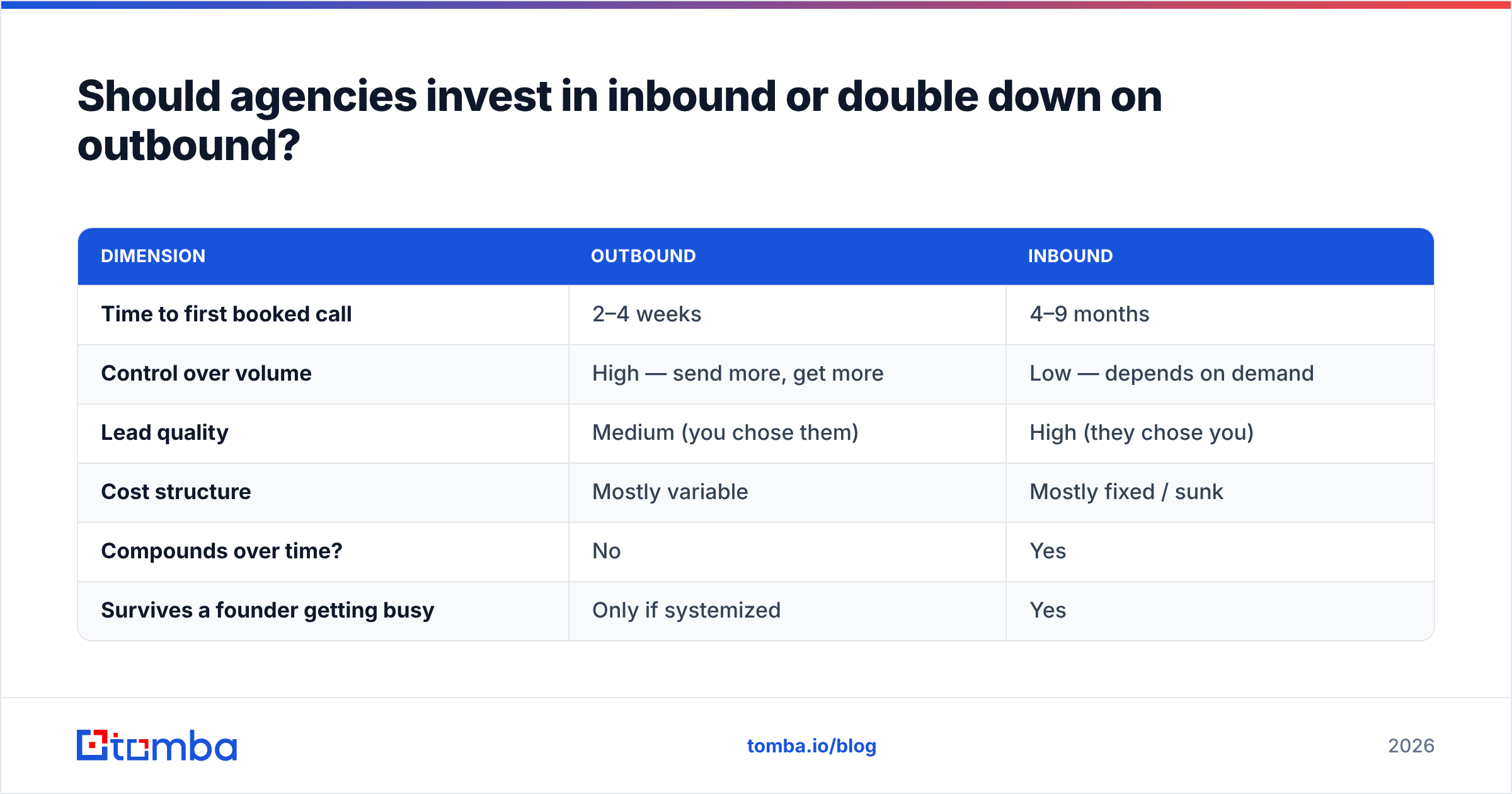
| Dimension | Outbound | Inbound |
|---|---|---|
| Time to first booked call | 2–4 weeks | 4–9 months |
| Control over volume | High — send more, get more | Low — depends on demand |
| Lead quality | Medium (you chose them) | High (they chose you) |
| Cost structure | Mostly variable | Mostly fixed / sunk |
| Compounds over time? | No | Yes |
| Survives a founder getting busy | Only if systemized | Yes |
The honest answer for a 5–25 person agency: run outbound to eat, run inbound to build an asset. Put 80% of your pipeline hours into outbound and partnerships for the first two quarters, then shift toward content and SEO once you have case studies worth ranking for.
The exception is founder-led content on LinkedIn. It is the only "inbound" channel with an outbound-like time-to-result, because distribution is instant and the audience is already B2B. Agencies whose founders post two or three substantive things a week — teardowns, pricing opinions, process breakdowns — report inbound that outperforms their blog within a quarter. Gartner's research on B2B buying behavior has consistently found that buyers spend the majority of their journey self-educating before they ever contact a vendor; showing up in that self-education window is the entire point. You can read more on how buying groups actually behave at Gartner's B2B sales insights.
How do you stop the feast-and-famine cycle?#
Make prospecting a calendar block, not a mood.
- Set a weekly floor, not a monthly goal. "40 new verified contacts and 15 personalized sends every Tuesday and Thursday" survives a busy week. "Do more outbound this month" does not.
- Track three numbers only: new qualified conversations started, booked calls, and proposals sent. Reply rate is vanity if nobody books.
- Forecast off proposals, not hope. If your close rate is 30% and you need two new clients next quarter, you need roughly seven proposals out — which means about 20 booked calls, which means about 600 contacted prospects. Work backwards from there every single quarter.
- Protect one senior hour a day. Junior staff can build lists and verify data. They cannot write the email that makes a founder reply. Keep the writing senior and the sourcing automated.
- Re-work your dead leads quarterly. Closed-lost from nine months ago is the warmest list you own. Budgets change, champions get promoted, the agency they picked instead disappointed them.
Agencies that run this loop for four consecutive quarters stop noticing whether a given month was "good." That is the whole objective.
What should your first 30 days look like?#
Week one: define the niche and hand-list 100 accounts. Week two: source and verify contacts, write the four-email sequence, warm the sending domain. Week three: send to the first 100, book the first calls, fix the obvious copy problems. Week four: double volume, add the LinkedIn layer, and set the recurring calendar block that makes weeks five through fifty-two automatic.
Nothing here requires a new hire or a six-figure tool stack. It requires a specific list and the discipline to send every week.
Build the list before you write the copy. If you are starting an outbound motion for your agency this quarter, the fastest first step is to take those 100 target domains and turn them into verified, role-matched contacts. Tomba's Email Finder does exactly that — search by domain, name, or company, get the verified address and the company's email pattern, and export straight into your sequencer. The free tier gives you 25 searches a month to test your niche before you commit; Starter at $49/mo covers a full 400-prospect monthly campaign. Pick the 100 accounts, get the contacts, send on Tuesday.
Related guides#
// get started
Find, verify and enrich your first contacts today
Start on the free plan with 25 searches a month, then scale when your team is ready.
Free plan · No credit card required · GDPR & CCPA
// about the author