Lead Magnet Examples: 15 B2B Offers That Actually Convert
Most lead magnets are PDFs nobody reads. Here are 15 lead magnet examples B2B teams use to capture buyers with real intent, 5 formats that waste traffic, and how to follow up so the leads turn into pipeline.
TL;DR
- The lead magnets that work best solve one narrow problem right away. Calculators, templates, and benchmark data usually beat long ebooks.
- Match the magnet to the funnel stage. Checklists and templates bring volume. Audits, assessments, and ROI calculators bring buyers.
- Short forms convert better. Ask for a work email and nothing else, then fill in the rest with enrichment.
- Most lead magnets fail after the download, not before. If you don't verify, enrich, and follow up within 24–48 hours, the lead goes cold.
- Judge each magnet by the pipeline it creates, not by download count.
What is a lead magnet, and what makes a good one?#
A lead magnet is something useful you give away in exchange for contact details, usually an email address. It's one of the oldest lead generation tactics, and it has lasted because the trade is simple. The prospect gets value now, and you get permission to keep talking.
The problem is that most B2B lead magnets are built for the marketing team's convenience, not the buyer's. A 40-page "ultimate guide" is easy to put together from old blog posts. It's also easy to download, skim for ten seconds, and forget.
Before you look at the examples, here's the checklist every good lead magnet passes:
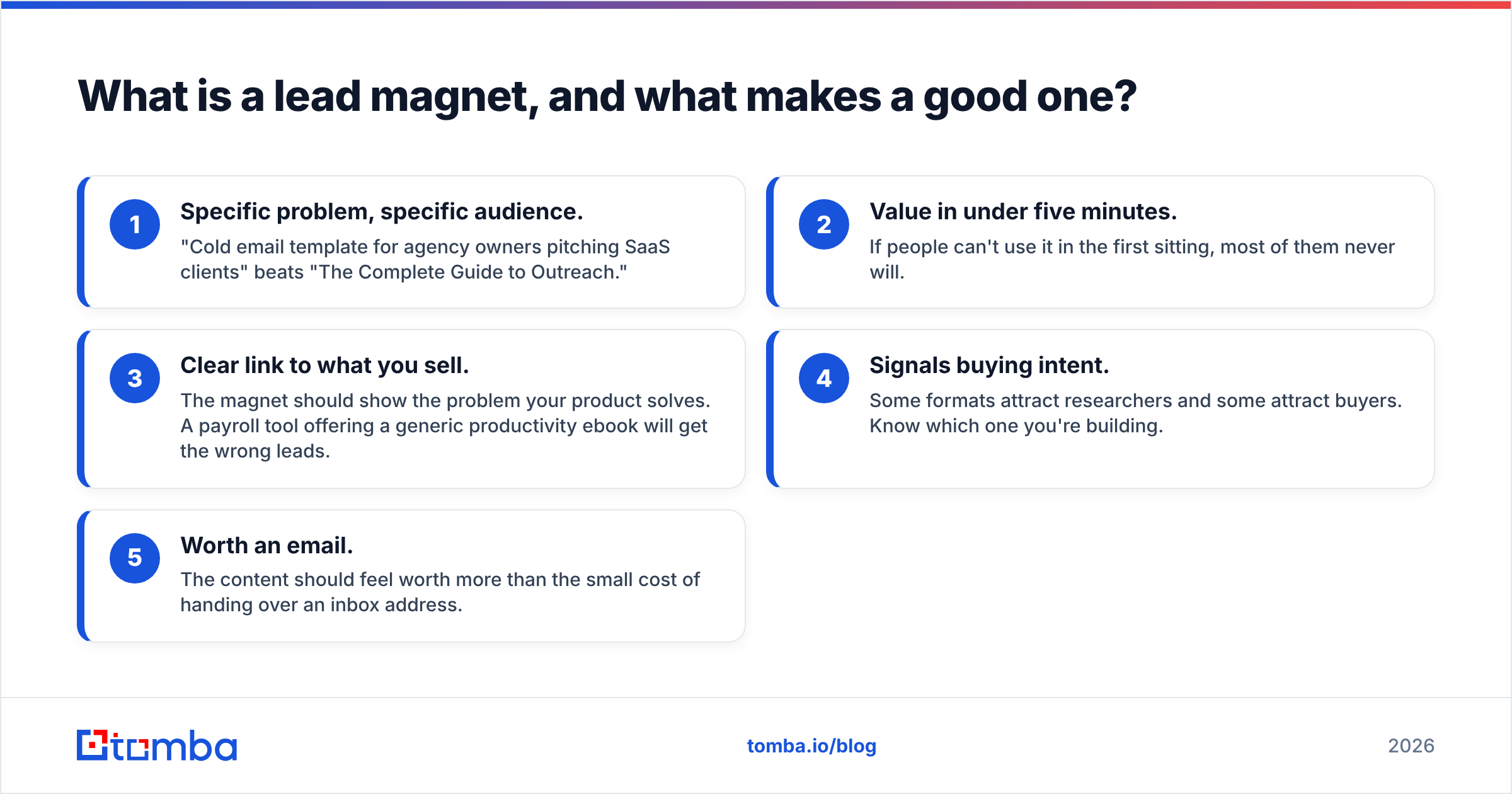
- Specific problem, specific audience. "Cold email template for agency owners pitching SaaS clients" beats "The Complete Guide to Outreach."
- Value in under five minutes. If people can't use it in the first sitting, most of them never will.
- Clear link to what you sell. The magnet should show the problem your product solves. A payroll tool offering a generic productivity ebook will get the wrong leads.
- Signals buying intent. Some formats attract researchers and some attract buyers. Know which one you're building.
- Worth an email. The content should feel worth more than the small cost of handing over an inbox address.
If a magnet fails two or more of these, rework the idea before you start design.
Which lead magnet examples work best for B2B in 2026?#
These 15 examples are grouped by the kind of value they deliver. Each one includes what it is, who it attracts, and a concrete way to build it.
Tools and interactive assets#
1. ROI or cost calculator The prospect enters a few numbers, such as team size, current spend, or hours lost, and gets back a dollar figure. Calculators attract people who are already building a business case, which puts them close to a buying decision. Gate the detailed breakdown, not the headline number. Show the result on screen and offer the full PDF report in exchange for an email.
2. Free micro-tool This is a single-purpose utility that does one job well: a subject line tester, an SPF record checker, an email format finder. A lot of B2B companies run these. Tomba's free tools, like the email checker and email permutator, are one example. The best micro-tools do a small version of the paid product, so the upgrade path is obvious.
3. Grader or audit tool A grader scores something the prospect already owns, like a website, a sales page, a LinkedIn profile, or an email domain. It works because people want to know how they measure up. Put the score on screen and email the full report with fixes.
4. Interactive assessment or quiz "What's your outbound maturity level?" with 8–10 questions that sort respondents into tiers. Assessments give you qualification data you'd never get from a form, such as current process, team size, and pain points, and they feel useful instead of intrusive.
Templates and swipe files#
5. Plug-and-play templates Email sequences, proposal decks, RFP responses, onboarding checklists, commission plans. Templates are the most reliable volume driver in B2B because they save hours immediately. Make them editable in Google Docs, Sheets, or Notion. A locked PDF template defeats the purpose.
6. Swipe file of real examples A curated collection of real examples, such as 30 cold emails that got replies or 25 pricing pages from Series B SaaS companies. Swipe files work because they're concrete. Add one line of commentary per example explaining why it works.
7. Checklist or one-page cheat sheet A pre-launch campaign checklist or a deliverability setup cheat sheet. It's low effort to build and high volume, but intent is also low. Use checklists at the top of the funnel and nurture the leads before you pitch.

Original data and research#
8. Benchmark report "Reply rates by industry, 2026" or "Median sales cycle length by deal size." Benchmarks are strong lead magnets because buyers need numbers for internal decks, and nobody else has your data. If you run a platform, anonymized aggregate data is your best asset. Publish the key findings openly for SEO and backlinks, then gate the full dataset.
9. Downloadable dataset or list A curated spreadsheet, such as "500 SaaS companies that raised Series A this quarter" or "Every conference for RevOps leaders in 2026." Keep it fresh and label the refresh date clearly, because stale lists hurt trust quickly.
10. Salary or pricing survey Compensation and pricing data gets shared inside companies because everyone wants it and few people publish it. The collection method builds your list too: respondents give their email to receive the results.
Education formats#
11. Email course A 5–7 day course delivered by email, with one lesson per day. It trains subscribers to open your emails, which helps your inbox placement later, and it gives you a week of touchpoints before any sales conversation.
12. Live workshop or webinar Webinars still work when they teach something hands-on, for example "Build a 3-step outbound sequence live" rather than "The Future of Sales." Registrants show clear intent, and the recording becomes a second lead magnet on demand.
13. Playbook with a narrow scope This is the right way to build the classic ebook. Keep it under 15 pages and focus on one outcome: "The 30-day playbook for launching outbound at a 10-person startup." Narrow scope keeps it readable and pulls in the right audience.
Product-led magnets#
14. Free tier or free trial For many SaaS companies, the product is the best lead magnet. A free tier with a real monthly allowance lets prospects get value before they talk to anyone. Review sites like G2 show how often buyers filter for "free plan available" when they shortlist tools.
15. Done-for-you teardown or sample deliverable "Send us your homepage and we'll record a 5-minute teardown video." It doesn't scale, and that's why it converts. Agencies and consultancies use this to open high-value conversations, and prospects who say yes have effectively raised their hand.
How do lead magnet types compare?#
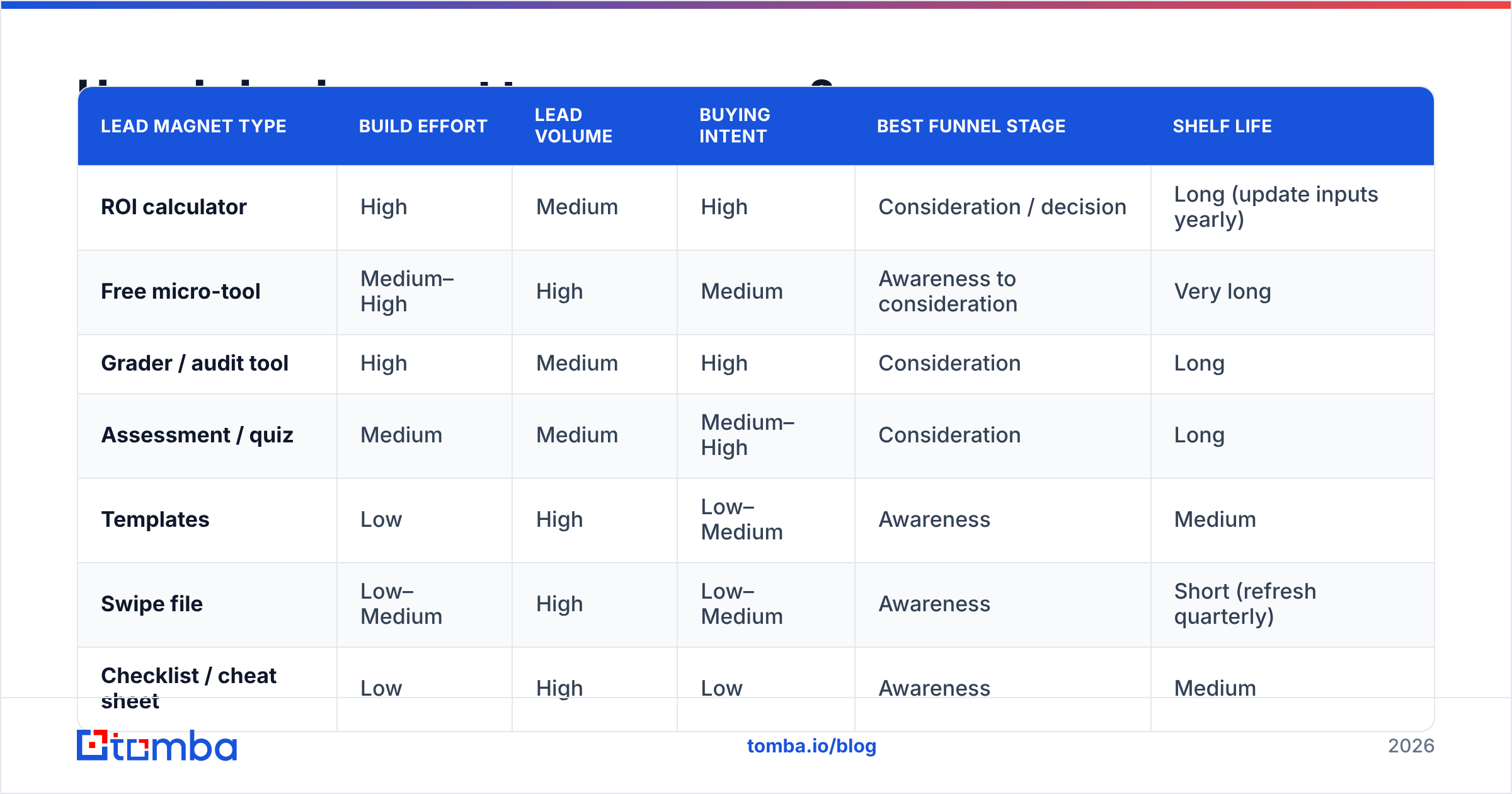
Not all lead magnets do the same job. Use this table to match format to goal before you commit design and dev time.
| Lead magnet type | Build effort | Lead volume | Buying intent | Best funnel stage | Shelf life |
|---|---|---|---|---|---|
| ROI calculator | High | Medium | High | Consideration / decision | Long (update inputs yearly) |
| Free micro-tool | Medium–High | High | Medium | Awareness to consideration | Very long |
| Grader / audit tool | High | Medium | High | Consideration | Long |
| Assessment / quiz | Medium | Medium | Medium–High | Consideration | Long |
| Templates | Low | High | Low–Medium | Awareness | Medium |
| Swipe file | Low–Medium | High | Low–Medium | Awareness | Short (refresh quarterly) |
| Checklist / cheat sheet | Low | High | Low | Awareness | Medium |
| Benchmark report | High | Medium | Medium | Awareness to consideration | ~12 months |
| Webinar / workshop | Medium | Low–Medium | Medium–High | Consideration | Medium (as recording) |
| Free tier / trial | Very high | Medium | High | Decision | Permanent |
| Teardown / sample work | Low per unit, doesn't scale | Low | Very high | Decision | N/A |
Two patterns stand out. First, build effort roughly tracks intent. Magnets that are cheap to build tend to attract early-stage researchers. Second, the formats with long shelf lives, like tools, calculators, and free tiers, keep paying off, while swipe files and reports need regular refreshes.
A healthy program usually runs one high-volume magnet, such as templates or a checklist, alongside one high-intent magnet, such as a calculator, assessment, or audit. The first builds the list. The second feeds sales.
Which lead magnets flop, and why?#
Here are five formats that consistently disappoint, and what to build in their place.
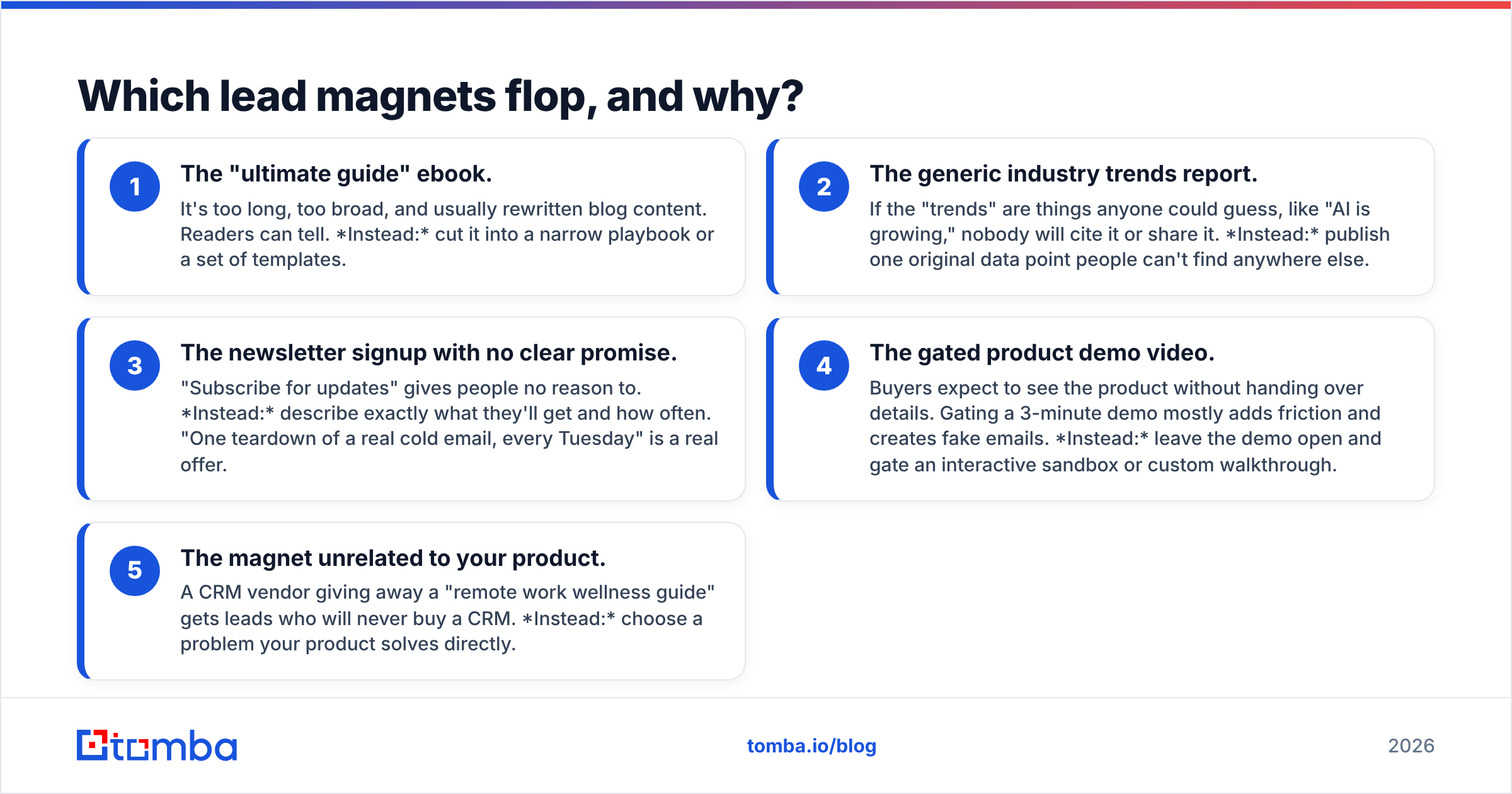
- The "ultimate guide" ebook. It's too long, too broad, and usually rewritten blog content. Readers can tell. Instead: cut it into a narrow playbook or a set of templates.
- The generic industry trends report. If the "trends" are things anyone could guess, like "AI is growing," nobody will cite it or share it. Instead: publish one original data point people can't find anywhere else.
- The newsletter signup with no clear promise. "Subscribe for updates" gives people no reason to. Instead: describe exactly what they'll get and how often. "One teardown of a real cold email, every Tuesday" is a real offer.
- The gated product demo video. Buyers expect to see the product without handing over details. Gating a 3-minute demo mostly adds friction and creates fake emails. Instead: leave the demo open and gate an interactive sandbox or custom walkthrough.
- The magnet unrelated to your product. A CRM vendor giving away a "remote work wellness guide" gets leads who will never buy a CRM. Instead: choose a problem your product solves directly.
How do you gate a lead magnet without killing conversions?#
The form is where good lead magnets go to die. Every extra field costs you signups, and many of the fields you add are ones you could fill in automatically.

Here's what works:
- Ask for a work email only. Company, role, company size, industry, and location can all be added after submission with data enrichment. Shorter forms also cut down on fake data, since people make up details when you ask for too many.
- Use progressive profiling. If you need qualification data, collect one extra field on each return visit instead of everything upfront. Most major marketing platforms, including HubSpot, support this natively.
- Show value before the gate. Show the calculator result, the first page of the report, or three of the thirty templates, then gate the rest. People convert when they already know it's worth it.
- Deliver instantly. Send the asset by email, but also show it on the thank-you page. Making people check their inbox adds friction, and some of them won't come back.
- Block junk addresses carefully. Blocking free email domains improves lead quality for enterprise offers, but it hurts freelancers and very small businesses. Decide based on your ICP, not habit.
What should happen after someone downloads your lead magnet?#
This is where most programs leak. A download is not a lead worth routing to sales yet. It's a signal. What you do in the next 48 hours decides whether that signal turns into pipeline.
Step 1: Verify the email. A good share of lead magnet signups are typos, throwaway inboxes, or role addresses like info@. Sending nurture emails to invalid addresses hurts your sender reputation for every campaign you run. Run each new signup through an email verifier before it enters your automation.
Step 2: Enrich and score. Once the address is valid, add company size, industry, and seniority. That lets you tell the student downloading your template apart from the VP of Sales at a 300-person target account. The VP should be routed toward marketing qualified lead status right away. The student goes into a slow nurture.
Step 3: Follow up with context. Your first email should reference the specific magnet and the problem behind it. For example: "You grabbed the outbound ROI calculator. Here's how three teams your size used the number to justify headcount." That's far better than a generic "Thanks for downloading!"
Step 4: Expand into the account. One download from a target company is a sign the account is interested. The person who downloaded is often a researcher, not the decision-maker. Use that signal to reach the rest of the buying committee with relevant outreach, and connect it to the original trigger.
Step 5: Sync it to your CRM with the source attached. Every lead should carry the name of the magnet that brought it in. Without that, you can't answer the only question that matters: which magnets produce revenue?
How do you measure whether a lead magnet is working?#
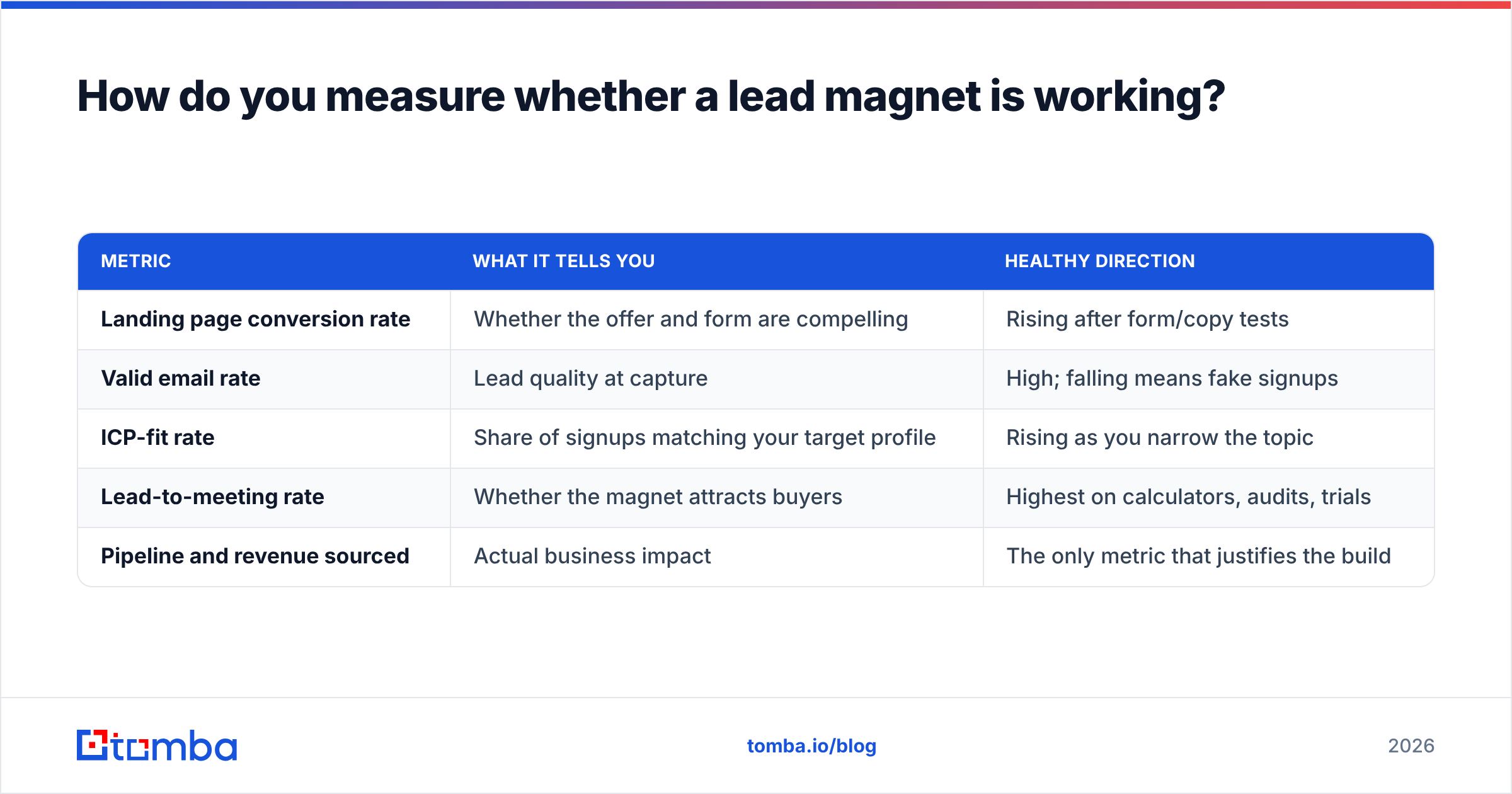
Download counts are a vanity metric. Track these instead, in this order:
| Metric | What it tells you | Healthy direction |
|---|---|---|
| Landing page conversion rate | Whether the offer and form are compelling | Rising after form/copy tests |
| Valid email rate | Lead quality at capture | High; falling means fake signups |
| ICP-fit rate | Share of signups matching your target profile | Rising as you narrow the topic |
| Lead-to-meeting rate | Whether the magnet attracts buyers | Highest on calculators, audits, trials |
| Pipeline and revenue sourced | Actual business impact | The only metric that justifies the build |
Review each magnet every quarter. Retire magnets that bring in plenty of downloads but little pipeline, or rework them into narrower versions. Put more money into the ones that feed sales, even if their volume looks modest. One calculator that produces ten qualified meetings a month is worth more than a checklist with 2,000 downloads and none.
Which lead magnet should you build first?#
If you're starting from zero, start with a template pack tied directly to your product's core job. It's cheap, fast, and brings volume. Then build one high-intent interactive asset, either a calculator or an assessment, once you have enough traffic to make it worth it. Leave benchmark reports for when you have unique data, and webinars for when you have a topic people will show up live to learn.
Whatever you build, plan the follow-up before you launch. A mediocre lead magnet with a fast, relevant follow-up usually beats a great one whose leads sit untouched in a spreadsheet.
Turn lead magnet signups into real conversations#
A download tells you a company is interested. It doesn't tell you who signs the contract. Tomba Email Finder helps you close that gap. Start from the domain of any company that engaged with your lead magnet and find verified professional emails for the decision-makers, champions, and budget holders you actually need to reach. Pair it with verification and enrichment so every lead that enters your nurture flow is real and scored. The free tier gives you 25 searches a month to test it on your most recent downloads, and paid plans start at $49/mo when you're ready to scale.
Related guides#
// get started
Find, verify and enrich your first contacts today
Start on the free plan with 25 searches a month, then scale when your team is ready.
Free plan · No credit card required · GDPR & CCPA
Get the Tomba newsletter
Product and data updates
// about the author