9 Best Lead411 Alternatives in 2026 (Pricing + Data Compared)
Lead411's unlimited-view pricing looks generous until export caps and annual contracts kick in. Here are nine alternatives compared on data accuracy, credits, and what you actually pay per verified contact.
TL;DR
- Lead411 sells "unlimited" contact views, but exports are capped and most plans are billed annually per seat — so the real cost per exported contact is much higher than the sticker price suggests.
- If you mainly need verified work emails and a clean API, a dedicated email finder like Tomba ($49/mo Starter, free tier included) costs a fraction of a seat-based intelligence platform.
- If you need intent data and direct dials at enterprise scale, ZoomInfo and Cognism are the honest upgrades — not the cheap ones.
- Pay-as-you-go providers such as BookYourData suit teams that buy lists in bursts rather than prospecting daily.
- Test any replacement on 100 of your own ICP contacts before signing. Vendor-published accuracy numbers are marketing; your bounce rate is data.
What is Lead411 and why do teams look for alternatives?#
Lead411 is a B2B sales intelligence platform: a contact database with verified emails, direct dial phone numbers, company technographics, and Bombora-powered intent data, plus growth triggers like funding rounds and hiring spikes. It has been around since 2001, it is genuinely strong on North American mid-market data, and its "unlimited views" positioning was a real differentiator when everyone else metered every click.
So why do people churn? Four recurring reasons show up in Lead411 reviews on G2 and in conversations with outbound teams:
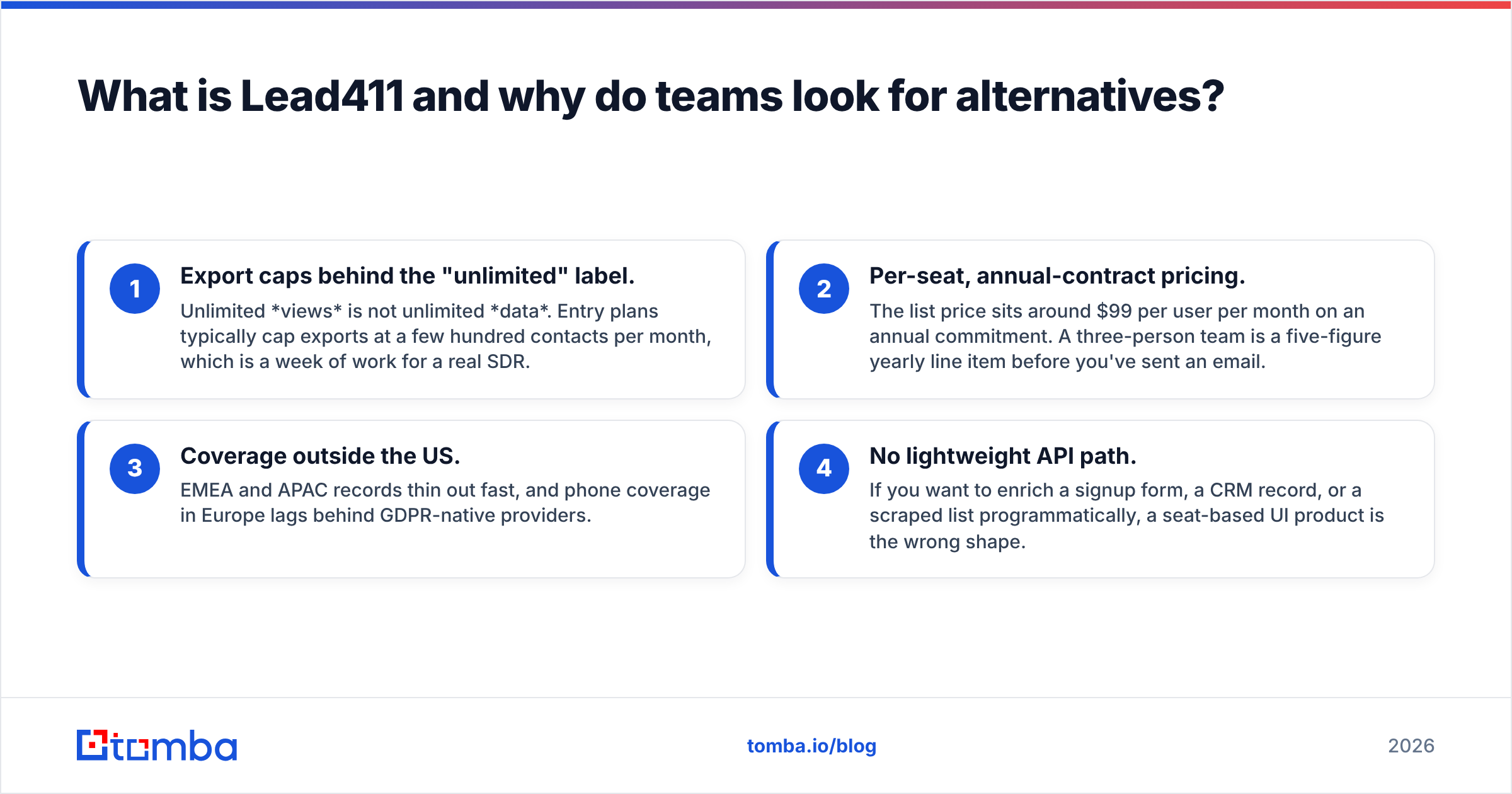
- Export caps behind the "unlimited" label. Unlimited views is not unlimited data. Entry plans typically cap exports at a few hundred contacts per month, which is a week of work for a real SDR.
- Per-seat, annual-contract pricing. The list price sits around $99 per user per month on an annual commitment. A three-person team is a five-figure yearly line item before you've sent an email.
- Coverage outside the US. EMEA and APAC records thin out fast, and phone coverage in Europe lags behind GDPR-native providers.
- No lightweight API path. If you want to enrich a signup form, a CRM record, or a scraped list programmatically, a seat-based UI product is the wrong shape.

None of that makes Lead411 a bad product. It makes it a specific product. The question is whether your workflow is "browse and build lists in a UI" or "resolve an email for a name and domain, at volume, cheaply."
How should you evaluate Lead411 alternatives?#
Score every candidate on the same six axes, in this order:
- Verified email accuracy on your ICP — not the vendor's global average. Run 100 known-good contacts through each tool and measure catch rate plus bounce rate.
- Cost per exported contact — divide the annual price by the annual export allowance. This single number reorders most shortlists.
- Credit mechanics — do failed lookups burn credits? Do credits roll over? Are views and exports billed separately?
- Coverage geography — US-heavy databases collapse on DACH, Nordics, and APAC searches.
- API and integration depth — REST API, Chrome extension, Sheets/Excel add-ons, CRM sync. If enrichment has to be manual, it will not happen.
- Compliance posture — GDPR/CCPA handling, suppression lists, and whether the vendor can tell you where a record came from.
Most teams over-weight database size and under-weight cost per export. A 200-million-record database with a 500-export monthly cap is a 500-record database.
Which Lead411 alternatives are worth comparing in 2026?#
Here is the shortlist, with what each one is actually good at.
1. Tomba — best for verified email discovery and API enrichment#
Tomba is an email-finding and verification platform rather than a full sales intelligence suite. You give it a name and a domain (or just a domain) and it returns verified professional addresses with confidence scores and source attribution. The email finder is the core, with domain search, catch-all verification, phone lookup, and enrichment sitting alongside it.
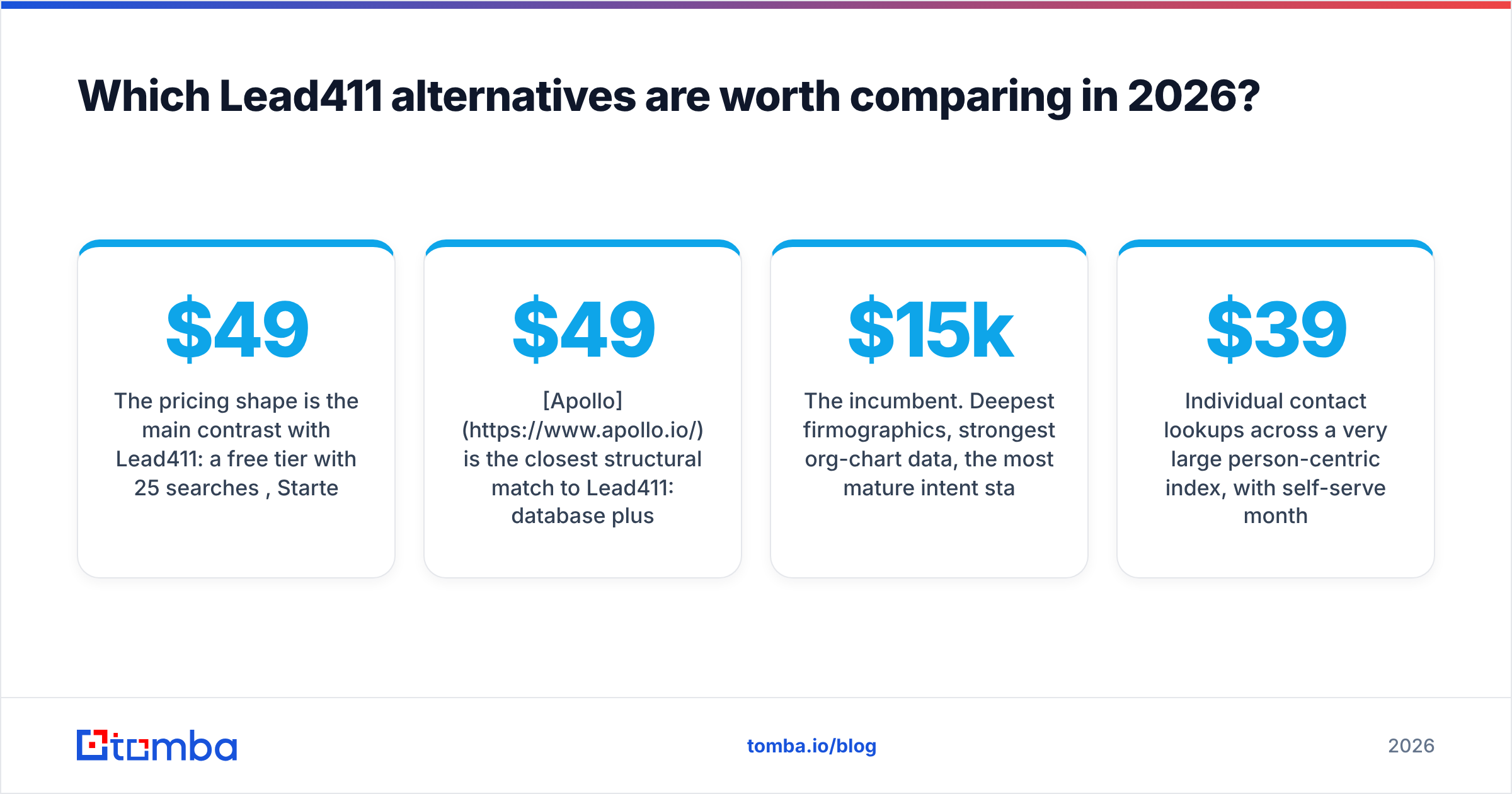
The pricing shape is the main contrast with Lead411: a free tier with 25 searches per month, Starter at $49/mo, Growth at $99/mo, Pro at $249/mo, and custom Enterprise — no per-seat annual lock-in. Full Tomba pricing is public, which is itself a differentiator in this category.
Best for: outbound teams, agencies, and developers who need accurate emails at volume and will do their own targeting. Weak spot: no intent data, no Bombora signals, no "companies hiring SDRs this week" triggers.
2. Apollo.io — best all-in-one replacement#
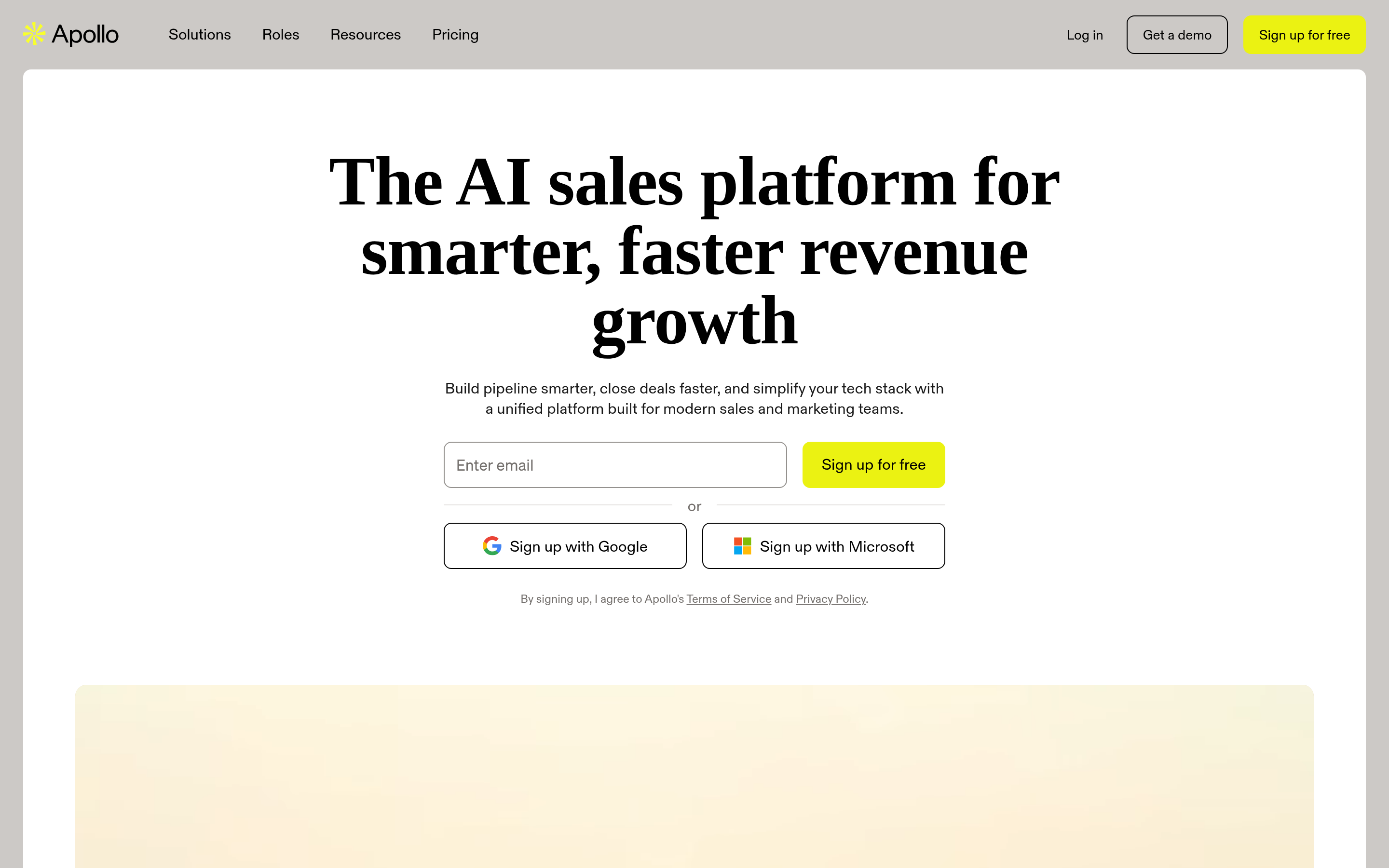
Apollo is the closest structural match to Lead411: database plus sequencer plus dialer plus basic intent. Its free plan is generous enough to evaluate seriously, and the paid tiers start around $49/user/mo annually. Data quality is mid-tier — good on US tech, patchy elsewhere — but the workflow consolidation is real, and for teams currently paying for Lead411 plus a separate sequencing tool, it can cut the stack in half. Teams who outgrow it usually look for an Apollo alternative on data accuracy grounds, not features.
3. Cognism — best for EMEA coverage and compliance#
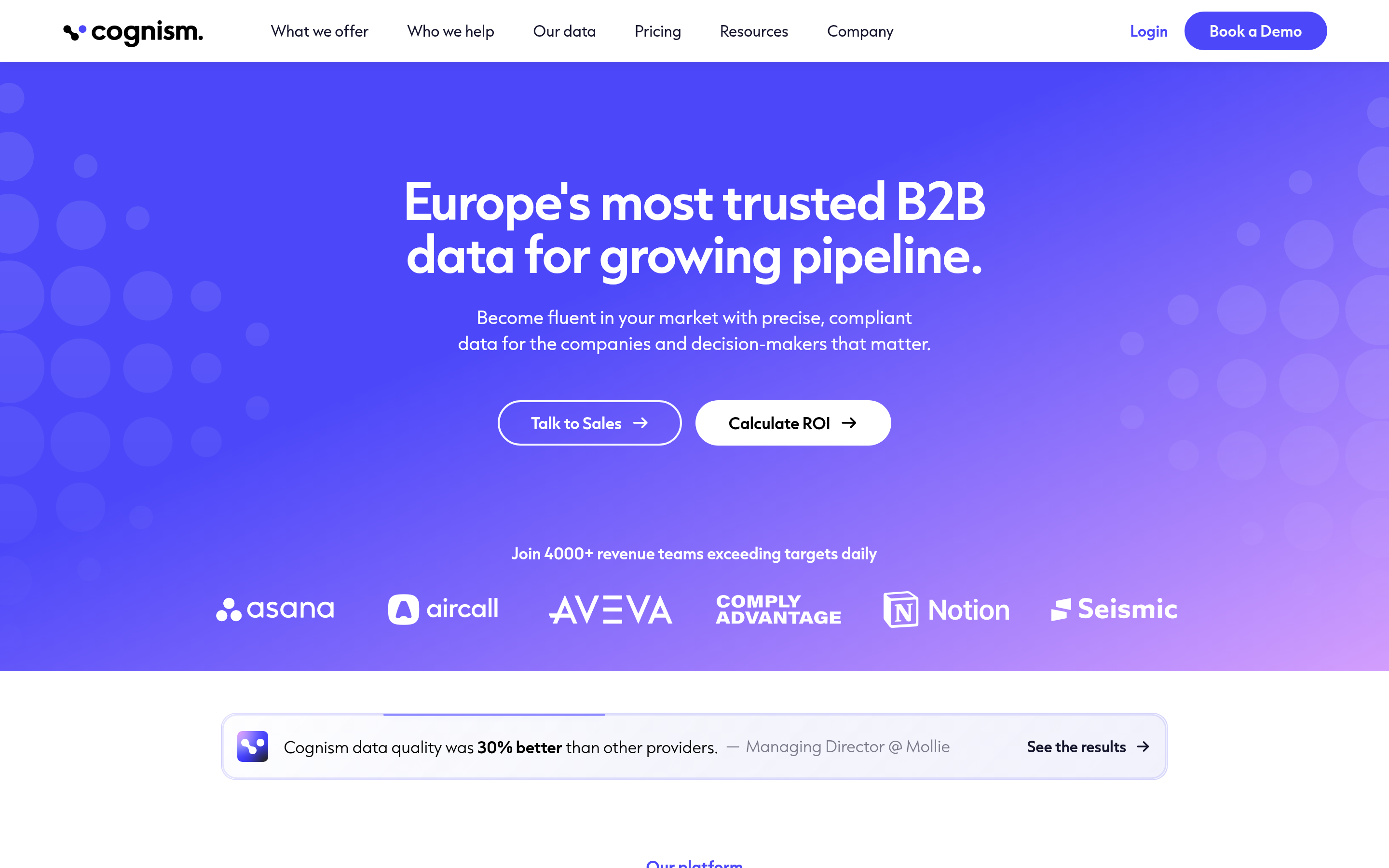
Cognism's differentiator is Diamond Data (phone-verified mobile numbers) and a notify-and-suppress GDPR workflow that European legal teams accept. Pricing is quote-only and lands well above Lead411 — expect low five figures annually. If your ICP is UK/DACH/Nordics and your reps live on the phone, this is the upgrade, not the downgrade.
4. ZoomInfo — best for enterprise intent and org charts#

The incumbent. Deepest firmographics, strongest org-chart data, the most mature intent stack. Also the most expensive, with annual contracts that routinely start in the $15k–$30k range and aggressive auto-renewal terms. Buy it when a full RevOps function will operationalize the data. Do not buy it to replace a $99/mo tool.
5. RocketReach — best for one-off people lookups#
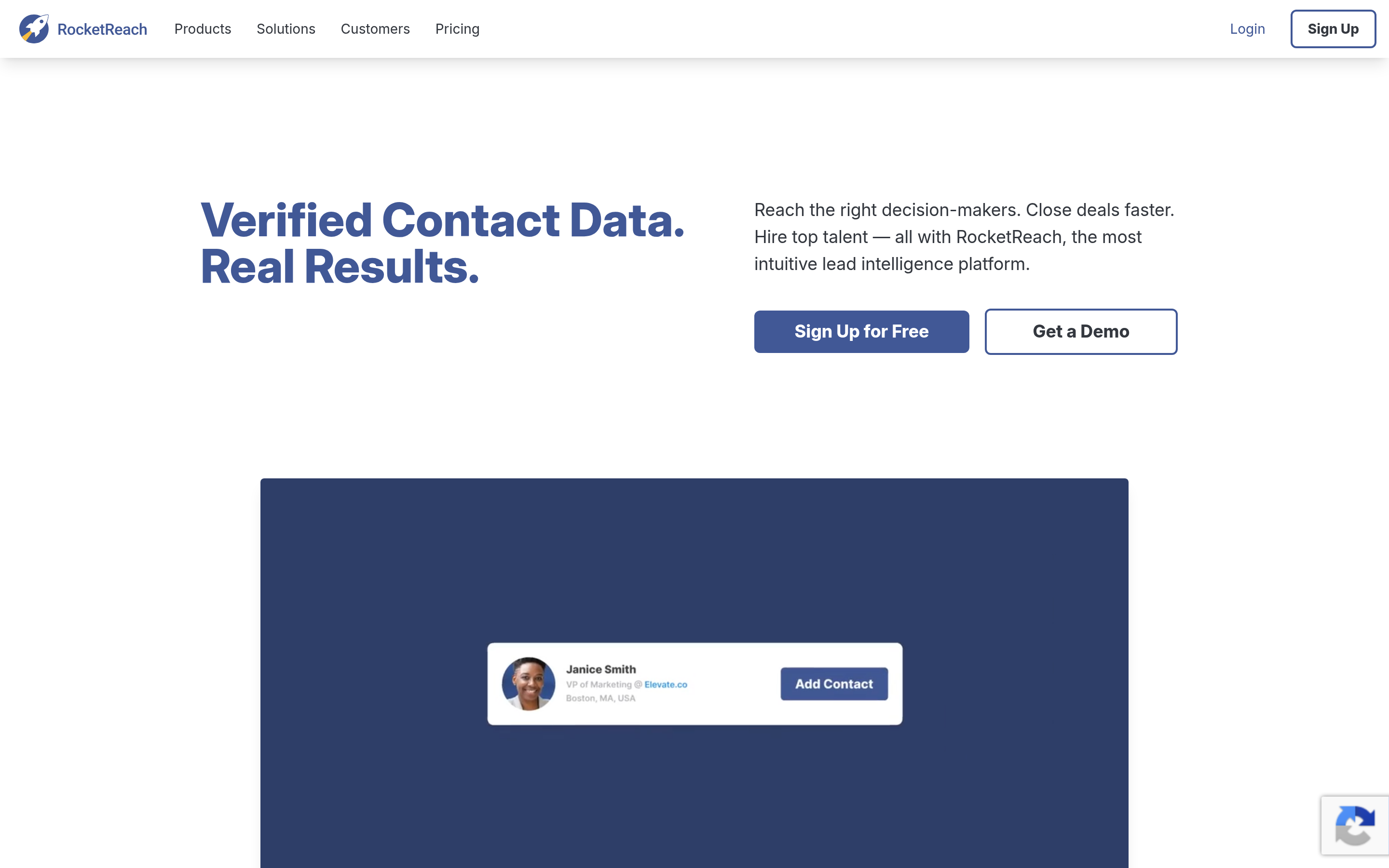
Individual contact lookups across a very large person-centric index, with self-serve monthly plans starting around $39/mo. Credit mechanics are the thing to read closely — plan tiers differ on whether phone lookups cost extra. Useful for recruiters and founders doing low-volume, high-intent searches; less suited to bulk list building. Comparison notes live on the RocketReach alternative page.
6. Lusha — best Chrome-extension workflow#
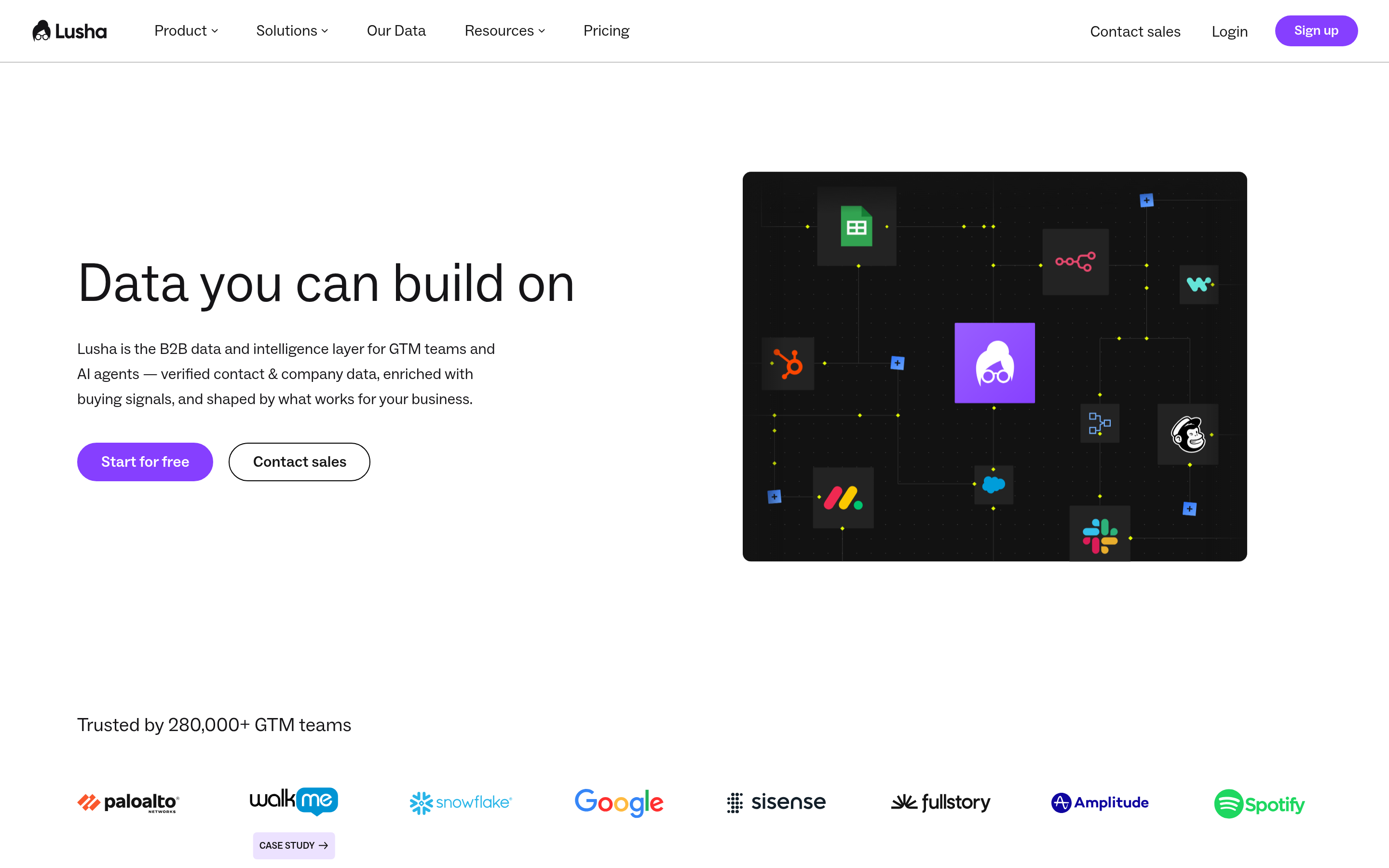
Lusha's browser extension on LinkedIn is the smoothest in the category, and the free tier lets you try it properly. Pricing is per seat from roughly $36/user/mo annually. Coverage is decent in the US and Israel-adjacent markets, thinner elsewhere, and credit burn is fast if your team browses a lot.
7. BookYourData — best pay-as-you-go list buying#
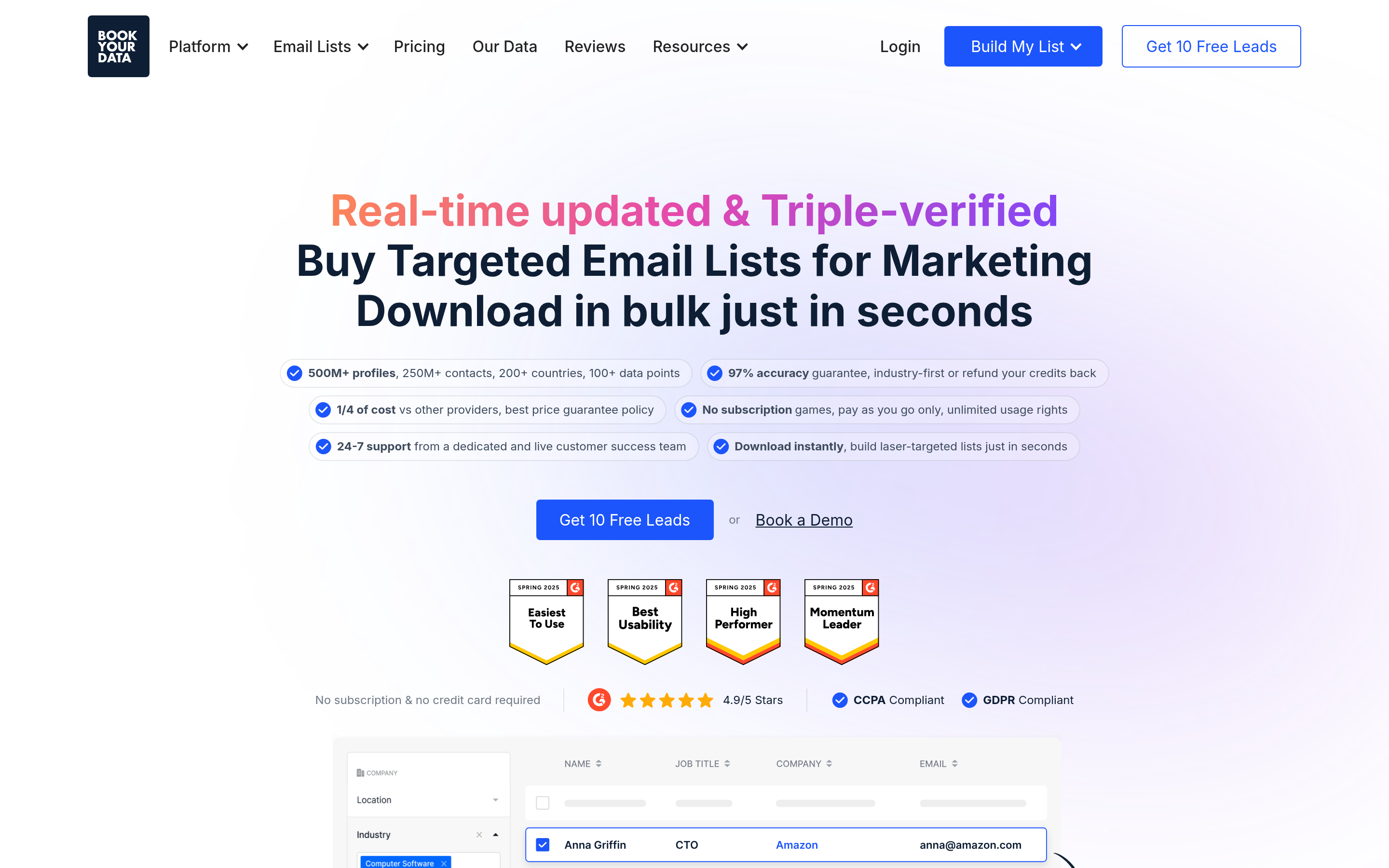
BookYourData takes a different commercial approach: buy credits outright, no subscription, with a published accuracy guarantee and free credits to test. That model fits teams who run campaigns in bursts — build a 5,000-contact list in March, nothing in April — and who resent paying seat fees during quiet months. It is a strong option when your buying pattern is lumpy rather than continuous.
8. Seamless.AI — best free-tier volume for SMB prospecting#
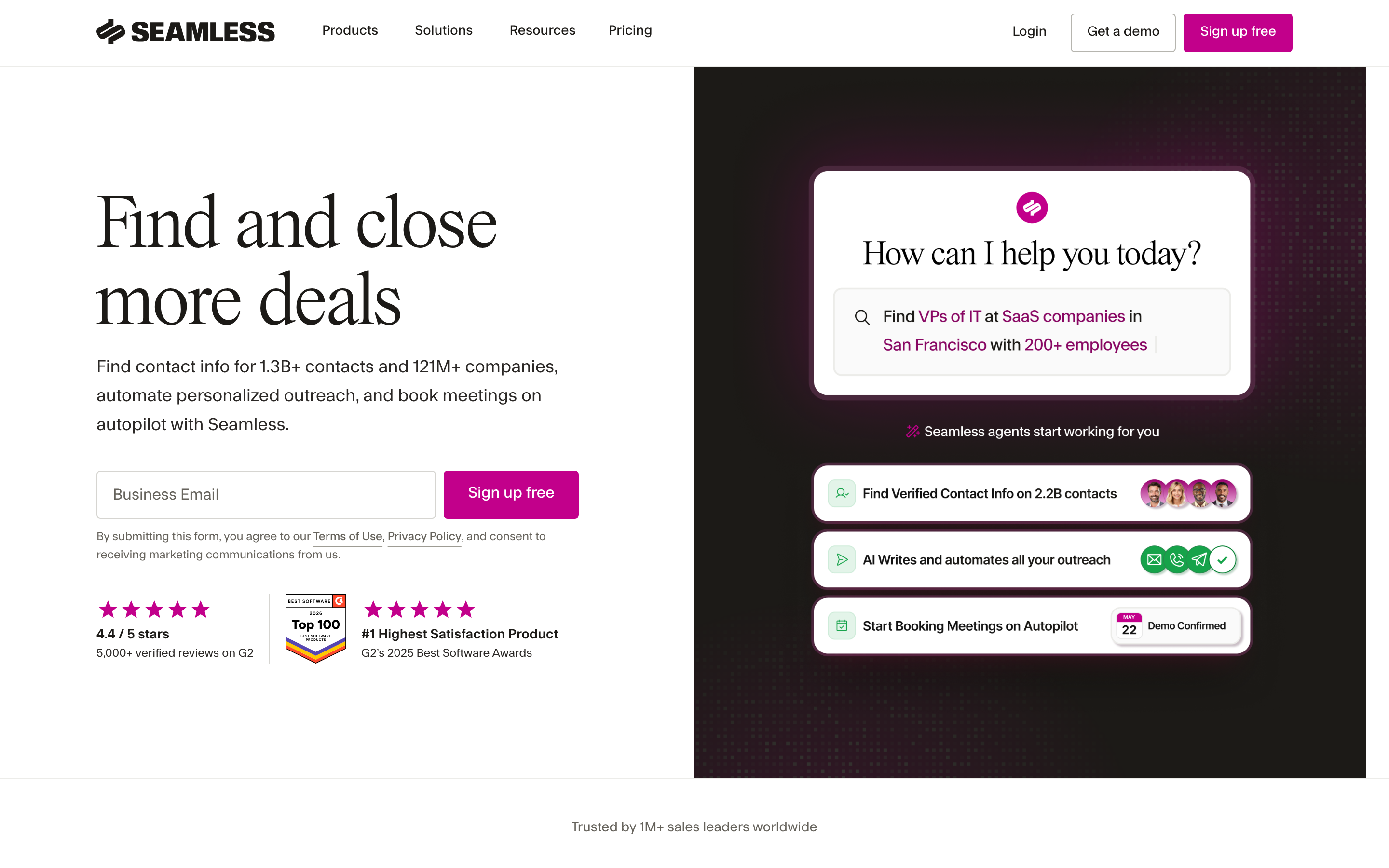
Real-time search that assembles contact records on demand, with a free tier and aggressive SMB pricing. Accuracy is variable and the record assembly can produce confident-looking guesses, so pair it with a standalone email verifier before any send. Fine as a supplementary source, risky as a single source of truth.
9. Hunter.io — best free domain-level discovery#
The most recognizable name in domain-based email discovery. Free tier, simple pricing, excellent for finding the pattern and a few contacts at a company you already care about. Its database skews toward publicly crawlable addresses, so senior-title coverage at larger enterprises is weaker than a data-provider approach.
How do the Lead411 alternatives compare on price and data?#

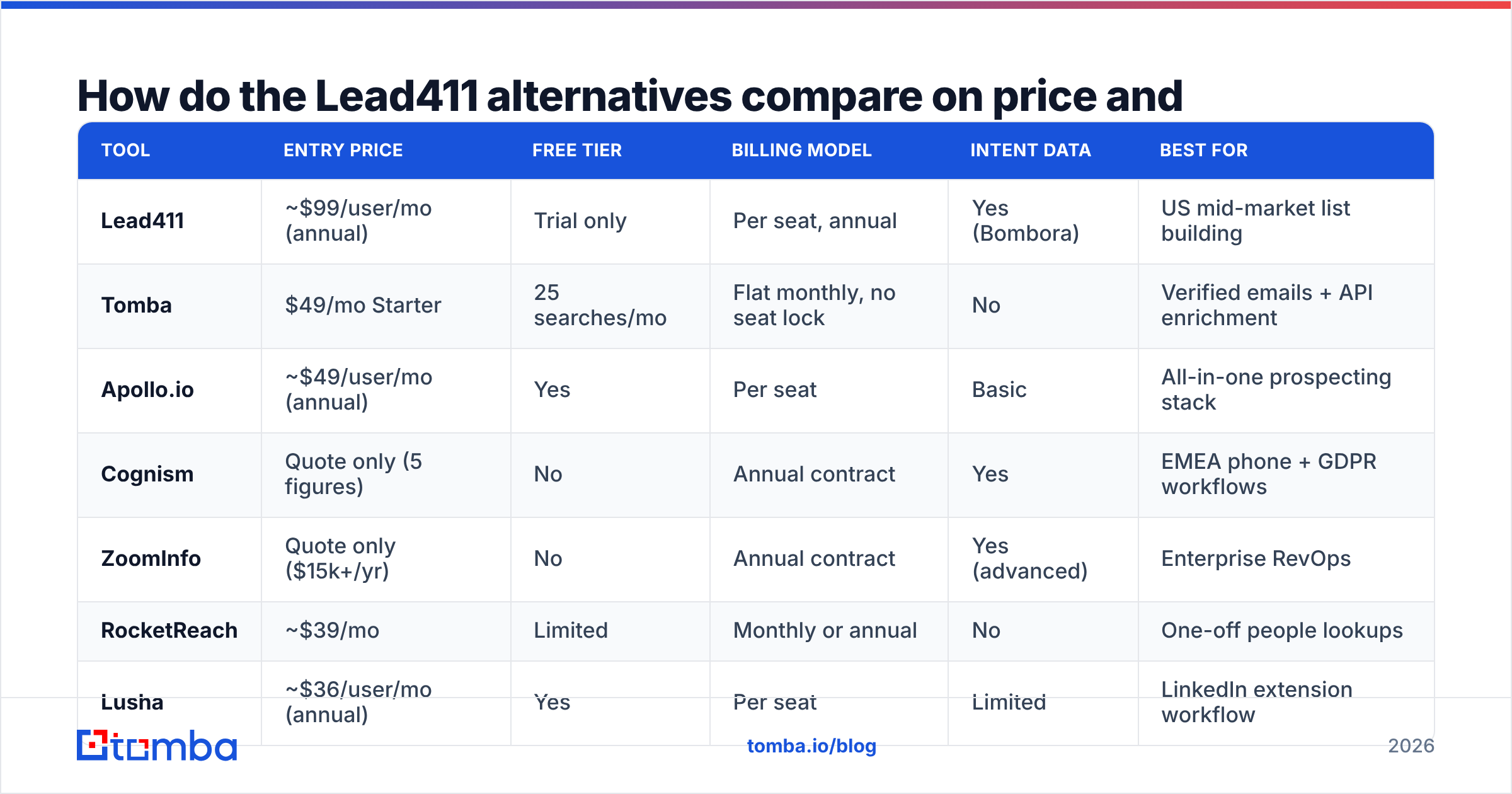
Accuracy claims deserve scrutiny. Every vendor in this table publishes a number between 95% and 99%, and every one of those numbers is measured on a sample the vendor chose. What varies enormously is how a tool behaves on the hard 20%: catch-all domains, recently changed roles, and non-US SMBs. A provider that returns "not found" honestly is worth more than one that returns a plausible permutation with a 92% confidence badge attached.

| Tool | Entry price | Free tier | Billing model | Intent data | Best for |
|---|---|---|---|---|---|
| Lead411 | ~$99/user/mo (annual) | Trial only | Per seat, annual | Yes (Bombora) | US mid-market list building |
| Tomba | $49/mo Starter | 25 searches/mo | Flat monthly, no seat lock | No | Verified emails + API enrichment |
| Apollo.io | ~$49/user/mo (annual) | Yes | Per seat | Basic | All-in-one prospecting stack |
| Cognism | Quote only (5 figures) | No | Annual contract | Yes | EMEA phone + GDPR workflows |
| ZoomInfo | Quote only ($15k+/yr) | No | Annual contract | Yes (advanced) | Enterprise RevOps |
| RocketReach | ~$39/mo | Limited | Monthly or annual | No | One-off people lookups |
| Lusha | ~$36/user/mo (annual) | Yes | Per seat | Limited | LinkedIn extension workflow |
| BookYourData | Pay-as-you-go credits | Free credits | Prepaid, no subscription | No | Burst list purchases |
| Hunter.io | ~$49/mo | 25 searches/mo | Flat monthly | No | Domain-level discovery |
Prices are list rates observed in 2026 and move constantly — confirm on each vendor's pricing page before you budget.
Now do the arithmetic that vendors avoid. A Lead411 seat at roughly $99/mo with a 200-export monthly cap is about $0.50 per exported contact, and you cannot bank the unused allowance. A $49/mo flat plan with a few thousand monthly lookups lands closer to $0.02–$0.05 per verified email. That gap is why so many teams end up running a cheap finder for volume and keeping one seat of an intelligence platform for research.

Is a single platform better than a two-tool stack?#
Usually not, and this is the most useful thing to take from this comparison.
The all-in-one pitch assumes your data needs are uniform. They aren't. A typical outbound motion has three distinct jobs:
- Targeting — deciding which accounts deserve attention. Intent data, hiring signals, technographics. This is where Lead411, ZoomInfo, and Cognism earn their price.
- Resolution — turning a target person into a deliverable email or phone number. This is a commodity API problem, and paying seat fees for it is waste.
- Hygiene — keeping the list clean so your domain survives. Verification, catch-all handling, suppression.
Teams that split these jobs typically spend 40–60% less than teams that buy one platform to do all three, because resolution volume — the expensive part at seat pricing — moves to a metered tool. A practical split: one seat of an intelligence platform for the researcher who builds target account lists, plus a bulk email finder and verifier feeding the CRM through the Tomba API for everything downstream.
The counter-argument is real: two tools means two invoices, two support queues, and a sync to maintain. If your total prospecting volume is under a few hundred contacts a month, consolidation wins on operational simplicity alone.
How do you migrate off Lead411 without losing pipeline?#
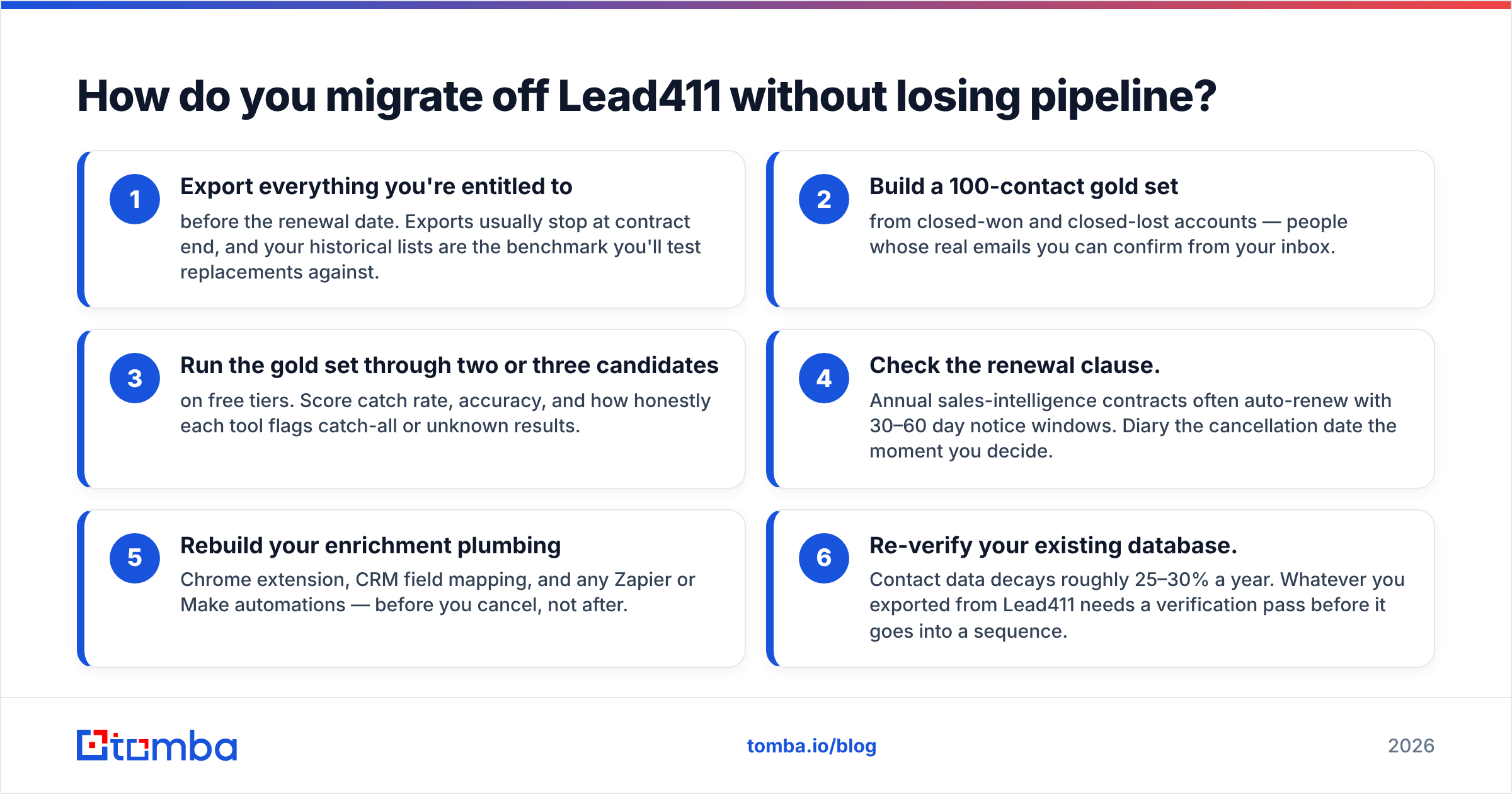
Run this sequence over two to three weeks rather than switching cold:
- Export everything you're entitled to before the renewal date. Exports usually stop at contract end, and your historical lists are the benchmark you'll test replacements against.
- Build a 100-contact gold set from closed-won and closed-lost accounts — people whose real emails you can confirm from your inbox.
- Run the gold set through two or three candidates on free tiers. Score catch rate, accuracy, and how honestly each tool flags catch-all or unknown results.
- Check the renewal clause. Annual sales-intelligence contracts often auto-renew with 30–60 day notice windows. Diary the cancellation date the moment you decide.
- Rebuild your enrichment plumbing — Chrome extension, CRM field mapping, and any Zapier or Make automations — before you cancel, not after.
- Re-verify your existing database. Contact data decays roughly 25–30% a year. Whatever you exported from Lead411 needs a verification pass before it goes into a sequence.
Skipping step 6 is the most common self-inflicted wound. Teams switch providers, blame the new vendor for bounces, and the real culprit is an eighteen-month-old list nobody re-checked.
Which alternative should you pick?#
Pick by constraint, not by feature count:
- Budget under $100/mo and you mainly need emails: Tomba or Hunter.
- You want one tool for data plus sequencing: Apollo.
- European ICP with heavy phone outreach: Cognism.
- Enterprise with a RevOps team to operationalize intent: ZoomInfo.
- Lumpy, campaign-based list buying: BookYourData.
- Occasional individual lookups: RocketReach or Lusha.
If your honest answer is "we mostly needed the emails," you were paying intelligence-platform prices for a resolution problem. Start free on the Tomba Email Finder — 25 searches a month, no card — run it against the same accounts Lead411 is billing you for, and compare the bounce rates yourself. If the catch rate holds on your ICP, the $49/mo Starter plan will cover what a seat costs you today, and the difference goes back into sending volume.
Related guides#
// get started
Find, verify and enrich your first contacts today
Start on the free plan with 25 searches a month, then scale when your team is ready.
Free plan · No credit card required · GDPR & CCPA
// about the author