9 Best Leadforce Alternatives in 2026 (Free and Paid Tools)
Leadforce gates pricing behind a demo and bundles data you may not need. Here are nine Leadforce alternatives compared on cost, coverage, verification quality, and how fast you can start sending.
TL;DR
- Most teams leave Leadforce for one of three reasons: quote-only pricing, data coverage that thins out outside their core regions, or paying for an all-in-one suite when they only needed contact data.
- If you want raw email discovery and verification at a predictable price, a focused finder like Tomba ($49/mo Starter, free tier included) replaces the part of Leadforce most teams actually use.
- If you need a full prospecting + sequencing suite, Apollo and Cognism are the closest structural swaps — both cost more per seat.
- If you buy data in bursts rather than monthly, credit-pack vendors like BookYourData avoid subscription lock-in entirely.
- Before you switch, run the same 50-contact test list through every shortlisted tool. Vendor-published accuracy numbers are marketing; your ICP is the only benchmark that matters.
What is Leadforce and who is it actually for?#
Leadforce sits in the AI-assisted lead generation category: it combines a B2B contact database, intent and firmographic signals, and automation that qualifies or routes leads before a rep touches them. The pitch is consolidation — one platform instead of a data vendor, an enrichment tool, and a sequencer stitched together.
That pitch lands well with mid-market teams that have a RevOps function and a budget line for "go-to-market platform." It lands badly with three groups: founders doing their own outbound, agencies running campaigns for multiple ICPs, and engineering-led teams that want an API and nothing else.
The friction point most people hit first is pricing. Like much of this category, Leadforce routes you to a demo rather than publishing tiers. That is a legitimate sales motion for six-figure contracts, but it makes a $200/month decision take three weeks. If you landed here, you probably already sat through that call.

Why do teams look for Leadforce alternatives?#
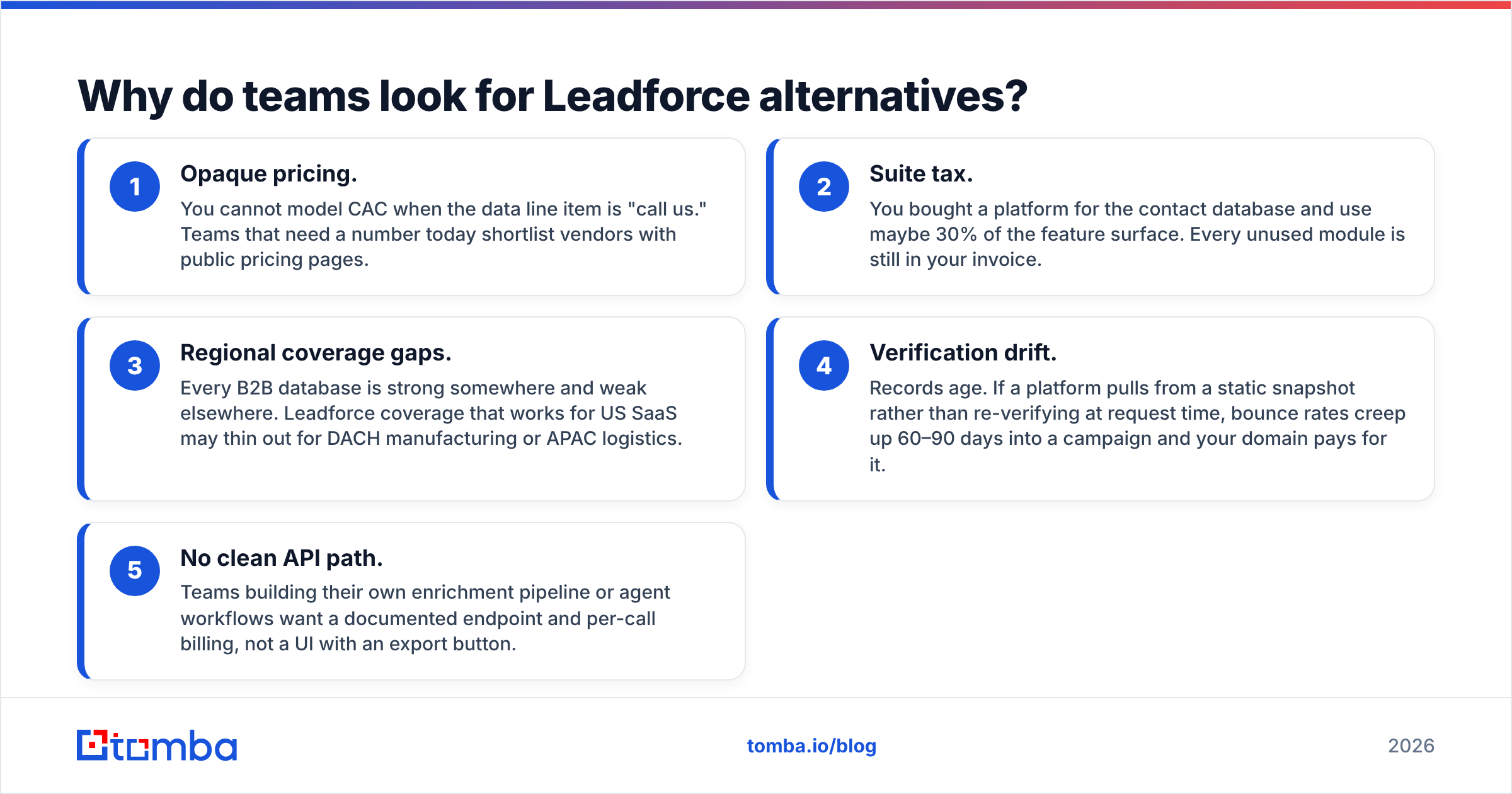
Five patterns come up repeatedly in switching conversations, and they map cleanly onto what you should replace it with:
- Opaque pricing. You cannot model CAC when the data line item is "call us." Teams that need a number today shortlist vendors with public pricing pages.
- Suite tax. You bought a platform for the contact database and use maybe 30% of the feature surface. Every unused module is still in your invoice.
- Regional coverage gaps. Every B2B database is strong somewhere and weak elsewhere. Leadforce coverage that works for US SaaS may thin out for DACH manufacturing or APAC logistics.
- Verification drift. Records age. If a platform pulls from a static snapshot rather than re-verifying at request time, bounce rates creep up 60–90 days into a campaign and your domain pays for it.
- No clean API path. Teams building their own enrichment pipeline or agent workflows want a documented endpoint and per-call billing, not a UI with an export button.
Be honest about which of those five is your real problem. If it is #1 or #2, a focused tool saves you money immediately. If it is #3, you need a different database, not a different interface — and you may end up running two vendors in parallel, which is normal and usually cheaper than one "complete" suite.
Which Leadforce alternatives are worth shortlisting in 2026?#
Here is the comparison first, detail after. Published prices move constantly — treat this as a shortlist filter, then verify on each vendor's own page before you buy.
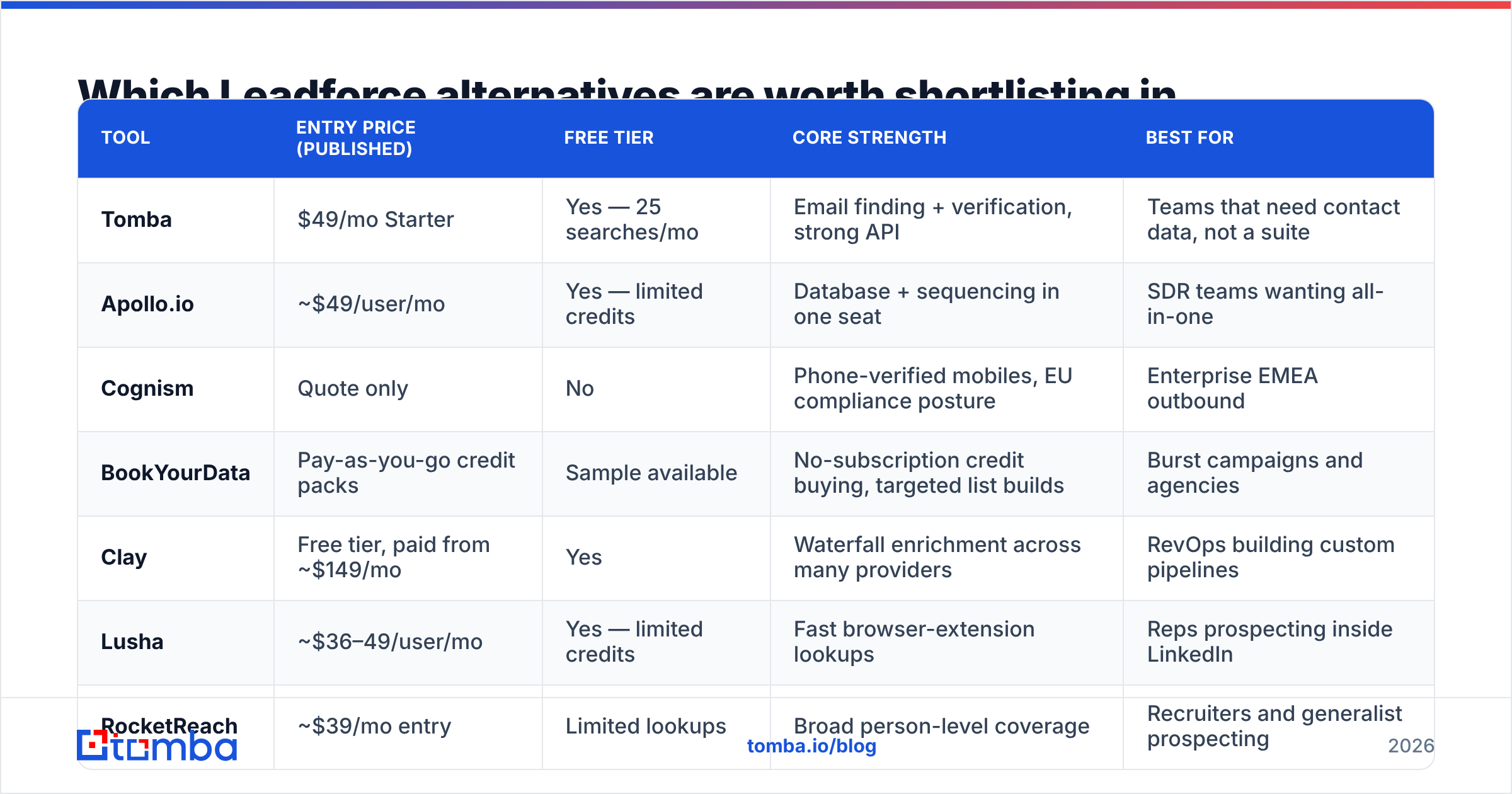
| Tool | Entry price (published) | Free tier | Core strength | Best for |
|---|---|---|---|---|
| Tomba | $49/mo Starter | Yes — 25 searches/mo | Email finding + verification, strong API | Teams that need contact data, not a suite |
| Apollo.io | ~$49/user/mo | Yes — limited credits | Database + sequencing in one seat | SDR teams wanting all-in-one |
| Cognism | Quote only | No | Phone-verified mobiles, EU compliance posture | Enterprise EMEA outbound |
| BookYourData | Pay-as-you-go credit packs | Sample available | No-subscription credit buying, targeted list builds | Burst campaigns and agencies |
| Clay | Free tier, paid from ~$149/mo | Yes | Waterfall enrichment across many providers | RevOps building custom pipelines |
| Lusha | ~$36–49/user/mo | Yes — limited credits | Fast browser-extension lookups | Reps prospecting inside LinkedIn |
| RocketReach | ~$39/mo entry | Limited lookups | Broad person-level coverage | Recruiters and generalist prospecting |
| ZoomInfo | Quote only | No | Deepest US firmographic + intent | Enterprise with a data budget |
| Instantly | ~$37/mo sending plans | Trial | Sending infrastructure + warmup | Teams that already have a data source |
Tomba — the focused replacement#
If you strip Leadforce down to the module you actually use daily, it is almost always "find the email, confirm it is real." That is what Tomba does as a primary product rather than a bundled feature.
The practical differences: pricing is published (Free at 25 searches/mo, $49 Starter, $99 Growth, $249 Pro, custom Enterprise), verification is a first-class product rather than a checkbox, and the Tomba API is documented for people building pipelines instead of clicking export. The email finder handles the name-plus-domain case, domain search handles "give me everyone at this company," and the email verifier runs before you send rather than after you bounce.
What you give up: no native sequencer, no intent scoring, no dialer. If those matter, you pair Tomba with a sending tool — which is frequently still cheaper than one suite seat.
Apollo.io — the closest all-in-one swap#
Apollo is the most common landing spot for teams that liked the suite concept but wanted transparent per-seat pricing. You get a large contact database, sequences, a dialer, and basic scoring in a single seat starting around $49/user/month.
The trade-off is well documented in user reviews: at the entry tier, export credits run out faster than people expect, and data accuracy on smaller or non-US companies is inconsistent. Apollo is excellent value when your ICP is mid-market US software. It gets less impressive when it is not.
Cognism — if the problem was EMEA coverage#
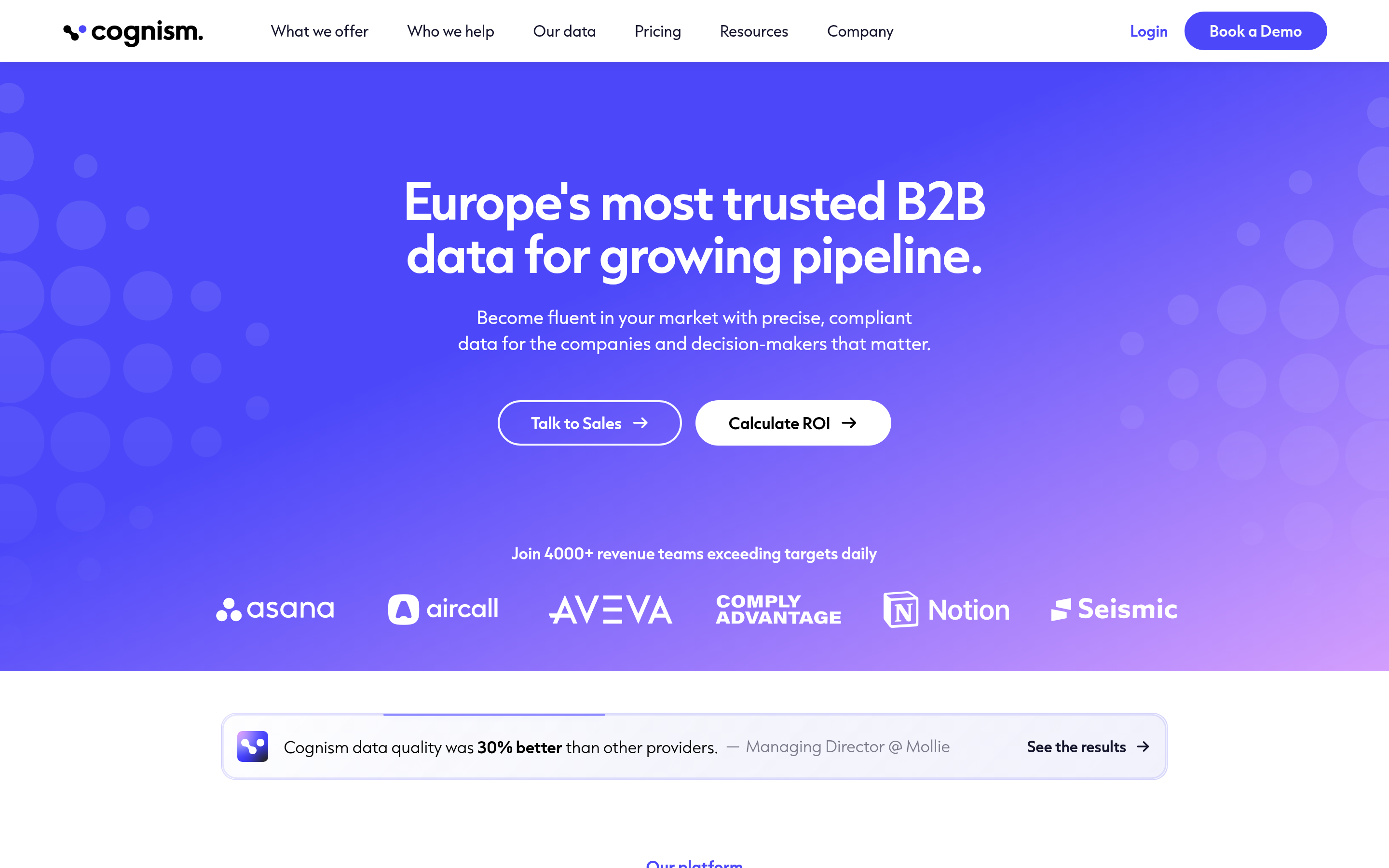
Cognism's differentiator is phone-verified mobile numbers and a compliance posture built for European outbound. If your Leadforce problem was "the data is fine in the US and useless in Germany," this is the swap. Pricing is quote-only, so you have not escaped the demo call — you have just made it worth taking.
BookYourData — if you buy in bursts#
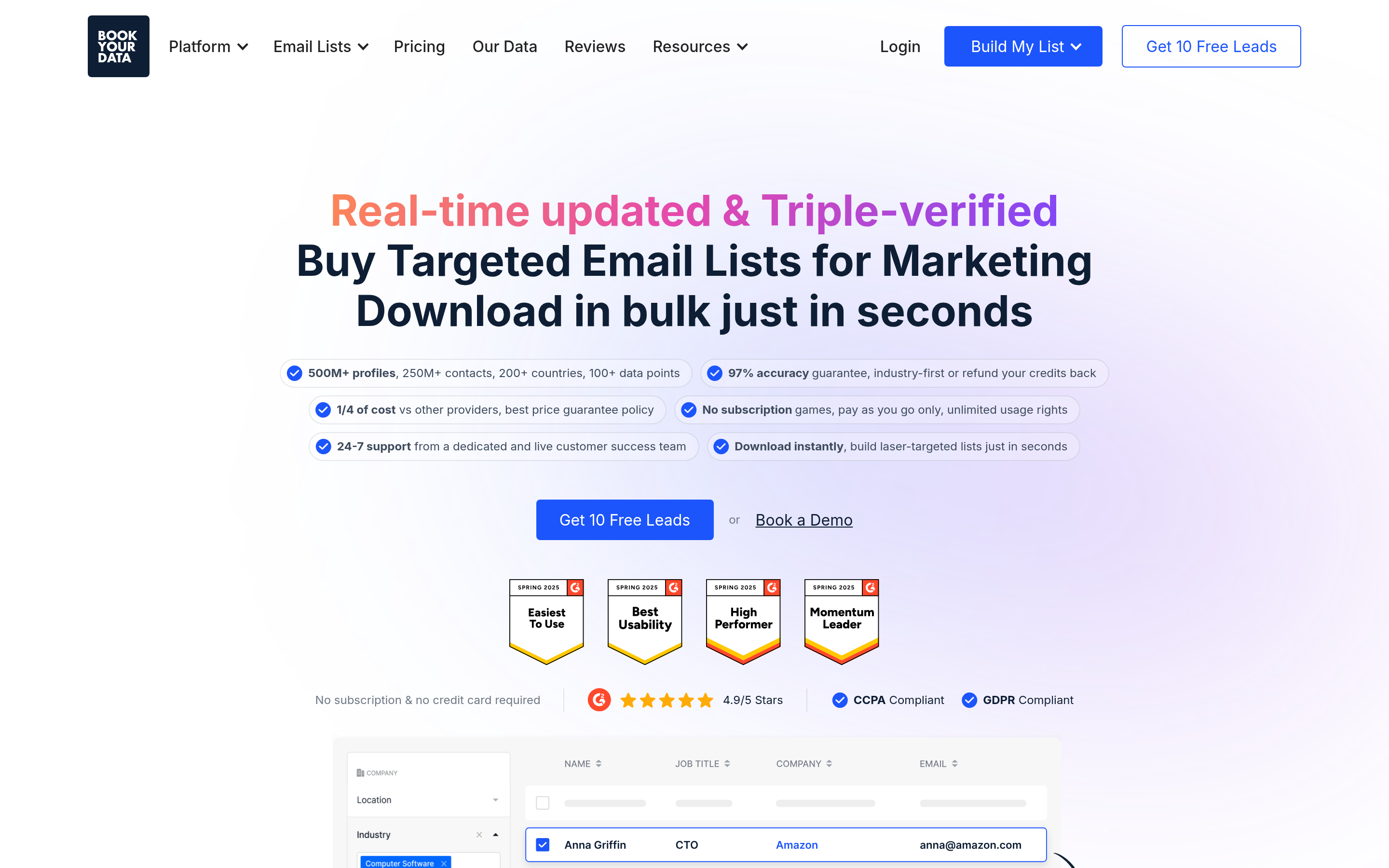
BookYourData takes a different shape: you buy credits in packs rather than committing to a monthly seat, and you build targeted lists against filters up front. For agencies running a campaign for one client this quarter and a different ICP next quarter, that model fits better than a subscription that idles between projects. It is a genuinely different purchasing motion, not just a cheaper version of the same thing — worth a look if your usage is spiky.
Clay — if you want to orchestrate, not buy#
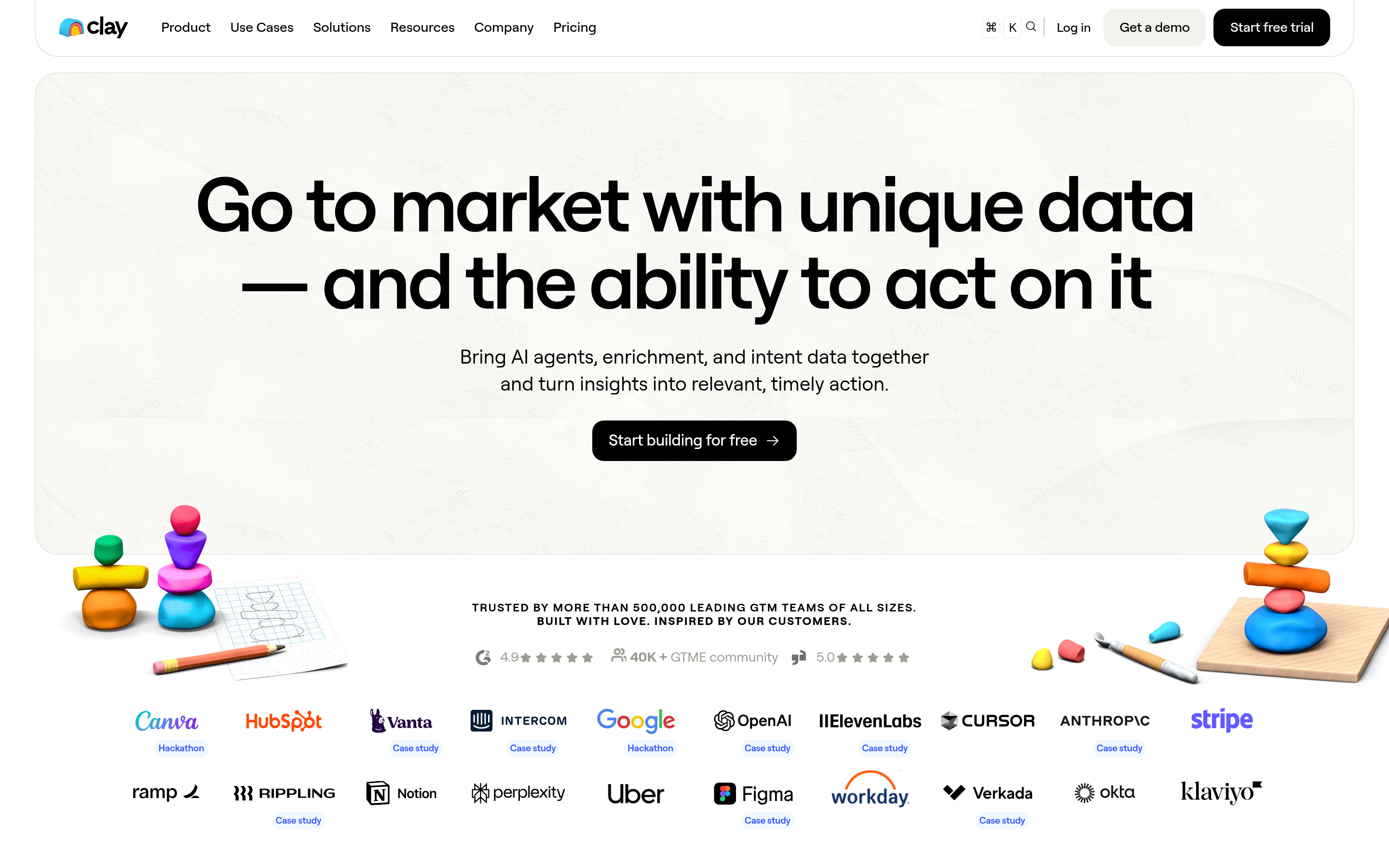
Clay is not a database. It is a waterfall enrichment layer that queries many providers in sequence until one returns a match, then runs your logic on the result. Teams that switch from Leadforce to Clay usually do so because they want to own the enrichment logic rather than accept a vendor's.
It is powerful and it is not cheap once credits scale. It also expects someone on your team to enjoy building workflows. If nobody does, Clay becomes shelfware fast.
Lusha and RocketReach — the lightweight lookups#
Both are reasonable if your volume is modest and your workflow is "I am on a LinkedIn profile, I need this person's email now." Lusha's extension is fast; RocketReach's person-level coverage is broad. Neither is built to be the data backbone of a 10,000-contact campaign, and neither tries to be.
ZoomInfo — the heavyweight#

If your Leadforce evaluation ended with "this is close but not deep enough," ZoomInfo is the deeper version. It is also the most expensive option on this list by a wide margin, with annual contracts and a real implementation cost. Only worth it when a single closed deal pays for the year.
Instantly — if the data was never the problem#
Sometimes the complaint about a lead-gen platform is really a deliverability complaint. If your emails are landing in spam, swapping databases will not fix it. Instantly and similar sending tools handle warmup, inbox rotation, and sending cadence — the layer Leadforce does not own well.
How do you compare these tools without wasting a month?#
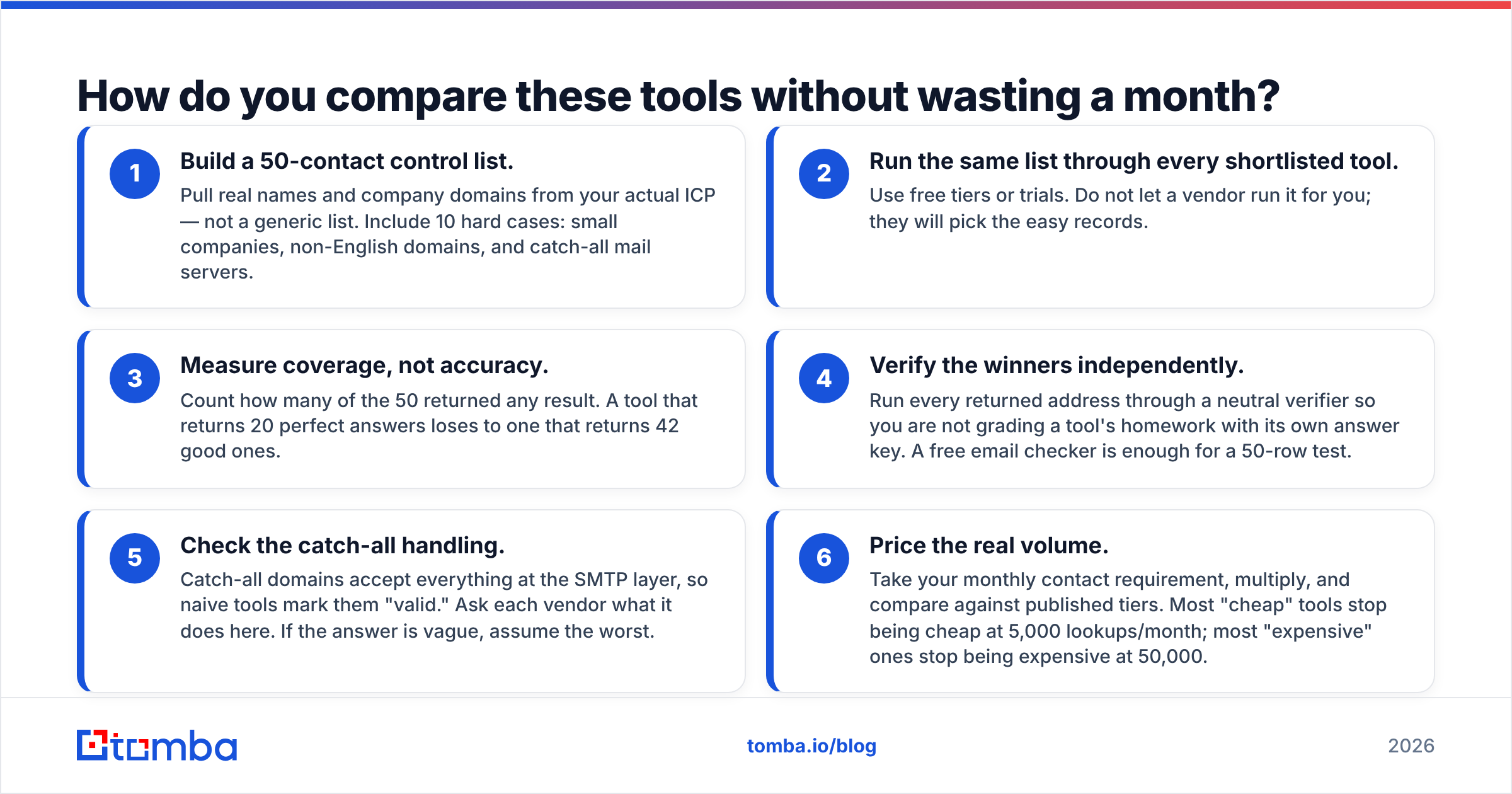
Vendor accuracy claims are unfalsifiable marketing. Run your own test instead. Six steps, about ninety minutes:
- Build a 50-contact control list. Pull real names and company domains from your actual ICP — not a generic list. Include 10 hard cases: small companies, non-English domains, and catch-all mail servers.
- Run the same list through every shortlisted tool. Use free tiers or trials. Do not let a vendor run it for you; they will pick the easy records.
- Measure coverage, not accuracy. Count how many of the 50 returned any result. A tool that returns 20 perfect answers loses to one that returns 42 good ones.
- Verify the winners independently. Run every returned address through a neutral verifier so you are not grading a tool's homework with its own answer key. A free email checker is enough for a 50-row test.
- Check the catch-all handling. Catch-all domains accept everything at the SMTP layer, so naive tools mark them "valid." Ask each vendor what it does here. If the answer is vague, assume the worst.
- Price the real volume. Take your monthly contact requirement, multiply, and compare against published tiers. Most "cheap" tools stop being cheap at 5,000 lookups/month; most "expensive" ones stop being expensive at 50,000.
That test costs you an afternoon and routinely changes the shortlist ranking. Peer review sites like G2 are useful for spotting support and billing complaints, but they cannot tell you whether a database covers your specific vertical.

What does switching actually cost you?#
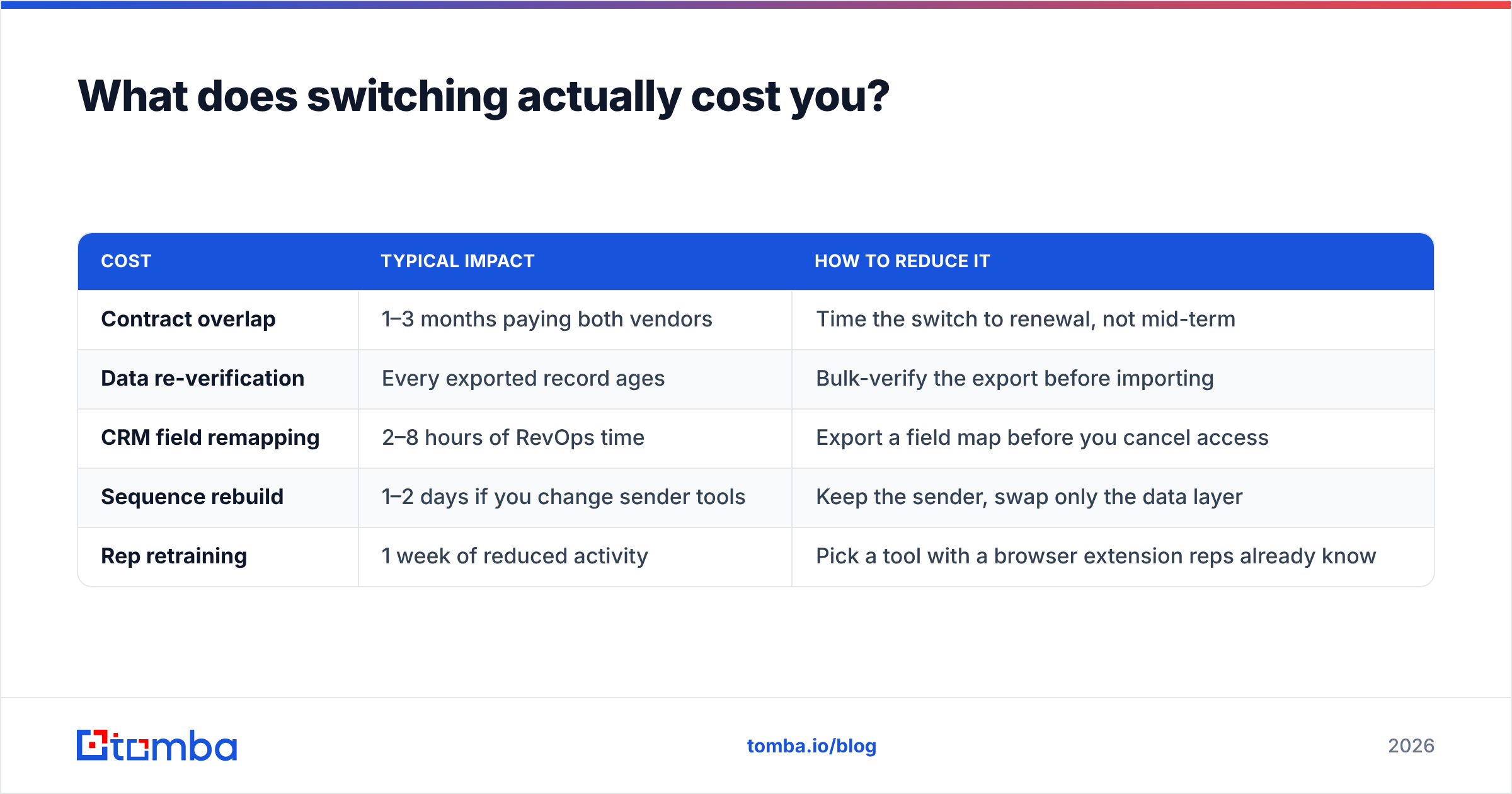
The subscription is the small number. Budget for the rest:
| Cost | Typical impact | How to reduce it |
|---|---|---|
| Contract overlap | 1–3 months paying both vendors | Time the switch to renewal, not mid-term |
| Data re-verification | Every exported record ages | Bulk-verify the export before importing |
| CRM field remapping | 2–8 hours of RevOps time | Export a field map before you cancel access |
| Sequence rebuild | 1–2 days if you change sender tools | Keep the sender, swap only the data layer |
| Rep retraining | 1 week of reduced activity | Pick a tool with a browser extension reps already know |
The single biggest avoidable cost on that list is the first one. Teams cancel in a panic, lose access to their historical exports, and then discover the records they need were only ever inside the old platform. Export everything — contacts, tags, campaign history — before you give notice.
The second biggest is skipping re-verification. Any list that has been sitting in a platform for six months has decayed. Running it through bulk verification before the first send on new infrastructure protects the sender reputation you are about to rebuild.
Which Leadforce alternative should you pick?#
Match the tool to the actual complaint:
- "The pricing was a black box." → Tomba or Apollo. Both publish tiers you can model today. Compare Tomba pricing against your monthly lookup volume before you commit.
- "We paid for modules we never opened." → Tomba, plus a sender you already trust. Unbundling almost always wins on cost.
- "Coverage was weak in our region." → Cognism for EMEA, ZoomInfo for deep US firmographics. Accept that this costs more.
- "We only run campaigns twice a year." → BookYourData's credit packs. Subscriptions punish spiky usage.
- "We want to build our own enrichment logic." → Clay, or go straight to APIs and orchestrate yourself.
- "Our emails were bouncing." → That is a verification and deliverability problem, not a database problem. Fix the verification layer first.
There is no universally correct answer here, and any article that gives you one is selling something. What is consistent across every switching story: teams who unbundled ended up with a lower bill and a clearer picture of which layer was actually underperforming.
Frequently asked questions#
Is there a free Leadforce alternative? Yes, with limits. Tomba's free tier includes 25 searches per month, Apollo and Lusha both offer capped free credits, and Clay has a free workspace. Free tiers are for evaluation, not production volume — but 25 searches is more than enough to run the control-list test described above.
Can I replace Leadforce with two cheaper tools? Usually, and it is the most common outcome. A data and verification layer plus a sending tool covers what most teams used the suite for, often at half the cost. The trade-off is one more integration to maintain.
Do these tools integrate with my CRM? The major ones do. Check the specific direction you need — pushing enriched contacts into HubSpot is common; pulling CRM records out for enrichment is less universally supported. Tomba's integrations cover the usual suspects plus Zapier and Make for anything custom.
How accurate is any of this data? Accuracy depends entirely on your ICP, and every vendor's published number was measured on a list that flattered it. Assume 60–85% coverage on realistic B2B lists and verify everything before sending. Anyone claiming 99% across all segments is measuring something other than what you care about.
Ready to unbundle?#
If your Leadforce evaluation comes down to "we mostly needed accurate contact data at a price we could predict," start with the Tomba Email Finder. The free tier gives you 25 searches — enough to run your 50-contact control test against your real ICP and see the coverage numbers for yourself before any card details are involved. If the results hold up, Starter is $49/month with verification included; if they do not, you have lost an afternoon instead of an annual contract.
Related guides#
// get started
Find, verify and enrich your first contacts today
Start on the free plan with 25 searches a month, then scale when your team is ready.
Free plan · No credit card required · GDPR & CCPA
// about the author