LeadGibbon vs SalesIntel (2026): Which B2B Data Tool Wins?
LeadGibbon sells cheap, fast list-building. SalesIntel sells human-verified, intent-enriched contact data at enterprise prices. Here is the honest breakdown of accuracy, coverage, cost, and who each one actually fits.
LeadGibbon vs SalesIntel is a budget-versus-rigor choice. One tool sells fast, cheap list building. The other sells human-verified data at enterprise prices. This guide compares both on accuracy, coverage, price, and team fit.
TL;DR
- LeadGibbon is a lightweight, self-serve list-builder: a Chrome extension plus a contact database. It suits solo founders, agencies, and small SDR teams who want emails in a CSV today.
- SalesIntel is an enterprise B2B data platform: human-verified contacts, direct dials, technographics, and Bombora intent, sold on annual, quote-based contracts.
- The two are not really substitutes. They sit at opposite ends of the price and rigor curve. The winner depends on what you need: volume at low cost or verified depth.
- SalesIntel's coverage is strongest in North America. Prospecting into EMEA, APAC, or LATAM? Test coverage on your real ICP first.
- Need accurate work emails on demand, with no seat-based contract? Then a dedicated email finder with usage-based pricing is usually the cheaper third option.
What are LeadGibbon and SalesIntel?#
LeadGibbon is a B2B lead-generation tool built around one loop: find a person or a company, get the work email, push it to a spreadsheet. It ships a browser extension that works next to LinkedIn and Sales Navigator. It also adds a searchable contact database and email verification on top of the results. The whole personality of the product is speed. You sign up, you export, you send. You can see current packaging on the LeadGibbon site.
SalesIntel is a different animal. It sells itself as a data quality company. A human research team re-verifies contacts on a rolling cycle. On top of that sit firmographics, technographics, and third-party intent from Bombora. It also offers "Research on Demand": you request a contact the database lacks, and analysts go build it. The buyer is usually a RevOps or demand-gen leader at a mid-market or enterprise company replacing ZoomInfo. Details are on the SalesIntel site.
Put simply: LeadGibbon is a tool you buy with a credit card. SalesIntel is a platform you buy with a procurement cycle.
LeadGibbon vs SalesIntel: how do they compare head-to-head?#
Here is the practical comparison, stripped of marketing language. Check current numbers with each vendor first. Data platforms re-package often, and plan names change more than the product does.
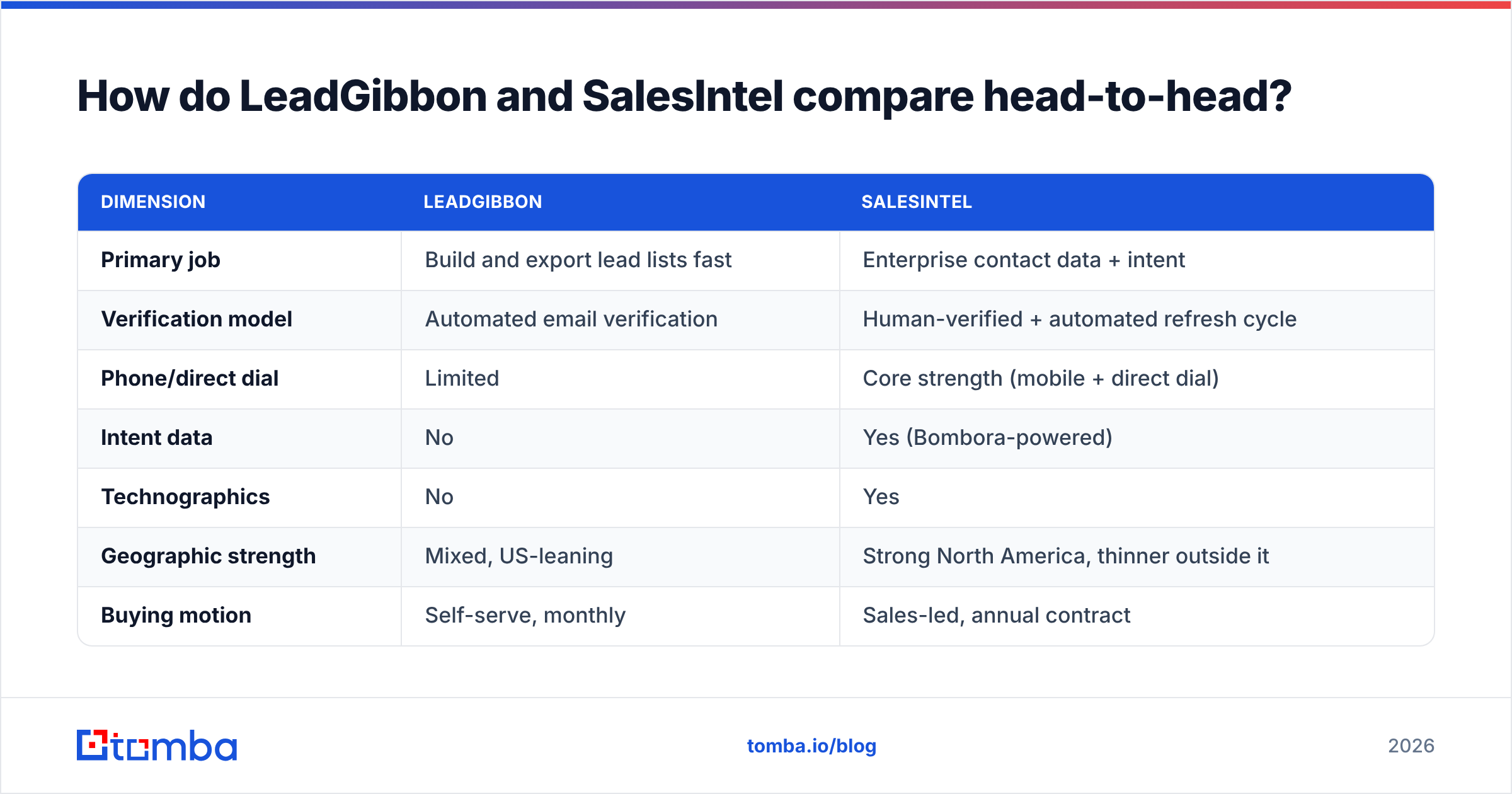
| Dimension | LeadGibbon | SalesIntel |
|---|---|---|
| Primary job | Build and export lead lists fast | Enterprise contact data + intent |
| Verification model | Automated email verification | Human-verified + automated refresh cycle |
| Phone/direct dial | Limited | Core strength (mobile + direct dial) |
| Intent data | No | Yes (Bombora-powered) |
| Technographics | No | Yes |
| Geographic strength | Mixed, US-leaning | Strong North America, thinner outside it |
| Buying motion | Self-serve, monthly | Sales-led, annual contract |
| Typical entry cost | Low double-digit to ~$99/mo band | Quote-based; expect four to five figures/yr |
| CRM integrations | Basic (CSV, common connectors) | Deep (Salesforce, HubSpot, Outreach, Salesloft) |
| Best for | Solo founders, agencies, small SDR pods | Mid-market/enterprise RevOps teams |
| Contract flexibility | Cancel anytime | Annual commitment typical |
| Custom research | No | Yes (Research on Demand) |
The table makes the trade-off obvious. You are choosing between cost and control (LeadGibbon) and depth and defensibility (SalesIntel). A 3-person agency booking meetings for clients does not need Bombora intent surges. A 40-seat sales org running account-based plays absolutely does.
How accurate is the data in each?#
Accuracy is where most comparisons get vague, so let's be precise about what "accurate" means. B2B contact data fails in three separate ways. These two tools fail differently on each.
- The email is wrong, or the mailbox does not exist. This is a verification problem. LeadGibbon runs automated checks. SalesIntel runs automated checks plus periodic human re-verification. SalesIntel wins this one on paper.
- The email works, but the person left the company. This is a freshness problem, and it is the silent killer of outbound. Job-change churn in sales and marketing roles runs about 20–30% a year. A database refreshed every 90 days beats one refreshed once a year. That gap is the real argument for SalesIntel's premium.
- The contact is not in the database at all. This is a coverage problem, and no vendor solves it everywhere. LeadGibbon's LinkedIn-adjacent workflow helps here. If you can see the person, you can usually get a candidate email. SalesIntel's Research on Demand helps too, but it runs on a turnaround time, not instantly.

The practical implication is simple. Never trust a vendor's headline accuracy number. Run a 200-contact bake-off against your own ICP instead. Then push every result through an independent email verifier before anything reaches a sequencer.
Even a genuinely good database will hand you 5–10% risk records. A single bounce spike can cost weeks of reputation repair. For context on why that matters, see the primer on email deliverability.
One more accuracy nuance: catch-all domains. Many enterprise domains accept every address at the SMTP layer. So "verified" often means "unverifiable, probably fine." Ask both vendors how they classify catch-alls. If the answer is "we mark them valid," your bounce rate will not match their accuracy claim.
What does each one actually cost?#
This is where the two products separate hardest.
LeadGibbon publishes self-serve tiers. Entry plans have sat in the ~$49–$99 per month band, with monthly credit allotments, and scale up from there. You can start, test, and cancel in the same week. There is no procurement overhead and no seat minimum. That is precisely why small teams like it.
SalesIntel does not publish pricing. It is a quote-based, annual-contract product. Deals are built around seats plus credits, with add-ons for intent and Research on Demand. Public buyer reports on G2 put it in mid-market-to-enterprise spend. It is cheaper than ZoomInfo in most head-to-heads, but still an order of magnitude above self-serve tooling. Budget for a demo, a security review, and a negotiation, not a checkout page.
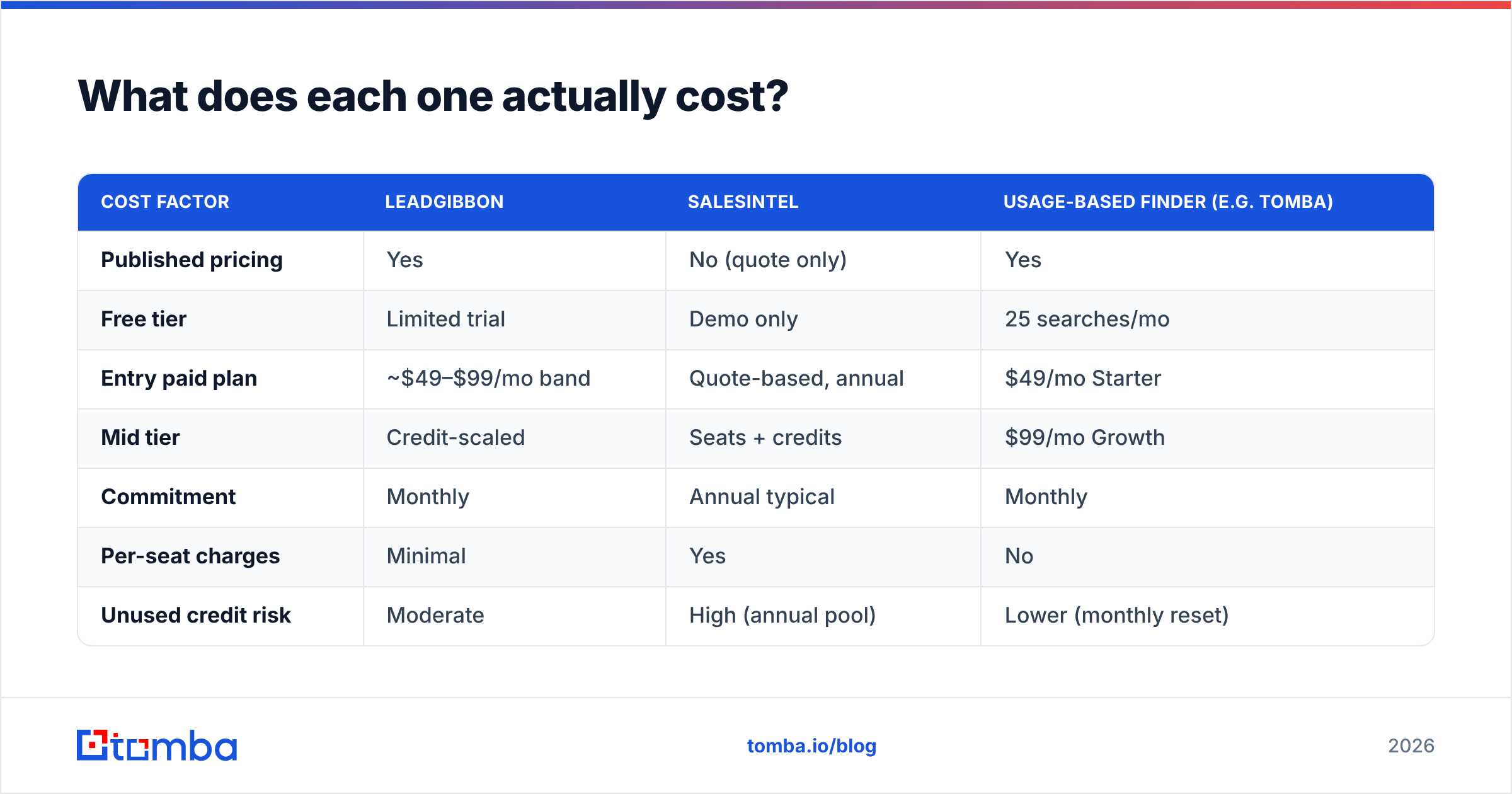
| Cost factor | LeadGibbon | SalesIntel | Usage-based finder (e.g. Tomba) |
|---|---|---|---|
| Published pricing | Yes | No (quote only) | Yes |
| Free tier | Limited trial | Demo only | 25 searches/mo |
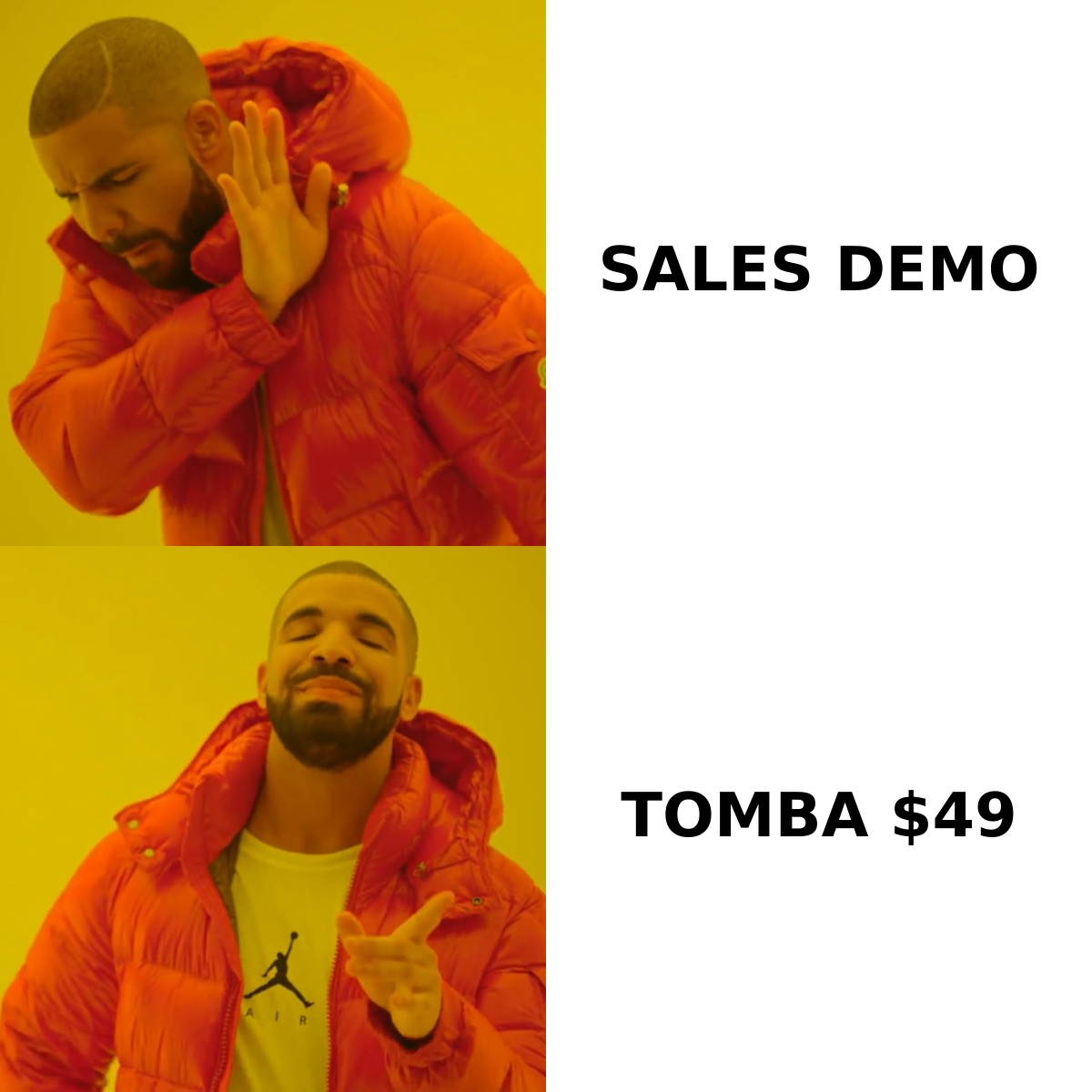
| Entry paid plan | ~$49–$99/mo band | Quote-based, annual | $49/mo Starter |
| Mid tier | Credit-scaled | Seats + credits | $99/mo Growth |
| Commitment | Monthly | Annual typical | Monthly |
| Per-seat charges | Minimal | Yes | No |
| Unused credit risk | Moderate | High (annual pool) | Lower (monthly reset) |
That last row matters more than teams expect. Annual credit pools look cheap per record on the quote. In practice they are not. Most organizations burn 60–70% of the pool and roll nothing over. So model your actual monthly consumption for the last two quarters before you buy a year's worth of anything.
Tomba's own pricing runs Free (25 searches/mo), Starter $49/mo, Growth $99/mo, Pro $249/mo, and Enterprise custom. Use it as a floor reference when you judge whether a five-figure contract is justified by the extra data.
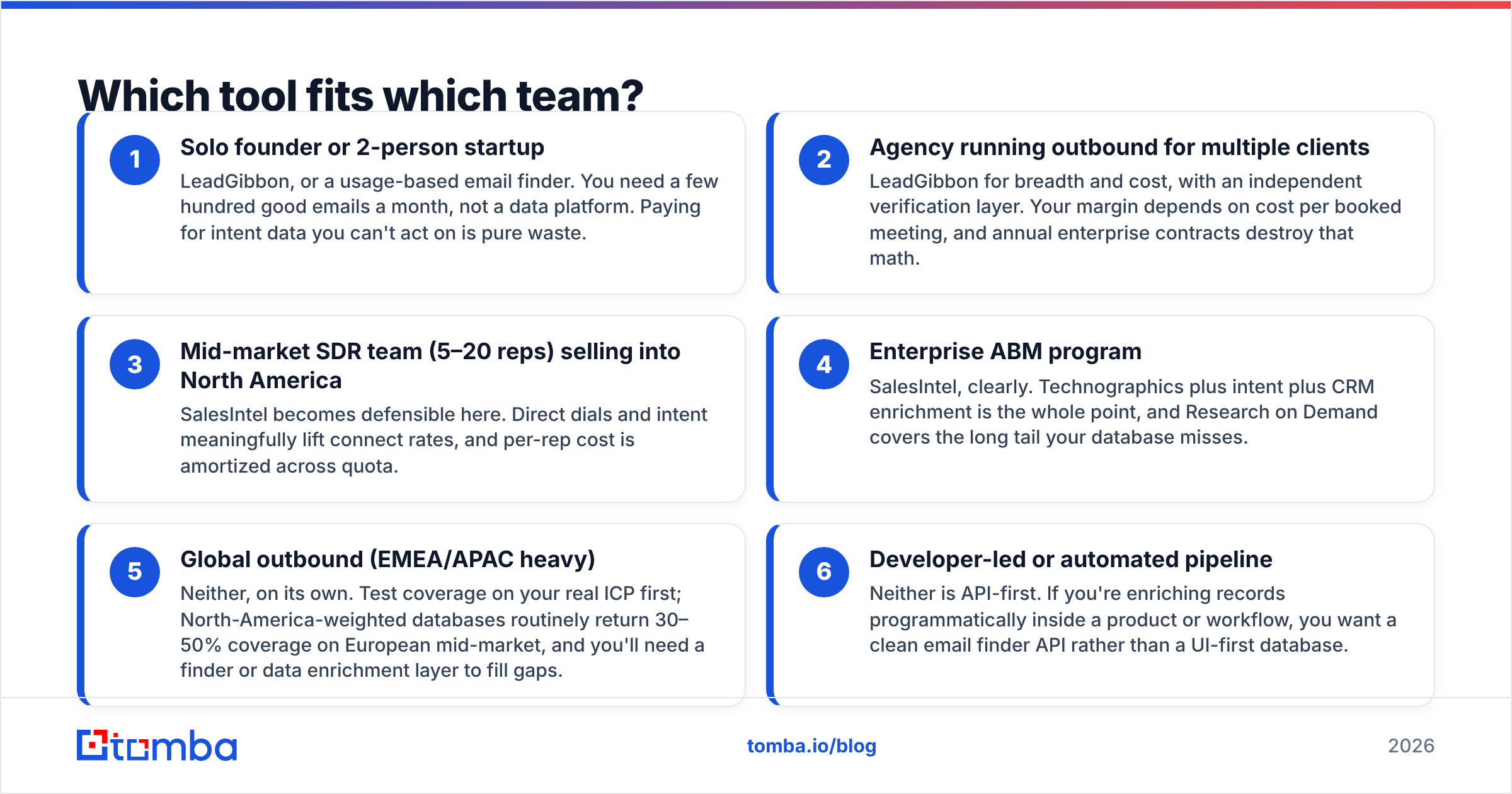
Which tool fits which team?#
Skip the feature matrix for a second. Match the tool to the motion:
- Solo founder or 2-person startup — LeadGibbon, or a usage-based email finder. You need a few hundred good emails a month, not a data platform. Paying for intent data you cannot act on is pure waste.
- Agency running outbound for multiple clients — LeadGibbon for breadth and cost, plus a separate verification layer. Your margin rides on cost per booked meeting, and annual enterprise contracts wreck that math.
- Mid-market SDR team (5–20 reps) selling into North America — SalesIntel starts to make sense here. Direct dials and intent lift connect rates, and the per-rep cost spreads across quota.
- Enterprise ABM program — SalesIntel, clearly. Technographics plus intent plus CRM enrichment is the whole point. Research on Demand covers the long tail your database misses.
- Global outbound (EMEA/APAC heavy) — Neither, on its own. Test coverage on your real ICP first. North-America-weighted databases often return only 30–50% coverage on European mid-market. You will need a finder or data enrichment layer to fill the gaps.
- Developer-led or automated pipeline — Neither is API-first. If you enrich records inside a product or a workflow, you want a clean email finder API instead of a UI-first database.
Where do both tools fall short?#
Honest criticism, both directions.
LeadGibbon's limits. Coverage is patchy outside common tech and SaaS verticals. There are no intent signals, no technographics, and no real account intelligence. You get contacts, not context. Phone data is thin. Verification is automated only, so you inherit the usual catch-all doubt. High-volume senders still need a separate verification step, which eats into the price advantage.
SalesIntel's limits. Price and contract rigidity are the obvious ones. You cannot test it properly without a sales cycle, and you cannot shrink it mid-year if headcount changes. Non-US coverage is the second gap. The third is subtler. Human verification is excellent when a record was touched recently. When it wasn't, it is no better than anyone else's. So ask what share of the records matching your ICP filters were human-verified in the last 90 days. Do not accept a database-wide number.
What both share. Neither is a sending tool. Neither fixes your offer. Neither will rescue a domain with a broken sender reputation. Data quality is necessary, but it is not sufficient. Teams routinely spend $20K on a data platform and keep a 1.2% reply rate, because the copy and the targeting never changed.
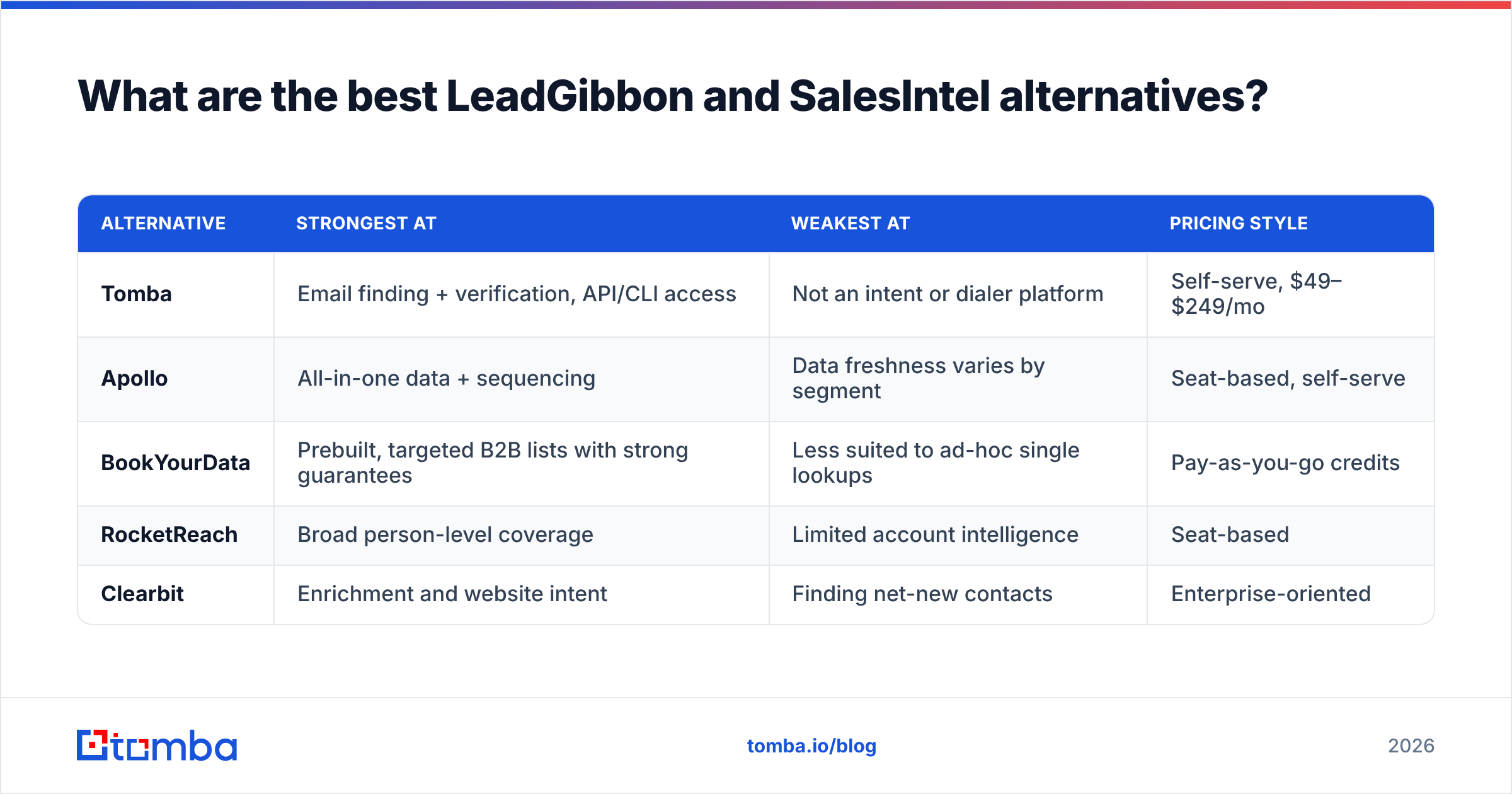
What are the best LeadGibbon and SalesIntel alternatives?#
If neither end of the spectrum fits, the middle is crowded and worth a look.

| Alternative | Strongest at | Weakest at | Pricing style |
|---|---|---|---|
| Tomba | Email finding + verification, API/CLI access | Not an intent or dialer platform | Self-serve, $49–$249/mo |
| Apollo | All-in-one data + sequencing | Data freshness varies by segment | Seat-based, self-serve |
| BookYourData | Prebuilt, targeted B2B lists with strong guarantees | Less suited to ad-hoc single lookups | Pay-as-you-go credits |
| RocketReach | Broad person-level coverage | Limited account intelligence | Seat-based |
| Clearbit | Enrichment and website intent | Finding net-new contacts | Enterprise-oriented |
A few of those are worth a closer look, depending on what you are replacing. Weighing the all-in-one route? Compare the Apollo alternative breakdown. Replacing an enrichment layer rather than a prospecting tool? The Clearbit alternative comparison is closer to your use case. BookYourData is the right call when you would rather buy a clean, pre-targeted list than run searches yourself. Different workflow, same destination.
The genuinely underrated option is a stack, not a suite. Use a focused finder for emails, a separate verifier before send, and a dialer or intent tool only if your motion really uses one. That stack usually costs less than one enterprise data seat. And every piece is swappable when one degrades.
How should you run the LeadGibbon vs SalesIntel evaluation?#
Do not evaluate on demo data. Run this test instead:
- Pull 250 real target accounts from your CRM. Weight them to match your actual pipeline mix by geography and company size.
- Ask each vendor to return contacts for a named role at each account. Measure coverage (records returned) and hit rate (records that are the right person).
- Push every email through an independent verifier. Record the bounce-risk spread, including catch-all counts.
- Send 100 records from each source through one identical sequence: same copy, same domain, same cadence. Then compare bounce rate and reply rate.
- Divide total annual cost by the number of usable contacts. That number is your real price, not the quoted cost per credit.
Most teams find the same pattern. The expensive platform wins on direct dials and loses on email coverage outside its core geography. That is not a reason to reject it. It is a reason to buy less of it and fill the gap cheaply. You can also check patterns fast with a free company email pattern lookup before you commit budget anywhere.
The bottom line#
LeadGibbon wins on price, speed, and zero commitment. SalesIntel wins on verification rigor, direct dials, intent, and North American depth. Under 10 reps and mostly sending email? LeadGibbon's economics are hard to argue with. Running ABM with a multi-channel motion and a real budget? SalesIntel earns its premium, as long as your ICP sits in its coverage sweet spot.
But the LeadGibbon vs SalesIntel debate misses what most teams use every day: accurate work emails, verified before send, available on demand without an annual contract. Neither tool is the efficient answer there.
That's the gap Tomba Email Finder was built for. Find professional email addresses by domain, name, or company. Verify them in the same workflow. Pull them through the UI, a Chrome extension, Google Sheets, or the API. Start on the free tier with 25 searches a month. Move to Starter at $49/mo when the volume justifies it, and skip the procurement cycle entirely. Test it against whatever quote is sitting in your inbox: 250 records will tell you more than any demo.
Related guides#
Ready to find emails that actually work?
Join 150,000+ professionals who stopped guessing and started sending. Free credits on signup — no credit card required.
Get the Tomba newsletter
Practical outbound tactics and product updates — once every two weeks.
About the author