Coaching Sales Managers: A Practical 2026 Framework for Results
Most sales coaching fails because it's random, rushed, and rep-focused. Here's how coaching sales managers themselves creates a coaching culture that actually lifts win rates.
Coaching sales managers is the single highest-leverage investment most revenue leaders skip. You hire strong closers, promote the best of them, and then expect them to develop other people with zero training in how to develop people. Then you wonder why coaching across the floor feels random.
This guide fixes that. It's about coaching the coaches — building the skill, the cadence, and the accountability that turn front-line managers into people who reliably make reps better.
TL;DR#
- Coaching sales managers beats coaching reps directly. One well-coached manager multiplies across an entire team; a well-coached rep improves one quota.
- Random coaching produces random results. You need a fixed cadence, a shared framework, and a metric you actually track.
- Skill-based coaching outperforms deal-based coaching. Chasing individual deals is firefighting; building repeatable skills compounds.
- Managers protect coaching time only when leaders protect it for them. If forecast calls always win, coaching always loses.
- Data quality is a coaching multiplier. Clean pipeline and accurate contact data mean 1:1s debate strategy, not spreadsheet errors.
Why coach sales managers instead of reps directly?#
The math is simple. A senior enablement leader or VP has a fixed number of hours. Spend them coaching a rep, and you improve one person's output. Spend them coaching a manager who runs eight reps, and you improve — if it sticks — eight people's output, plus every future hire that manager onboards.
Front-line managers are the true point of leverage in any sales organization. Gartner's sales research has consistently found that manager effectiveness is one of the largest swing factors in seller performance, yet managers are the least-developed layer in most companies. They get promoted for closing, handed a team, and left to figure out coaching by instinct.
Instinct is not a system. Some managers happen to be naturals. Most default to what they know: jumping into deals, telling reps what they would do, and calling it coaching. That's directing, not coaching — and it creates dependent reps who can't think without their manager in the room.
Coaching the manager breaks that cycle. When you teach a manager how to coach — how to ask instead of tell, how to diagnose a skill gap, how to run a consistent 1:1 — you install a capability that keeps paying off long after your session ends.
What does good sales manager coaching actually look like?#
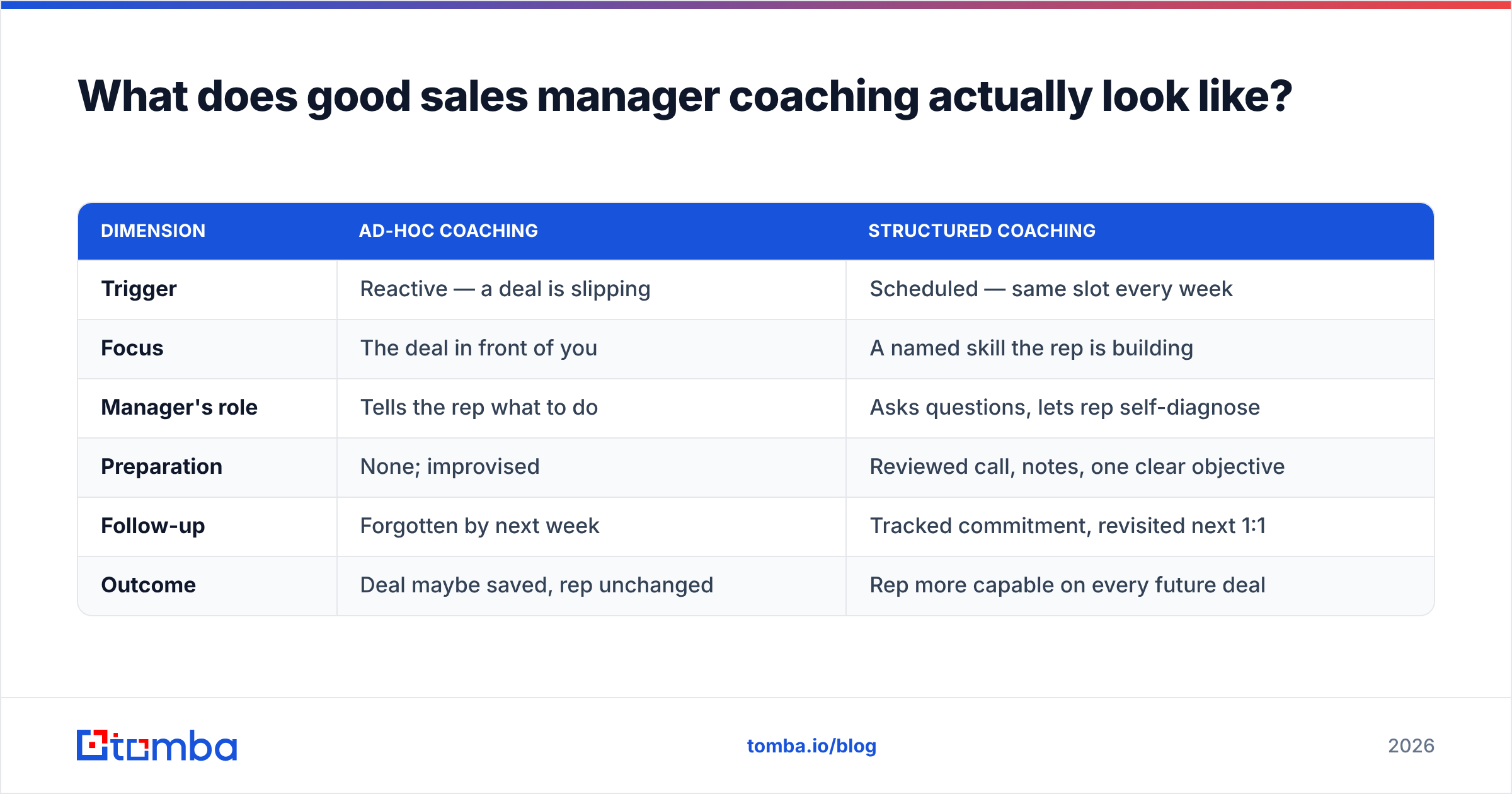
Good coaching of managers has three ingredients: a shared framework, a protected cadence, and a measurable focus. Miss any one and it degrades into hallway pep talks.
Here's the difference in practice:
| Dimension | Ad-hoc coaching | Structured coaching |
|---|---|---|
| Trigger | Reactive — a deal is slipping | Scheduled — same slot every week |
| Focus | The deal in front of you | A named skill the rep is building |
| Manager's role | Tells the rep what to do | Asks questions, lets rep self-diagnose |
| Preparation | None; improvised | Reviewed call, notes, one clear objective |
| Follow-up | Forgotten by next week | Tracked commitment, revisited next 1:1 |
| Outcome | Deal maybe saved, rep unchanged | Rep more capable on every future deal |
Notice the pattern. Ad-hoc coaching is deal rescue disguised as development. Structured coaching treats each deal as raw material for building a durable skill. The deal might still slip — but the rep gets better either way, and better reps slip fewer deals over time.
The manager's job is to move from player to coach. A player takes the shot. A coach makes the team take better shots. Coaching sales managers is largely about un-teaching the reflex that made them great individual contributors.
What framework should managers use to coach reps?#
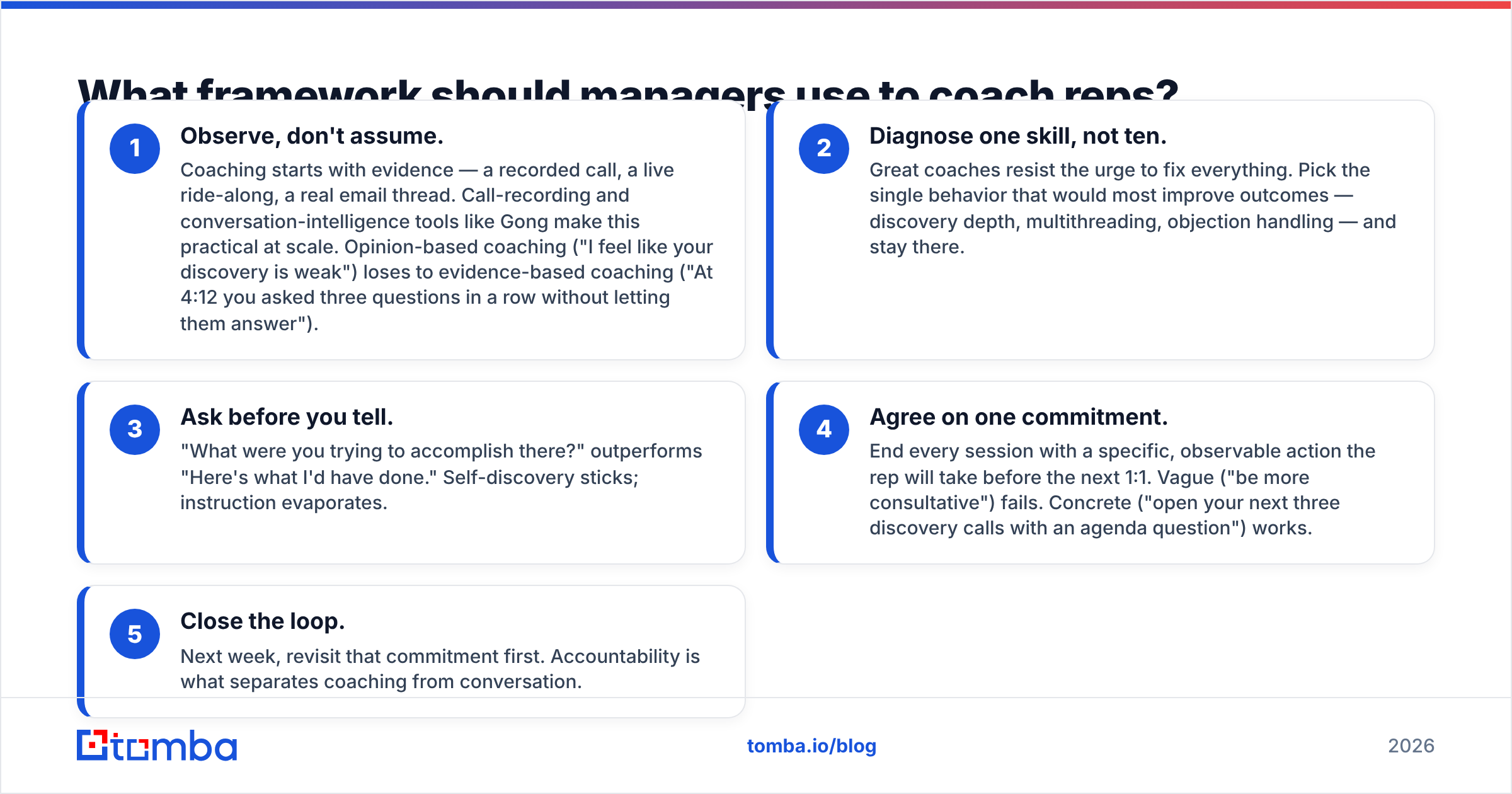
You don't need a proprietary methodology with a trademark. You need a repeatable loop that any manager can run without you in the room. The strongest ones share the same skeleton:
- Observe, don't assume. Coaching starts with evidence — a recorded call, a live ride-along, a real email thread. Call-recording and conversation-intelligence tools like Gong make this practical at scale. Opinion-based coaching ("I feel like your discovery is weak") loses to evidence-based coaching ("At 4:12 you asked three questions in a row without letting them answer").
- Diagnose one skill, not ten. Great coaches resist the urge to fix everything. Pick the single behavior that would most improve outcomes — discovery depth, multithreading, objection handling — and stay there.
- Ask before you tell. "What were you trying to accomplish there?" outperforms "Here's what I'd have done." Self-discovery sticks; instruction evaporates.
- Agree on one commitment. End every session with a specific, observable action the rep will take before the next 1:1. Vague ("be more consultative") fails. Concrete ("open your next three discovery calls with an agenda question") works.
- Close the loop. Next week, revisit that commitment first. Accountability is what separates coaching from conversation.
Teach your managers this loop, watch them run it, and coach their execution of it. That's the recursive part — you're coaching the coaching. When a manager skips the "ask before you tell" step, that's your coaching moment with them, exactly as they'd catch a rep skipping discovery.
How often should managers coach, and how do leaders protect it?#
Weekly, and the protection has to come from the top. The most common failure mode isn't managers who don't know how to coach — it's managers who know how but never do it, because something louder always wins.
Every manager faces the same brutal trade-off, and left alone they resolve it the wrong way:
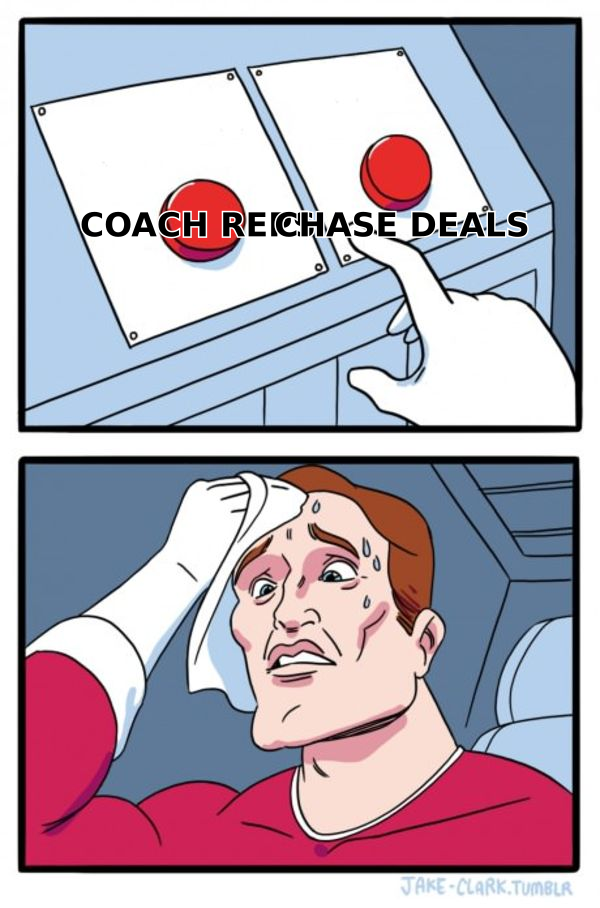
When a forecast call, an escalation, and a coaching 1:1 all land on the same Tuesday, coaching is the one with no immediate consequence for cancelling. So it's the one that dies. Multiply that across a quarter and "we coach weekly" becomes "we coached twice."
Leaders fix this by making coaching non-negotiable and visible:
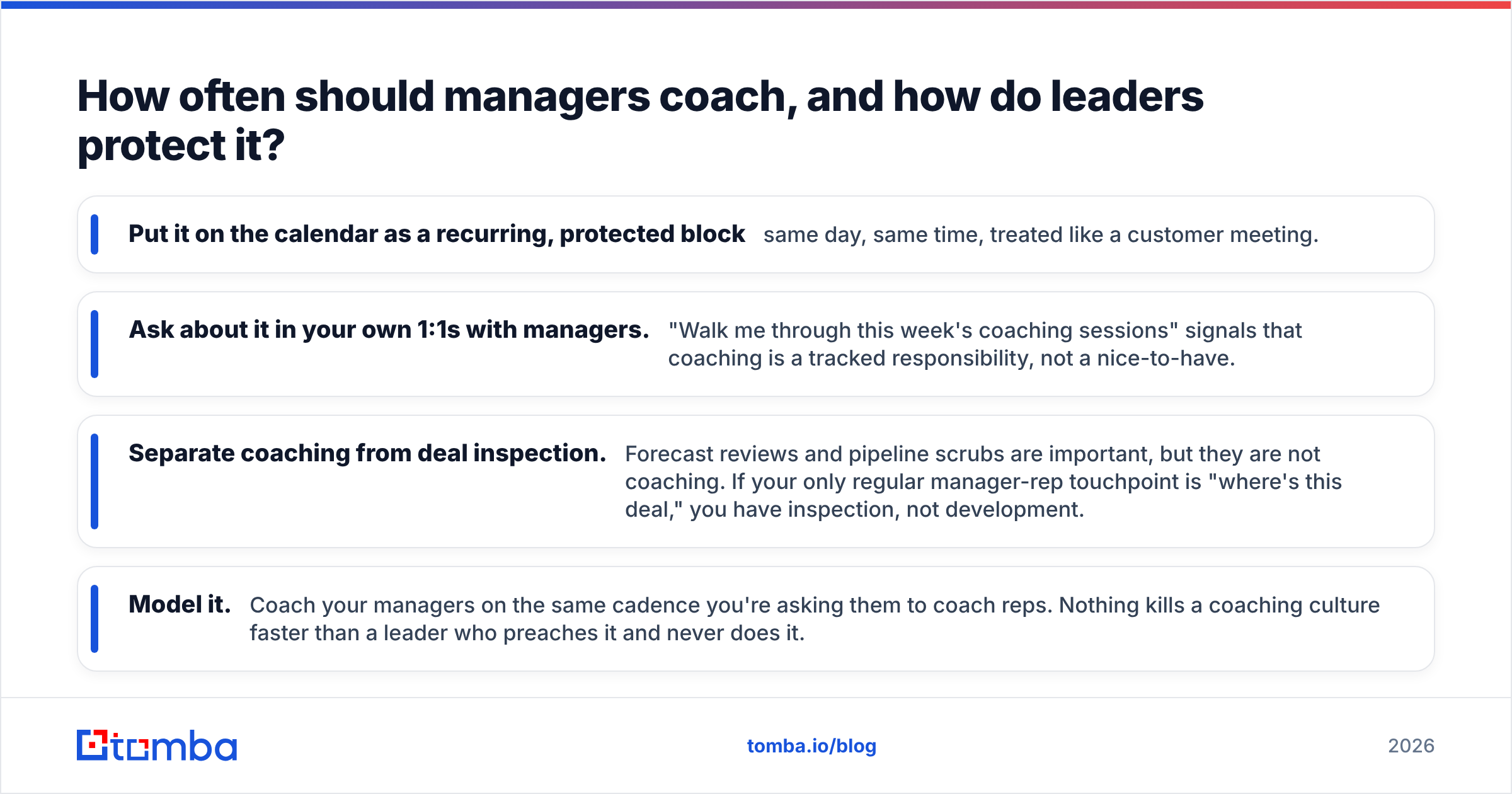
- Put it on the calendar as a recurring, protected block — same day, same time, treated like a customer meeting.
- Ask about it in your own 1:1s with managers. "Walk me through this week's coaching sessions" signals that coaching is a tracked responsibility, not a nice-to-have.
- Separate coaching from deal inspection. Forecast reviews and pipeline scrubs are important, but they are not coaching. If your only regular manager-rep touchpoint is "where's this deal," you have inspection, not development.
- Model it. Coach your managers on the same cadence you're asking them to coach reps. Nothing kills a coaching culture faster than a leader who preaches it and never does it.
A reliable rhythm that works: managers run a 30-minute skill-focused 1:1 with each rep weekly, and leaders run a coaching-focused session with each manager weekly or biweekly. Keep deal inspection in a separate meeting so it stops eating the development time.
Which metrics tell you coaching is working?#
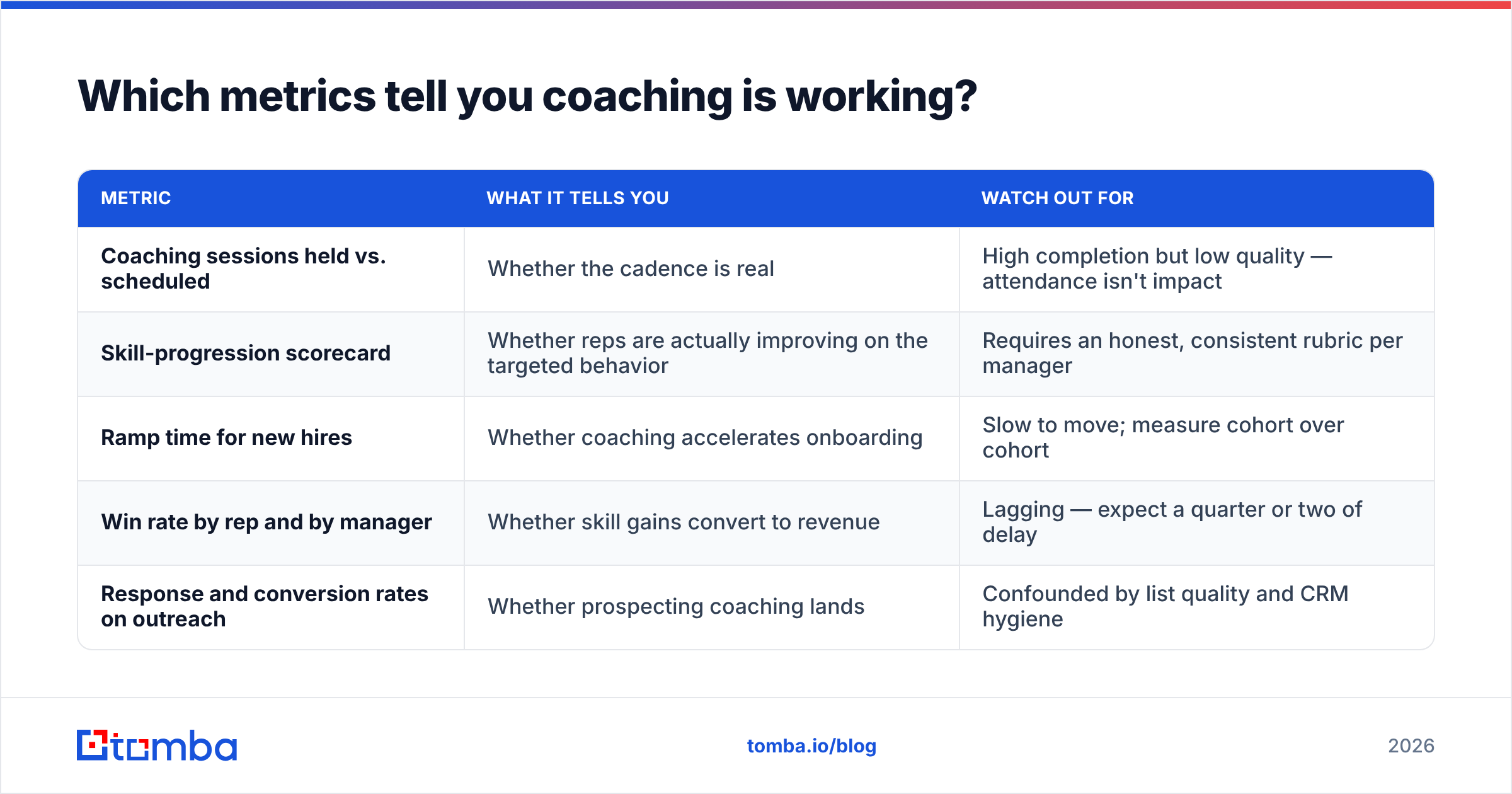
Coaching is not a soft, unmeasurable art. The inputs and outputs are both trackable — you just have to pick the right ones and be patient.
| Metric | What it tells you | Watch out for |
|---|---|---|
| Coaching sessions held vs. scheduled | Whether the cadence is real | High completion but low quality — attendance isn't impact |
| Skill-progression scorecard | Whether reps are actually improving on the targeted behavior | Requires an honest, consistent rubric per manager |
| Ramp time for new hires | Whether coaching accelerates onboarding | Slow to move; measure cohort over cohort |
| Win rate by rep and by manager | Whether skill gains convert to revenue | Lagging — expect a quarter or two of delay |
| Response and conversion rates on outreach | Whether prospecting coaching lands | Confounded by list quality and CRM hygiene |
Two rules keep this honest. First, weight input metrics early and output metrics later. Coaching that changes behavior this month may not show up in win rate until next quarter. If you judge only on lagging revenue, you'll kill a working program before it pays off.
Second, watch the spread between managers, not just the average. If one manager's team consistently ramps faster and wins more, that's not luck — it's coaching skill you can study and transfer. The gap between your best and worst manager is your single biggest coaching opportunity.
What gets in the way — and how do you clear it?#
Even with a framework and a cadence, three obstacles reliably sabotage coaching sales managers. Name them early.
The player-coach relapse. Under pressure, managers revert to closing deals themselves because it's faster and feels productive. It also robs reps of reps. Catch it by asking managers to report on what their reps did rather than what they did — if every win story is about the manager, they've relapsed into playing.
Bad data poisoning the well. Coaching conversations collapse when the underlying numbers are wrong. If a 1:1 spends fifteen minutes arguing whether a deal is real or whether a contact even exists, that's fifteen minutes stolen from actual development. This is where operational hygiene meets coaching: clean pipelines, deduplicated records, and accurate contact data mean the conversation stays on strategy. Teams that lean on data enrichment and verified contact records spend their 1:1s debating approach, not spreadsheet accuracy.
One-size-fits-all coaching. A ramping SDR and a tenured AE need completely different coaching. Managers who run the same playbook for everyone underserve both. Teach managers to segment: new hires need direction and confidence, mid-level reps need skill depth, and top performers need stretch challenges and autonomy — not micromanagement.
No shared language. When every manager coaches with a different vocabulary, reps who change teams start over, and leaders can't compare notes. A shared framework — even a lightweight one — gives the whole org a common language for what "good discovery" or "strong multithreading" means. Vendors like HubSpot and Salesforce publish enablement frameworks you can adapt rather than invent from scratch.
How do you build a coaching culture, not just a coaching program?#
Programs end. Culture compounds. The difference is whether coaching survives when the leader who launched it moves on.
A few moves make coaching self-sustaining:
- Promote for coaching, not just closing. When reps see that the path to management runs through developing others — not only hitting personal quota — they start coaching peers before they're ever promoted.
- Make coaching stories part of the operating rhythm. In pipeline reviews and team meetings, ask managers to share a coaching win, not just a revenue win. What you celebrate in public is what people do in private.
- Give managers time back. Managers won't coach if they're drowning in admin, manual list-building, and CRM cleanup. Automating the low-value work — prospect research, contact discovery, data hygiene — buys the hours coaching needs. That's why operational tooling and coaching culture are quietly linked.
- Coach the coaches, visibly and forever. The moment leaders stop coaching managers, managers stop coaching reps. It has to be permanent.
The goal is a floor where a new rep gets consistent, high-quality development regardless of which manager they land under — because every manager runs the same loop, protects the same cadence, and answers to the same expectations.
Where does data quality fit into all of this?#
Coaching runs on trust in the numbers. A manager coaching a rep on prospecting can't diagnose whether the problem is messaging or targeting if the contact list is full of bounced addresses and wrong titles. Was the low response rate a weak email, or a bad list? Without clean data, you can't tell — and the coaching conversation degrades into guesswork.
That's the practical link between operations and coaching. When reps prospect with accurate, verified contact data, coaching can focus on the parts reps actually control: the message, the timing, the follow-up. A reliable email finder and verified records remove the "was the data wrong?" excuse from every prospecting post-mortem, so managers coach skill instead of adjudicating data disputes.
It also protects the manager's time. Every hour a rep spends hand-building lists is an hour not spent in a coachable selling motion — and every hour a manager spends validating those lists is an hour not spent coaching. Automating the grunt work isn't a coaching tactic on its own, but it's what makes room for coaching to happen at all.
Put it into practice#
Start small and specific. Pick one framework, protect one weekly slot, and measure one input metric for a full quarter before you judge results. Coach your managers on the same loop you want them to run with reps — observe, diagnose one skill, ask before telling, agree on a commitment, close the loop. Then keep doing it after the novelty wears off, because coaching is a practice, not a project.
And clear the operational friction that steals coaching time. Give your reps and managers verified, accurate contact data so 1:1s stay on strategy instead of spreadsheet cleanup. Tomba's Email Finder gives your team accurate professional emails by domain, name, or company — with a free tier to start (25 searches a month) and paid plans from $49/mo. Check the full Tomba pricing to match a plan to your team size, and let your managers get back to the work that actually multiplies: making reps better.
Related guides#
// get started
Find, verify and enrich your first contacts today
Start on the free plan with 25 searches a month, then scale when your team is ready.
Free plan · No credit card required · GDPR & CCPA
// about the author