Cognism vs Apolloio: Data Accuracy, Coverage & Pricing (2026)
Cognism and Apollo.io both promise clean B2B contact data, but they win on different things. Here's an honest breakdown of accuracy, coverage, pricing, and when a leaner email tool beats both.
Choosing between Cognism and Apollo.io comes down to one question. Do you want a premium, compliance-first data provider? Or an all-in-one prospecting engine with a huge database and a low entry price? This Cognism vs Apolloio guide breaks it down. Both are strong tools. Neither is right for every team.
This is a neutral, side-by-side look at Cognism vs Apolloio. We compare data accuracy, coverage, workflow, and real cost in 2026. We also show where a focused email tool beats both.
TL;DR: Cognism vs Apolloio at a glance#
- Cognism wins on European (EMEA) coverage, phone-verified mobile data, and compliance (GDPR/CCPA, DNC-checked). It is the pricier, sales-team-grade option.
- Apollo.io wins on database size, all-in-one workflow (find, sequence, dial, sync), and price. It has a real free tier and a low starter cost.
- Accuracy is close on US email. Cognism edges ahead on verified mobile numbers. Apollo edges ahead on raw record volume.
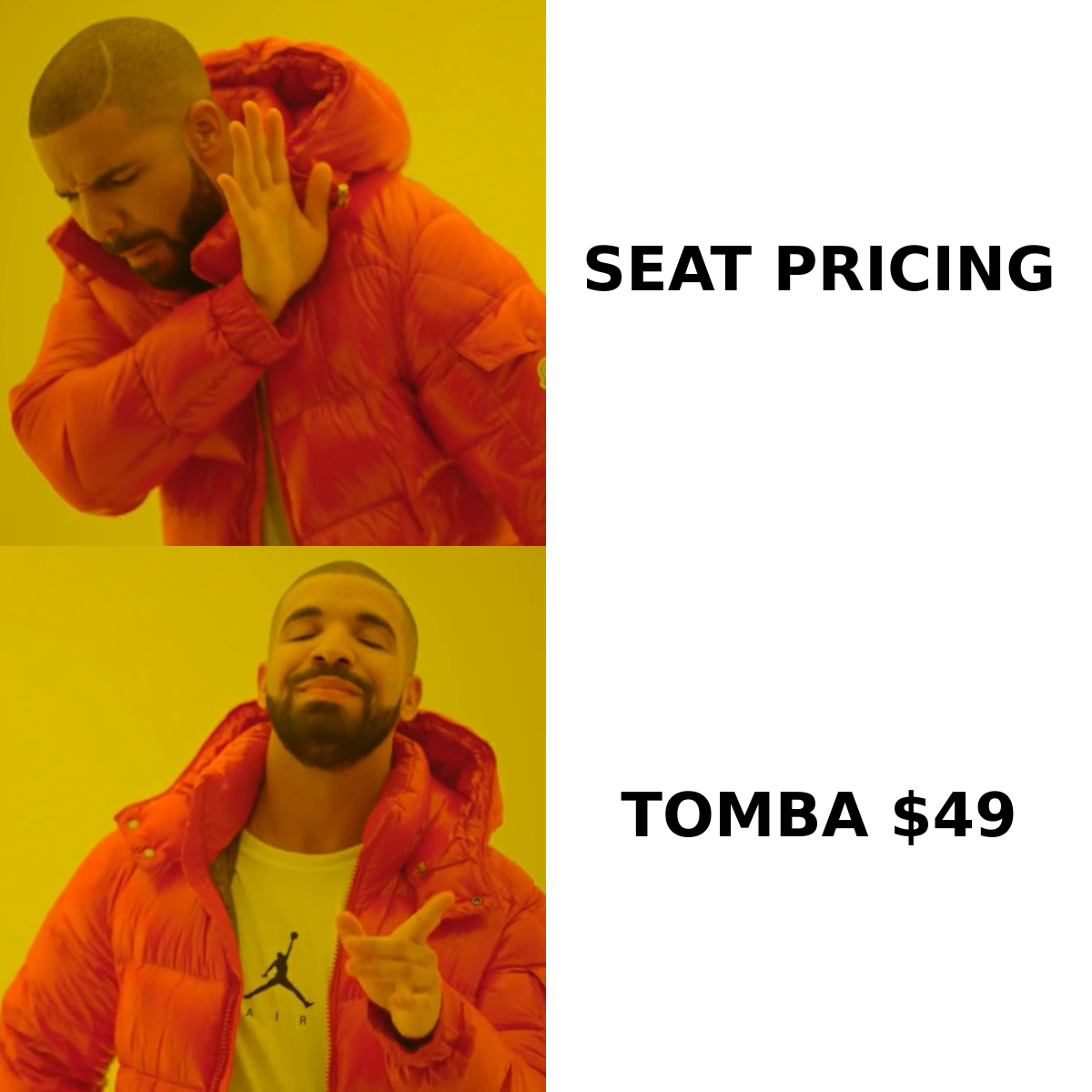
- Pricing model is the biggest practical difference. Both lean on annual, seat-based contracts. A usage-based email finder like Tomba starts at $49/mo with no seat minimums.
- Best pick: Cognism for EMEA outbound and cold calling. Apollo for US-heavy, all-in-one SDR teams. A standalone finder when you just need verified emails.
What is Cognism?#
Cognism is a premium B2B sales intelligence platform. It is built around compliant, phone-verified contact data. Its headline feature is Diamond Data: mobile numbers a human has actually dialed and confirmed. That is why it is popular with teams that live on the phone.
Cognism's strongest territory is EMEA. Do your reps sell into the UK, DACH, or the Nordics? Then its European coverage and GDPR/DNC compliance are hard to beat. You can read more on the Cognism website.
There is a trade-off. Cognism is enterprise-priced. It is sold through annual contracts and sales calls, and it does not publish per-seat numbers. It is a data provider first, not a full sequencing-and-dialing suite.
What is Apollo.io?#
Apollo.io is an all-in-one sales engagement platform. A large contact database (200M+ records) is bolted to sequencing, a dialer, a Chrome extension, deal management, and CRM sync. You prospect, enrich, email, and call without leaving the tool.
Apollo's biggest advantage is the on-ramp. It has a genuine free tier and low-cost paid plans. So a solo founder or a small SDR team can start prospecting today. Its database and native sequencer make it a default choice for US-centric outbound. See apollo.io for the current plan lineup.
There is a trade-off here too. Data quality is more variable than Cognism's, especially outside the US. EMEA mobile coverage is thinner. And the "everything in one tool" model means you may pay for features you already cover elsewhere.
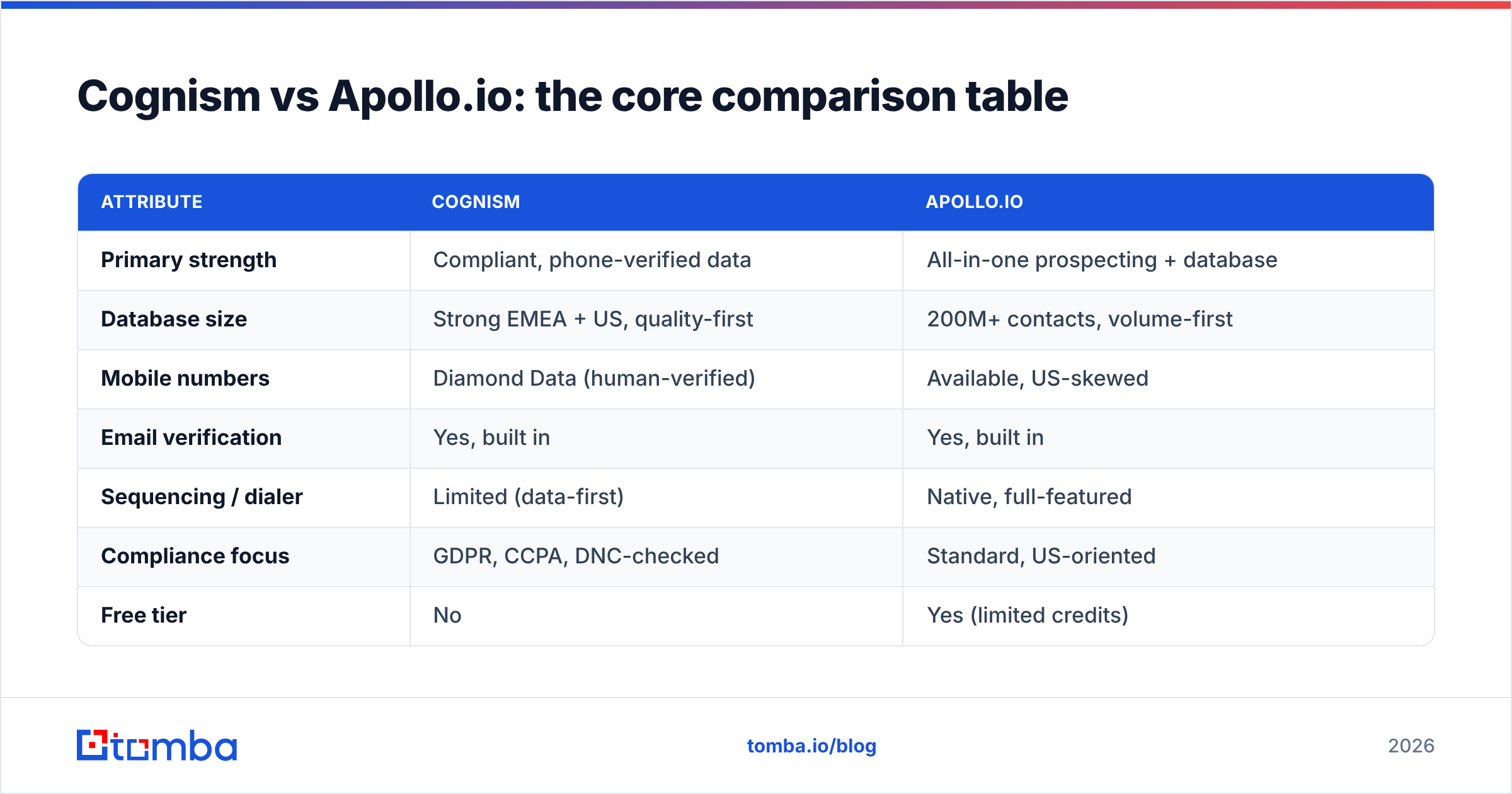
Cognism vs Apolloio: the core comparison table#
Here is the head-to-head on the attributes that actually change a buying decision.
| Attribute | Cognism | Apollo.io |
|---|---|---|
| Primary strength | Compliant, phone-verified data | All-in-one prospecting + database |
| Database size | Strong EMEA + US, quality-first | 200M+ contacts, volume-first |
| Mobile numbers | Diamond Data (human-verified) | Available, US-skewed |
| Email verification | Yes, built in | Yes, built in |
| Sequencing / dialer | Limited (data-first) | Native, full-featured |
| Compliance focus | GDPR, CCPA, DNC-checked | Standard, US-oriented |
| Free tier | No | Yes (limited credits) |
| Entry pricing | Enterprise, annual, quote-based | Free → ~$49–59/user/mo |
| Best region | EMEA + global | North America |
How do Cognism and Apollo.io compare on data accuracy?#
On US B2B email, the two are close. On verified mobile and EMEA data, Cognism leads. On raw record count, Apollo leads. That is the honest summary.
Independent reviews on G2 tend to praise Cognism for phone data quality and Apollo for breadth and value. But accuracy is never a single number. It depends on region, seniority, and how fresh the record is. A few things to keep in mind:
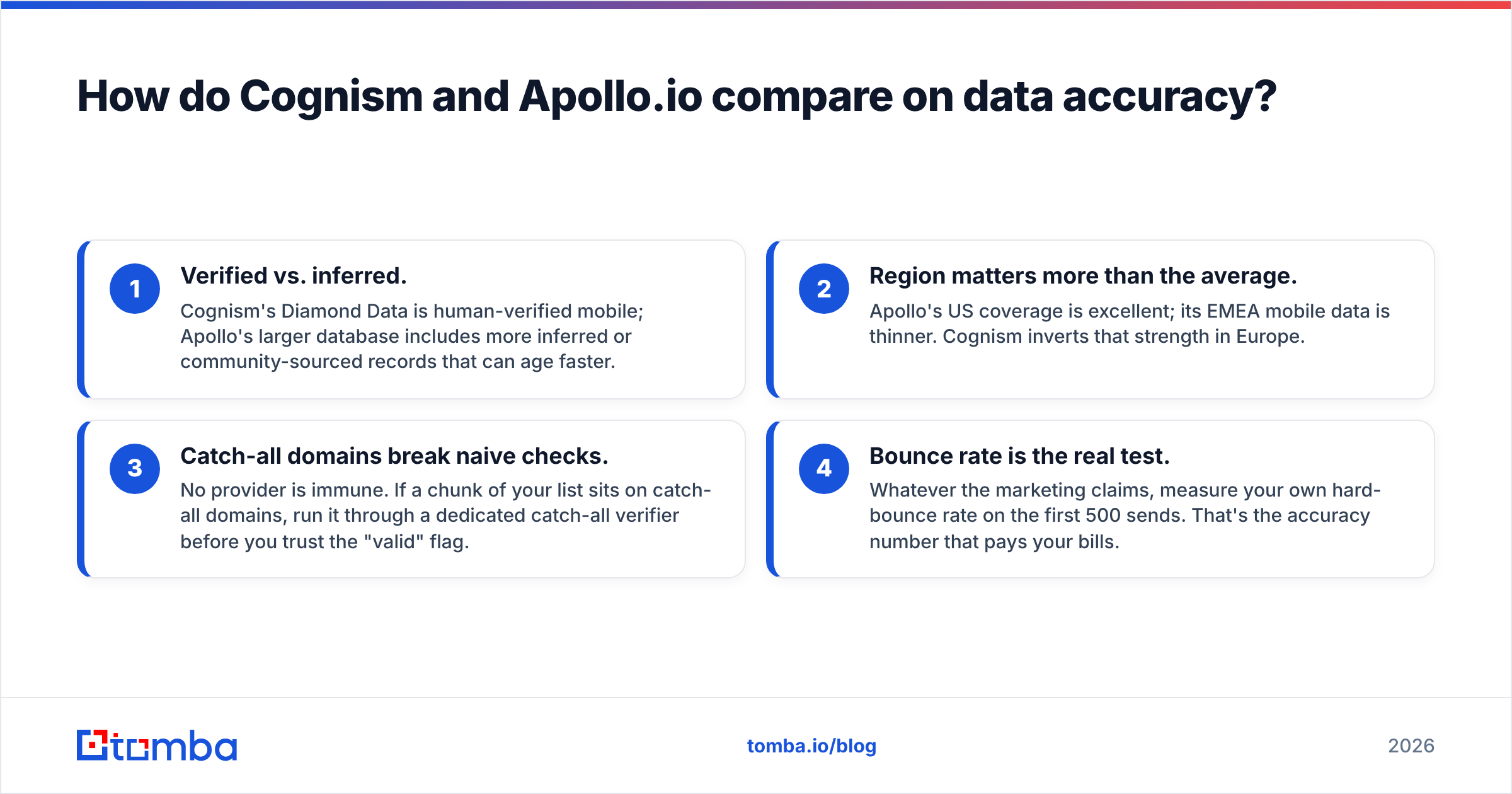
- Verified vs. inferred. Cognism's Diamond Data is human-verified mobile. Apollo's larger database includes more inferred or community-sourced records, which can age faster.
- Region matters more than the average. Apollo's US coverage is excellent, but its EMEA mobile data is thinner. Cognism inverts that strength in Europe.
- Catch-all domains break naive checks. No provider is immune. If a chunk of your list sits on catch-all domains, run it through a dedicated catch-all verifier before you trust the "valid" flag.
- Bounce rate is the real test. Whatever the marketing claims, measure your own hard-bounce rate on the first 500 sends. That is the accuracy number that pays your bills.

Is deliverability your bottleneck? Layer a standalone email verifier on top of either platform's export. Cleaning a list twice costs pennies. A burned sending domain costs weeks.
How do they compare on workflow and features?#
This is where the two philosophies split hardest.
Apollo is a suite. You build a list, enrich it, and drop contacts into a sequence. You dial from the same tab and sync to your CRM. For a lean team that wants one login and one bill, that consolidation is the whole pitch. The native dialer and sequencer mean fewer integrations to maintain.
Cognism is a data layer. It is designed to feed your existing stack: Salesforce, Outreach, Salesloft. It sends clean, compliant records into the tools you already use. Do you already have a sequencer and a dialer you like? Then Cognism slots in without forcing you to rip anything out. It does not try to be your engagement platform.
Neither approach is wrong. Ask yourself one thing. Do you want to replace your outbound stack (Apollo)? Or upgrade the data flowing through it (Cognism)?
How much do Cognism and Apollo.io cost in 2026?#
Apollo is transparent and cheap to start. Cognism is quote-based and enterprise-priced.
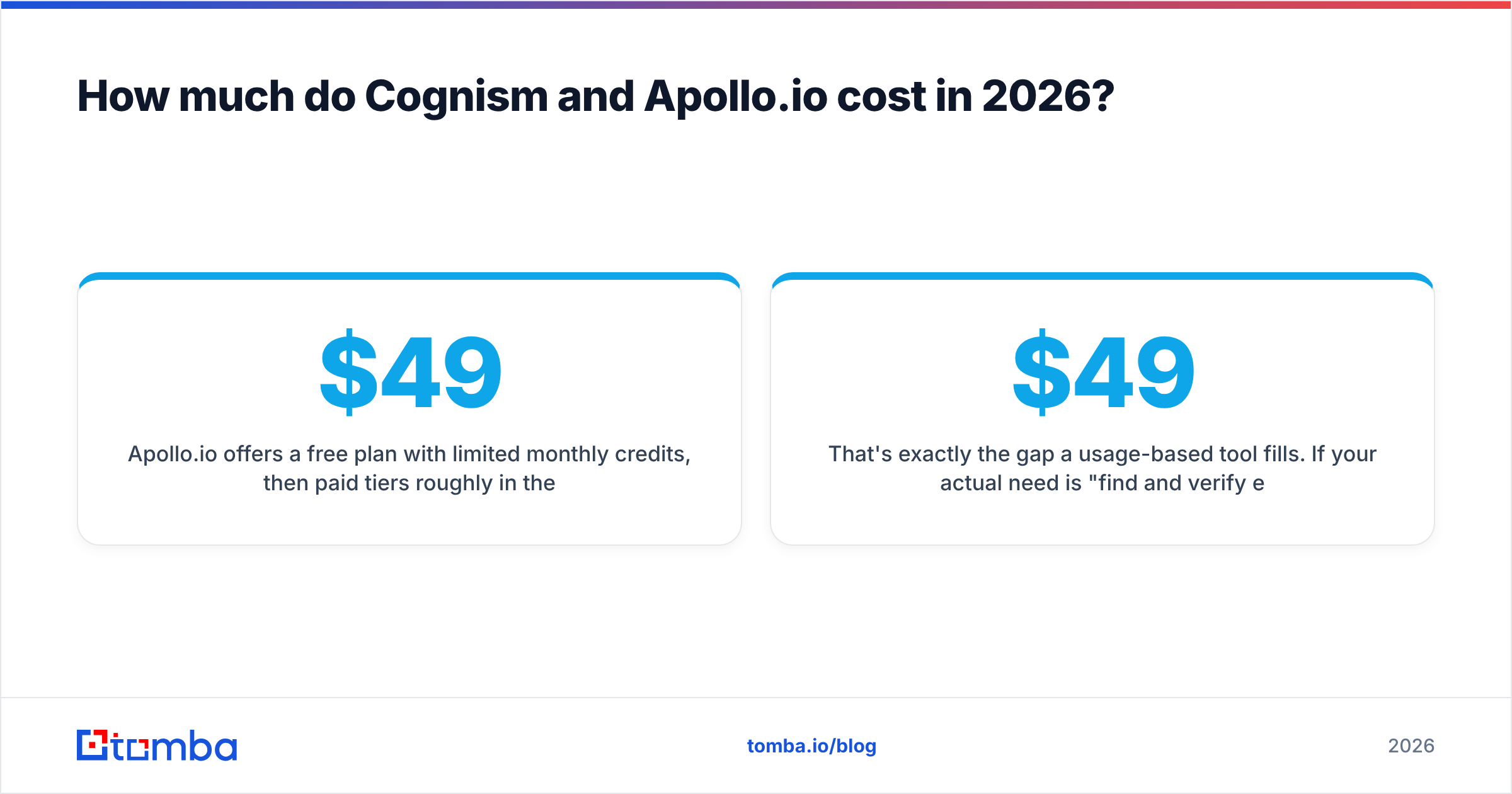
- Apollo.io offers a free plan with limited monthly credits. Paid tiers then sit roughly in the $49–$99/user/month range, billed annually for the best rate. Higher tiers unlock more credits, sequencing volume, and dialer minutes.
- Cognism does not publish per-seat pricing. Expect an annual contract, a platform fee, and per-user licensing set through sales. It is generally a four-to-five-figure yearly commitment, depending on seats and data volume.
The hidden cost with both is the seat-and-annual model. You commit up front, per user, for a year. Does your team size fluctuate? Do you only need data now and then? Either way, you pay for idle seats.

That is exactly the gap a usage-based tool fills. Say your real need is "find and verify emails at a predictable rate." Then Tomba's pricing runs on searches, not seats: a Free tier with 25 searches/mo, Starter at $49/mo, Growth at $99/mo, and Pro at $249/mo. No annual lock-in is required to get started.
Cognism vs Apolloio: which should you choose?#
Match the tool to your motion, not the other way around.
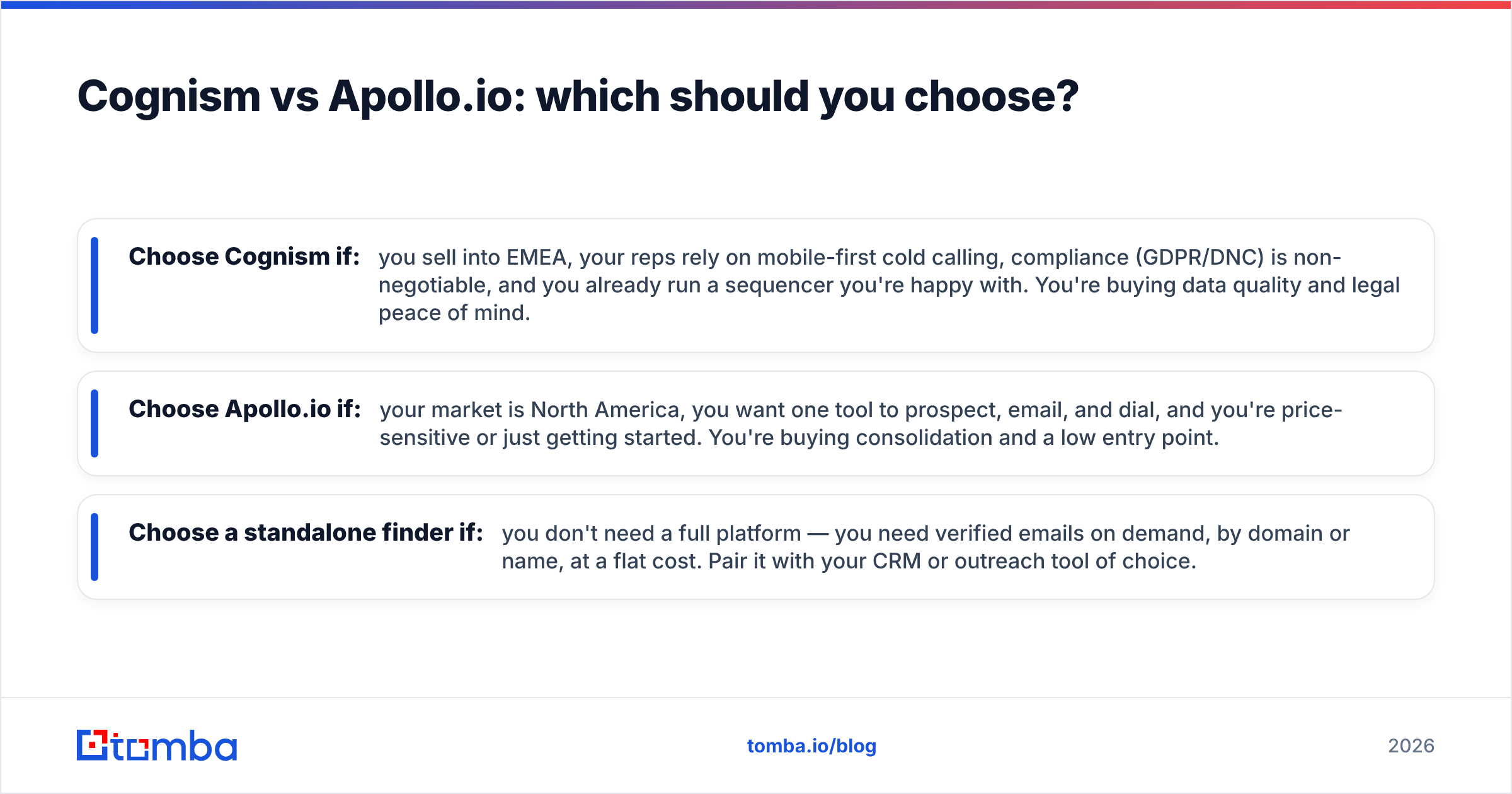
- Choose Cognism if: you sell into EMEA, your reps rely on mobile-first cold calling, and compliance (GDPR/DNC) is non-negotiable. It fits best when you already run a sequencer you are happy with. You are buying data quality and legal peace of mind.
- Choose Apollo.io if: your market is North America and you want one tool to prospect, email, and dial. It suits teams that are price-sensitive or just getting started. You are buying consolidation and a low entry point.
- Choose a standalone finder if: you do not need a full platform. You need verified emails on demand, by domain or name, at a flat cost. Pair it with your CRM or outreach tool of choice.
Remember these are not the only two names on the shortlist. Teams cross-shopping this category often test an Apollo alternative or a lighter data source first. They then add data enrichment only where they actually need it.
What about accuracy at scale — bulk and API use?#
Are you enriching thousands of records? Then two things decide whether the project succeeds: throughput and cost predictability.
Apollo handles bulk enrichment inside its credit system. That is convenient, but it can burn credits fast on large jobs. Cognism handles volume well, but under an enterprise contract, so scaling means renegotiating. For engineering-driven pipelines, a metered email finder API or a bulk email finder often gives you cleaner unit economics. You pay for what you process. You can throttle by budget instead of by seat.
Here is a simple decision frame for scale work:
| Need | Best fit |
|---|---|
| Occasional list building | Apollo free/starter |
| EMEA cold-call lists | Cognism |
| High-volume enrichment jobs | Metered API or bulk tool |
| One-off email verification | Standalone verifier |

The bottom line on Cognism vs Apolloio#
There is no universal winner. There is a winner for your motion. Cognism is the compliance-first, phone-verified, EMEA-strong choice for teams that call. Apollo.io is the all-in-one, US-strong, budget-friendly choice for teams that want everything in one login. Both are respected platforms. The deciding factors are region, workflow, and how much you will actually use those seats.
But strip the question down to its core: "I need accurate, verified email addresses without a yearly seat commitment." If that is you, you may not need either heavyweight. Tomba's Email Finder finds professional emails by domain, name, or company. It verifies them in the same flow. And it runs on transparent, usage-based pricing, starting free (25 searches/mo) and $49/mo for Starter. Point it at your target accounts, export clean addresses, and feed them into whatever sequencer or dialer you already trust. Try it before you sign an annual contract. It is the cheapest way to find out how much platform you actually need.
Related guides#
// get started
Find, verify and enrich your first contacts today
Start on the free plan with 25 searches a month, then scale when your team is ready.
Free plan · No credit card required · GDPR & CCPA
// about the author