Cold Calling for Beginners: The Complete 2026 Playbook
New to the phones? This beginner's guide breaks down cold calling into a repeatable system: openers, scripts, objection handling, and the metrics that actually matter in 2026.
Cold calling still books meetings in 2026 — not because it's magic, but because most reps quit before they get good at it. If you're new to the phones, the problem usually isn't your voice or your product. It's that nobody handed you a system. This guide is that system.
TL;DR#
- Cold calling for beginners is a numbers-plus-skill game. Expect roughly 1-3 meetings per 100 dials when you start, climbing as your talk tracks tighten.
- A good opener buys you 30 seconds. Lead with a pattern interrupt and permission, not a monologue.
- Objections are signals, not walls. Memorize 3-4 rebuttals and you'll handle 80% of what you hear.
- Your list beats your script. Calling accurate, well-targeted numbers matters more than any clever line.
- Track dials, connects, conversations, and meetings — not just "calls made" — so you know what to fix.
What is cold calling, really?#
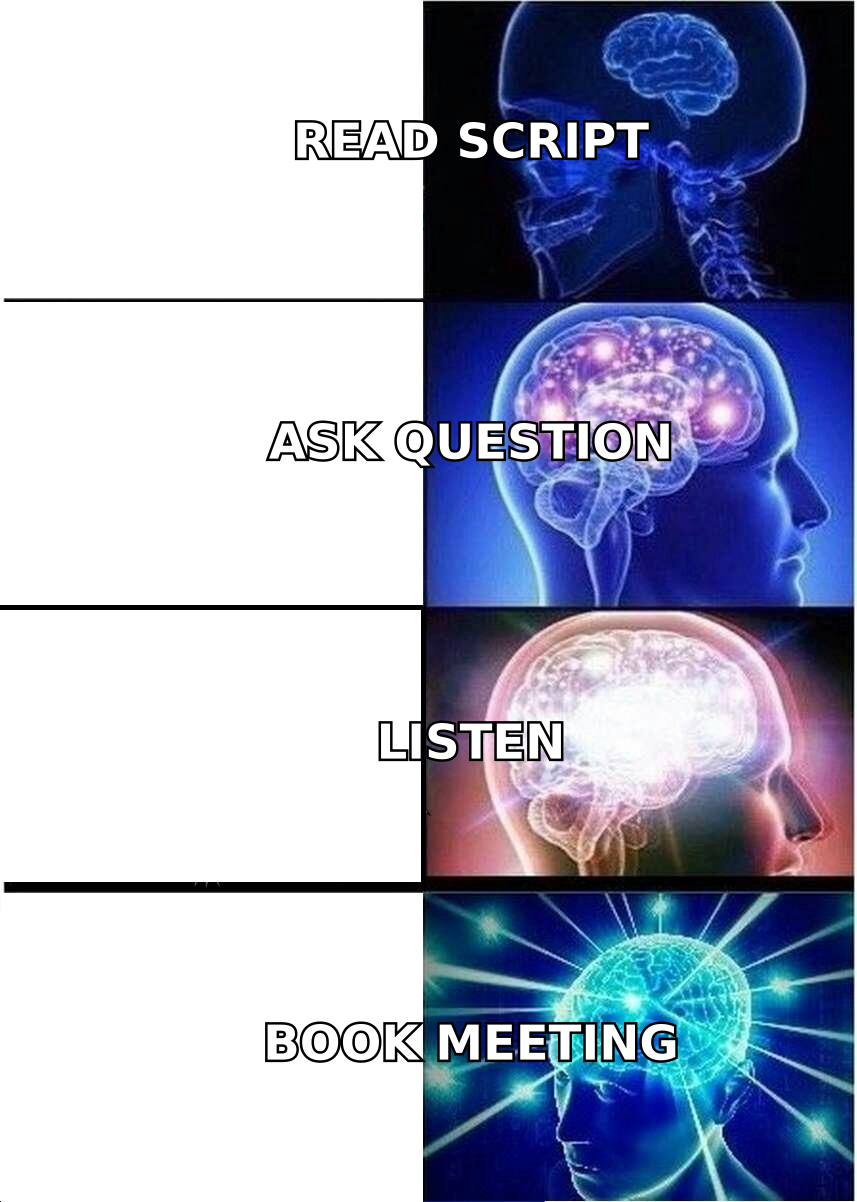
Cold calling is picking up the phone and reaching a prospect who isn't expecting you, to start a conversation that leads to a meeting. That's it. It is not closing a deal on the first call, and it is not reading a script at someone until they cave.
Think of it like knocking on a stranger's door to ask for two minutes. If you barge in with a pitch, the door shuts. If you're respectful, relevant, and quick, you get invited to talk. The entire craft is earning that first 30 seconds and then not wasting it.
Beginners often assume cold calling is dead because email and LinkedIn feel easier. In reality, decision-makers get 100+ emails a day and a handful of calls. The phone still cuts through — it's just harder, which is exactly why fewer people do it well.
Does cold calling still work in 2026?#
Yes — with caveats. Connect rates have dropped as spam labeling and mobile screening grew, so raw dialing volume matters more than it used to. But conversion per conversation has held up, because the reps still willing to call face less competition for attention.
Two things changed the game for beginners:
- Data quality is now the differentiator. A dialer is only as good as the phone numbers you feed it. Calling wrong or stale numbers destroys your connect rate before you say a word. Enriching your list with a reliable phone finder and cleaning it with a phone validator is no longer optional.
- Multi-channel is the norm. The best beginners pair calls with email and LinkedIn touches so the prospect has seen your name before you dial. According to HubSpot's sales research, it takes multiple touches to reach most buyers — the call is one of them, not the whole plan.
So cold calling works, but "spray and pray" doesn't. You need a targeted list, a tight talk track, and the discipline to keep dialing.
What do you need before your first call?#
Don't dial cold with nothing. Set yourself up so the call is the only hard part.
- A clean, targeted list. 50-100 prospects who actually fit your ideal customer profile. Wrong-fit calls waste dials and crush your confidence.
- Verified contact data. Correct direct-dial numbers and, ideally, a backup email. Bad data is the number one silent killer of beginner call blocks.
- A one-line reason for calling. Why this person, why now. "I saw you're hiring 5 SDRs" beats "I wanted to introduce myself."
- A simple script skeleton. Opener, value prompt, qualifying question, ask for the meeting. Not a word-for-word essay.
- A tracking sheet or CRM. You cannot improve what you don't measure. Log every dial.
- A quiet space and a headset. Sounds obvious. It isn't. Background noise reads as "unprofessional" in the first two seconds.
Get your list and data right first. A rep with an average script and a great list will out-book a rep with a great script and a garbage list every single time.
What does a beginner cold call script look like?#
A script is scaffolding, not a cage. Here's a proven four-part structure you can adapt to any industry.
1. The opener (pattern interrupt + permission)
"Hi Sarah, it's Alex from Tomba. I know I'm an interruption — can I take 30 seconds to tell you why I called, and you can decide if it's worth continuing?"
This is honest, disarming, and gives them control. Most people say "go ahead" because you asked instead of assuming.
2. The reason (relevant + specific)
"I noticed your team just expanded into outbound. We help SDR teams reach the right contacts with accurate direct dials and emails, so reps spend time talking, not hunting for numbers."
3. The qualifying question (make them talk)
"How is your team sourcing contact data right now — is that something you own, or does marketing hand it over?"
Now they're in a conversation, not a pitch.
4. The ask (specific, low-friction)
"Makes sense. Worth a 15-minute look next Tuesday or Thursday to see if it'd save your reps time?"
Notice you never described every feature. The goal of the call is a meeting, not a sale. Talk less, ask more.
How do you handle objections without freezing?#
Objections feel personal when you're new. They're not. Most are reflexes — the prospect's autopilot trying to end an unexpected call. Your job is to acknowledge, reframe, and redirect, not to argue.
Here are the four you'll hear most and a simple response for each:
- "I'm not interested." → "Totally fair — most people aren't when I first call. Quick question: is that because you've already solved contact data, or because now's just a bad time?"
- "Send me an email." → "Happy to. So I send something useful and not just noise — what's the one thing that would make it worth reading?"
- "We already use [competitor]." → "Good, so you value the category. A lot of teams we talk to like their tool but wish coverage was better. What's working and what isn't?"
- "I don't have time." → "I figured — that's why I asked for 30 seconds, not 30 minutes. If it's not relevant I'll let you go. Fair?"
Memorize these. When a rebuttal is automatic, your voice stays calm, and calm sells. For a deeper library of tested rebuttals, Gong's call analysis research is a strong free resource built on real recorded calls.
How many calls does it take to book a meeting?#
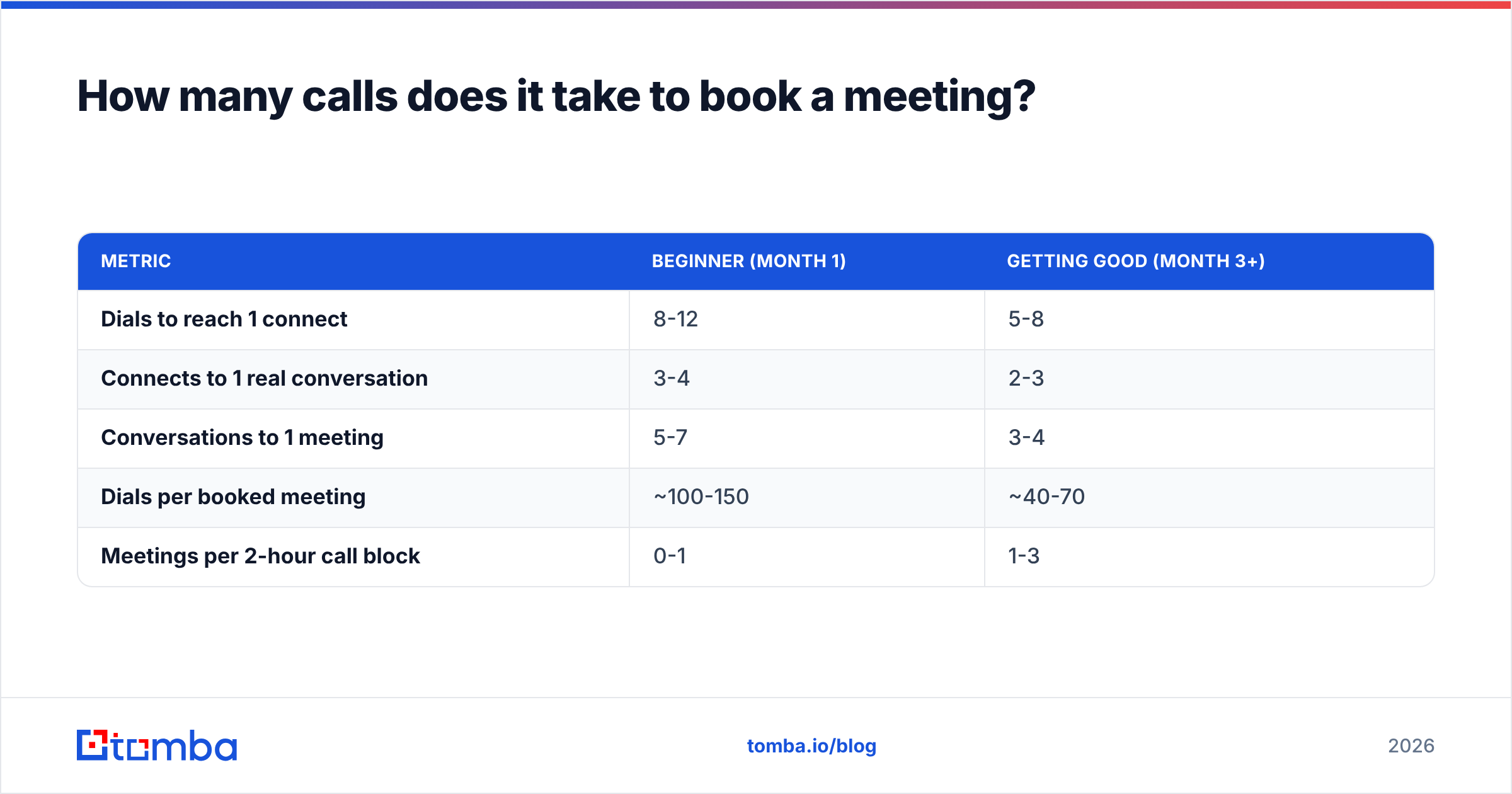
More than you'd like, fewer than you fear. Beginner benchmarks vary by industry, but here's a realistic starting range to calibrate against.
| Metric | Beginner (month 1) | Getting good (month 3+) |
|---|---|---|
| Dials to reach 1 connect | 8-12 | 5-8 |
| Connects to 1 real conversation | 3-4 | 2-3 |
| Conversations to 1 meeting | 5-7 | 3-4 |
| Dials per booked meeting | ~100-150 | ~40-70 |
| Meetings per 2-hour call block | 0-1 | 1-3 |
Two takeaways. First, if you're new and booking one meeting per 100+ dials, you are normal, not failing. Second, every stage is a lever. If you connect but never get a conversation, fix your opener. If you have conversations but no meetings, fix your ask. Diagnose the specific leak instead of just "calling more."
This is why measuring the full funnel — not just total dials — matters. A high response rate on your follow-up emails, for example, often signals your calls are warming prospects even when they don't book on the spot.
What tools do beginners actually need?#
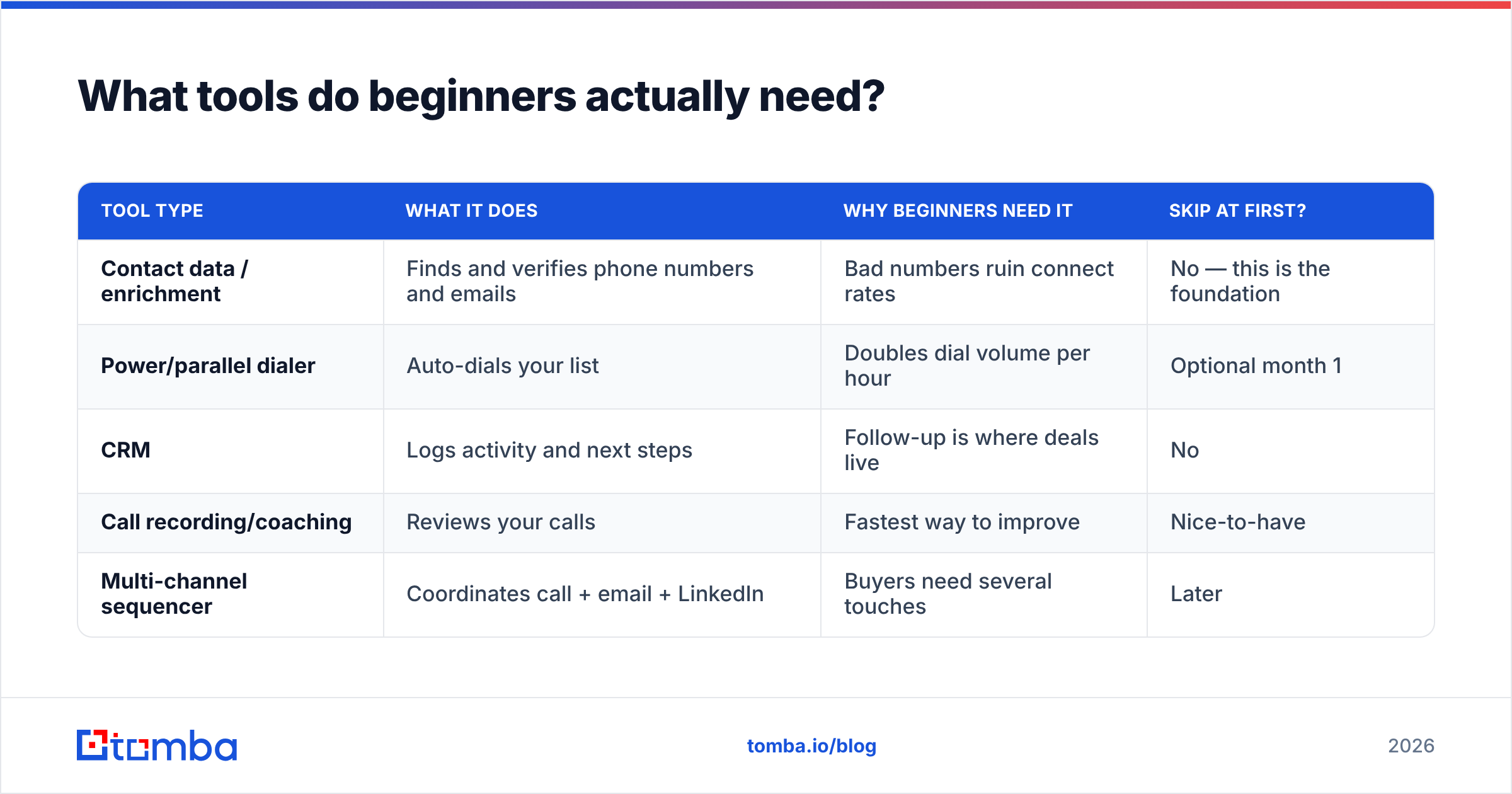
You don't need a bloated tech stack on day one. You need clean data, a way to dial, and a way to track. Here's how the essentials compare.
| Tool type | What it does | Why beginners need it | Skip at first? |
|---|---|---|---|
| Contact data / enrichment | Finds and verifies phone numbers and emails | Bad numbers ruin connect rates | No — this is the foundation |
| Power/parallel dialer | Auto-dials your list | Doubles dial volume per hour | Optional month 1 |
| CRM | Logs activity and next steps | Follow-up is where deals live | No |
| Call recording/coaching | Reviews your calls | Fastest way to improve | Nice-to-have |
| Multi-channel sequencer | Coordinates call + email + LinkedIn | Buyers need several touches | Later |
Start with the first row. If your list is full of disconnected or wrong numbers, no dialer or script saves you. Tools like the Tomba email verifier and phone validation keep your list clean so your dials actually land on real people. Pair that with a simple CRM and you have enough to book meetings from week one.
For a broader look at dialers and sales-engagement platforms, browse verified reviews on G2 before you buy anything — beginners routinely overspend on features they won't touch for months.
How do you build the mental toughness to keep dialing?#
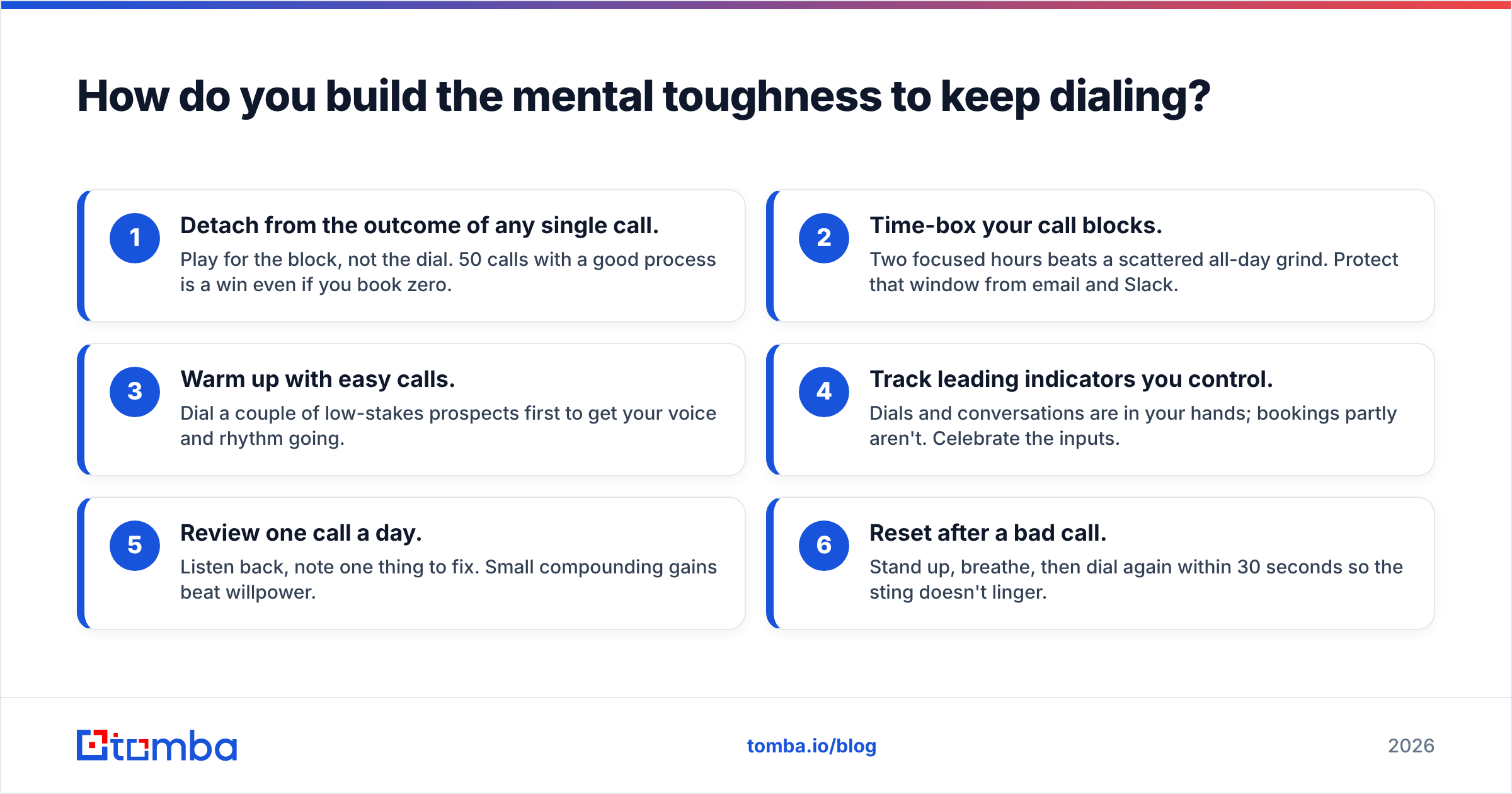
Cold calling is emotional labor, and pretending otherwise is why beginners burn out. You'll hear "no," get hung up on, and occasionally meet someone rude. None of it is about you. Here's how to protect your momentum:
- Detach from the outcome of any single call. Play for the block, not the dial. 50 calls with a good process is a win even if you book zero.
- Time-box your call blocks. Two focused hours beats a scattered all-day grind. Protect that window from email and Slack.
- Warm up with easy calls. Dial a couple of low-stakes prospects first to get your voice and rhythm going.
- Track leading indicators you control. Dials and conversations are in your hands; bookings partly aren't. Celebrate the inputs.
- Review one call a day. Listen back, note one thing to fix. Small compounding gains beat willpower.
- Reset after a bad call. Stand up, breathe, then dial again within 30 seconds so the sting doesn't linger.
The reps who make it aren't fearless. They've just built routines that make fear irrelevant. Confidence is a byproduct of reps, not a prerequisite.
What are the most common beginner mistakes?#
Avoid these and you'll skip months of frustration:
- Talking too much. New reps pitch out of nerves. The best callers ask a question and shut up.
- Sounding scripted. Read your script out loud 20 times until it sounds like you, then stop reading it.
- Skipping research. Ten seconds of context ("I saw your recent funding") transforms the opener.
- Chasing bad-fit leads. A targeted list of 50 beats a random list of 500. Quality of data over quantity of dials.
- Not following up. Most meetings come from touch 3-5, not touch 1. One call is rarely enough.
- Calling at dead times. Test early morning and late afternoon; midday often hits voicemail.
- Ignoring the CRM. If it's not logged, it didn't happen — and you'll never spot your patterns.
Fix the list and the follow-up first. Those two mistakes quietly cost beginners more meetings than any script flaw.
How does cold calling fit with email and other channels?#
Cold calling works best as one instrument in a small orchestra. A typical beginner-friendly sequence over two weeks might look like: a connection request and email on day one, a first call on day two, a value email on day four, a second call on day six, and a breakup message on day ten. The call and the email reinforce each other — the prospect who ignored your email might take your call because your name looks familiar.
This is where good contact data pays off twice. The same verified record that gives you a working direct dial usually gives you a deliverable email, so you can run the whole sequence from one clean list. If you're building that list from scratch, a domain-level tool like Tomba's find email addresses feature plus phone enrichment gets you both channels in one pass. You can check current Tomba pricing to see which tier fits your call volume — the free tier is enough to test the workflow before you commit.
The point: don't treat the call as isolated. It's the highest-impact touch in a coordinated set, and it lands harder when the prospect has already seen you.
Your first-week action plan#
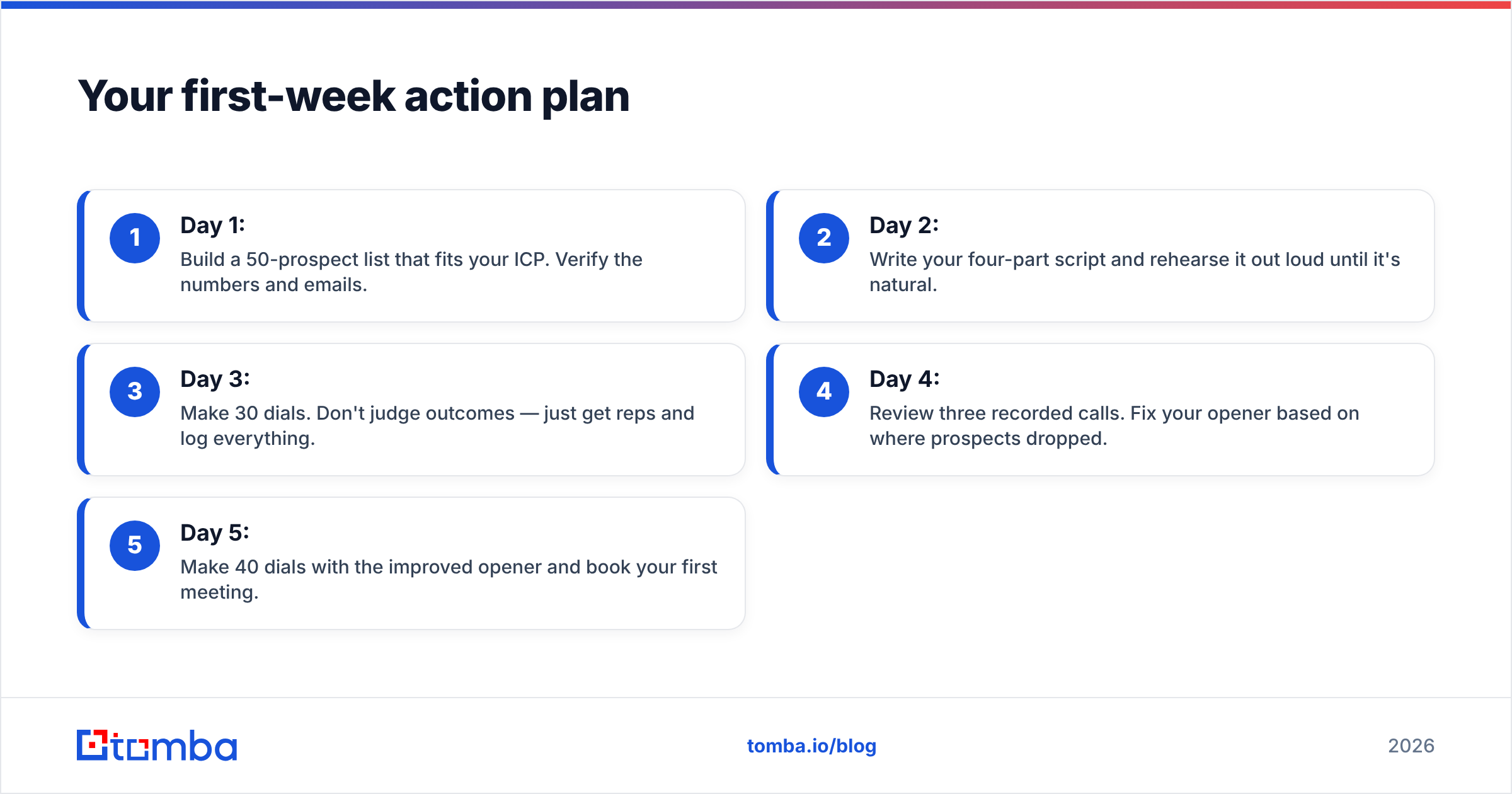
Keep it simple. In your first five days:
- Day 1: Build a 50-prospect list that fits your ICP. Verify the numbers and emails.
- Day 2: Write your four-part script and rehearse it out loud until it's natural.
- Day 3: Make 30 dials. Don't judge outcomes — just get reps and log everything.
- Day 4: Review three recorded calls. Fix your opener based on where prospects dropped.
- Day 5: Make 40 dials with the improved opener and book your first meeting.
By the end of week one you'll have data on your own funnel — and data beats anxiety every time.
Start with a list worth calling#
The fastest way to feel confident on the phones is to know the person on the other end actually exists, actually fits, and can actually be reached. That starts with your data, not your delivery. Build your call list on verified, accurate contacts using the Tomba Email Finder and pair it with phone enrichment, so every dial has a real shot at a real conversation. Get the list right, run the four-part script, track your funnel, and keep dialing — the meetings follow. Start free, load your first 50 prospects, and make the calls.
Related guides#
Ready to find emails that actually work?
Join 150,000+ professionals who stopped guessing and started sending. Free credits on signup — no credit card required.
Get the Tomba newsletter
Practical outbound tactics and product updates — once every two weeks.
About the author