Cold Email B2B SaaS in 2026: The Complete Playbook
Cold email still books B2B SaaS demos in 2026 — if you fix targeting, deliverability, and copy in that order. This playbook shows you the exact sequence.
Cold email B2B SaaS outreach is still the cheapest way to start a conversation with a buyer who has never heard of you. It is also the easiest channel to ruin. Send to a bought list, skip the verification step, and pitch your features in line one. You will torch your domain reputation before you book a single demo.
This playbook walks through what actually moves pipeline for SaaS teams in 2026 — in the order that matters.
TL;DR#
- List quality beats copy. A tight, verified list of 200 right-fit prospects outperforms a bought list of 20,000 every time.
- Deliverability is a prerequisite, not a tactic. SPF, DKIM, DMARC, warmup, and a separate sending domain come before you write a word.
- One clear trigger per email. Reference something specific about the prospect's company; generic "I noticed your company is growing" openers get deleted.
- Sequences win, single sends lose. Plan 4–6 touches across 2–3 weeks with varied angles.
- Measure replies and positive replies, not opens. Apple Mail privacy protection made open rates fiction years ago.
Why does most cold email B2B SaaS outreach fail?#
Because teams optimize the wrong layer. They A/B test subject lines while sending to unverified contacts from a domain with no DMARC record. The copy was never the bottleneck.
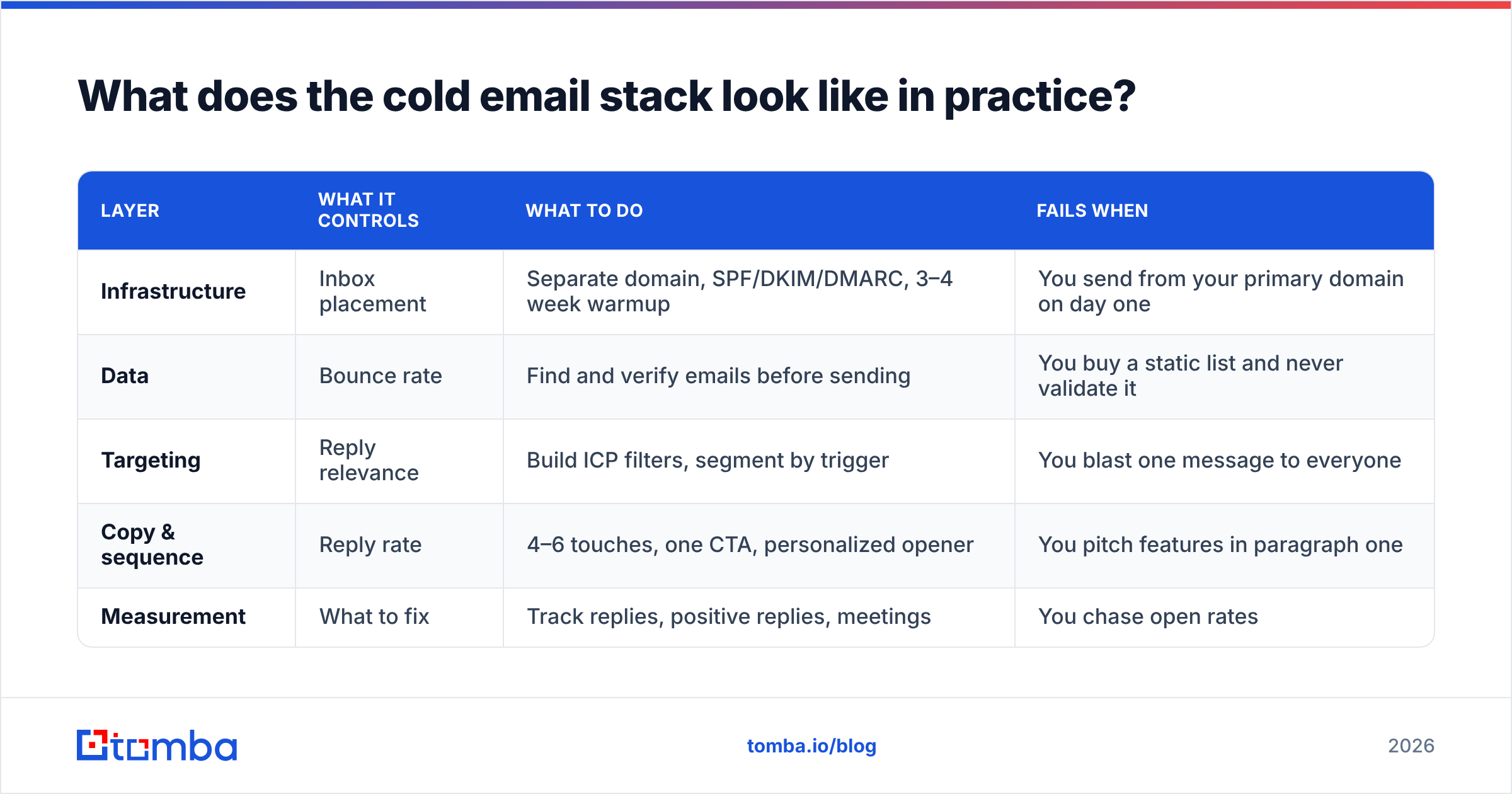
Cold email for B2B SaaS works as a stack. Each layer sits on the one below it, and a crack in a lower layer collapses everything above it:
- Domain and infrastructure — the sending domain, authentication records, and warmup status that decide whether you reach the inbox at all.
- Data — the accuracy and fit of the contacts you're emailing.
- Targeting — whether those verified contacts actually match your ideal customer profile.
- Copy and sequence — the words and cadence that earn a reply.
- Measurement — the reply and meeting metrics that tell you what to fix next.
Most "cold email isn't working" complaints trace back to layers 1 and 2. Fix those and the copy you already have will start to convert.
What does the cold email stack look like in practice?#
Here is how the five layers map to concrete actions and the tools that handle each one.
| Layer | What it controls | What to do | Fails when |
|---|---|---|---|
| Infrastructure | Inbox placement | Separate domain, SPF/DKIM/DMARC, 3–4 week warmup | You send from your primary domain on day one |
| Data | Bounce rate | Find and verify emails before sending | You buy a static list and never validate it |
| Targeting | Reply relevance | Build ICP filters, segment by trigger | You blast one message to everyone |
| Copy & sequence | Reply rate | 4–6 touches, one CTA, personalized opener | You pitch features in paragraph one |
| Measurement | What to fix | Track replies, positive replies, meetings | You chase open rates |
Notice that four of the five layers have nothing to do with writing. That is the point. The teams booking the most demos in 2026 spend their time on data and deliverability. Then they let a simple, honest message do the work.
How do you build a list that actually converts?#
Start from your ideal customer profile, not from a database export. A good B2B SaaS list is narrow on purpose: a defined industry, a company-size band, a specific role, and — ideally — a trigger event like a recent funding round, a new hire in the buying role, or a tech-stack signal.
Once you know who you want, you need their work emails and you need them clean. The workflow that holds up:
- Find contacts by company. Use a domain search to pull the right people at a target account instead of guessing addresses.
- Fill the gaps by name. When you have a name but no address, an email finder resolves the professional email from the domain and name.
- Verify every address. Run the list through an email verifier so invalid and risky addresses never reach your sending domain.
- Handle catch-all domains. Many B2B domains accept every address; a catch-all verifier tells you which ones are actually deliverable.
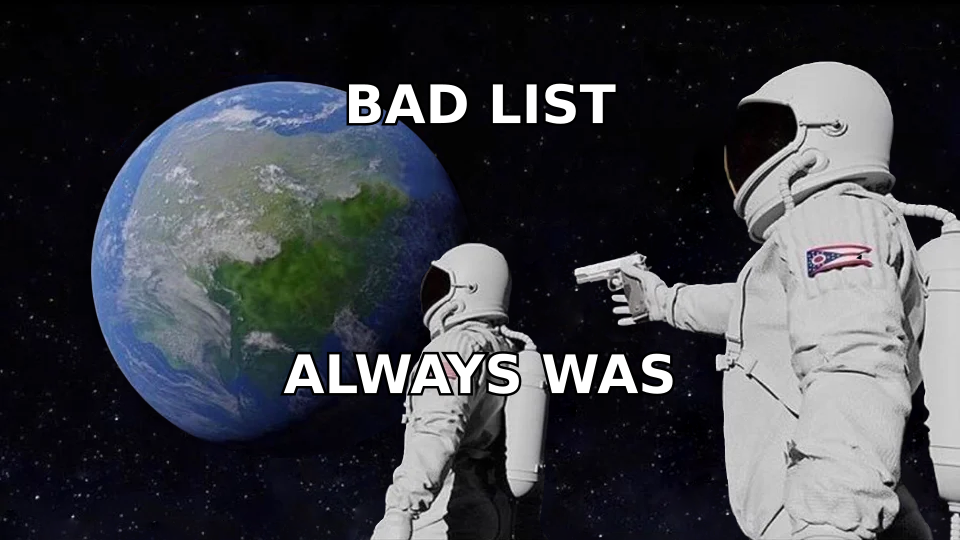
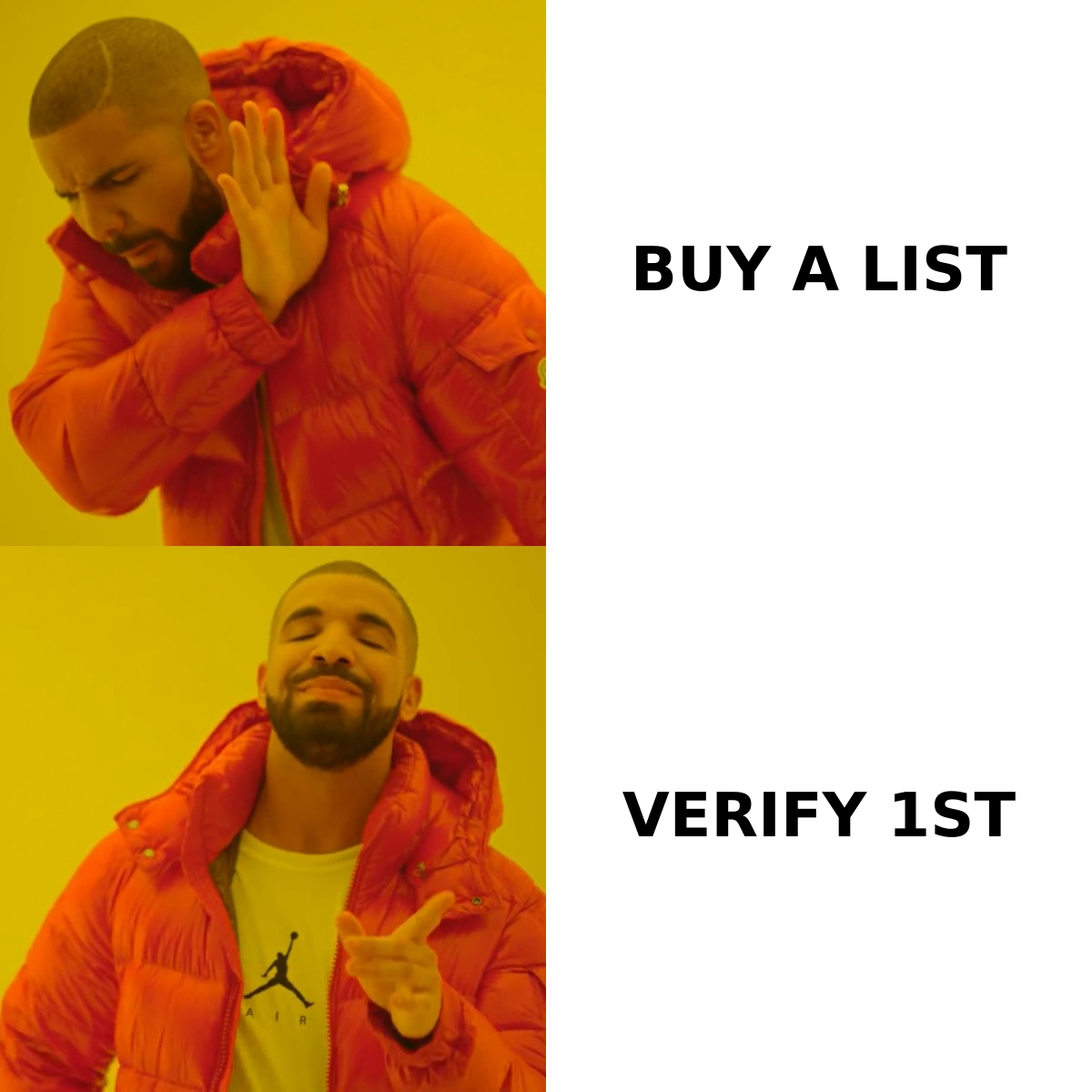
This is where buying a list quietly kills you. Purchased lists are stale, shared across dozens of senders, and packed with spam traps. One trap hit can land your domain on a blocklist. Build the list yourself from verified sources instead.
Does deliverability really come before copy?#
Yes — and it is not close. The best cold email in the world earns zero replies from the spam folder.
Before your first campaign, lock these down:
- Use a dedicated sending domain. Something like
getyourapp.comfor sending, separate from your primaryyourapp.com, so a reputation problem never touches your main domain. - Authenticate. Publish SPF, DKIM, and DMARC records. Google and Yahoo now enforce authentication for bulk senders, and unauthenticated mail gets filtered aggressively. Google's own sender guidelines spell out the requirements.
- Warm up gradually. Ramp volume over 3–4 weeks. New domains that blast 500 emails on day one get flagged instantly.
- Keep bounce rates under 2–3%. This is the direct payoff of verifying your list. High bounces are the fastest way to wreck sender reputation.
- Stay well under blocklists. Monitor with a tool like the free blacklist checker and keep daily volume per inbox modest.
If deliverability is new to you, the fundamentals of email deliverability are worth an hour of reading before you scale. It is the single highest-leverage part of the whole stack.
What makes cold email copy work for SaaS?#
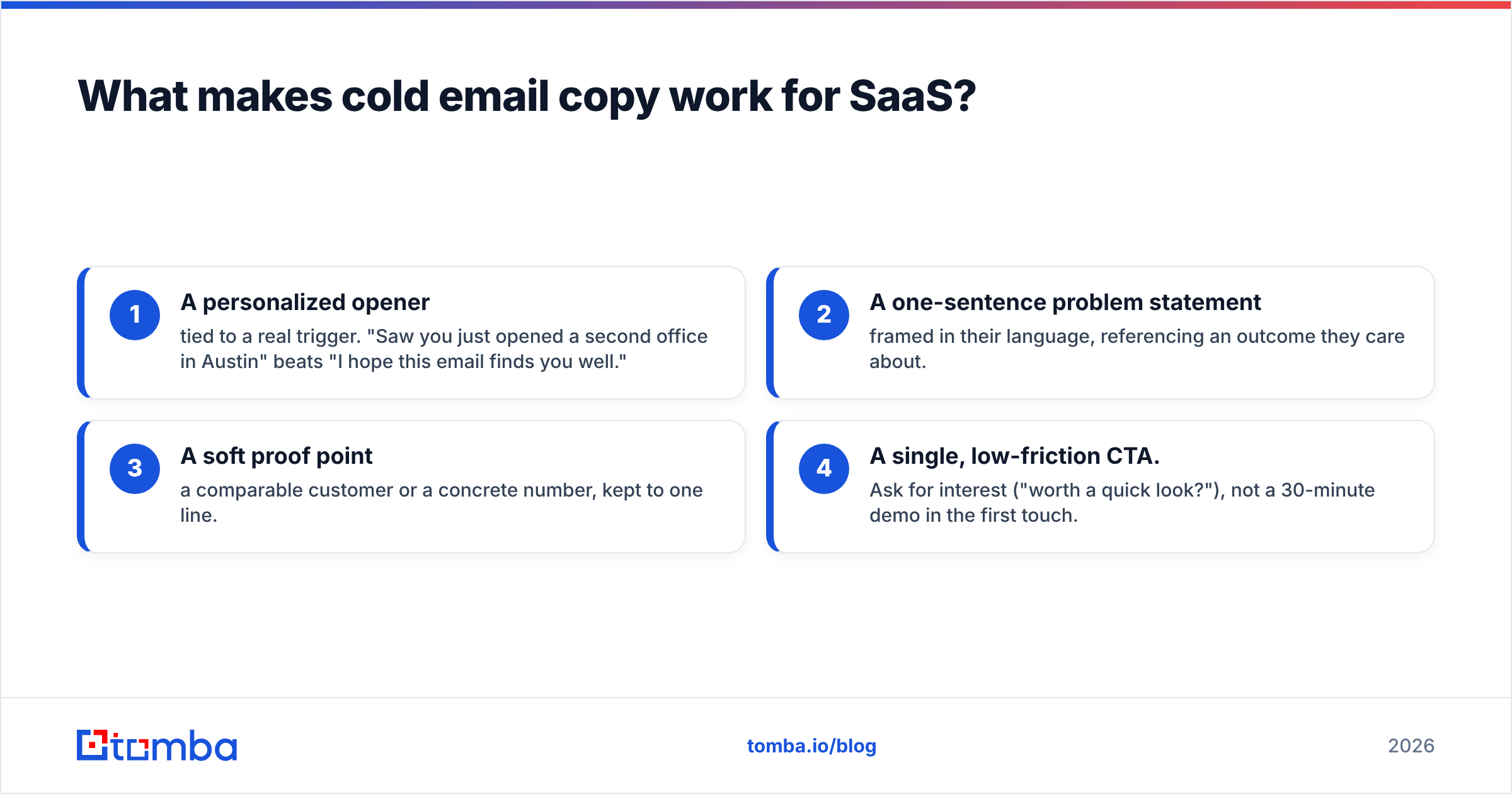
Short, specific, and about the prospect — not about you. The structure that consistently earns replies:
- A personalized opener tied to a real trigger. "Saw you just opened a second office in Austin" beats "I hope this email finds you well."
- A one-sentence problem statement framed in their language, referencing an outcome they care about.
- A soft proof point — a comparable customer or a concrete number, kept to one line.
- A single, low-friction CTA. Ask for interest ("worth a quick look?"), not a 30-minute demo in the first touch.
Keep the whole thing under 120 words. Every extra sentence lowers your reply rate. If you want a starting point, work from proven cold email templates and rewrite them in your own voice rather than sending them verbatim.
Two rules that matter more than any clever line:
- One CTA per email. Two asks split attention and cut replies.
- No feature dumps. Buyers do not care about your integration count in a cold email. They care whether you solve a problem they already feel.
How long should a cold email sequence be?#
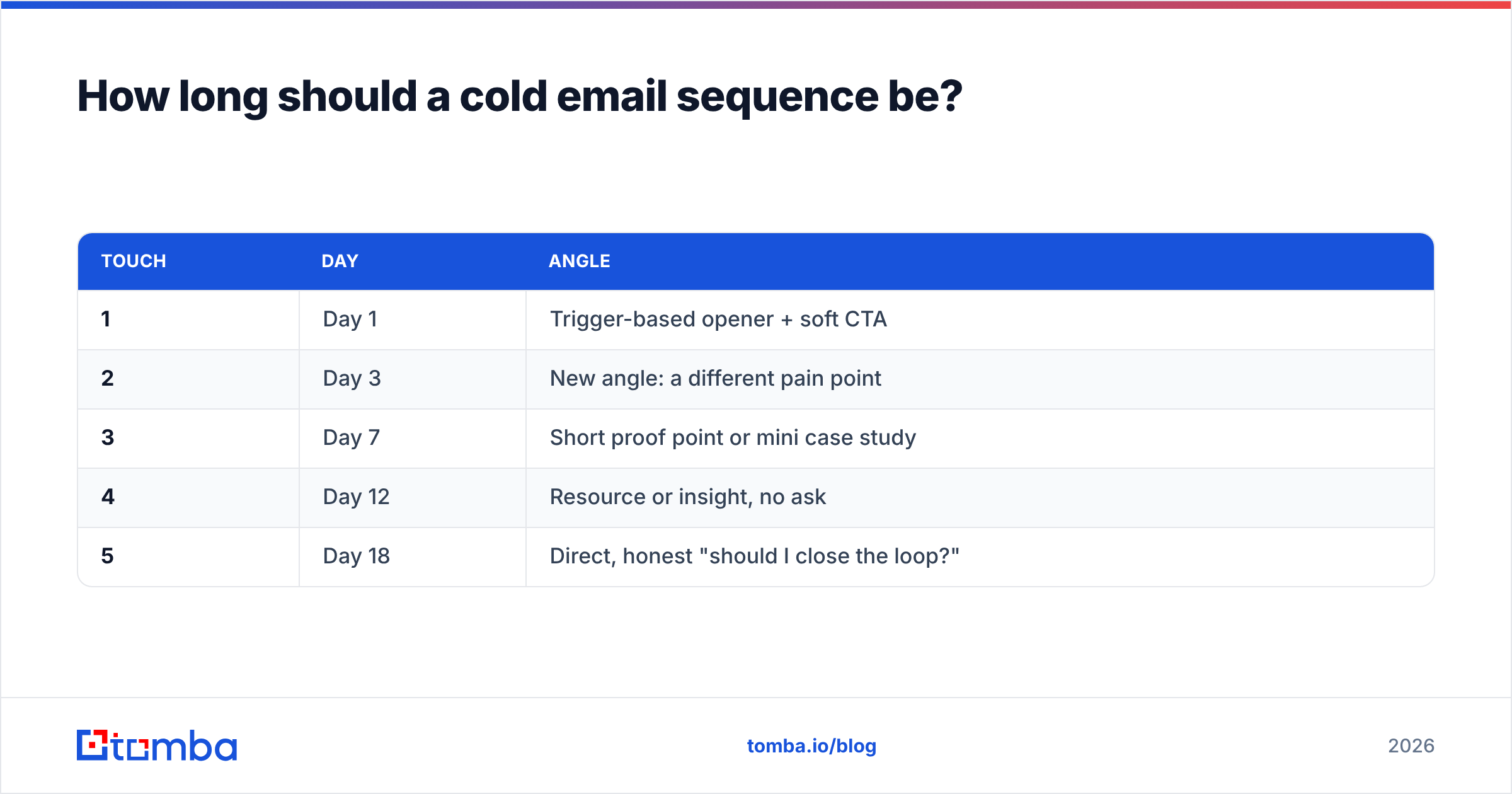
Four to six touches over two to three weeks, with each message taking a different angle. A single send captures only the small fraction of prospects who happen to be ready the day it arrives.
A reliable B2B SaaS cadence:
| Touch | Day | Angle |
|---|---|---|
| 1 | Day 1 | Trigger-based opener + soft CTA |
| 2 | Day 3 | New angle: a different pain point |
| 3 | Day 7 | Short proof point or mini case study |
| 4 | Day 12 | Resource or insight, no ask |
| 5 | Day 18 | Direct, honest "should I close the loop?" |
Vary the angle, not just the wording. Reframing the same pitch five times reads as pestering; approaching from a genuinely new problem each time reads as persistence. And always make follow-ups feel like standalone value, not "just bumping this to the top of your inbox."
Which metrics should you actually track?#
Track replies, positive replies, and booked meetings. Ignore open rates.
Apple's Mail Privacy Protection and similar features pre-load tracking pixels, which inflates open data into noise. A campaign showing 60% opens and three replies is a bad campaign wearing a good costume.
The numbers that tell the truth:
- Reply rate — the honest measure of whether your targeting and copy land. Benchmarks and definitions for response rate vary by industry, but 5–10% is a solid target for a well-built list.
- Positive reply rate — replies that show genuine interest, separated from "not interested" and "unsubscribe."
- Meetings booked — the only metric that maps to pipeline.
- Bounce rate — your early-warning light for list quality and deliverability.
If reply rate is low but bounce rate is fine, fix copy and targeting. If bounces are high, stop everything and re-verify your data before you send another email.
Should B2B SaaS teams buy lists or build them?#
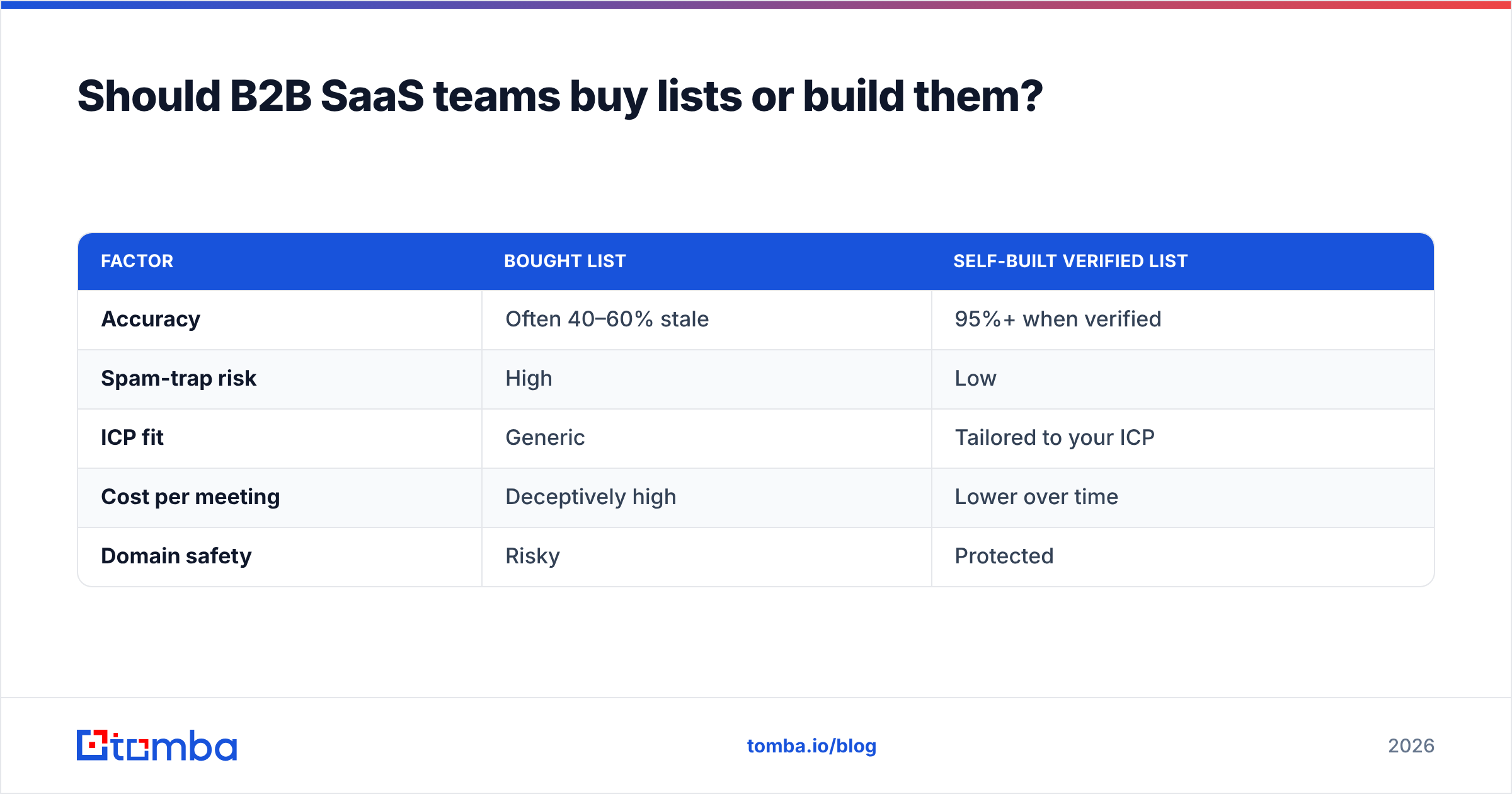
Build them. This is the decision that separates teams that scale cold email from teams that get their domain blocklisted.
| Factor | Bought list | Self-built verified list |
|---|---|---|
| Accuracy | Often 40–60% stale | 95%+ when verified |
| Spam-trap risk | High | Low |
| ICP fit | Generic | Tailored to your ICP |
| Cost per meeting | Deceptively high | Lower over time |
| Domain safety | Risky | Protected |
Reputable data providers exist — vendors like BookYourData sell verified B2B contacts and are a legitimate option when you need volume fast. But even with a quality provider, run every address through your own verification step before sending. Your domain reputation is the asset you are protecting, and no external guarantee is worth risking it.
The durable approach is to build lists from live sources — company domains, LinkedIn, your own site's traffic — and verify at the point of use. That keeps your data fresh and your ICP tight, which is exactly what the reply-rate math rewards. For a deeper comparison of the categories, G2's sales intelligence grid is a useful neutral reference.
What does a repeatable cold email workflow look like?#
Put the whole stack together and it runs like this, every week:
- Define the segment — one ICP slice with a shared trigger.
- Build the list — domain search plus email finder to collect contacts.
- Verify — bulk verification, drop invalid and risky addresses, check catch-alls.
- Load into your sequencer — mapped to the 4–6 touch cadence above.
- Send from a warmed, authenticated domain — modest daily volume per inbox.
- Measure replies and meetings — iterate on the layer the numbers point to.
When you need volume, a bulk email finder lets you resolve and verify hundreds of contacts at once instead of one at a time, so the data step never becomes your bottleneck.
The bottom line#
Cold email B2B SaaS success in 2026 is not a copywriting problem. It is a data and deliverability problem with a copywriting problem sitting on top. Fix the order — infrastructure, data, targeting, then copy. A plain, honest message will then book demos that a clever message on a bad list never could.
The layer most teams get wrong is data. If your list is stale, nothing above it can save the campaign. Start there: use the Tomba Email Finder to build accurate, ICP-matched lists, verify every address before you send, and protect the sending reputation your entire pipeline depends on. Check the Tomba pricing plans — including a free tier with 25 searches a month — and build your first verified list today.
Related guides#
Ready to find emails that actually work?
Join 150,000+ professionals who stopped guessing and started sending. Free credits on signup — no credit card required.
Get the Tomba newsletter
Practical outbound tactics and product updates — once every two weeks.
About the author