Cold Email Call to Action Examples That Get Replies in 2026
Your cold email lives or dies on the last line. Here are 15 cold email call to action examples, when to use each, and the interest-based asks that actually book meetings.
Your cold email can have a perfect subject line, a sharp opener, and a tight value prop — and still get zero replies because the last sentence asked for too much. The call to action (CTA) is the single line that converts attention into a response. Get it wrong and everything above it is wasted.
This guide breaks down 15 cold email call to action examples that work in 2026, when to use each one, and the psychology behind the asks that actually get answered.
TL;DR#
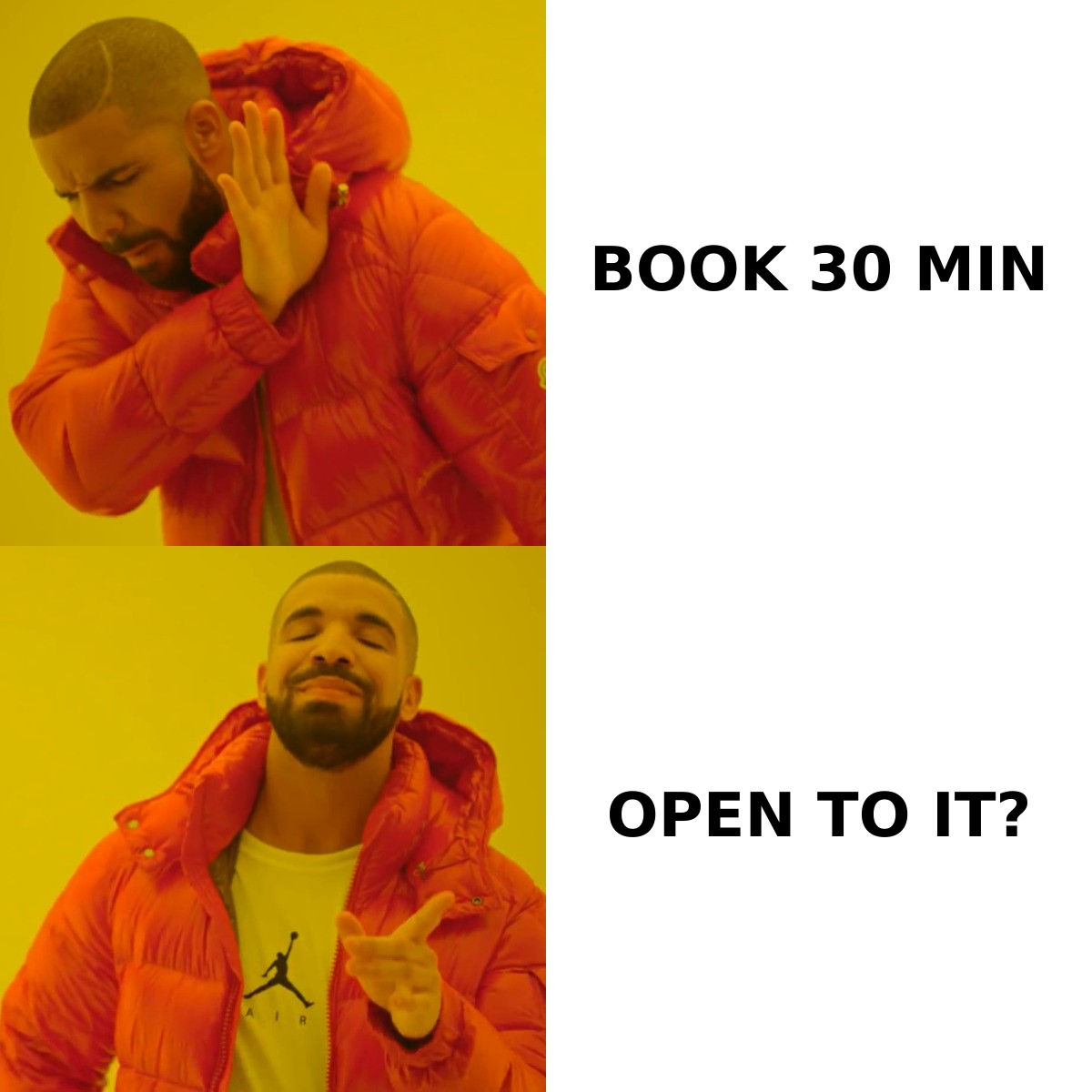
- Soft, interest-based CTAs beat hard meeting asks. "Worth a quick chat?" outperforms "Book 30 minutes here" for cold (non-referred) prospects.
- One CTA per email. Every extra ask lowers your reply rate. Pick a single, low-friction next step.
- Match the ask to the relationship temperature. First touch = micro-yes; later follow-ups = calendar link.
- Make replying physically easy — a yes/no question or a one-word answer converts better than "let me know your availability."
- Copy the 15 examples below, then pair them with clean, verified contact data so your CTA actually reaches a human.
What is a cold email call to action?#
A cold email call to action is the specific request you make at the end of your message that tells the reader exactly what to do next. It is the difference between a prospect thinking "interesting" and a prospect actually typing a reply.
Think of it like the end of a first date. You do not propose marriage — you ask if they want to grab coffee again. A good cold email CTA works the same way: it lowers the stakes of saying yes so the natural response is "sure" instead of "who is this person and why do they want an hour of my time?"
Most weak cold emails fail here in one of three ways: they ask for too much (a 30-minute demo from a stranger), they ask for too many things at once (reply, book a call, and check out the deck), or they are so vague ("let me know your thoughts") that there is no clear action at all.
What makes a cold email CTA convert?#
Strong CTAs share a handful of traits. Here are the six that matter most, in rough order of impact:
- Low friction — The reader can say yes without opening their calendar or blocking time. A reply-only ask ("Interested?") beats a scheduling link on a first touch.
- Singular — One clear next step, not a menu. Two CTAs compete with each other and both lose.
- Specific — "15 minutes Thursday to walk through the X integration" beats "a quick call sometime."
- Interest-based — You ask about interest first ("Open to seeing how this works?"), not commitment. Commitment comes after they raise a hand.
- Reader-centric — The CTA is framed around their outcome, not your quota. "Want the teardown of your onboarding flow?" not "Can I show you our product?"
- Easy to answer — Yes/no questions and reply-with-a-number formats remove the burden of composing a thoughtful response.
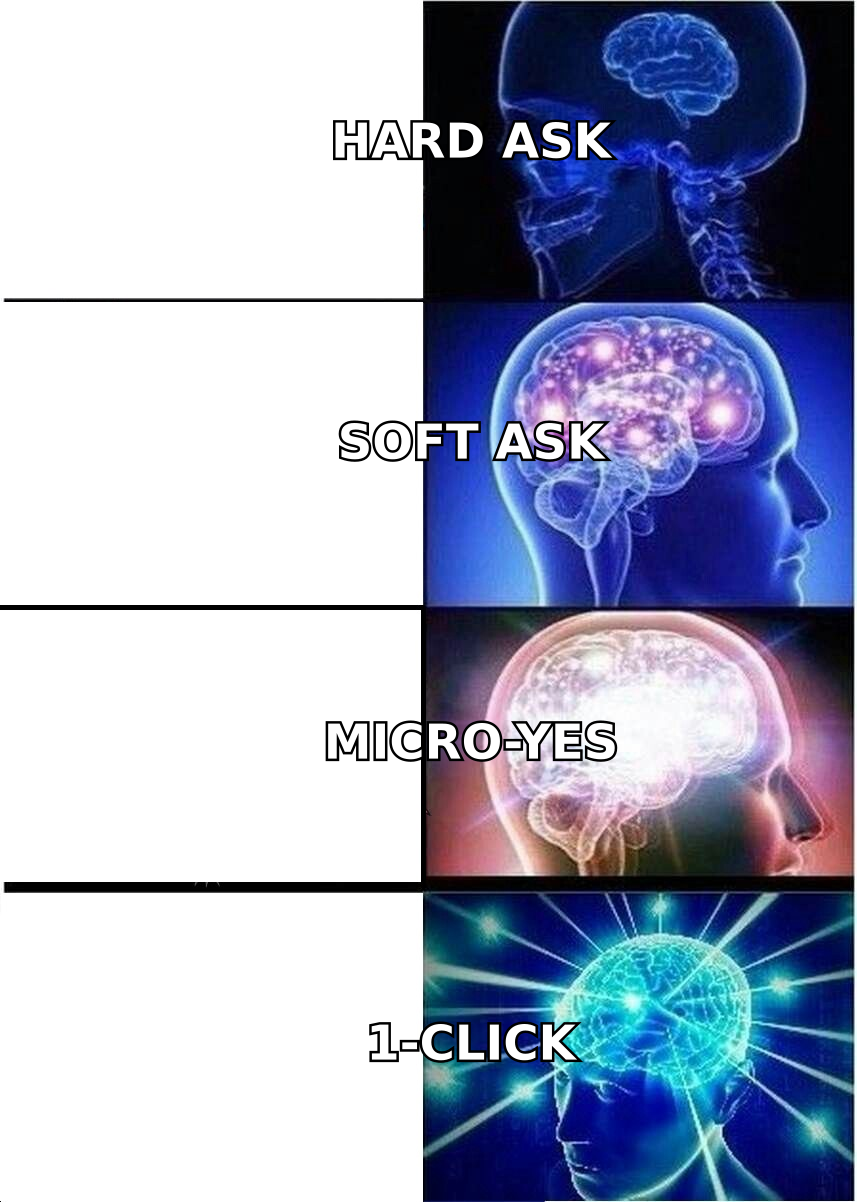
The core lesson: the colder the prospect, the softer the ask. You are trading a small, easy commitment now for the chance to escalate later.
15 cold email call to action examples#
Here are 15 CTAs grouped by how much they ask for. Start soft and escalate as the conversation warms.
Soft / interest-based CTAs (best for first touch)#
- "Worth a quick chat?" — Low-stakes, conversational, easy to reply to.
- "Is this a priority for your team this quarter?" — Frames a yes/no and qualifies at the same time.
- "Want me to send over the 2-minute breakdown?" — Offers value, asks only for permission.
- "Open to seeing how [similar company] cut [metric] by 30%?" — Curiosity plus social proof.
- "Should I stop chasing this, or is there mild interest?" — The "breakup" pattern; disarming and honest.
Value-first CTAs (offer something before you ask)#
- "Want the free teardown of your [landing page / onboarding / outreach]?" — Lead with a gift.
- "Happy to share the template we used — want it?" — Gives first, asks second.
- "I recorded a 90-second Loom on your site — want the link?" — Personalized and hard to ignore.
Direct meeting CTAs (best for warm or later-stage follow-ups)#
- "Do you have 15 minutes Thursday or Friday?" — Two concrete options reduce decision fatigue.
- "Here's my calendar — grab any slot that works." — Frictionless once interest exists.
- "Who on your team owns [problem]? Happy to loop them in." — The internal-referral ask.
Micro-commitment CTAs (when you want a reply, not a meeting)#
- "Reply '1' if useful, '2' if not the right time." — One keystroke to respond.
- "Right person for this, or should I reach out to someone else?" — Routes you to the decision-maker.
- "Just say the word and I'll send details." — Signals zero pressure.
- "Bad idea?" — A two-word breakup CTA that gets surprising reply rates on final follow-ups.
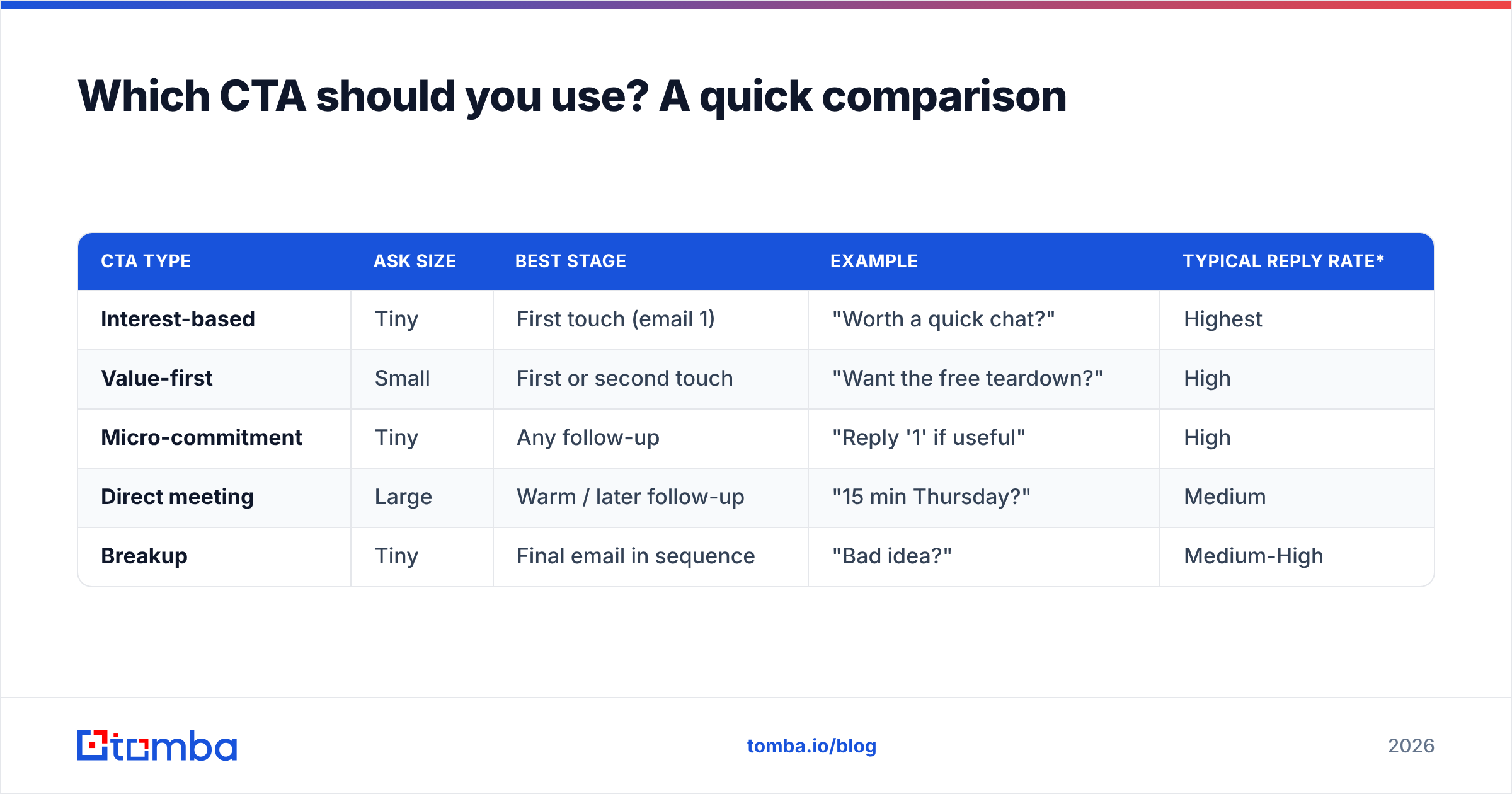
Which CTA should you use? A quick comparison#
Different asks fit different moments in the sequence. Use this table to match the CTA type to your situation:
| CTA type | Ask size | Best stage | Example | Typical reply rate* |
|---|---|---|---|---|
| Interest-based | Tiny | First touch (email 1) | "Worth a quick chat?" | Highest |
| Value-first | Small | First or second touch | "Want the free teardown?" | High |
| Micro-commitment | Tiny | Any follow-up | "Reply '1' if useful" | High |
| Direct meeting | Large | Warm / later follow-up | "15 min Thursday?" | Medium |
| Breakup | Tiny | Final email in sequence | "Bad idea?" | Medium-High |
*Relative, directional benchmarks — your numbers depend on list quality, targeting, and offer. Always A/B test.
The pattern is clear: front-load your sequence with soft, interest-based and value-first asks, and only pull out the calendar link once someone has signaled they are in.
Should you put a calendar link in a cold email?#
Not on the first touch. A scheduling link in email one asks a stranger to block time before they have decided they care — that is a large commitment disguised as convenience.
Sequence it instead:
- Email 1: Interest-based CTA. ("Open to it?")
- Email 2: Value-first CTA with proof. ("Here's how [peer] solved this — want details?")
- Email 3+: Once they reply positively, then drop the calendar link.
The exception is warm outbound — prospects who filled a form, attended a webinar, or came through a referral. For those, a calendar link can work immediately because the relationship is already partly established. This mirrors how a strong response rate is built: reduce friction early, escalate the ask only as interest grows.
How do you write a CTA that actually gets a reply?#
Follow this three-part formula for cold CTAs that convert:
1. Anchor to their outcome. Reference the specific result they care about, not your feature. Compare:
- Weak: "Can I show you our platform?"
- Strong: "Want to see how teams like yours cut prospecting time in half?"
2. Shrink the ask. Ask for interest, a reply, or permission — not a meeting.
- Weak: "Book a 45-minute demo here."
- Strong: "Worth a look? Just reply and I'll send a 2-minute video."
3. Make the response trivial. End with a yes/no question or a reply-with-a-number prompt so the reader does not have to think about how to answer.
- Weak: "Let me know your thoughts and availability."
- Strong: "Interested — yes or no?"
If you want a head start on phrasing, Tomba's free cold email templates and subject line generator pair well with these CTAs so the whole message stays consistent.
What cold email CTA mistakes kill reply rates?#
Even good copywriters trip on these. Avoid them:
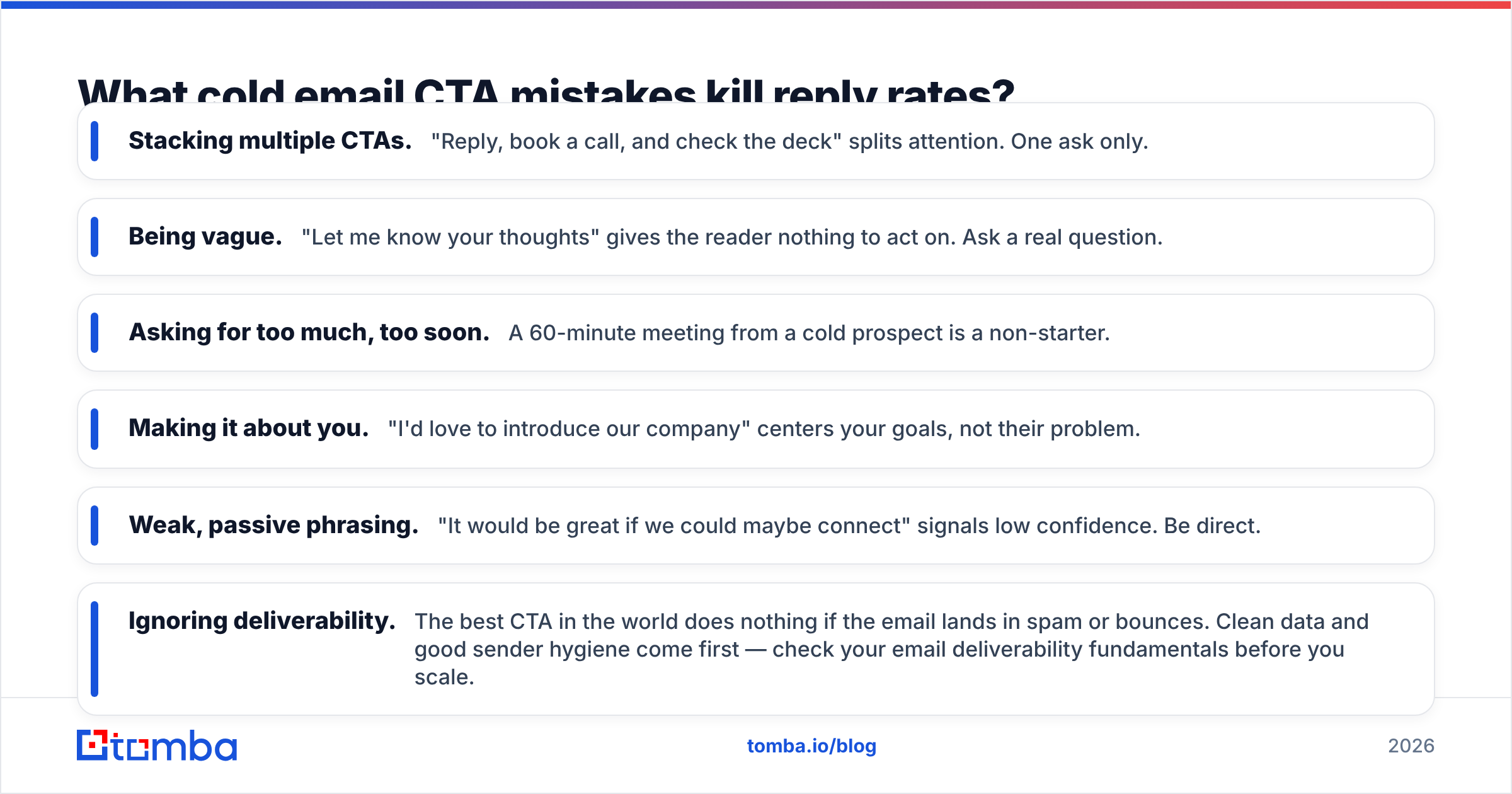
- Stacking multiple CTAs. "Reply, book a call, and check the deck" splits attention. One ask only.
- Being vague. "Let me know your thoughts" gives the reader nothing to act on. Ask a real question.
- Asking for too much, too soon. A 60-minute meeting from a cold prospect is a non-starter.
- Making it about you. "I'd love to introduce our company" centers your goals, not their problem.
- Weak, passive phrasing. "It would be great if we could maybe connect" signals low confidence. Be direct.
- Ignoring deliverability. The best CTA in the world does nothing if the email lands in spam or bounces. Clean data and good sender hygiene come first — check your email deliverability fundamentals before you scale.
According to HubSpot's sales research, personalized, single-ask outreach consistently outperforms generic blasts — and the CTA is where that personalization pays off or falls flat.
How does data quality affect your CTA?#
The strongest CTA fails if it reaches a dead inbox. Reply rate is a product of three things: targeting, message, and deliverability. Your CTA is the message lever — but it can only work if the first and third are handled.
That means:
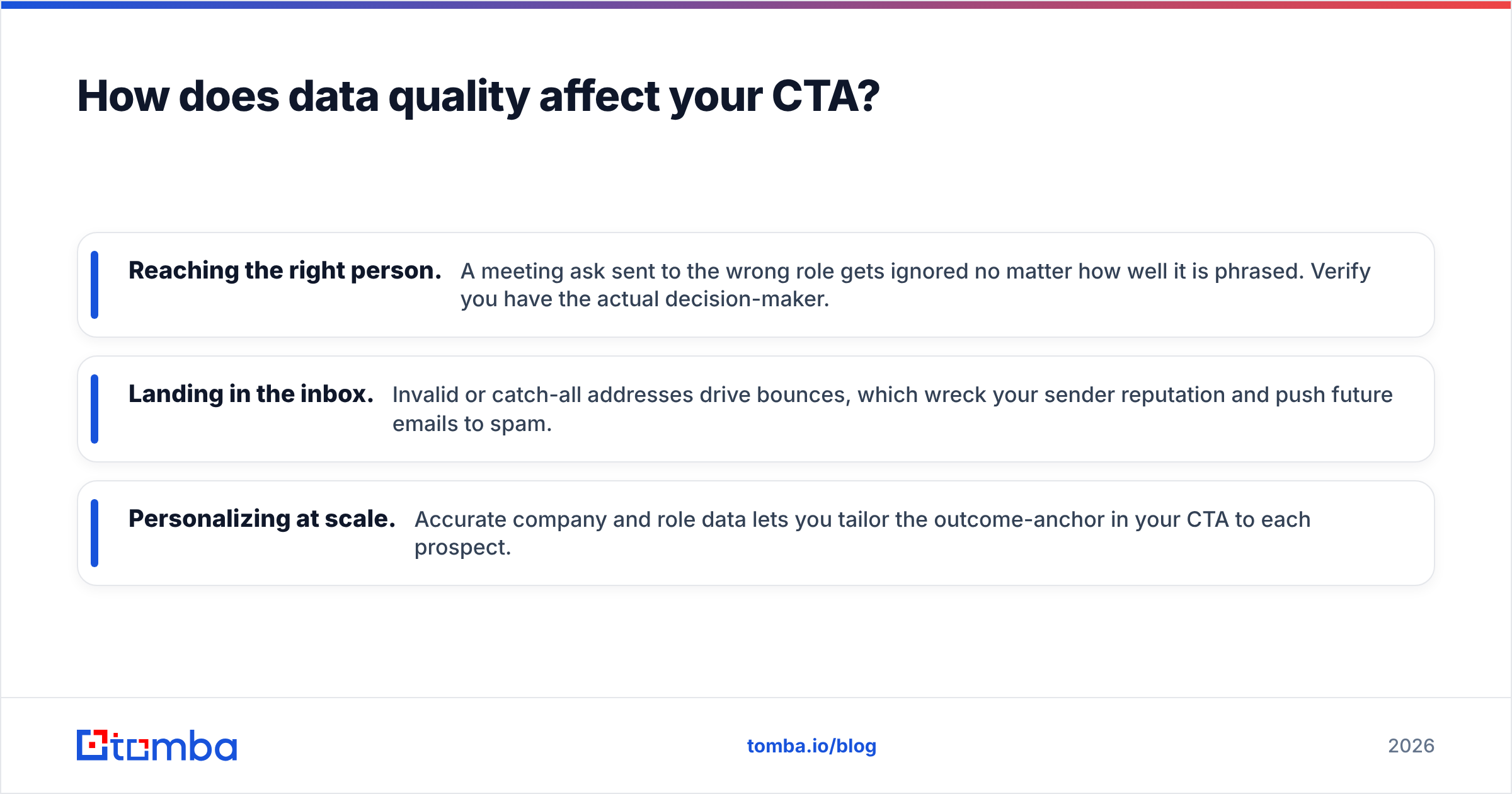
- Reaching the right person. A meeting ask sent to the wrong role gets ignored no matter how well it is phrased. Verify you have the actual decision-maker.
- Landing in the inbox. Invalid or catch-all addresses drive bounces, which wreck your sender reputation and push future emails to spam.
- Personalizing at scale. Accurate company and role data lets you tailor the outcome-anchor in your CTA to each prospect.
This is exactly why so many outbound teams pair their copy work with a reliable email finder and email verifier before a single send. Great CTAs plus clean, verified contacts is the combination that moves reply rates. You can compare plans on the Tomba pricing page — the free tier includes 25 searches a month to test the workflow.
Cold email CTA templates you can copy today#
Drop these into your sequence and adapt the brackets:
First touch (interest-based):
"Hi [Name] — noticed [specific trigger]. Teams in [industry] usually struggle with [problem]. Worth a quick chat, or not a priority right now?"
Follow-up (value-first):
"[Name], quick one — I put together a 2-minute breakdown of how [peer company] fixed [problem]. Want me to send it over?"
Breakup (final email):
"Haven't heard back, [Name] — totally fine. Should I close the loop on this, or is there mild interest worth exploring? Either answer helps."
Each one asks for exactly one small thing, centers the reader, and is easy to answer in a single line.
Start with the CTA, but don't stop there#
A great cold email call to action is the last 10 words that make the previous 100 worth writing. Keep it singular, low-friction, and anchored to the reader's outcome — then let the sequence escalate the ask as interest builds.
But remember the full equation: message plus the right person plus the inbox. Once your CTAs are dialed in, make sure they reach real, verified decision-makers by pairing your outreach with the Tomba Email Finder. Find accurate professional emails by name, company, or domain, verify them before you send, and give your best CTA the audience it deserves. Start free with 25 searches a month and scale up as your reply rate climbs.
Related guides#
Ready to find emails that actually work?
Join 150,000+ professionals who stopped guessing and started sending. Free credits on signup — no credit card required.
Get the Tomba newsletter
Practical outbound tactics and product updates — once every two weeks.
About the author