7 Best Connectily Alternatives for Cold Outreach in 2026
Connectily covers sending and warmup, but it won't build your list or verify your data. Here are 7 alternatives ranked by deliverability, accuracy, and real cost.

Connectily promises to get your cold emails into the inbox: sending infrastructure, warmup, and campaign scheduling in one place. That's useful. But a sending tool is only half the machine — it moves the emails you already have. It does not build your list, and it does not tell you whether the addresses you loaded are real. Load bad data into any sender and the warmup work is wasted.
If you're weighing Connectily alternatives in 2026, the real question is not "which tool sends email?" It's "which stack gets accurate contacts, keeps them verified, and lands them in the inbox — for what I actually pay?" This guide breaks down seven options across that full picture.
TL;DR#
- Connectily is a sender, not a data source. Its strength is deliverability and warmup; its gap is finding and verifying the contacts you email in the first place.
- The best alternative depends on your bottleneck. Pick by whether you're short on data, deliverability, or automation — not by feature-count.
- Deliverability tools cluster tightly. Instantly, Smartlead, and Saleshandy all do inbox rotation and warmup well; price and support are the real differentiators.
- Data accuracy is where money leaks. Every bounce burns sender reputation. Verifying contacts before send matters more than any warmup schedule.
- A layered stack usually beats one all-in-one. Pair a data layer like Tomba Email Finder with a sender you trust, and you control quality at each step.
What does Connectily actually do?#
Connectily positions itself as a cold-email delivery platform: you connect mailboxes, warm them up so they build a sending history, rotate across inboxes to spread volume, and schedule campaigns. The category it competes in is deliverability tooling — the same lane as Instantly and Smartlead.
Here's the honest framing. A sender's job is to protect email deliverability and sender reputation once you press "go." What it does not do is decide who you email. That decision — the list — determines your bounce rate, your reply rate, and whether the warmup effort survives contact with reality.
So when people search for Connectily alternatives, they usually want one of three things:
- A cheaper or more reliable sender with the same warmup-and-rotate model.
- A data source that produces accurate contacts to feed the sender.
- A single platform that tries to do both.
Sort yourself into one of those buckets before you compare tools. It saves you from paying for overlap.

Why look for a Connectily alternative at all?#
Four reasons come up repeatedly when teams switch senders — and none of them is "the emails didn't send."
- The data problem is upstream. You can have flawless warmup and still bounce 15% of a campaign because the list was scraped and never verified. Bounces above ~3% drag your whole domain down. No sender fixes a bad list.
- Pricing scales badly with mailboxes. Deliverability tools often charge per connected inbox or per active lead. Add sending accounts and the bill climbs fast. Model your real mailbox count, not the starter tier.
- Support and deliverability guidance vary wildly. When your open rates crater, you need a vendor who'll help diagnose SPF, DKIM, and reputation — not a ticket queue. Check the SPF record guidance and support reviews before committing.
- All-in-one lock-in. Bundling finding, verifying, and sending into one subscription feels tidy until one piece underperforms and you can't swap it out.
The fix is rarely "a better sender." It's usually a cleaner data layer feeding whichever sender you like.
What are the best Connectily alternatives in 2026?#
Below are seven tools worth comparing, grouped by the job they do best. Prices are starting tiers as published by each vendor; confirm current rates on their sites, since deliverability pricing changes often.
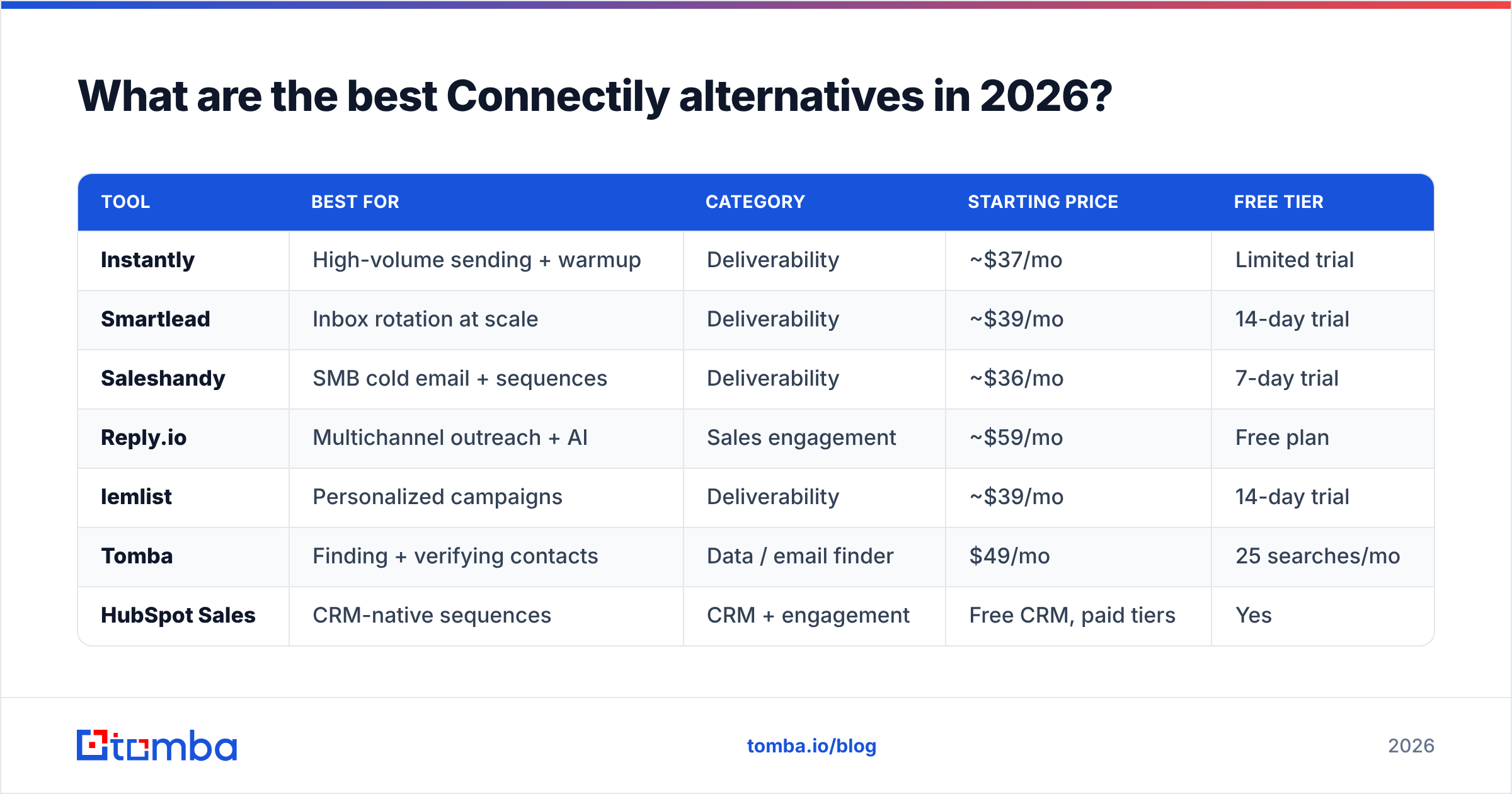
| Tool | Best for | Category | Starting price | Free tier |
|---|---|---|---|---|
| Instantly | High-volume sending + warmup | Deliverability | ~$37/mo | Limited trial |
| Smartlead | Inbox rotation at scale | Deliverability | ~$39/mo | 14-day trial |
| Saleshandy | SMB cold email + sequences | Deliverability | ~$36/mo | 7-day trial |
| Reply.io | Multichannel outreach + AI | Sales engagement | ~$59/mo | Free plan |
| lemlist | Personalized campaigns | Deliverability | ~$39/mo | 14-day trial |
| Tomba | Finding + verifying contacts | Data / email finder | $49/mo | 25 searches/mo |
| HubSpot Sales | CRM-native sequences | CRM + engagement | Free CRM, paid tiers | Yes |
Notice the table mixes two categories. That's deliberate. Most people replacing Connectily need one deliverability tool and one data tool — not two of the same kind. Here's how each fits.
Instantly#
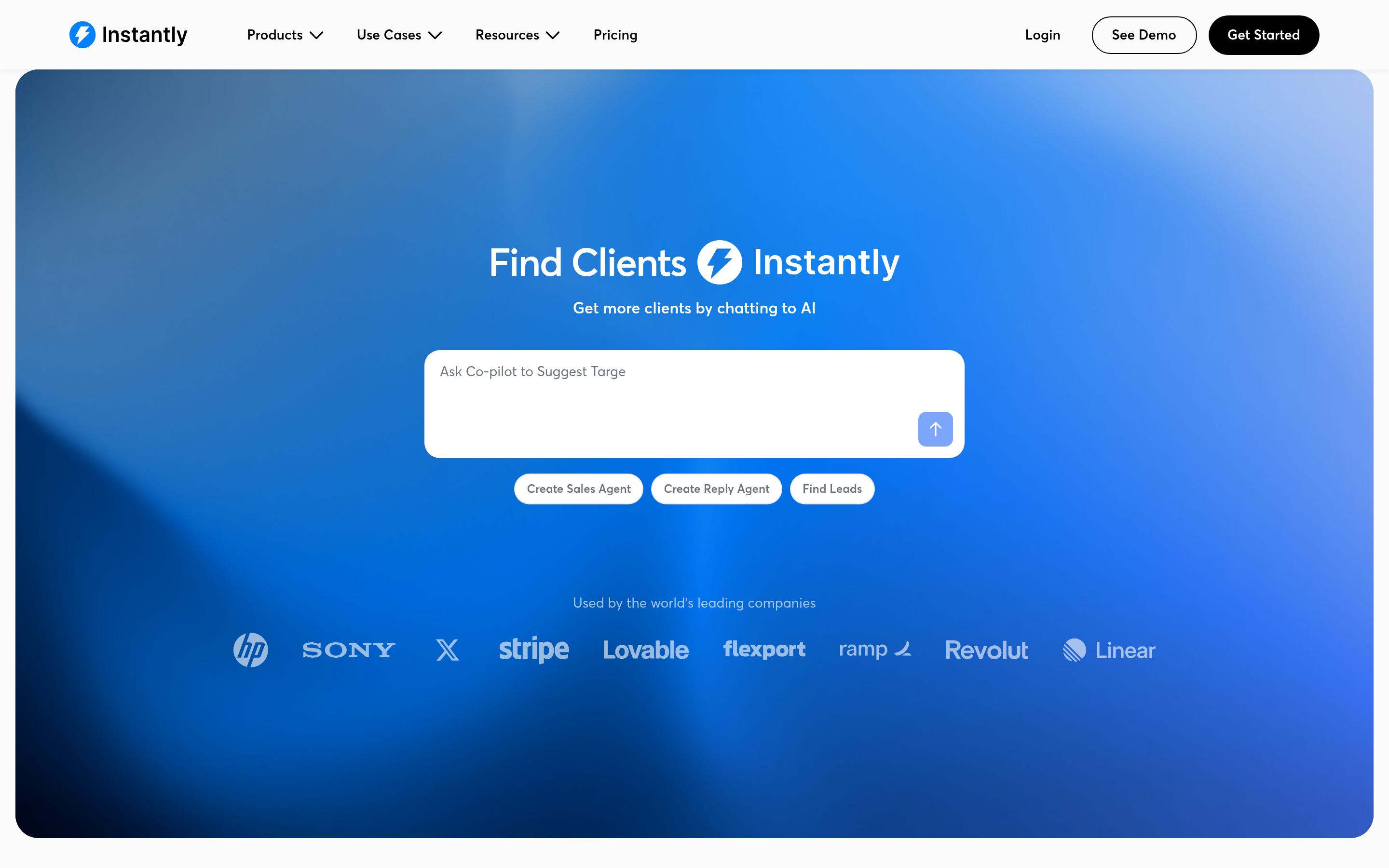
The volume favorite. Instantly leans into unlimited email accounts on higher tiers and a large warmup network, which makes it attractive for agencies running many domains. If your bottleneck is "I need to send a lot from many mailboxes," it's a strong match. See how it stacks up as an Instantly alternative when you're comparing data coverage, since Instantly is a sender first.
Smartlead#
Similar DNA to Instantly — unlimited warmup, inbox rotation, sub-account management for agencies. Teams often choose between the two on price, UI preference, and API quality. Both assume you bring your own verified list.
Saleshandy#
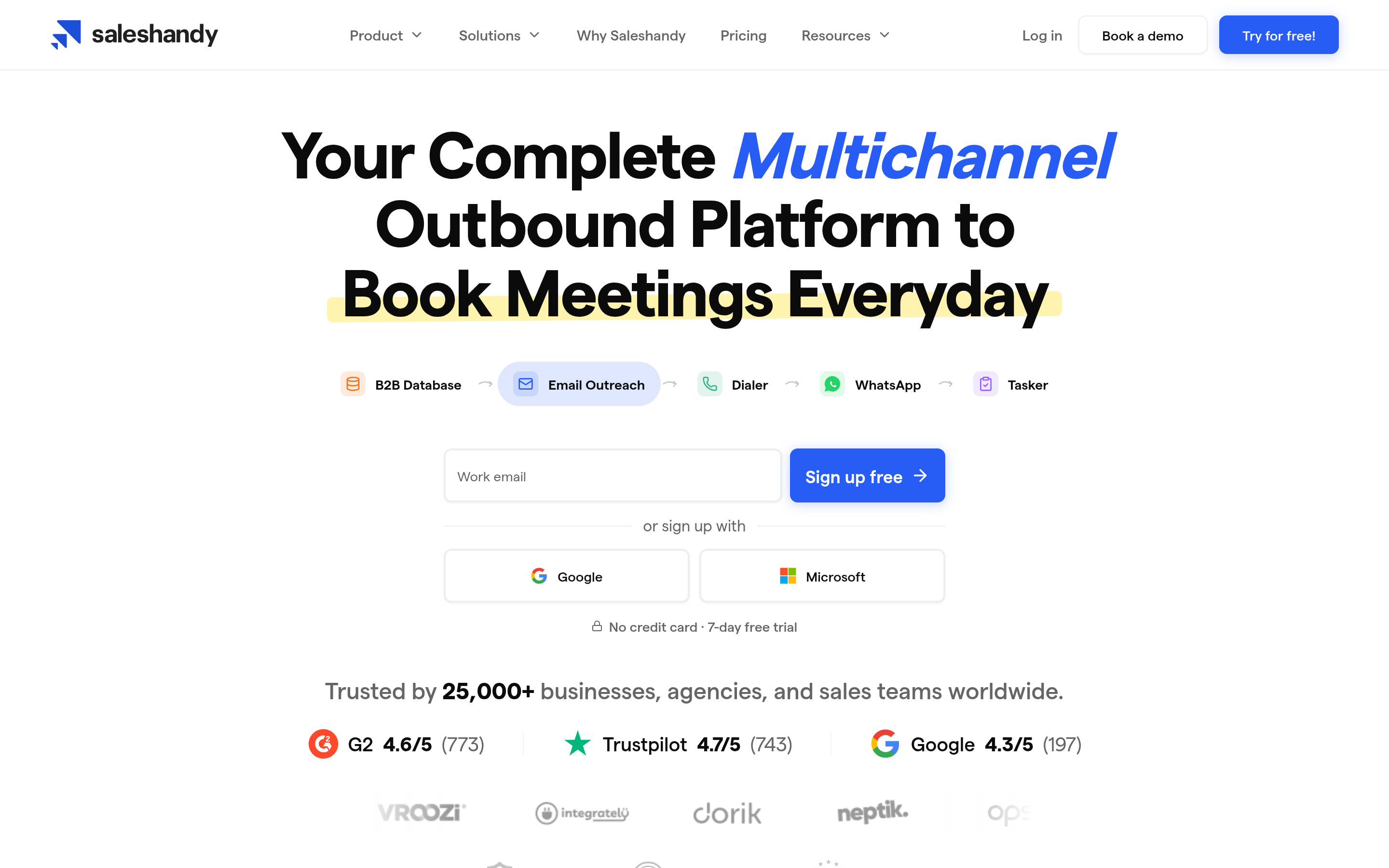
The SMB-friendly pick. Saleshandy pairs cold-email sending with sequence automation at an approachable price, and it's a common first sender for founders doing outbound themselves. Weigh it as a Saleshandy alternative if you want sequences plus deliverability without agency-scale complexity.
Reply.io#

Broader than pure email. Reply.io adds calls, LinkedIn steps, and AI-assisted writing, making it a sales-engagement platform rather than a sender alone. If your outreach is genuinely multichannel, look at it as a Reply.io alternative — but expect to pay for the extra surface area.
lemlist#
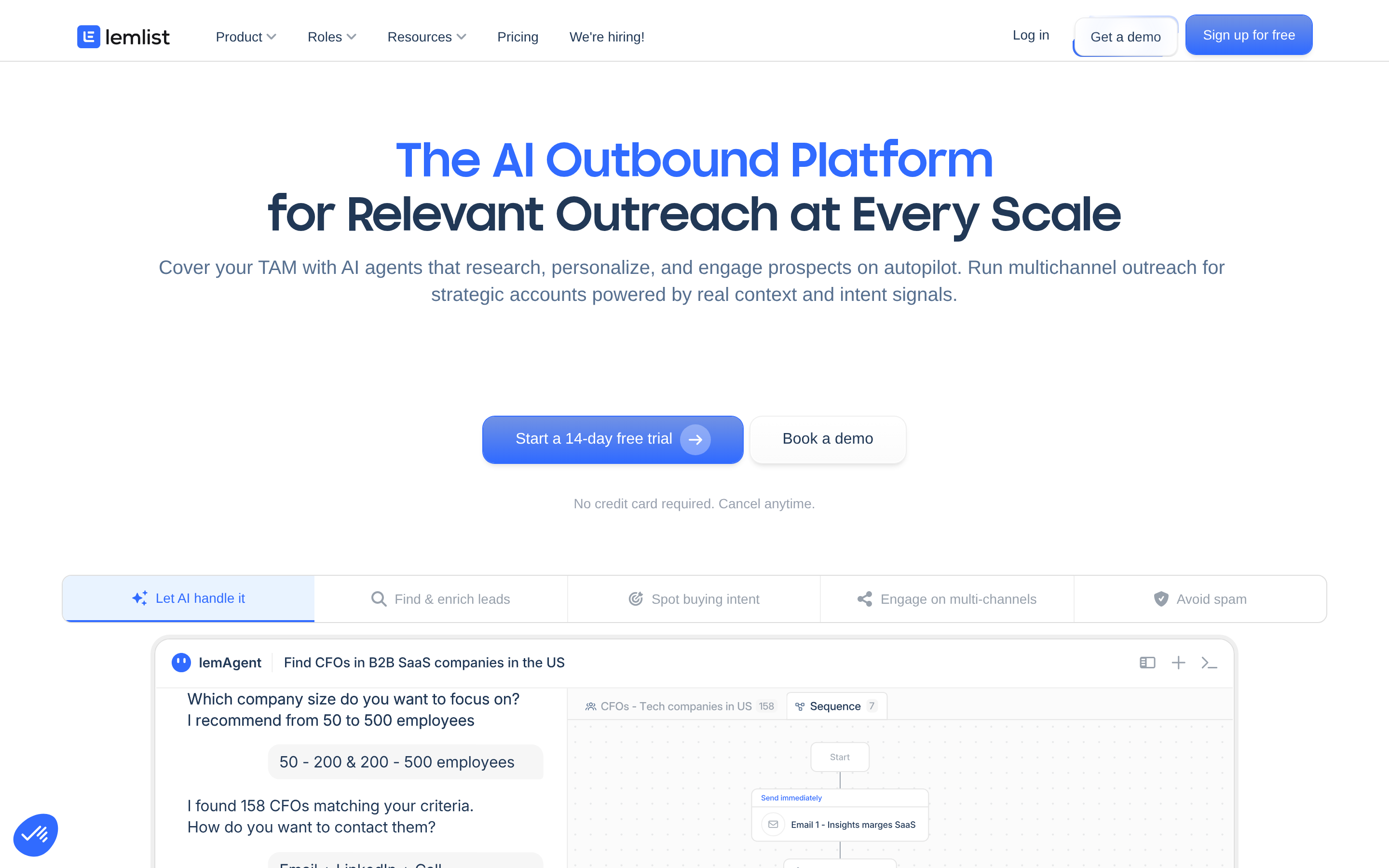
Known for personalization — dynamic images, custom variables, and a community-driven playbook approach. Good when your differentiator is message quality, not raw volume. Deliverability features are solid; the list is still yours to source.
HubSpot Sales#
If you already live in HubSpot's CRM, its native sequences keep outreach and pipeline in one system. It's not a warmup-and-rotate cold-email engine, so it fits warm and semi-warm outreach better than cold-at-scale. The upside is zero data silo between marketing and sales.
Tomba#
The odd one out, on purpose. Tomba doesn't compete with Connectily on sending — it competes on the thing Connectily can't do: producing accurate contacts. Use domain search to pull every reachable address at a target company, verify each with the email verifier, then export a clean list into whichever sender you chose above. It's the data layer, not the sender.
Is a single all-in-one better than a stack?#
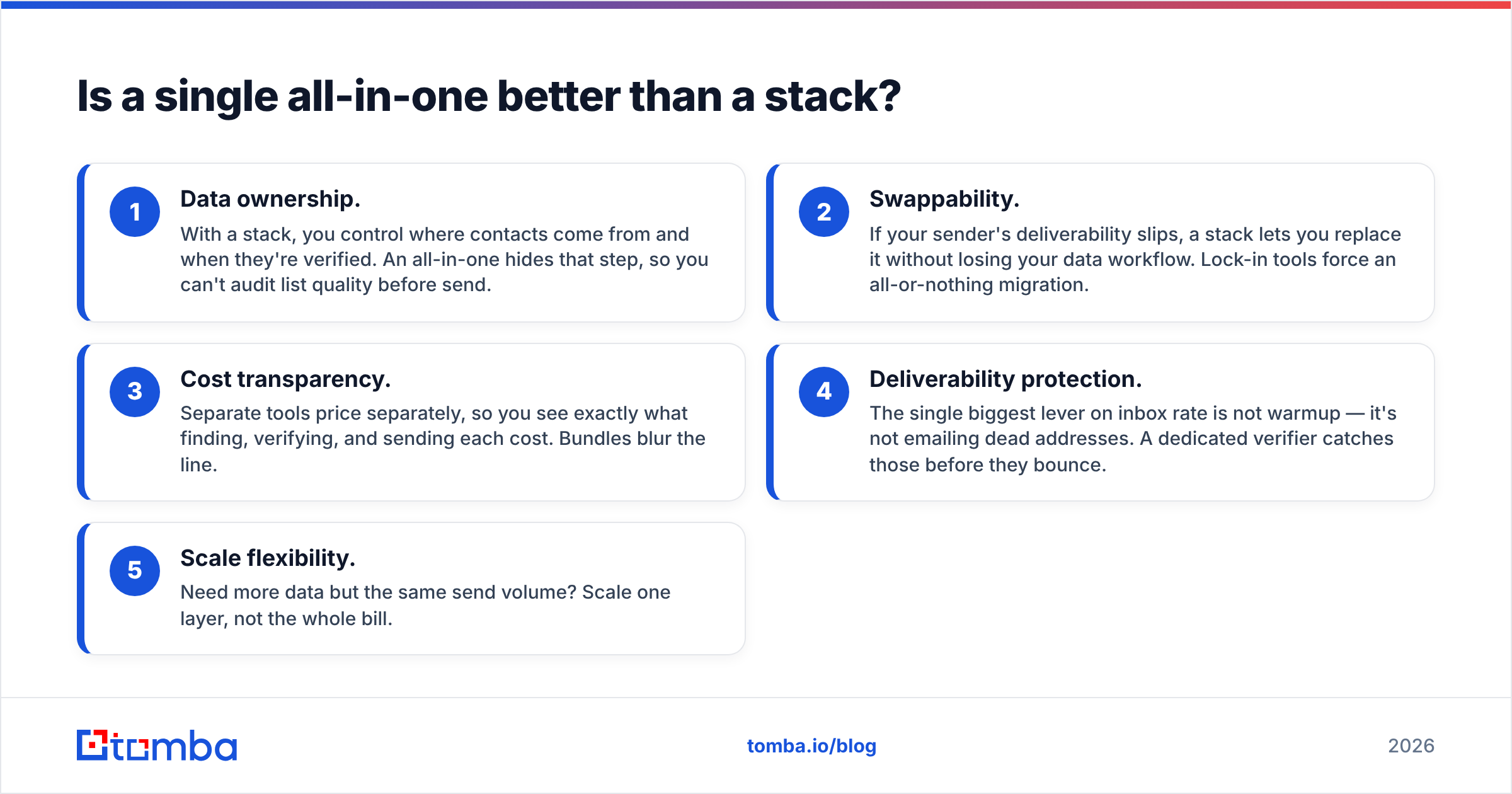
A stack usually wins on quality; an all-in-one wins on convenience. Here's the trade-off, concretely.
- Data ownership. With a stack, you control where contacts come from and when they're verified. An all-in-one hides that step, so you can't audit list quality before send.
- Swappability. If your sender's deliverability slips, a stack lets you replace it without losing your data workflow. Lock-in tools force an all-or-nothing migration.
- Cost transparency. Separate tools price separately, so you see exactly what finding, verifying, and sending each cost. Bundles blur the line.
- Deliverability protection. The single biggest lever on inbox rate is not warmup — it's not emailing dead addresses. A dedicated verifier catches those before they bounce.
- Scale flexibility. Need more data but the same send volume? Scale one layer, not the whole bill.
The counterargument is real: a stack is more moving parts, more logins, more integration. If you're sending low volume and value simplicity over control, one platform is defensible. But at any serious volume, the data-quality gap decides who lands in the inbox.

How much do these Connectily alternatives really cost?#
Sticker price hides the real number. Two line items dominate the true cost of cold outreach, and neither is the sender's monthly fee.
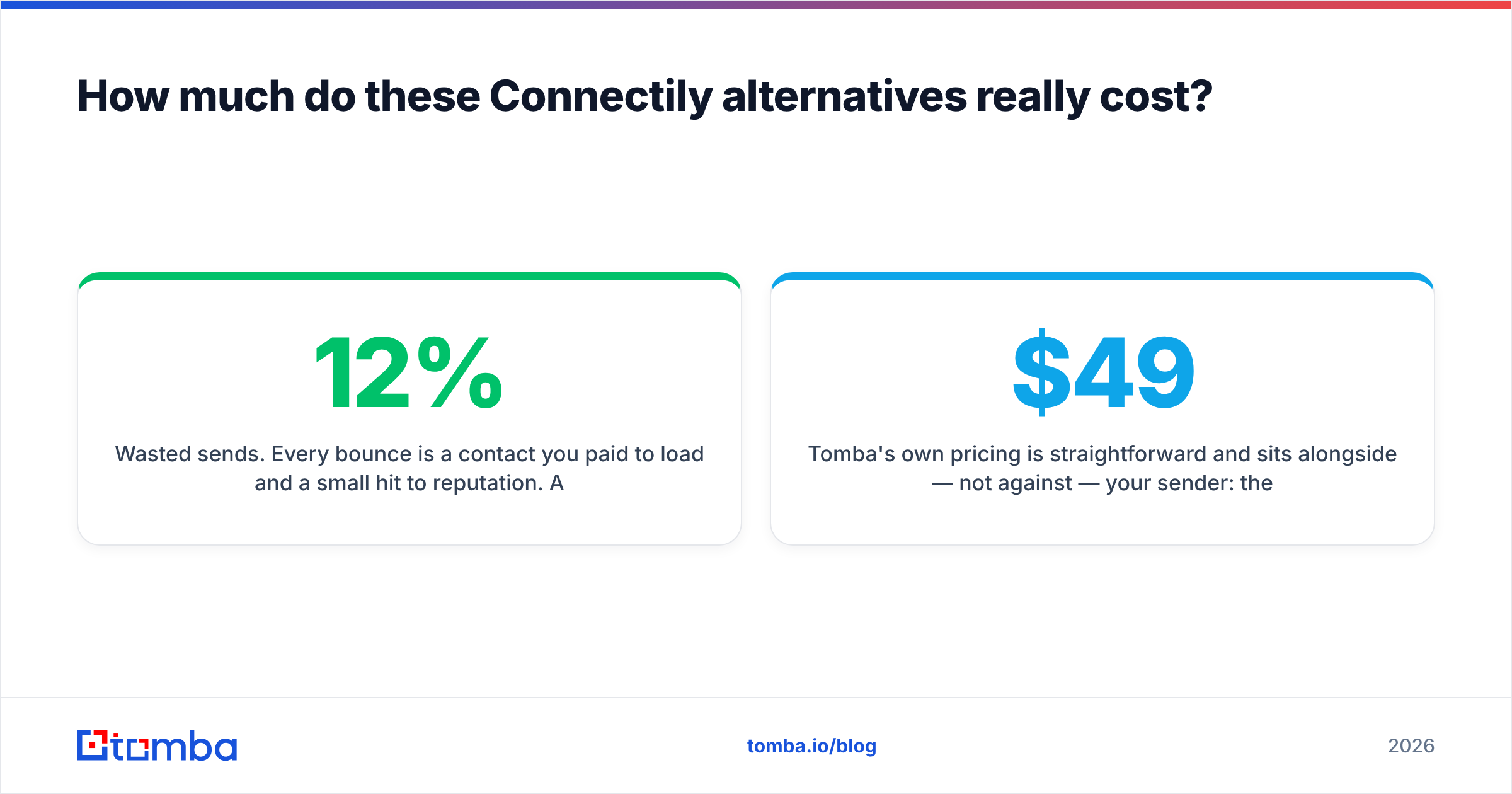
- Wasted sends. Every bounce is a contact you paid to load and a small hit to reputation. A 12% bounce rate on a 10,000-send month is 1,200 emails actively hurting you. Verification is cheap insurance against that.
- Mailbox sprawl. Per-inbox pricing means the sender bill grows with domains, not just contacts. Count your real mailbox needs before comparing starter tiers.
Tomba's own pricing is straightforward and sits alongside — not against — your sender: the Free tier gives 25 searches a month, Starter is $49/mo, Growth $99/mo, and Pro $249/mo. Full Tomba pricing is public, credits roll into both finding and verifying, and there's an email finder API if you want to bake verification into your sending workflow programmatically.
For a like-for-like read on the sender side, cross-check current tiers on independent review sites such as G2 rather than trusting any single vendor's landing page.
How do you choose the right one?#
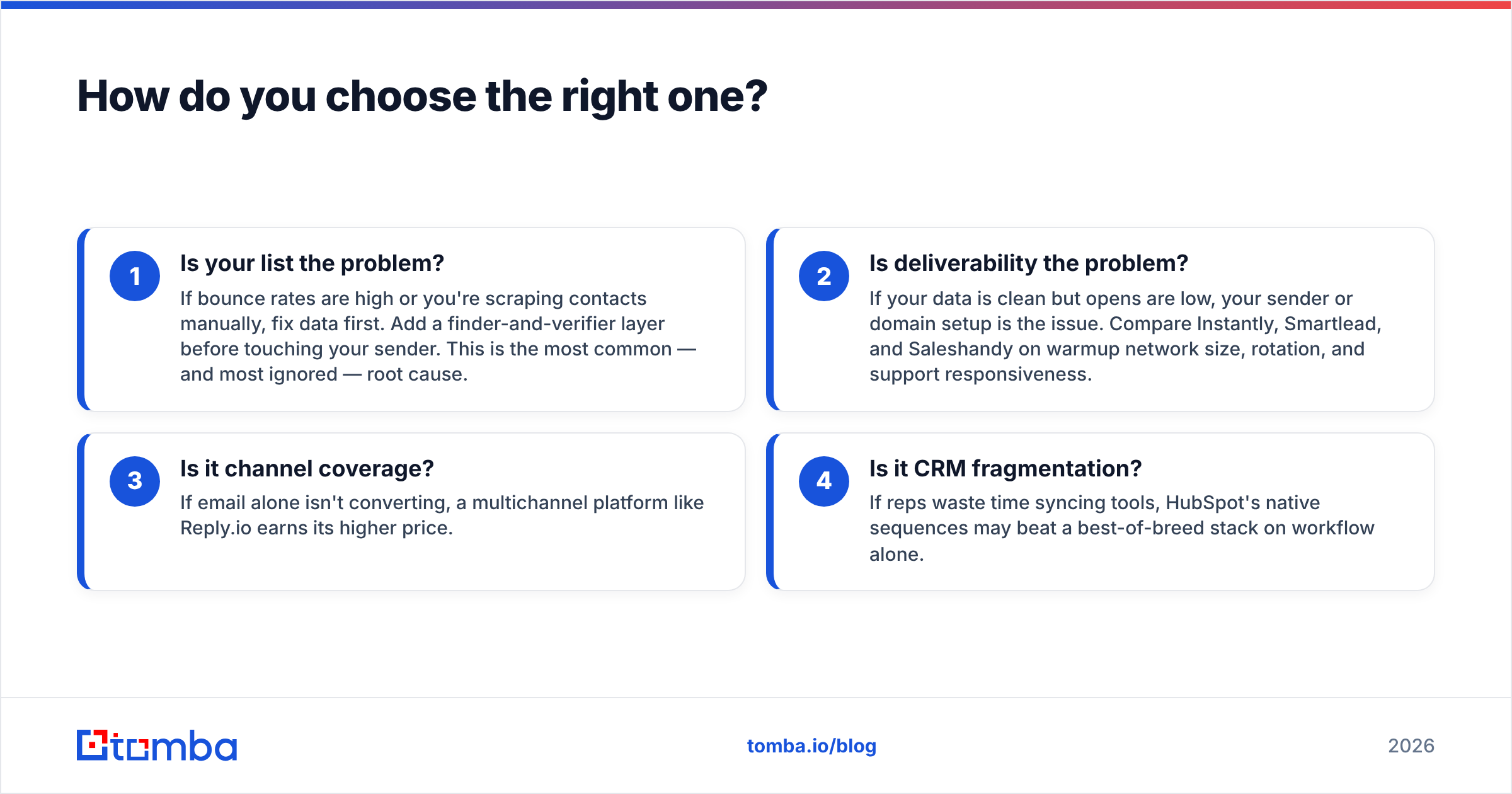
Match the tool to your actual bottleneck, in this order:
- Is your list the problem? If bounce rates are high or you're scraping contacts manually, fix data first. Add a finder-and-verifier layer before touching your sender. This is the most common — and most ignored — root cause.
- Is deliverability the problem? If your data is clean but opens are low, your sender or domain setup is the issue. Compare Instantly, Smartlead, and Saleshandy on warmup network size, rotation, and support responsiveness.
- Is it channel coverage? If email alone isn't converting, a multichannel platform like Reply.io earns its higher price.
- Is it CRM fragmentation? If reps waste time syncing tools, HubSpot's native sequences may beat a best-of-breed stack on workflow alone.
Most teams switching from Connectily discover the answer is #1. The sending was never broken — the list was.
What's the smartest stack for 2026?#
Keep the layers separate and keep the data clean. The pattern that holds up:
- Find contacts with an accurate email finder — by domain, name, or company.
- Verify every address before it enters a campaign, and re-verify old lists on a schedule.
- Send with whichever deliverability tool fits your volume and budget.
That structure means no single vendor can quietly degrade your results, and the most damaging failure mode — emailing dead addresses — is designed out from the start.
The bottom line#
Connectily is a capable sender, and several alternatives — Instantly, Smartlead, Saleshandy, Reply.io, lemlist — will match or beat it on deliverability depending on your volume and budget. But swapping one sender for another rarely moves the needle if the list feeding it is unverified.
Fix the data layer first. Use Tomba Email Finder to source accurate, verified professional emails by domain or name, run them through the built-in verifier so nothing bounces, then export a clean list into the sender you like best. Start free with 25 searches a month, and let your outreach tool do what it's good at — landing verified contacts in the inbox instead of warming up addresses that were never real. See Tomba plans and build the data layer your cold email has been missing.
Related guides#
Ready to find emails that actually work?
Join 150,000+ professionals who stopped guessing and started sending. Free credits on signup — no credit card required.
Get the Tomba newsletter
Practical outbound tactics and product updates — once every two weeks.
About the author