Cross Selling Best Practices: The 2026 Playbook for B2B Teams
Cross-selling done right grows revenue and loyalty; done wrong it burns trust. Here are the 2026 best practices, comparison tables, and data tactics to get it right.
Cross-selling is the fastest revenue you already own. The account is signed. The trust exists. The cost to reach the buyer is close to zero. Yet most teams still bolt on a random "want fries with that?" offer and wonder why attach rates stay flat. The cross selling best practices below fix that, with clear timing, data, and metrics.
TL;DR#
- Cross-selling sells adjacent products to an existing customer; upselling sells a bigger version of what they already bought. Both grow account value, but they need different timing and triggers.
- The best cross-sell offers are relevant, timed to a moment of value, and backed by data — not calendar-based blasts.
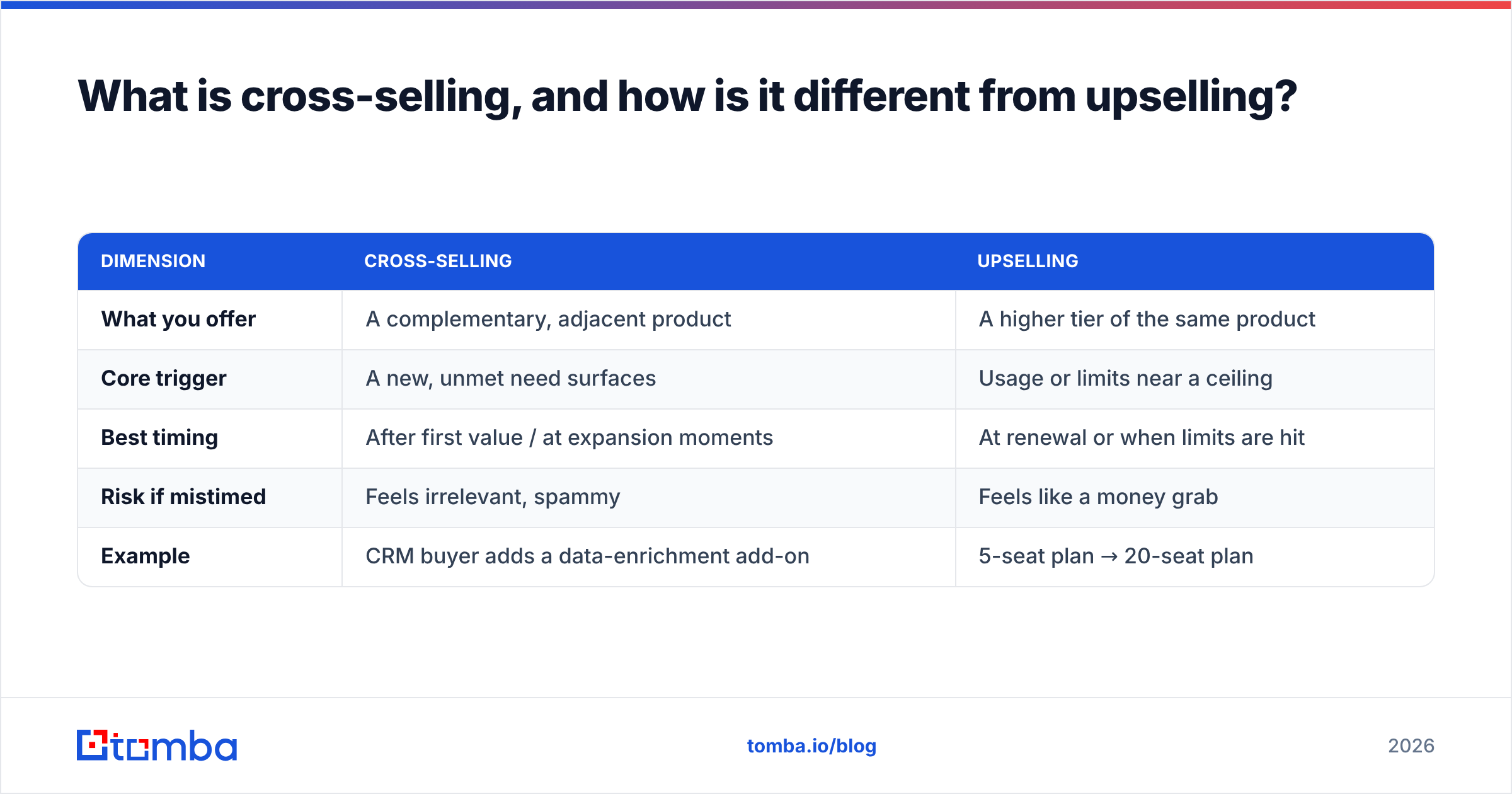
- Map complementary products to lifecycle stages so reps and automations know exactly what to offer, and when.
- Clean contact and account data is the hidden prerequisite — you cannot personalize an offer to a decision-maker you cannot reach.
- Measure attach rate, expansion revenue, and net revenue retention, not just gross bookings, to prove cross-selling actually works.
What is cross-selling, and how is it different from upselling?#
Cross-selling means offering a customer a complementary product or service that pairs with what they already own. Think of a bank that opens your checking account, then offers a credit card and a savings plan. Each product solves a different job, but together they deepen the relationship.
Upselling, by contrast, moves a customer to a higher tier of the same product — more seats, more storage, a premium plan. Same job, bigger version.
Why the distinction matters: the two motions fire at different moments. Upsell triggers on usage limits ("you've hit 90% of your credits"). Cross-sell triggers on a new need the customer just revealed (they onboarded a new team, entered a new market, or hit a workflow gap your other product fills).
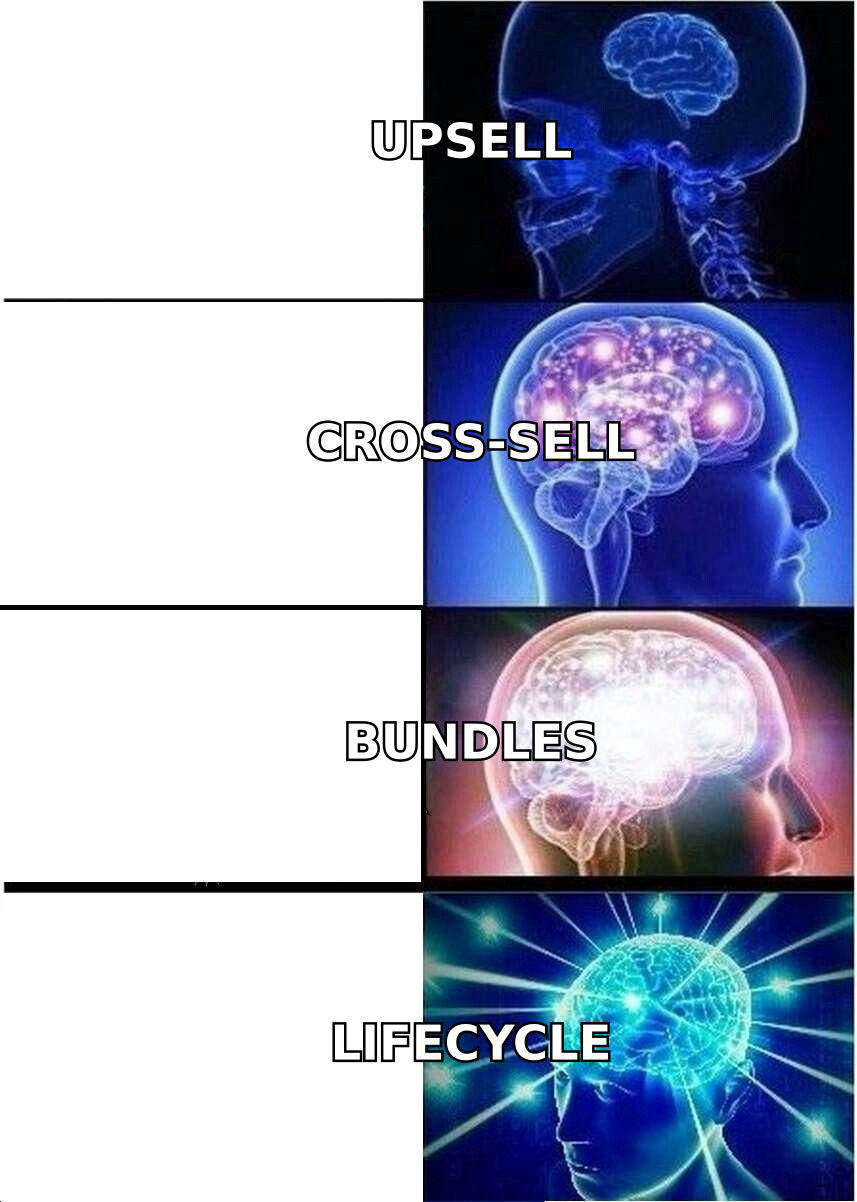
| Dimension | Cross-Selling | Upselling |
|---|---|---|
| What you offer | A complementary, adjacent product | A higher tier of the same product |
| Core trigger | A new, unmet need surfaces | Usage or limits near a ceiling |
| Best timing | After first value / at expansion moments | At renewal or when limits are hit |
| Risk if mistimed | Feels irrelevant, spammy | Feels like a money grab |
| Example | CRM buyer adds a data-enrichment add-on | 5-seat plan → 20-seat plan |
Both belong in your sales process and pipeline motion, and the highest-performing teams sequence them deliberately rather than pitching everything at once.
Why do cross selling best practices matter more in 2026?#
Because acquisition got expensive and boards want efficient growth. According to widely cited HubSpot and industry research, selling to an existing customer is far cheaper and closes at a far higher rate than acquiring a new one. When budgets tighten, expansion revenue is the line that keeps net revenue retention above 100%.
There is also a compounding effect. A customer using three of your products is much harder for a rival to rip out than a customer using one. Cross-selling is not just a revenue tactic — it is a retention moat.
The catch: buyers in 2026 have zero patience for irrelevant offers. A mistimed cross-sell doesn't just fail to convert; it erodes the trust you spent months building. That is why "best practices" here are less about scripts and more about relevance, timing, and data.
What are the core cross-selling best practices?#
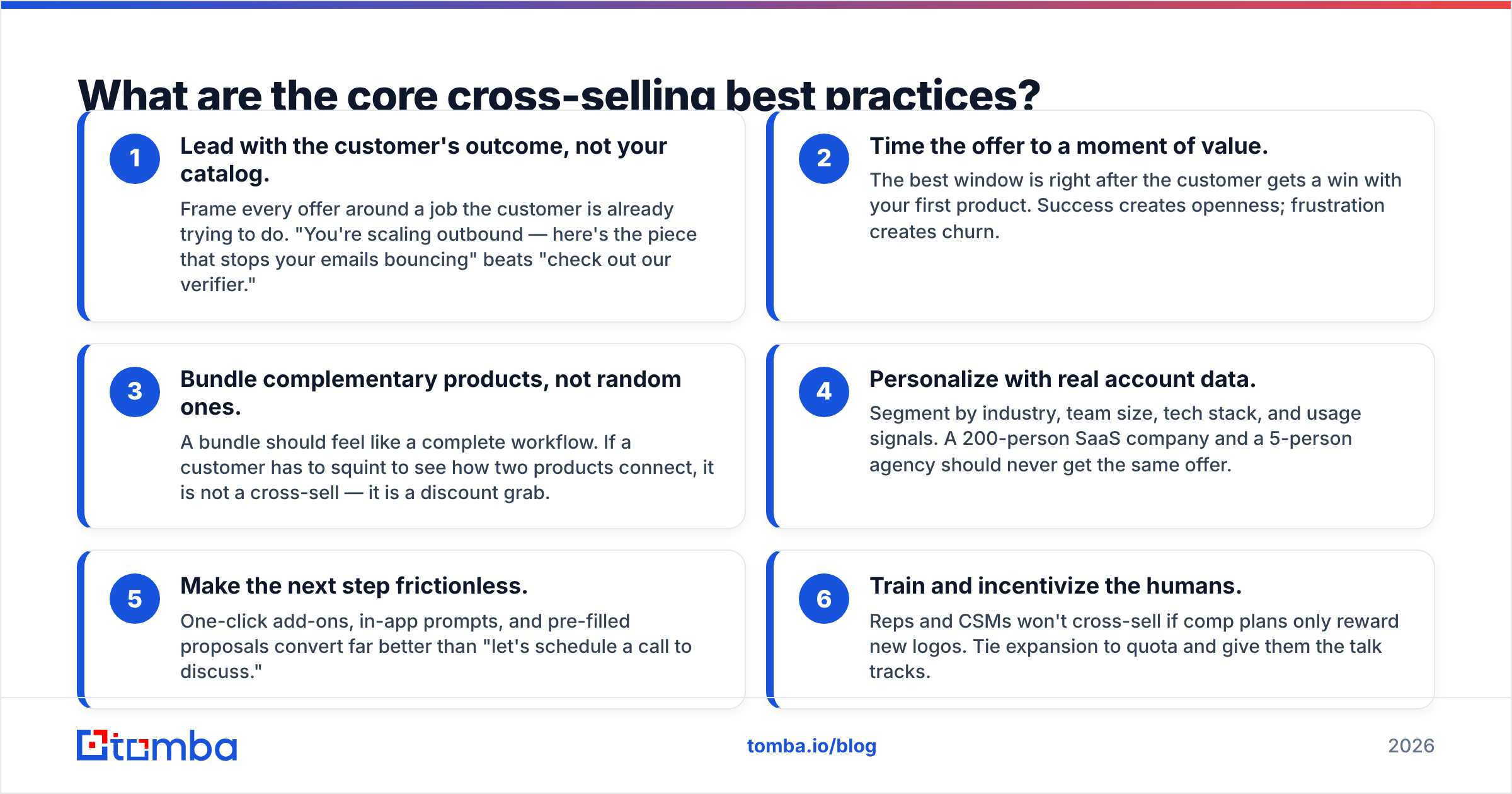
These cross selling best practices separate teams with 30%+ attach rates from teams stuck at single digits.
- Lead with the customer's outcome, not your catalog. Frame each offer around a job they already want done. "You're scaling outbound — here's the fix for bouncing emails" beats "check out our verifier."
- Time the offer to a moment of value. The best window is right after a win with your first product. Success creates openness; frustration creates churn.
- Bundle complementary products, not random ones. A good bundle feels like a complete workflow. If the link is hard to see, it is a discount grab, not a cross-sell.
- Personalize with real account data. Segment by industry, team size, tech stack, and usage. A 200-person SaaS firm and a 5-person agency should never get the same offer.
- Make the next step frictionless. One-click add-ons and pre-filled proposals convert better than "let's book a call."
- Train and incentivize your team. Reps won't cross-sell if comp plans only reward new logos. Tie expansion to quota and give them the talk tracks.
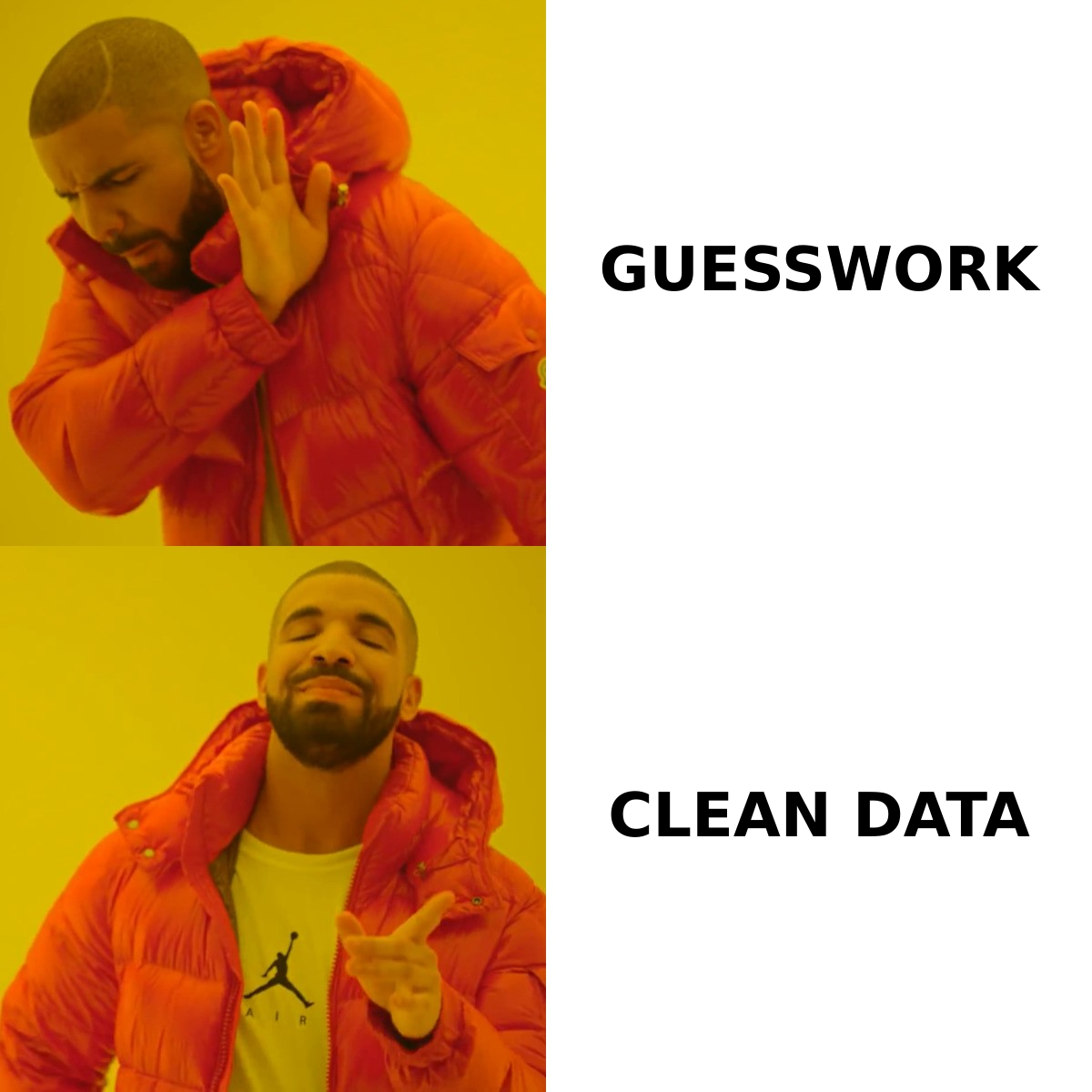
Notice how much of this rests on knowing your customer well enough to be relevant. That knowledge lives in your data — which is exactly where most cross-sell programs quietly fail.
How does data drive successful cross-selling?#
Data is the difference between a relevant offer and an annoying one. To cross-sell well, you need three data layers working together:
- Firmographic data — industry, company size, revenue, region — to pick which product to offer.
- Behavioral / usage data — what features they use, where they hit friction — to pick the moment.
- Contact data — accurate emails, roles, and phone numbers — to reach the right decision-maker, not just your original champion.
That third layer trips up more teams than any other. Your original buyer may not own the budget for the product you want to cross-sell. Expanding into a new department means finding new stakeholders — and if your CRM is full of stale or missing contacts, your perfectly-timed offer never reaches a human.
This is where enrichment earns its keep. Running your account list through data enrichment fills in missing roles, job titles, and verified emails so your reps target the actual economic buyer. When you need to reach a new stakeholder inside an existing account, a fast email finder turns a name and a domain into a deliverable address in seconds, and a company email search surfaces every relevant contact at the account so nobody gets missed.
Clean data also protects your sender reputation. Blasting expansion offers to unverified addresses spikes your bounce rate and lands your renewal emails in spam — so verify before you send.
Which cross-selling channels and triggers work best?#
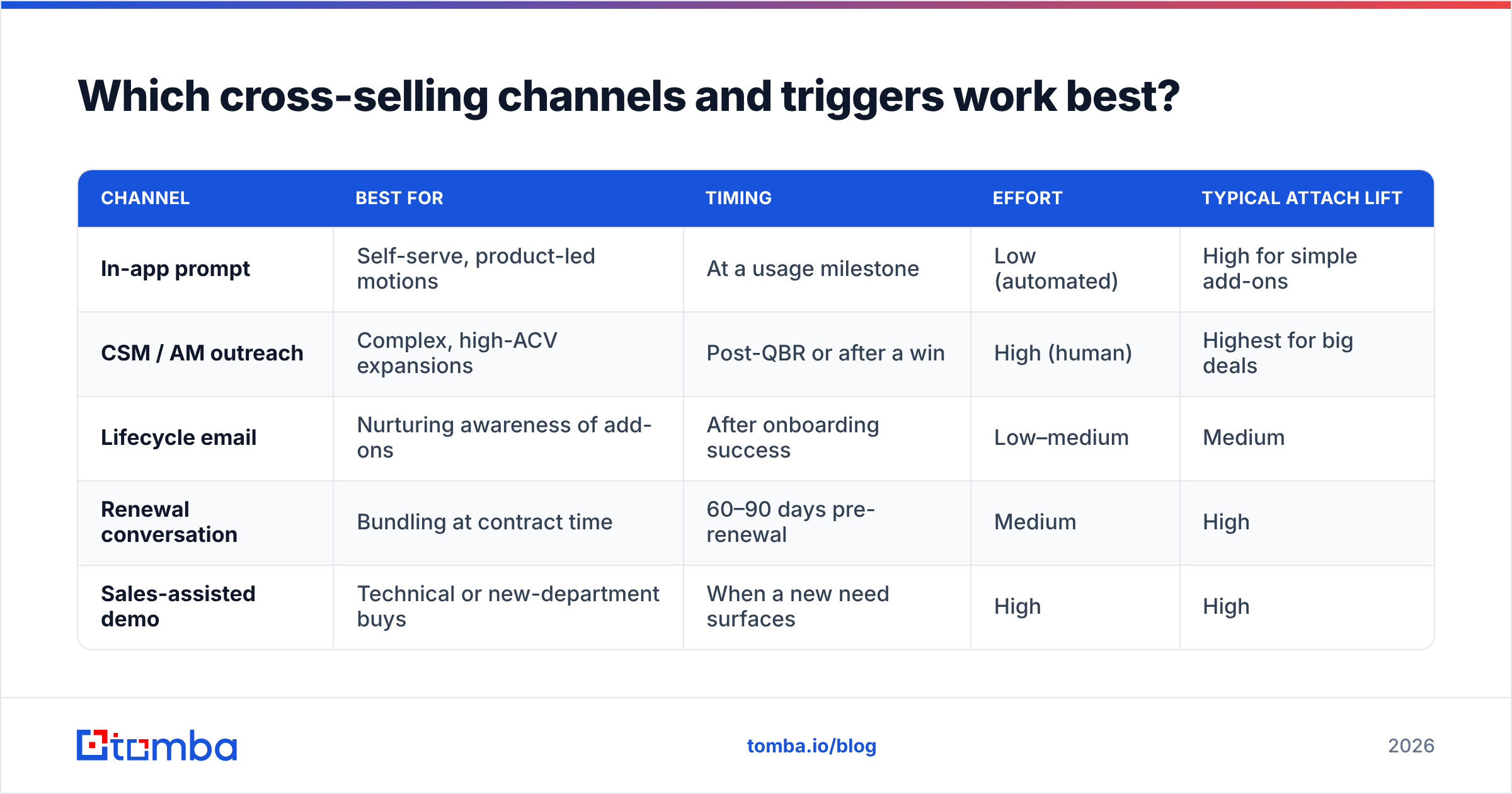
Different channels fit different moments. Here is how the main ones compare for a typical B2B motion.
| Channel | Best for | Timing | Effort | Typical attach lift |
|---|---|---|---|---|
| In-app prompt | Self-serve, product-led motions | At a usage milestone | Low (automated) | High for simple add-ons |
| CSM / AM outreach | Complex, high-ACV expansions | Post-QBR or after a win | High (human) | Highest for big deals |
| Lifecycle email | Nurturing awareness of add-ons | After onboarding success | Low–medium | Medium |
| Renewal conversation | Bundling at contract time | 60–90 days pre-renewal | Medium | High |
| Sales-assisted demo | Technical or new-department buys | When a new need surfaces | High | High |
The winning teams don't pick one — they orchestrate a sequence. An in-app prompt plants the seed, a lifecycle email nurtures it, and a CSM closes the meaningful expansion. Tools like Salesforce or a connected CRM stack let you fire these triggers off real usage and account signals rather than a calendar.
If you run this through a modern stack, connect your enrichment and finder tools directly to the CRM via a HubSpot integration so freshly discovered stakeholders land in the right sequence automatically.
What are the biggest cross-selling mistakes to avoid?#
- Pitching too early. Cross-selling before the customer gets first value reads as greedy. Earn the right with an initial win.
- Ignoring the buying committee. The champion who bought product one may have no say over product two. Map the new stakeholders before you pitch.
- Treating every account the same. Segment or stay silent. Generic offers train customers to ignore you.
- Optimizing for the transaction, not the relationship. A cross-sell that doesn't fit the customer's real need boosts this quarter and churns next year.
- Selling on dirty data. Bounced emails, wrong titles, and duplicate records quietly kill even well-designed programs. Audit and enrich first.
- No measurement loop. If you can't see attach rate by segment, you're guessing about what works.
How do you measure cross-selling success?#
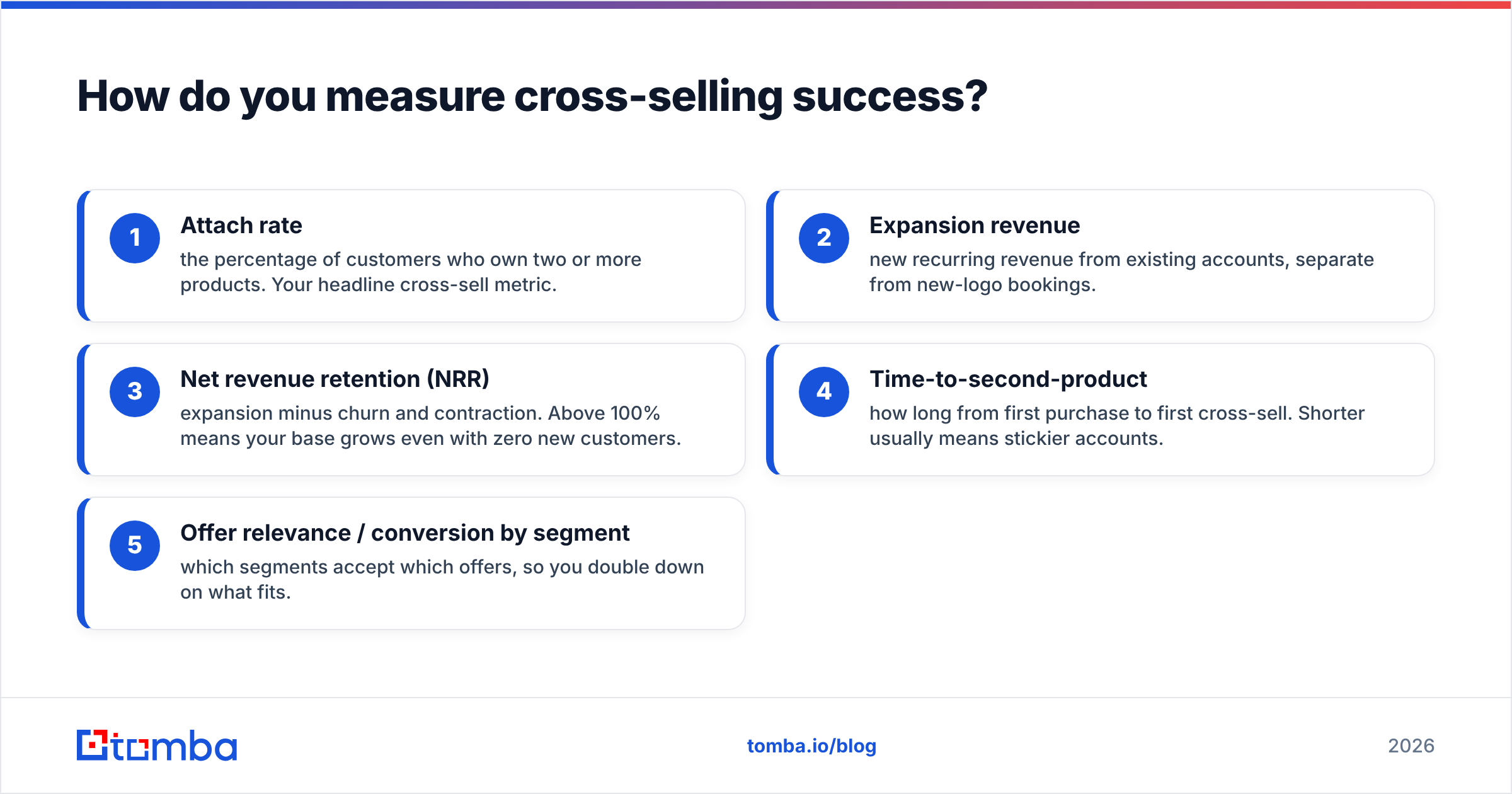
Track leading and lagging indicators together so you can steer, not just report.
- Attach rate — the percentage of customers who own two or more products. Your headline cross-sell metric.
- Expansion revenue — new recurring revenue from existing accounts, separate from new-logo bookings.
- Net revenue retention (NRR) — expansion minus churn and contraction. Above 100% means your base grows even with zero new customers.
- Time-to-second-product — how long from first purchase to first cross-sell. Shorter usually means stickier accounts.
- Offer relevance / conversion by segment — which segments accept which offers, so you double down on what fits.
Report these monthly and slice them by segment. The pattern that emerges — "mid-market SaaS accounts attach the verifier within 60 days at 40%" — becomes your repeatable playbook.
A simple cross-selling framework you can run this quarter#
If you want a starting point, turn these cross selling best practices into a simple loop:
- Segment your customer base by product owned, industry, and size.
- Map the two or three most logical complementary products for each segment.
- Enrich each account so you have verified contacts for the new decision-makers.
- Trigger an offer at the next moment of value (a win, a milestone, a QBR).
- Measure attach rate and NRR, then feed the results back into step one.
Every step depends on the one before it, but step three — accurate contacts — is the quiet gate. You can have perfect segmentation and timing, and still fail because the offer never reaches the person who can say yes.
Where does Tomba fit into your cross-selling motion?#
Cross-selling only works when the right offer reaches the right person at the right time — and that starts with knowing who the right person is. Tomba's Email Finder turns a name and company domain into a verified, deliverable email so your expansion offers land in front of the actual budget owner, not a dead inbox. Pair it with domain search to map every stakeholder in an account and enrichment to keep your CRM current, and your cross-sell sequences run on clean, current data instead of guesswork.
Start free with 25 searches a month, or scale up on the Starter plan at $49/mo — see full Tomba pricing to match a plan to your account volume. Give your reps accurate contacts, and let these cross selling best practices do the rest.
Related guides#
Ready to find emails that actually work?
Join 150,000+ professionals who stopped guessing and started sending. Free credits on signup — no credit card required.
Get the Tomba newsletter
Practical outbound tactics and product updates — once every two weeks.
About the author