CSVGo vs GrowMeOrganic: Which Lead Gen Tool Wins in 2026?
CSVGo and GrowMeOrganic both promise cheap B2B leads and built-in outreach—but they win on very different jobs. Here's an honest breakdown of pricing, data accuracy, and where a verification-first tool beats both.
CSVGo vs GrowMeOrganic: Which Lead Gen Tool Wins in 2026?
Choosing between CSVGo and GrowMeOrganic comes down to one question: do you need a cheap data faucet, or an all-in-one prospecting-and-outreach machine? They market themselves similarly, but they solve different halves of the outbound problem — and neither one is built to guarantee the email actually lands.
TL;DR
- CSVGo is a low-cost lead-data platform: pull B2B contacts, export CSVs fast, enrich in bulk. Strong on volume and price, thinner on native sending.
- GrowMeOrganic is an all-in-one: prospecting database plus LinkedIn extraction plus built-in email drip campaigns, usually on unlimited-style plans.
- Data accuracy is the real battleground. Both surface emails; neither is primarily a verification engine, so bounce risk is on you.
- Pricing: CSVGo leans credit/volume-cheap; GrowMeOrganic leans flat-rate "unlimited." The cheaper sticker can cost more once bounces burn your domain.
- The honest pick for accuracy-first teams is a dedicated finder-plus-verifier stack. That's where a tool like Tomba's email finder fits.
What are CSVGo and GrowMeOrganic?#
CSVGo positions itself as an affordable B2B data and lead-generation tool. The pitch is straightforward: search a contact database, filter by role and company, and export clean CSVs at a price point that undercuts the enterprise data vendors. It's aimed at founders, agencies, and lean sales teams who want raw contacts without a four-figure annual contract.
GrowMeOrganic is broader. It bundles a B2B contact database, a LinkedIn and email extractor, and — crucially — a native email outreach engine with drip sequences. The selling point is "everything in one login": find the lead, grab the email, and send the campaign without stitching three tools together. It's popular with agencies running high-volume outbound who don't want a separate sending platform.
The overlap is the database and the email lookup. The divergence is what happens next: CSVGo hands you data to use elsewhere, while GrowMeOrganic wants to be the place you also send from.
How do CSVGo and GrowMeOrganic compare on features?#
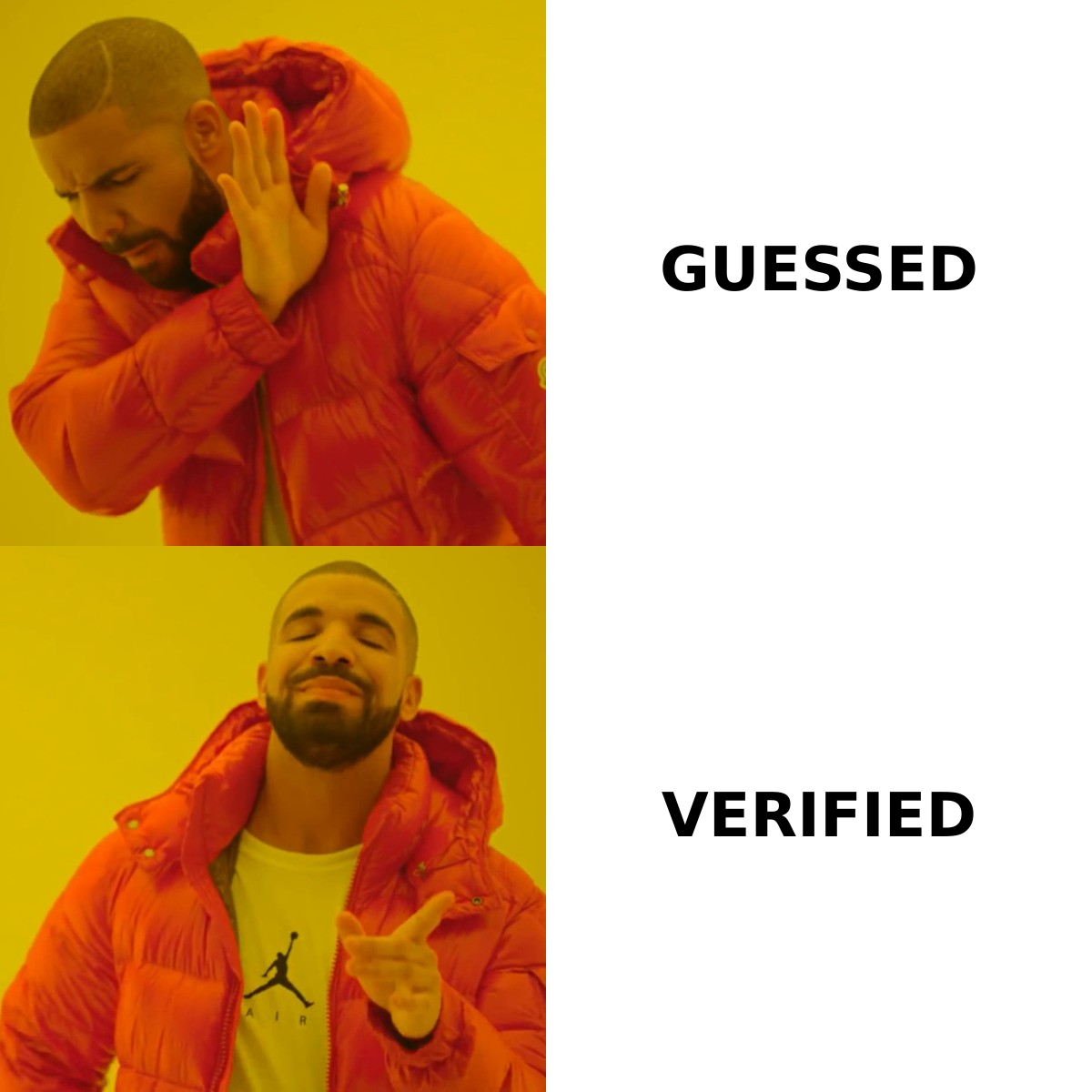
Here's the head-to-head on the attributes that actually change your reply rate and your cost per booked meeting.
| Feature | CSVGo | GrowMeOrganic |
|---|---|---|
| Core job | Lead data + bulk export | All-in-one prospecting + outreach |
| B2B contact database | Yes | Yes |
| LinkedIn extraction | Limited | Yes |
| Native email sequences | No / minimal | Yes (drip campaigns) |
| Built-in email verification | Basic | Basic |
| Pricing model | Credit / volume | Flat "unlimited" tiers |
| Best for | Cheap CSVs at volume | Agencies sending in-app |
| Weak spot | No native sending | Data depth vs pure DBs |
The pattern is clear. If your workflow already lives in a CRM or a dedicated sequencer, CSVGo's export-first model is frictionless and cheap. If you want one tool to do discovery and sending, GrowMeOrganic removes steps — but you inherit its database quality and its deliverability defaults across the whole funnel.
Neither, though, treats verification as a first-class product. That matters more than any feature checkbox, so let's spend real time there.
Which tool has more accurate data?#
Accuracy is where "cheap leads" quietly get expensive. A contact database is a snapshot, and B2B data decays fast — people change jobs, companies rebrand, and catch-all domains hide dead mailboxes. When a platform's main job is volume or all-in-one convenience, verification tends to be a light bolt-on rather than the core engine.

Both CSVGo and GrowMeOrganic will return an email for most prospects. The question is what percentage of those are valid, deliverable, and current. When a list is exported without a real verification pass, a 20–30% bounce rate is not unusual — and once you push that through a sender, your domain reputation takes the hit, not the tool's.
That's the trap behind a low sticker price: the tool got cheaper, but your sender reputation got more expensive. This is exactly why a dedicated email verifier — one that does SMTP checks, catch-all detection, and syntax validation as a core function — belongs in the pipeline no matter which database you start from.

Why verification beats raw volume#
Think of a lead list like a bag of keys handed to you for a building. CSVGo and GrowMeOrganic are generous — they'll give you a big bag. But if a third of the keys don't turn, you don't find that out until you're standing at the door in front of a prospect. Verification is testing the keys before you show up. A catch-all verifier goes further and tells you which "maybe" doors are worth trying at all.
How do CSVGo and GrowMeOrganic price compare?#
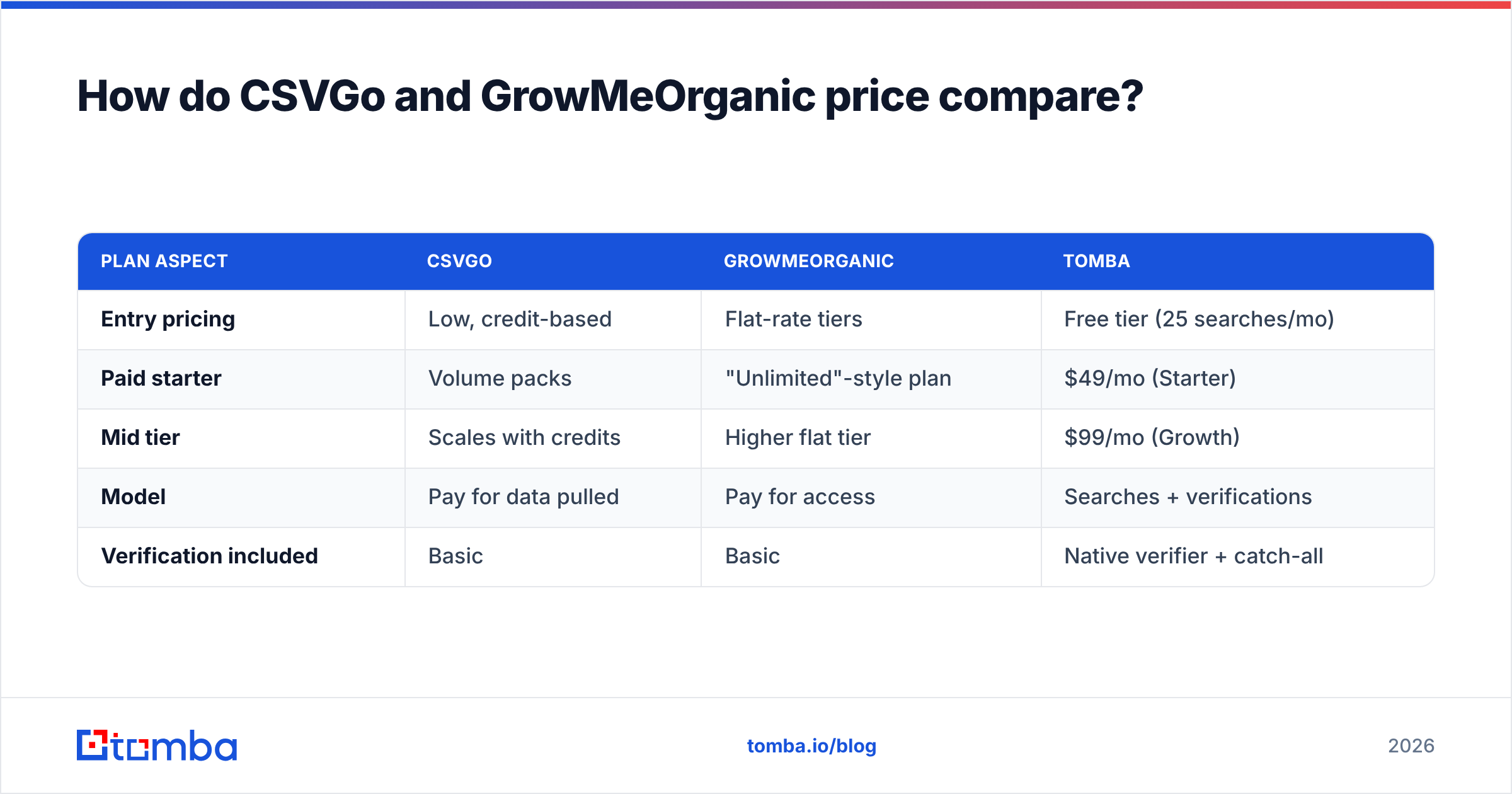
Pricing is the loudest part of both pitches, and it's where the two tools philosophically split.
| Plan aspect | CSVGo | GrowMeOrganic | Tomba |
|---|---|---|---|
| Entry pricing | Low, credit-based | Flat-rate tiers | Free tier (25 searches/mo) |
| Paid starter | Volume packs | "Unlimited"-style plan | $49/mo (Starter) |
| Mid tier | Scales with credits | Higher flat tier | $99/mo (Growth) |
| Model | Pay for data pulled | Pay for access | Searches + verifications |
| Verification included | Basic | Basic | Native verifier + catch-all |
CSVGo's credit model rewards you when volume is spiky — pay for what you pull, don't pay in slow months. GrowMeOrganic's flat "unlimited" framing rewards you when volume is constant and high, because the marginal cost of the next 1,000 sends is zero.
But "unlimited" is only a deal if the underlying data converts. Sending 10,000 unverified emails isn't 10,000 opportunities — it's a reputation liability at scale. Compare that to a model where you can see transparent Tomba pricing: a free tier to test accuracy, a $49/mo Starter, and $99/mo Growth, with verification built into the same platform rather than sold as an afterthought.
The honest takeaway on cost: calculate cost per deliverable contact, not cost per raw row. A tool that's 20% cheaper per row but 25% less accurate is more expensive per meeting booked.
Which should you choose — and is there a better option?#
Here's the decision framed by job, not by marketing:
- Pick CSVGo if you want the cheapest possible way to export B2B contacts into an existing stack, you already have a sequencer and a verifier, and you're comfortable running your own QA on the data.
- Pick GrowMeOrganic if you're an agency that wants discovery and sending in one login, you send high volume on flat pricing, and native LinkedIn extraction plus drip campaigns matter more than database depth.
- Pick a verification-first stack if deliverability is your bottleneck — if bounces, spam folders, or a scorched domain are what's actually capping your reply rate.
That third path is where a dedicated finder-plus-verifier wins. A tool like Tomba isn't trying to be an all-in-one sender; it's built to make sure the address is real before it ever hits your sequencer. You get an email finder with confidence scoring, a native verifier, domain search to map every contact at a company, and bulk email finder workflows for list-scale jobs. You can pull data from CSVGo or GrowMeOrganic and run it through verification — the two aren't mutually exclusive.
Where each tool sits#
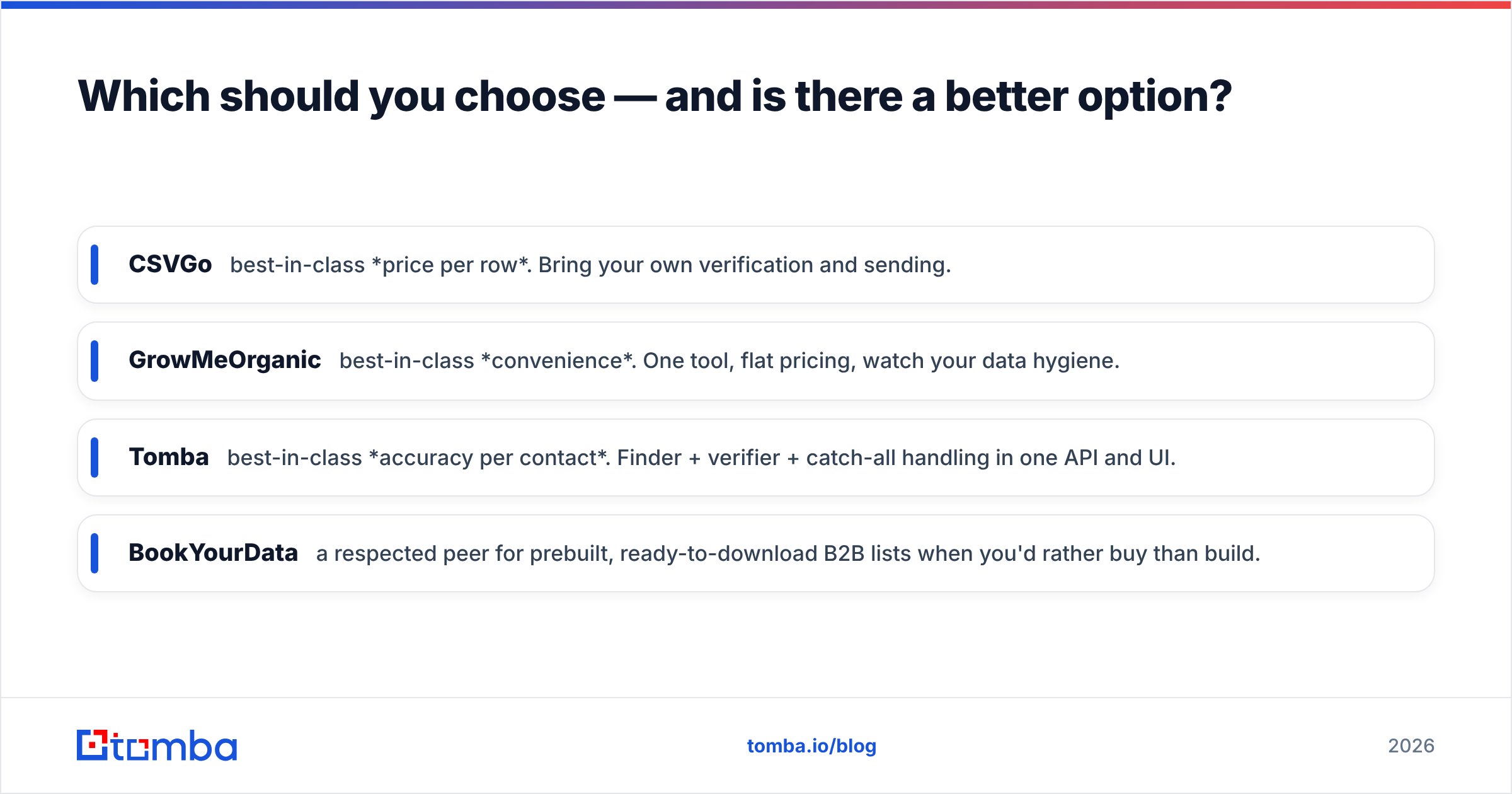
- CSVGo — best-in-class price per row. Bring your own verification and sending.
- GrowMeOrganic — best-in-class convenience. One tool, flat pricing, watch your data hygiene.
- Tomba — best-in-class accuracy per contact. Finder + verifier + catch-all handling in one API and UI.
- BookYourData — a respected peer for prebuilt, ready-to-download B2B lists when you'd rather buy than build.
If you're evaluating the broader category, it's worth reading independent reviews on G2 and Capterra before committing, and checking each vendor's own docs — GrowMeOrganic's site and CSVGo's site both publish current feature lists. Cross-reference the accuracy claims against a real test batch of your own domains; that's the only benchmark that matters.
Frequently asked questions#
Is CSVGo or GrowMeOrganic better for cold email? GrowMeOrganic is the more complete cold-email tool because it includes native drip sequences, so you can send in-app. CSVGo is better if you already run a dedicated sequencer and just need cheap data to feed it. Either way, verify the list first to protect email deliverability.
Do these tools verify emails automatically? Both include basic checks, but verification isn't their core product. For SMTP-level validation, catch-all detection, and syntax checks, run exports through a dedicated email verification step before sending.
Can I use them together with another finder? Yes. A common setup is to source contacts in CSVGo or GrowMeOrganic, then enrich and verify through a specialist tool. That combination gives you volume and accuracy instead of choosing one.
What's the real cost difference? CSVGo bills by credits/volume; GrowMeOrganic bills flat for near-unlimited access. The cheaper option depends on your send volume — but always compute cost per verified deliverable contact, not per raw record.
The bottom line#
CSVGo and GrowMeOrganic are both legitimate ways to get B2B leads on a budget — CSVGo wins on cheap volume, GrowMeOrganic wins on all-in-one convenience. What neither is built to do is guarantee the email is real before you stake your domain reputation on it.
If your outbound is capped by bounces and spam folders rather than by lead count, start with accuracy. Test the Tomba Email Finder on your next campaign — its free tier gives you 25 searches a month to compare validity against whatever list you're running today. Find the address, verify it in the same platform, and send to inboxes that actually exist. That's the difference between a big list and a working pipeline.
Related guides#
Ready to find emails that actually work?
Join 150,000+ professionals who stopped guessing and started sending. Free credits on signup — no credit card required.
Get the Tomba newsletter
Practical outbound tactics and product updates — once every two weeks.
About the author