Customer Nurturing in 2026: The Complete Playbook Guide
Most deals die in the gap between first touch and ready-to-buy. This customer nurturing playbook shows the stages, channels, metrics, and automation that turn cold contacts into revenue in 2026.
Customer nurturing is the work you do between "they know you exist" and "they're ready to buy." Get it right and your pipeline compounds. Get it wrong and you burn expensive leads that were never actually dead — just early.
TL;DR#
- Customer nurturing is the structured process of building trust with prospects and customers over time through relevant, timed touches — not a single campaign, but a system.
- Most B2B buyers are not ready when you first reach them; nurturing keeps you present until timing, budget, and need line up.
- The best programs blend email, LinkedIn, retargeting, and human outreach mapped to buying stages, not calendar dates.
- Bad contact data kills nurturing before it starts. Clean, verified records are the foundation — you cannot nurture an address that bounces.
- Measure by stage progression and revenue influenced, not open rates. Vanity metrics hide broken funnels.
What is customer nurturing?#
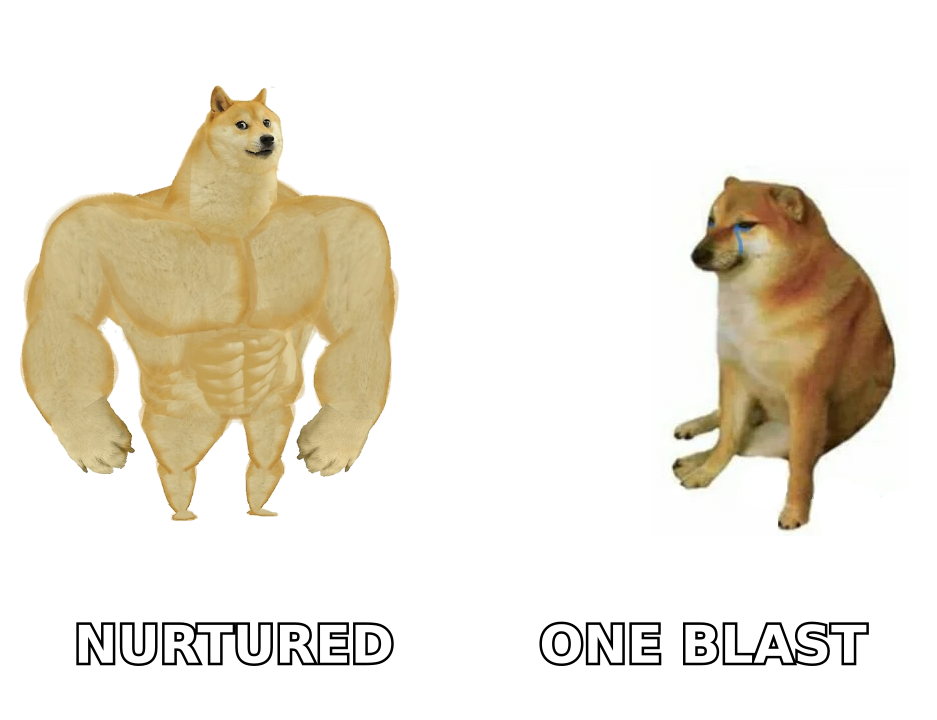
Customer nurturing is like tending a garden versus buying cut flowers. Cold outreach is the bouquet — fast, showy, and dead in a week. Nurturing is the garden: slower, deliberate, and it keeps producing. Technically, it's the sequence of value-driven interactions that move a contact from unaware to aware to considering to buying — and, after the sale, from buyer to renewer to advocate.
The core insight is timing. Research from firms like Gartner consistently shows B2B buyers spend the majority of their journey doing independent research before they ever want to talk to sales. If your only move is "buy now," you're invisible to the 90-plus percent who aren't ready this quarter. Nurturing is how you stay useful — and top of mind — until they are.
It also doesn't stop at the deal. Post-sale nurturing (onboarding, education, check-ins, expansion offers) is where retention and revenue expansion live. Acquiring a new customer costs far more than keeping one, so the same discipline that fills the top of the funnel protects the bottom.
Why does customer nurturing matter more in 2026?#
Three shifts made nurturing non-optional:
- Buying committees got bigger. A typical B2B purchase now involves six to ten stakeholders. You're not nurturing a person — you're nurturing a group, each with different questions and fears. One email blast can't do that.
- Inboxes got stricter. Google and Yahoo tightened bulk-sender rules, so email deliverability now depends on sending relevant mail to engaged, verified contacts. Spraying a dirty list gets you throttled or blocked.
- Attention got shorter and channels multiplied. Prospects live across email, LinkedIn, communities, and search. A single-channel drip feels like shouting into a void.
The teams winning in 2026 treat nurturing as a cross-channel operating system, not a folder of automated emails. And the entry price for that system is data you can trust.
What are the stages of a customer nurturing journey?#
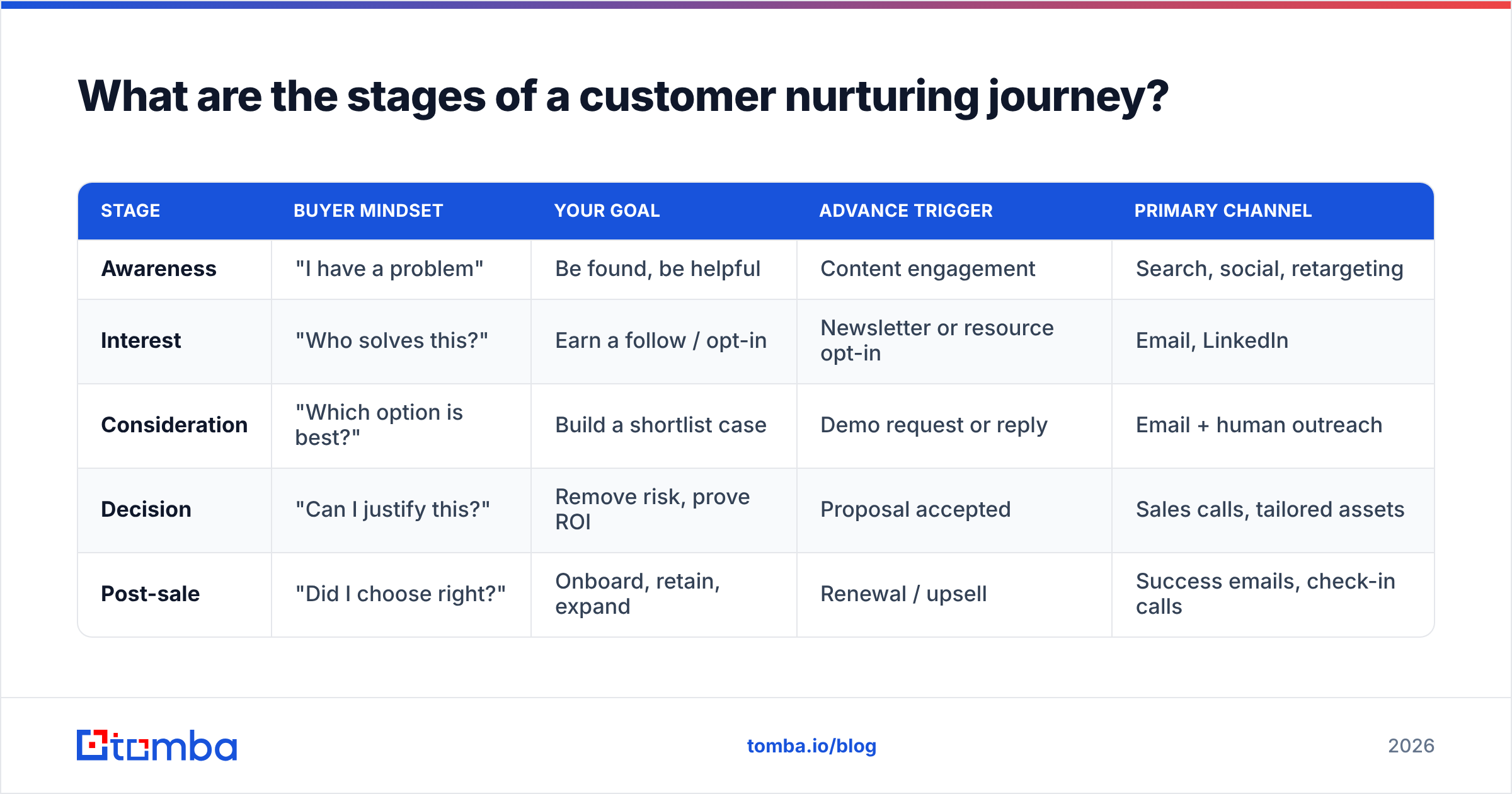
Map your program to how people actually buy. Here's a practical five-stage model with the goal, the trigger to advance, and the primary channel for each.
| Stage | Buyer mindset | Your goal | Advance trigger | Primary channel |
|---|---|---|---|---|
| Awareness | "I have a problem" | Be found, be helpful | Content engagement | Search, social, retargeting |
| Interest | "Who solves this?" | Earn a follow / opt-in | Newsletter or resource opt-in | Email, LinkedIn |
| Consideration | "Which option is best?" | Build a shortlist case | Demo request or reply | Email + human outreach |
| Decision | "Can I justify this?" | Remove risk, prove ROI | Proposal accepted | Sales calls, tailored assets |
| Post-sale | "Did I choose right?" | Onboard, retain, expand | Renewal / upsell | Success emails, check-in calls |
The mistake most teams make is running everyone through the same generic sequence. A contact who just downloaded a top-of-funnel checklist is not ready for a pricing email, and a stalled opportunity doesn't need another "welcome" note. Stage-based logic — moving people forward based on behavior — is what separates nurturing from spamming.
What channels should a nurturing program use?#
Email is the backbone, but a modern program is multi-touch. Here's how the main channels earn their place:
- Email — Your workhorse for education, proof, and gentle nudges. Segment by stage and behavior. Keep it useful; every send should teach or unlock something.
- LinkedIn — Where B2B buyers self-educate. Comment, share, and run light LinkedIn outreach that references shared context, not a pitch.
- Retargeting ads — Cheap reinforcement that keeps you visible while a committee deliberates. Great for the long consideration middle.
- Human touches — A well-timed call or personal note from a rep at the decision stage does what no automation can. Reserve it for high-intent signals.
- Community and events — Slower to attribute, but they build the trust that makes every other channel convert.
You don't need all of them on day one. Start with email done well, add LinkedIn, then layer retargeting once your stages and messaging are proven.
How do data quality and nurturing fit together?#
You cannot nurture a contact you can't reach. This is the unglamorous truth that sinks most programs: the CRM fills with typo'd addresses, stale roles, and catch-all domains, and half your carefully-built sequence lands nowhere.
Before a single nurture email goes out, three things have to be true:
- The contact exists and is reachable. Use a reliable email finder to source accurate professional addresses by name and domain instead of guessing formats.
- The address is deliverable. Run every record through an email verifier so bounces don't wreck your sender reputation and drag down the whole list.
- The record is enriched. Add role, seniority, and company context via data enrichment so you can segment and personalize — nurturing without context is just a slower blast.
Think of it like a plumbing system. The cleverest campaign is the water pressure; dirty data is the corroded pipe. No amount of pressure fixes a leak. Clean, verified, enriched contacts are the pipe — boring, essential, and the reason everything downstream works.
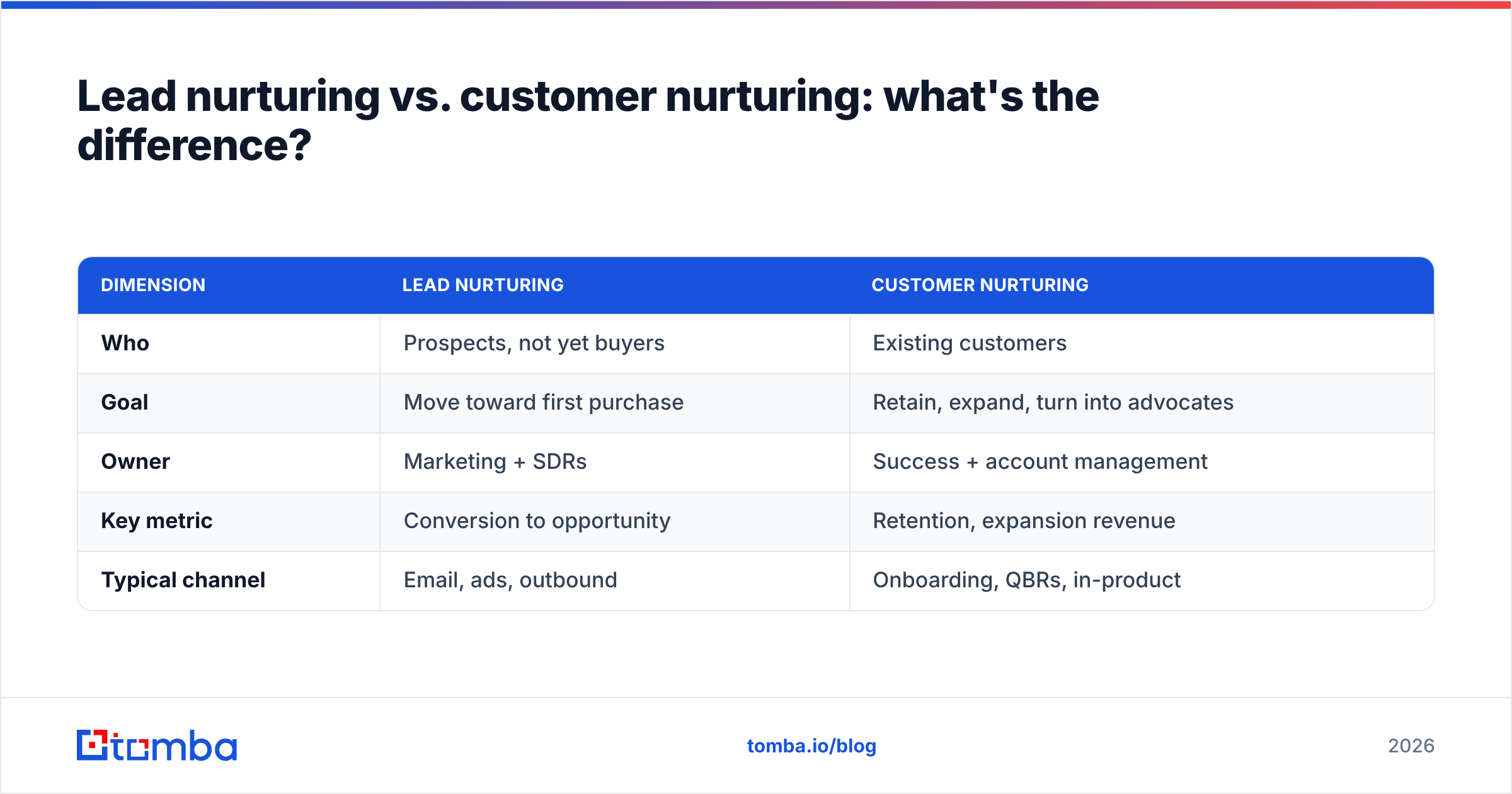
Lead nurturing vs. customer nurturing: what's the difference?#
People use the terms interchangeably, but the distinction matters for how you resource each.
| Dimension | Lead nurturing | Customer nurturing |
|---|---|---|
| Who | Prospects, not yet buyers | Existing customers |
| Goal | Move toward first purchase | Retain, expand, turn into advocates |
| Owner | Marketing + SDRs | Success + account management |
| Key metric | Conversion to opportunity | Retention, expansion revenue |
| Typical channel | Email, ads, outbound | Onboarding, QBRs, in-product |
Both are "nurturing" because both are about earning trust over time rather than closing in one touch. The strongest go-to-market teams run them as one continuous relationship — a marketing qualified lead that becomes a customer shouldn't fall off a cliff into a different, disconnected experience. The handoff should feel seamless to the buyer.
How do you build a customer nurturing workflow step by step?#
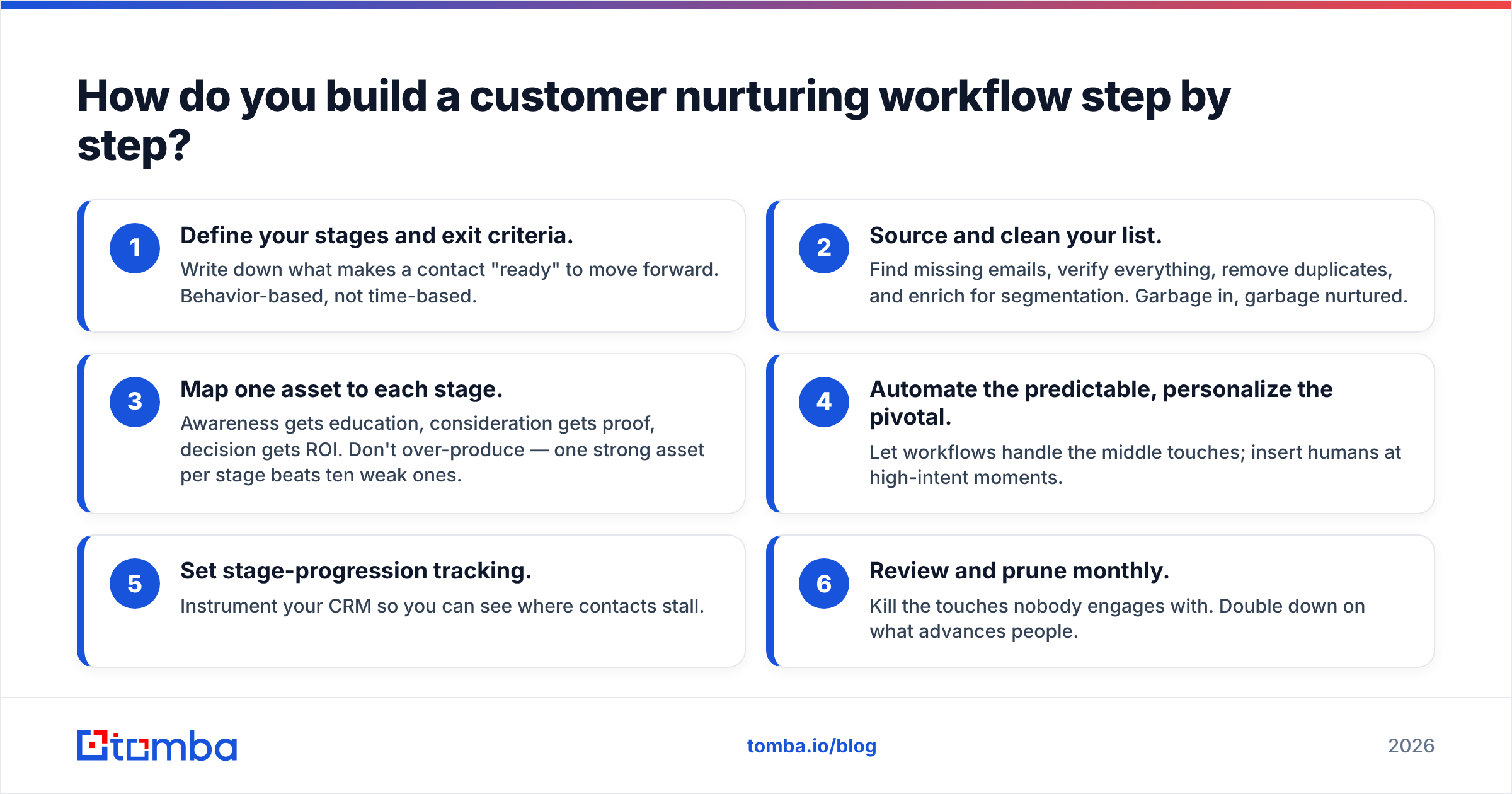
Here's a lean starting framework you can stand up in a few weeks:
- Define your stages and exit criteria. Write down what makes a contact "ready" to move forward. Behavior-based, not time-based.
- Source and clean your list. Find missing emails, verify everything, remove duplicates, and enrich for segmentation. Garbage in, garbage nurtured.
- Map one asset to each stage. Awareness gets education, consideration gets proof, decision gets ROI. Don't over-produce — one strong asset per stage beats ten weak ones.
- Automate the predictable, personalize the pivotal. Let workflows handle the middle touches; insert humans at high-intent moments.
- Set stage-progression tracking. Instrument your CRM so you can see where contacts stall.
- Review and prune monthly. Kill the touches nobody engages with. Double down on what advances people.
Connect this to your stack so it runs without babysitting. Tomba's HubSpot integration and Zapier integration let you find and verify contacts, then push clean records straight into the workflows your CRM already runs.
What metrics prove your nurturing actually works?#
Open rates feel good and prove nothing — with Apple Mail privacy inflating them, they're close to meaningless. Track outcomes instead:
- Stage-to-stage conversion rate — What percentage move from interest to consideration to decision? This is the health of the funnel.
- Time-in-stage — Where do contacts stall? Long dwell times flag broken messaging or missing assets.
- Reply and meeting-booked rate — Real engagement, not machine-inflated opens. Watch your response rate as a leading indicator.
- Revenue influenced — Deals that touched a nurture track versus those that didn't. This is what earns budget.
- Retention and expansion — For post-sale nurturing, the only metrics that matter.
If you only track one, track stage-to-stage conversion. It tells you whether the machine is moving people forward or just sending mail.
What tools do you need for customer nurturing?#
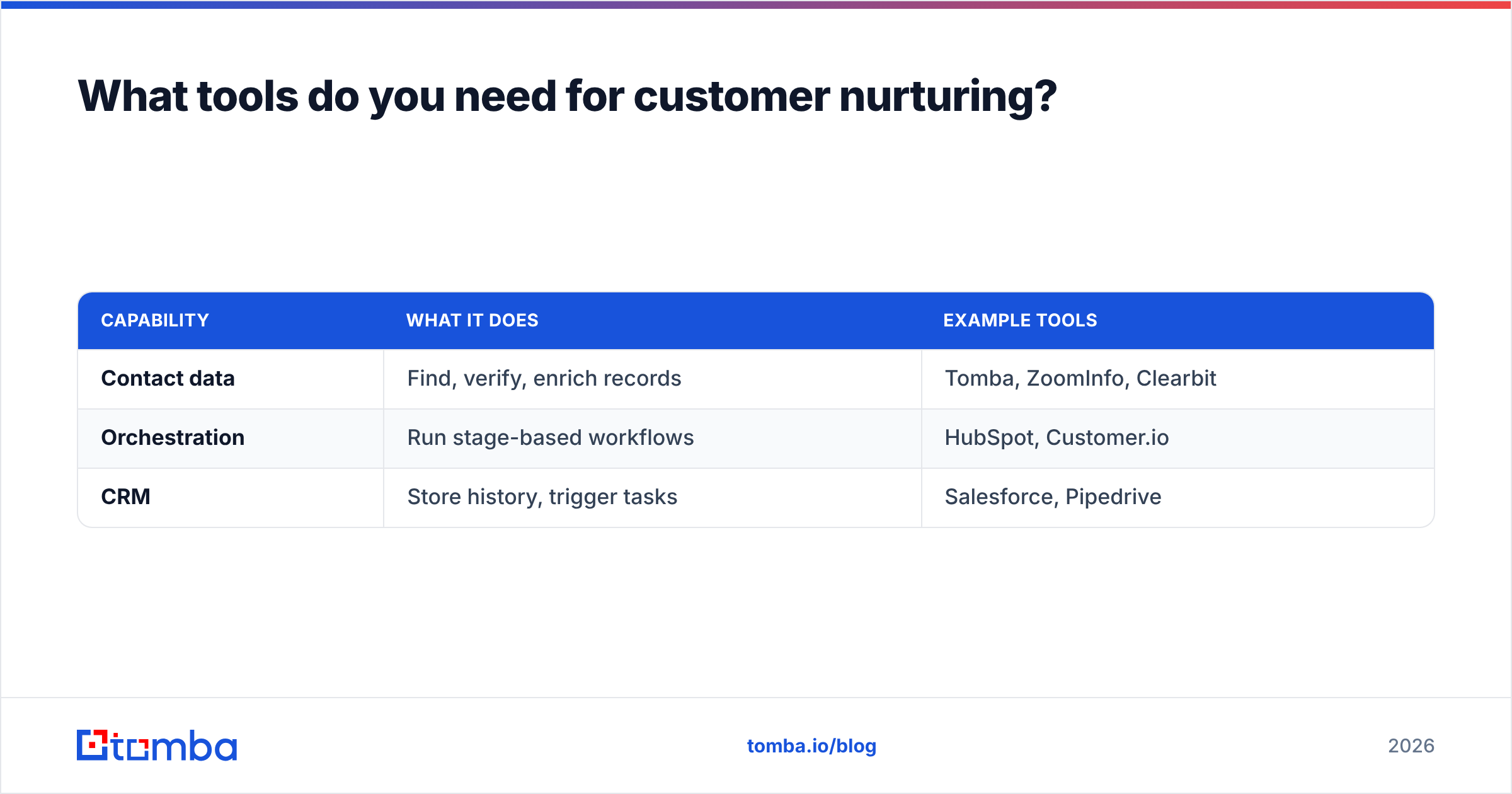
You need three capabilities, and you can assemble them without a bloated platform:
| Capability | What it does | Example tools |
|---|---|---|
| Contact data | Find, verify, enrich records | Tomba, ZoomInfo, Clearbit |
| Orchestration | Run stage-based workflows | HubSpot, Customer.io |
| CRM | Store history, trigger tasks | Salesforce, Pipedrive |
Marketing automation platforms get the spotlight, but they assume you already have reachable, accurate contacts — which is exactly where most programs are broken. A tool like HubSpot orchestrates beautifully on top of clean data and does nothing useful on top of a dirty list. Fix the data layer first; the orchestration layer only amplifies whatever you feed it.
For teams watching budget, Tomba pricing starts free (25 searches/month) and scales through Starter at $49/month and Growth at $99/month — you can source and verify a real nurturing list before committing to an enterprise automation contract.
Common customer nurturing mistakes to avoid#
- Nurturing on autopilot forever. Automation is a tool, not a strategy. Sequences need pruning and human moments.
- Sending to unverified lists. One spike of hard bounces tanks deliverability for everyone on the list.
- Time-based instead of behavior-based logic. "Day 3 email" ignores what the person actually did.
- Treating every stage the same. A pricing email to a top-of-funnel lead reads as tone-deaf.
- Ignoring post-sale. The cheapest revenue you'll ever earn is the customer you already have.
Avoid these five and you're ahead of most B2B teams already.
Start with data you can trust#
Customer nurturing is a compounding advantage — but only if the contacts behind it are real, reachable, and enriched. The most sophisticated sequence in the world fails silently against a list of bounces and dead roles.
Start at the foundation. Use the Tomba Email Finder to source accurate professional emails by name, company, or domain, verify them before they enter your workflows, and enrich each record so your nurturing is segmented and personal from the first touch. Clean data in, nurtured revenue out — that's the whole game. Try it free and build your nurturing program on ground that holds.
Related guides#
Ready to find emails that actually work?
Join 150,000+ professionals who stopped guessing and started sending. Free credits on signup — no credit card required.
Get the Tomba newsletter
Practical outbound tactics and product updates — once every two weeks.
About the author