Datanyze vs Sellhack (2026): The Honest Email Finder Comparison
Datanyze and Sellhack both promise clean B2B contact data, but they solve different problems. Here's an honest breakdown of accuracy, pricing, and which tool actually fits your prospecting workflow in 2026.
Choosing between Datanyze and Sellhack usually comes down to one question: do you want a Chrome-extension prospecting layer, or a lightweight email-finding and verification engine? Both have loyal users, both have real gaps, and both get compared against a newer generation of email finders that ship more accurate data at a lower price. This is the honest, third-party breakdown.
TL;DR — Datanyze vs Sellhack in 30 seconds#
- Datanyze is a browser-first prospecting tool focused on tech firmographics and one-click contact grabs while you browse LinkedIn or company sites. Good for reps who live in the browser.
- Sellhack is a lean email-finding and verification tool built around a Chrome extension and bulk uploads. Good for teams that mostly need a verified address and nothing else.
- Accuracy is the deciding factor for both, and neither publishes independent benchmark numbers — you're trusting marketing claims unless you test.
- Pricing favors Sellhack for solo users; Datanyze bundles firmographic data that inflates cost if you only need emails.
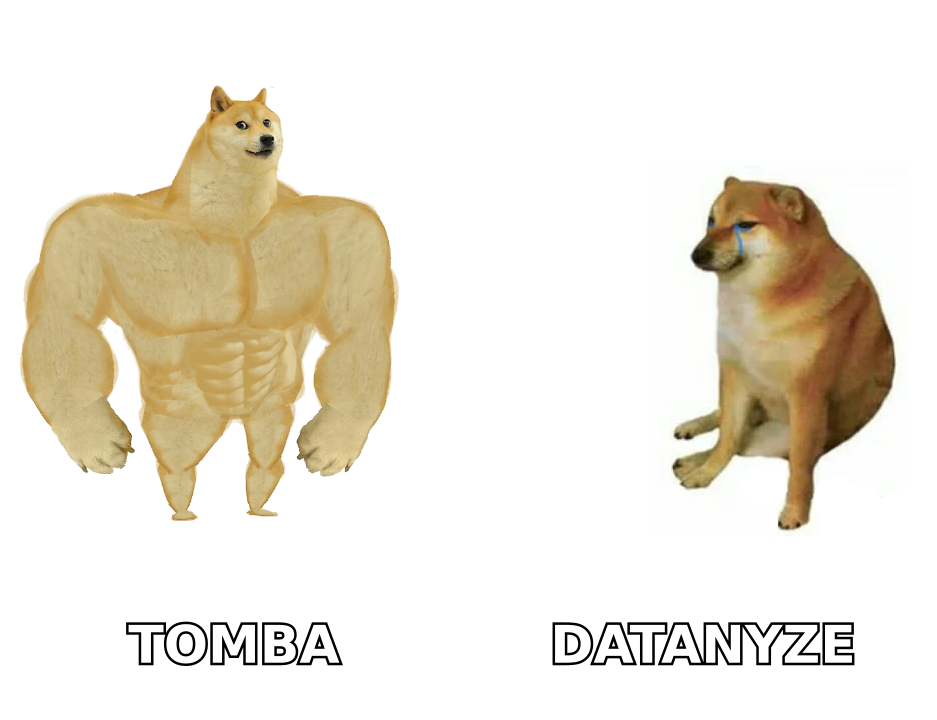
- If raw email-finder accuracy and price matter most, a dedicated finder like Tomba Email Finder often beats both on cost-per-verified-contact — more on that below.
What is Datanyze and who is it for?#
Datanyze started life as a technographics company — it told you what software a website ran (CRM, analytics, ad tech) so sellers could target by tech stack. Today it's positioned as a B2B contact and firmographic tool with a Chrome extension that surfaces emails and direct-dial numbers while you browse LinkedIn or a company website.
The pitch is workflow speed. You're already on a prospect's profile, so you click the Datanyze icon and it returns a contact record. For account executives targeting companies by technology or industry, that firmographic layer is genuinely useful. The trade-off: you pay for data you may not need if all you want is an email address.
Datanyze's data depth is strongest on mid-market and enterprise US accounts. Coverage thins out for smaller companies, non-US regions, and niche roles — a common pattern across firmographic-heavy tools.
What is Sellhack and who is it for?#
Sellhack is the opposite philosophy: do one thing, keep it cheap. It's an email-finding and verification tool that works through a Chrome extension and CSV uploads. You give it a name and company (or a LinkedIn profile), and it returns a best-guess email, then runs verification to flag whether the address is likely deliverable.
Sellhack appeals to founders, recruiters, and solo SDRs who want verified emails without a platform subscription. There's no heavy CRM layer, no sequences, no technographics — just find, verify, export. That simplicity is the selling point and the limit. If you need firmographic filtering or intent data, Sellhack won't provide it.
Where Sellhack occasionally frustrates users is guess-based results. Like many finders, it can return a pattern-based email (firstname.lastname@company.com) without a strong confidence signal, which is why verification matters so much.
How do Datanyze and Sellhack compare on features?#
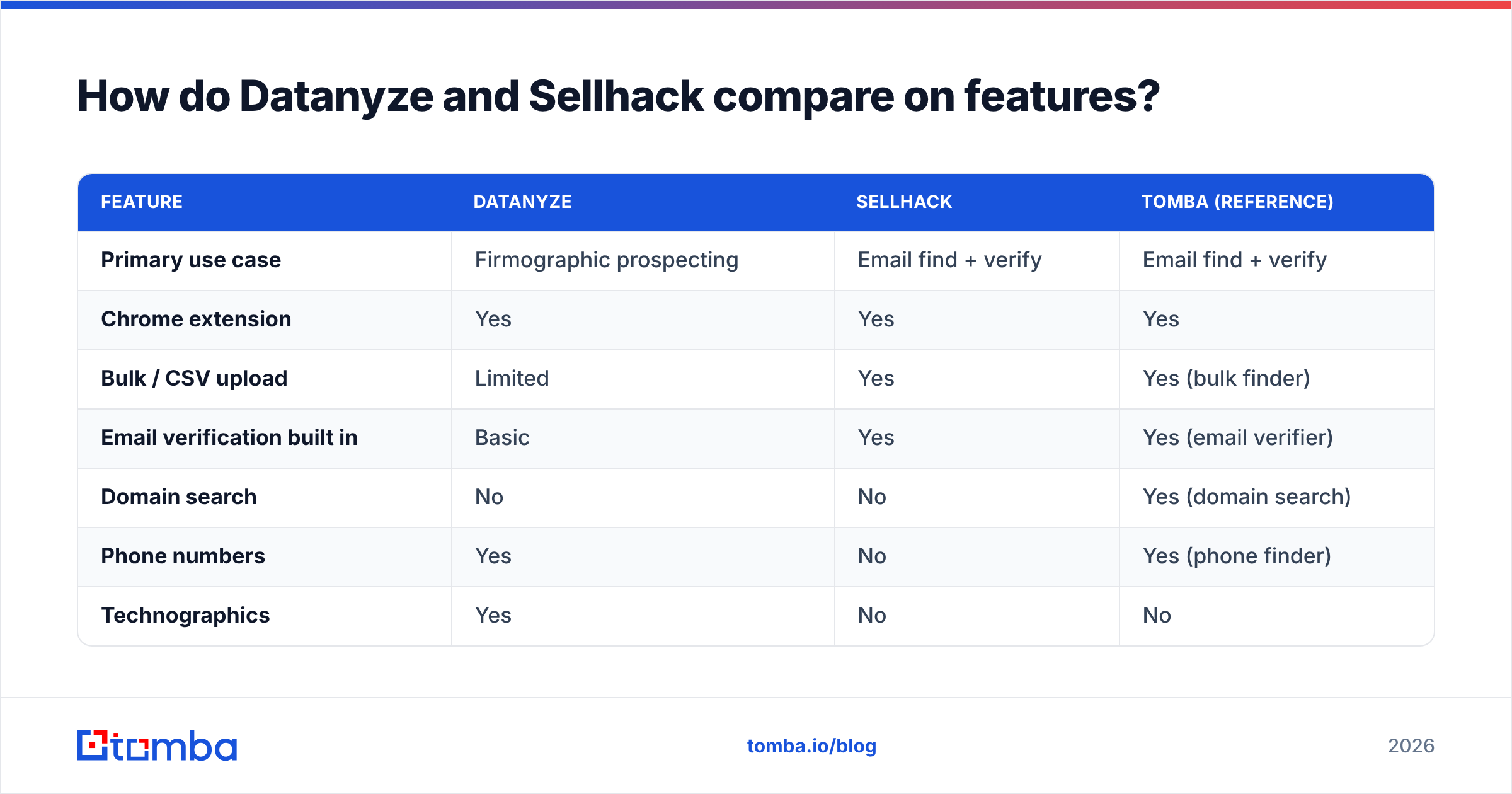
Here's the side-by-side. Pricing figures reflect publicly listed plans at the time of writing — always confirm on each vendor's site, since B2B data pricing changes often.
| Feature | Datanyze | Sellhack | Tomba (reference) |
|---|---|---|---|
| Primary use case | Firmographic prospecting | Email find + verify | Email find + verify |
| Chrome extension | Yes | Yes | Yes |
| Bulk / CSV upload | Limited | Yes | Yes (bulk finder) |
| Email verification built in | Basic | Yes | Yes (email verifier) |
| Domain search | No | No | Yes (domain search) |
| Phone numbers | Yes | No | Yes (phone finder) |
| Technographics | Yes | No | No |
| API access | Limited | Limited | Full (Tomba API) |
| Free tier | Trial only | Limited free credits | 25 searches/mo free |
| Entry paid price | ~$29/mo (annual) | ~$3/mo (starter) to $99+ | $49/mo |
Read the table by your bottleneck, not by feature count. If your bottleneck is "I need to know what tech a company runs," Datanyze wins outright. If it's "I just need a verified email fast and cheap," Sellhack is closer to the mark — but so are several dedicated finders that undercut it on accuracy per dollar.
Which one has better data accuracy?#
Neither publishes independent, audited accuracy numbers — so treat both marketing claims with healthy skepticism and run your own test batch. Accuracy is where email-finder tools live or die, because a "found" email that bounces costs you sender reputation, not just a wasted credit.

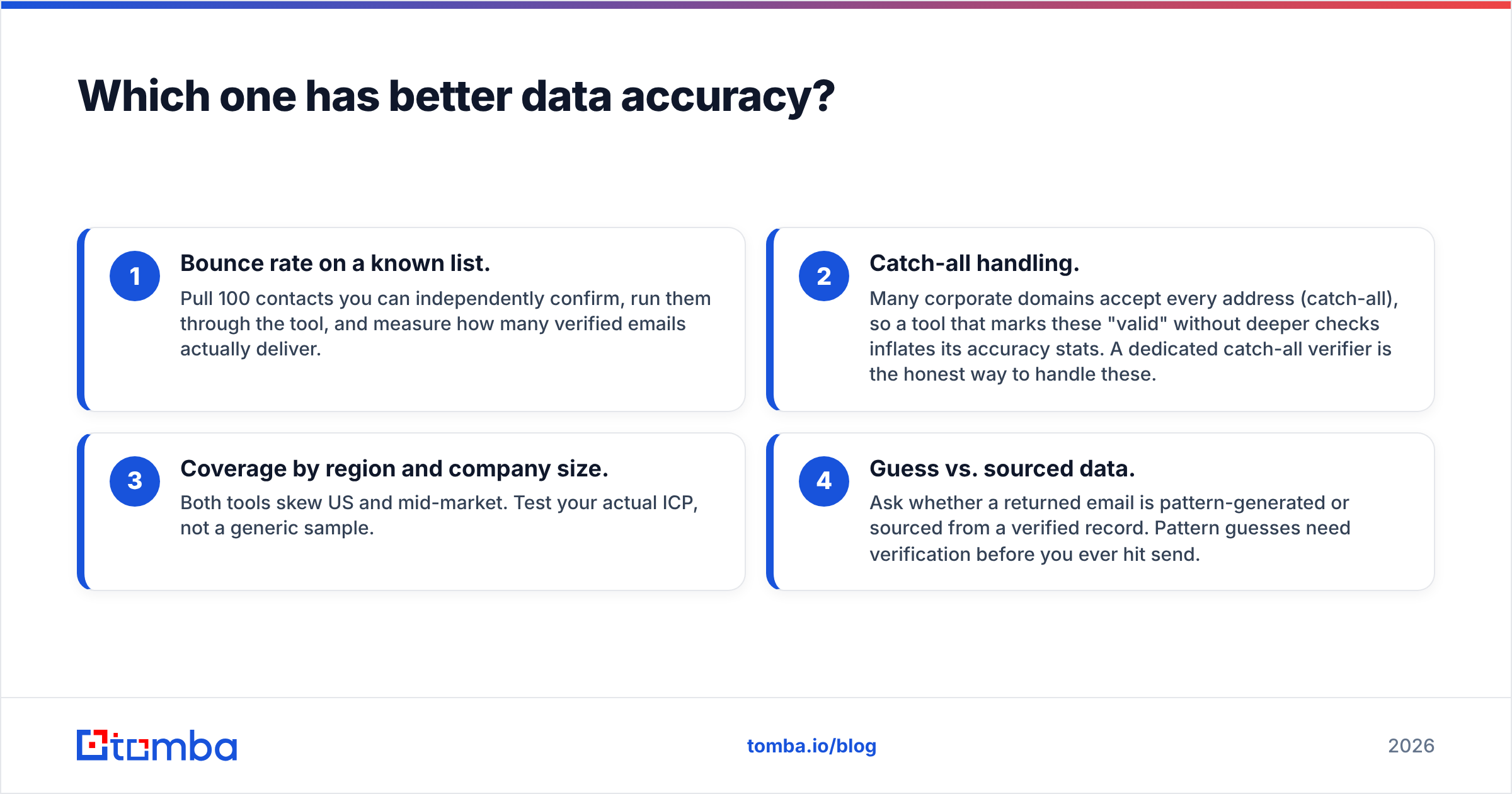
A few things to test before you commit to either:
- Bounce rate on a known list. Pull 100 contacts you can independently confirm, run them through the tool, and measure how many verified emails actually deliver.
- Catch-all handling. Many corporate domains accept every address (catch-all), so a tool that marks these "valid" without deeper checks inflates its accuracy stats. A dedicated catch-all verifier is the honest way to handle these.
- Coverage by region and company size. Both tools skew US and mid-market. Test your actual ICP, not a generic sample.
- Guess vs. sourced data. Ask whether a returned email is pattern-generated or sourced from a verified record. Pattern guesses need verification before you ever hit send.
The practical takeaway: whichever tool you pick, pair it with independent verification. A finder and a verified deliverability check are two different jobs, and treating them as one is how good lists go bad.
How does pricing really compare?#
Sellhack is cheaper to start; Datanyze costs more but bundles firmographic and phone data. The real number that matters is cost-per-verified-contact, not headline monthly price.
- Sellhack starts very low for light usage, which makes it attractive for one-person outbound. Costs climb as you add verification volume and higher-tier credits.
- Datanyze front-loads value with technographics and direct dials, so its price is fair if you use that data. If you only extract emails, you're overpaying for the firmographic layer.
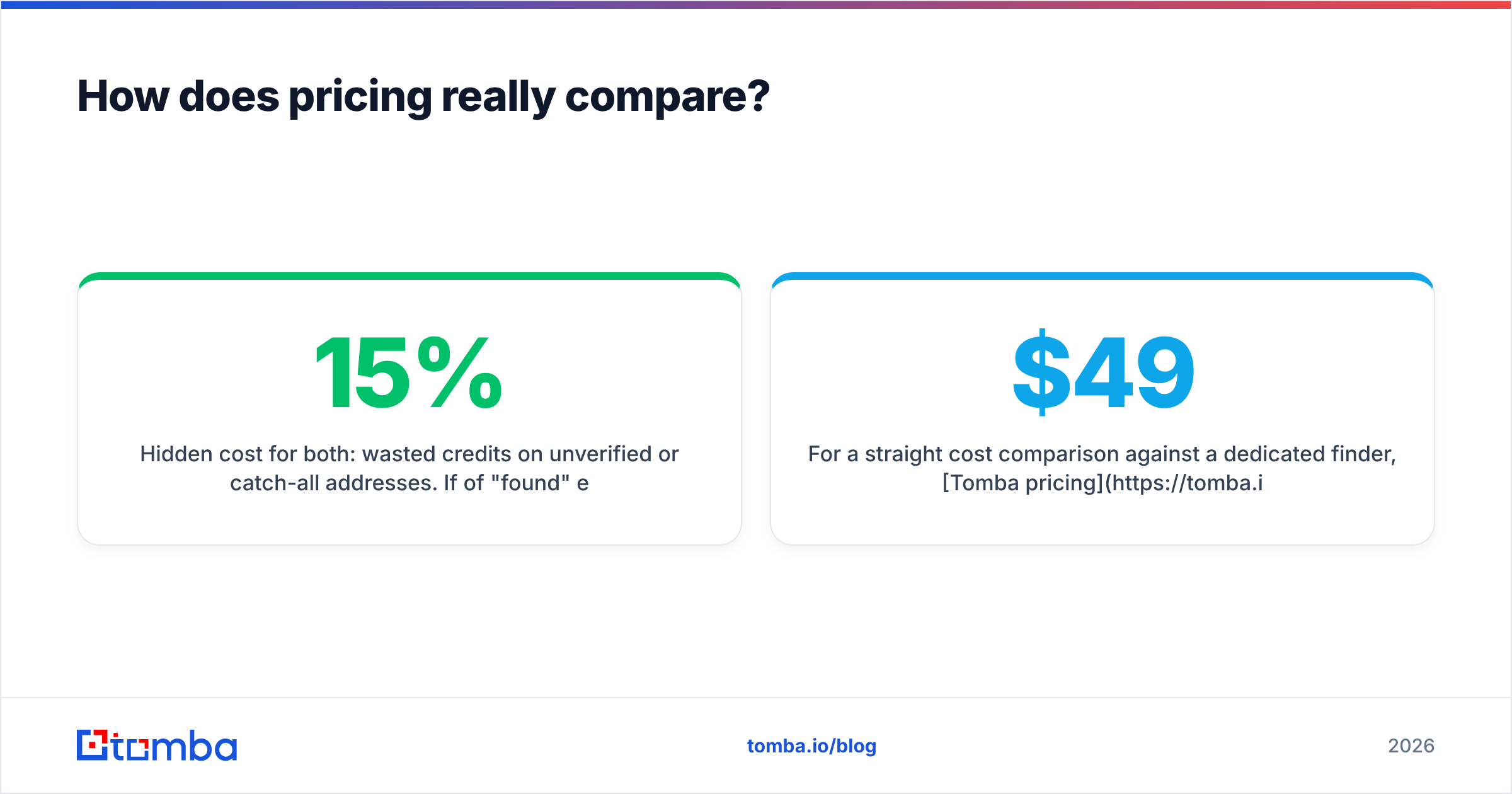
- Hidden cost for both: wasted credits on unverified or catch-all addresses. If 15% of "found" emails bounce, your effective price per usable contact jumps 15%+.
For a straight cost comparison against a dedicated finder, Tomba pricing runs a free tier of 25 searches per month, then $49/mo (Starter), $99/mo (Growth), and $249/mo (Pro). Because verification is built into the same platform, you're not paying two vendors to find and then confirm the same address.
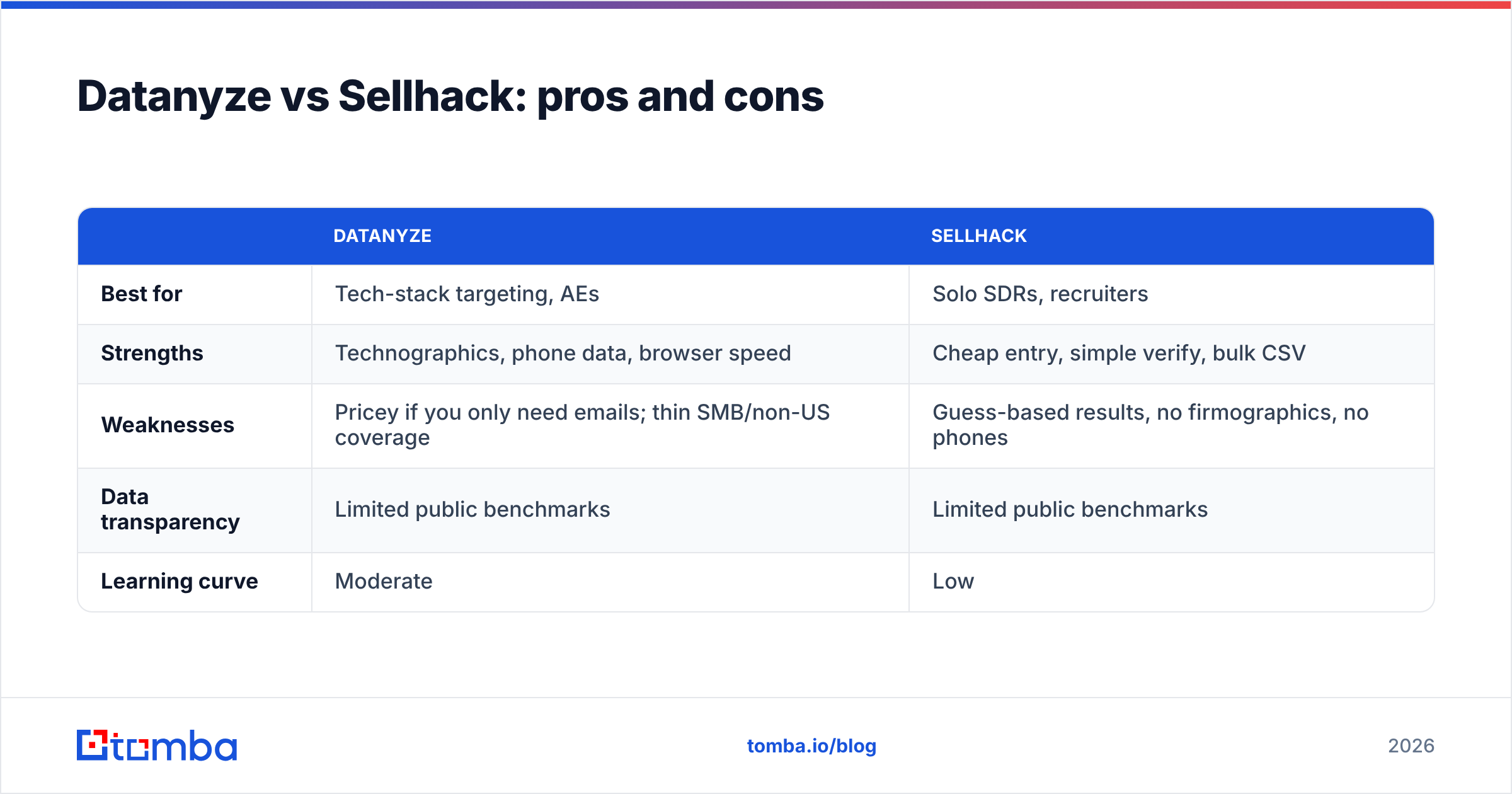
Datanyze vs Sellhack: pros and cons#
| Datanyze | Sellhack | |
|---|---|---|
| Best for | Tech-stack targeting, AEs | Solo SDRs, recruiters |
| Strengths | Technographics, phone data, browser speed | Cheap entry, simple verify, bulk CSV |
| Weaknesses | Pricey if you only need emails; thin SMB/non-US coverage | Guess-based results, no firmographics, no phones |
| Data transparency | Limited public benchmarks | Limited public benchmarks |
| Learning curve | Moderate | Low |
Neither is a bad tool. They're built for different buyers. The mistake is picking one because a competitor's blog told you it "won" — the winner is whichever matches your actual bottleneck and passes your own bounce test.

When should you consider a third option?#
Consider a dedicated email finder when your core need is volume of accurate, verified emails at a predictable price — not technographics, not a full sales-engagement suite. That's the lane where a purpose-built finder tends to beat both Datanyze and Sellhack.
A few signals you've outgrown a browser-only workflow:
- You're building lists in bulk, not grabbing one contact at a time. A bulk email finder that dedupes and verifies in one pass saves hours over extension clicks.
- You need domain-level search — "give me every reachable contact at this company" — which neither Datanyze nor Sellhack does well. That's a domain search job.
- You want the finder in your own stack via API, CRM, or spreadsheets. Native HubSpot and Google Sheets integrations remove the export-import shuffle.
- You care about verified deliverability, which means the finder and verifier should share the same confidence signal instead of being two disconnected products.
For an apples-to-apples look at how the major finders stack up on accuracy and price, this comparison chart is a useful starting point:

How to choose, step by step#
- Name your bottleneck. Emails only? Emails plus phones? Tech-stack targeting? Write it down before you look at any pricing page.
- Run a 100-contact bounce test on each shortlisted tool using contacts you can verify. This single test beats every marketing claim.
- Check coverage on your real ICP — region, company size, seniority — not a generic US enterprise sample.
- Add up cost-per-verified-contact, not monthly price. Factor in bounces and wasted credits.
- Confirm integration fit with your CRM and outreach tool so you're not exporting CSVs forever.
If your answer to step one is "firmographics and phones," Datanyze earns its price. If it's "cheap, simple verified emails for one person," Sellhack is reasonable. If it's "accurate emails at volume with verification and an API," look at a dedicated finder.
Frequently asked questions#
Is Datanyze better than Sellhack? Not universally. Datanyze is better if you need technographics and phone numbers; Sellhack is better if you need cheap, simple verified emails. Match the tool to your bottleneck.
Does Sellhack verify emails? Yes, Sellhack includes verification, but always test bounce rates on a known list. Pattern-guessed emails still need an independent email verification pass before you send.
Which is cheaper, Datanyze or Sellhack? Sellhack is cheaper to start for solo users. Datanyze costs more but bundles firmographic and phone data, so the value depends on whether you use that data.
What's the most accurate email finder? No tool publishes fully independent numbers, so run your own test. Compare cost-per-verified-contact across two or three finders on your real ICP before committing.
The bottom line#
Datanyze and Sellhack solve adjacent but different problems. Datanyze is a firmographic prospecting layer for reps who target by technology; Sellhack is a no-frills email finder and verifier for solo outbound. Both are legitimate — and both should be tested against your own bounce rate before you trust them at scale.
If what you actually need is accurate, verified B2B emails at a predictable price — with domain search, bulk lookups, verification, and an API in one place — start with the free tier of the Tomba Email Finder. Find emails by name, company, or domain, verify them in the same workflow, and measure the cost-per-verified-contact yourself. That single test will tell you more than any vendor comparison page, including this one.
Related guides#
Ready to find emails that actually work?
Join 150,000+ professionals who stopped guessing and started sending. Free credits on signup — no credit card required.
Get the Tomba newsletter
Practical outbound tactics and product updates — once every two weeks.
About the author