Dealfront Alternatives in 2026: 8 Cheaper GTM Tools Compared
Dealfront bundles visitor tracking, sales intelligence, and European B2B data into one pricey suite. Here are 8 alternatives that match the parts you actually use — often for far less.
Dealfront (the platform born from the Echobot + Leadfeeder merger) sells itself as an all-in-one European go-to-market suite: website visitor identification, a large B2B company database, sales triggers, and lead export. It works. But most teams use one slice of it, pay for the whole thing, and get locked into annual contracts with opaque, quote-only pricing. If that describes you, this guide breaks down eight Dealfront alternatives worth testing in 2026 — and where each one actually wins.
TL;DR#
- Dealfront is strong on European (GDPR-region) data and website visitor reveal, but pricing is quote-only, contracts are annual, and you pay for modules you rarely touch.
- If your core need is finding and verifying contact emails, a focused tool like Tomba starts at $49/mo with a free tier — no annual lock-in.
- If you only want website visitor identification, Leadfeeder-style trackers or Tomba Reveal cover that slice for a fraction of a full suite.
- For US-heavy prospecting, Apollo, RocketReach, and ContactOut usually beat Dealfront on coverage and self-serve pricing.
- Best overall value pick below: match the tool to the one job you hired Dealfront for, instead of buying the bundle again.
What is Dealfront and why look for alternatives?#
Dealfront is a B2B go-to-market platform aimed primarily at European sales and marketing teams. Its headline features are Leadfeeder (deanonymize website visitors by company), Target (a searchable database of companies with firmographic and financial filters), Connect (contact data and export), and Promote (B2B display advertising). You can read the vendor's own breakdown on the Dealfront homepage and cross-check user sentiment on G2.
So why do teams shop around? A few recurring reasons:
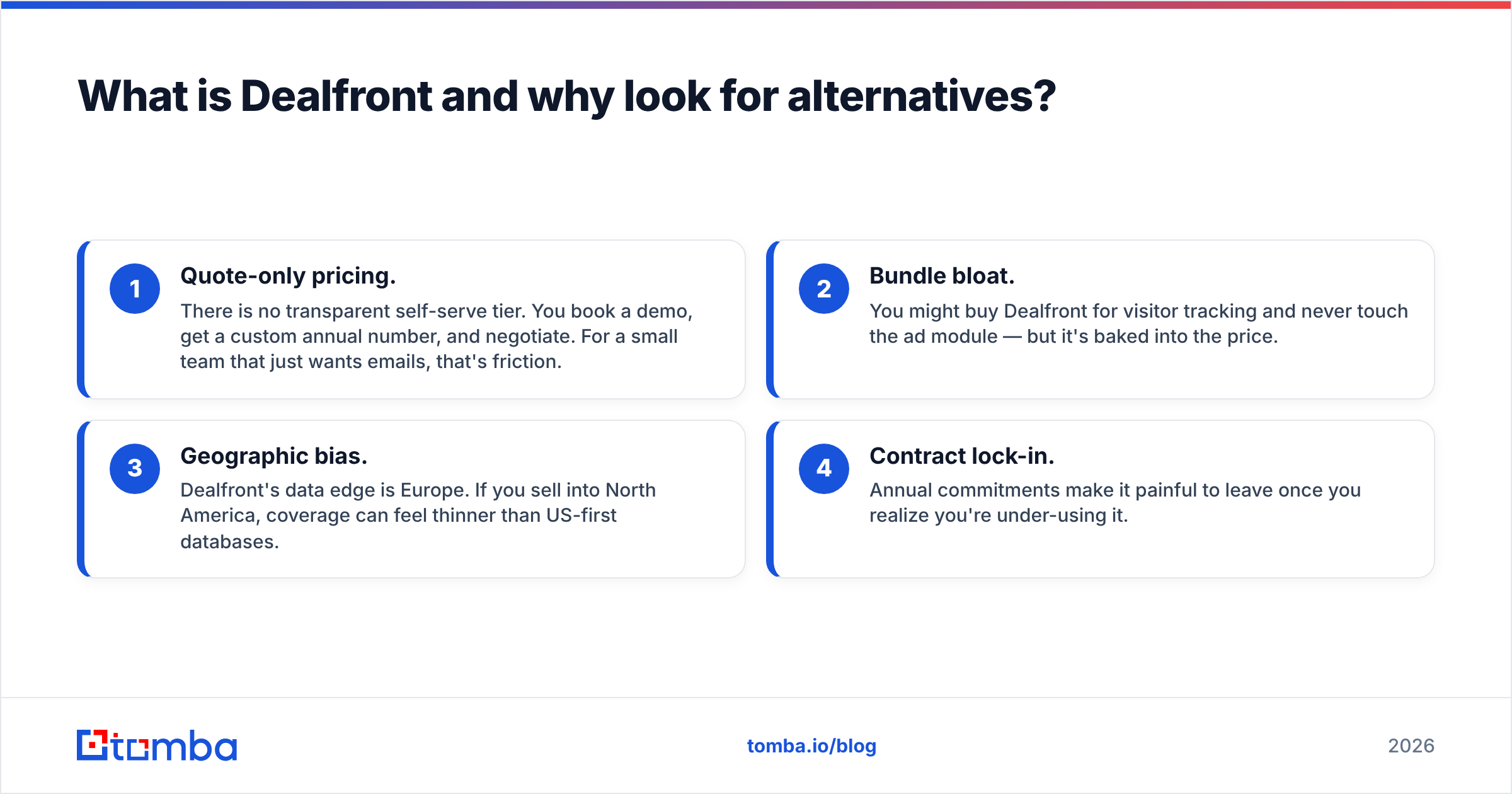
- Quote-only pricing. There is no transparent self-serve tier. You book a demo, get a custom annual number, and negotiate. For a small team that just wants emails, that's friction.
- Bundle bloat. You might buy Dealfront for visitor tracking and never touch the ad module — but it's baked into the price.
- Geographic bias. Dealfront's data edge is Europe. If you sell into North America, coverage can feel thinner than US-first databases.
- Contract lock-in. Annual commitments make it painful to leave once you realize you're under-using it.
None of that makes Dealfront bad. It makes it overkill for a large chunk of the people paying for it. The right alternative depends on which single job you were really hiring it to do.

What should you look for in a Dealfront alternative?#
Before you compare logos, get clear on the job. Here are the six attributes that actually differentiate these tools:
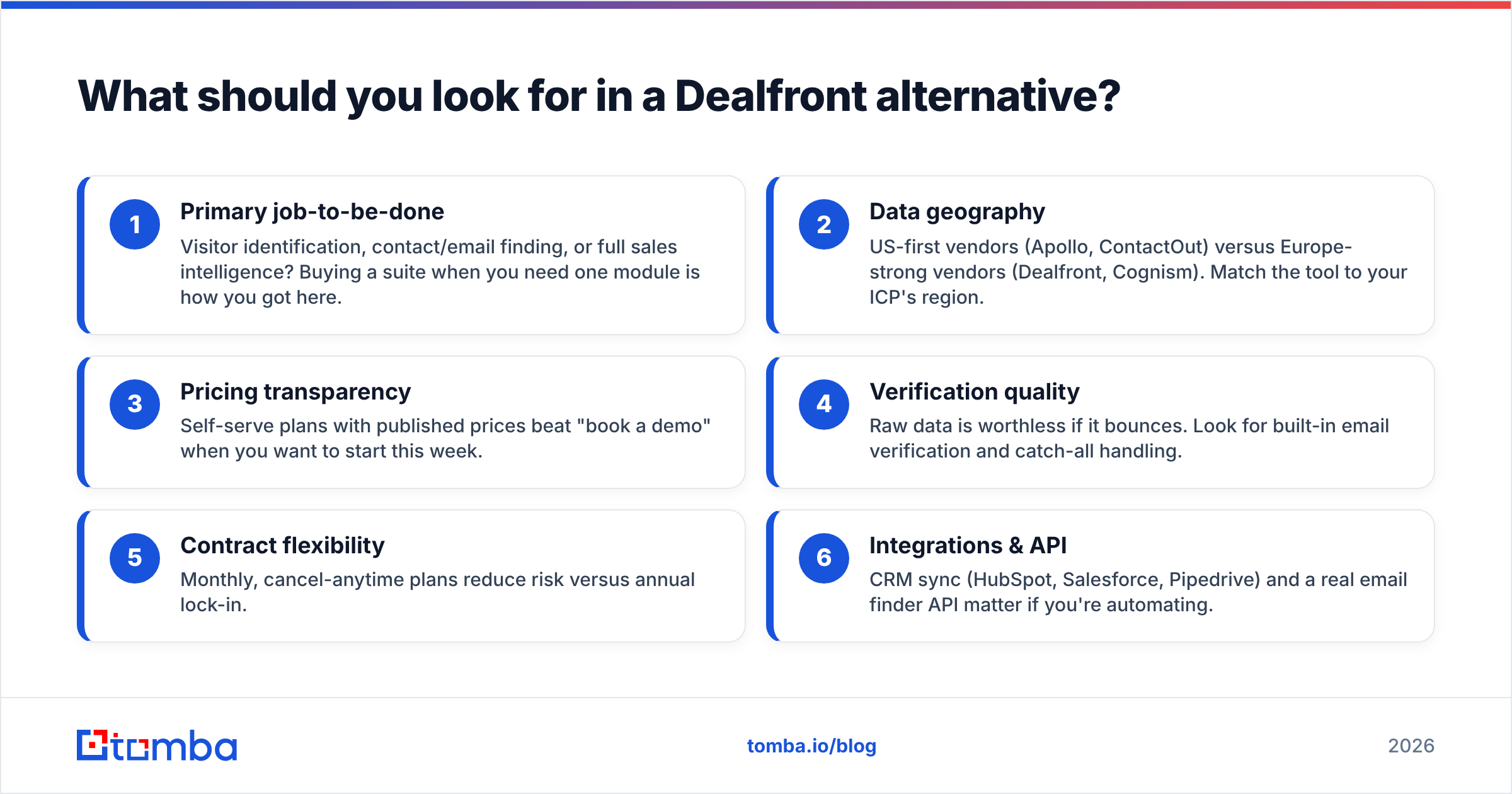
- Primary job-to-be-done — Visitor identification, contact/email finding, or full sales intelligence? Buying a suite when you need one module is how you got here.
- Data geography — US-first vendors (Apollo, ContactOut) versus Europe-strong vendors (Dealfront, Cognism). Match the tool to your ICP's region.
- Pricing transparency — Self-serve plans with published prices beat "book a demo" when you want to start this week.
- Verification quality — Raw data is worthless if it bounces. Look for built-in email verification and catch-all handling.
- Contract flexibility — Monthly, cancel-anytime plans reduce risk versus annual lock-in.
- Integrations & API — CRM sync (HubSpot, Salesforce, Pipedrive) and a real email finder API matter if you're automating.
Score any candidate against those six and the shortlist gets obvious fast.
Which tools are the best Dealfront alternatives in 2026?#
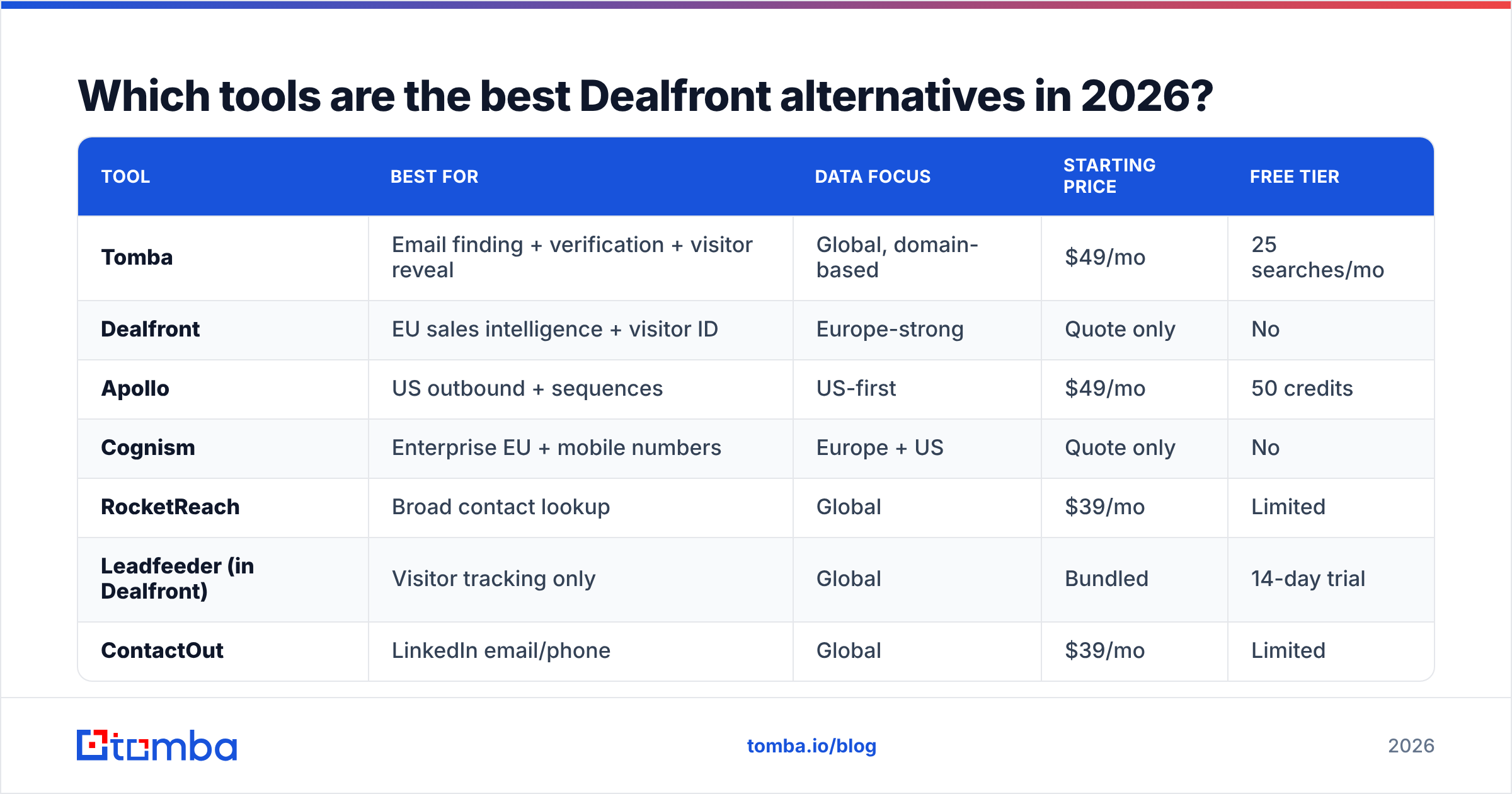
Here's the at-a-glance comparison. Prices are entry self-serve tiers where published; "Quote" means demo-gated.
| Tool | Best for | Data focus | Starting price | Free tier |
|---|---|---|---|---|
| Tomba | Email finding + verification + visitor reveal | Global, domain-based | $49/mo | 25 searches/mo |
| Dealfront | EU sales intelligence + visitor ID | Europe-strong | Quote only | No |
| Apollo | US outbound + sequences | US-first | $49/mo | 50 credits |
| Cognism | Enterprise EU + mobile numbers | Europe + US | Quote only | No |
| RocketReach | Broad contact lookup | Global | $39/mo | Limited |
| Leadfeeder (in Dealfront) | Visitor tracking only | Global | Bundled | 14-day trial |
| ContactOut | LinkedIn email/phone | Global | $39/mo | Limited |
| BookYourData | Pay-as-you-go lists | Global | Pay per record | Free credits |
Now the detail on each.
1. Tomba — best if you mainly need verified emails#
If the job you hired Dealfront for was "get me the right person's email," a dedicated finder is faster and cheaper. Tomba's email finder works by domain, name, or company, and every result runs through verification so you're not exporting bounces. It also covers the slice most people forget they wanted from Dealfront — Tomba Reveal deanonymizes website visitors, so you get the Leadfeeder-style use case without the suite. Pricing is public: Free (25 searches/mo), Starter $49/mo, Growth $99/mo, Pro $249/mo. See full Tomba pricing — no demo required, no annual lock-in.
Where it wins: transparent pricing, free tier, strong verification, an API and Chrome extension. Where it doesn't: it's not a full ad-and-intent suite — if you genuinely use every Dealfront module, that's a different purchase.
2. Apollo — best for US outbound at scale#
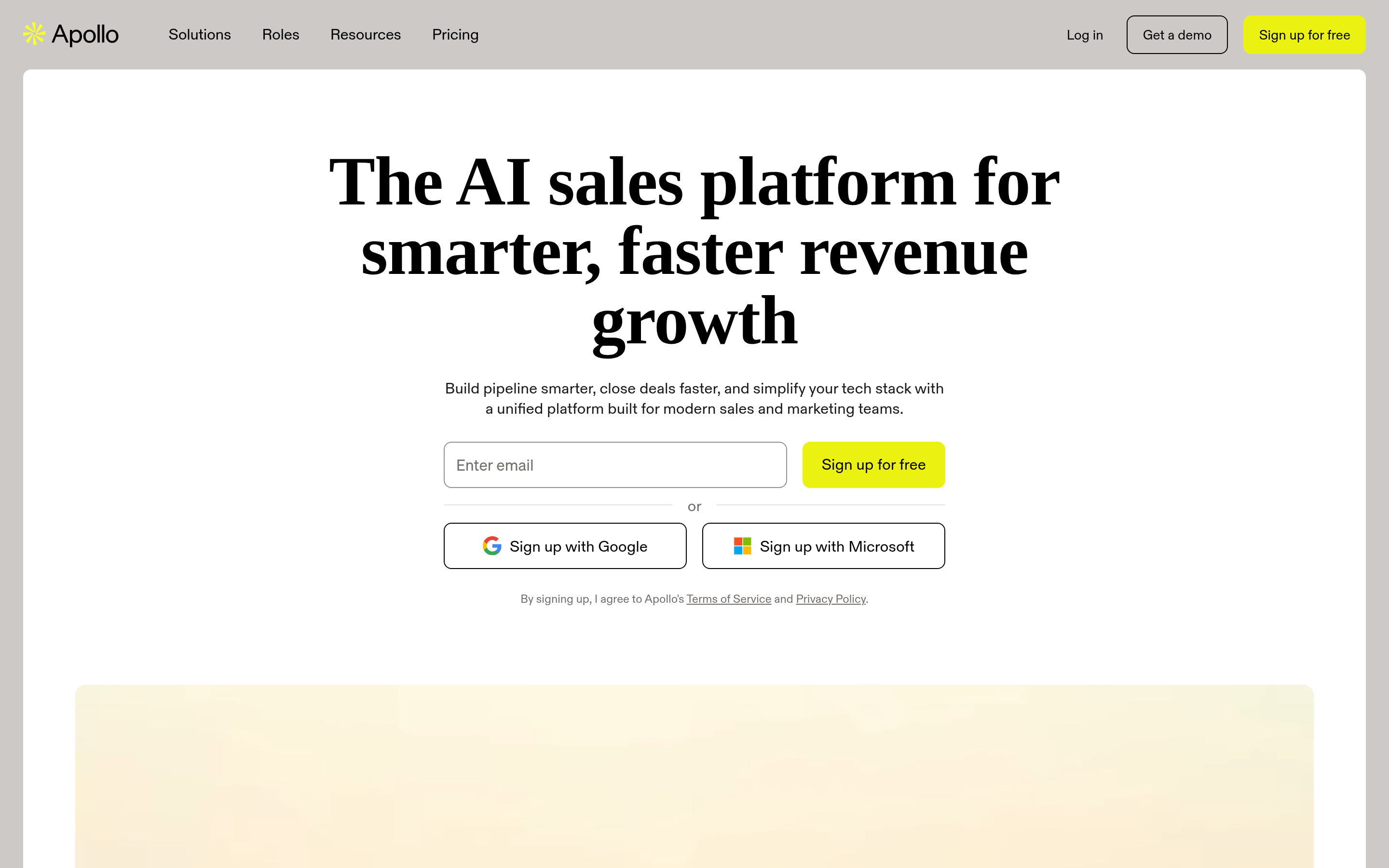
Apollo pairs a large US-centric contact database with built-in sequencing and a dialer. If your motion is high-volume North American cold outreach, Apollo's all-in-one loop (find → sequence → track) is hard to beat on price. Its free tier and $49 entry plan make it an easy starting point. Coverage outside the US and mobile-number accuracy are the usual complaints. If you're comparing directly, see the Apollo alternative breakdown.
3. Cognism — best European enterprise swap#
Cognism is the closest like-for-like to Dealfront for enterprise European teams that care about phone-verified mobile numbers and GDPR-compliant sourcing. It's also quote-only and annual, so you're trading one demo-gated contract for another — but coverage of EU mobile data is a genuine strength. Choose it when compliance and phone reach outrank pricing transparency.
4. RocketReach — best broad lookup#
RocketReach is a generalist: enter a name or company and get emails and phones across a wide global index. It's self-serve and cheap to start, which suits recruiters and founders doing occasional lookups rather than continuous pipeline. Accuracy varies by region. Compare on the RocketReach alternative page.

5. Leadfeeder-style visitor tracking#
Leadfeeder is inside Dealfront now, so buying it standalone is no longer the clean option it once was. If website visitor identification is your only goal, evaluate purpose-built trackers or Tomba Reveal. The core value — turning anonymous company traffic into named accounts with contact routing — doesn't require the rest of a GTM suite.
6. ContactOut — best for LinkedIn-first sourcing#
ContactOut lives in the browser and pulls personal and work emails plus phones off LinkedIn profiles. Recruiters and founder-led sales love it for one-at-a-time precision. It's less suited to bulk database pulls. See the ContactOut alternative comparison.
7. BookYourData — best pay-as-you-go lists#
BookYourData is a solid option when you want to buy a targeted list outright rather than subscribe. Its pay-per-record model and free starter credits make it friendly for one-off campaigns, and coverage spans multiple regions and industries. It's a respected data vendor — good to keep on the shortlist when you'd rather own a list than rent a seat.
8. Roll your own with a finder + verifier + enrichment#
For technical teams, the cheapest "alternative" is a stack: pull contacts via an API, verify them, and enrich in your warehouse. Tomba's data enrichment and domain search endpoints let you rebuild the useful 20% of Dealfront programmatically, paying only for what you call.
Is any Dealfront alternative actually cheaper?#
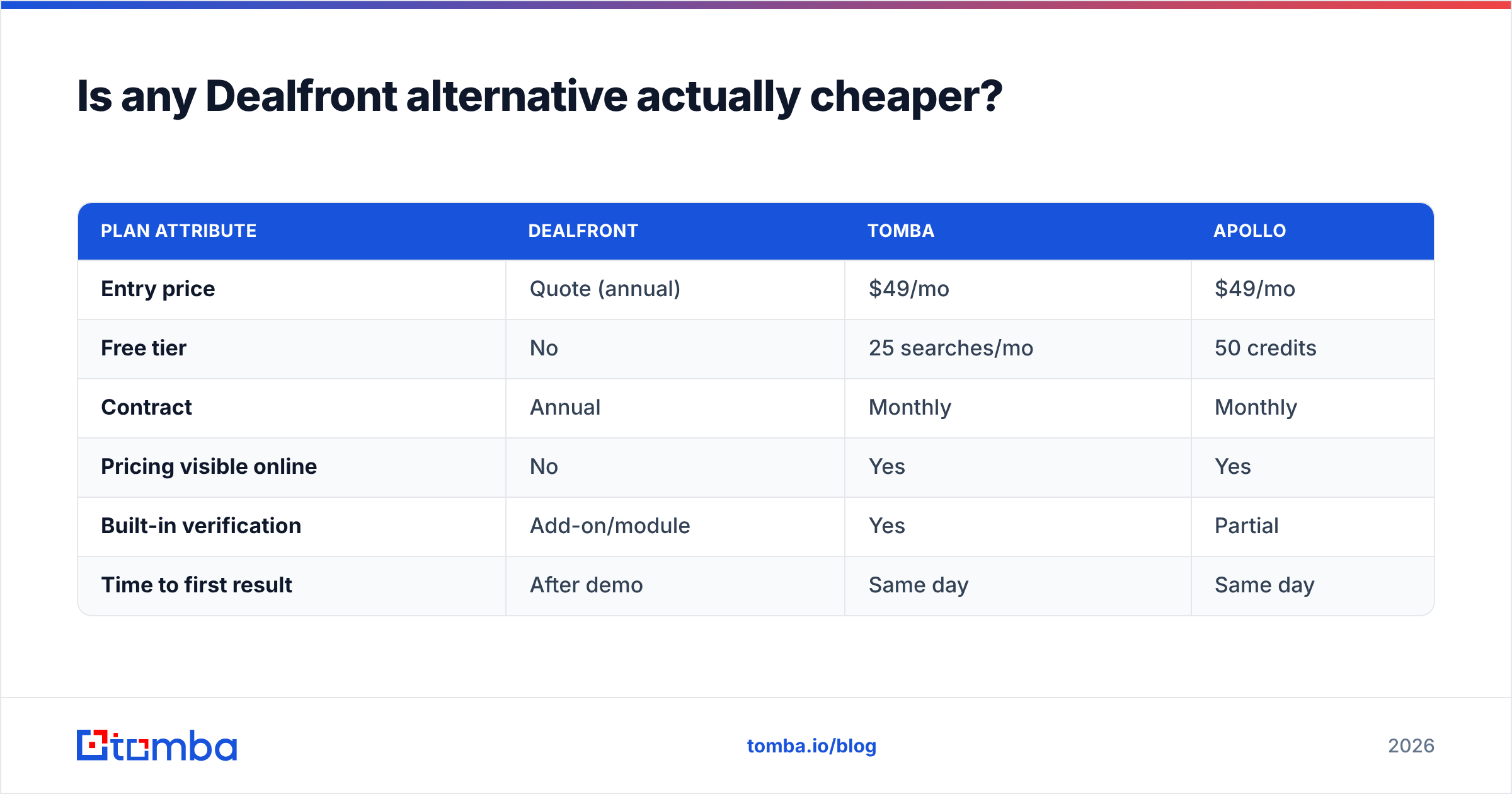
Yes — mostly because you stop paying for modules you don't use. The catch with any bundle is that the sticker price hides how little of it you touch. Here's a pricing-shape comparison for the common "I just want contacts" use case:
| Plan attribute | Dealfront | Tomba | Apollo |
|---|---|---|---|
| Entry price | Quote (annual) | $49/mo | $49/mo |
| Free tier | No | 25 searches/mo | 50 credits |
| Contract | Annual | Monthly | Monthly |
| Pricing visible online | No | Yes | Yes |
| Built-in verification | Add-on/module | Yes | Partial |
| Time to first result | After demo | Same day | Same day |
The pattern is consistent: focused, self-serve tools get you a verified contact today for a known price, while suites optimize for large annual commitments. If you're doing occasional research on authors or publications, note that even niche jobs have cheap point tools — like an author finder — instead of a platform seat.
How do you choose the right Dealfront alternative?#
Work backwards from the one job you were hiring Dealfront to do:
- "I need to identify anonymous website visitors." → A dedicated visitor tracker or Tomba Reveal. Don't buy a database you won't query.
- "I need verified emails for a name or company." → Tomba, Apollo, or RocketReach. Prioritize built-in verification so lists don't bounce.
- "I sell into Europe and need compliant mobile numbers." → Cognism, or stay on Dealfront. This is where the suites earn their price.
- "I do occasional, precise LinkedIn sourcing." → ContactOut.
- "I want to buy a list, not a subscription." → BookYourData.
- "I have engineers and want to automate." → An API stack: finder + verifier + enrichment.
Then run a real test. Take 25 target accounts, pull contacts from two tools, and check bounce rates and match rates against your CRM. The winner is empirical, not a feature grid.
Frequently asked questions#
Is Dealfront the same as Leadfeeder and Echobot? Effectively yes — Dealfront is the merged brand of Echobot (sales intelligence) and Leadfeeder (visitor identification). If you loved one product and not the other, a focused alternative usually maps better to your actual usage.
Are there free Dealfront alternatives? For the contact-finding job, yes. Tomba offers 25 free searches per month and Apollo offers free credits. Full visitor-identification and intent suites rarely have meaningful free tiers.
Which alternative is best for US-based teams? Apollo, RocketReach, and ContactOut generally have stronger North American coverage and self-serve pricing than Dealfront, whose edge is European data.
Can I replace Dealfront with an API instead of a seat? If you have engineering resources, yes. A finder + verifier + enrichment API stack rebuilds the parts most teams use and bills only for calls, avoiding annual seat commitments.
The bottom line#
Dealfront is a capable European GTM suite, but "capable" and "right for you" aren't the same thing. Most teams shopping for alternatives are really trying to unbundle: they want verified contacts, or visitor reveal, or a list — not the whole platform on an annual contract. Pick the tool that nails your one job and pay a transparent, monthly price for it.
If that job is finding and verifying the right person's email — with visitor reveal and enrichment alongside when you need them — start free with the Tomba Email Finder. You get 25 searches a month at no cost, published pricing from $49/mo, and no demo gate standing between you and your first verified lead. Test it against your Dealfront export on 25 accounts and let the bounce rate decide.
Related guides#
// get started
Find, verify and enrich your first contacts today
Start on the free plan with 25 searches a month, then scale when your team is ready.
Free plan · No credit card required · GDPR & CCPA
// about the author