7 Best DealHub Alternatives in 2026 (Compared by Price)
DealHub is a capable CPQ and deal-room platform, but it is quote-gated, enterprise-shaped, and slow to roll out. Here are seven DealHub alternatives compared on pricing model, setup time, CRM depth, and the buyer they actually fit.

TL;DR
- DealHub is a strong CPQ and DealRoom platform for mid-market and enterprise sales teams with complex pricing — subscriptions, usage tiers, ramps, and approval chains. It is also quote-gated, so you cannot benchmark cost without a call.
- Most teams searching for DealHub alternatives want one of three things: published pricing, a faster rollout, or a lighter proposal tool they will not need an admin to maintain.
- The seven alternatives below split into three buckets: document-first (PandaDoc, Qwilr, Proposify), CRM-native CPQ (Salesforce Revenue Cloud, HubSpot Commerce Hub), and billing-heavy CPQ (Conga CPQ, Subskribe).
- Match the tool to your quote complexity, not to your headcount. A 12-rep team selling one SKU with two discount tiers does not need a configure-price-quote engine.
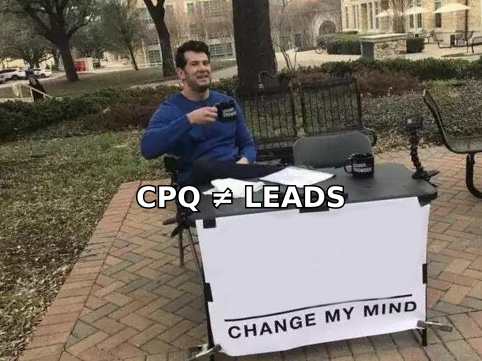
- CPQ tightens the bottom of the funnel. It does nothing for the top. If quotes are fine but volume is thin, the fix is contact data and outbound — not another quoting seat.
What is DealHub and who is it actually for?#
DealHub is a revenue platform built around CPQ (configure, price, quote), contract lifecycle management, subscription management, and its signature "DealRoom" — a shared, trackable buyer microsite that replaces the emailed PDF. It sits in the same competitive set as Salesforce CPQ and Conga, and it consistently reviews well on G2 for ease of use relative to legacy CPQ suites.
The sweet spot is a company where quoting has genuinely become a bottleneck: recurring revenue with multiple pricing dimensions, usage-based add-ons, multi-year ramps, regional price books, and a legal or finance approval chain that adds days to every deal. If your reps rebuild quotes by hand in spreadsheets and your CFO cannot reconcile bookings, DealHub is a rational purchase.
The friction shows up elsewhere. DealHub does not publish list pricing on its site, so every evaluation starts with a demo and a discovery call. Implementations are typically measured in weeks, not hours, because someone has to model your price book, approval matrix, and CRM object mapping. And the platform is deliberately broad — if all you need is a beautiful proposal with an e-signature block, you will pay for a lot of engine you never start.
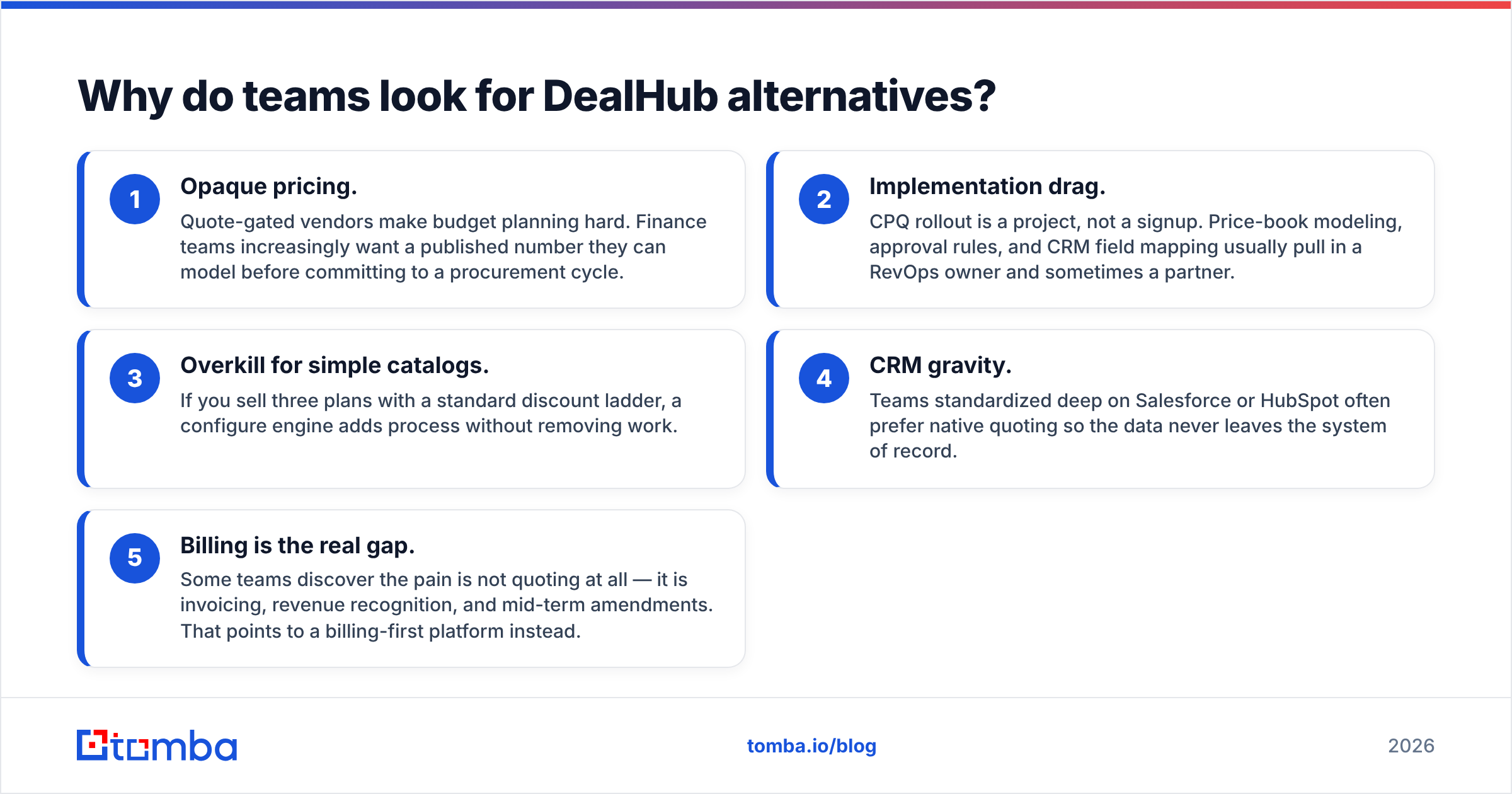
Why do teams look for DealHub alternatives?#
Five reasons come up repeatedly in evaluation threads and review sites:
- Opaque pricing. Quote-gated vendors make budget planning hard. Finance teams increasingly want a published number they can model before committing to a procurement cycle.
- Implementation drag. CPQ rollout is a project, not a signup. Price-book modeling, approval rules, and CRM field mapping usually pull in a RevOps owner and sometimes a partner.
- Overkill for simple catalogs. If you sell three plans with a standard discount ladder, a configure engine adds process without removing work.
- CRM gravity. Teams standardized deep on Salesforce or HubSpot often prefer native quoting so the data never leaves the system of record.
- Billing is the real gap. Some teams discover the pain is not quoting at all — it is invoicing, revenue recognition, and mid-term amendments. That points to a billing-first platform instead.
Be honest about which one applies to you. Reasons 1 and 2 point to a lighter document tool. Reason 4 points to native CPQ. Reason 5 points to a quote-to-cash platform, which is a bigger, not smaller, purchase.
What should you compare in a CPQ or proposal tool?#
Score every option on these six dimensions before you look at a demo:
- Quote complexity ceiling — Can it handle bundles, tiered usage, ramps, and multi-currency price books, or does it top out at line items and a discount field?
- Approval workflow — Conditional routing by discount depth, deal size, or product family. Without it, your "approval process" is a Slack message.
- CRM depth — Two-way sync on opportunity, product, and line-item objects. A one-way push that creates orphaned records is worse than no integration.
- Buyer-facing experience — Interactive pricing, embedded video, engagement tracking, and native e-signature versus a static PDF attachment.
- Time to first quote — Realistic days from contract to a rep sending a live quote. Document tools land in hours; full CPQ lands in weeks.
- Total cost shape — Per-user monthly, platform fee plus seats, or annual contract only. Platform-fee models punish small teams; per-seat models punish large ones.
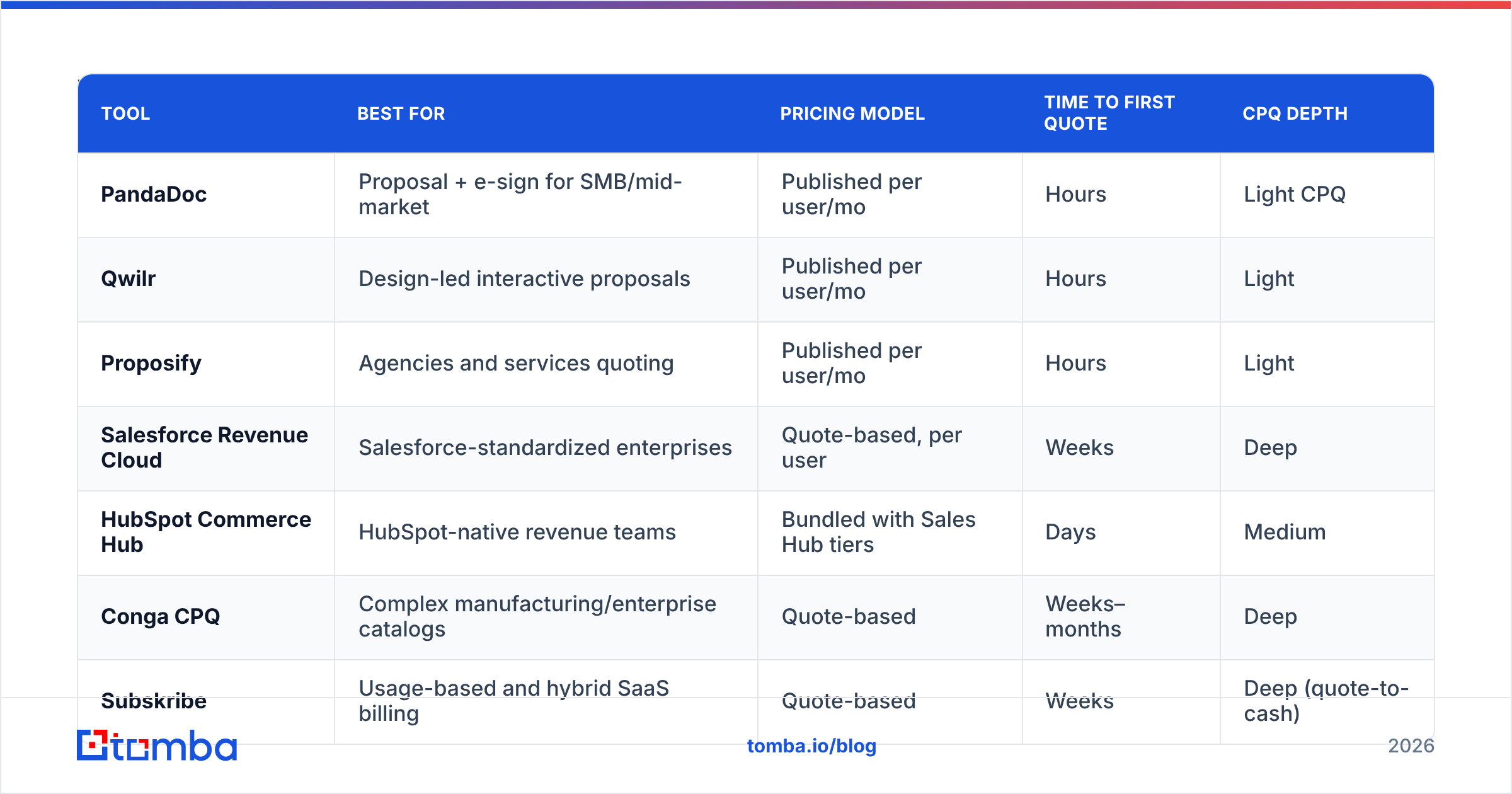
Which are the 7 best DealHub alternatives in 2026?#
| Tool | Best for | Pricing model | Time to first quote | CPQ depth |
|---|---|---|---|---|
| PandaDoc | Proposal + e-sign for SMB/mid-market | Published per user/mo | Hours | Light CPQ |
| Qwilr | Design-led interactive proposals | Published per user/mo | Hours | Light |
| Proposify | Agencies and services quoting | Published per user/mo | Hours | Light |
| Salesforce Revenue Cloud | Salesforce-standardized enterprises | Quote-based, per user | Weeks | Deep |
| HubSpot Commerce Hub | HubSpot-native revenue teams | Bundled with Sales Hub tiers | Days | Medium |
| Conga CPQ | Complex manufacturing/enterprise catalogs | Quote-based | Weeks–months | Deep |
| Subskribe | Usage-based and hybrid SaaS billing | Quote-based | Weeks | Deep (quote-to-cash) |
PandaDoc — the default lightweight swap#
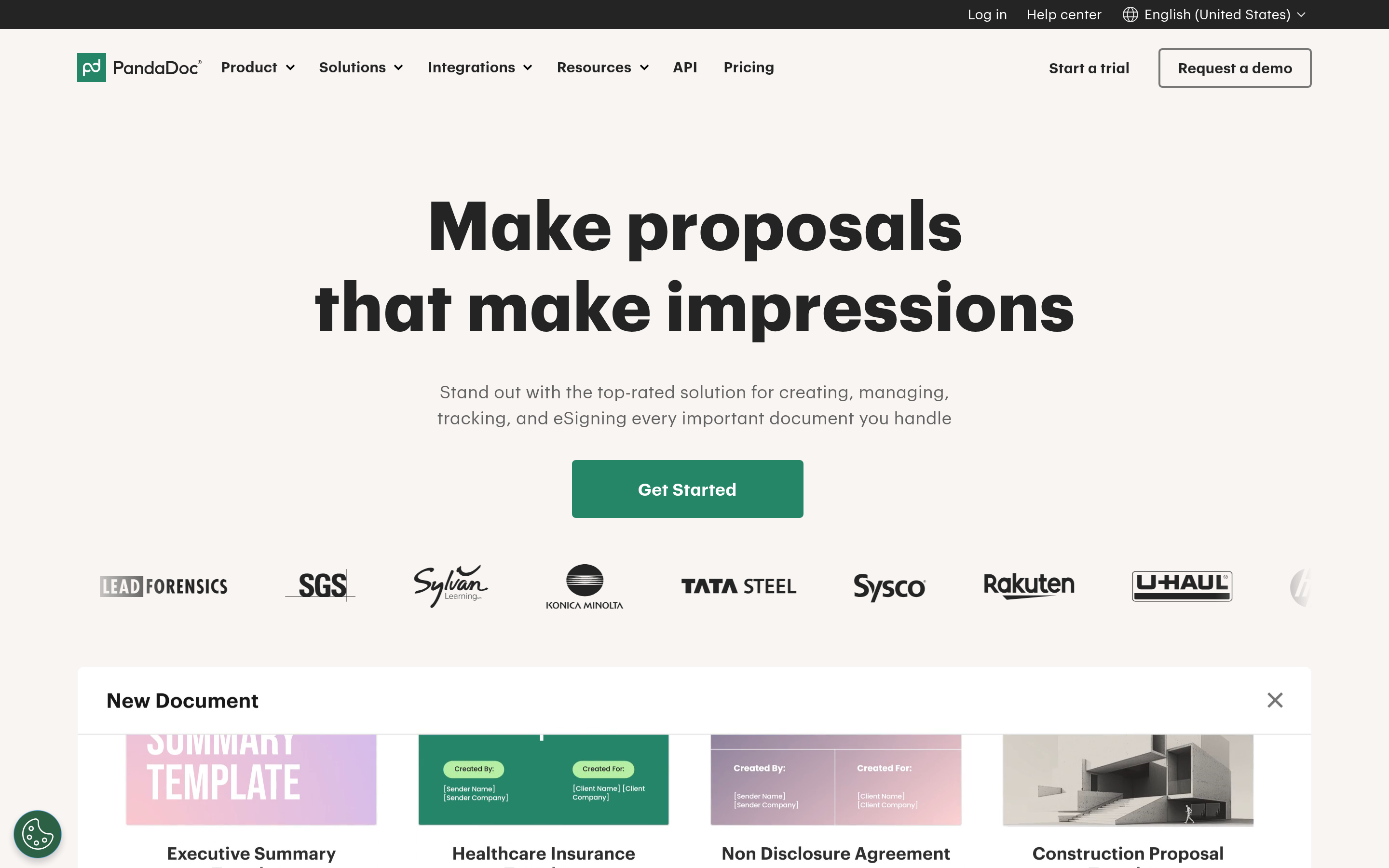
PandaDoc is the tool most teams land on when DealHub feels too heavy. It handles templates, content libraries, e-signature, payment collection, and a product catalog with basic pricing rules. PandaDoc publishes its plans openly, with a Starter tier around the mid-$30s per user per month and a Business tier roughly double that at list, which is a refreshing change from demo-gated CPQ.
Where it falls short: conditional approval routing and multi-dimensional price books are shallow compared to real CPQ. If a rep can break your pricing model with a creative bundle, PandaDoc will not stop them.
Qwilr — when the proposal is the pitch#
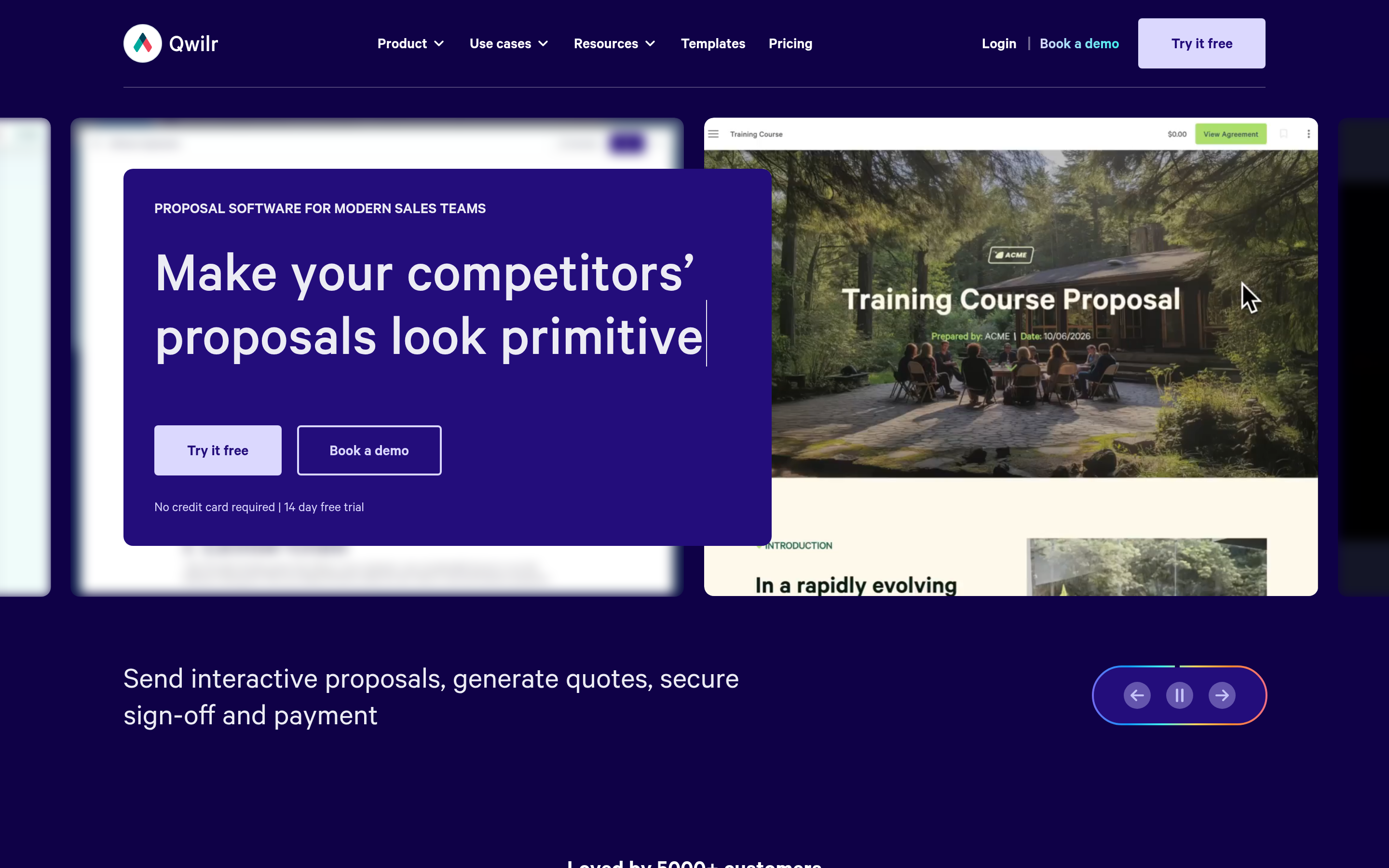
Qwilr replaces the PDF with a responsive web page: embedded video, interactive quote blocks where buyers toggle options, and engagement analytics showing which sections got read. For teams selling design-sensitive or marketing-adjacent products, it wins deals on presentation alone.
Its quoting logic is intentionally simple. Treat it as a proposal tool with pricing attached, not a CPQ.
Proposify — services and agency quoting#
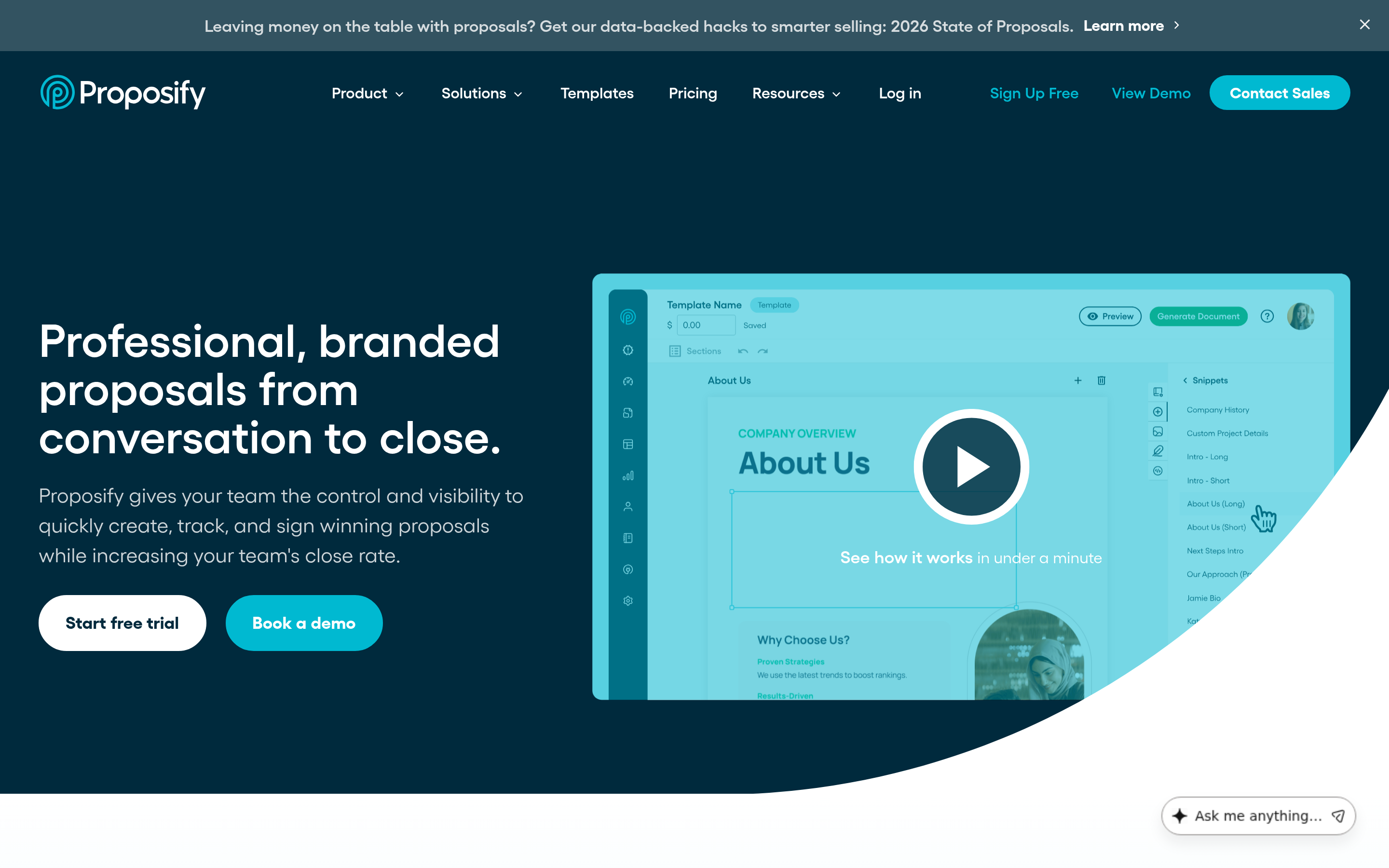
Proposify is built around scoped statements of work: reusable sections, fee tables, approval on the internal side, and version control across revisions. Agencies, consultancies, and professional-services teams get more out of it than product companies do.
Salesforce Revenue Cloud — the incumbent#
If your entire go-to-market runs on Salesforce, native CPQ keeps quote lines, products, and orders on standard objects with no sync layer to babysit. Salesforce prices it per user on top of Sales Cloud, and it is the deepest option here for approval matrices and price-book governance.
The trade-off is well documented: implementation cost frequently exceeds license cost, and admin dependency is permanent. You are buying a platform commitment, not a tool.
HubSpot Commerce Hub — the mid-market compromise#
For teams already on HubSpot, quotes, product libraries, payment links, and subscription management live inside the CRM at no additional platform fee beyond your Sales Hub tier. Configuration depth is medium — enough for tiered SaaS pricing, not enough for a 4,000-SKU catalog with compatibility rules. See HubSpot for current tier limits, and note that a HubSpot integration on the data side keeps contact records clean before deals ever reach the quote stage.
Conga CPQ — deep catalogs, deep pockets#
Conga is the answer when the product catalog itself is the complexity: manufacturing configurations, compatibility constraints, guided selling, channel pricing. It is more configurable than DealHub and correspondingly slower to deploy. Budget for a partner.
Subskribe — when the problem is billing, not quoting#
Subskribe collapses CPQ, billing, and revenue recognition into one system, which matters for usage-based and hybrid pricing where mid-term amendments break traditional stacks. If your finance team spends more time on amendments than your reps spend on quotes, this bucket deserves a look.
How do the pricing models actually compare?#
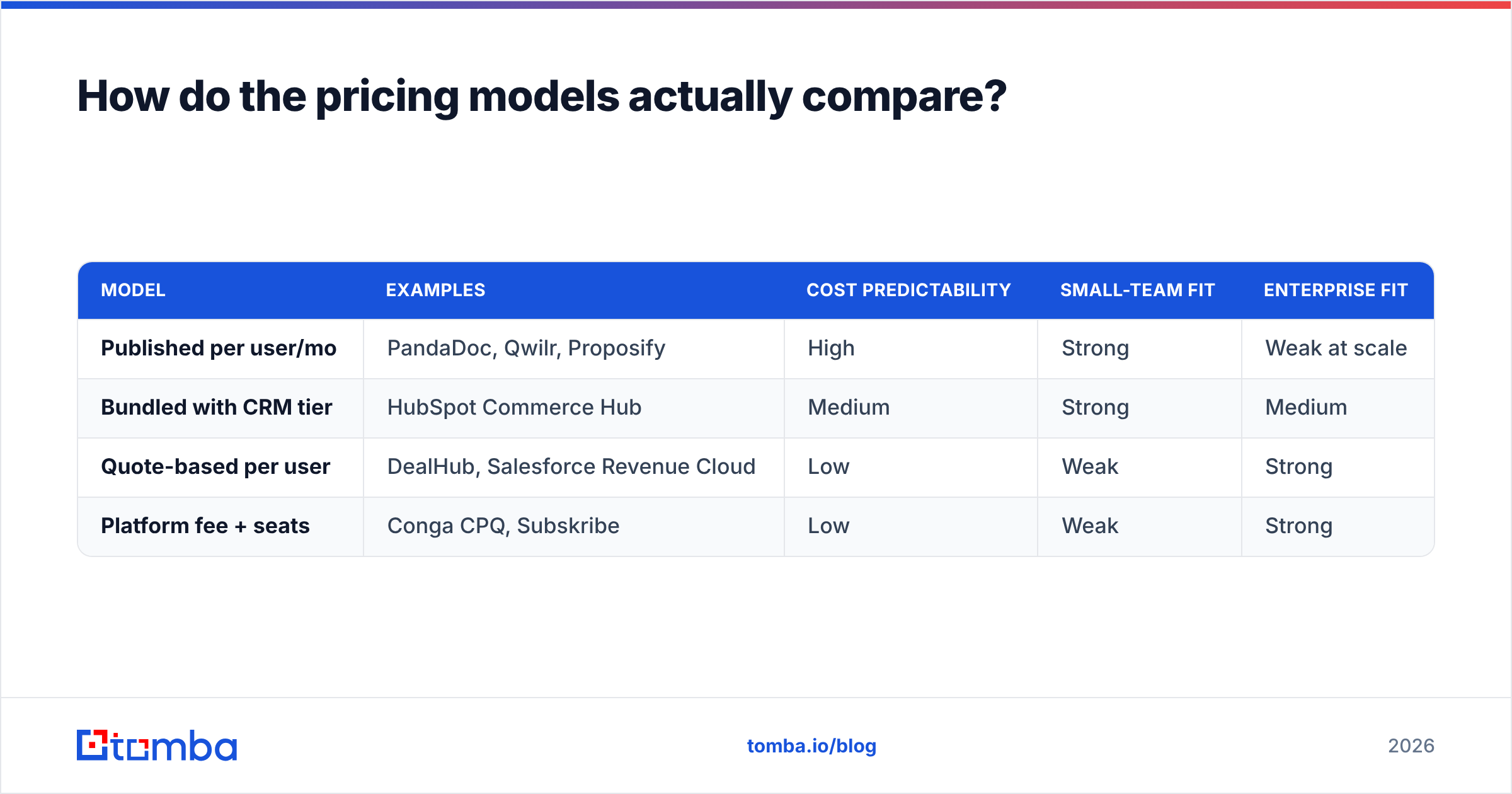
| Model | Examples | Cost predictability | Small-team fit | Enterprise fit |
|---|---|---|---|---|
| Published per user/mo | PandaDoc, Qwilr, Proposify | High | Strong | Weak at scale |
| Bundled with CRM tier | HubSpot Commerce Hub | Medium | Strong | Medium |
| Quote-based per user | DealHub, Salesforce Revenue Cloud | Low | Weak | Strong |
| Platform fee + seats | Conga CPQ, Subskribe | Low | Weak | Strong |
Two rules of thumb. First, published per-user pricing is cheapest below roughly 20 seats and stops being cheapest somewhere north of 100. Second, any quote-based vendor should give you a three-year total cost of ownership including implementation before you sign — if they will not, that is your answer.
Which DealHub alternative fits your team?#
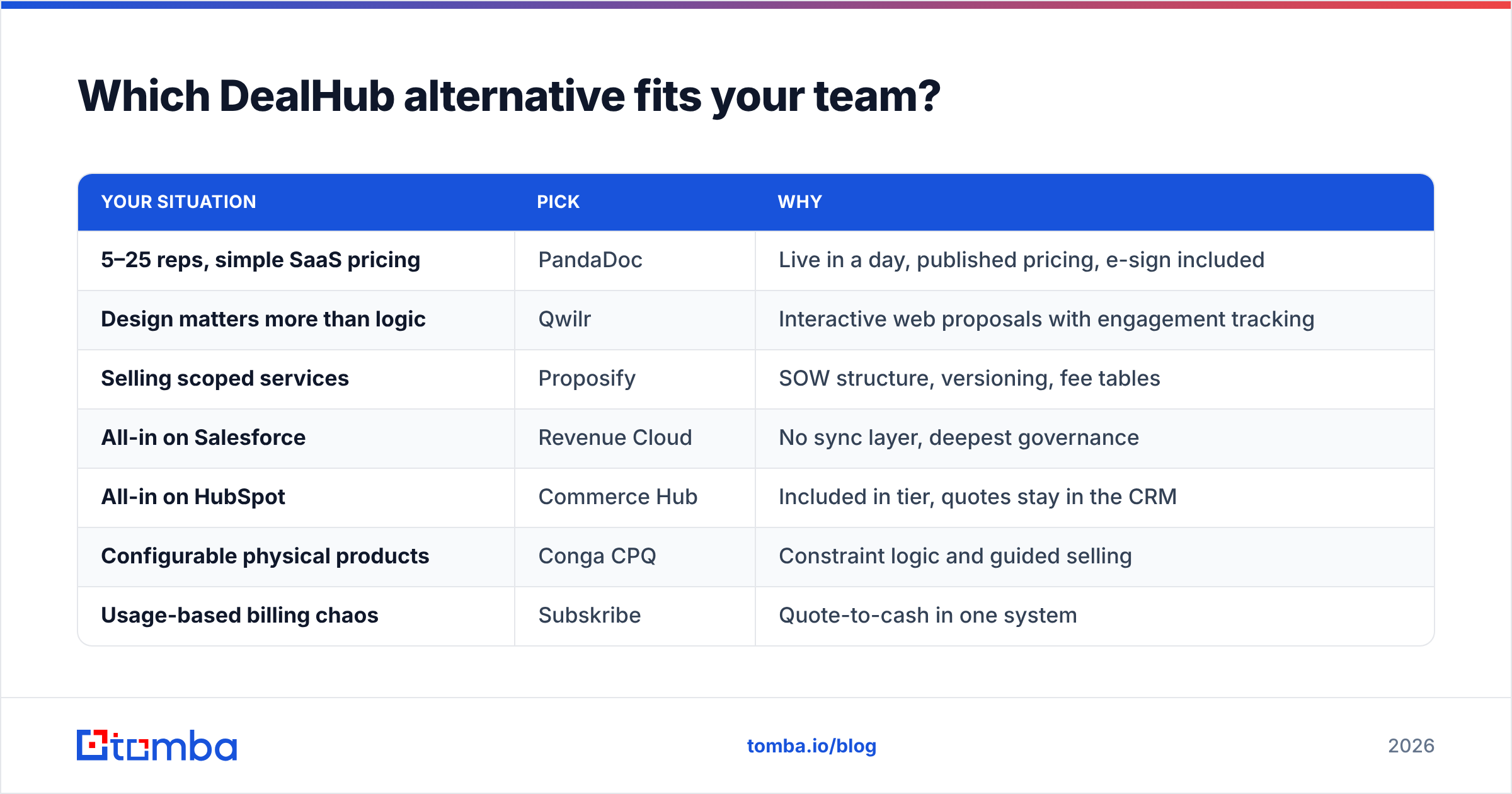
| Your situation | Pick | Why |
|---|---|---|
| 5–25 reps, simple SaaS pricing | PandaDoc | Live in a day, published pricing, e-sign included |
| Design matters more than logic | Qwilr | Interactive web proposals with engagement tracking |
| Selling scoped services | Proposify | SOW structure, versioning, fee tables |
| All-in on Salesforce | Revenue Cloud | No sync layer, deepest governance |
| All-in on HubSpot | Commerce Hub | Included in tier, quotes stay in the CRM |
| Configurable physical products | Conga CPQ | Constraint logic and guided selling |
| Usage-based billing chaos | Subskribe | Quote-to-cash in one system |
If two rows describe you, start with the lighter tool. Downgrading from an over-scoped CPQ mid-contract is painful; upgrading from a proposal tool is not.
Does better quoting actually fix a revenue problem?#
This is where most CPQ evaluations go sideways. A quoting tool compresses the last 10% of the sales cycle. It cannot create the first 90%.
Run the diagnostic before you spend a procurement cycle:
- Quotes take days to produce and errors reach buyers. That is a CPQ problem. Buy one of the tools above.
- Quotes go out fine but win rates are flat. That is a qualification or win rate problem. Look at discovery and ICP fit, not tooling.
- Not enough deals reach the quote stage at all. That is a pipeline problem, and no CPQ on this list will move the number.
The third case is the most common — and the most misdiagnosed. Teams buy quoting software because it is a visible, fixable pain, while the actual constraint sits upstream: not enough qualified contacts entering the funnel, or contact data so stale that outreach bounces before a conversation ever starts.
If that is you, the money is better spent on the top of the funnel. An accurate email finder plus verification keeps your outbound list clean; domain search pulls the full contact map for a target account so you reach the economic buyer instead of a gatekeeper; and data enrichment fills the firmographic gaps your CRM records are missing so scoring and routing actually work. None of that is glamorous. All of it precedes the quote.
What questions should you ask on the demo call?#
Bring these five to every vendor, DealHub included:
- What is the fully loaded first-year cost — licenses, implementation, and any required partner services?
- Who owns this after go-live? If the answer is "a certified admin," price that role in.
- Show me a mid-term amendment. Upgrades, downgrades, and co-term renewals are where CPQ tools quietly break.
- What happens on renewal pricing? Ask for a cap in writing.
- Can I export my templates and price book? Lock-in risk is real in this category.
Vendors that answer all five clearly are usually the ones worth shortlisting, regardless of logo size.
FAQ#
Is DealHub better than Salesforce CPQ? For most mid-market teams, DealHub is faster to deploy and friendlier to non-admins. For enterprises already deep in the Salesforce ecosystem, native CPQ wins on data integrity and governance depth. Neither is universally better.
What is the cheapest DealHub alternative? Among tools with published pricing, PandaDoc, Qwilr, and Proposify all start in the $30–50 per user per month range at list. Verify current list prices directly with each vendor — this category changes tiers often.
Do I need CPQ if I only sell two plans? No. A proposal tool with an e-signature and a product library will cover you. Revisit CPQ when discount approvals, ramps, or usage tiers start creating errors.
Can a CRM replace a CPQ tool? Increasingly, yes at the low end. HubSpot Commerce Hub and Salesforce's native quoting handle straightforward SaaS pricing without a separate vendor. Complex catalogs still need dedicated CPQ.
Where to start#
Shortlist two tools, not five. Pick one from the document-first bucket and one from the CRM-native bucket, run the same real deal through both, and time how long it takes a rep — not an admin — to send a correct quote. That single test resolves most of this comparison.
And if the honest diagnosis is that quoting is not your constraint, fix the input instead. Tomba's Email Finder locates verified professional addresses by name, company, or domain so your reps spend the quarter running discovery calls rather than chasing bad contact records. The free tier includes 25 searches a month, paid plans start at $49/mo, and full Tomba pricing is published — no demo required to see the number.
Related guides#
Ready to find emails that actually work?
Join 150,000+ professionals who stopped guessing and started sending. Free credits on signup — no credit card required.
Get the Tomba newsletter
Practical outbound tactics and product updates — once every two weeks.
About the author