Decision Maker Definition: How to Identify and Reach Them
Most reps pitch the wrong person. Here's the decision maker definition that actually holds up in 2026 B2B deals, plus a practical way to find the person who signs.
TL;DR
- A decision maker is the person with formal authority to approve a purchase and commit budget. That is a narrow definition, and it is not the same as "the most senior person on the call."
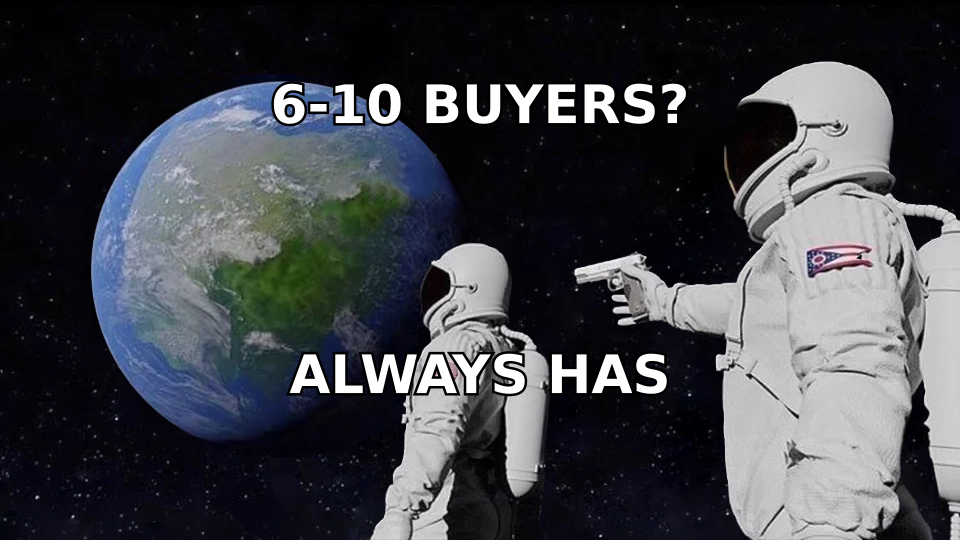
- In modern B2B deals, authority is split across a buying group. Gartner's research puts a typical complex purchase at six to ten stakeholders, so hunting for one signature is usually the wrong plan.
- The four roles you must separate are decision maker, economic buyer, champion, and gatekeeper. Confusing them is the single most common reason a "great" deal stalls at the finish line.
- Job title is a weak signal. Budget ownership, procurement thresholds, and who runs the vendor review are strong signals.
- Identification is only half the job. You still need a verified email or direct dial, which is where a email finder beats guessing patterns by hand.
What is the decision maker definition in B2B sales?#
A decision maker is the individual who holds the formal authority to approve a purchase, allocate the budget, and sign the contract on behalf of an organization.
That is the textbook version. In practice it needs two qualifiers:
Authority must be specific to the spend. A VP of Marketing may have unlimited authority on a $2,000/month tool and zero authority on a $200,000 platform that touches customer data. The same person is a decision maker for one deal and an influencer in another.
Authority must be current. Reorgs, procurement policy changes, and new spend-freeze thresholds move the line constantly. A contact who signed last year may need three approvals this year.
So the working decision maker definition for prospecting is: the person whose approval is required and sufficient for this specific purchase at this specific price point, right now. If someone above them can veto, they are not the decision maker. If someone below them can block, that person is a gatekeeper, not a decision maker.
Who is actually in a B2B buying committee?#
Almost no meaningful B2B purchase is made by one person anymore. Gartner's B2B buying research describes buying groups of roughly six to ten stakeholders, each arriving with their own information, their own vendor shortlist, and their own veto power.
Here are the six roles you will meet, and what each one actually wants:
- The economic buyer — Owns the P&L line the money comes out of. Cares about ROI, payback period, and what gets cut to fund this. Often a director, VP, or CFO depending on deal size.
- The decision maker — Signs or gives the final internal approval. Frequently the same person as the economic buyer in deals under six figures; frequently a different, more senior person above them once the deal crosses a procurement threshold.
- The champion — Wants the problem solved, sells your case internally when you are not in the room, and has credibility with the economic buyer. Rarely has signing authority. Absolutely essential.
- The end user — Lives in the tool daily. Can kill a deal in the evaluation stage by saying "the UI is unusable," and can rescue one by saying "this saves me four hours a week."
- The technical evaluator — Security, IT, or data. Runs the SOC 2 questionnaire, the SSO check, the DPA review. Cannot say yes. Can absolutely say no.
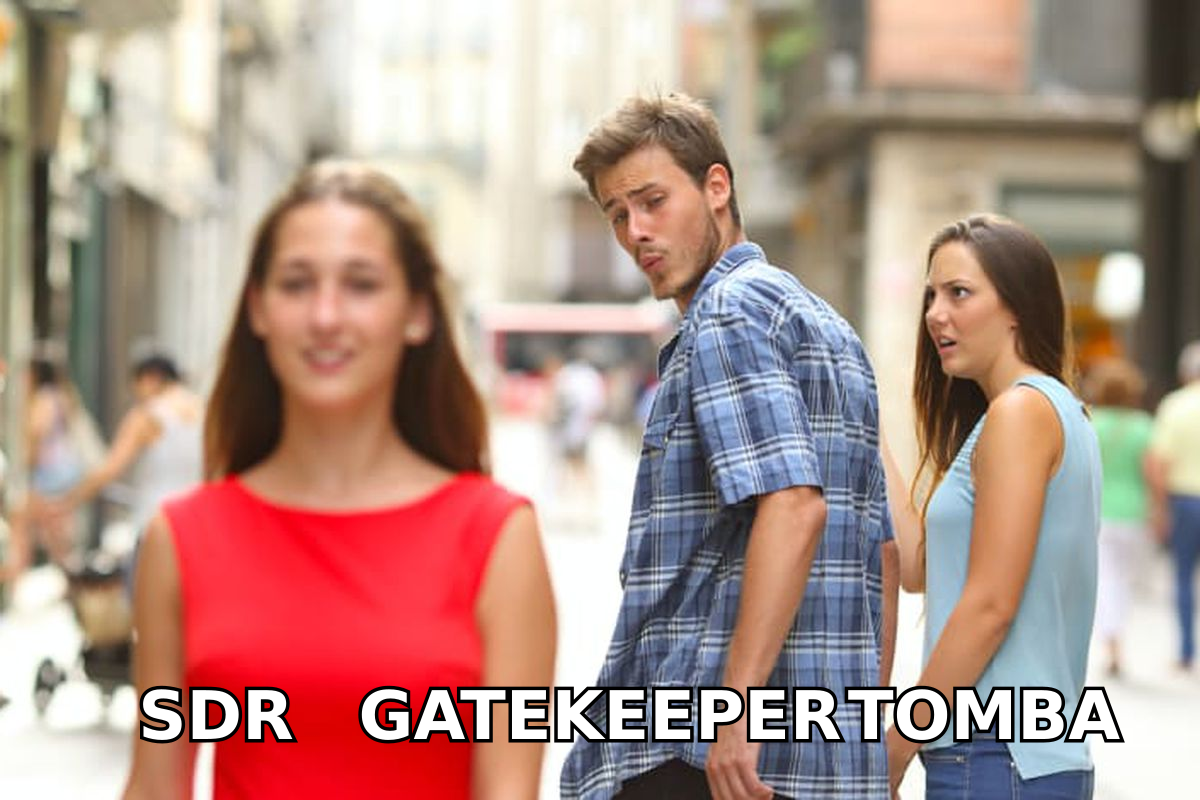
- The gatekeeper — Controls access to the people above. An executive assistant, a "please route all vendor inquiries here" inbox, or a procurement intake form.
Map all six before you build your outreach sequence. If you can only name one contact at an account, you do not have an account — you have a lead.
Decision maker vs influencer vs champion vs gatekeeper: what's the difference?#
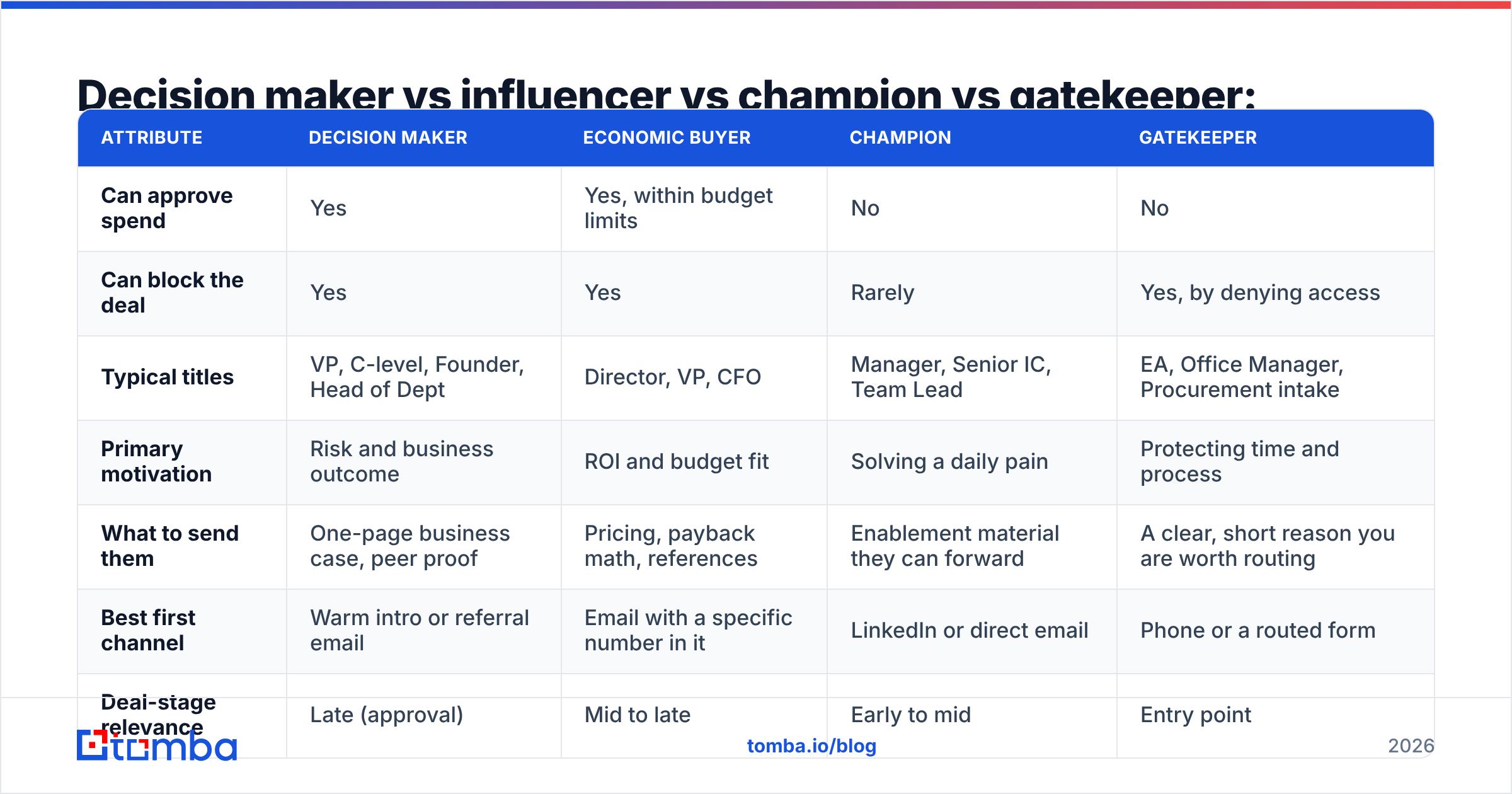
These four labels get used interchangeably in CRM notes, and that sloppiness costs deals. Here is the practical split:
| Attribute | Decision Maker | Economic Buyer | Champion | Gatekeeper |
|---|---|---|---|---|
| Can approve spend | Yes | Yes, within budget limits | No | No |
| Can block the deal | Yes | Yes | Rarely | Yes, by denying access |
| Typical titles | VP, C-level, Founder, Head of Dept | Director, VP, CFO | Manager, Senior IC, Team Lead | EA, Office Manager, Procurement intake |
| Primary motivation | Risk and business outcome | ROI and budget fit | Solving a daily pain | Protecting time and process |
| What to send them | One-page business case, peer proof | Pricing, payback math, references | Enablement material they can forward | A clear, short reason you are worth routing |
| Best first channel | Warm intro or referral email | Email with a specific number in it | LinkedIn or direct email | Phone or a routed form |
| Deal-stage relevance | Late (approval) | Mid to late | Early to mid | Entry point |
The pattern most teams miss: you sell through the champion, you sell to the economic buyer, and you get signed by the decision maker. Skipping the champion to "go straight to the top" produces a polite forward down the org chart and a cold restart three weeks later.
How do you identify the real decision maker at an account?#
Title is the laziest signal available and the one most reps rely on. Better signals, in rough order of reliability:
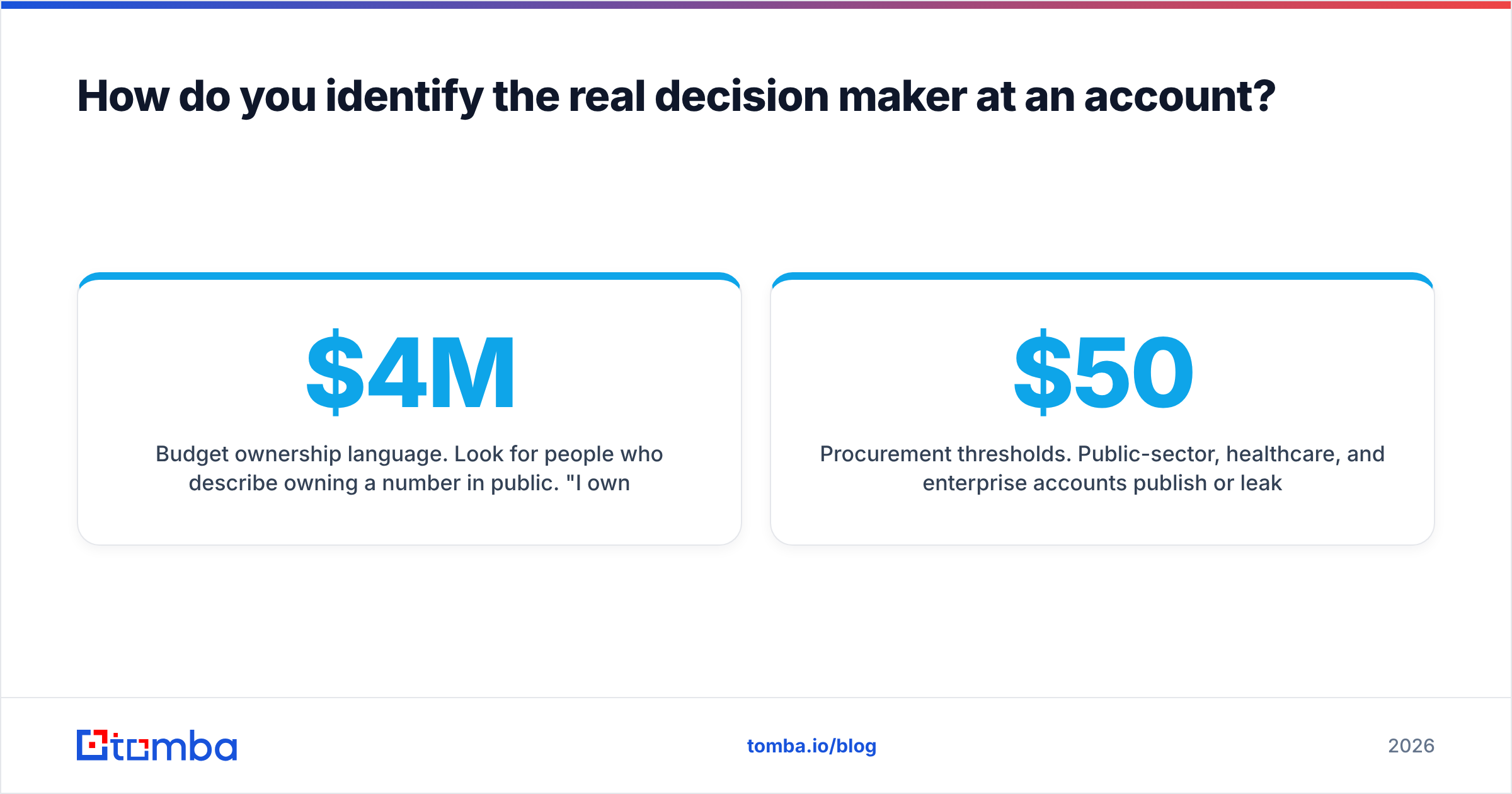
Budget ownership language. Look for people who describe owning a number in public. "I own our $4M paid acquisition budget" in a LinkedIn headline or a conference bio is a far stronger signal than "VP Marketing."
Who ran the last vendor evaluation. Case studies, G2 reviews, and podcast appearances leak this constantly. If a Director of RevOps is quoted in a competitor's case study, that person runs vendor selection for that category. Check G2 profiles for reviewer titles in your category — it is a free map of who evaluates tools like yours.
Procurement thresholds. Public-sector, healthcare, and enterprise accounts publish or leak their approval limits. If the threshold is $50,000 and your deal is $75,000, you know a second signature exists before you ever get on a call.
Org-chart proximity to the pain. Ask your champion, directly: "If we agreed this makes sense, what does the approval path look like from here?" That single question outperforms any amount of org-chart guessing. Sales methodology teams at HubSpot and Salesforce both frame this as qualifying the process, not just the person.
Tenure and hiring signals. A leader six weeks into a new role has a mandate and a budget. A leader who has just posted three roles on their team is building, and building means buying.
Once you have a name, you need a way to reach it. That is a data problem, not a strategy problem — and it is where most well-researched account plans quietly die.
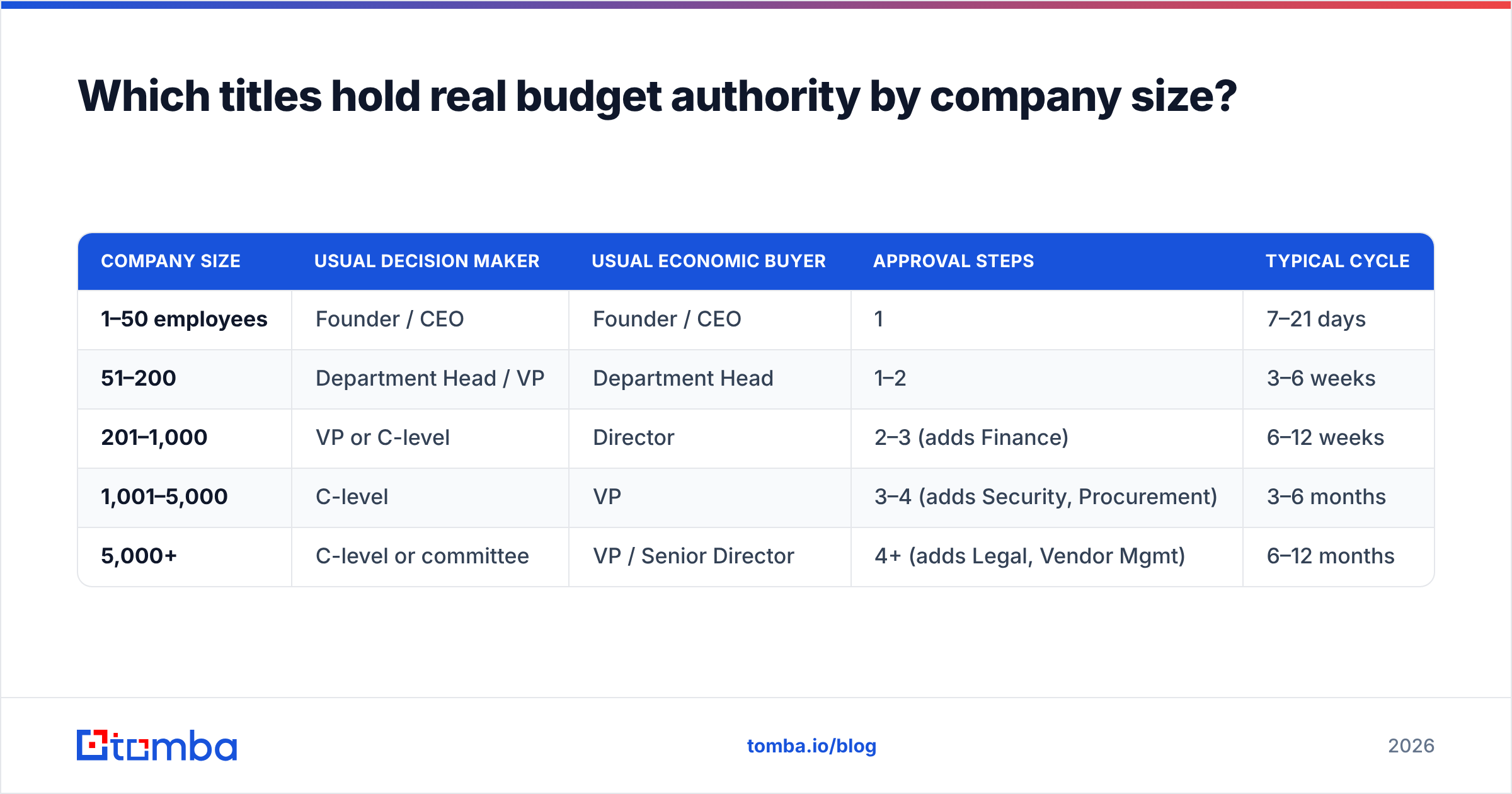
Which titles hold real budget authority by company size?#
Authority scales inversely with company size in a predictable way. The same title means something completely different at 20 employees and at 20,000.
| Company size | Usual decision maker | Usual economic buyer | Approval steps | Typical cycle |
|---|---|---|---|---|
| 1–50 employees | Founder / CEO | Founder / CEO | 1 | 7–21 days |
| 51–200 | Department Head / VP | Department Head | 1–2 | 3–6 weeks |
| 201–1,000 | VP or C-level | Director | 2–3 (adds Finance) | 6–12 weeks |
| 1,001–5,000 | C-level | VP | 3–4 (adds Security, Procurement) | 3–6 months |
| 5,000+ | C-level or committee | VP / Senior Director | 4+ (adds Legal, Vendor Mgmt) | 6–12 months |
Two practical takeaways. First, under 200 employees, going direct to the founder is efficient and expected — hesitating there wastes weeks. Second, above 1,000 employees, going direct to the C-level with a cold pitch has a worse conversion rate than starting one or two levels down with someone who feels the pain daily and can carry your case upward.
How do you actually reach a decision maker once you've found them?#
Identification without contactability is a research project, not pipeline. Three things have to line up.
A deliverable address. Guessed patterns like first.last@ fail on a meaningful share of domains, and every bounce chips at your sending reputation. Run names through a email verifier before they enter a sequence, and check whether the domain is catch-all with a catch-all verifier so you know which addresses carry real risk versus which are simply unverifiable by SMTP.
A second channel. Senior decision makers ignore email at a higher rate than anyone else in the buying group. A direct dial from a phone finder, a LinkedIn touch, and a well-timed email together outperform any one of them tripled in volume.
A message that matches the role. Send the champion an internal-ready one-pager. Send the economic buyer a number: payback period, cost of the status quo, what the last three comparable customers saw. Send the decision maker risk mitigation: security posture, references, contract flexibility. The same email to all three converts none of them.
What mistakes kill decision-maker outreach?#
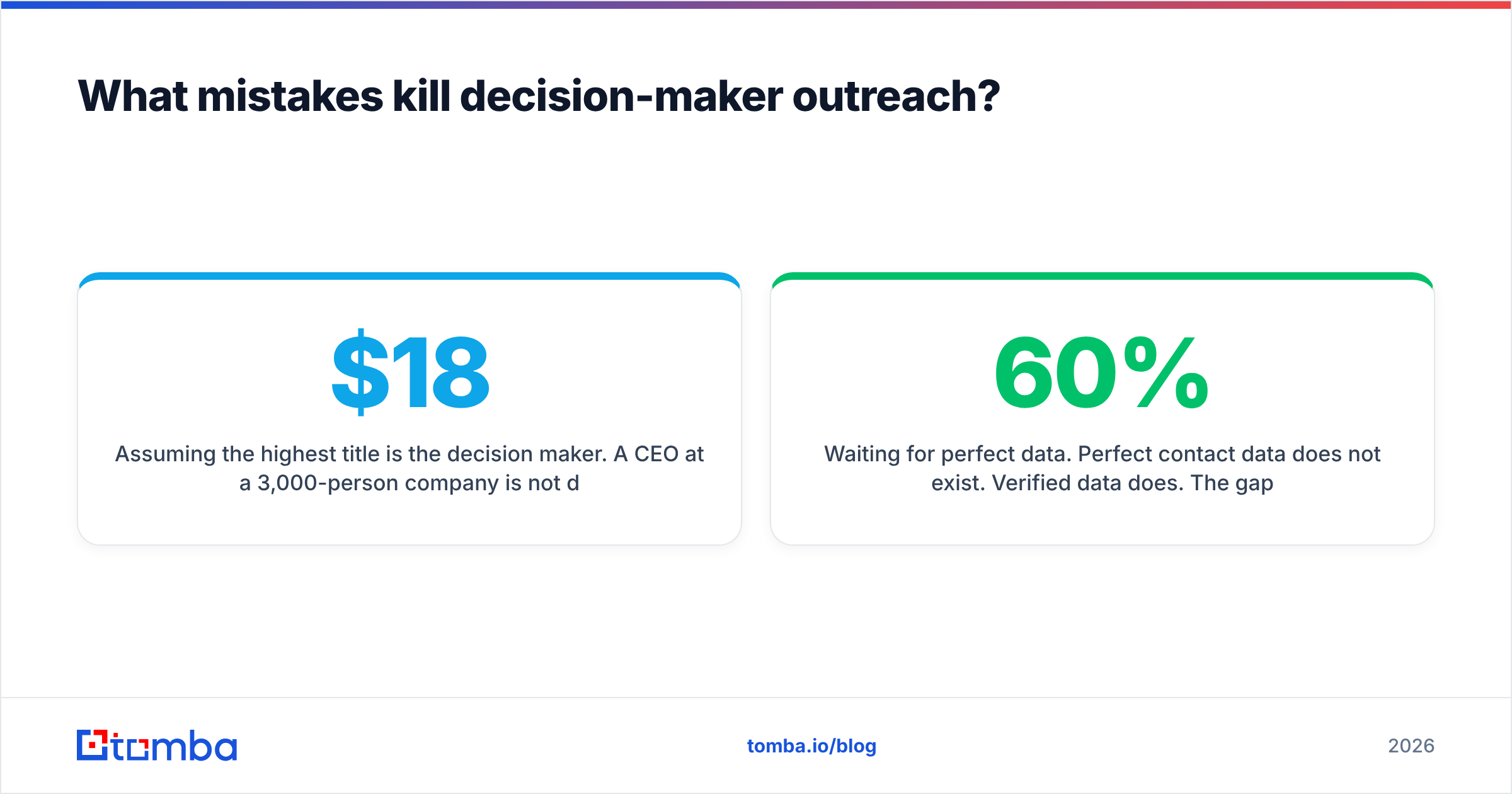
Assuming the highest title is the decision maker. A CEO at a 3,000-person company is not deciding on your $18,000 tool. Their VP is. Emailing the CEO signals you did no research.
Only mapping one contact per account. Single-threaded deals die when your contact changes jobs — and in most B2B categories, a meaningful share of your pipeline contacts will change roles within a year. Map three to five people per target account minimum, and enrich them together with data enrichment so titles and companies stay current in your CRM.
Treating the gatekeeper as an obstacle. An executive assistant who knows exactly what their exec cares about is the single best-informed person you will speak to at that account. Be direct, be short, be respectful of the routing process, and you get routed.
Confirming authority too late. "Who else needs to be involved in a decision like this?" belongs in the first call, not the fourth. Late discovery of a second approver is the most common cause of slipped close dates.
Waiting for perfect data. Perfect contact data does not exist. Verified data does. The gap between a 60% and a 95% deliverable list is not more research time — it is verification.
How should you build a decision-maker list from scratch?#
A repeatable workflow, in five steps:
- Define the ICP account, not the ICP person. Industry, size band, tech stack, hiring signals. Titles come after.
- Pull the org map. For each target domain, run a domain search to surface who works there and in what function, then filter to the departments that touch your problem.
- Assign roles. Tag each contact as decision maker, economic buyer, champion, user, technical evaluator, or gatekeeper. Guess if you must, then correct on the first call.
- Verify before you send. Every address, every time. Bounces above roughly 2% start degrading inbox placement for the whole domain.
- Sequence by role, not by list. Three role-specific sequences beat one generic sequence sent to everyone at the account, and they make multi-threading feel coordinated rather than spammy.
Run that loop weekly and your account map stops being a static spreadsheet and becomes a living picture of who can actually say yes.
Where does Tomba fit?#
Finding the right person is judgment. Reaching them is data — and that part should be automated.
Tomba Email Finder turns a name and a company domain into a verified professional email, with source attribution and a confidence score so you know what you are sending to before you send it. Pair it with domain search to map an entire buying committee in one pass, and verification to keep bounce rates low enough that your sender reputation survives the campaign.
Start on the free tier at 25 searches per month to test accuracy against accounts you already know. Paid plans begin at $49/month for Starter, $99/month for Growth, and $249/month for Pro — full details on Tomba pricing. Map the committee, verify the addresses, and stop pitching people who were never going to sign.
Related guides#
Ready to find emails that actually work?
Join 150,000+ professionals who stopped guessing and started sending. Free credits on signup — no credit card required.
Get the Tomba newsletter
Practical outbound tactics and product updates — once every two weeks.
About the author