Demand Generation Companies: How to Pick the Right Partner
Most demand generation companies sell the same deck with different logos. Here's how to tell the agencies that build pipeline from the ones that just book meetings you'll never close.
TL;DR
- Demand generation companies fall into four models — full-funnel agencies, content/SEO shops, paid-media specialists, and outbound-as-a-service providers. Most sell all four in one deck. Ask which one they actually staff.
- Expect $5,000–$25,000/month for a mid-market retainer, plus 3–6 months before the pipeline number means anything. Anyone promising qualified meetings in week two is selling appointment setting, not demand gen.
- The single biggest predictor of failure is bad contact data. A $15,000/month agency running on a 60%-accurate list burns most of its budget on bounces.
- Cost-per-lead is a vanity metric. Contract on pipeline created, opportunity-to-close rate, and cost per closed-won.
- For teams under ~$3M ARR, a lean in-house motion plus good data tooling usually beats a retainer. Above that, specialist agencies start earning their fee.
What are demand generation companies, actually?#
Demand generation companies are agencies or managed-service providers that create and capture buying interest for your product — everything from category-level awareness content down to the SDR who books the demo.
The everyday analogy: a lead generation vendor is a fishing guide who hands you a bucket of fish. A demand generation company teaches the lake to be hungry, then hands you a rod, a map, and a schedule. One produces a list. The other produces a market that already knows who you are when your rep emails them.
That distinction matters commercially. Lead gen is priced per lead or per meeting. Demand gen is priced as a retainer against pipeline. If a vendor's pricing page quotes a per-meeting rate, you are buying lead gen with a demand gen label on it — which is fine, as long as you know which one you bought.
The typical scope of a real demand generation engagement includes:
- Positioning and ICP work — who you sell to, what they call the problem, why they switch. Usually 2–4 weeks of interviews before anything ships.
- Content and category education — long-form, webinars, podcasts, LinkedIn thought leadership. The part that compounds and the part clients cancel first.
- Paid capture — search, LinkedIn, retargeting, review-site placements on G2 or Capterra. Catches demand you already created.
- Outbound motion — sequenced email and calls against a targeted account list. Only works if the data underneath it is clean.
- Measurement and attribution — self-reported attribution surveys, pipeline reporting inside your CRM, not a dashboard that lives on the agency's server.
- Enablement handoff — what your AEs say when the meeting lands. Skipped constantly, and it's why great top-of-funnel work dies at stage two.
If a proposal covers items 3 and 4 only, you're buying media buying and cold outreach. That can be exactly right. Just don't pay full-funnel prices for it.
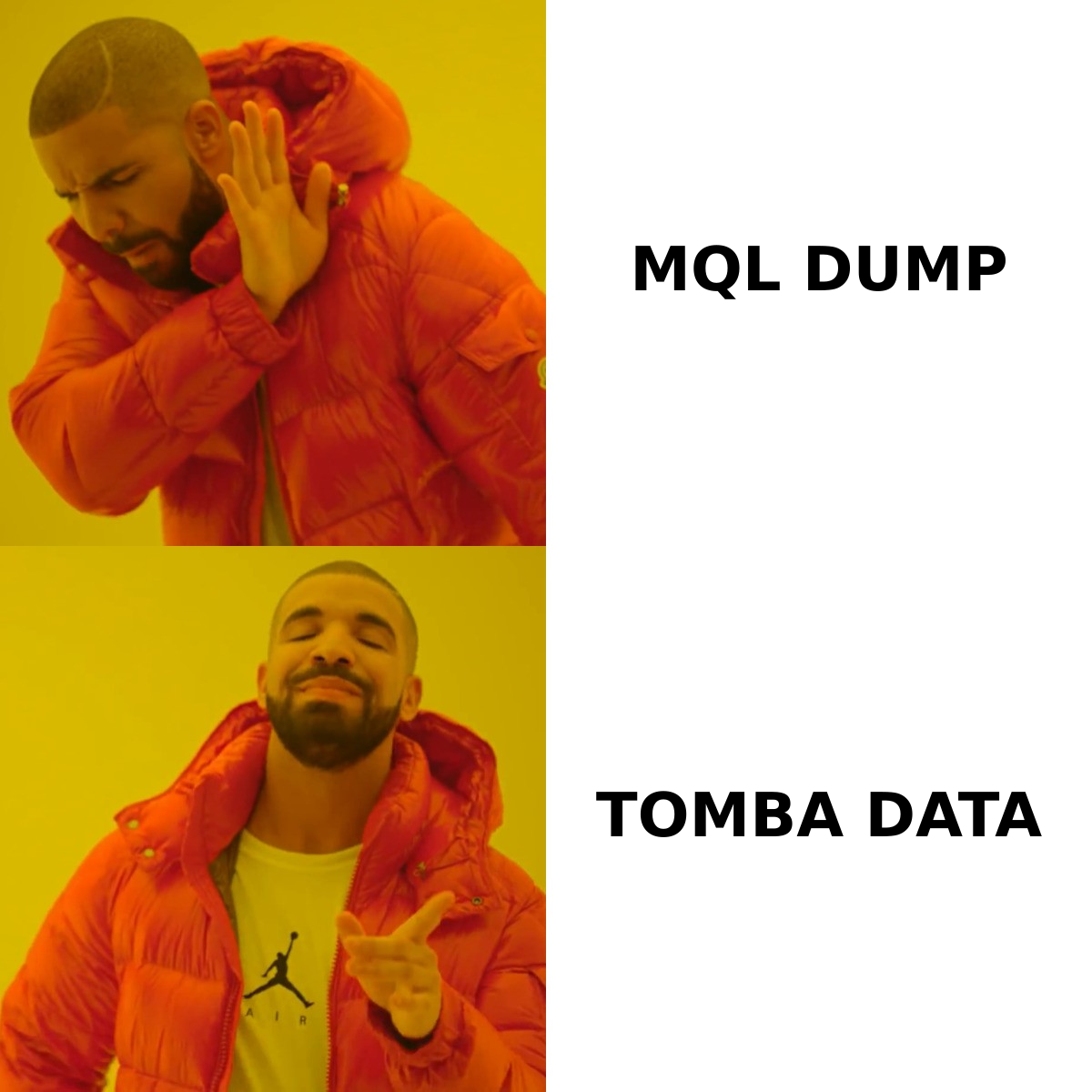
How do the four models of demand generation companies compare?#
| Model | Typical monthly cost | Time to first pipeline | Best for | Main risk |
|---|---|---|---|---|
| Full-funnel agency | $12,000–$40,000 | 4–6 months | $50k+ ACV, complex buying committees | Slow, expensive, junior staff on your account |
| Content and SEO shop | $6,000–$18,000 | 6–12 months | PLG and self-serve, long research cycles | Traffic that never converts to revenue |
| Paid media specialist | $4,000–$15,000 + ad spend | 3–8 weeks | Existing category demand, clear search intent | Costs scale linearly; stop paying, stop leads |
| Outbound-as-a-service | $5,000–$15,000 | 6–10 weeks | Defined ICP, ACV above $15k | Domain reputation damage from bad lists |
| In-house + tooling | $1,500–$6,000 (tools + part-time) | 8–12 weeks | Sub-$3M ARR, founder-led sales | Requires an owner who actually owns it |
The row most teams underweight is the last one. Before signing a $15,000/month retainer, price the alternative: one competent growth marketer, a B2B database subscription, a sequencing tool, and a verification layer. That stack runs a fraction of the retainer and keeps the institutional knowledge inside your company.
The row most teams overweight is content and SEO. It works — it's just the slowest line item on the list, and the one whose ROI is hardest to defend when the board asks about Q3.
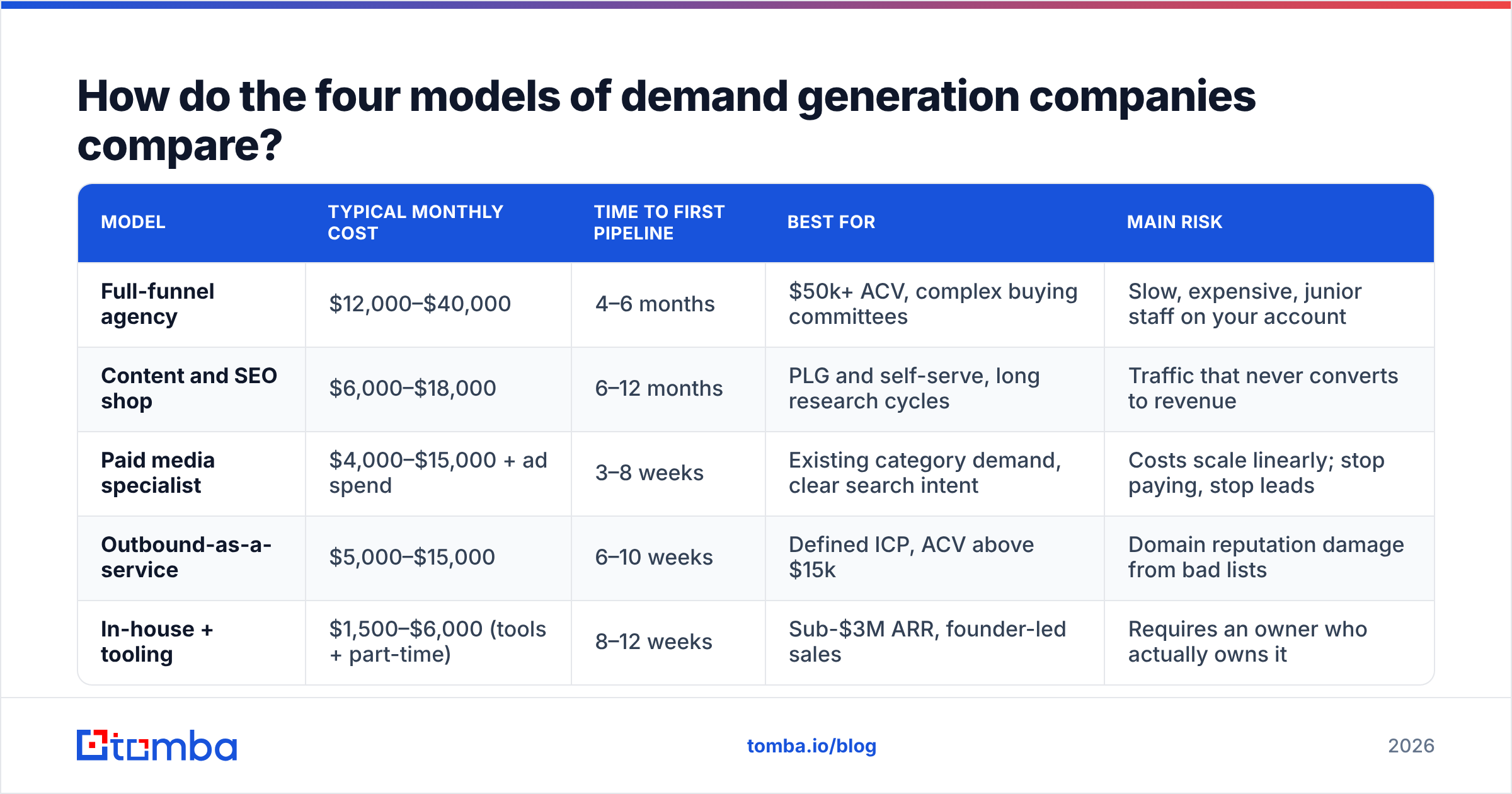
What should demand generation companies cost in 2026?#
Pricing has compressed at the low end and held firm at the top. Here's the realistic 2026 spread:
| Engagement tier | Monthly retainer | Contract length | What you actually get |
|---|---|---|---|
| Starter / project | $3,000–$6,000 | 3 months | One channel, one strategist part-time, no analyst |
| Mid-market retainer | $8,000–$18,000 | 6–12 months | 2–3 channels, dedicated strategist, monthly reporting |
| Enterprise program | $25,000–$60,000+ | 12 months | Full pod, ABM, custom attribution, exec sponsor |
| Performance / hybrid | $4,000 base + $150–$600 per SQL | 6 months | Base covers ops, variable ties to output |
| Pure pay-per-meeting | $0 base + $250–$900 per meeting | Monthly | Meetings — of highly variable quality |
Three pricing traps to watch for.
Ad spend excluded from the retainer. A $10,000 fee against $30,000 of media is a $40,000 commitment. Read the line item.
Data costs passed through. Some agencies quote a clean retainer and then bill you for the contact database, enrichment credits, and verification separately — often at markup. Ask up front whether data is included, and at what volume.
Auto-renewal with a 90-day out. Standard in the industry, and fine — as long as you know the clock starts when you notify, not when you get frustrated.
For comparison, running the data layer yourself is cheap and predictable. Tomba pricing starts free at 25 searches/month, with Starter at $49/mo, Growth at $99/mo, and Pro at $249/mo. That's the entire contact-data cost of a serious outbound program, and it's less than most agencies bill for a single reporting call.
Why do most demand generation engagements fail on data, not strategy?#
Because the strategy deck is usually fine, and the list underneath it usually isn't.
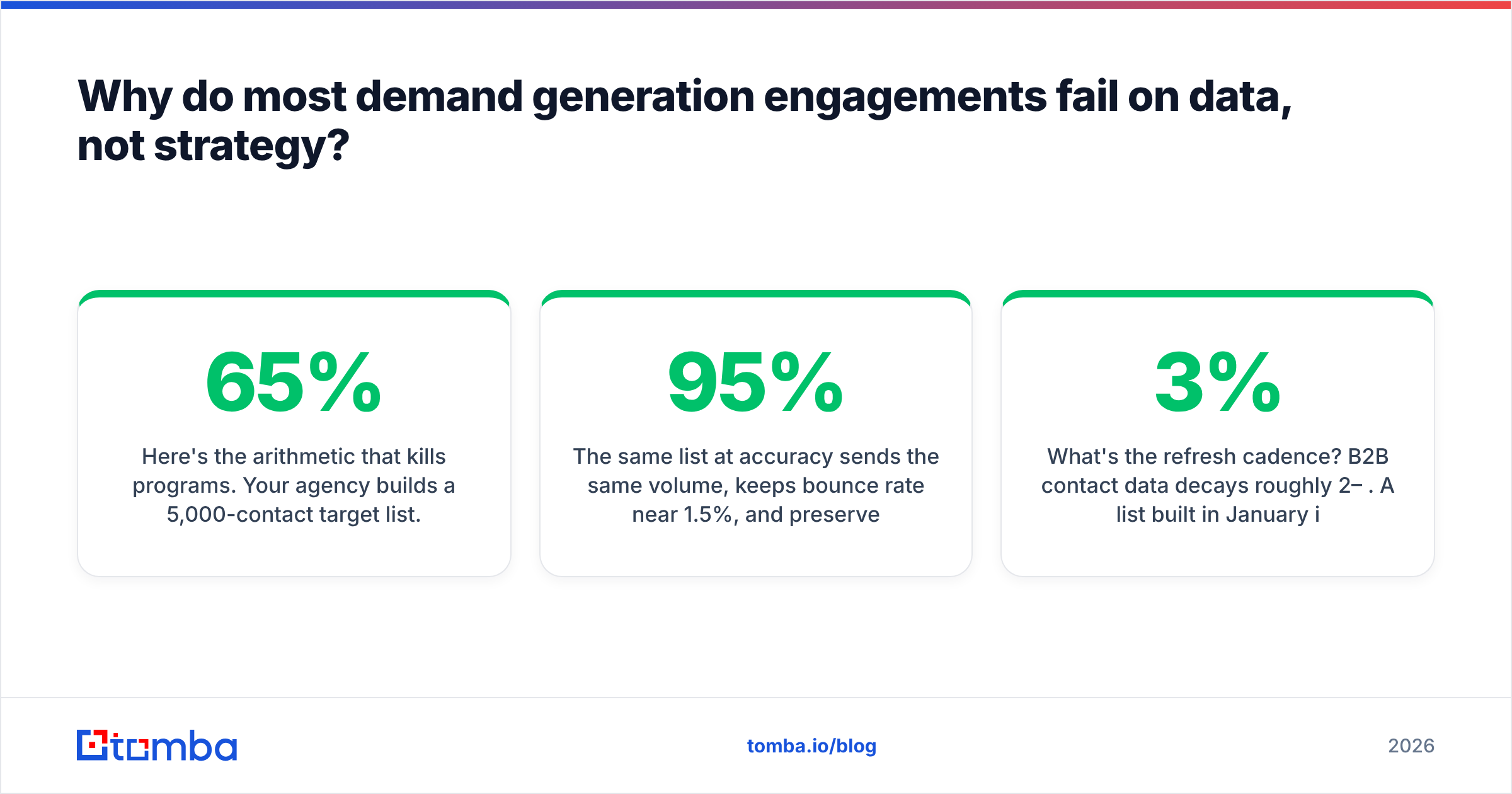
Here's the arithmetic that kills programs. Your agency builds a 5,000-contact target list. If accuracy is 65%, roughly 1,750 of those addresses bounce or land in a role that left 18 months ago. At a 4% bounce threshold, you don't just lose those contacts — you damage the sending domain for every campaign that follows. Two months in, the agency reports "deliverability headwinds," and everyone blames the copy.
The same list at 95% accuracy sends the same volume, keeps bounce rate near 1.5%, and preserves sender reputation for the next quarter. Nothing about the strategy changed. The inputs did.
So before you evaluate any demand generation company's creative work, evaluate their data supply chain:
- Where does the data come from? Scraped, licensed, contributed, or verified at query time? Ask them to name the sources. Vagueness here is the single loudest warning sign.
- What's the verification step? SMTP-level checks, catch-all handling, and role-account filtering should be standard. If they say "our provider handles it," ask which provider.
- How is catch-all traffic treated? Catch-all domains accept everything and reveal nothing. A serious operator runs a catch-all verifier rather than sending blind.
- What's the refresh cadence? B2B contact data decays roughly 2–3% per month. A list built in January is meaningfully wrong by June.
- Who owns the data at contract end? If the enriched records live only in the agency's tool, you're renting your own pipeline.
You can run these checks yourself in an afternoon. Pull 50 contacts from the agency's sample list, run them through an email verifier, and compare the pass rate to what they claimed. Most proposals don't survive that test.

Which demand generation companies fit which situation?#
There's no universal best vendor, so stop looking for one. Match the model to your revenue shape.
If your ACV is under $5,000: skip the agency. The math rarely works — a $10,000/month retainer needs to produce 24+ closed deals a year just to break even before your own costs. Build a self-serve funnel, invest in content, and use a lightweight email finder for founder-led outbound. Revisit at $3M ARR.
If your ACV is $5,000–$25,000 with a defined ICP: outbound-as-a-service or a hybrid retainer. You need volume against a known target list, and that's a data-and-sequencing problem more than a brand problem. Providers like BookYourData are strong here on the data side, and pairing a curated list with your own verification pass keeps quality honest without a full agency wrapper.
If your ACV is $25,000–$100,000 with a buying committee: full-funnel agency or an ABM specialist. At this deal size you're educating five stakeholders across nine months, and that genuinely requires content, paid, events, and outbound working together. This is where retainers earn their fee.
If you're enterprise with an existing brand: you likely need specialists, not generalists — one firm for ABM orchestration, one for paid, one for content ops. A single agency claiming all three usually subcontracts two of them.
If you're in a category nobody searches for yet: content and category creation, funded for at least 12 months, or don't start. Paid search can't capture demand for a term with 40 monthly searches.
A practical shortlist tactic: ask three agencies for the same deliverable — a 90-day plan against your actual ICP — and pay each a small scoping fee for it. The plans will differ enormously, and the differences tell you more than any case study. Vendors reviewed on Clutch and G2 are a reasonable starting universe, but reviews measure client-management experience far better than they measure pipeline impact.
What metrics should you hold a demand generation company to?#
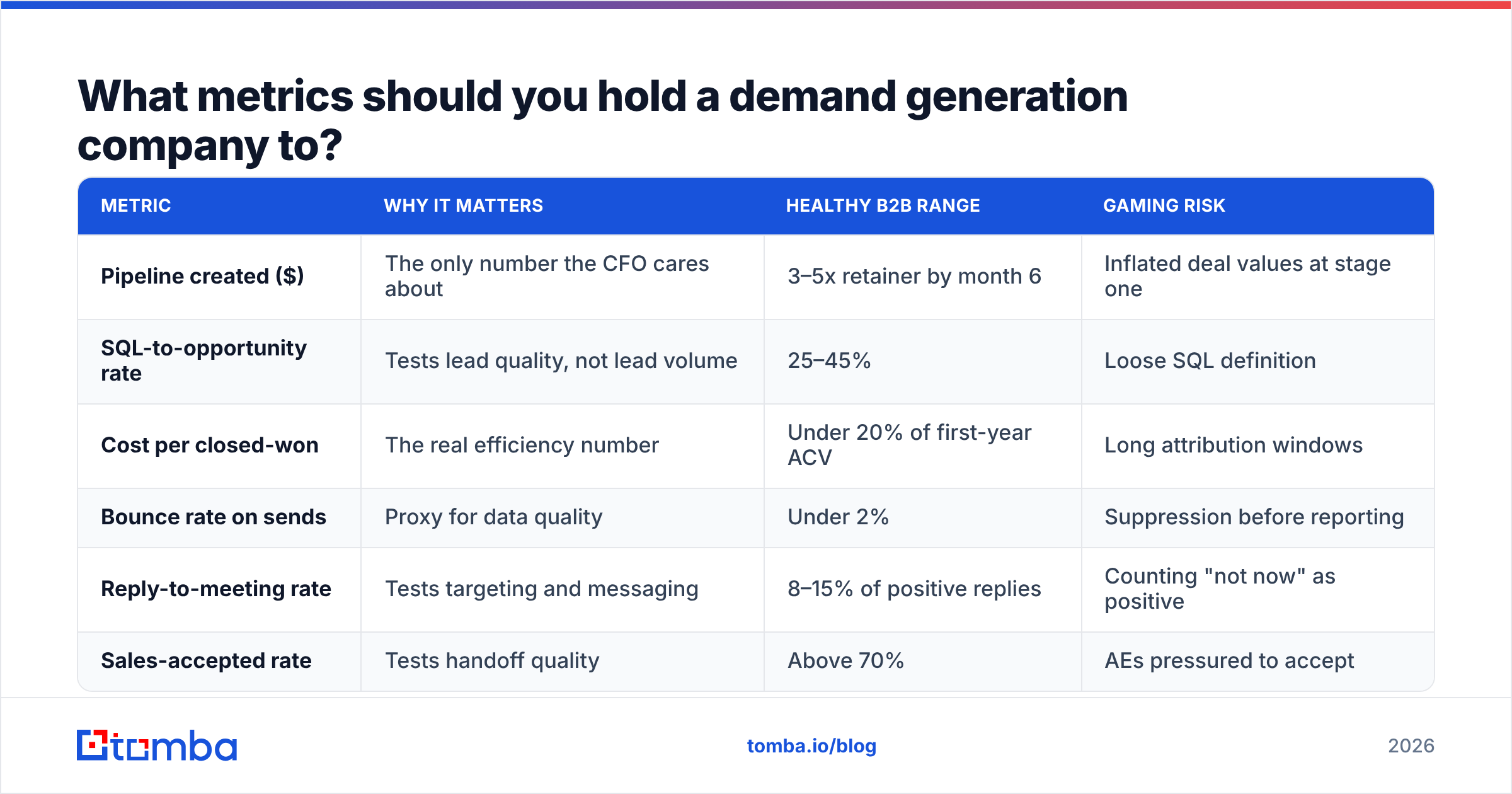
Contract on outcomes you can verify in your own CRM. Anything reported exclusively from the agency's dashboard is marketing, not measurement.
| Metric | Why it matters | Healthy B2B range | Gaming risk |
|---|---|---|---|
| Pipeline created ($) | The only number the CFO cares about | 3–5x retainer by month 6 | Inflated deal values at stage one |
| SQL-to-opportunity rate | Tests lead quality, not lead volume | 25–45% | Loose SQL definition |
| Cost per closed-won | The real efficiency number | Under 20% of first-year ACV | Long attribution windows |
| Bounce rate on sends | Proxy for data quality | Under 2% | Suppression before reporting |
| Reply-to-meeting rate | Tests targeting and messaging | 8–15% of positive replies | Counting "not now" as positive |
| Sales-accepted rate | Tests handoff quality | Above 70% | AEs pressured to accept |
Two contractual specifics worth insisting on.
Define SQL in writing before signing. Not "interested prospect." Write the criteria: title band, company size, stated timeline, budget authority. Half of all agency disputes trace back to a one-sentence SQL definition.
Require CRM-native reporting. The agency works inside your HubSpot or Salesforce instance. If they need to export to build a report, the numbers are reconstructed rather than observed. HubSpot's own attribution reporting documentation is a decent reference point for what "good" looks like structurally.
Also track one qualitative signal: how often the agency tells you something isn't working. Vendors who only report wins are managing your emotions, not your pipeline. The best ones kill their own campaigns in month two and say so out loud.
Should you build in-house instead of hiring an agency?#
Build in-house when your motion is repeatable and your ACV can't absorb a retainer. Hire out when the motion is unproven and you need pattern recognition faster than you can develop it.
The honest in-house cost, fully loaded for a small B2B team:
- One growth marketer or demand gen lead: $90,000–$140,000/year
- Contact data and enrichment: $600–$3,000/year — Tomba's Growth plan at $99/mo covers most sub-50-person teams, including data enrichment and bulk lookups
- Sequencing and sending infrastructure: $100–$500/month
- Paid media: whatever you choose to spend
- Content production (freelance): $2,000–$6,000/month
That's roughly $150,000–$220,000 annually for a real in-house function, versus $120,000–$480,000 for an agency retainer of comparable scope. The in-house version is slower to start and compounds; the agency version is faster to start and evaporates when the contract ends.
The hybrid most sub-$10M ARR companies land on: one in-house owner who holds strategy and CRM, plus specialist contractors for paid and content. Data and outbound infrastructure stay in-house permanently, because that's the asset you keep. Agencies rotate. Your verified contact database doesn't.
If you go hybrid, wire the data layer directly into your stack rather than letting it live in a vendor's account. The Tomba API and native HubSpot integration mean enriched records land in your CRM as they're found, so the asset accrues to you regardless of who's running campaigns this quarter.
How do you run the vendor evaluation without wasting a quarter?#
Compress it into four weeks.
Week 1 — Define the brief. ICP, ACV, current pipeline, what's already been tried, and the single metric you'll judge success on. One page. Send the same page to every vendor so the responses are comparable.
Week 2 — Scoped plans. Ask for a 90-day plan, the named humans who'll do the work, and their data sourcing methodology in writing. Reject anyone who sends a generic capabilities deck instead.
Week 3 — Reference and data checks. Talk to two clients who churned, not just two who renewed. Ask churned clients what the agency did in month four when results lagged. Separately, run the sample contact list through your own verification.
Week 4 — Negotiate the exit. Before you sign the start, agree the end: notice period, data ownership, CRM access revocation, and what happens to in-flight campaigns. Contracts are easy to sign and expensive to leave.
One last filter. Ask each vendor: "What kind of client are you bad for?" Anyone who says "we work with everyone" either hasn't thought about it or is willing to take a fee they can't earn. The good ones answer immediately and specifically — and sometimes that answer is you.
Where to start before you sign anything#
Whatever model you choose, the contact data underneath it decides the ceiling. Run a control test first: pick 100 accounts in your ICP, find and verify the decision-maker addresses yourself, and send a small campaign. If those 100 contacts produce replies, you have a targeting problem an agency can help with. If they bounce, you have a data problem no retainer will fix.
Start with the Tomba Email Finder. The free tier gives you 25 searches a month to run that control test at zero cost, Starter at $49/mo covers a working outbound list, and every result runs through verification before it reaches your sequencer. Prove the data works, then decide who you're paying to scale it.
Related guides#
Ready to find emails that actually work?
Join 150,000+ professionals who stopped guessing and started sending. Free credits on signup — no credit card required.
Get the Tomba newsletter
Practical outbound tactics and product updates — once every two weeks.
About the author