Differences Between B2B and B2C Sales: The 2026 Guide
B2B and B2C sales look similar on the surface but run on completely different engines. Here is how the deal cycles, buying committees, data, and tactics actually diverge in 2026.
Selling a $60,000 annual contract to a procurement committee and selling a $60 pair of headphones to a shopper on their phone are both "sales." That is where the similarity ends. If you run the same playbook for both, one of them quietly bleeds money.
This guide breaks down the real differences between B2B and B2C sales — not the textbook definitions, but the operational gaps that change how you prospect, price, pitch, and measure.
TL;DR — B2B vs B2C sales at a glance#
- B2B sells to organizations; B2C sells to individuals. That single shift changes the buyer count, the sales cycle, the price point, and the emotional logic behind every decision.
- B2B deals involve a buying committee (6–10 people on average) and take weeks to months. B2C is usually one person deciding in minutes to days.
- B2B runs on relationships, ROI, and accurate contact data. B2C runs on brand, emotion, volume, and impulse.
- The data problem is different. B2B lead gen depends on finding and verifying named decision-makers; B2C depends on reach, retargeting, and audience segments.
- Your tooling should match the motion. Email finders, enrichment, and CRM pipelines power B2B; ad platforms, e-commerce funnels, and loyalty tools power B2C.
What is the core difference between B2B and B2C sales?#
The core difference is the buyer. B2B (business-to-business) sales target companies and the professionals who buy on their behalf. B2C (business-to-consumer) sales target individual people buying for themselves.
Think of it like cooking. B2C is a food truck: you serve one hungry customer, they decide fast, they pay, they leave happy. B2B is catering a corporate wedding: you negotiate with a planner, a finance lead, and the couple, you send proposals, you get approvals, and the "meal" is delivered months after the first conversation.
That difference in who buys cascades into everything else — how many people are involved, how long it takes, how much rational justification the buyer needs, and what "good data" even means. According to HubSpot's research on sales trends, B2B buyers now complete most of their research before they ever talk to a rep, which puts even more weight on reaching the right person at the right account.
How do the buying processes differ?#
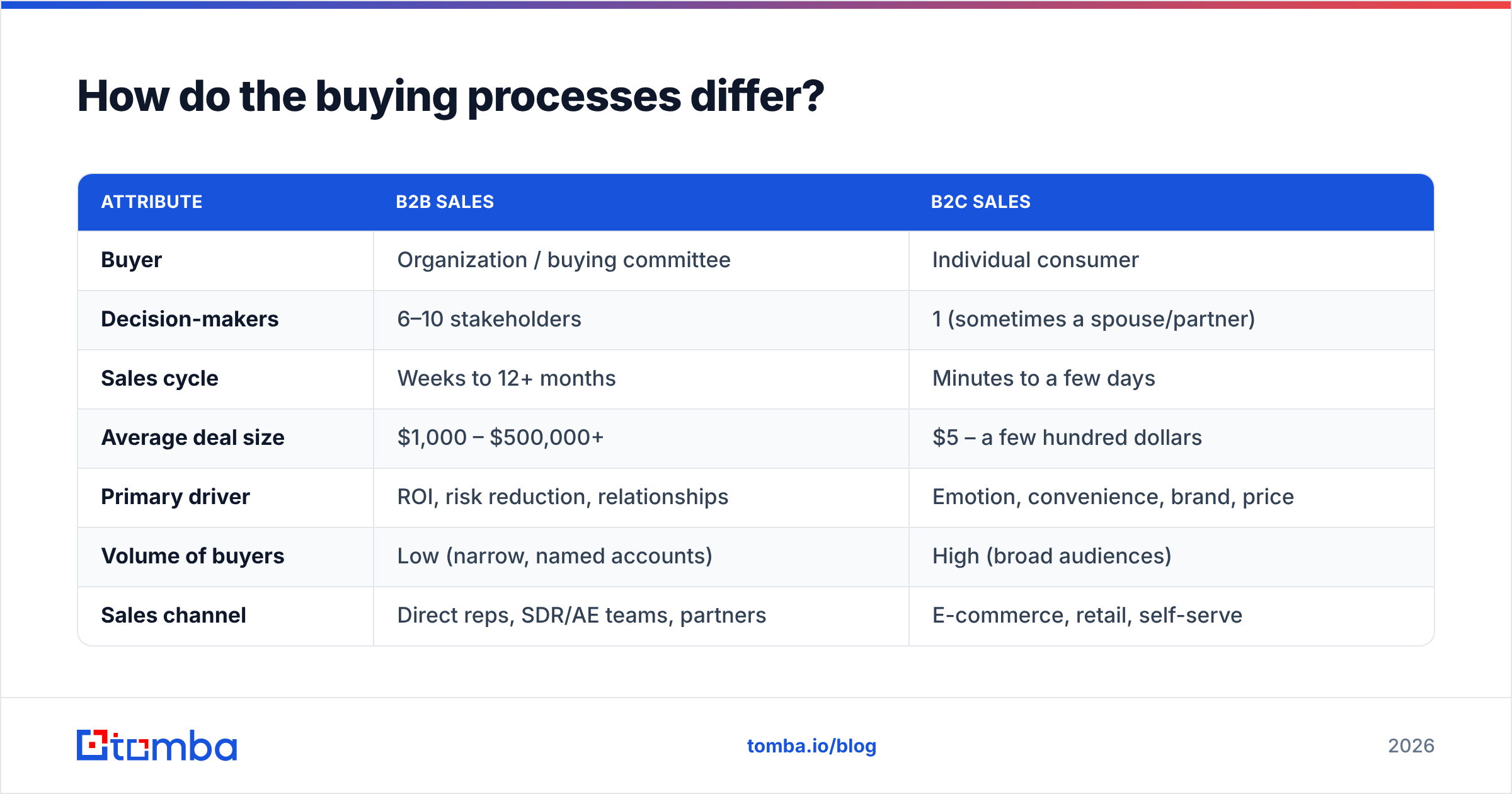
The buying process is where B2B and B2C split most dramatically. B2C is often a single decision by a single person. B2B is a group project with a budget owner, an end user, a technical evaluator, and frequently a procurement or legal gate.
Gartner research puts the typical B2B buying group at six to ten stakeholders, each arriving with their own priorities and their own stack of information. Every extra stakeholder adds another objection to handle and another inbox you need to reach.
Here is how the two motions compare across the attributes that actually affect your quota:
| Attribute | B2B Sales | B2C Sales |
|---|---|---|
| Buyer | Organization / buying committee | Individual consumer |
| Decision-makers | 6–10 stakeholders | 1 (sometimes a spouse/partner) |
| Sales cycle | Weeks to 12+ months | Minutes to a few days |
| Average deal size | $1,000 – $500,000+ | $5 – a few hundred dollars |
| Primary driver | ROI, risk reduction, relationships | Emotion, convenience, brand, price |
| Volume of buyers | Low (narrow, named accounts) | High (broad audiences) |
| Sales channel | Direct reps, SDR/AE teams, partners | E-commerce, retail, self-serve |
| Contact data need | Named decision-maker emails & phones | Aggregate audiences, retargeting pools |
| Post-sale motion | Onboarding, account management, renewal | Support, loyalty, repeat purchase |
Notice the last two rows. In B2B, you cannot run a campaign until you know exactly who the CFO or Head of Ops is and how to reach them. In B2C, you rarely need one person's name — you need a well-defined audience segment and a channel to reach it at scale.
Why does deal size and sales cycle change the playbook?#
Because high-value, slow deals reward precision, and low-value, fast deals reward volume. These are opposite optimization problems.
When a B2B deal is worth $50,000 and takes four months, it is entirely rational to spend an hour researching one account, finding the three right contacts, personalizing outreach, and following up seven times. The math works: one closed deal pays for hundreds of hours of effort.
When a B2C product costs $40 and converts in minutes, you cannot afford to hand-research anyone. You win by reaching thousands of the right people cheaply through ads, SEO, email lists, and retargeting, then optimizing conversion rate at the margin.
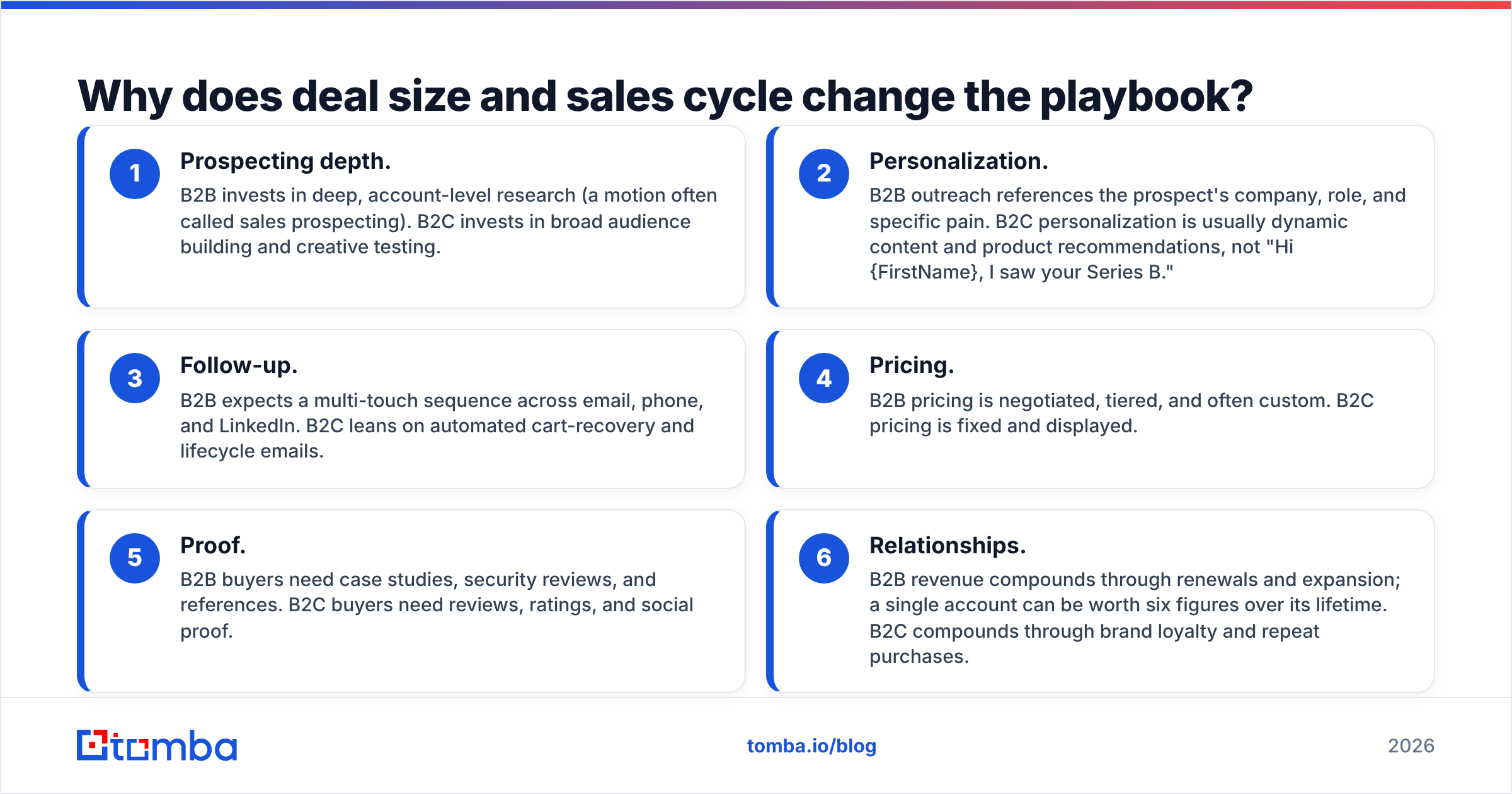
This is why the two disciplines drift apart in practice:
- Prospecting depth. B2B invests in deep, account-level research (a motion often called sales prospecting). B2C invests in broad audience building and creative testing.
- Personalization. B2B outreach references the prospect's company, role, and specific pain. B2C personalization is usually dynamic content and product recommendations, not "Hi {FirstName}, I saw your Series B."
- Follow-up. B2B expects a multi-touch sequence across email, phone, and LinkedIn. B2C leans on automated cart-recovery and lifecycle emails.
- Pricing. B2B pricing is negotiated, tiered, and often custom. B2C pricing is fixed and displayed.
- Proof. B2B buyers need case studies, security reviews, and references. B2C buyers need reviews, ratings, and social proof.
- Relationships. B2B revenue compounds through renewals and expansion; a single account can be worth six figures over its lifetime. B2C compounds through brand loyalty and repeat purchases.
How does emotion versus logic play out in each?#
B2C sales lead with emotion and justify with logic; B2B sales lead with logic and are unblocked by emotion. Both use both — the order and weight differ.
A consumer buys running shoes because they want to feel fast, then rationalizes the price with "they'll last longer." A B2B buyer starts with a business case — "this cuts onboarding time 30%" — but the deal still stalls or moves based on trust, internal politics, and whether the champion personally believes in you.
The practical takeaway: in B2B, your job is to arm an internal champion with the rational ammunition they need to sell up and across their own organization. In B2C, your job is to trigger desire and remove friction from the checkout. As Salesforce's State of Sales reporting has consistently shown, trust is the deciding factor in complex B2B deals far more often than price alone.
Do B2B and B2C need different sales data and tools?#
Yes — and this is the difference most teams underestimate. The single biggest operational gap between B2B and B2C is the kind of data that fuels each engine.
B2B lives or dies on accurate, named contact data. You need the decision-maker's real work email, their direct phone number, their role, and enough firmographic context to personalize. A bounced email or a wrong contact doesn't just waste a send — it burns your sender reputation and can sink an entire domain's deliverability. That is why B2B teams invest in an email finder and an email verifier before they ever hit send.
B2C, by contrast, rarely traffics in individual named contacts sourced one at a time. It runs on opt-in lists, ad-platform audiences, lookalike modeling, and first-party behavioral data collected through the site itself.
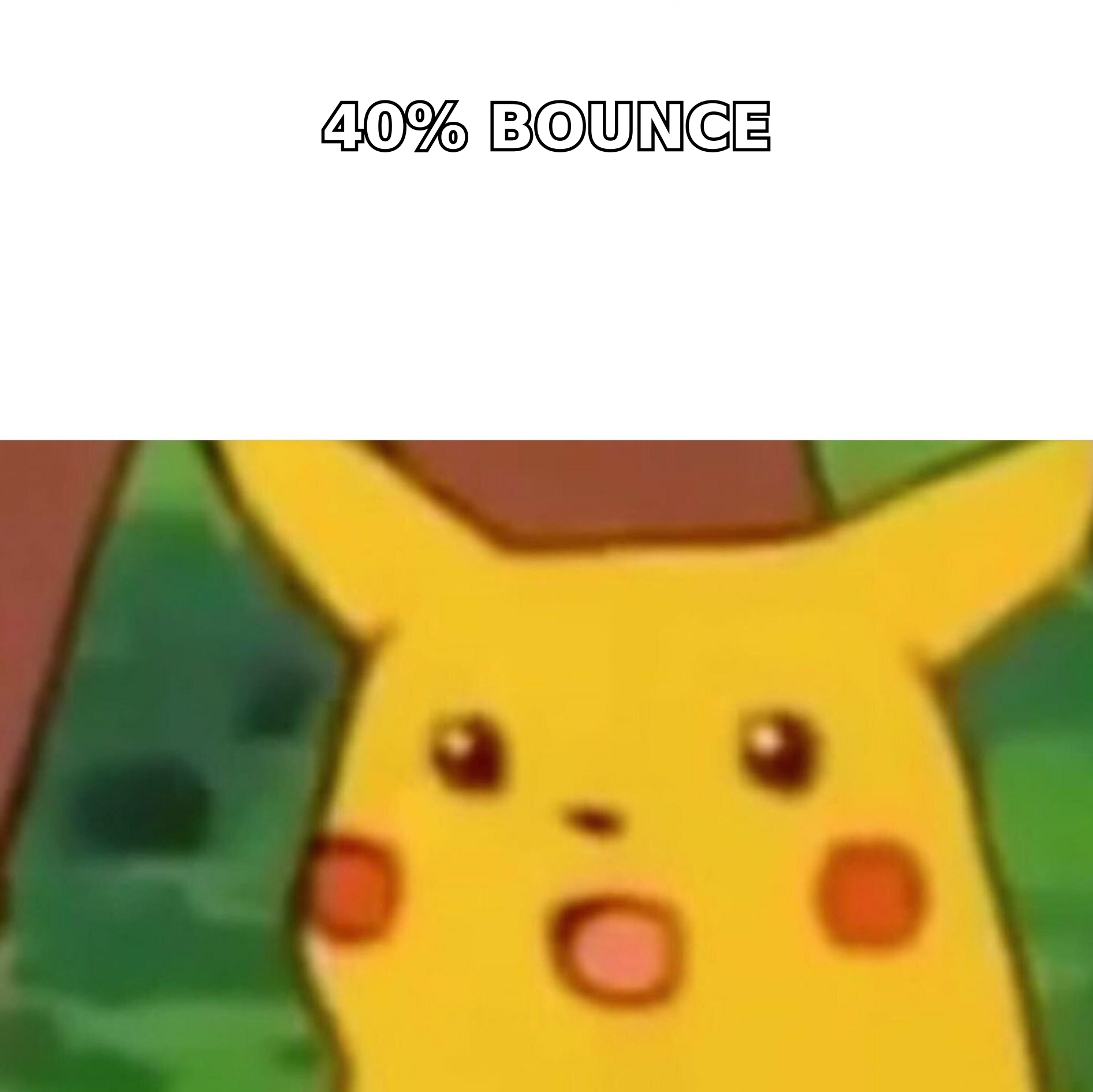
That surprised face is what happens when a B2B team treats contact data like a B2C audience — scraping a list, skipping verification, and blasting it. The 40% bounce rate that follows is entirely foreseeable.
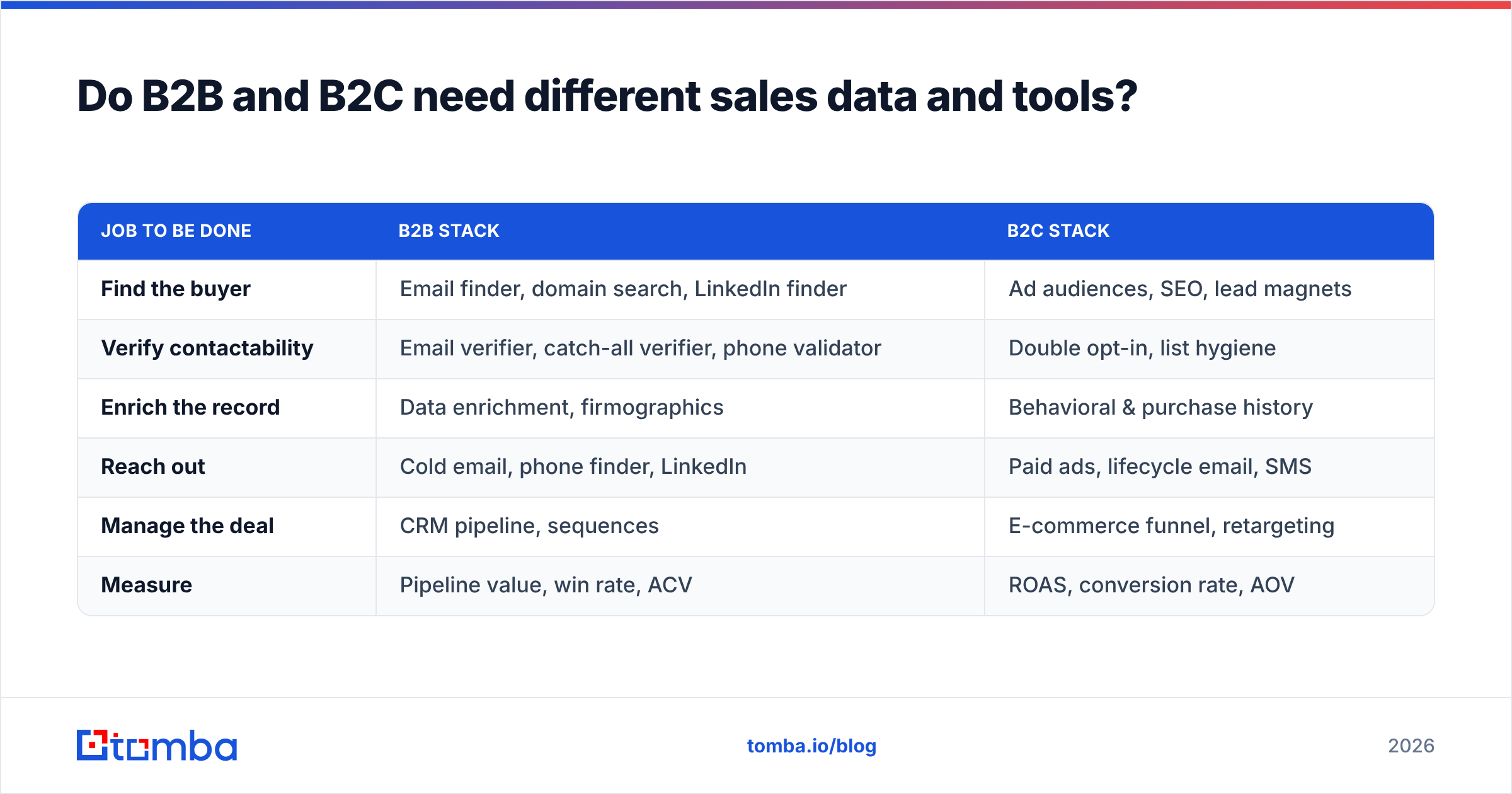
Here is how the tooling stacks compare:
| Job to be done | B2B stack | B2C stack |
|---|---|---|
| Find the buyer | Email finder, domain search, LinkedIn finder | Ad audiences, SEO, lead magnets |
| Verify contactability | Email verifier, catch-all verifier, phone validator | Double opt-in, list hygiene |
| Enrich the record | Data enrichment, firmographics | Behavioral & purchase history |
| Reach out | Cold email, phone finder, LinkedIn | Paid ads, lifecycle email, SMS |
| Manage the deal | CRM pipeline, sequences | E-commerce funnel, retargeting |
| Measure | Pipeline value, win rate, ACV | ROAS, conversion rate, AOV |
The pattern is clear: B2B tooling is about precision at the contact level, and B2C tooling is about efficiency at the audience level. When you pick tools, match them to the motion — not to whatever your competitor uses.
Which metrics matter for B2B vs B2C?#
B2B measures pipeline and lifetime value; B2C measures conversion and volume. Chasing the wrong metric is how teams optimize themselves into a hole.
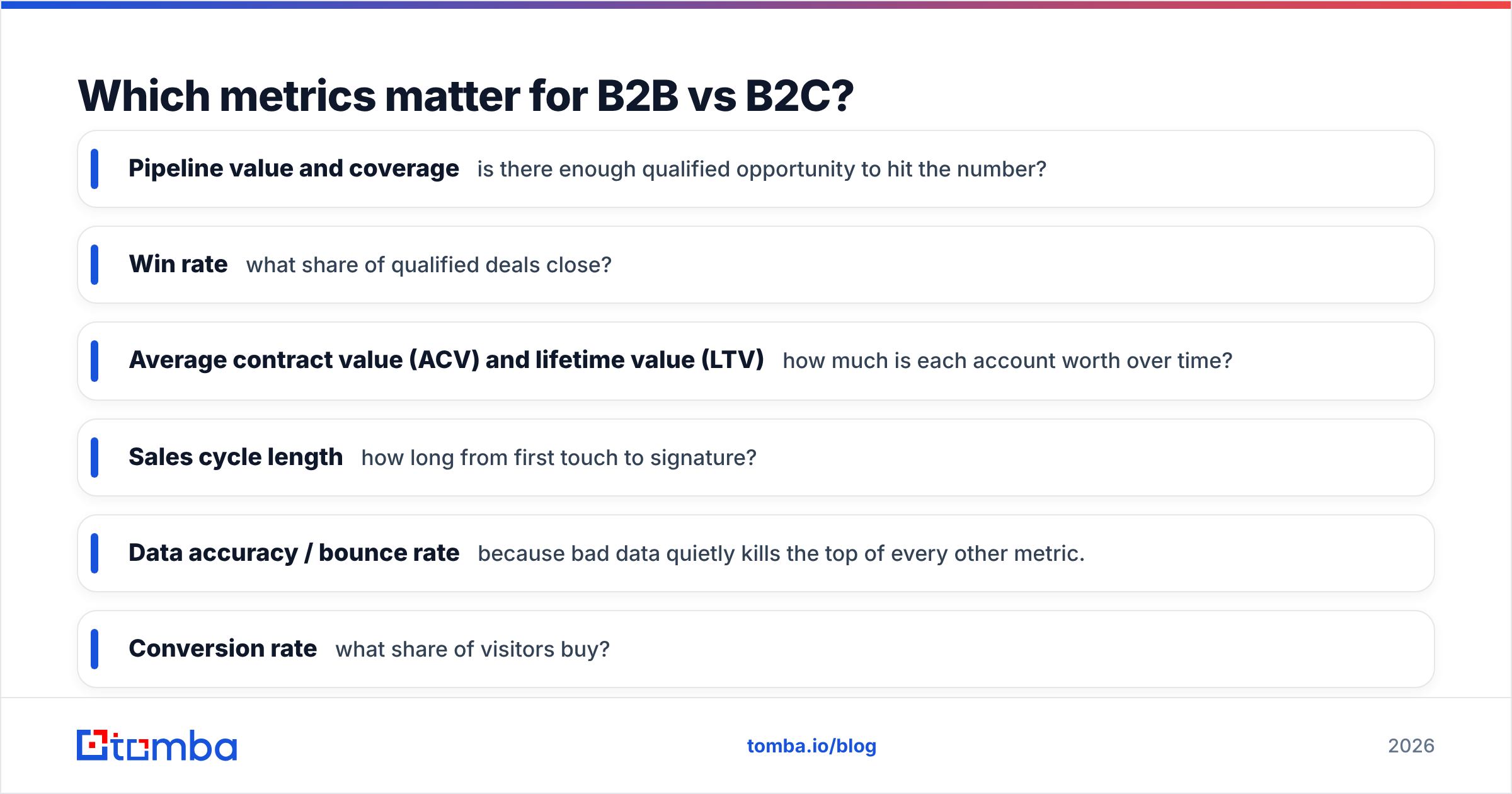
B2B core metrics:
- Pipeline value and coverage — is there enough qualified opportunity to hit the number?
- Win rate — what share of qualified deals close?
- Average contract value (ACV) and lifetime value (LTV) — how much is each account worth over time?
- Sales cycle length — how long from first touch to signature?
- Data accuracy / bounce rate — because bad data quietly kills the top of every other metric.
B2C core metrics:
- Conversion rate — what share of visitors buy?
- Average order value (AOV) — how much per transaction?
- Return on ad spend (ROAS) — is acquisition profitable?
- Repeat purchase rate and churn — does the customer come back?
A B2B rep with a 20% win rate on twelve big deals is a star. A B2C funnel with a 2% conversion rate across a million visitors can be a runaway success. The numbers aren't comparable because the motions aren't comparable.
Can the same team run both motions?#
Rarely well. The skills, incentives, and tempo are different enough that most companies split them. A B2B account executive is comped on a handful of large, slow deals and rewarded for patience and relationship depth. A B2C growth marketer is measured on volume, creative velocity, and conversion rate — a completely different rhythm.
Hybrid models do exist. Product-led SaaS often runs a self-serve B2C-style funnel for individuals and a B2B sales-assist motion for enterprise accounts on the same product. But even there, the two motions are staffed and measured separately, because forcing one team to do both usually means one motion gets starved.
If you are building a B2B function, the fastest lever is almost always data quality. You can have the best reps and the tightest messaging, but if half your contacts bounce or go to the wrong person, the whole machine stalls. Start by getting reachable, verified contacts into your pipeline — everything downstream improves when the top of the funnel is clean.
The bottom line#
B2B and B2C sales share a name and almost nothing else. B2B is a precision game: few buyers, big deals, long cycles, committee decisions, and an absolute dependency on accurate contact data. B2C is a volume game: many buyers, small deals, fast decisions, and an absolute dependency on reach and conversion. Pick your playbook — and your tools — to match the game you're actually playing.
If your motion is B2B, your first bottleneck is finding and verifying the right decision-makers before you spend a rep's time on them. Tomba's Email Finder turns a company domain or a name into verified, work-email contacts, so your pipeline starts with people who actually exist and actually open your mail. Pair it with the built-in email verifier to keep bounce rates low, and check the Tomba pricing — from a free tier of 25 searches to Growth at $99/mo — to find the plan that fits your team. Precise data is the difference between a B2B pipeline that compounds and one that quietly leaks.
Related guides#
Ready to find emails that actually work?
Join 150,000+ professionals who stopped guessing and started sending. Free credits on signup — no credit card required.
Get the Tomba newsletter
Practical outbound tactics and product updates — once every two weeks.
About the author