Diggernaut Pricing Reviews Pros and Cons: 2026 Buyer's Guide
A no-hype breakdown of Diggernaut pricing, reviews, pros and cons for 2026 — what the plans really cost, where the tool shines, where it frustrates, and when a ready-made B2B data stack beats scraping your own.
This is a plain-English guide to Diggernaut pricing reviews pros and cons for 2026. Diggernaut is a cloud web-scraping platform. It turns websites into structured data using a config language it calls "diggers." Maybe you are weighing it for a lead-gen, pricing, or data-enrichment project. The real question is not "can it scrape?" It can. The real question is whether the price, the learning curve, and the upkeep are worth it. Often it is cheaper to buy data that is already clean.
This is a neutral teardown of Diggernaut pricing reviews pros and cons. It is written for people who have to justify the line item.
TL;DR — Is Diggernaut worth it in 2026?#
- Diggernaut is a developer-leaning cloud scraper. You write "diggers" (config scripts), run them in the cloud, and pull structured JSON/CSV/XML out. Powerful, but not point-and-click.
- Pricing is page-credit based. There is a free tier for testing and paid plans that scale by pages crawled per month — costs climb fast on JavaScript-heavy or large sites.
- Best fit: engineers or data teams who need custom extraction from sites with no API and are comfortable maintaining scrapers.
- Worst fit: sales and marketing teams who just want verified contact data. For that, a ready-made source is cheaper and lower-maintenance than building and babysitting scrapers.
- The honest verdict: great tool for bespoke scraping projects; overkill (and legally riskier) if all you actually need is B2B email and company data.
What is Diggernaut and who is it for?#
Think of Diggernaut like renting a robotic arm instead of buying pre-cut parts. The arm can build almost anything, but you have to program every movement, and if the factory floor changes, the arm keeps grabbing air until you reprogram it. That is web scraping in a nutshell: enormous flexibility, ongoing upkeep.
Diggernaut runs your scraping logic on its own cloud infrastructure, so you are not managing proxies and servers yourself. You define extraction rules in its meta-language, schedule runs, and export the results. It supports pagination, form submission, and some JavaScript rendering.
The typical Diggernaut user is one of three profiles:
- A developer automating data collection from sites without an API.
- A data/analytics team building price-monitoring or market-research feeds.
- A growth hacker scraping directories or listings for leads — the group most likely to be over-served by a scraper when a purpose-built email finder would do the job faster.
If you fall into that third bucket, keep reading — the pros/cons section is where the trade-off gets sharp.
How much does Diggernaut cost? (Pricing breakdown)#
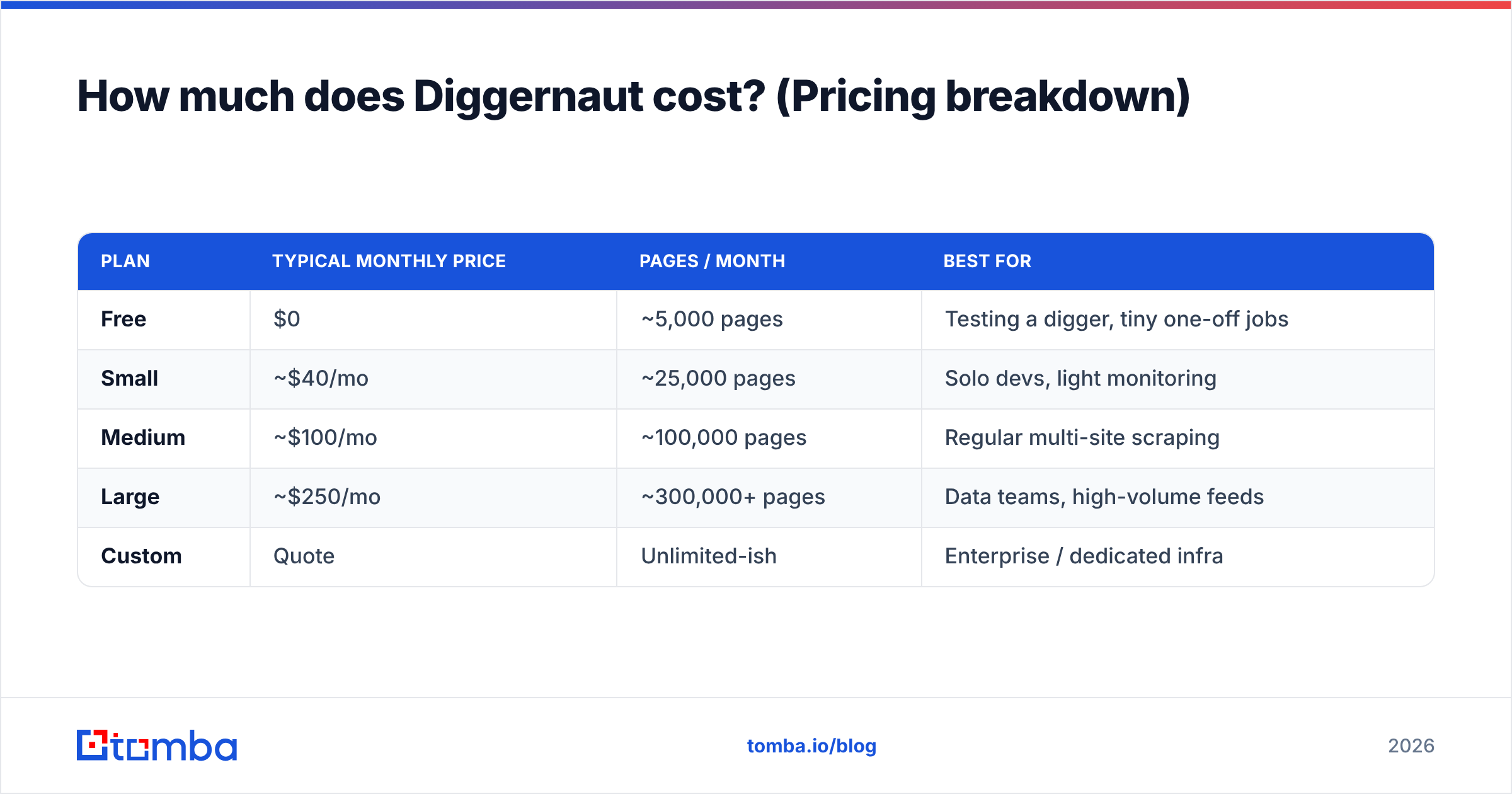
Diggernaut uses a credit/page model. Plans are priced by how many pages you crawl each month. Higher tiers unlock more concurrent diggers, JavaScript rendering, and longer retention. Exact numbers shift, so confirm live figures on the official Diggernaut site before you commit. The shape of the pricing has stayed consistent, though. It looks roughly like this:
| Plan | Typical monthly price | Pages / month | Best for |
|---|---|---|---|
| Free | $0 | ~5,000 pages | Testing a digger, tiny one-off jobs |
| Small | ~$40/mo | ~25,000 pages | Solo devs, light monitoring |
| Medium | ~$100/mo | ~100,000 pages | Regular multi-site scraping |
| Large | ~$250/mo | ~300,000+ pages | Data teams, high-volume feeds |
| Custom | Quote | Unlimited-ish | Enterprise / dedicated infra |
Two things drive your real cost above the sticker price:
- JavaScript rendering burns pages faster. Modern sites that load content dynamically consume far more resources per record, so your effective cost-per-record can be several times the naive "price ÷ pages" math.
- Maintenance is unpriced labor. Every layout change on a target site can break a digger. That engineering time never shows up on the invoice but is the biggest hidden cost of any scraping tool.
Compare that to flat, per-record data pricing. For reference, Tomba pricing runs Free (25 searches/mo), Starter $49/mo, Growth $99/mo, and Pro $249/mo — and every result is a verified contact, not a raw HTML page you still have to parse, clean, and validate.
Diggernaut reviews: what users actually say#
Pulling from public reviews on G2 and Capterra, sentiment clusters into a few clear themes. Diggernaut is not a mass-market product, so review volume is modest, but the patterns are consistent.
What reviewers praise:
- Genuine flexibility — the meta-language handles complex, multi-step crawls that visual scrapers choke on.
- Cloud execution — no local infrastructure, scheduling built in.
- Responsive support for a small team, especially on digger debugging.
What reviewers criticize:
- Steep learning curve — the config language is powerful but unfamiliar; non-developers stall.
- Documentation gaps — several reviewers wanted more worked examples for edge cases.
- Breakage on complex sites — heavy JavaScript or anti-bot defenses cause failed runs.
- Value at scale — for large volumes, page costs plus engineering time add up.
The recurring meta-theme: people who can code are happy; people who expected a no-code data faucet are not.
Diggernaut pricing reviews pros and cons: at a glance#
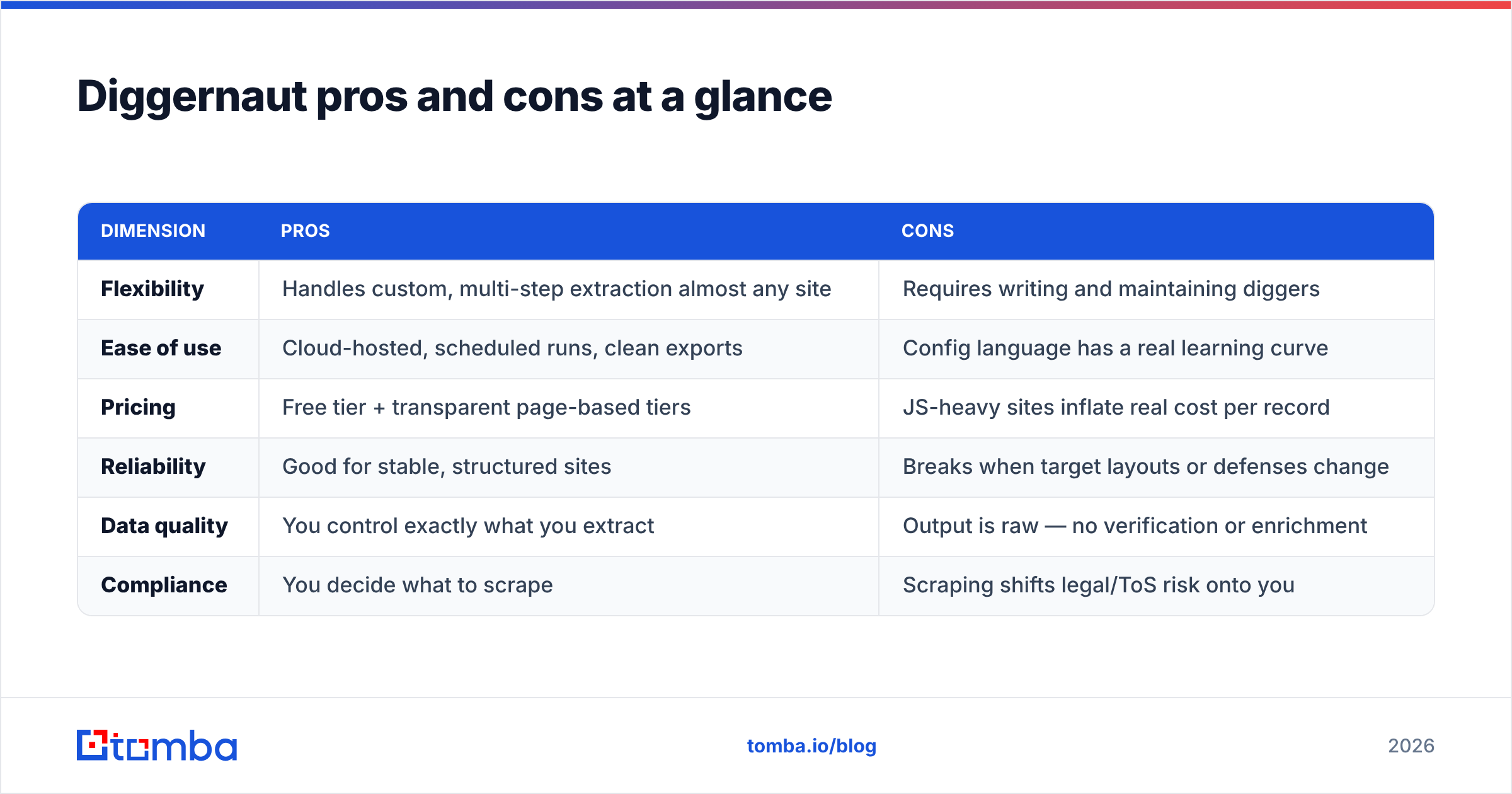
Here is the balanced scorecard most buyers actually want.
| Dimension | Pros | Cons |
|---|---|---|
| Flexibility | Handles custom, multi-step extraction almost any site | Requires writing and maintaining diggers |
| Ease of use | Cloud-hosted, scheduled runs, clean exports | Config language has a real learning curve |
| Pricing | Free tier + transparent page-based tiers | JS-heavy sites inflate real cost per record |
| Reliability | Good for stable, structured sites | Breaks when target layouts or defenses change |
| Data quality | You control exactly what you extract | Output is raw — no verification or enrichment |
| Compliance | You decide what to scrape | Scraping shifts legal/ToS risk onto you |
That last row deserves emphasis. When you scrape, you own the compliance question. When you buy from a compliant data provider, that burden is shared and the sourcing is documented — see how Tomba's data sources are handled versus DIY collection.
Is Diggernaut better than buying B2B data outright?#
Short answer: it depends on whether you need arbitrary data or contact data.
Diggernaut wins when your target is idiosyncratic — scraping competitor catalogs, monitoring price changes across niche marketplaces, or assembling a dataset that simply does not exist as a product. No off-the-shelf vendor sells that, so a flexible scraper is the right tool.
But if your goal is finding and verifying business emails, phone numbers, or company records, scraping is the slow, brittle path. You would have to build the crawler, dodge anti-bot systems, parse inconsistent HTML, then still verify every address to avoid bounces. A dedicated stack collapses that into one step.
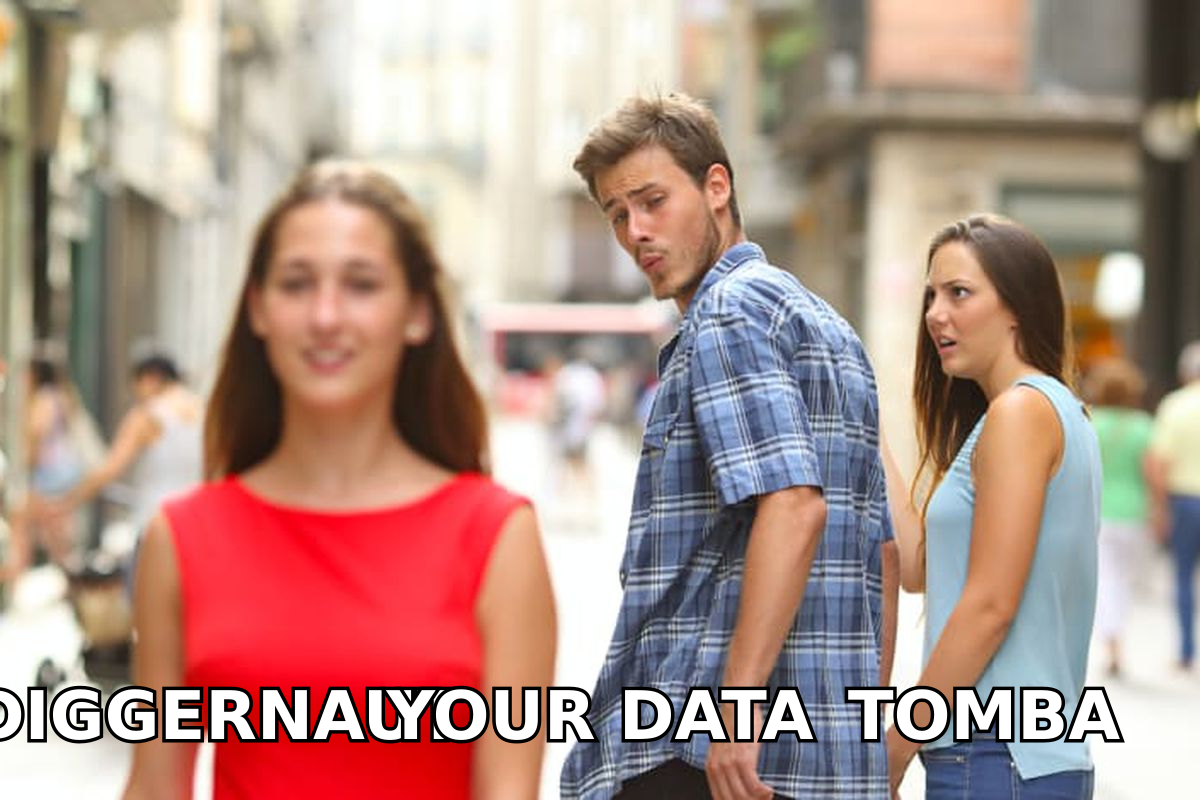
Here is the practical split:
- Choose a scraper (like Diggernaut) when the data is custom and no vendor offers it.
- Choose a data platform when you need verified people and company info. Pair an email verifier with data enrichment and you get clean, deliverable records without maintaining a single line of scraping code.
- Sometimes both — scrape the niche signal, then enrich the entities against a maintained B2B database so your final dataset is actually usable.
For teams whose entire objective is outbound-ready contacts, the maintenance-free route is almost always cheaper once you price in engineering hours.
What are the best Diggernaut alternatives in 2026?#
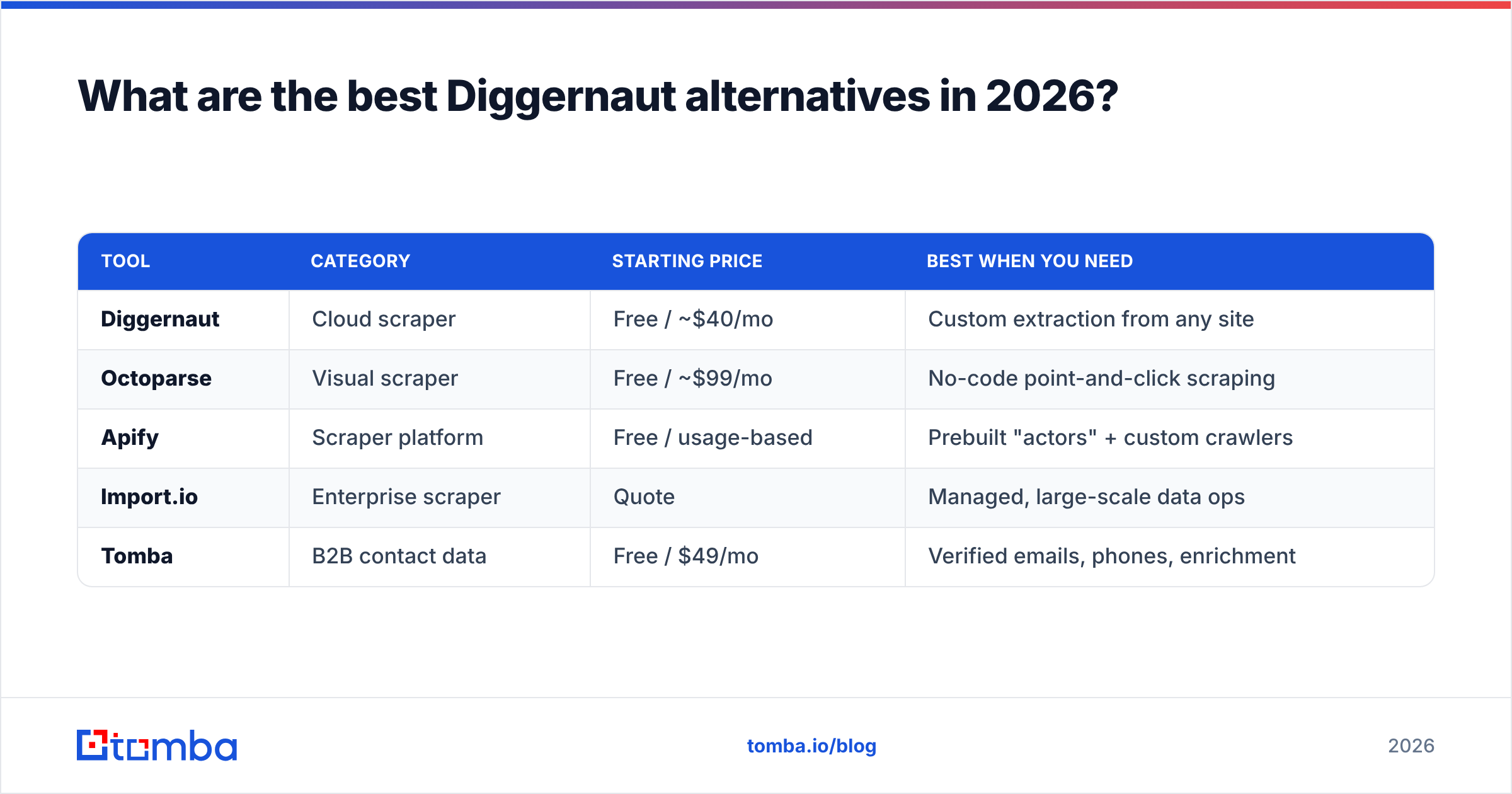
Depending on which half of the job you care about, the alternatives split into two camps: general-purpose scrapers and contact-data platforms.
| Tool | Category | Starting price | Best when you need |
|---|---|---|---|
| Diggernaut | Cloud scraper | Free / ~$40/mo | Custom extraction from any site |
| Octoparse | Visual scraper | Free / ~$99/mo | No-code point-and-click scraping |
| Apify | Scraper platform | Free / usage-based | Prebuilt "actors" + custom crawlers |
| Import.io | Enterprise scraper | Quote | Managed, large-scale data ops |
| Tomba | B2B contact data | Free / $49/mo | Verified emails, phones, enrichment |
If the friction you keep hitting is "I scraped a list but half the emails bounce," the fix is not a better scraper — it is verified data at the source. Tomba's bulk email finder and domain search cover the exact use case most lead-gen scrapers are chasing, without the breakage.
How to decide: a 5-point checklist#
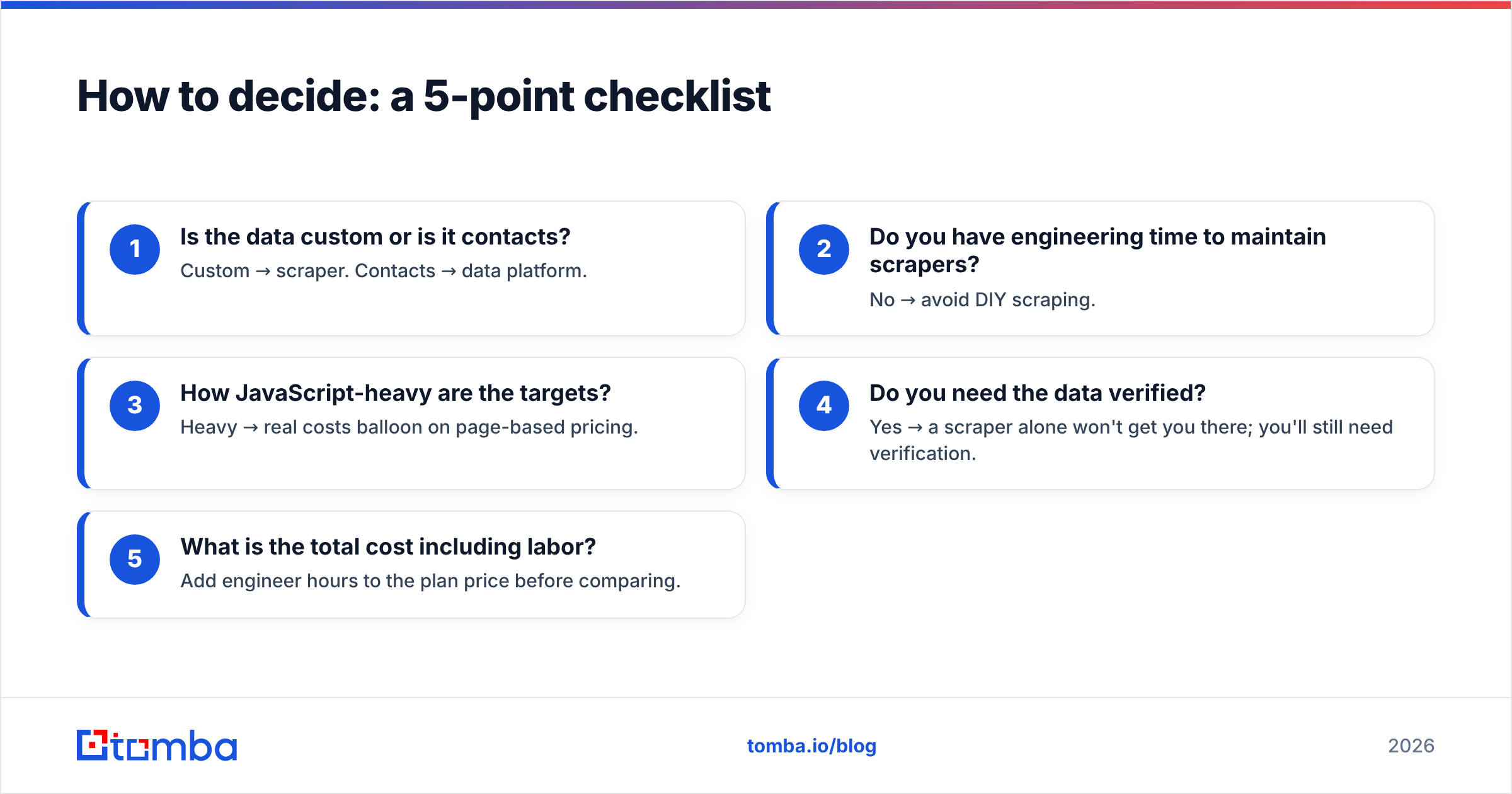
Run your project through these before you pay for any scraping plan:
- Is the data custom or is it contacts? Custom → scraper. Contacts → data platform.
- Do you have engineering time to maintain scrapers? No → avoid DIY scraping.
- How JavaScript-heavy are the targets? Heavy → real costs balloon on page-based pricing.
- Do you need the data verified? Yes → a scraper alone won't get you there; you'll still need verification.
- What is the total cost including labor? Add engineer hours to the plan price before comparing.
If three or more answers point away from scraping, you are the buyer a maintained data source is built for.
Frequently asked questions#
Does Diggernaut have a free plan? Yes. There is a free tier suitable for testing diggers and small one-off jobs, with a limited monthly page allowance. It is enough to evaluate the config language before paying.
Is Diggernaut hard to learn? For non-developers, yes. Its meta-language is powerful but unfamiliar. Developers ramp quickly; marketers and sales ops usually find the learning curve steep relative to the outcome they want.
Is web scraping with Diggernaut legal? Scraping public data is broadly permitted in many contexts, but site terms of service, rate limits, and data-protection laws still apply. When you scrape, that compliance risk sits with you. Buying from a compliant provider distributes and documents that responsibility.
Why do scraped emails bounce so often? Because raw HTML addresses are unverified — they include role accounts, typos, and stale mailboxes. You need a verification step regardless of how you collected them.
The bottom line#
Diggernaut is a capable, developer-oriented cloud scraper with fair, page-based pricing and honest reviews: flexible and reliable for custom extraction, but demanding to learn and maintain, and raw in its output. If your project is a bespoke data-collection problem with no product on the market, it earns its place.
But if what you actually need is verified business contacts — emails, phones, enriched company records — scraping is the expensive, brittle detour. Skip the maintenance treadmill and start with the Tomba Email Finder: search by name, domain, or company, get results that are already verified and deliverable, and keep your engineers building product instead of babysitting diggers. Try the free tier, then scale on a plan that costs less than the labor a scraper quietly demands.
Related guides#
Ready to find emails that actually work?
Join 150,000+ professionals who stopped guessing and started sending. Free credits on signup — no credit card required.
Get the Tomba newsletter
Practical outbound tactics and product updates — once every two weeks.
About the author