DiscoverOrg vs Sparklane: Which B2B Data Tool Wins in 2026?
DiscoverOrg (now ZoomInfo) and Sparklane solve B2B data from opposite ends — enterprise org charts versus European predictive scoring. Here is the honest breakdown of price, coverage, and who each one actually fits.
DiscoverOrg vs Sparklane is a common shortlist for B2B data buyers. One is a US giant. The other is a French specialist. Here is the plain-English breakdown of price, coverage, and fit.
TL;DR
- DiscoverOrg is now ZoomInfo. The brand was folded into ZoomInfo after the 2019 merger. So buying "DiscoverOrg" in 2026 means buying a ZoomInfo Copilot or SalesOS seat. Budget for a yearly deal of roughly $15,000 to $40,000+ for a small team.
- Sparklane is a French prospecting platform. It scores leads for you. It covers European (mostly FR and BENELUX) company data, buying signals, and account scoring. Pricing is quote-only. It lands well under ZoomInfo, but coverage outside Europe thins fast.
- They are not really rivals. ZoomInfo sells depth on North American org charts and direct dials. Sparklane sells European company data plus signal scoring. The DiscoverOrg vs Sparklane call is mostly about where your buyers live.
- Both are heavy if you only need verified emails. You have the company. You have the name. You just need an address that lands. A per-lookup tool like Tomba starts at $49/mo, not a five-figure year.
- Best combo for most mid-market teams: a signal source you already own (LinkedIn, website visitors, CRM) plus a pay-as-you-go enrichment API. A full database is often overkill.
What happened to DiscoverOrg, and does it still exist in 2026?#
DiscoverOrg is not a standalone product any more. In 2019 DiscoverOrg bought ZoomInfo and took its name. By 2021 the old platform, login, and pricing pages had moved into the ZoomInfo stack. If a rep pitches you "DiscoverOrg," they are pitching ZoomInfo with old wording.
That matters here. DiscoverOrg was famous for org charts checked by hand. Staff called each company to confirm titles, reporting lines, and IT install data. None of it was scraped. That work lives on as ZoomInfo's enterprise data layer.
What changed is the packaging. You now buy seats, credit bundles, and add-on modules on a yearly contract. The modules include Intent, Engage, Chat, and Copilot.
So in this DiscoverOrg vs Sparklane guide, "DiscoverOrg" means the ZoomInfo line that inherited its data.
What is Sparklane and who is it built for?#
Sparklane is a French B2B prospecting platform. It is built around predictive lead scoring. It does not hand you a raw database and a search builder. Instead it reads public company data and ranks accounts by how likely they are to buy from you. The model learns from your closed-won deals. Sources include legal filings, finance data, press, hiring signals, and website changes.
The pitch is time saved on list building. You set an ICP. You connect your CRM. Sparklane then shows a ranked feed of accounts with the trigger event attached. A trigger might be "raised a Series A," "opened a new site," "hired a CTO," or "posted a tender."
For a French or Benelux mid-market team, that trigger data is hard to copy with US-first tools. It comes from INSEE and Greffe filings and from local business press. ZoomInfo does not index those sources well.
The trade-off is scope. Sparklane is strong on company-level data. It is thinner on contact-level depth, above all direct dials and work emails at scale. Coverage also drops fast once you sell outside Western Europe.
DiscoverOrg vs Sparklane: how do they compare head to head?#
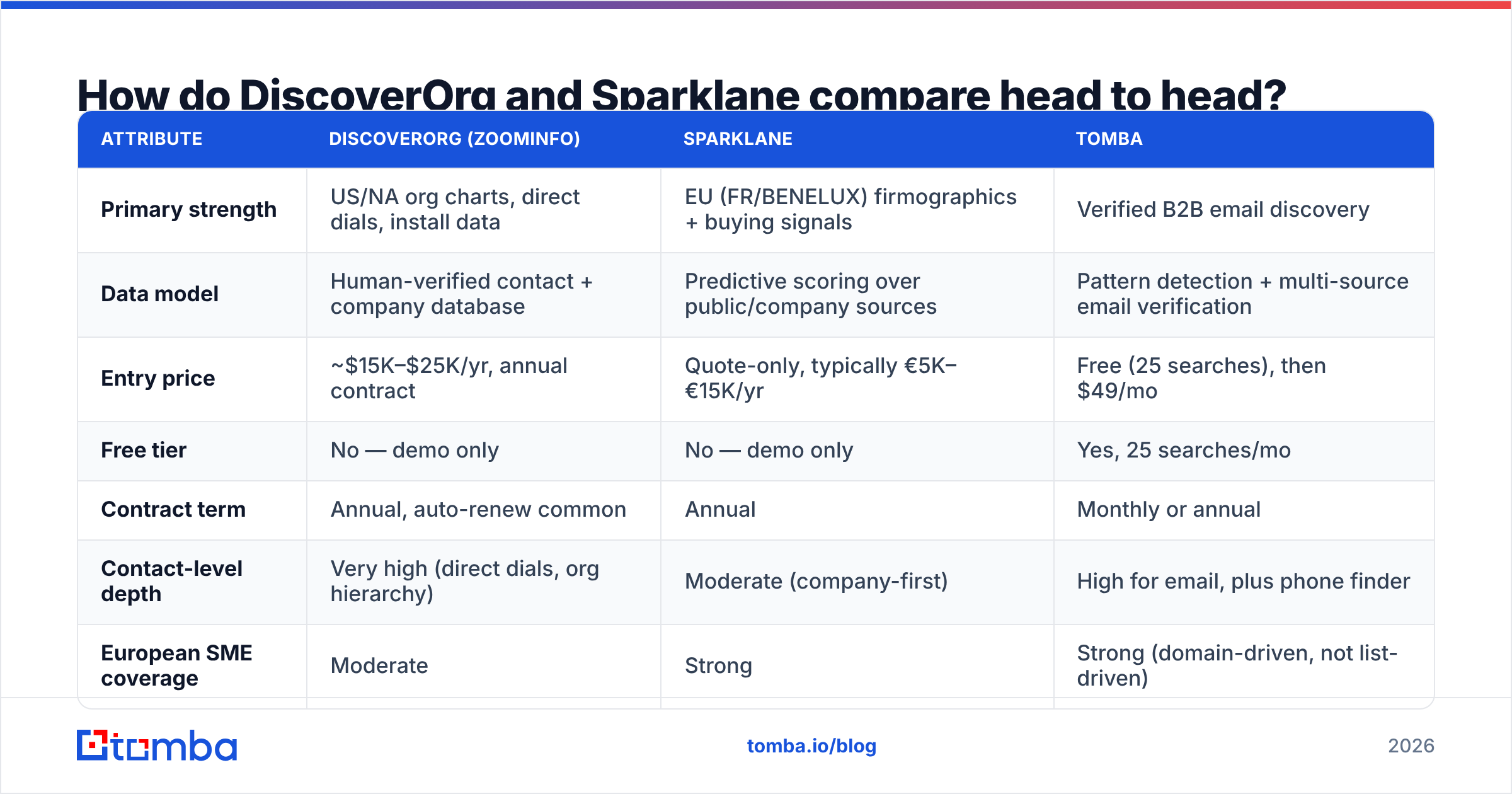
Here is the practical breakdown. Both vendors quote instead of publishing prices. So the price rows show common market ranges from G2 reviews and buyer reports. They are not rate cards. Treat them as a guide, not a promise.
| Attribute | DiscoverOrg (ZoomInfo) | Sparklane | Tomba |
|---|---|---|---|
| Primary strength | US/NA org charts, direct dials, install data | EU (FR/BENELUX) firmographics + buying signals | Verified B2B email discovery |
| Data model | Human-verified contact + company database | Predictive scoring over public/company sources | Pattern detection + multi-source email verification |
| Entry price | ~$15K–$25K/yr, annual contract | Quote-only, typically €5K–€15K/yr | Free (25 searches), then $49/mo |
| Free tier | No — demo only | No — demo only | Yes, 25 searches/mo |
| Contract term | Annual, auto-renew common | Annual | Monthly or annual |
| Contact-level depth | Very high (direct dials, org hierarchy) | Moderate (company-first) | High for email, plus phone finder |
| European SME coverage | Moderate | Strong | Strong (domain-driven, not list-driven) |
| Intent/trigger data | Yes (ZoomInfo Intent, add-on cost) | Yes, core to the product | No — enrichment only |
| API access | Yes, credit-metered, enterprise tier | Yes, on higher plans | Yes, on all paid plans |
| Best for | Enterprise SDR teams selling into NA | French/EU mid-market sales teams | Any team that needs deliverable emails cheaply |
The "Best for" row decides most deals.
Some reps sell into US enterprise accounts. They need to know who reports to whom before they work five stakeholders at once. There, DiscoverOrg's roots are worth the money.
Other reps sell into French SMBs. They need to know which of 4,000 accounts just did something worth a call. There, Sparklane wins, and ZoomInfo is a costly way to get worse data.
Which one has better data accuracy?#
Neither vendor publishes an audited accuracy score. So treat any number a rep quotes with care. That includes the numbers in their own marketing.
Here is what you can judge yourself in a DiscoverOrg vs Sparklane trial.
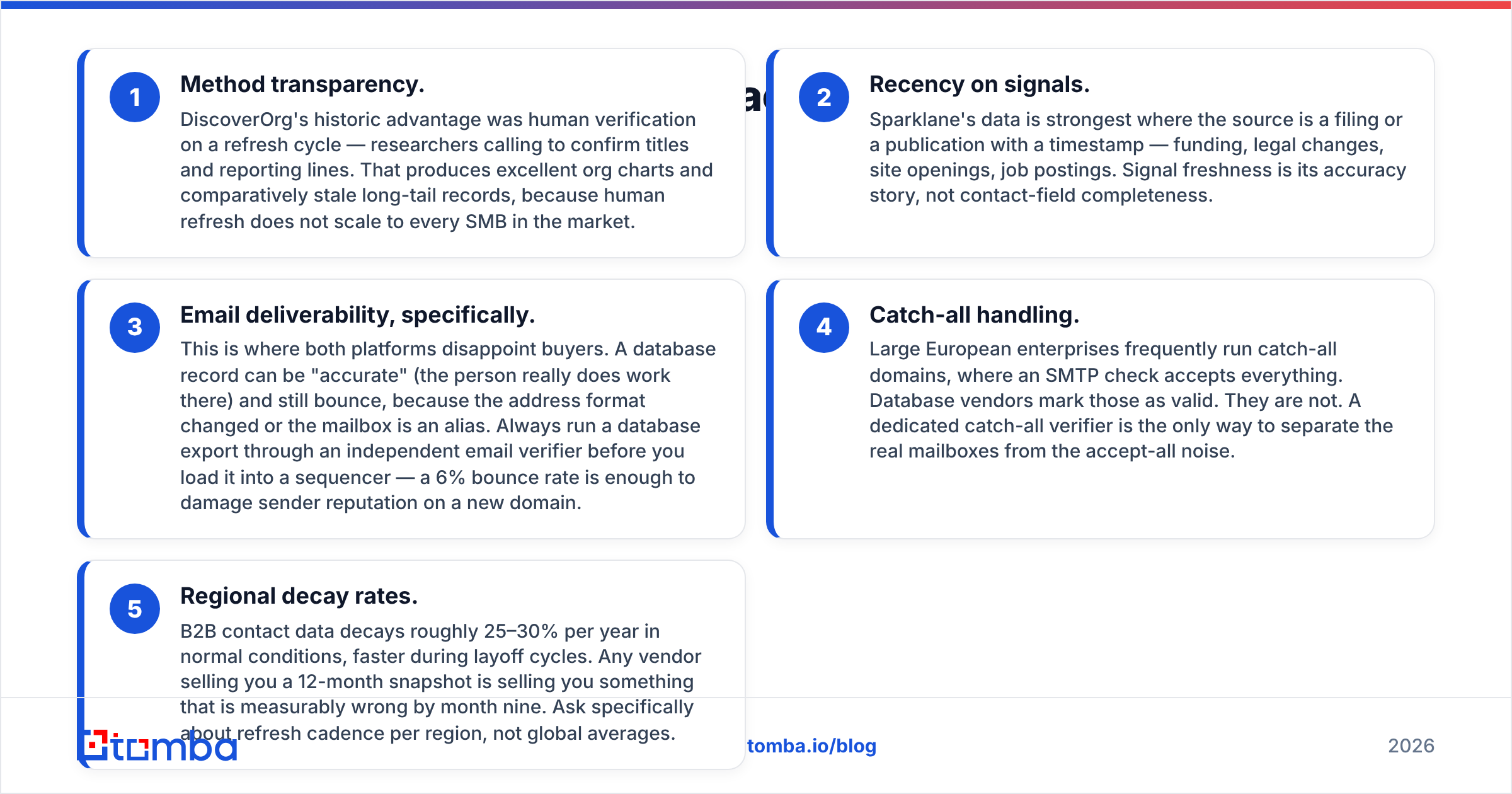
- How the data is made. DiscoverOrg's edge was human checks on a refresh cycle. Staff called to confirm titles and reporting lines. That makes great org charts. It also leaves stale records in the long tail, because people cannot refresh every small firm.
- How fresh the signals are. Sparklane is strongest when the source is a filing or a dated news item. Think funding, legal changes, new sites, and job posts. Speed is its accuracy story, not full contact records.
- Whether the email lands. This is where both tools let buyers down. A record can be right and still bounce. The address format may have changed, or the mailbox may be an alias. Run every export through an email verifier first. A 6% bounce rate can hurt sender reputation on a new domain.
- How catch-all domains are handled. Many large European firms accept any address at the domain. Database vendors mark those as valid. They are not. A catch-all verifier is the only way to tell real inboxes from noise.
- How fast data decays by region. B2B contact data goes stale by about 25% to 30% a year. Layoff cycles make it worse. A 12-month snapshot is wrong by month nine. Ask for refresh rates per region, not a global average.
Short version. DiscoverOrg is better at who works where and who they report to in North America. Sparklane is better at what a European company just did. Neither is best at whether one address will land. That is a checking job, not a database job.
What does each one actually cost in 2026?#
Both are quote-only. That is a data point by itself. Quote-only means the price is set by how your company looks, not by what you use.
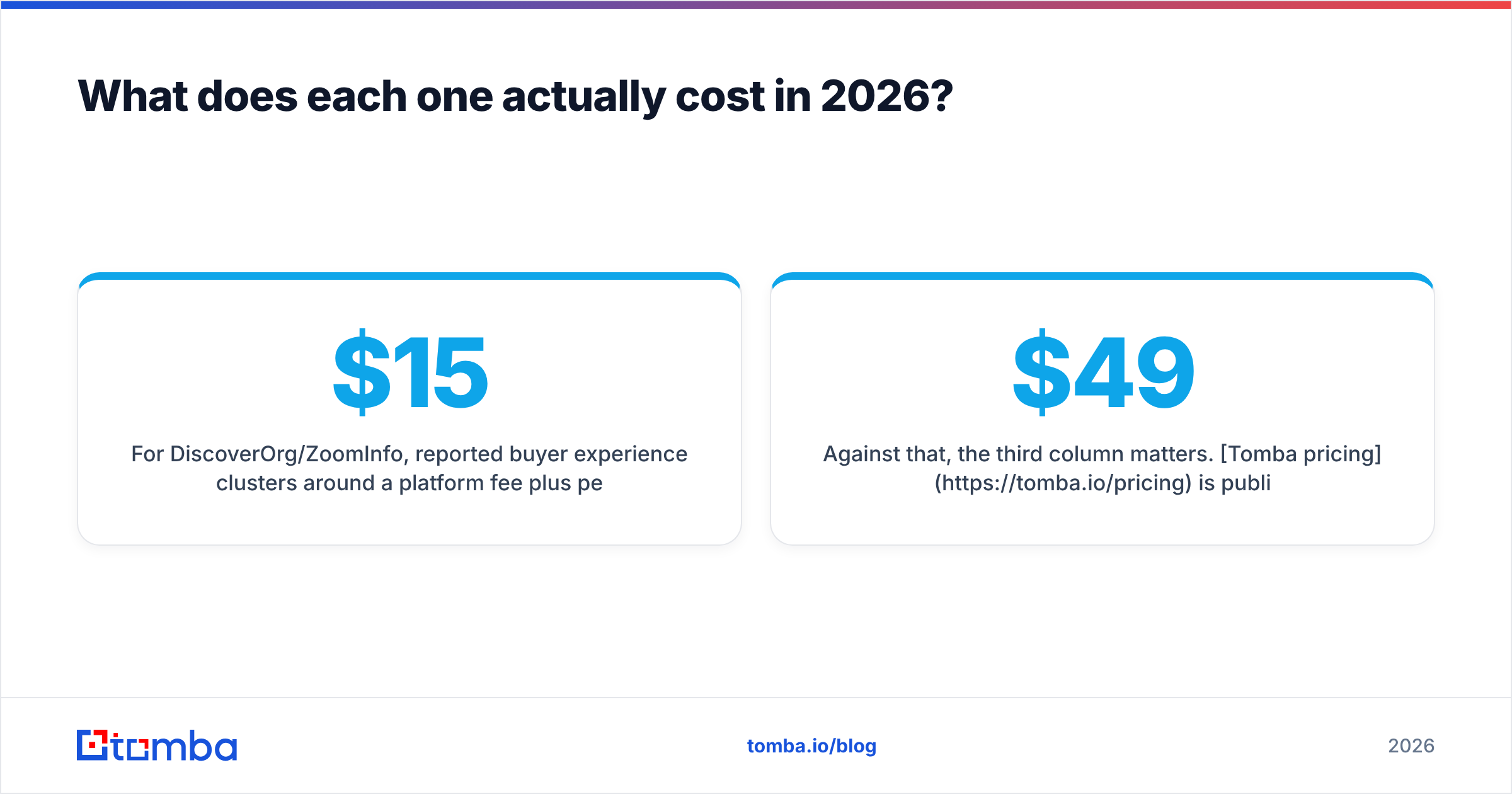
Start with ZoomInfo. Buyers report a platform fee, plus a fee per seat, plus credit bundles. Three seats with modest credits and no intent add-on often starts near $15,000 to $25,000 a year. Add Intent, Engage, or Copilot and a 5 to 10 seat rollout often passes $40,000.
Credits are spent per record you export. Unused credits rarely roll over. Multi-year discounts are real. They also lock you in during the years when your ICP is most likely to shift.
Sparklane contracts are smaller. Think European mid-market SaaS pricing, often a low five-figure yearly deal. The shape is the same: yearly term, seat-based. The scoring engine only works if you feed it clean CRM history. If your CRM data is a mess, the scores inherit the mess.
Now look at the third column. Tomba pricing is public. Free covers 25 searches a month. Starter is $49/mo, Growth $99/mo, Pro $249/mo, and Enterprise is custom. You can cancel in a month.
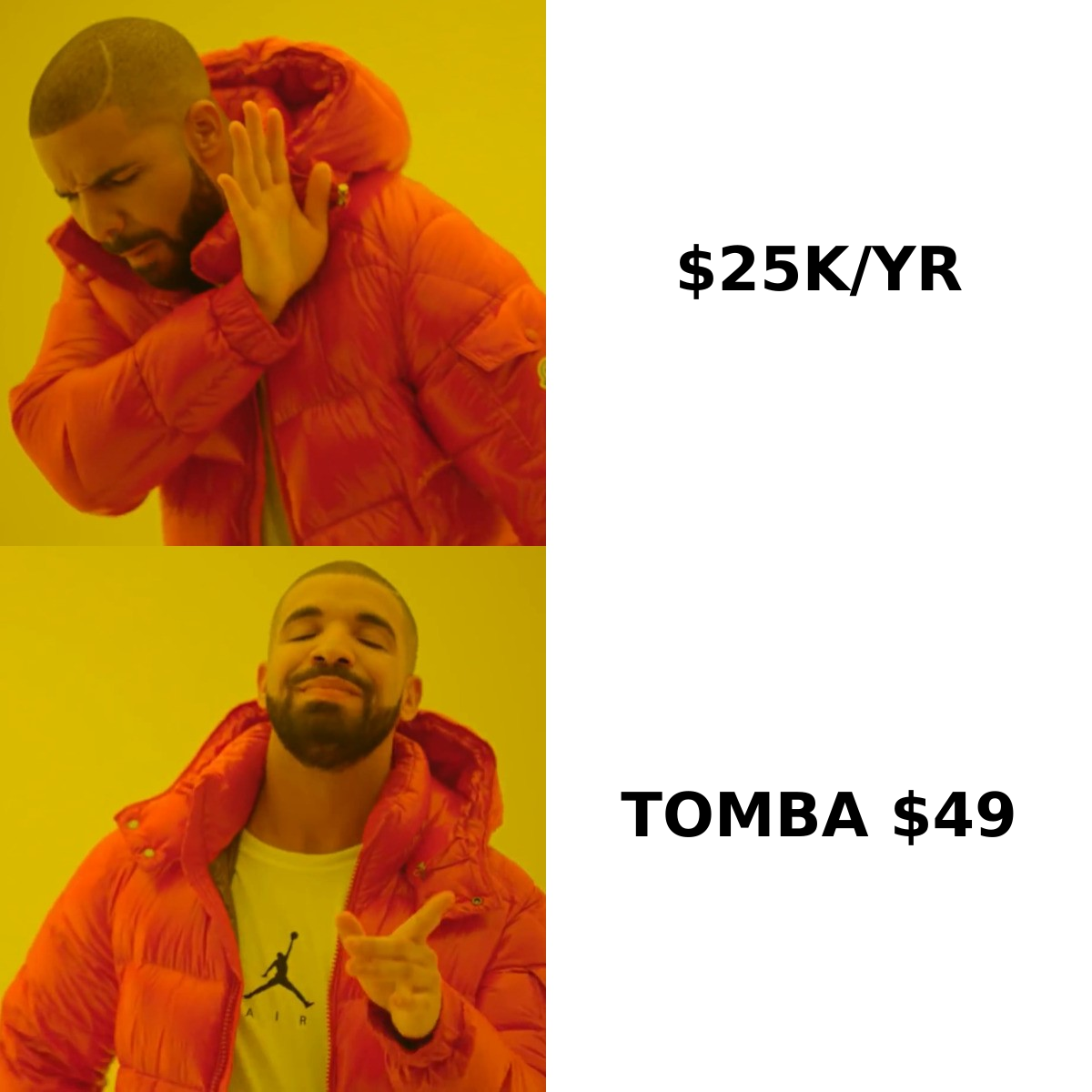
That is not a like-for-like match. Tomba does not sell intent data or org charts. But it reframes the DiscoverOrg vs Sparklane budget question. Many teams buy a $25,000 database because they need email addresses. Then they use maybe 8% of the platform.
Do you actually need a full database subscription?#
Run this test before you sign anything.
- Do you need reporting structure? Some deals need you to map a VP's direct reports and their boss first. That is a real ZoomInfo use case. Cheap tools cannot fake it.
- Do you need triggers you cannot see yourself? "Raised funding" is free to track. "Filed a tender in the Rhône-Alpes region" is not. That second one earns Sparklane its fee.
- Do you already have your target list? Most outbound teams do. They know the 800 accounts. The gap is contact data, not account discovery. A domain search returns every address it can find at a company. Add checking, and it replaces the database for far less.
- How many records will you export each month? Divide the yearly price by that number. Teams often find they pay $4 to $9 per useful record. A metered tool costs cents per lookup.
- Is your ICP one region or several? Neither tool is truly global. Sell into North America and Europe and APAC, and you will stitch sources anyway. That argues for an API-first setup over one big subscription.
The market is also wider than two names. BookYourData sells pay-as-you-go verified B2B lists with no yearly deal. That is a fair middle path if you want a list, not a platform. ZoomInfo alternatives, Apollo alternatives, and regional providers overlap here too. The "DiscoverOrg vs Sparklane" framing is narrower than most real buying processes.
How should you run an evaluation without wasting a quarter?#
Do not judge on the demo. Demos run on the vendor's best data.
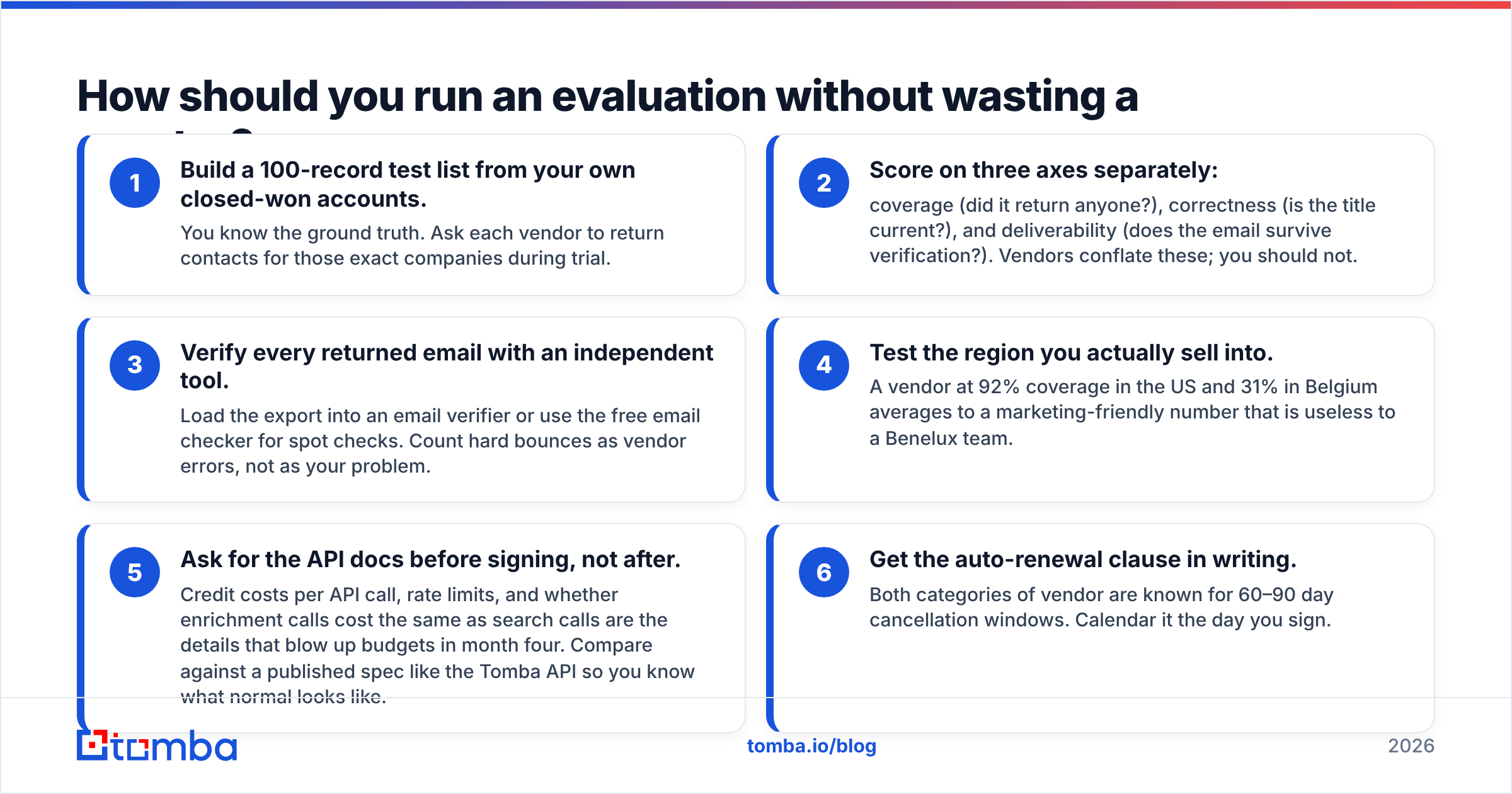
- Build a 100-record test list from your own closed-won accounts. You know the truth. Ask each vendor to return contacts for those exact firms during the trial.
- Score three things apart: coverage, correctness, and delivery. Did it return anyone? Is the title current? Does the email survive a check? Vendors blur these. You should not.
- Check every returned email with an outside tool. Load the export into an email verifier. Or use the free email checker for spot checks. Count hard bounces as vendor errors, not as your problem.
- Test the region you actually sell into. A vendor at 92% in the US and 31% in Belgium averages to a nice number. That number is useless to a Benelux team.
- Ask for the API docs before you sign. Credit cost per call, rate limits, and whether enrich calls cost the same as search calls all blow up budgets in month four. Compare against a public spec like the Tomba API.
- Get the auto-renewal clause in writing. Both kinds of vendor use 60 to 90 day cancellation windows. Put the date in your calendar the day you sign.
DiscoverOrg vs Sparklane: what is the verdict?#
Choose DiscoverOrg (ZoomInfo) if you sell to North American enterprises. It fits teams that work five or more stakeholders per deal. Org-chart accuracy has to change your win rate. The price makes sense for that motion and for no other.
Choose Sparklane if your ICP is French, Belgian, or Dutch mid-market. You want ranked accounts with triggers, not a raw search box. You also need clean CRM history to train the scores. It is a strong product at home and a poor fit abroad.
Choose neither if you really just need contact data for a list you already have. That is the most common case. It is also the case both vendors overcharge for. Pair a signal source you trust with metered enrichment. Find the addresses, check them, push them to your sequencer, and keep data spend in step with pipeline.
Want to test the cheap path first? Start with the Tomba Email Finder. You get 25 free searches a month, no card, and no yearly contract. Run it against 50 accounts from your list. Verify the results. Then compare the cost per usable record with the quote sitting in your inbox. If the database still wins, buy it with confidence. Most teams find it does not.
Related guides#
Ready to find emails that actually work?
Join 150,000+ professionals who stopped guessing and started sending. Free credits on signup — no credit card required.
Get the Tomba newsletter
Practical outbound tactics and product updates — once every two weeks.
About the author