Emotional Selling in B2B: How Feelings Close Deals in 2026
B2B buyers say they decide on ROI. Neuroscience and buying-committee data say otherwise. Here is how emotional selling actually works, where it beats feature-led pitching, and where it backfires.
TL;DR
- Emotional selling means building your pitch around the feelings that actually drive a buying decision — risk, status, relief, fear of being blamed — instead of leading with features and ROI math.
- In B2B this is not soft. Buying committees average 6-11 people, and each one carries personal career risk. That risk is an emotion, and it kills more deals than price does.
- The logic still matters: emotion opens the decision, logic justifies it afterwards. Skip either half and you lose.
- The four emotions that move B2B deals most reliably are fear of loss, fear of blame, desire for status, and desire for relief from a specific daily annoyance.
- Emotional selling collapses without accurate contact data and real research. You cannot name someone's pain if you emailed the wrong person at the wrong company.
What is emotional selling?#
Emotional selling is structuring your outreach, discovery, and pitch around the feelings a buyer already has about their situation — then positioning your product as the thing that resolves those feelings. The features come later, as proof.
Think of it like a doctor's visit. Nobody walks in and asks for a specific drug molecule. They walk in saying "my back has hurt for three weeks and I'm scared it's serious." The prescription is the logic; the fear is the reason they showed up. Sellers who lead with the molecule — the feature list, the integration matrix, the uptime SLA — are answering a question the buyer hasn't asked yet.
The academic backing here is stronger than most sales advice. Antonio Damasio's work on patients with damage to the ventromedial prefrontal cortex found that people who lose emotional processing but keep full logical reasoning become unable to decide — they can list every pro and con of a lunch option and still not pick one. Decision requires feeling. You can read the summary on Wikipedia's somatic marker hypothesis page.
Applied to B2B: your prospect is not comparing your spec sheet to a competitor's spec sheet in a vacuum. They are asking, quietly, "if I champion this and it fails, what happens to me?"
Why does emotional selling work in B2B when buyers claim they are rational?#
Because the stated decision criteria and the actual decision criteria are different documents.
Ask a procurement lead why they picked a vendor and you get: price, security review, integration coverage, references. Ask them why they eliminated the other three vendors and you often get something closer to "the rep didn't get back to me for a week and I lost confidence," or "their onboarding sounded like a nightmare and I don't have the bandwidth."
Three structural facts make B2B unusually emotional, not less:
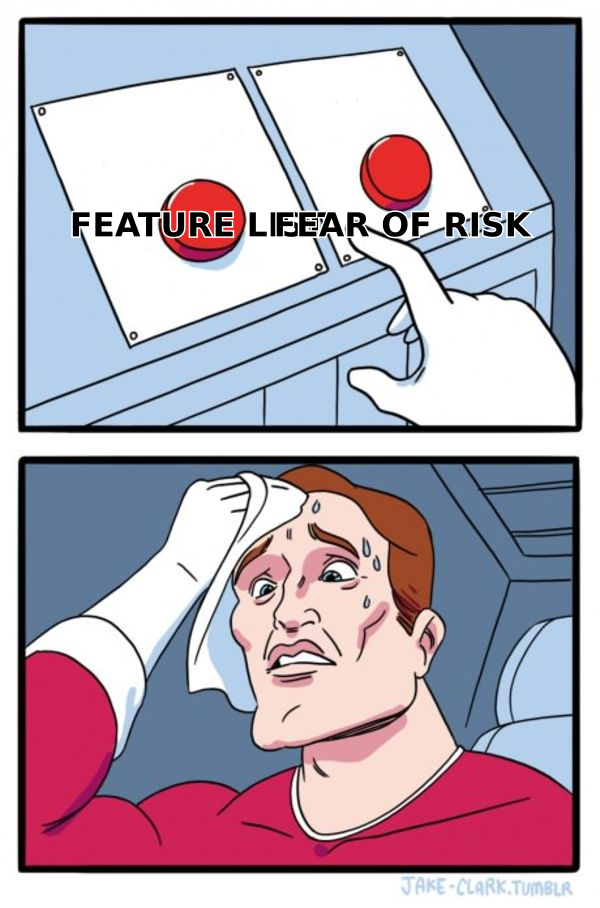
- Personal risk is concentrated, upside is diffuse. If the tool works, the company benefits. If it fails, one person's name is on the purchase order. That asymmetry makes loss aversion the dominant force in most enterprise deals.
- Committees amplify caution. Gartner's research on buying groups has consistently put the average B2B buying committee somewhere between 6 and 11 stakeholders. Every added stakeholder is another veto and another private set of anxieties. See Gartner's B2B buying journey research for the underlying data.
- The status quo is a real competitor. Doing nothing carries zero blame. Your pitch is not competing with the alternative vendor — it is competing with the emotional safety of changing nothing.
Emotional selling attacks exactly that third point. You are not proving you're better than a rival. You are making the cost of inaction feel heavier than the risk of the change.
Which emotions actually close B2B deals?#
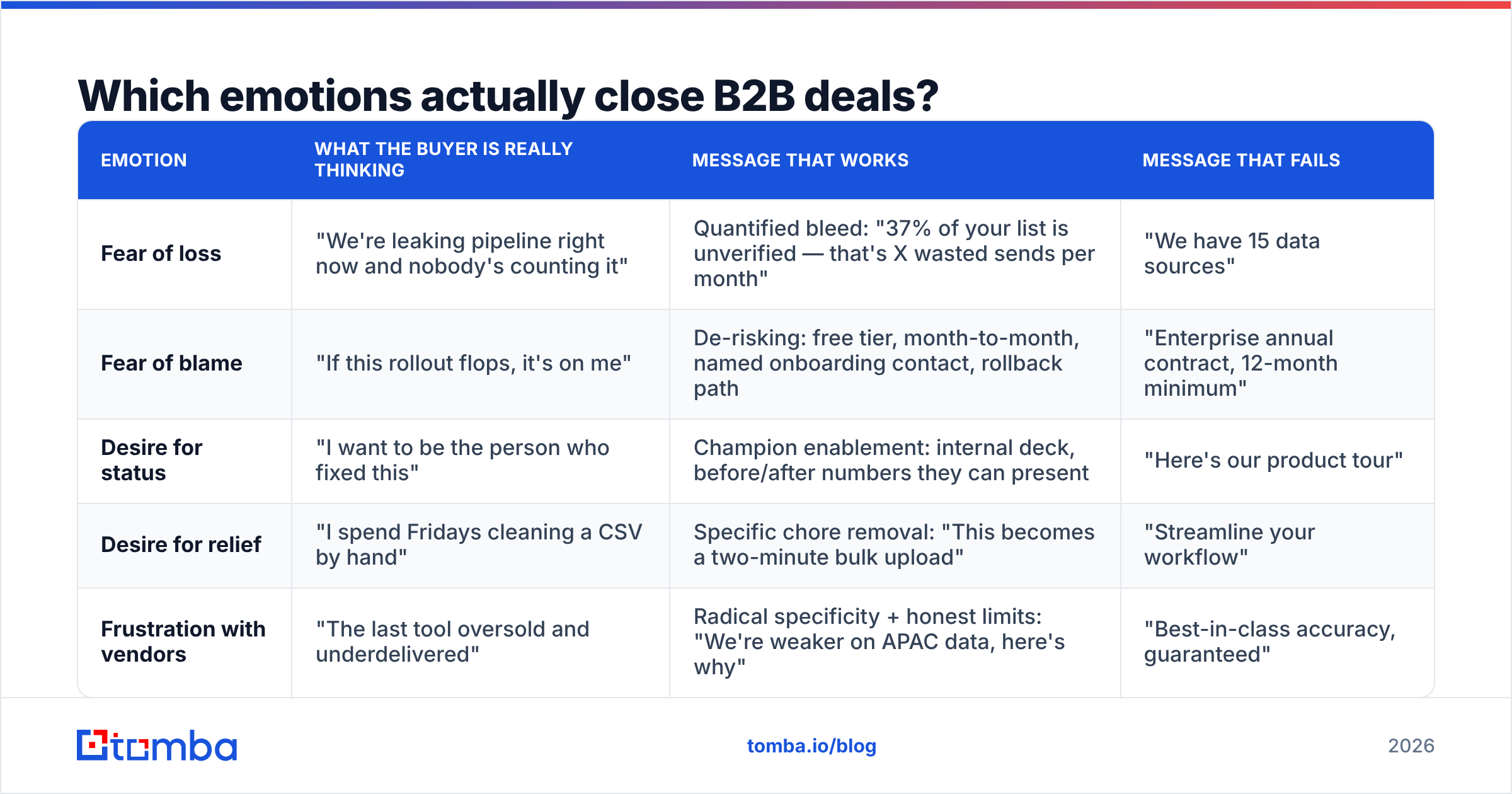
Not all of them. "Joy" and "delight" belong in consumer marketing. In B2B, four emotions do most of the work, and they map to very different messaging.
| Emotion | What the buyer is really thinking | Message that works | Message that fails |
|---|---|---|---|
| Fear of loss | "We're leaking pipeline right now and nobody's counting it" | Quantified bleed: "37% of your list is unverified — that's X wasted sends per month" | "We have 15 data sources" |
| Fear of blame | "If this rollout flops, it's on me" | De-risking: free tier, month-to-month, named onboarding contact, rollback path | "Enterprise annual contract, 12-month minimum" |
| Desire for status | "I want to be the person who fixed this" | Champion enablement: internal deck, before/after numbers they can present | "Here's our product tour" |
| Desire for relief | "I spend Fridays cleaning a CSV by hand" | Specific chore removal: "This becomes a two-minute bulk upload" | "Streamline your workflow" |
| Frustration with vendors | "The last tool oversold and underdelivered" | Radical specificity + honest limits: "We're weaker on APAC data, here's why" | "Best-in-class accuracy, guaranteed" |
Notice the pattern in the failing column: every one of them is about the seller. Every message in the working column is about the buyer's internal experience.
How do you run emotional selling without sounding manipulative?#
The line is thinner than most sales training admits, and crossing it costs you the deal permanently.
Manipulation is manufacturing an emotion the buyer doesn't have. Emotional selling is naming an emotion they already have. Fake urgency ("this price expires Friday" when it doesn't) is manipulation. Naming a real cost ("every month you wait, your list decays another 2-3%") is not.
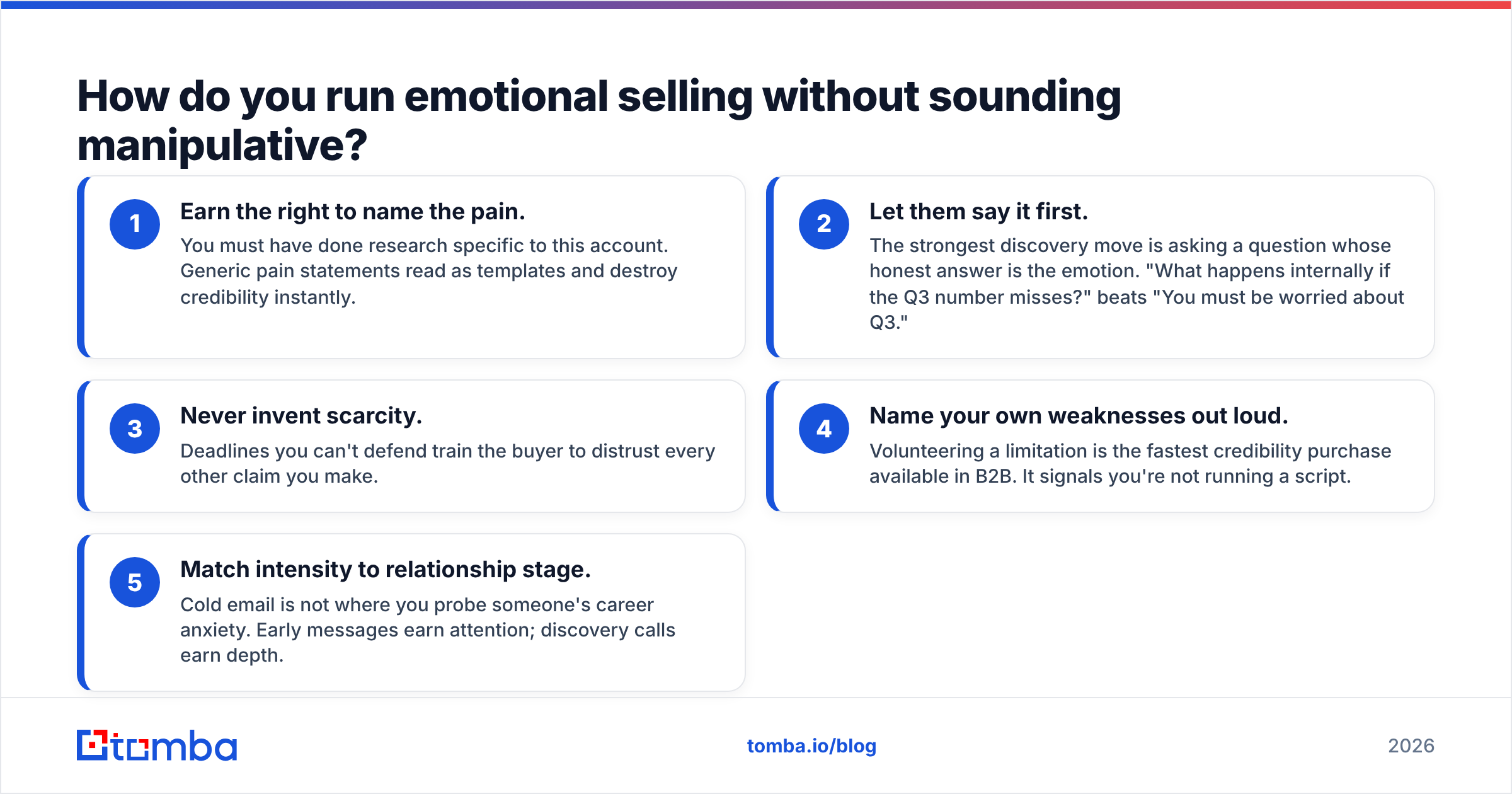
Five rules that keep you on the right side:
- Earn the right to name the pain. You must have done research specific to this account. Generic pain statements read as templates and destroy credibility instantly.
- Let them say it first. The strongest discovery move is asking a question whose honest answer is the emotion. "What happens internally if the Q3 number misses?" beats "You must be worried about Q3."
- Never invent scarcity. Deadlines you can't defend train the buyer to distrust every other claim you make.
- Name your own weaknesses out loud. Volunteering a limitation is the fastest credibility purchase available in B2B. It signals you're not running a script.
- Match intensity to relationship stage. Cold email is not where you probe someone's career anxiety. Early messages earn attention; discovery calls earn depth.
Rule 1 is where most teams fail, and it is a data problem, not a copy problem. You cannot personalize to a real situation if your contact list is guesswork. That's the practical bridge between emotional selling and tooling: research-grade accuracy in who you're reaching and what company they actually work at. A verified email finder and a clean email verifier pass are prerequisites, not extras — a message that lands in the wrong inbox has zero emotional resonance by definition.
What does emotional selling look like across the funnel?#
The emotion changes as the deal progresses. Using the same one throughout is the most common execution mistake.
Cold outreach — target: curiosity and mild discomfort. You have three seconds. You are not closing; you are creating a small itch. Reference something specific and observable (a hiring post, a product launch, a competitor's move) and attach one consequence. Keep it to four sentences. Anything longer reads as a pitch and gets archived.
Discovery — target: fear of loss made concrete. This is where you convert vague dissatisfaction into a number the buyer says out loud. "How many reps? What's the average deal size? What percentage of sends bounce?" When they do the arithmetic, the loss becomes theirs, not yours.
Demo — target: relief. Show the moment the chore disappears, not the feature that enables it. Don't tour the settings panel. Show a 4,000-row list going through a bulk email finder run in one pass and the "before/after" bounce estimate.
Proposal and negotiation — target: fear of blame, neutralized. This is the stage where deals die silently. Your champion is now imagining the internal defense of this purchase. Give them ammunition: a one-page internal summary, a pilot scope, a clear exit. Reduce the size of the bet.
Post-close — target: status. Help your champion take a win lap. Send them the metrics that make them look right for choosing you. This is how you get renewals and referrals without asking for either.
How does emotional selling compare to consultative and challenger selling?#
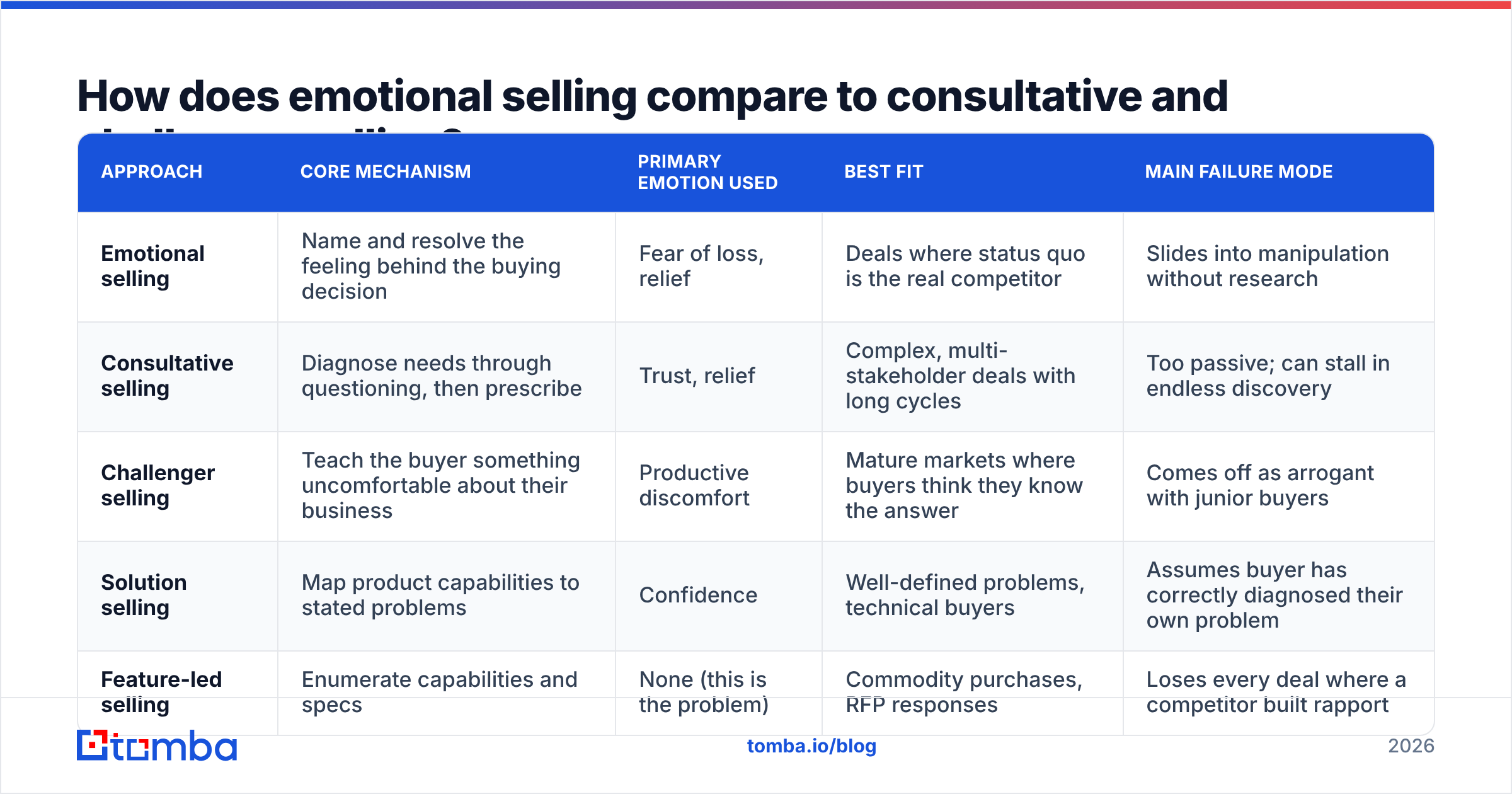
They overlap, but they load the emotional weight in different places. Here's the honest comparison.
| Approach | Core mechanism | Primary emotion used | Best fit | Main failure mode |
|---|---|---|---|---|
| Emotional selling | Name and resolve the feeling behind the buying decision | Fear of loss, relief | Deals where status quo is the real competitor | Slides into manipulation without research |
| Consultative selling | Diagnose needs through questioning, then prescribe | Trust, relief | Complex, multi-stakeholder deals with long cycles | Too passive; can stall in endless discovery |
| Challenger selling | Teach the buyer something uncomfortable about their business | Productive discomfort | Mature markets where buyers think they know the answer | Comes off as arrogant with junior buyers |
| Solution selling | Map product capabilities to stated problems | Confidence | Well-defined problems, technical buyers | Assumes buyer has correctly diagnosed their own problem |
| Feature-led selling | Enumerate capabilities and specs | None (this is the problem) | Commodity purchases, RFP responses | Loses every deal where a competitor built rapport |
Emotional selling is not a replacement for these. It's the layer underneath them. A challenger pitch without emotional calibration is just a lecture. A consultative call without emotional read is a survey.
Rackham's research behind SPIN Selling reached a similar conclusion decades ago: the highest-performing reps spent disproportionate time on implication questions — the ones that make a problem feel expensive. That's emotional selling with a research citation. G2's buyer behavior reports and HubSpot's sales statistics roundup both keep landing on the same finding: responsiveness and perceived trustworthiness outrank feature parity in vendor selection.
What are the concrete tactics that work right now?#
Specific moves, not principles.
- Lead with a consequence, not a capability. "Your careers page shows 6 open SDR roles — that's 6 people about to send from a list nobody verified" beats any feature sentence you can write.
- Use their words back. Pull exact phrasing from their job posts, earnings calls, or LinkedIn posts. Mirrored language feels like understanding; paraphrase feels like research.
- Quantify the bleed in their units. Not "improve deliverability." Instead: "at 8,000 sends a month and a 12% bounce rate, you're burning about 960 sends and putting your domain at risk." Then link the fix — a proper email verification pass — as the boring solution to the scary number.
- Ask the blame question directly in discovery. "Who else has to sign off, and what would make them nervous about this?" You'll get the real objection two weeks earlier than you otherwise would.
- Shrink the first commitment. Free tiers exist for emotional reasons, not economic ones. They convert fear of blame into "I tried it on 25 contacts, here's what happened."
- Send proof that makes your champion look smart. A short before/after they can paste into Slack is worth more than a case study PDF nobody opens.
- Kill your own weak claims. If your data coverage is thin in a region, say so before they find out. The credibility you buy transfers to every claim you do make.
Worth noting on the competitive landscape: buyers increasingly evaluate data vendors on transparency about sourcing rather than headline accuracy claims. Providers like BookYourData have built real trust by being explicit about where records come from and how they're refreshed — that transparency itself is an emotional play, and a legitimate one. Tomba publishes its data sources for the same reason.
Where does emotional selling fail?#
Three situations where you should dial it down.
Technical buyers evaluating on hard specs. A platform engineer comparing API rate limits does not want their feelings named. Give them documentation, latency numbers, and a sandbox key. Emotion here is respect for their time — expressed by being brief and precise.
Formal RFPs. The emotional decision was made before the RFP was written, usually by whoever shaped the requirements. If you're responding cold to an RFP you didn't influence, you're column fodder. Emotional selling can't rescue that; earlier access can.
Very low ACV, high-volume transactions. Below a certain deal size, the buyer isn't emotionally invested enough to justify the research cost. Self-serve pricing and a good free tier do the work instead.
Cultures where directness reads as aggression. Emotional calibration is regional. Naming someone's career anxiety directly works in some markets and destroys the relationship in others. Read the room before you use the sharp version.
How do you build the data foundation emotional selling requires?#
Personalization at scale is a data problem wearing a copywriting costume.
Every tactic above assumes you know: who the person is, what company they actually work at right now, what that company is doing, and that your message will physically arrive. Miss any of those and the emotional angle becomes noise — or worse, an embarrassing mismatch that ends the relationship.
The practical stack for research-grade outreach:
- Identify the right person, not just any contact. Titles rot fast. Use a LinkedIn finder or domain search to map the actual current team at a target account rather than working from a two-year-old list.
- Verify before you send. Bounces damage sender reputation, and a damaged domain undermines every future emotional appeal you write. Run verification as a hard gate, not an optional step.
- Enrich for the research hooks. Company size, funding stage, tech stack, and headcount trend are what let you write the specific consequence line. Data enrichment turns a name into a situation you can speak to.
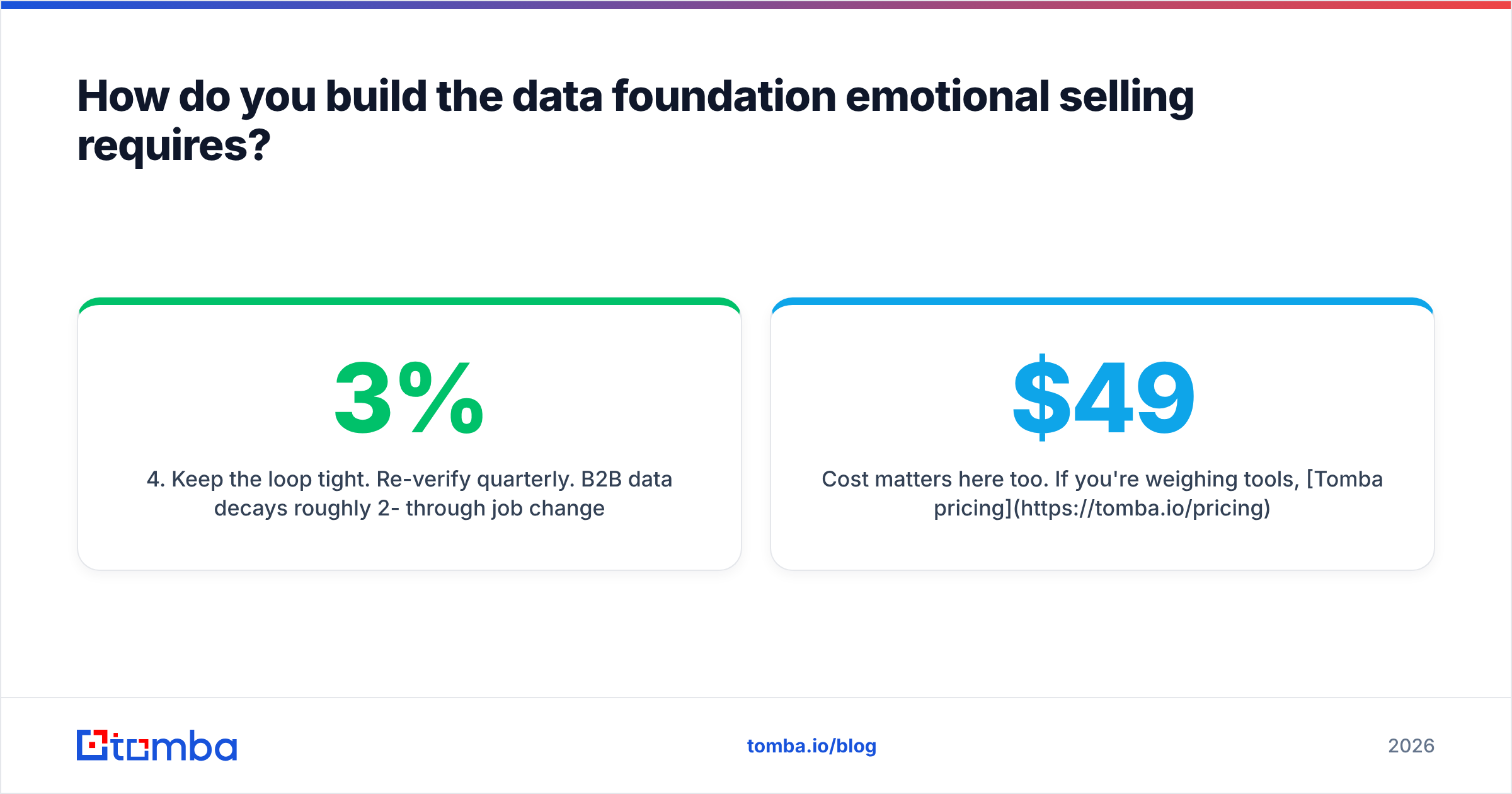
- Keep the loop tight. Re-verify quarterly. B2B data decays roughly 2-3% per month through job changes alone; a list you personalized against in January is partly fiction by June.
Cost matters here too. If you're weighing tools, Tomba pricing starts with a free tier at 25 searches per month, then Starter at $49/mo, Growth at $99/mo, and Pro at $249/mo — enough range that you can pilot the approach on one segment before committing budget to it. That's the fear-of-blame principle applied to your own purchase.
What should you do this week?#
Pick one segment. Twenty accounts, no more. For each one, write down a single sentence: what is the person you're emailing afraid of, and what specific evidence do you have for that?
If you can't fill in the evidence half for at least 15 of the 20, your problem isn't messaging — it's research inputs. Fix that first. Then rewrite your top sequence so the first line names a consequence instead of a capability, and measure reply rate against your existing control for four weeks.
Emotional selling isn't a script you deploy. It's the discipline of knowing enough about a specific human to say something true about their situation before you say anything about your product.
Start with the data layer. The fastest way to make emotional selling work is to stop guessing who you're writing to. Tomba Email Finder gives you verified, current contacts by domain, name, or company — with a free tier at 25 searches a month so you can test the approach on a single segment before you scale it. Get the right person in the To: field, and the rest of this playbook actually has somewhere to land.
Related guides#
Ready to find emails that actually work?
Join 150,000+ professionals who stopped guessing and started sending. Free credits on signup — no credit card required.
Get the Tomba newsletter
Practical outbound tactics and product updates — once every two weeks.
About the author