8 Best Explorium Alternatives in 2026 (Tested & Compared)
Explorium sells agentic B2B data behind an annual contract. Here are eight alternatives — from $49/mo email APIs to enterprise databases — compared on coverage, pricing transparency, and how fast you can actually ship.
TL;DR
- Explorium is a data-and-agents platform, not an email finder. You buy a broad enrichment layer plus agentic workflows — and you buy it on an annual contract with quoted pricing.
- Most teams evaluating Explorium actually need one of three narrower things: contact discovery (emails and phones), firmographic enrichment, or an orchestration layer that stitches multiple sources together.
- If you need contact data via API with published pricing, Tomba starts at $49/mo and skips the procurement cycle entirely.
- If you need waterfall orchestration across many vendors, Clay is the closer functional match. If you need a full outbound suite, Apollo. If you need enterprise intent plus compliance, ZoomInfo or Cognism.
- The single biggest cost difference in this market is not data quality — it's whether pricing is public. Quoted-only vendors typically start in five figures per year.
What does Explorium actually do?#
Explorium (explorium.ai) positions itself as an agentic B2B data platform. Instead of selling you a static contact list, it sells access to a large business-entity graph — companies, people, signals, technographics — plus an agent layer that can run prospecting and enrichment tasks against that graph, including via MCP so LLM agents can query it directly.
That's a genuinely different product from a lookup tool. Think of it as the difference between buying groceries and hiring a kitchen: one gives you ingredients, the other gives you ingredients plus someone to cook with them. The kitchen is more capable. It's also a bigger commitment, and you pay for it whether or not you cook every night.
Three things push teams to look for Explorium alternatives:
- Pricing is quoted, not published. There's no self-serve card-swipe tier at the time of writing. Expect a sales cycle, an annual commitment, and a floor that makes sense for funded GTM teams — not for a two-person outbound motion.
- Scope overshoot. Many buyers discover mid-evaluation that they wanted verified work emails and a REST endpoint, not an agent framework.
- Overlap with existing stack. If you already run HubSpot, Clay, or a sequencer, a big chunk of the platform duplicates what you own.
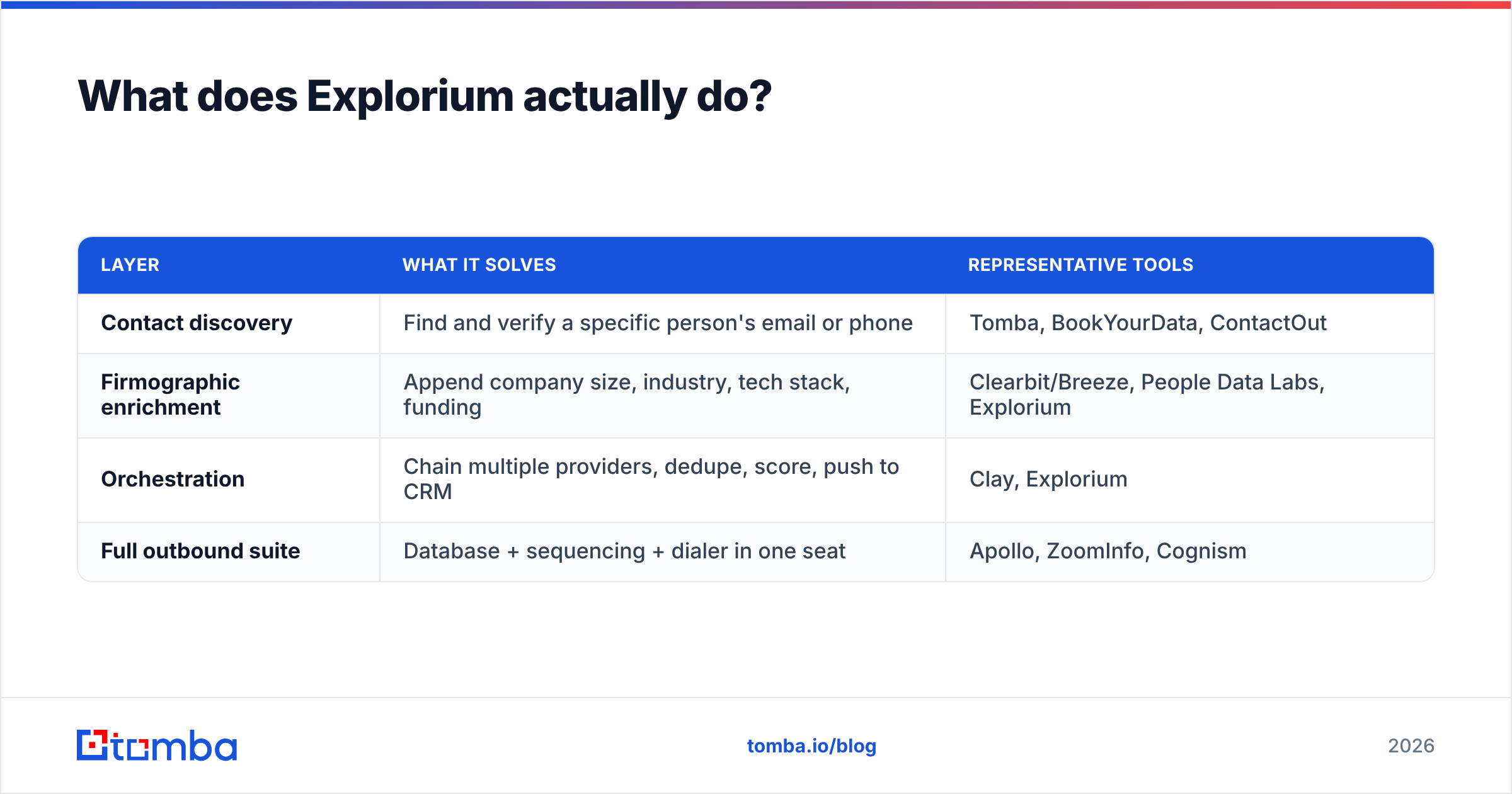
Here's how the category actually splits:
| Layer | What it solves | Representative tools |
|---|---|---|
| Contact discovery | Find and verify a specific person's email or phone | Tomba, BookYourData, ContactOut |
| Firmographic enrichment | Append company size, industry, tech stack, funding | Clearbit/Breeze, People Data Labs, Explorium |
| Orchestration | Chain multiple providers, dedupe, score, push to CRM | Clay, Explorium |
| Full outbound suite | Database + sequencing + dialer in one seat | Apollo, ZoomInfo, Cognism |
Pick the row you need before you pick a vendor. Most bad B2B data purchases are row errors, not brand errors.

Which Explorium alternatives are worth evaluating in 2026?#
1. Tomba — best for contact data with published pricing#
Tomba is the narrow, fast answer. It does one job well: turn a domain or a name-plus-company into a deliverable work email, then verify it before you send. The email finder, email verifier, domain search, catch-all handling, phone lookup, and data enrichment all sit behind the same key.
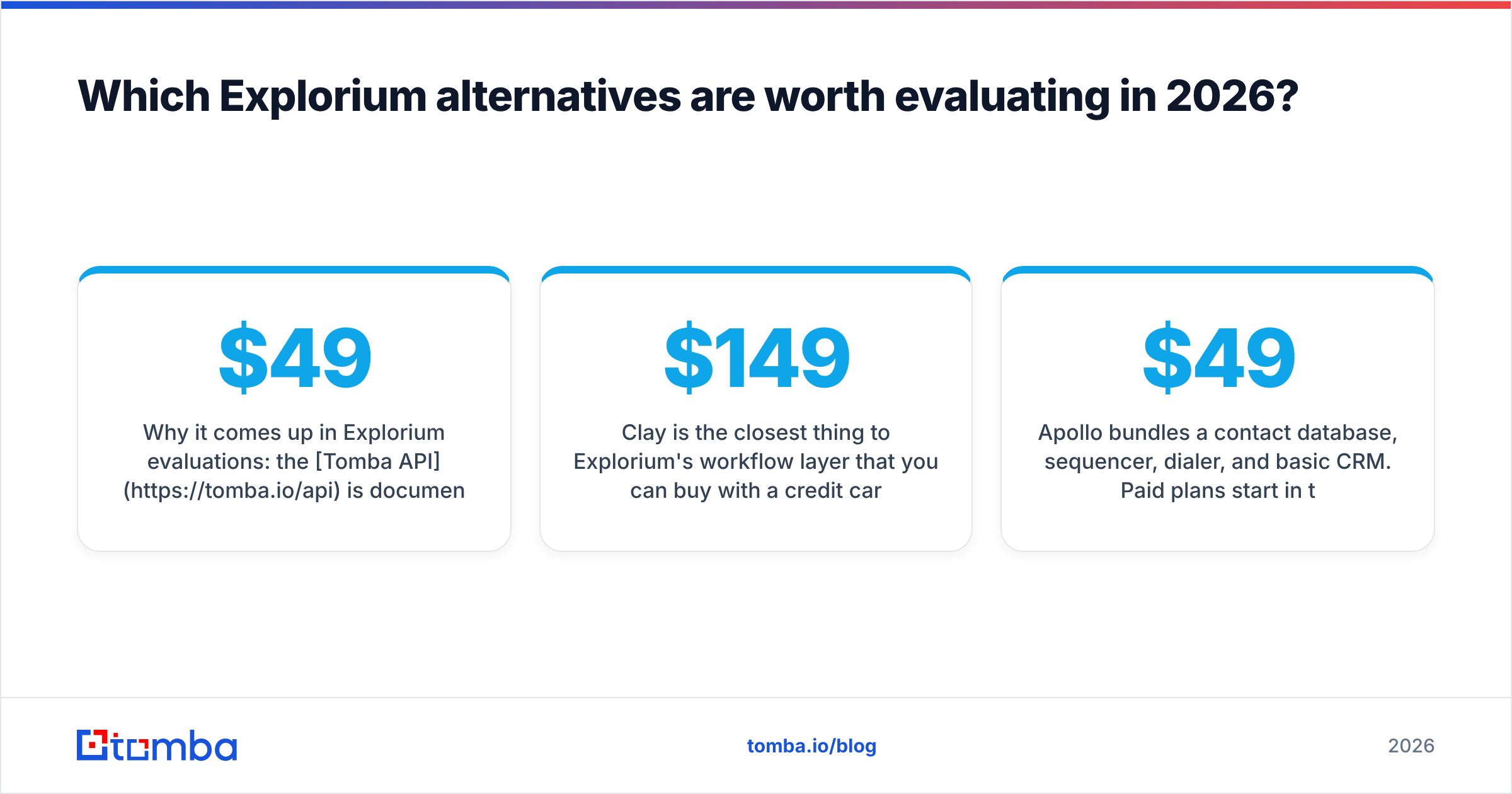
Why it comes up in Explorium evaluations: the Tomba API is documented, self-serve, and priced on a page you can read without a demo. Free tier is 25 searches/mo, Starter is $49/mo, Growth $99/mo, Pro $249/mo, Enterprise custom — see Tomba pricing for the current credit allocations. There's also a CLI, an MCP server, Sheets and Excel add-ins, and a Chrome extension, so engineers and RevOps people can both work without waiting on each other.
Where it isn't the answer: Tomba doesn't sell intent signals, and it isn't an orchestration canvas. If your requirement is "run a 12-step enrichment waterfall with conditional logic," you want Clay with Tomba as one of the providers inside it.
2. Clay — best functional match for orchestration#
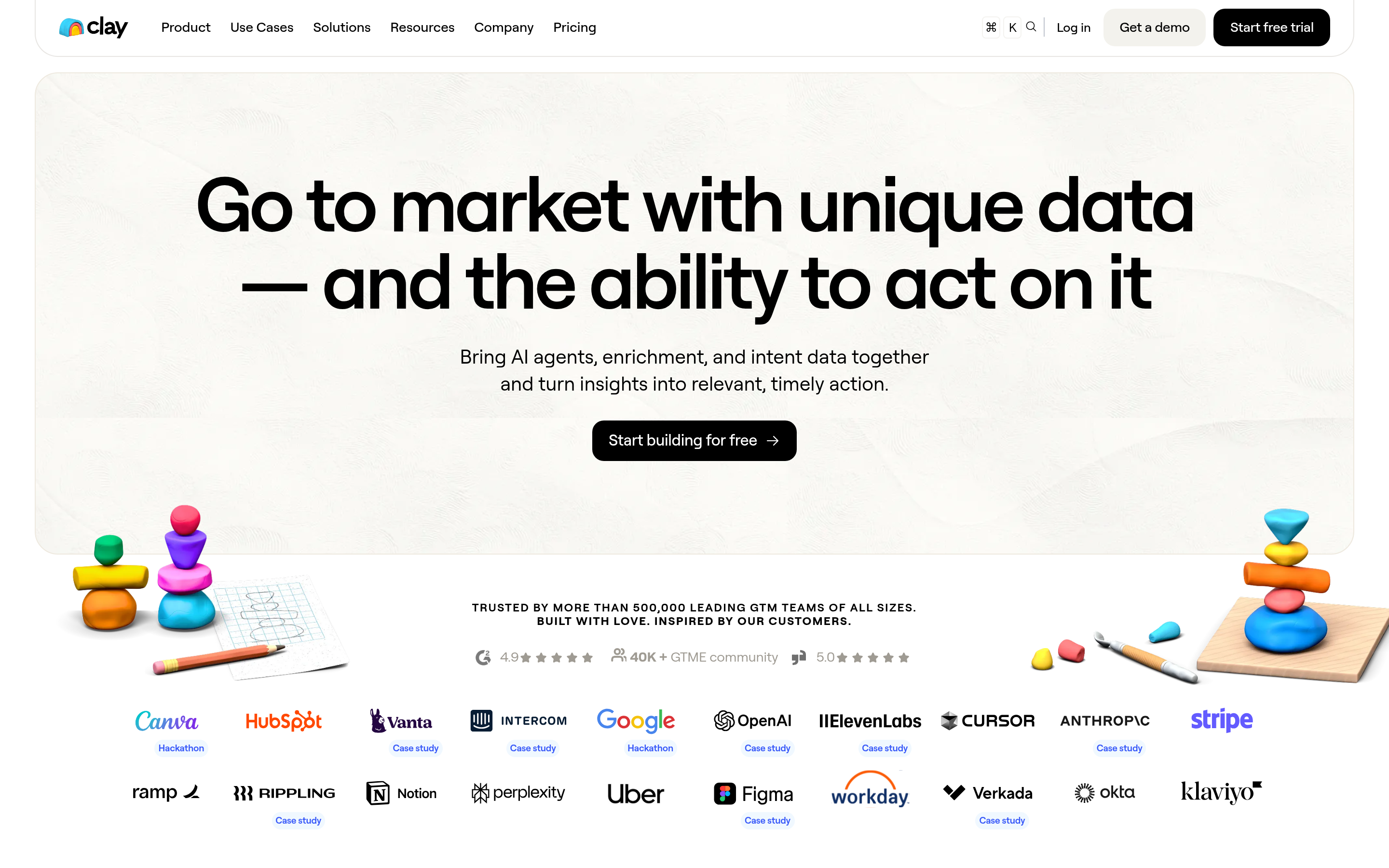
Clay is the closest thing to Explorium's workflow layer that you can buy with a credit card. You build a table, add enrichment columns from 100+ providers, waterfall between them until one returns a hit, then push the result to your CRM or sequencer. Public pricing starts with a free tier; paid plans commonly begin around $149/mo and climb sharply with credit volume.
Trade-off: you're now the integrator. Clay gives you the canvas, not the data — you still pay per provider, and credit burn is the number one complaint from teams who ship sloppy tables.
3. Apollo.io — best all-in-one for small outbound teams#
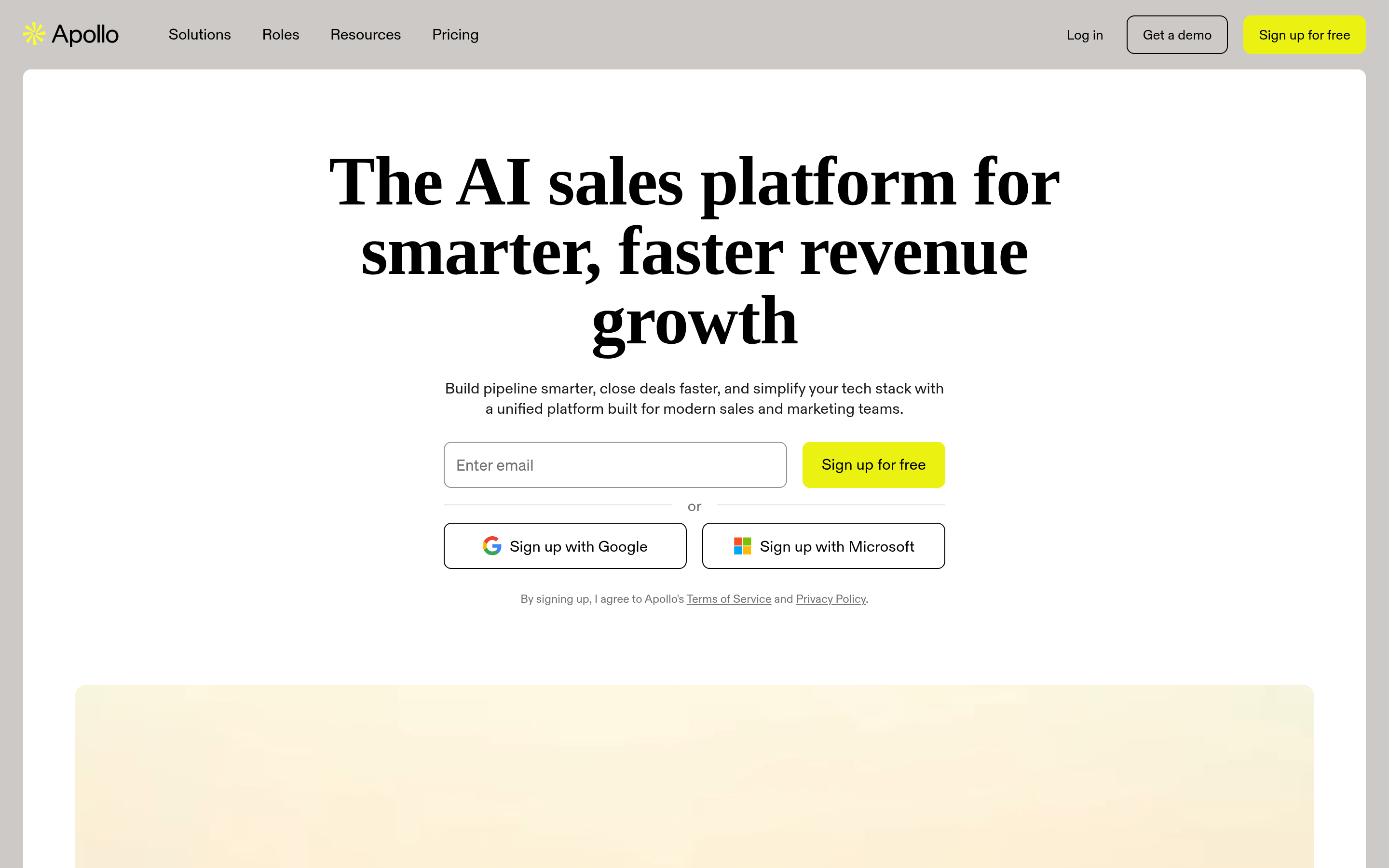
Apollo bundles a contact database, sequencer, dialer, and basic CRM. Paid plans start in the ~$49/user/mo range with a usable free tier. For a team that wants one login and one invoice, it's the pragmatic pick, and it removes the need for a separate sending tool.
Trade-off: database accuracy varies by region and seniority, and per-seat pricing punishes larger teams. If you like the suite but not the bill, an Apollo alternative that unbundles the data layer often costs less.
4. ZoomInfo — best for enterprise coverage and intent#

The incumbent. Deepest US coverage, mature intent data, org charts, and integrations everywhere. If your ICP is enterprise North America and your CRO wants one system of record, ZoomInfo is defensible.
Trade-off: custom pricing, annual contracts, and a reputation for aggressive renewals. Check the G2 category listings for current sentiment before you sign — the review volume there is large enough to be meaningful.
5. Cognism — best for EU/UK compliance and mobile numbers#
Cognism built its position on phone-verified mobile numbers and a GDPR-first posture, including notification against DNC lists in several European countries. If you're calling into the EU and legal has opinions, this is the safer database.
Trade-off: quoted pricing, annual commitment, and North American coverage that trails ZoomInfo.
6. BookYourData — best for pay-as-you-go verified lists#
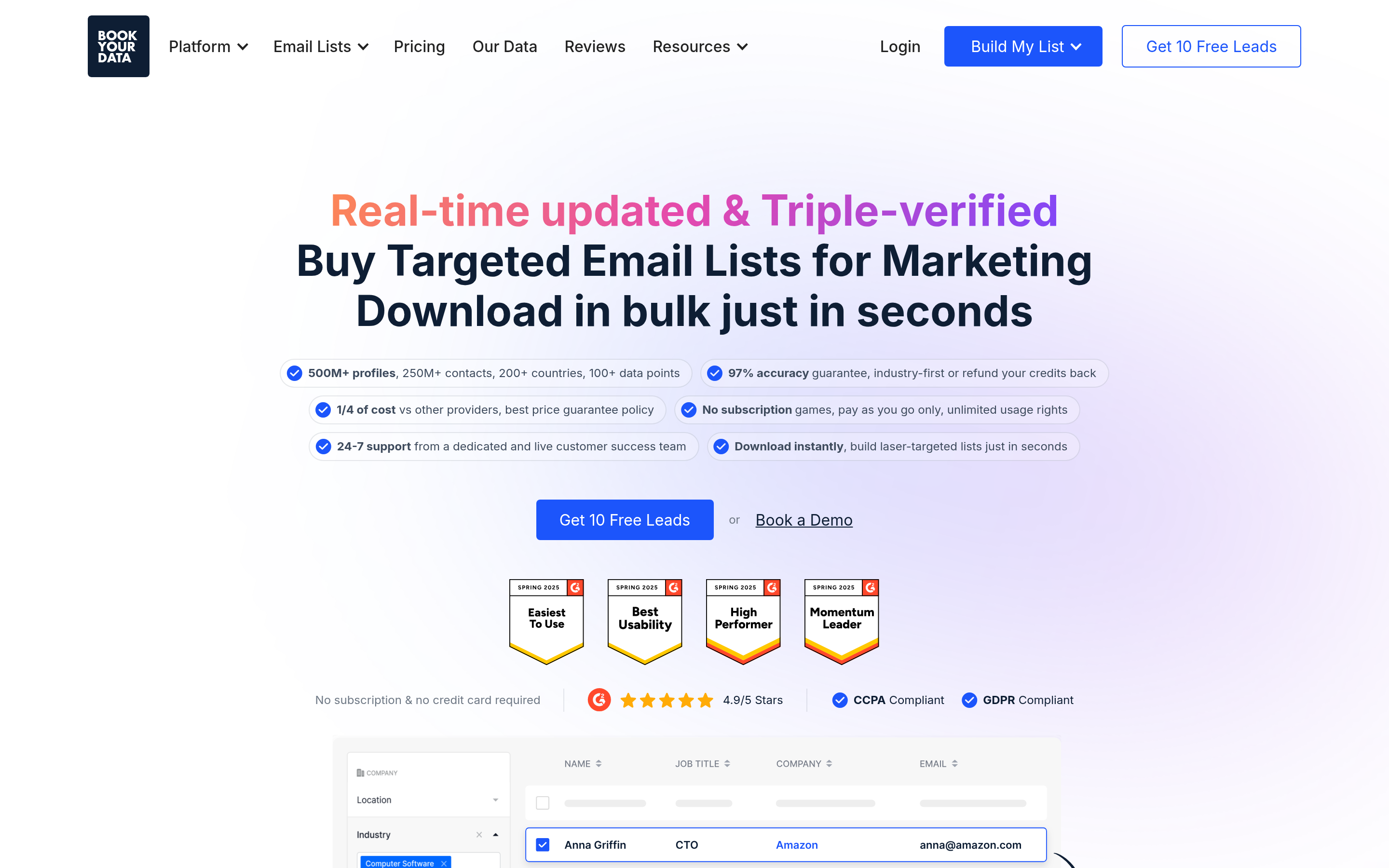
BookYourData is a strong option when you want a clean, pre-verified B2B list without committing to a platform. You filter, you buy the credits you need, you download. The accuracy guarantee and the no-subscription model make it a genuinely different purchase from the platform vendors — useful for one-off campaigns, list top-ups, or testing a new segment before you build infrastructure around it.
Trade-off: it's a list purchase, not a live enrichment pipeline. If your workflow needs a real-time API call on every inbound signup, pair it with a lookup API.
7. People Data Labs — best raw data API for builders#
PDL sells person and company records as an API and as bulk datasets. If you're building your own product feature — a signup autocomplete, an internal scoring model — this is the ingredient supplier, priced per record with self-serve tiers.
Trade-off: no UI worth speaking of, no workflow layer, and you own all the matching logic.
8. Clearbit (HubSpot Breeze Intelligence) — best if you live in HubSpot#
Now folded into HubSpot as Breeze Intelligence, this is form shortening plus company enrichment inside the CRM you already pay for. Zero integration work if you're a HubSpot shop.
Trade-off: credits are consumed from HubSpot's pool, and the standalone flexibility Clearbit once had is gone. Existing users evaluating a Clearbit alternative usually cite exactly that.
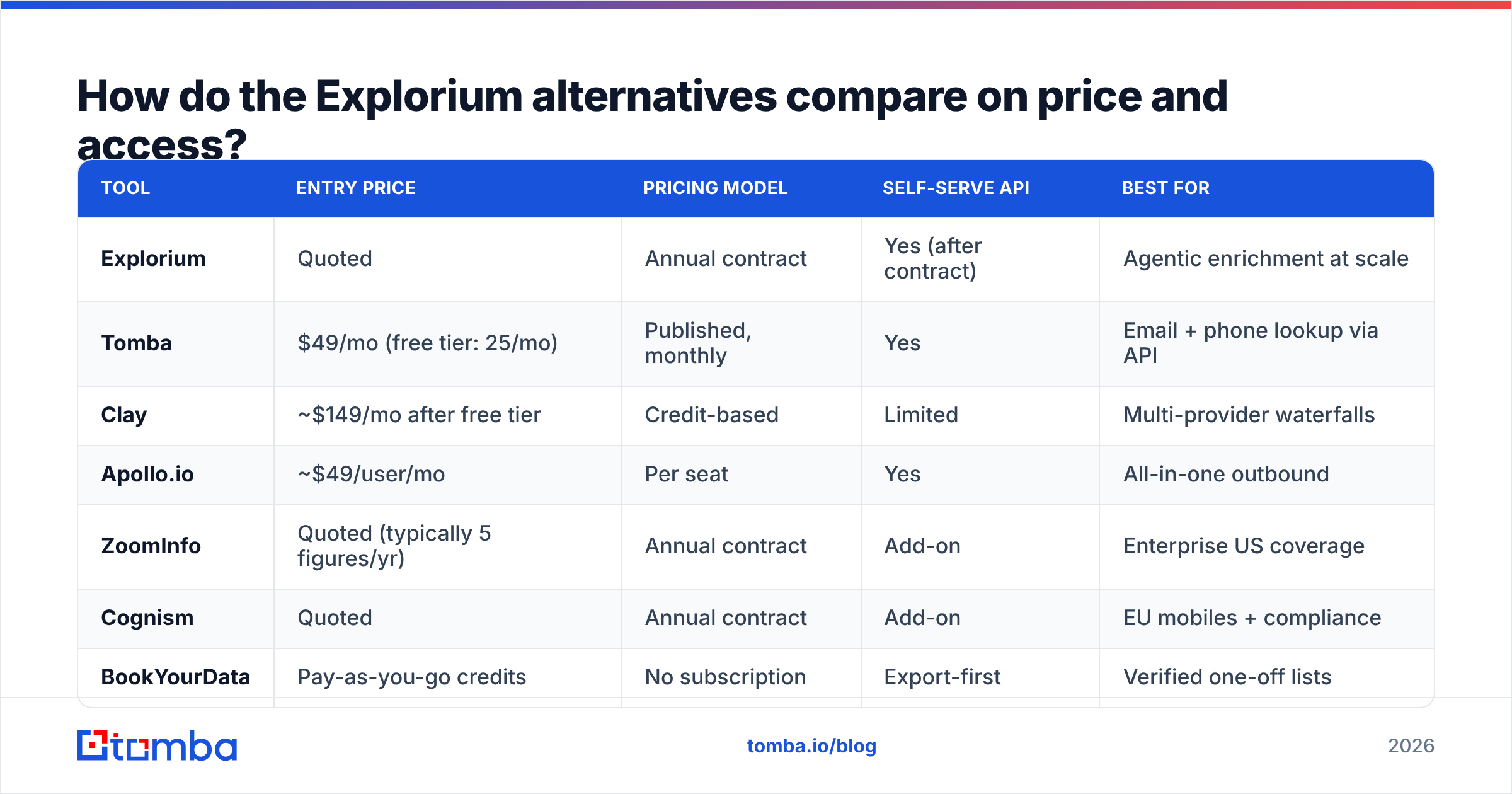
How do the Explorium alternatives compare on price and access?#
| Tool | Entry price | Pricing model | Self-serve API | Best for |
|---|---|---|---|---|
| Explorium | Quoted | Annual contract | Yes (after contract) | Agentic enrichment at scale |
| Tomba | $49/mo (free tier: 25/mo) | Published, monthly | Yes | Email + phone lookup via API |
| Clay | ~$149/mo after free tier | Credit-based | Limited | Multi-provider waterfalls |
| Apollo.io | ~$49/user/mo | Per seat | Yes | All-in-one outbound |
| ZoomInfo | Quoted (typically 5 figures/yr) | Annual contract | Add-on | Enterprise US coverage |
| Cognism | Quoted | Annual contract | Add-on | EU mobiles + compliance |
| BookYourData | Pay-as-you-go credits | No subscription | Export-first | Verified one-off lists |
| People Data Labs | Per-record, self-serve | Usage-based | Yes | Building data features |
Prices reflect publicly listed information at the time of writing; quoted vendors change floors frequently, so treat the last column as the durable signal and the second as a starting point.
Is Explorium worth it, or should you unbundle?#
Explorium is worth it when three conditions hold at once: you have a data team that will actually use an entity graph, you need signals beyond contact details, and your annual GTM data budget is already five figures. In that world, one platform beats five invoices.
Unbundle when any of these are true:
- Your real requirement is deliverable emails. A lookup API plus verification solves 90% of the job at a fraction of the cost.
- You need to ship this quarter. Procurement on a quoted contract routinely eats six to ten weeks. A published-price API is live in an afternoon.
- Volume is spiky. Annual seats price your peak month twelve times. Credit or usage models price what you use.
- You already own an orchestration layer. If Clay or an internal pipeline is doing the stitching, you're paying twice for the workflow.
- Compliance drives the choice. Then the question is coverage-by-jurisdiction, not agent capability, and Cognism or a regional provider wins on that axis alone.

What should you test before you switch?#
Do not evaluate on marketing claims about database size. Total record counts are the least useful number in this industry — a graph with 300 million people is worthless if it holds two thousand of your ICP.
Run this instead:
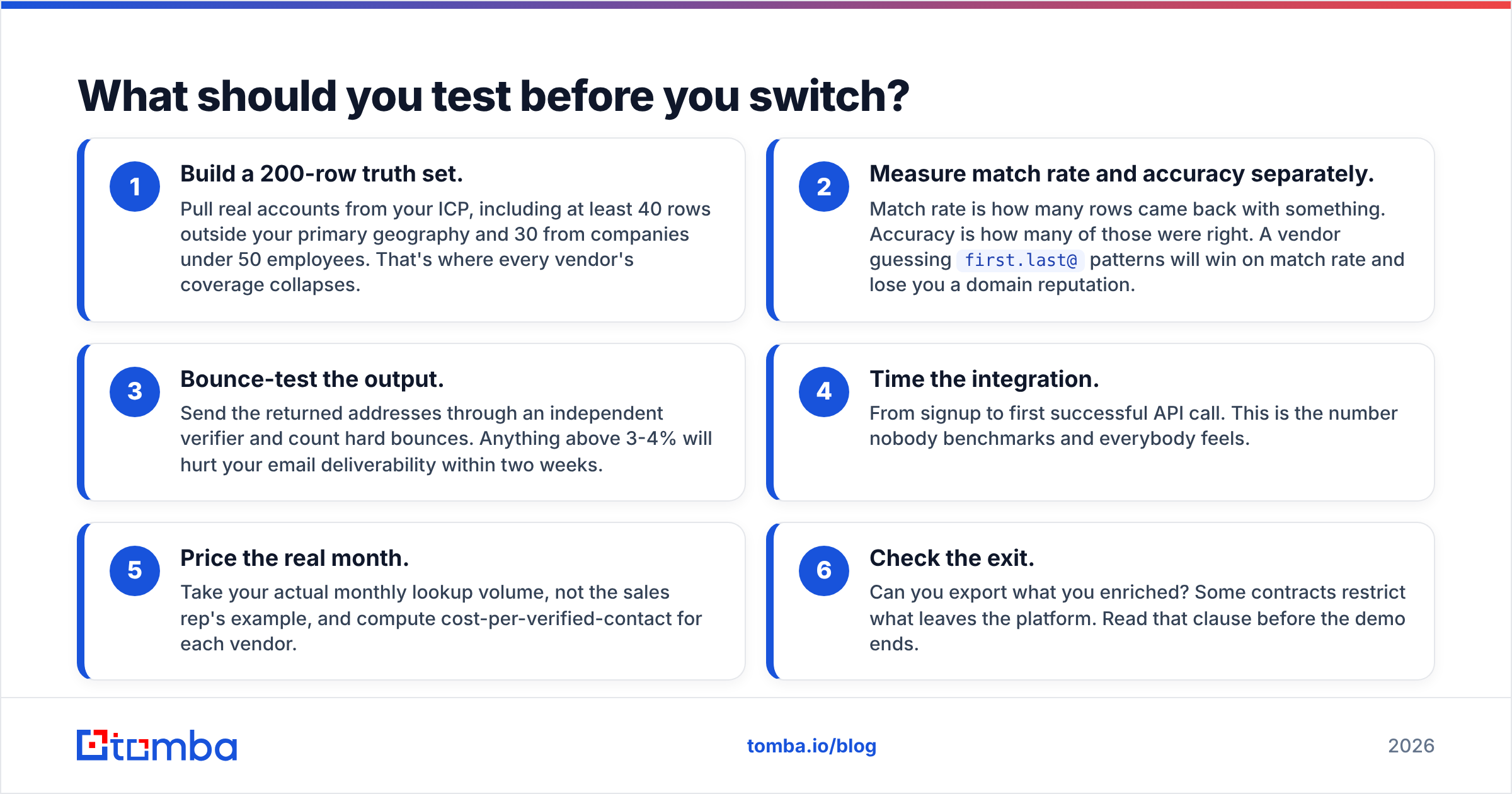
- Build a 200-row truth set. Pull real accounts from your ICP, including at least 40 rows outside your primary geography and 30 from companies under 50 employees. That's where every vendor's coverage collapses.
- Measure match rate and accuracy separately. Match rate is how many rows came back with something. Accuracy is how many of those were right. A vendor guessing
first.last@patterns will win on match rate and lose you a domain reputation. - Bounce-test the output. Send the returned addresses through an independent verifier and count hard bounces. Anything above 3-4% will hurt your email deliverability within two weeks.
- Time the integration. From signup to first successful API call. This is the number nobody benchmarks and everybody feels.
- Price the real month. Take your actual monthly lookup volume, not the sales rep's example, and compute cost-per-verified-contact for each vendor.
- Check the exit. Can you export what you enriched? Some contracts restrict what leaves the platform. Read that clause before the demo ends.
For step 1 and 5, bulk lookups make the test cheap — upload the truth set, export the results, diff it against your known-good column in a spreadsheet.
Which alternative fits which team?#
- Two-to-ten person outbound team: Apollo for the suite, or Tomba plus a sequencer if you'd rather own your data layer and keep the bill flat.
- RevOps team with a builder mindset: Clay for orchestration, with Tomba and one firmographic provider as the waterfall steps.
- Engineering team shipping a data feature: People Data Labs for firmographics, Tomba for contact resolution, both behind your own service.
- Enterprise with a compliance function: ZoomInfo for North America, Cognism for Europe. Budget accordingly.
- Campaign-by-campaign marketer: BookYourData for clean list buys without a platform commitment.
- HubSpot-native team: Breeze Intelligence first, then add a lookup API only where match rates disappoint.
The short version#
Explorium is a good platform aimed at a specific buyer: a team that wants a data layer plus agents and has the budget and headcount to exploit it. Most teams comparing Explorium alternatives are not that buyer — they need reliable contact data, a documented endpoint, and a price they can read on a page.
If that's you, start with the narrow tool and expand later. Run your 200-row truth set through the Tomba Email Finder on the free tier — 25 searches costs nothing and tells you more about your real coverage than any demo will. If the match and bounce numbers hold up, $49/mo gets you the same API in production this week, with no contract to unwind if your ICP changes next quarter.
Related guides#
Ready to find emails that actually work?
Join 150,000+ professionals who stopped guessing and started sending. Free credits on signup — no credit card required.
Get the Tomba newsletter
Practical outbound tactics and product updates — once every two weeks.
About the author