9 Best Folloze Alternatives in 2026 (Compared & Priced)
Folloze pioneered the personalized buyer-experience board, but it is not the only option — and rarely the cheapest. Here are nine Folloze alternatives compared on pricing, ABM depth, analytics and the contact data that actually feeds them.
TL;DR
- Folloze is a buyer-experience platform: personalized content boards for ABM campaigns, with intent-style engagement analytics on top. It is strong, enterprise-priced, and quoted per seat plus per campaign volume.
- The best Folloze alternatives fall into three buckets: content experience (PathFactory, Uberflip, Turtl, Paperflite), web personalization (Mutiny, Hushly, Journey), and full ABM orchestration (Demandbase, 6sense, RollWorks).
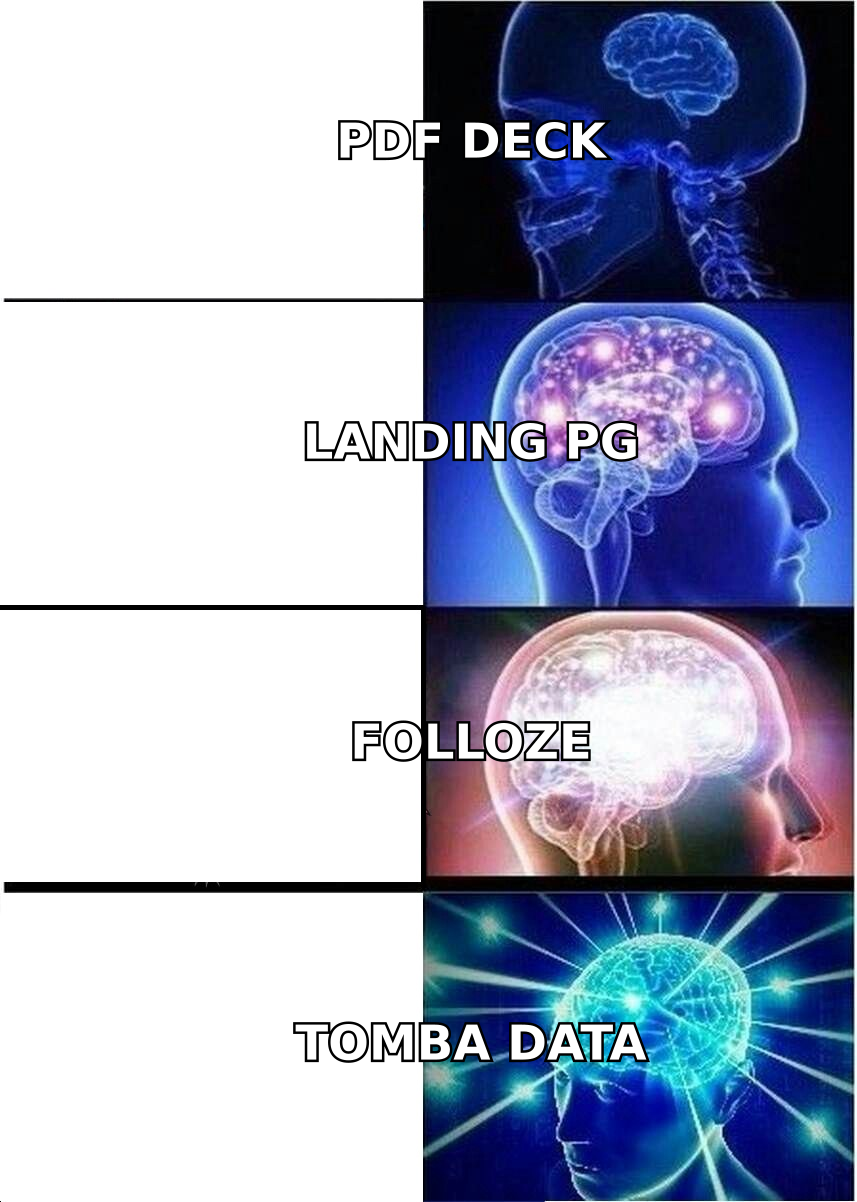
- Most teams that churn from Folloze do not leave because the boards underperform. They leave because they were paying enterprise ABM money for what was effectively a nicer landing-page builder.
- No buyer-experience platform generates demand on its own. It personalizes traffic you already have. If your named-account list has no verified contacts behind it, the board never gets seen.
- Budget realistically: $8k–$25k/year for mid-market content experience tools, $40k–$150k+ for full ABM suites, and a separate line item for contact data and enrichment.
What is Folloze, and why do teams look for alternatives?#
Folloze is a buyer experience platform (BEP). Instead of sending a prospect a PDF and a generic landing page, you build a personalized "board" — a mini microsite assembled from your content library, branded to the target account, sometimes personalized down to the individual contact. Sales and marketing share the same boards, and Folloze reports back on who opened what, for how long, and which assets moved.
The category itself is sound. Gartner's B2B buying research has consistently found that buying groups spend the majority of their journey doing independent research rather than talking to reps, which is exactly the gap a curated content destination fills. You can read Gartner's B2B buying journey research for the underlying data.
So why do teams shop around? Four recurring reasons show up in G2 reviews and in renewal conversations:
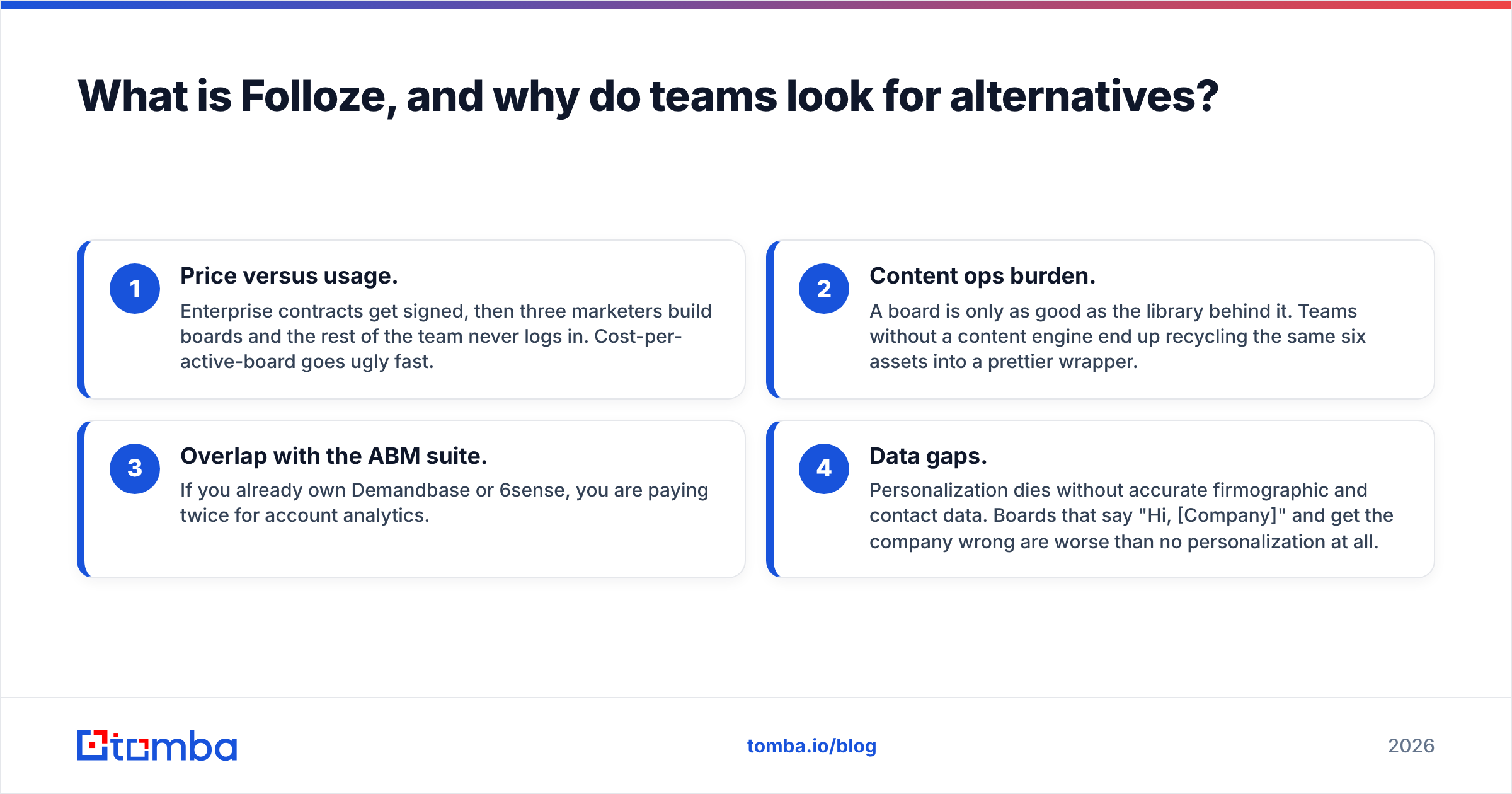
- Price versus usage. Enterprise contracts get signed, then three marketers build boards and the rest of the team never logs in. Cost-per-active-board goes ugly fast.
- Content ops burden. A board is only as good as the library behind it. Teams without a content engine end up recycling the same six assets into a prettier wrapper.
- Overlap with the ABM suite. If you already own Demandbase or 6sense, you are paying twice for account analytics.
- Data gaps. Personalization dies without accurate firmographic and contact data. Boards that say "Hi, [Company]" and get the company wrong are worse than no personalization at all.
That fourth point is the one most comparison posts skip, and it is the one that decides whether any of these tools return money.
What should you compare in a Folloze alternative?#
Do not start from feature lists. Start from these six axes, in this order:
- Traffic source — Does the tool personalize inbound web traffic (Mutiny, Hushly), outbound-shared destinations (Folloze, Paperflite, Journey), or both? Buying the wrong one means the product technically works and still produces nothing.
- Content volume required — PathFactory and Uberflip assume you have 100+ assets to route. If you have 20, a lighter tool or a well-built landing page stack wins.
- Analytics depth — Engagement time per asset, buying-group coverage, and CRM write-back are the three that matter. Vanity click counts are not analytics.
- CRM and MAP integration — Salesforce, HubSpot, Marketo. Check whether write-back is native or requires a middleware hop. Native beats "supported via Zapier" every time.
- Time to first campaign — Enterprise ABM suites routinely take 60–90 days to implement. Content experience tools should be live in two weeks.
- Data dependency — What contact and company data does the tool need from you, and where will you get it? This is the hidden cost line in every ABM budget.
How do the main Folloze alternatives compare?#
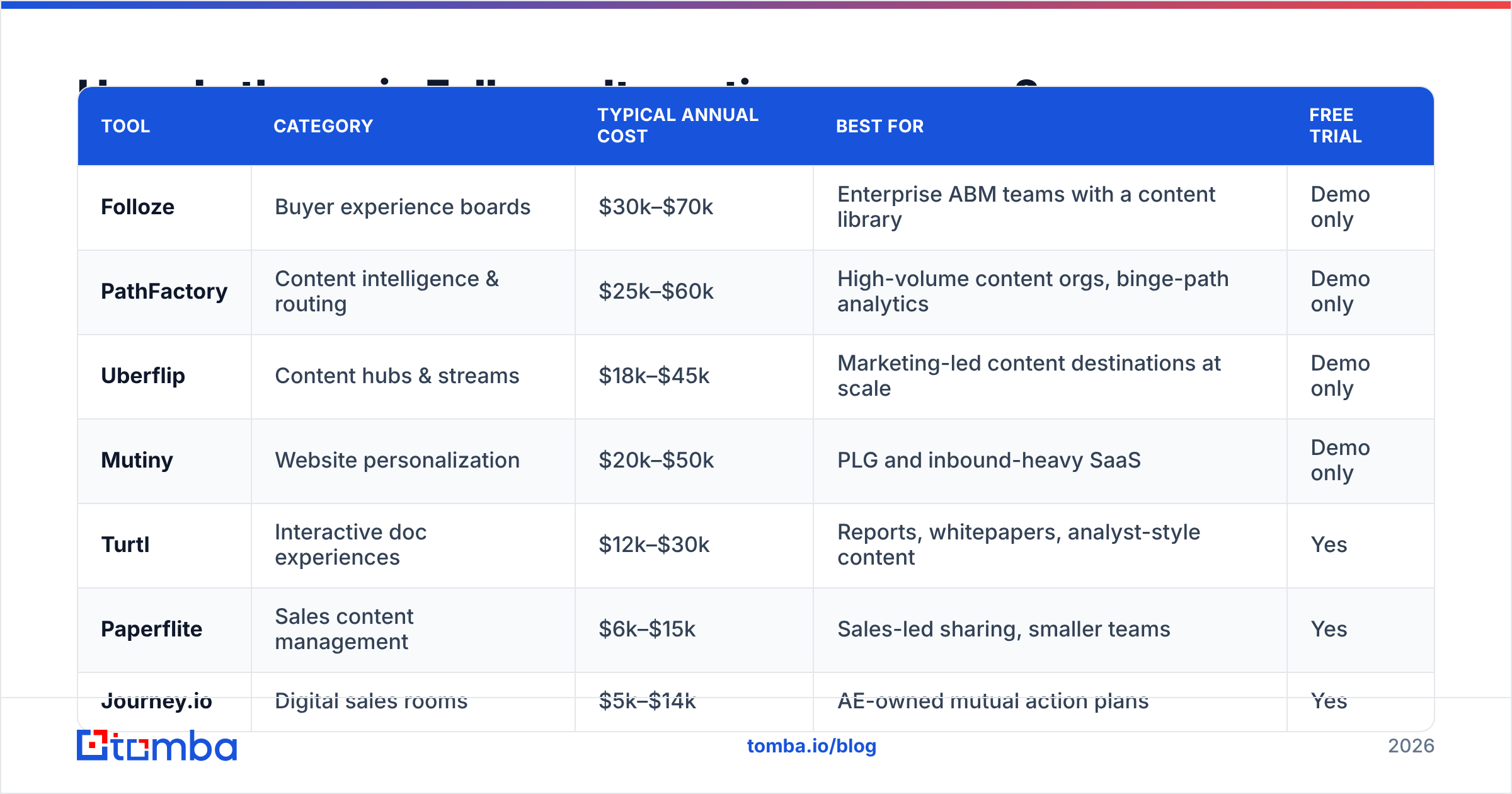
Pricing below reflects publicly listed rates and commonly reported contract ranges at the time of writing. Most of these vendors quote, so treat the numbers as planning ranges, not quotes.
| Tool | Category | Typical annual cost | Best for | Free trial |
|---|---|---|---|---|
| Folloze | Buyer experience boards | $30k–$70k | Enterprise ABM teams with a content library | Demo only |
| PathFactory | Content intelligence & routing | $25k–$60k | High-volume content orgs, binge-path analytics | Demo only |
| Uberflip | Content hubs & streams | $18k–$45k | Marketing-led content destinations at scale | Demo only |
| Mutiny | Website personalization | $20k–$50k | PLG and inbound-heavy SaaS | Demo only |
| Turtl | Interactive doc experiences | $12k–$30k | Reports, whitepapers, analyst-style content | Yes |
| Paperflite | Sales content management | $6k–$15k | Sales-led sharing, smaller teams | Yes |
| Journey.io | Digital sales rooms | $5k–$14k | AE-owned mutual action plans | Yes |
| Demandbase | Full ABM platform | $40k–$150k+ | Enterprise ABM with intent + advertising | Demo only |
| RollWorks | ABM for mid-market | $12k–$36k | Smaller teams needing ads + scoring | Demo only |
Is PathFactory a better fit than Folloze?#
PathFactory is the closest true peer. Where Folloze emphasizes the curated board as a destination, PathFactory emphasizes content journeys: it removes friction between assets so a visitor binges three pieces instead of bouncing after one, then reports engagement time as the primary metric.
Choose PathFactory if content marketing owns the program and you have a deep asset library. Choose Folloze if sales reps need to assemble and send personalized destinations themselves. PathFactory's analytics on time-per-asset are genuinely better than most of the category; its board-building UX is less rep-friendly.
Is Uberflip a cheaper Folloze alternative?#
Usually, yes — though "cheaper" here still means five figures. Uberflip builds content hubs and streams: persona-based, industry-based, or account-based collections that live on your domain and inherit your SEO. It handles the "we have 400 blog posts and no way to package them" problem better than anything else on this list.
The tradeoff is that Uberflip is a marketing tool wearing an ABM hat. Rep-level personalization is thinner, and the account-based add-ons push the price back toward Folloze territory.
Should you use Mutiny instead?#
Only if your problem is inbound, not outbound. Mutiny personalizes your existing website by visitor firmographics — swapping headlines, logos, case studies and CTAs based on who is browsing. If you have meaningful organic and paid traffic from target accounts, Mutiny converts it better than any board ever will.
If your motion is cold outbound and reps send links to prospects who have never visited your site, Mutiny has nothing to personalize. That is a different product problem entirely.
Where do Paperflite and Journey.io fit?#
These are the pragmatic downgrades — and for many mid-market teams, the correct choice.
- Paperflite is sales content management: organize assets, share trackable links, see engagement. Roughly a quarter of Folloze's cost, with maybe 60% of the useful functionality.
- Journey.io builds digital sales rooms — a shared space per deal with content, mutual action plans and stakeholder tracking. It is deal-centric rather than campaign-centric.
If your honest use case is "reps want to send a nice link and know if it got opened," you do not need an enterprise BEP. You need one of these two and a better contact list.
What about full ABM platforms?#
Demandbase, 6sense and RollWorks are not really Folloze alternatives — they are the layer above it. They provide intent data, account scoring, advertising and orchestration. Some teams replace Folloze by consolidating into one of these and accepting weaker content experiences in exchange for one contract instead of three.
That consolidation math only works if you actually use the intent and advertising modules. Buying a $90k ABM suite to replace a $40k board tool is not a saving. If you are evaluating that path, our breakdown of 6sense alternatives and Demandbase alternatives covers the trade-offs in more depth.
Do buyer experience platforms work without good contact data?#
No — and this is the failure mode nobody demos.
Every tool on this list assumes two inputs you must supply yourself:
- A target account list that is accurate and current.
- Contact-level records — names, titles, verified work emails, and ideally direct phone numbers — for the buying group inside each account.
Personalization is a multiplier on those inputs. Multiply by a bad list and you get a beautifully rendered board that lands in a catch-all inbox, or a personalized headline addressed to someone who left the company fourteen months ago.
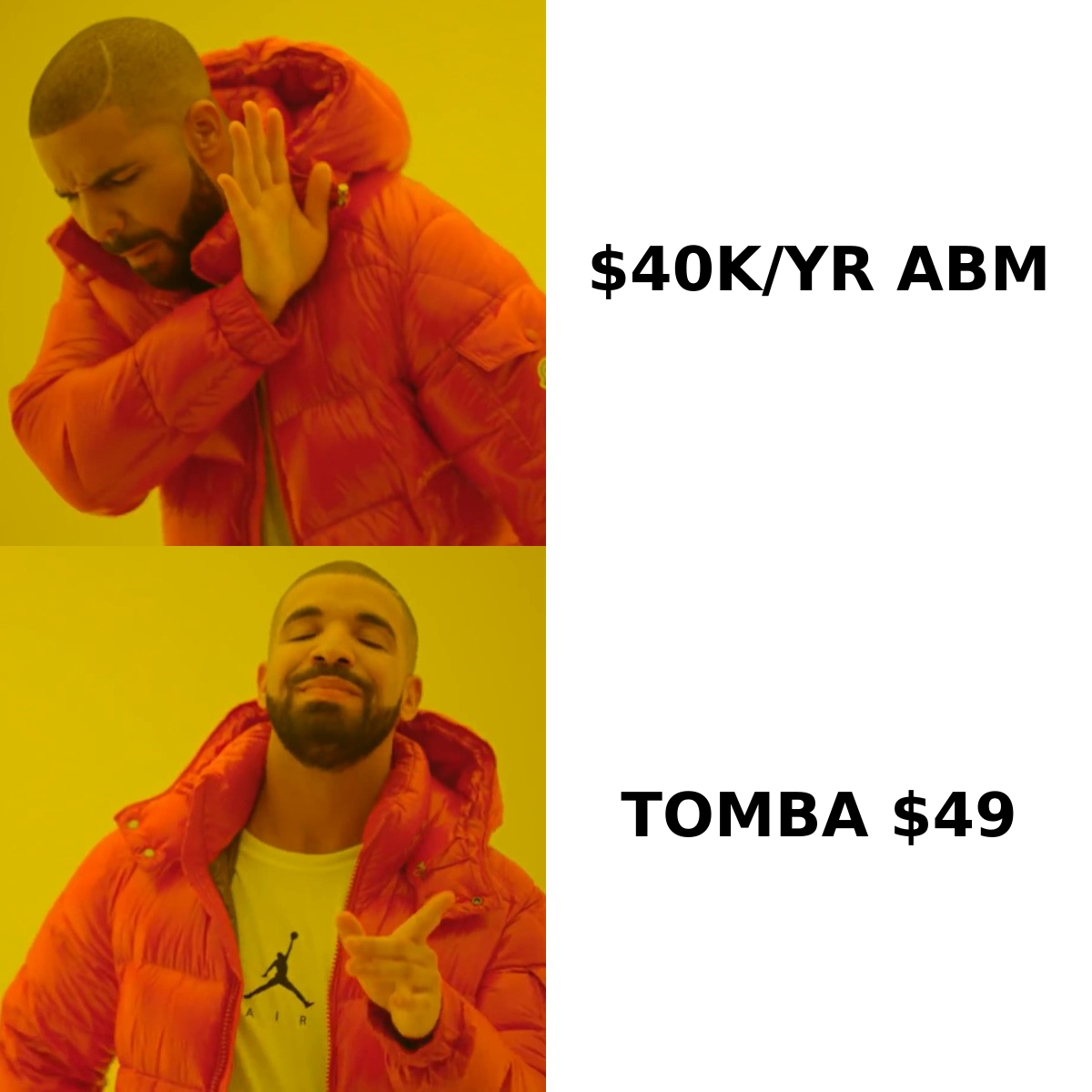
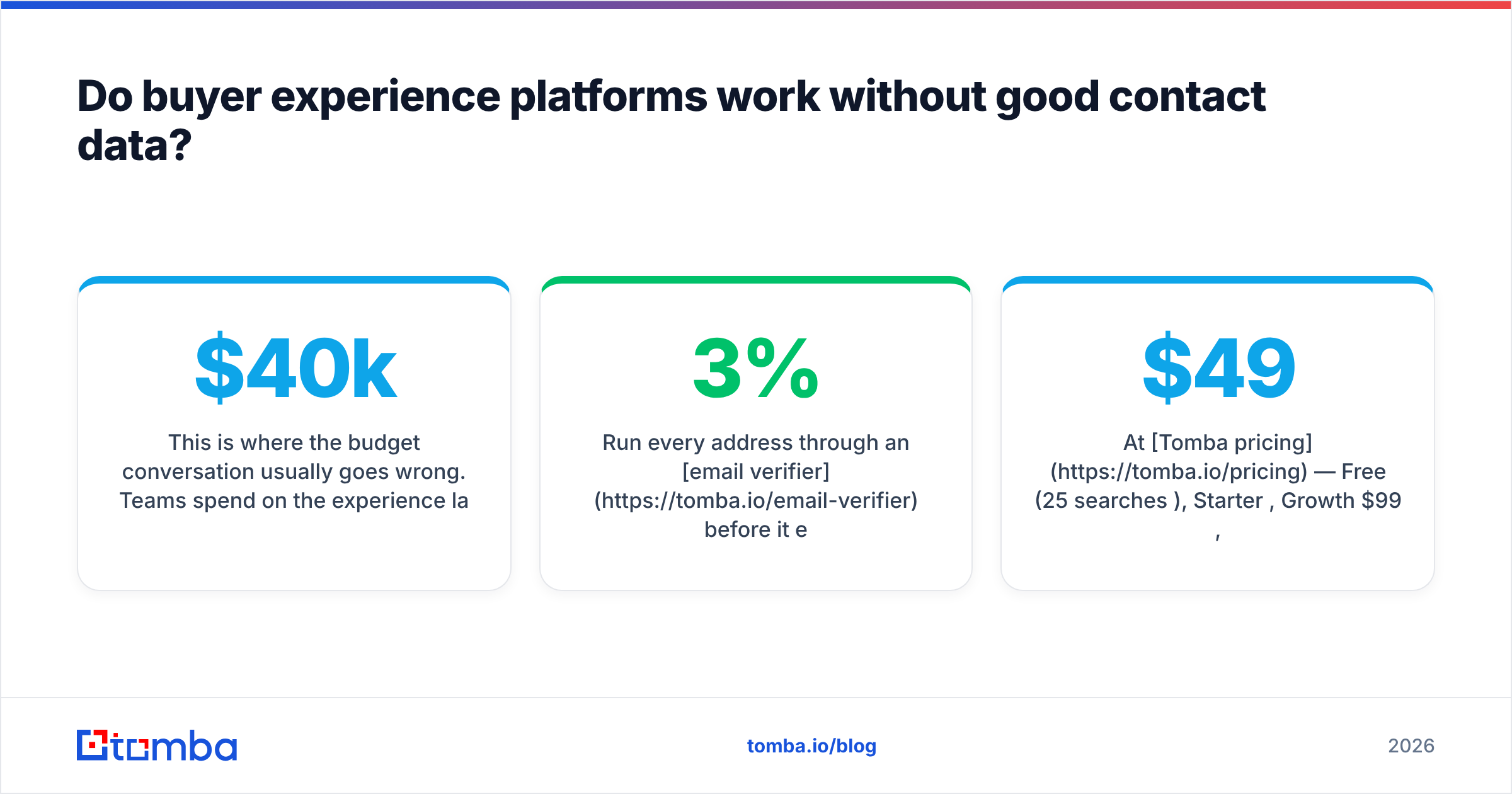
This is where the budget conversation usually goes wrong. Teams spend $40k on the experience layer and $0 on the data layer, then blame the platform when engagement rates disappoint. The fix costs a fraction of the platform:
- Build the account list, then use domain search to pull every discoverable contact at each target company, filtered by department and seniority.
- Run every address through an email verifier before it enters the campaign. Bounce rates above 3% damage sender reputation for every other campaign you run.
- Use data enrichment to fill in job title, seniority and company size so the personalization tokens in your board have something real to reference.
At Tomba pricing — Free (25 searches/month), Starter $49/mo, Growth $99/mo, Pro $249/mo — the data layer costs roughly what one enterprise ABM seat costs per year. The ratio is absurd, and it is why data is the highest-ROI line in the ABM budget.
What does a realistic Folloze-replacement stack cost?#
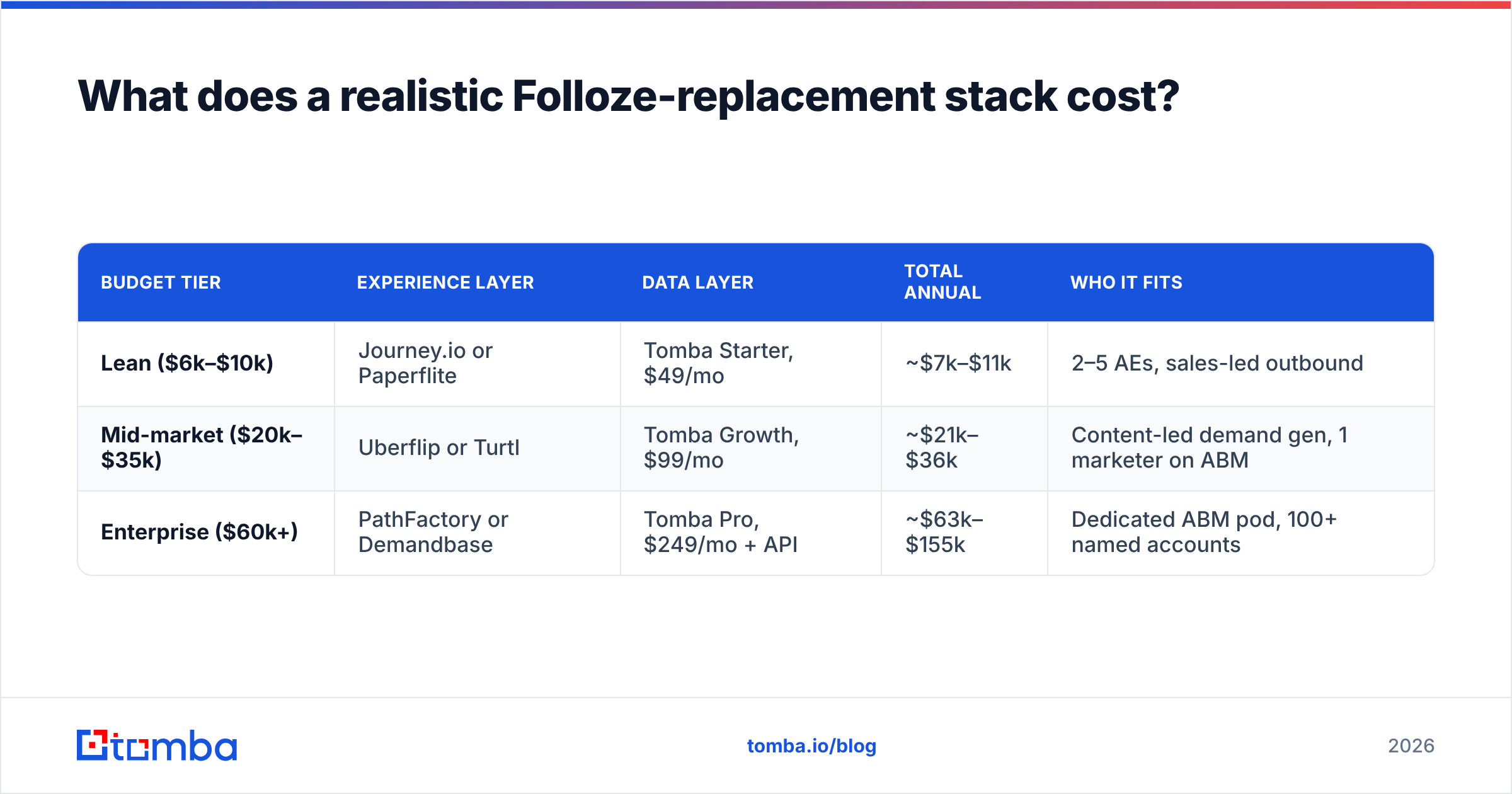
Here is how three common budget tiers actually assemble. Data costs assume Tomba plus a verification workflow.
| Budget tier | Experience layer | Data layer | Total annual | Who it fits |
|---|---|---|---|---|
| Lean ($6k–$10k) | Journey.io or Paperflite | Tomba Starter, $49/mo | ~$7k–$11k | 2–5 AEs, sales-led outbound |
| Mid-market ($20k–$35k) | Uberflip or Turtl | Tomba Growth, $99/mo | ~$21k–$36k | Content-led demand gen, 1 marketer on ABM |
| Enterprise ($60k+) | PathFactory or Demandbase | Tomba Pro, $249/mo + API | ~$63k–$155k | Dedicated ABM pod, 100+ named accounts |
Two things to notice. First, the experience layer dominates the cost in every tier — which is exactly why you should size it to your content volume, not your ambition. Second, moving from Starter to Pro data changes total spend by about 1%, while typically changing deliverability and match rates far more than that. Underspending on data to protect the platform budget is the wrong trade every time.
Which Folloze alternative should you pick?#
Short version, by situation:
- You have a big content library and marketing owns ABM → PathFactory, with Uberflip as the cheaper runner-up.
- You have strong inbound traffic from target accounts → Mutiny.
- Reps just need trackable, decent-looking share links → Paperflite or Journey.io. Save the $30k.
- You need intent, ads and scoring, not just boards → Demandbase or RollWorks, and drop the standalone BEP.
- Your content is long-form and report-heavy → Turtl.
- You are staying on Folloze → Fine. But audit what percentage of your boards get more than five unique viewers before you renew, and fix the contact data feeding them first.
If you are running the evaluation seriously, request pricing from three vendors on the same day with the same account-volume assumptions. The quote spread inside this category is wider than the feature spread — and vendors discount hardest at quarter end.
One last check before you sign anything: pull a sample of 200 contacts from your target account list and verify them. If more than 15% are invalid, unknown, or attached to people who have changed jobs, the platform is not your bottleneck. Your list is.
Ready to fix the data layer first?#
Whichever buyer-experience platform you choose, it runs on contacts you supply. Start with the Tomba Email Finder — search by domain, name or company, get verified professional emails with confidence scores, and push them straight into your CRM or ABM platform via the Tomba API. The free tier gives you 25 searches to test match quality against your own target account list before you commit a cent.
Build the list, verify it, then decide how much personalization it deserves.
Related guides#
Ready to find emails that actually work?
Join 150,000+ professionals who stopped guessing and started sending. Free credits on signup — no credit card required.
Get the Tomba newsletter
Practical outbound tactics and product updates — once every two weeks.
About the author