9 Best FullEnrich Alternatives in 2026 (Free & Paid)
FullEnrich made waterfall enrichment mainstream, but credit math, phone coverage, and API limits push plenty of teams to look elsewhere. Here are 9 alternatives compared on price, accuracy, and real-world fit.
TL;DR
- FullEnrich is a waterfall enrichment tool: it queries a stack of data vendors in sequence until it returns an email or a mobile number. That's genuinely useful — and genuinely expensive per record.
- Most teams shopping for FullEnrich alternatives are solving one of three things: credit burn on low-yield lists, weak coverage outside the US, or an API/workflow that doesn't fit how they actually prospect.
- If email is 90% of your outbound and phone is a nice-to-have, a direct email-finding platform like Tomba usually costs a fraction per verified contact.
- If you need mobile numbers at volume, keep a waterfall in the stack — but run it after a cheap first-pass finder, not before.
- Nine alternatives compared below on price, phone coverage, API depth, and who each one actually fits.
What is FullEnrich, and why do teams look for alternatives?#
Think of waterfall enrichment like calling three friends to get someone's number. You ask the first; if they don't have it, you ask the second; if they strike out, you ask the third. You almost always end up with a number — but you've spent three favors to get it.
That's FullEnrich in one sentence. It sits on top of 15+ underlying data vendors, sends your contact through them in a defined order, and stops the moment one returns a hit. You get better fill rates than any single provider, especially for mobile numbers, which are notoriously fragmented across sources.
The friction shows up in three predictable places:
Credit economics. Waterfalls charge per successful enrichment, which sounds fair until you run a 10,000-row list where you only planned to email 2,000 of them. You pay for hits you never use. On a low-intent list, the cost per meeting can quietly triple.
Phone-heavy pricing on email-only workflows. A large share of B2B teams never dial. If your sequence is email plus LinkedIn, you're paying for a mobile-number engine you touch once a quarter.
Geographic skew. Waterfall vendors are strongest where their underlying sources are strongest — heavily US, decent EU, thin in APAC, LATAM, and MENA. Ask any team prospecting into Germany or the Gulf how their fill rate compares to their US numbers.
None of that makes FullEnrich a bad product. It makes it a specific product, and a lot of buyers picked it before they knew what they actually needed.
What should you actually compare in a FullEnrich alternative?#
Before you look at a single logo, decide which of these six variables you're optimizing. Most switching regret comes from optimizing the wrong one.
- Cost per usable contact, not per credit. A tool at $0.03/credit with a 55% hit rate costs more per usable record than one at $0.04/credit hitting 80%. Run both on the same 200-row sample and do the division yourself.
- Email vs. phone weighting. Waterfalls earn their premium on mobile numbers. If you're not dialing, that premium is dead weight — a dedicated email finder plus a separate phone tool is usually cheaper than one blended credit.
- Verification depth, including catch-all domains. Roughly a third of B2B domains are catch-all, which means SMTP checks return "accepted" for everything. Tools that flag catch-alls honestly beat tools that quietly mark them valid and hand you a bounce.
- API and automation surface. Can you call it from a script, a Clay table, a Google Sheet, an n8n node? A great dataset behind a clunky UI is a dataset you'll use twice.
- Regional coverage where you actually sell. Test your real territory, not a demo list of Silicon Valley VPs. Every vendor looks accurate on
stripe.com. - Compliance posture. GDPR/CCPA handling, opt-out flows, and documented sourcing matter more every year — and increasingly show up in enterprise procurement checklists.
Which FullEnrich alternatives are worth comparing in 2026?#
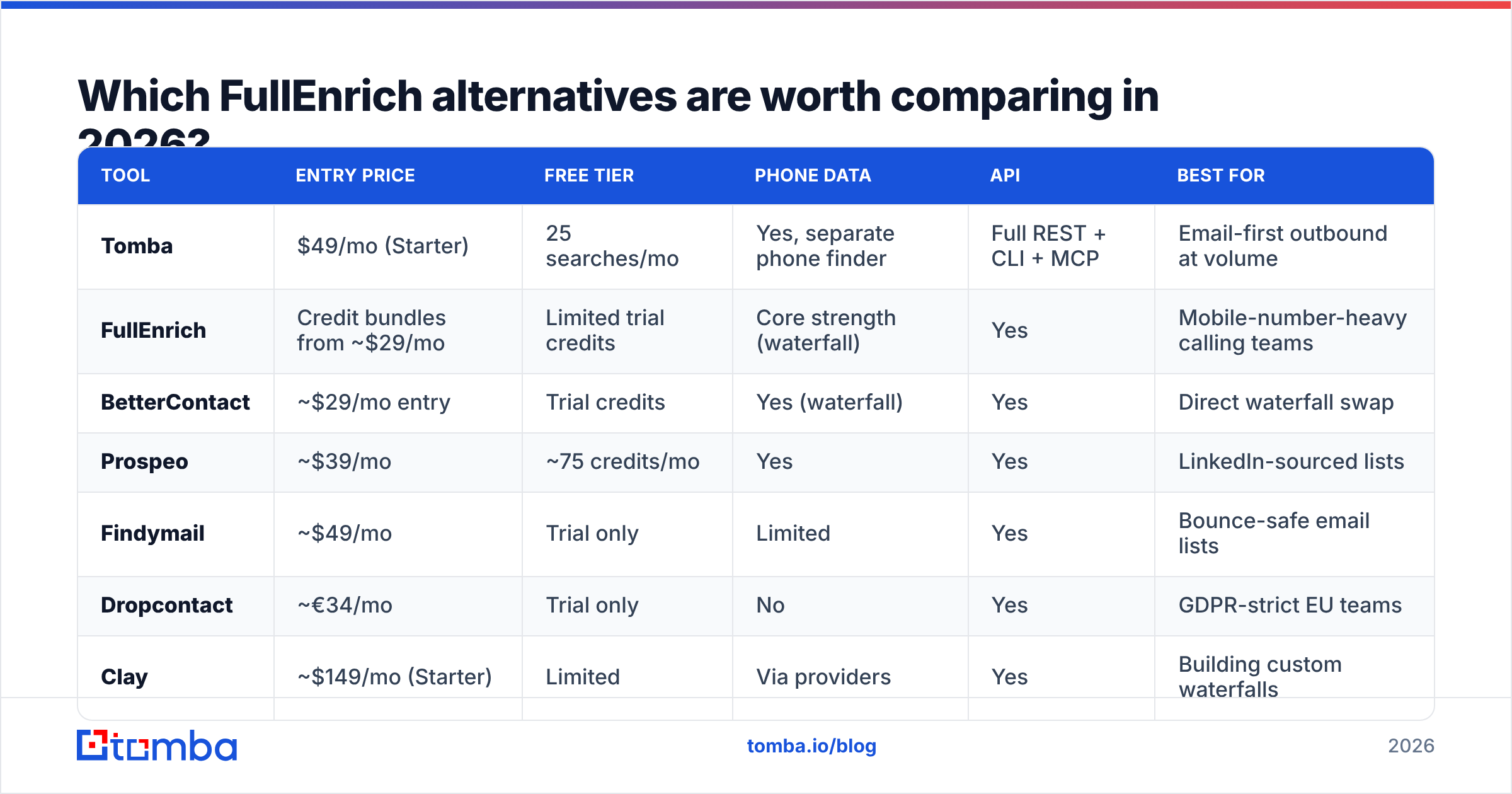
Here's the shortlist, scored on the variables that actually move cost per meeting. Pricing is indicative of publicly listed entry tiers at the time of writing — always confirm on the vendor's own page, since credit bundles change often.

| Tool | Entry price | Free tier | Phone data | API | Best for |
|---|---|---|---|---|---|
| Tomba | $49/mo (Starter) | 25 searches/mo | Yes, separate phone finder | Full REST + CLI + MCP | Email-first outbound at volume |
| FullEnrich | Credit bundles from ~$29/mo | Limited trial credits | Core strength (waterfall) | Yes | Mobile-number-heavy calling teams |
| BetterContact | ~$29/mo entry | Trial credits | Yes (waterfall) | Yes | Direct waterfall swap |
| Prospeo | ~$39/mo | ~75 credits/mo | Yes | Yes | LinkedIn-sourced lists |
| Findymail | ~$49/mo | Trial only | Limited | Yes | Bounce-safe email lists |
| Dropcontact | ~€34/mo | Trial only | No | Yes | GDPR-strict EU teams |
| Clay | ~$149/mo (Starter) | Limited | Via providers | Yes | Building custom waterfalls |
| Apollo.io | ~$49/user/mo | Limited credits | Yes | Yes | All-in-one DB + sequencer |
| BookYourData | Pay-as-you-go | Sample list | Yes | Yes | Buying a verified list outright |
Tomba — the email-first swap#
If your outbound is email plus LinkedIn, this is the most direct cost reduction on the list. Tomba is built around finding and verifying professional email addresses rather than blending email and phone into one premium credit. Tomba pricing runs Free (25 searches/mo), Starter at $49/mo, Growth at $99/mo, Pro at $249/mo, and custom Enterprise — so the per-contact math is predictable rather than yield-dependent.
Practically, the workflow that saves teams the most money is a two-stage one: run the whole list through Tomba's domain search and email verifier first, then send only the leftover misses to a waterfall. You're paying premium prices for the hard 20%, not the easy 80%.
The catch-all handling is worth calling out separately. Instead of returning a shrug, Tomba's catch-all verification gives you a confidence signal you can actually route on — send high-confidence catch-alls, hold the rest. There's also a full Tomba API, a CLI, an MCP server, and Sheets/Excel/Airtable add-ins, which matters if your enrichment lives inside an automation rather than a dashboard.
Watch out for: it's not a sequencer or a CRM. If you wanted one login for everything, this isn't it.
BetterContact — the like-for-like waterfall#
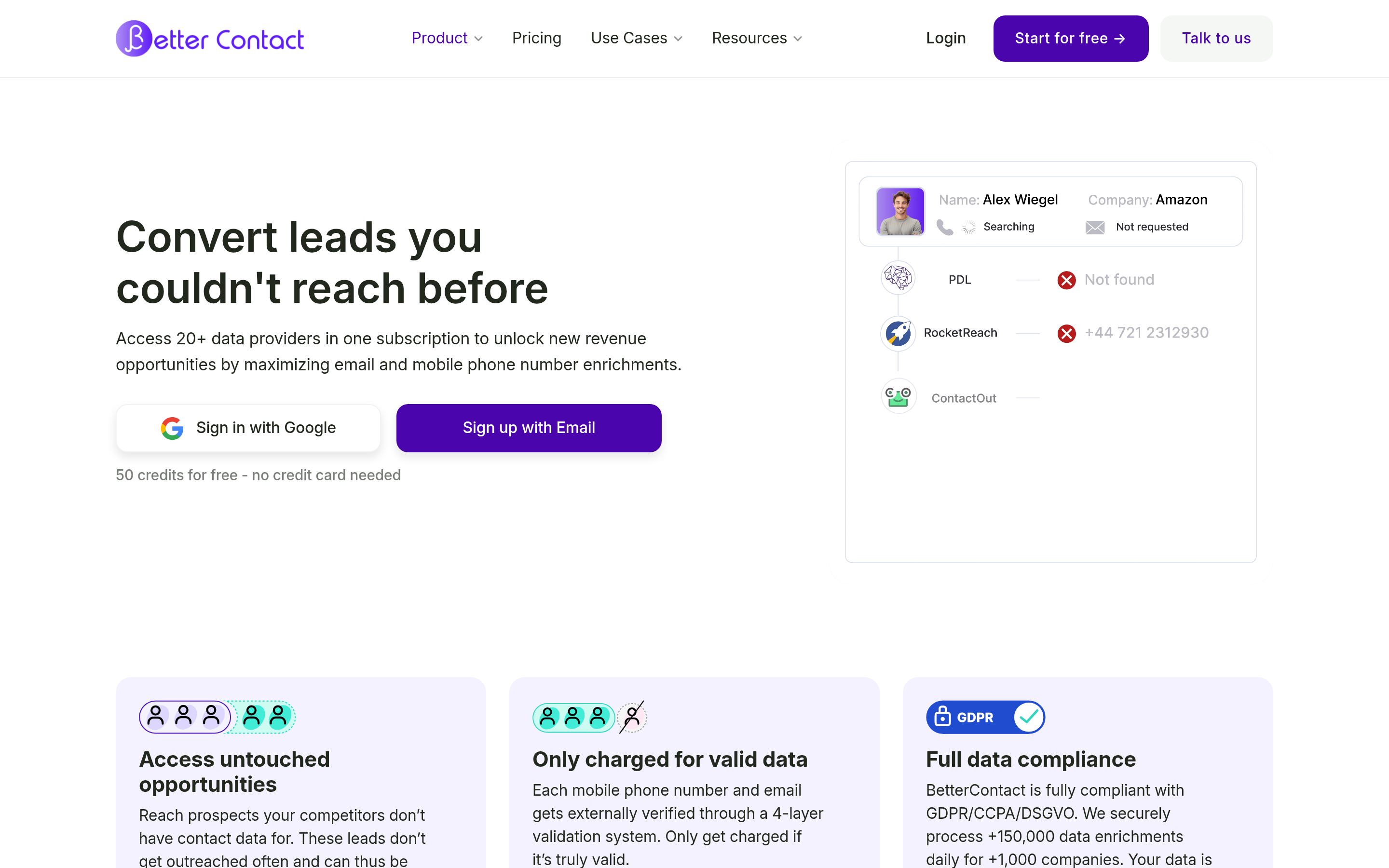
The closest philosophical match to FullEnrich. Same model, similar vendor stack, aggressive entry pricing. If you like waterfalls and just want better unit economics or a different support experience, this is the lowest-friction move — your Clay tables and Zapier flows barely change.
Watch out for: you're swapping one waterfall's blind spots for another's. Sample your actual territory before committing budget.
Prospeo — strong on LinkedIn-sourced lists#
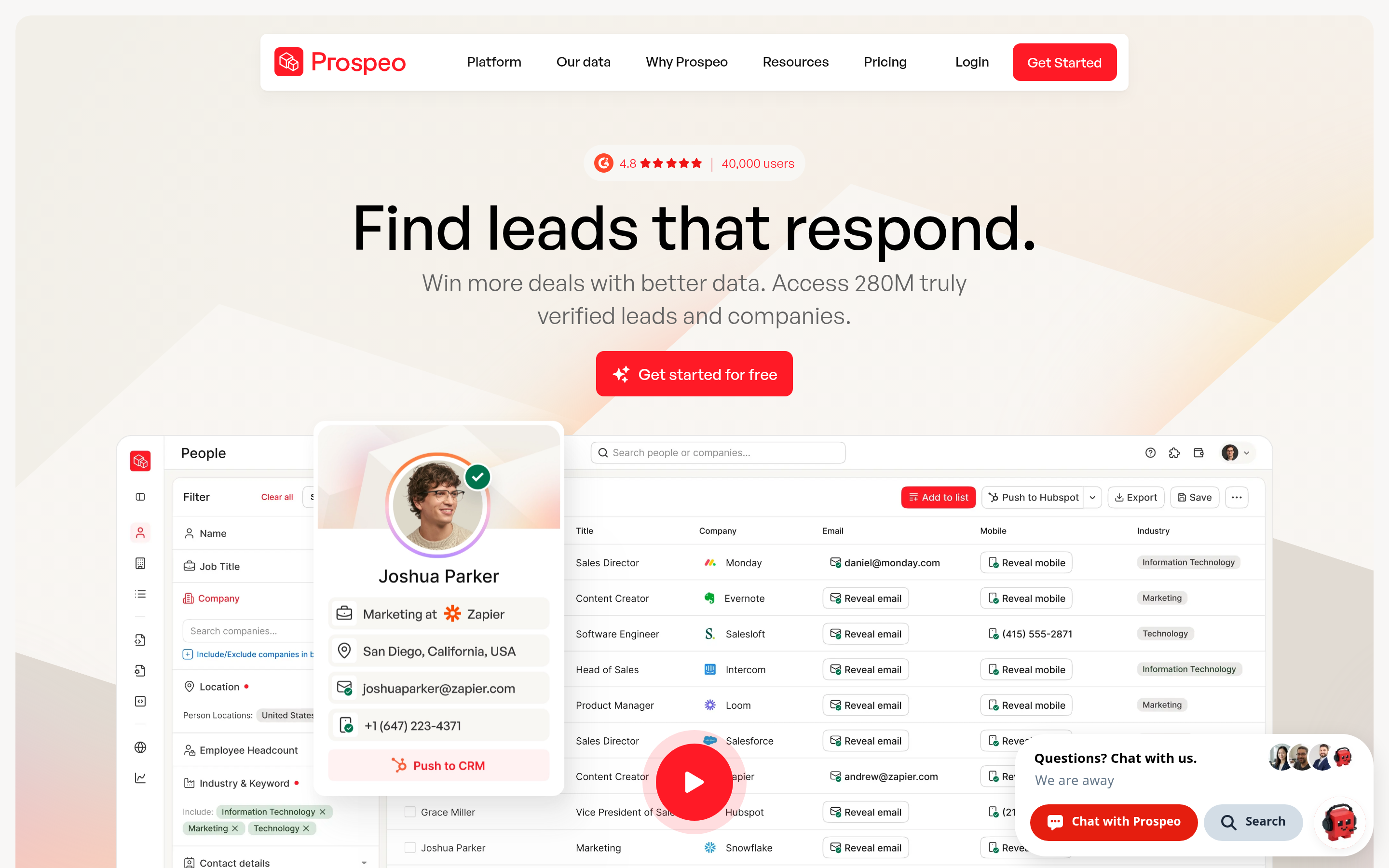
Prospeo's sweet spot is turning LinkedIn profiles and Sales Navigator exports into working contact data. If your list-building starts in LinkedIn rather than in a firmographic database, the hit rate tends to be better than a generic waterfall because the input signal is richer.
Watch out for: narrower value if your inputs are domains and job titles rather than profile URLs.
Findymail — built around not bouncing#
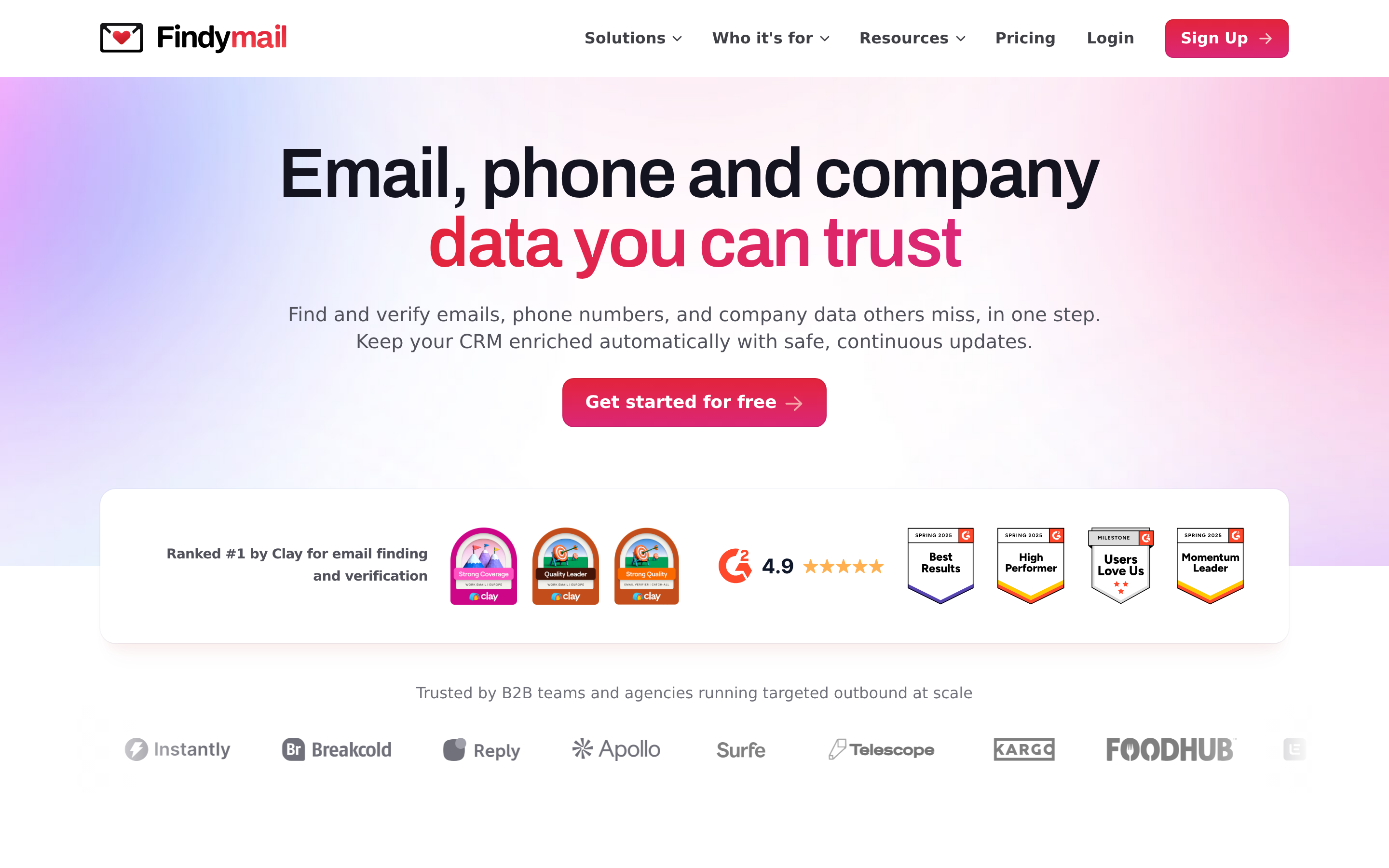
Findymail markets bounce protection hard, and the product reflects it: it returns fewer addresses but flags risky ones aggressively. For teams on shared sending infrastructure where a 4% bounce rate is an existential threat, that trade is correct.
Watch out for: lower raw volume. If you need 5,000 contacts this week, conservative verification is a cost.
Dropcontact — the compliance-first EU option#
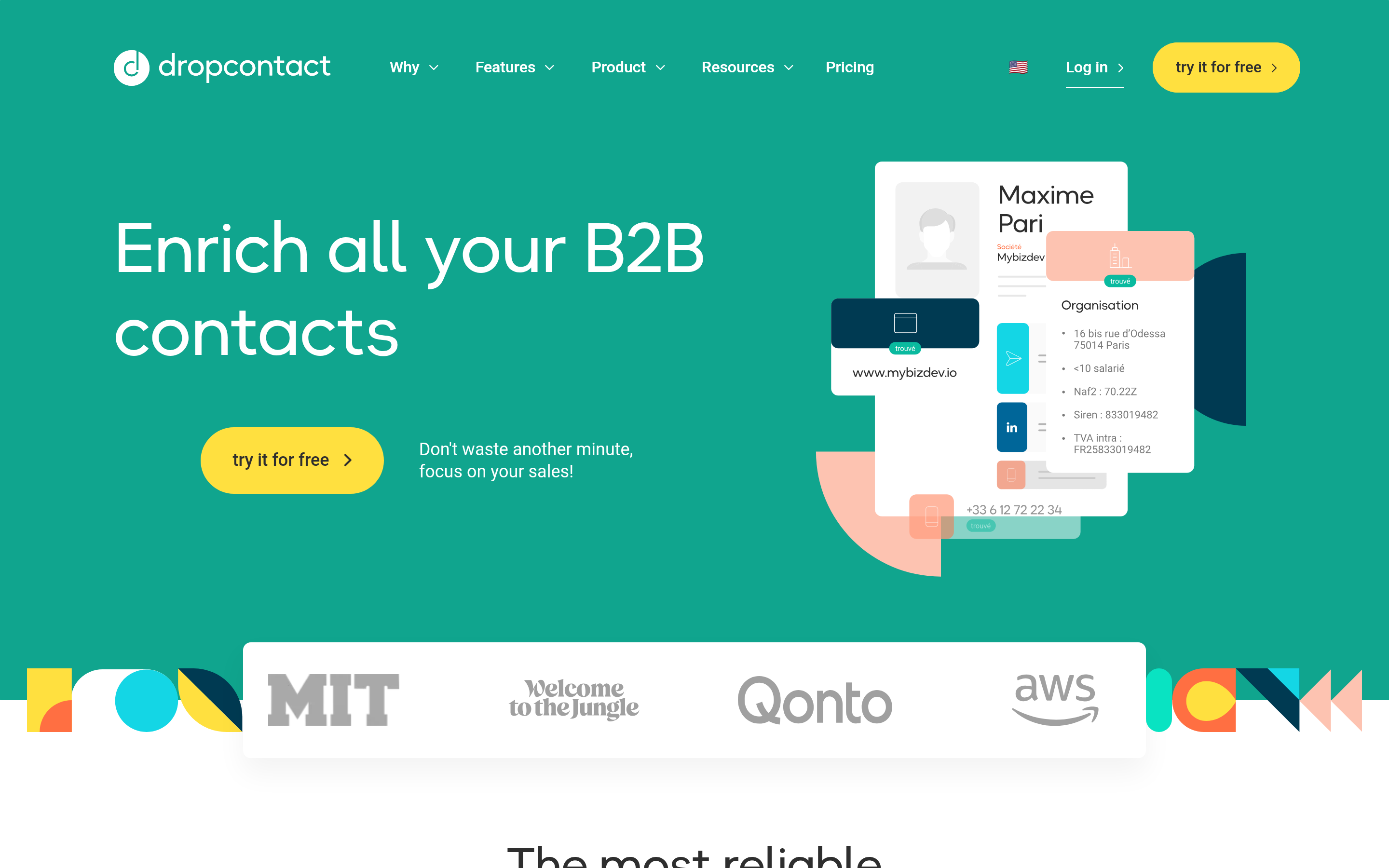
No purchased database. Dropcontact derives and verifies data algorithmically, which is a meaningfully different legal posture under GDPR. European teams selling into regulated industries often pick it for that reason alone, and it slots neatly into HubSpot and Pipedrive.
Watch out for: no mobile numbers, and coverage outside Europe is thinner than the US-centric tools.
Clay — build your own waterfall#
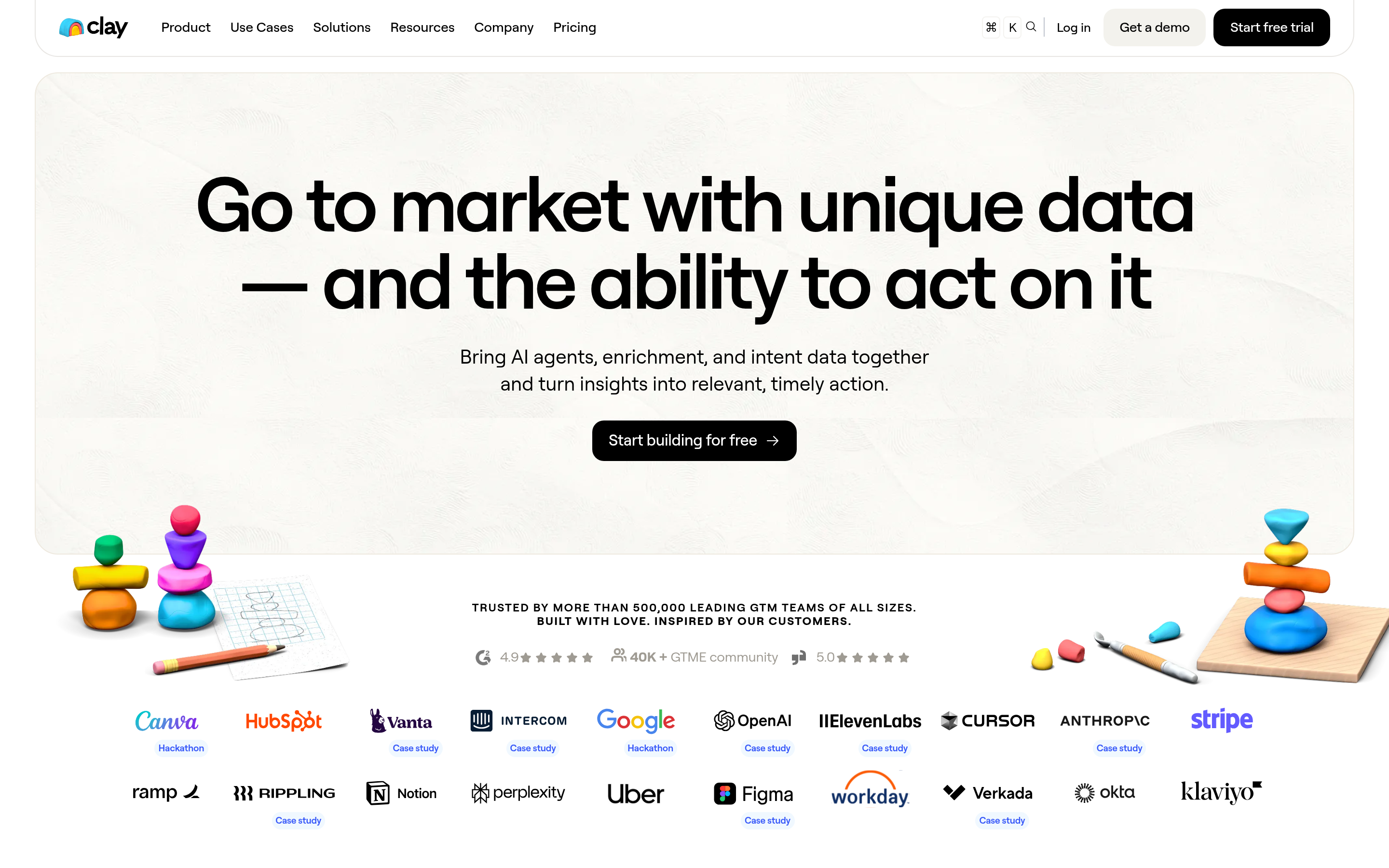
Clay isn't a data vendor; it's the table where you assemble vendors. You can literally rebuild FullEnrich's logic with your own providers in your own order, then layer AI research on top. Enormous ceiling.
Watch out for: cost and complexity. You're now the person maintaining the waterfall, and the credit bill has two layers — Clay's and each provider's.
Apollo.io — the all-in-one#
A database, a sequencer, and a dialer in one seat-priced product. For a small team that wants one tool instead of four, that consolidation is real. Data quality is broad rather than deep, and job-change decay is a known issue on any static database.
Watch out for: seat pricing scales differently than credit pricing. Five reps is a very different bill than one. See our Apollo alternative breakdown for the full comparison.
BookYourData — buy the list, skip the waterfall#
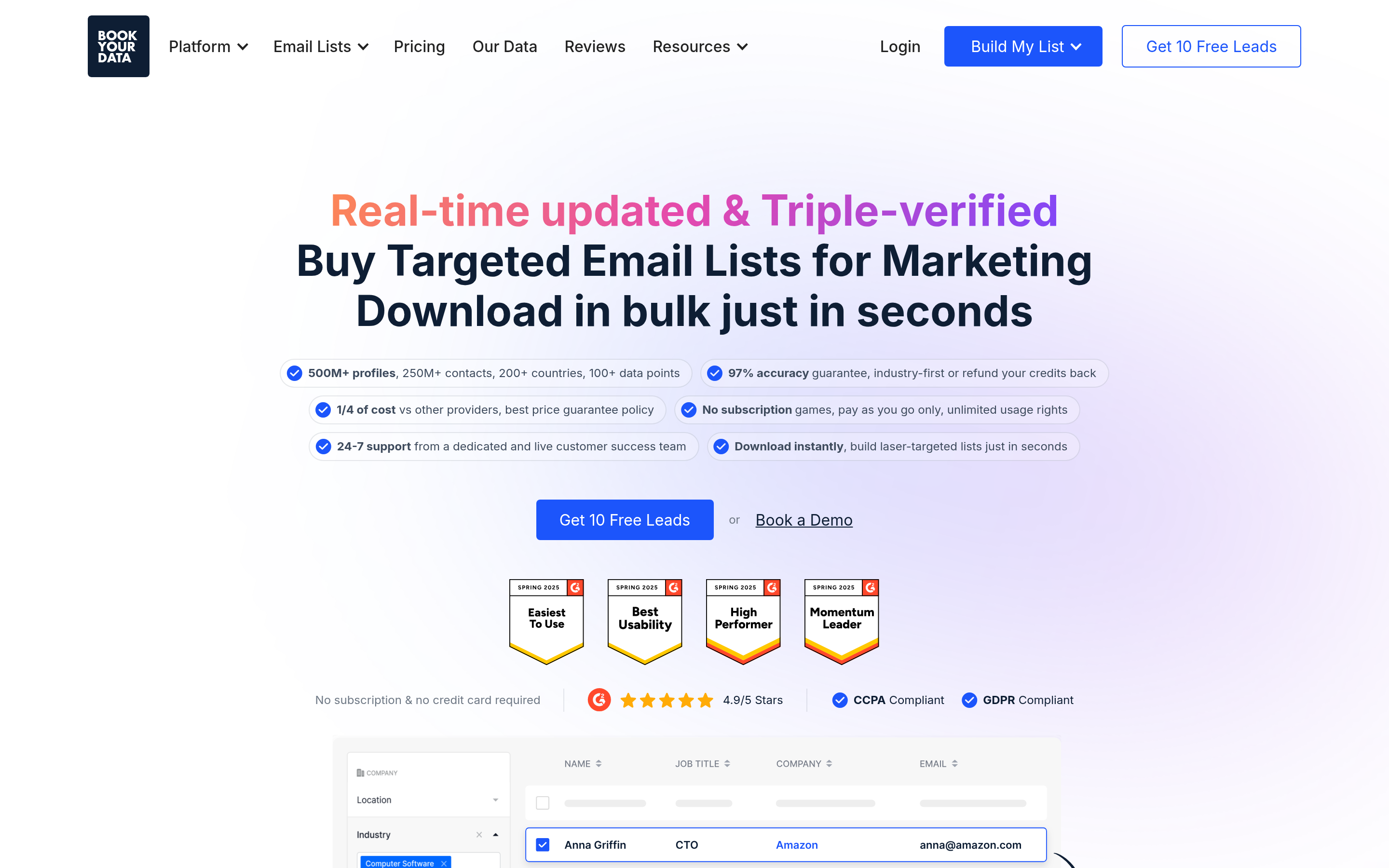
A different answer to the same question. Instead of enriching contacts one at a time, you buy a pre-verified list filtered by industry, title, and geography, pay-as-you-go, and skip the per-credit yield roulette entirely. For teams running a defined ICP campaign with known parameters, it's often the cleanest path — and the accuracy guarantee removes the "will this even return anything" variable that makes waterfall budgeting hard.
Watch out for: it's a snapshot, not a live lookup. Pair it with verification before a big send.
RocketReach — breadth over precision#
Large contact database, decent phone coverage, familiar Chrome extension. Fine as a lookup tool for one-off research. Less compelling as the backbone of a programmatic enrichment pipeline. Our RocketReach alternative page goes deeper on the trade-offs.
How accurate are these tools, really?#
Accuracy claims in this category are close to meaningless as marketed. Every vendor advertises 95%+ because every vendor defines the denominator differently — some count only records they chose to return, which is a bit like a weather forecaster only grading the days they felt confident.

Run your own test instead. It takes an afternoon:
- Pull 200 real prospects from your actual ICP, including at least 50 outside your primary country.
- Feed the identical list to three tools on free or trial credits.
- Record three numbers per tool: coverage (rows with any result), precision (verified-valid share of those results), and cost per usable row.
- Send a small real campaign and log the actual bounce rate. This is the only number that isn't self-reported.
Teams that do this are frequently surprised — not because one tool dominates, but because the ranking flips by territory. The winner on US mid-market SaaS is rarely the winner on German manufacturing.
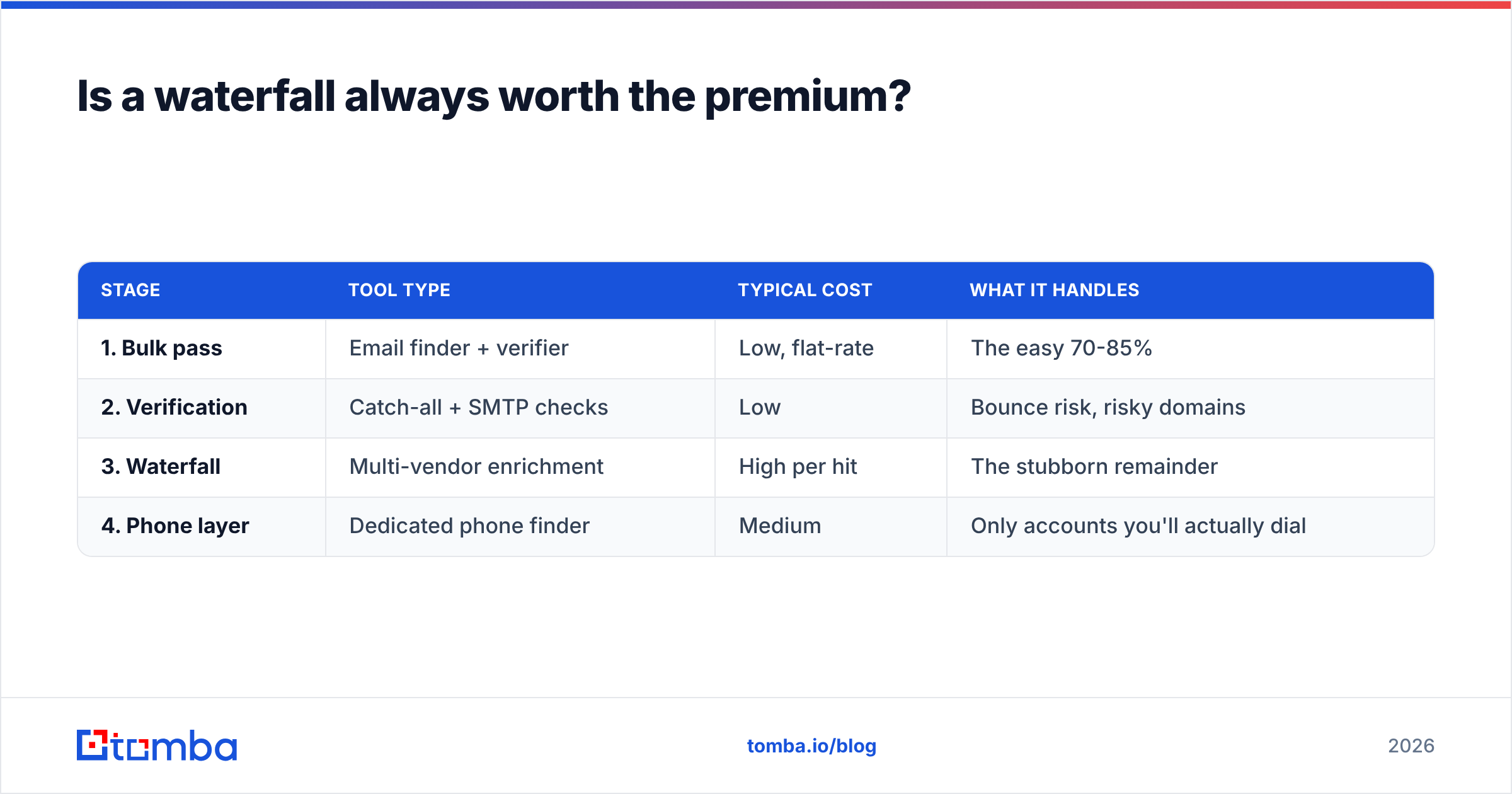
Is a waterfall always worth the premium?#
No — and this is the decision most buyers skip.
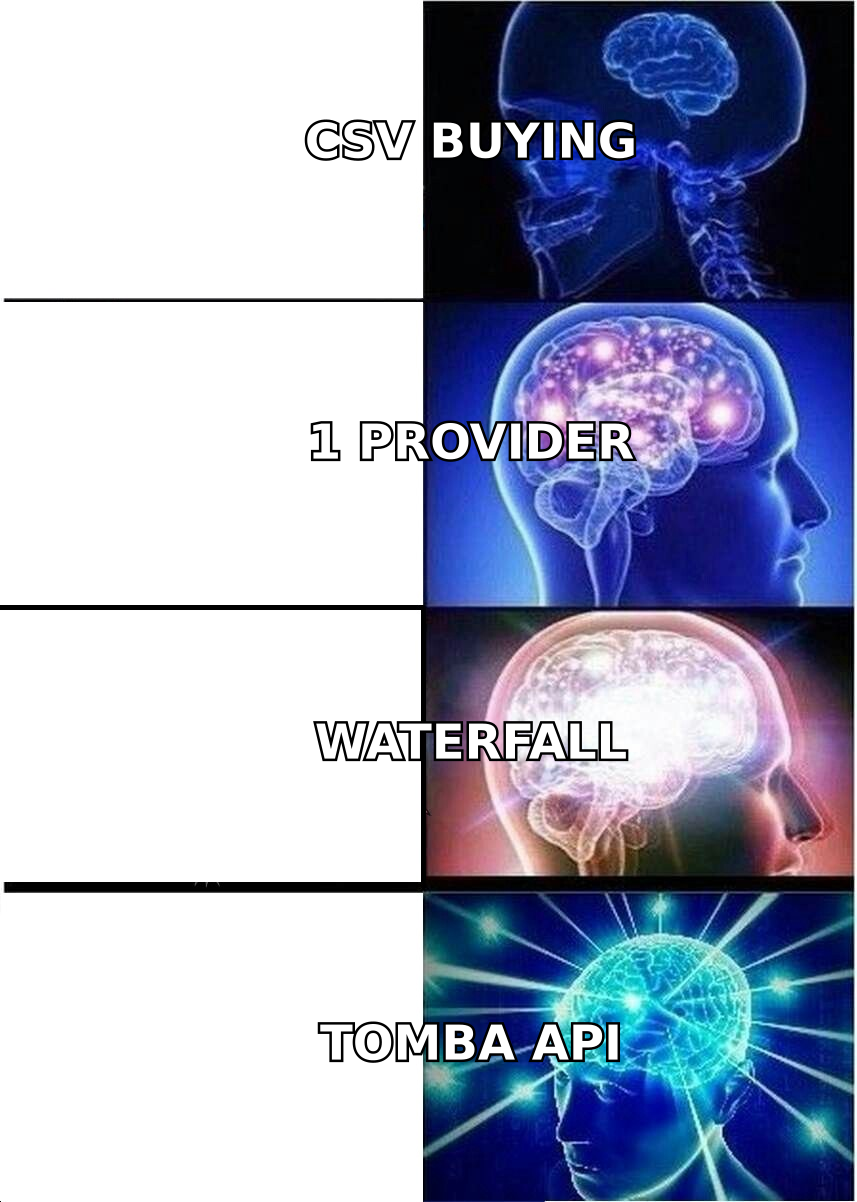
A waterfall's entire value is marginal recovery: the contacts a single provider misses. If a good first-pass finder already covers 78% of your list, the waterfall is being asked to do one job — recover part of the remaining 22% — while being paid on all 100%.
The fix is sequencing, not switching:
| Stage | Tool type | Typical cost | What it handles |
|---|---|---|---|
| 1. Bulk pass | Email finder + verifier | Low, flat-rate | The easy 70-85% |
| 2. Verification | Catch-all + SMTP checks | Low | Bounce risk, risky domains |
| 3. Waterfall | Multi-vendor enrichment | High per hit | The stubborn remainder |
| 4. Phone layer | Dedicated phone finder | Medium | Only accounts you'll actually dial |
Run stage 1 through a bulk email finder, verify, then pass only the misses downstream. Most teams that restructure this way cut enrichment spend 40-60% without losing a single contactable prospect — because the waterfall is now doing marginal work at marginal volume.
How do you migrate off FullEnrich without breaking your workflow?#
Switch in parallel, never cold. A four-week sequence that works:
Week 1 — Baseline. Export your last 90 days of enrichment: rows in, hits out, credits spent, bounces. You cannot prove an improvement without this.
Week 2 — Bake-off. Run the same 200-row list through two candidates on trial credits. Compare on the three metrics above, split by region.
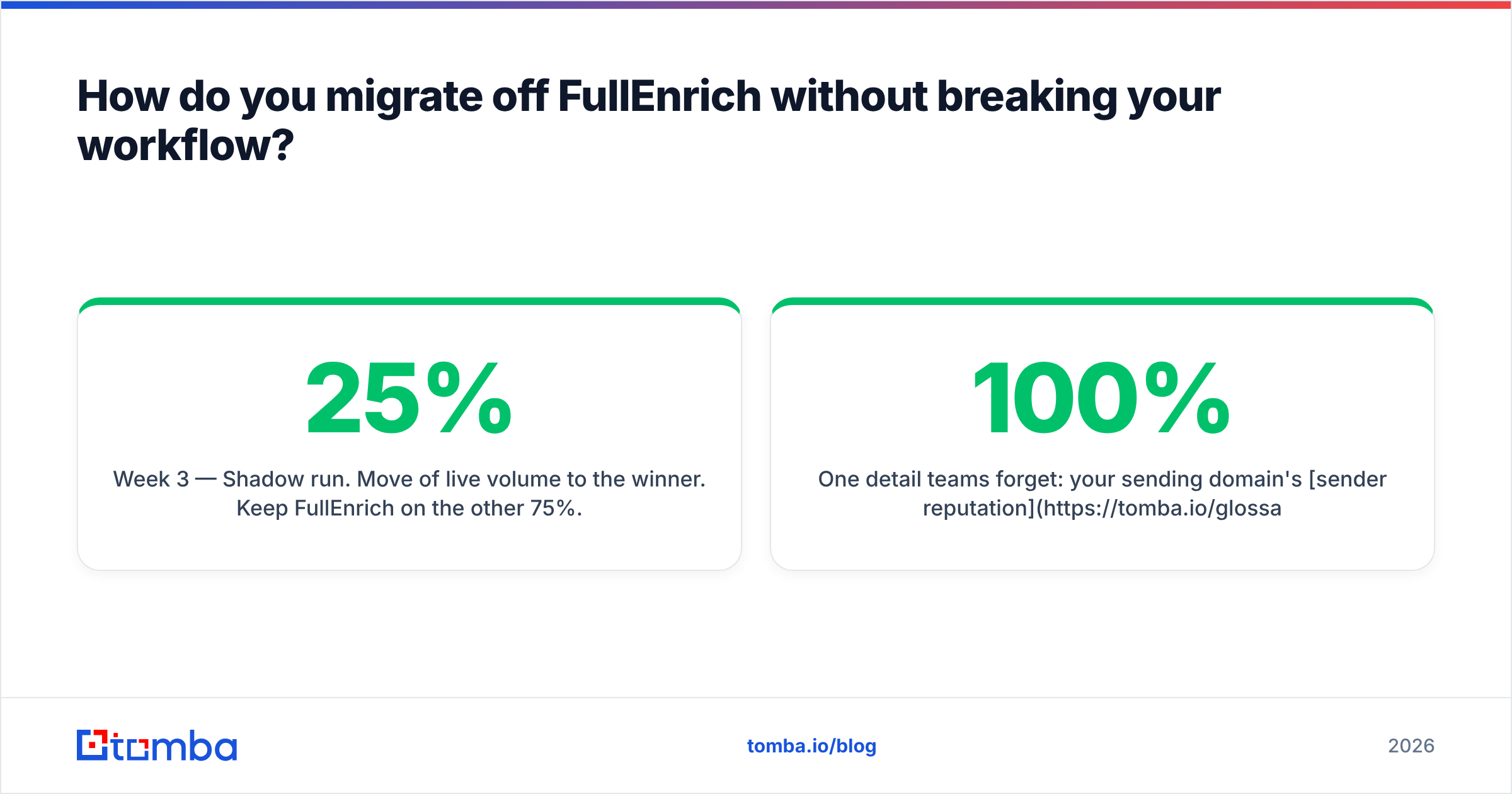
Week 3 — Shadow run. Move 25% of live volume to the winner. Keep FullEnrich on the other 75%. Watch reply rate, not just bounce rate — deliverability problems show up in replies first.
Week 4 — Rewire. Update your API calls, Zapier/Make scenarios, and CRM field mappings before you cancel anything. Check that enriched fields land in the same CRM properties, or your reporting silently breaks.
One detail teams forget: your sending domain's sender reputation carries over, but a data-source change alters your bounce profile. Ramp new-source volume over a week rather than flipping 100% overnight.
Which FullEnrich alternative should you pick?#
- Email-first outbound, cost-sensitive: Tomba, with a waterfall kept as a stage-3 fallback.
- Mobile numbers are the whole point: stay on a waterfall — FullEnrich or BetterContact.
- EU-only, compliance-heavy: Dropcontact.
- LinkedIn-sourced lists: Prospeo.
- Deliverability is fragile: Findymail.
- You want to engineer the pipeline yourself: Clay.
- One tool for data plus sequencing: Apollo.
- Defined ICP, want the list today: BookYourData.
The honest summary: FullEnrich is good at what it does, and most teams shopping for FullEnrich alternatives don't have a product problem — they have a sequencing problem. Fix the order of operations first, then decide whether you still need to switch.
Start with the cheap stage. Run your next list through the Tomba Email Finder before it touches a per-hit waterfall. The free tier gives you 25 searches a month to benchmark against your current provider, Starter is $49/mo, and the API, CLI, and Sheets add-in mean it drops into whatever pipeline you've already built. Find the easy 80% at flat-rate pricing — and pay premium credits only for the contacts that actually earn it.
Related guides#
// get started
Find, verify and enrich your first contacts today
Start on the free plan with 25 searches a month, then scale when your team is ready.
Free plan · No credit card required · GDPR & CCPA
// about the author