Funnelpool Alternatives: 7 Better B2B Data Tools for 2026
Funnelpool sells contact data behind a sales call and a custom quote. Here are seven alternatives compared on verification, pricing transparency, coverage and API access — plus which one fits your outbound motion.
TL;DR
- Funnelpool is a quote-based B2B contact data and demand-generation vendor. The friction most buyers hit is not data quality — it is the sales call, the annual contract, and the lack of a self-serve API.
- The seven alternatives below split into three groups: self-serve finders (Tomba, Hunter, RocketReach), all-in-one prospecting suites (Apollo, Lusha), and curated list providers (BookYourData, Cognism).
- If you need emails on demand inside a workflow — CRM, Sheets, or your own app — a credit-based API tool beats a bulk list every time. You pay for what you pull.
- If you need a finished list handed to you with a guarantee attached, a curated provider is faster than assembling it yourself.
- Verification is the whole ballgame. A 95%-accurate list of 2,000 contacts outperforms a 70%-accurate list of 20,000, because the bad half burns your sending domain.
What is Funnelpool, and why are people looking for alternatives?#
Funnelpool positions itself as a B2B contact data and demand-generation provider: you tell them the account profile and titles you want, they deliver contacts. That model works — it is the same model plenty of enterprise data vendors run on — but it creates three predictable friction points.
First, opacity. Pricing is not published. You book a call, describe your use case, and get a quote. That is fine for a $40k annual data budget and genuinely painful when you want to test 500 contacts before committing.
Second, latency. A list-delivery motion has a turnaround. Modern outbound teams work the other way around: they identify an account this morning and want a verified contact in the sequence this afternoon. Batch delivery does not fit that rhythm.
Third, no developer surface. If your RevOps team wants to enrich inbound signups automatically, or your product needs to resolve a domain to a contact, you need an API key — not a CSV in your inbox.
None of that makes Funnelpool a bad vendor. It makes it a specific vendor, suited to teams that want managed lists rather than infrastructure. The alternatives below are for everyone else.

What should you actually compare in a Funnelpool alternative?#
Ignore the logo grids. Six criteria decide whether a data vendor works for you:
- Verification depth. Does the provider run real SMTP checks, or does it pattern-guess from a company's email format and ship it as "valid"? Ask specifically how they handle catch-all domains — that is where guessers hide their misses.
- Pricing transparency. Published tiers mean you can model cost per contact before a call. Quote-only means you cannot benchmark against anyone.
- Credit mechanics. Do you get charged for a search that returns nothing? The honest vendors only bill on a successful find. Read this clause carefully; it changes effective cost by 20–40%.
- Coverage shape. Some databases skew North America and enterprise. Some skew EMEA mid-market. Ask for a sample against your ICP, not a global count. "300 million contacts" tells you nothing about whether they have German logistics ops managers.
- Delivery surface. API, CLI, Chrome extension, Sheets add-on, CRM sync, or CSV only. The more places the data can land, the fewer manual handoffs your team runs.
- Compliance posture. GDPR and CCPA handling, opt-out processing, and documented sourcing. If a vendor cannot tell you where a record came from, that is your legal exposure, not theirs.
Score any candidate against those six and the shortlist collapses fast.
How do the top Funnelpool alternatives compare?#
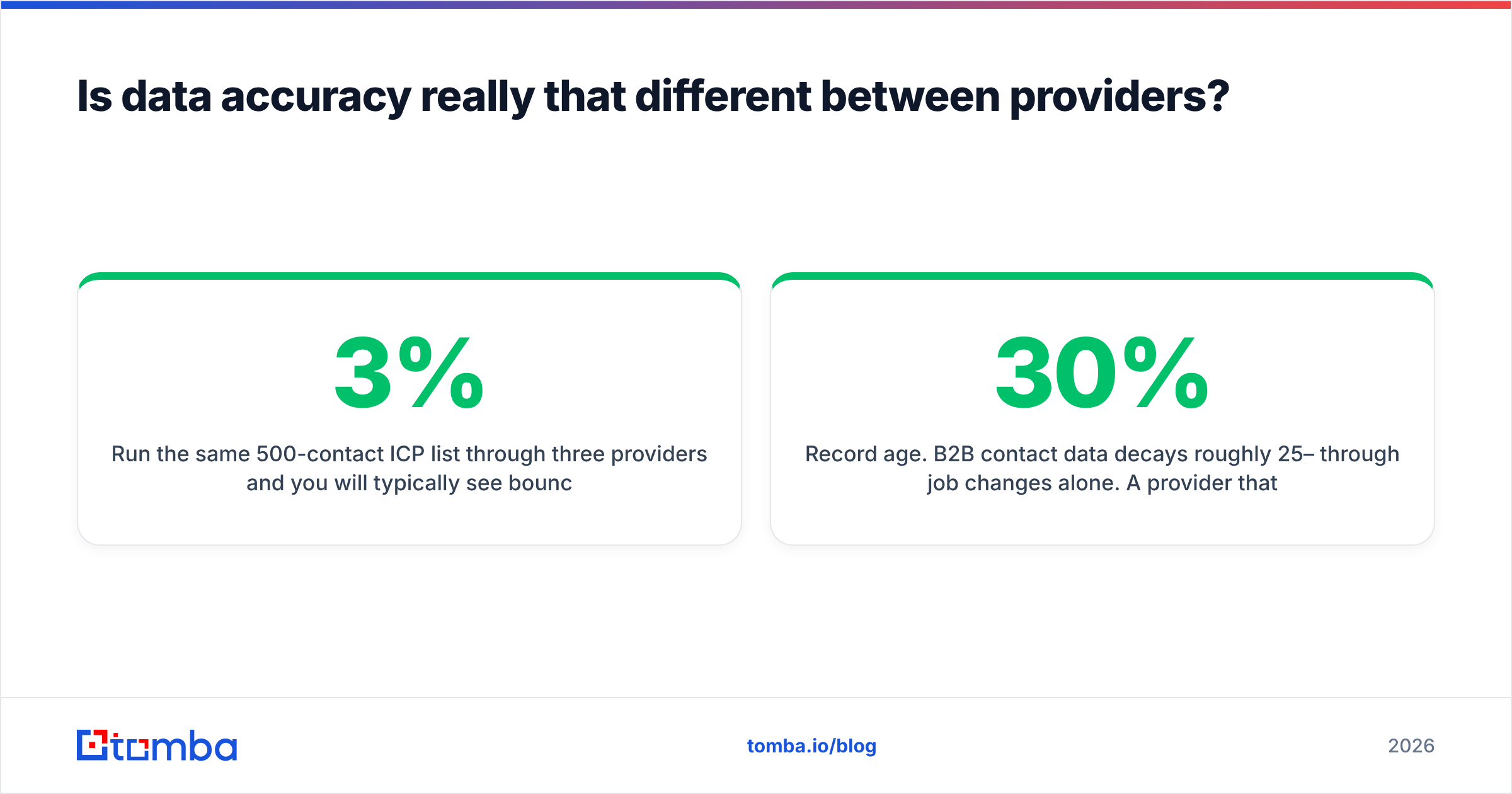
Here is the head-to-head. Prices reflect publicly listed entry tiers at the time of writing; always confirm on the vendor's own pricing page before you buy, since tiers move.

| Tool | Entry price | Free tier | API access | Best for |
|---|---|---|---|---|
| Tomba | $49/mo (Starter) | 25 searches/mo | Full REST API, CLI, MCP | Self-serve finding + verification in one stack |
| Apollo | ~$49/user/mo | Limited credits | Yes, on paid tiers | Teams wanting data plus a sequencer |
| Hunter | ~$34–49/mo | 25–50 searches/mo | Yes | Simple domain-level email lookup |
| RocketReach | ~$39/mo | Trial lookups | Yes, higher tiers | Individual recruiters and founders |
| Lusha | Free + paid seats | 5–50 credits/mo | Yes, on business plans | Chrome-extension-first prospecting |
| BookYourData | Pay-as-you-go credits | Sample records | Available | Buying a targeted, guaranteed list outright |
| Cognism | Custom quote | No | Yes | Enterprise EMEA coverage with phone-verified data |
| Funnelpool | Custom quote | No | Limited | Managed, done-for-you list delivery |
Two patterns jump out. The self-serve tools all publish pricing and offer a free tier you can test in ten minutes. The managed providers all require a conversation. Neither is wrong — but if your evaluation window is a week, the second group eats most of it.
Tomba#
The pitch is narrow on purpose: find the email, verify it, move on. The email finder resolves a name plus a domain into a deliverable address, domain search pulls every public contact at a company, and the email verifier runs the deliverability check before anything reaches your sequencer. Credits are only consumed on a successful find.
Where it separates from list vendors is the delivery surface. There is a documented email finder API, a CLI, a Chrome extension, and Sheets and Excel add-ins, so the same credit pool serves your SDRs, your RevOps automations, and your product. Tomba pricing runs Free (25 searches/mo), Starter $49/mo, Growth $99/mo, Pro $249/mo, and Enterprise on request — no call required to start.
Trade-off: it is not a sequencer. You still need an outbound sending tool alongside it.
Apollo#
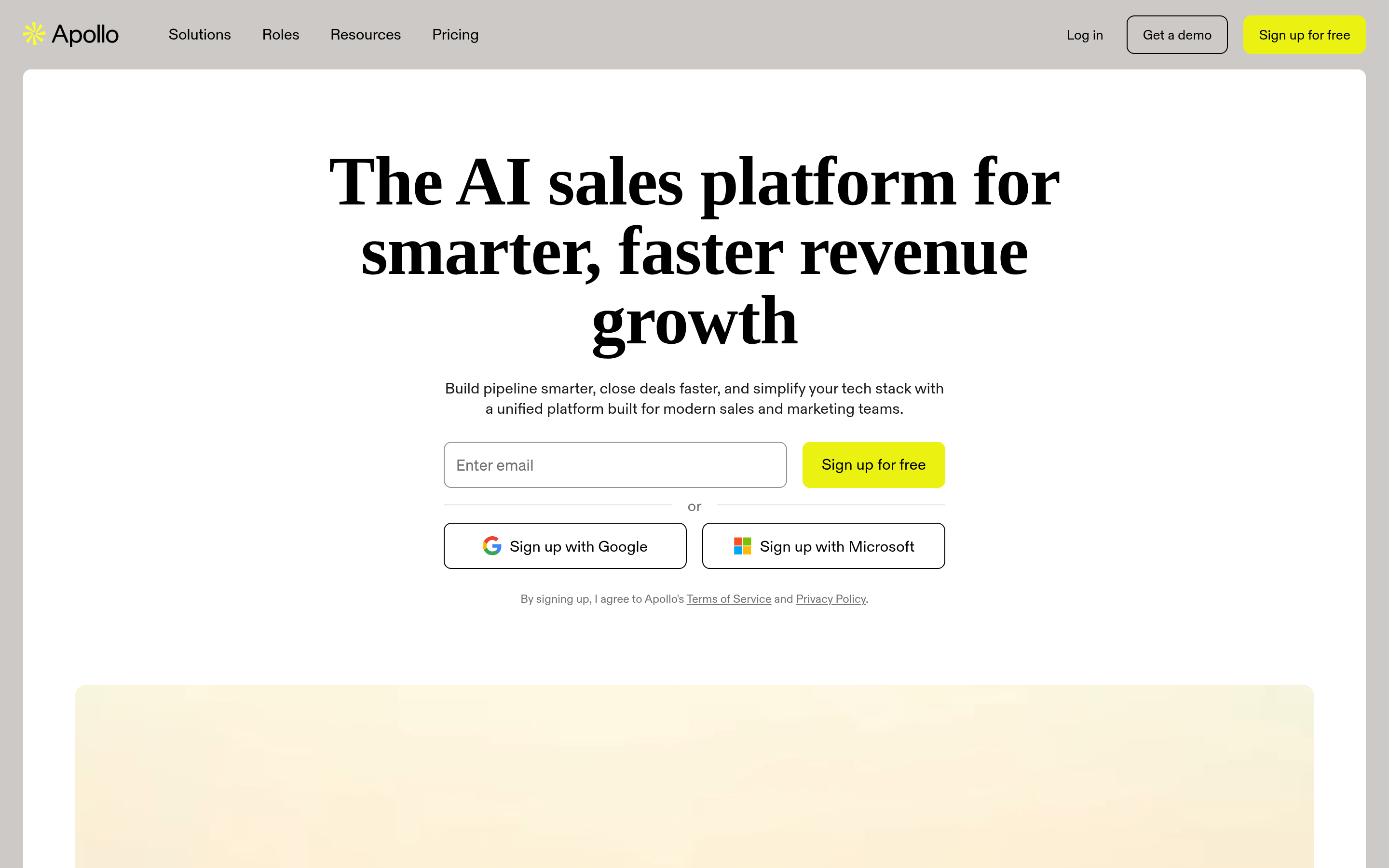
Apollo.io is the default all-in-one: database, sequencer, dialer, and basic CRM in a single seat. If your team has no outbound stack at all, buying one product instead of three is a real advantage.
Trade-off: email accuracy on long-tail and non-US records is inconsistent, and most serious users run a separate verification pass before sending. Seat-based pricing also gets expensive as the team grows. If that is where you land, see the Apollo alternative breakdown.
Hunter#
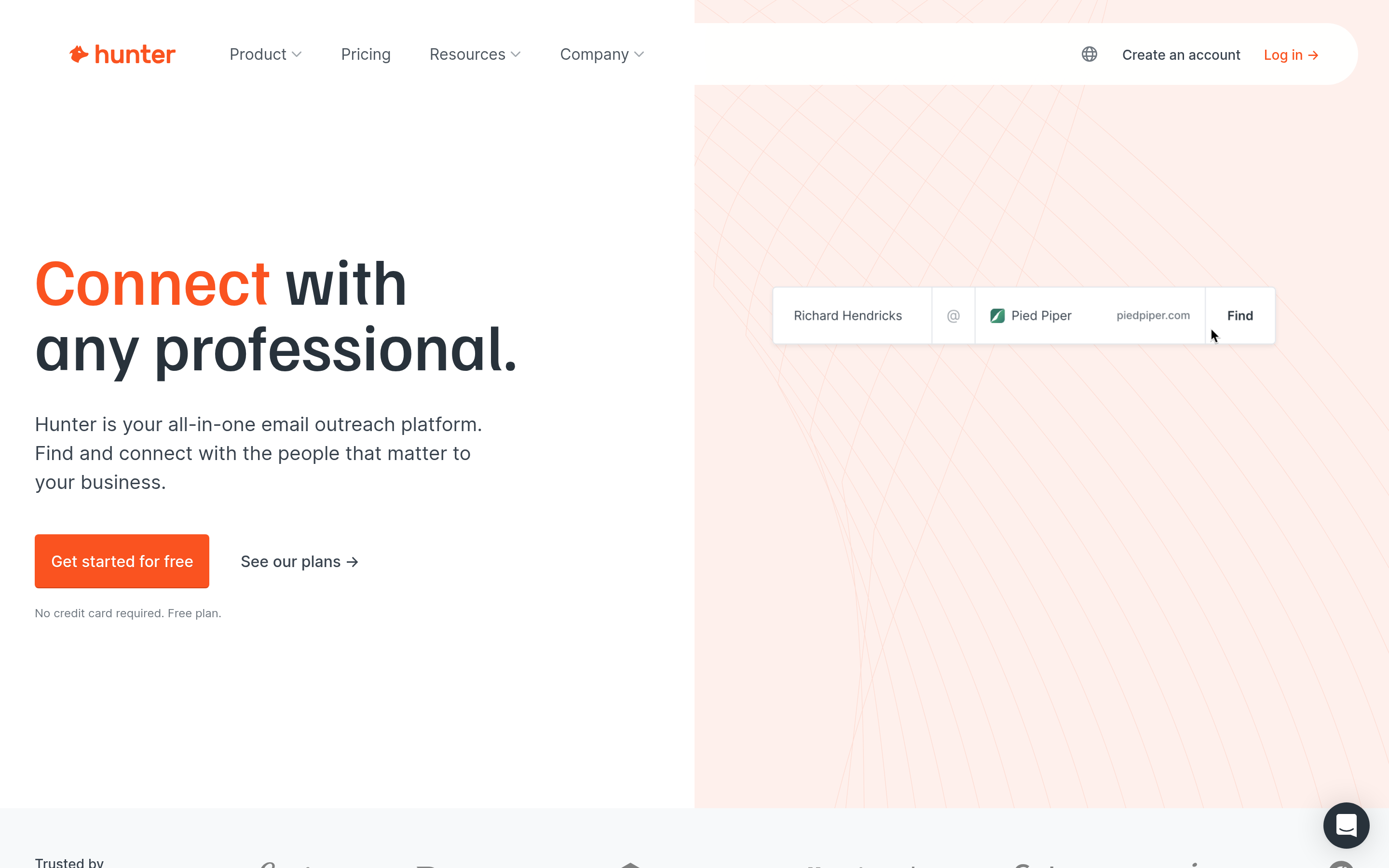
Hunter built the category. Domain search, email finder, verifier — clean, fast, well documented. It is the closest philosophical match to Tomba.
Trade-off: it is deliberately minimal. No phone data, no enrichment beyond the basics, and credit costs climb quickly at volume.
RocketReach#
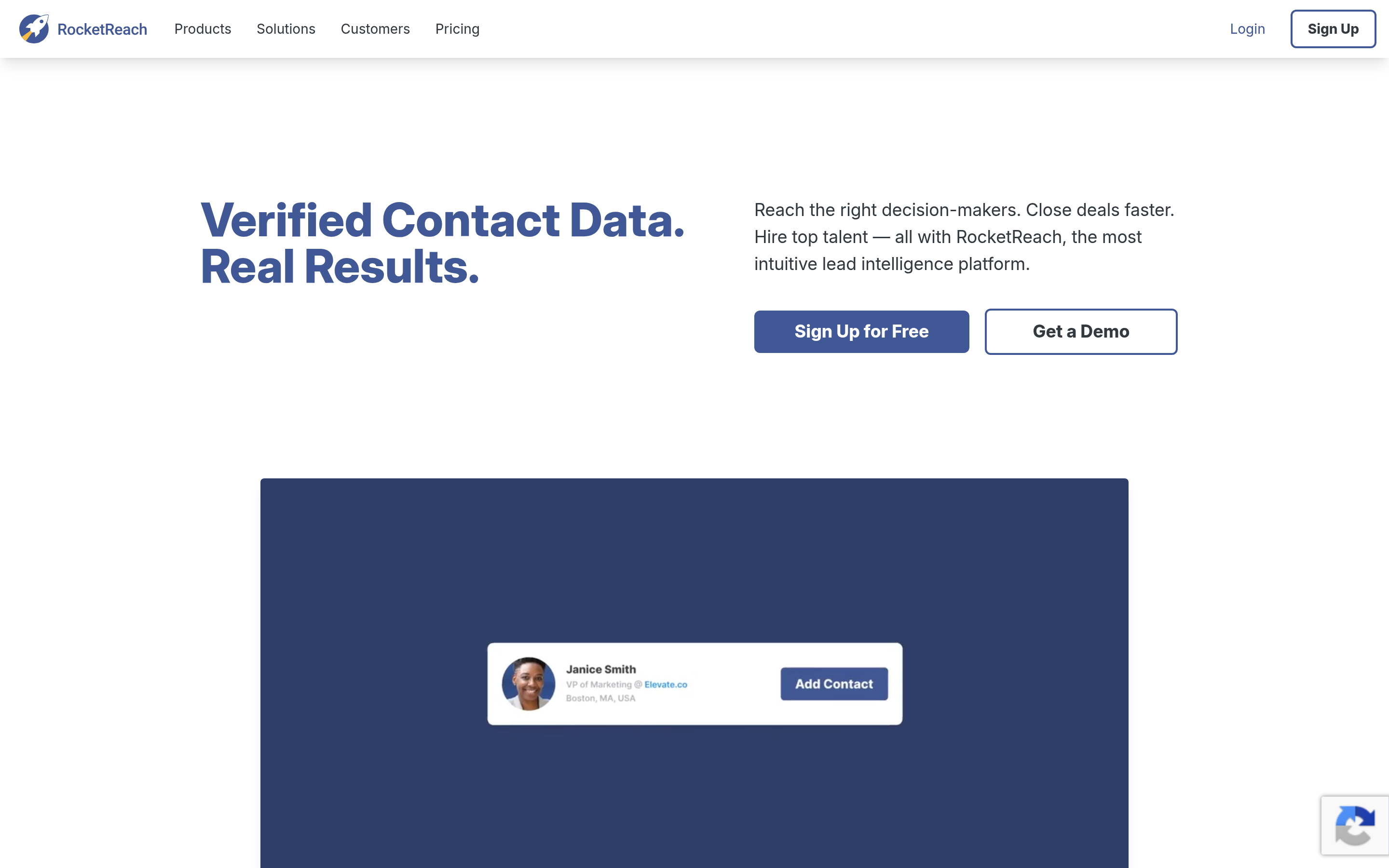
Strong on individual-person lookup, especially when you have a LinkedIn profile and need a personal or work address. Recruiters like it for that reason.
Trade-off: bulk work is clumsy and per-lookup cost is high relative to API-first tools. The RocketReach alternative comparison covers the volume math.
Lusha#
Browser-extension-first. Sitting on a LinkedIn profile and clicking once to reveal a contact is a genuinely good workflow for reps who live in LinkedIn all day. Phone coverage in North America is respectable.
Trade-off: credits are consumed per reveal regardless of quality, and the database is shallower than the big enterprise providers outside its core geographies.
BookYourData#
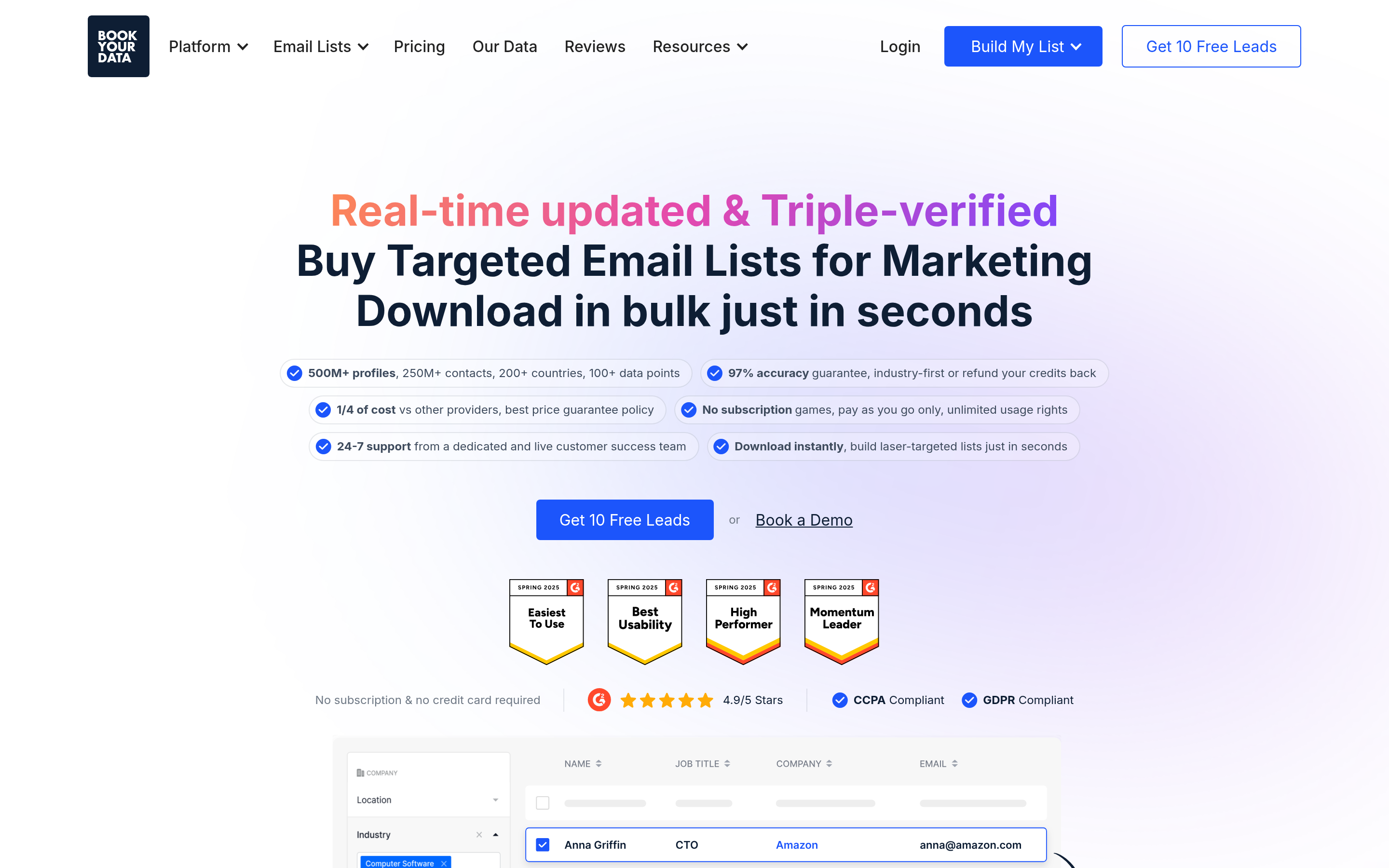
A well-regarded curated list provider with a strong accuracy guarantee and pay-as-you-go credits rather than a mandatory subscription — a meaningful difference from most quote-only vendors. You define the filters (industry, title, geography, company size), preview counts, and buy exactly the segment you need. For teams that want a finished, human-checkable list and no engineering work at all, it is one of the cleanest ways to buy B2B data. See bookyourdata.com for current packs.
Trade-off: it is a list purchase, not a live lookup layer. If your need is "enrich this signup within 300ms," that is a different tool category.
Cognism#
Enterprise-grade, particularly strong in EMEA, with phone-verified mobile numbers and solid compliance documentation. If you sell into Europe at scale and legal reviews every data vendor, Cognism is usually on the shortlist.
Trade-off: custom quote, annual contract, enterprise sales cycle. Not a fit for a two-person team testing a new segment.
Is data accuracy really that different between providers?#
Yes, and it is the difference that costs you the most money.
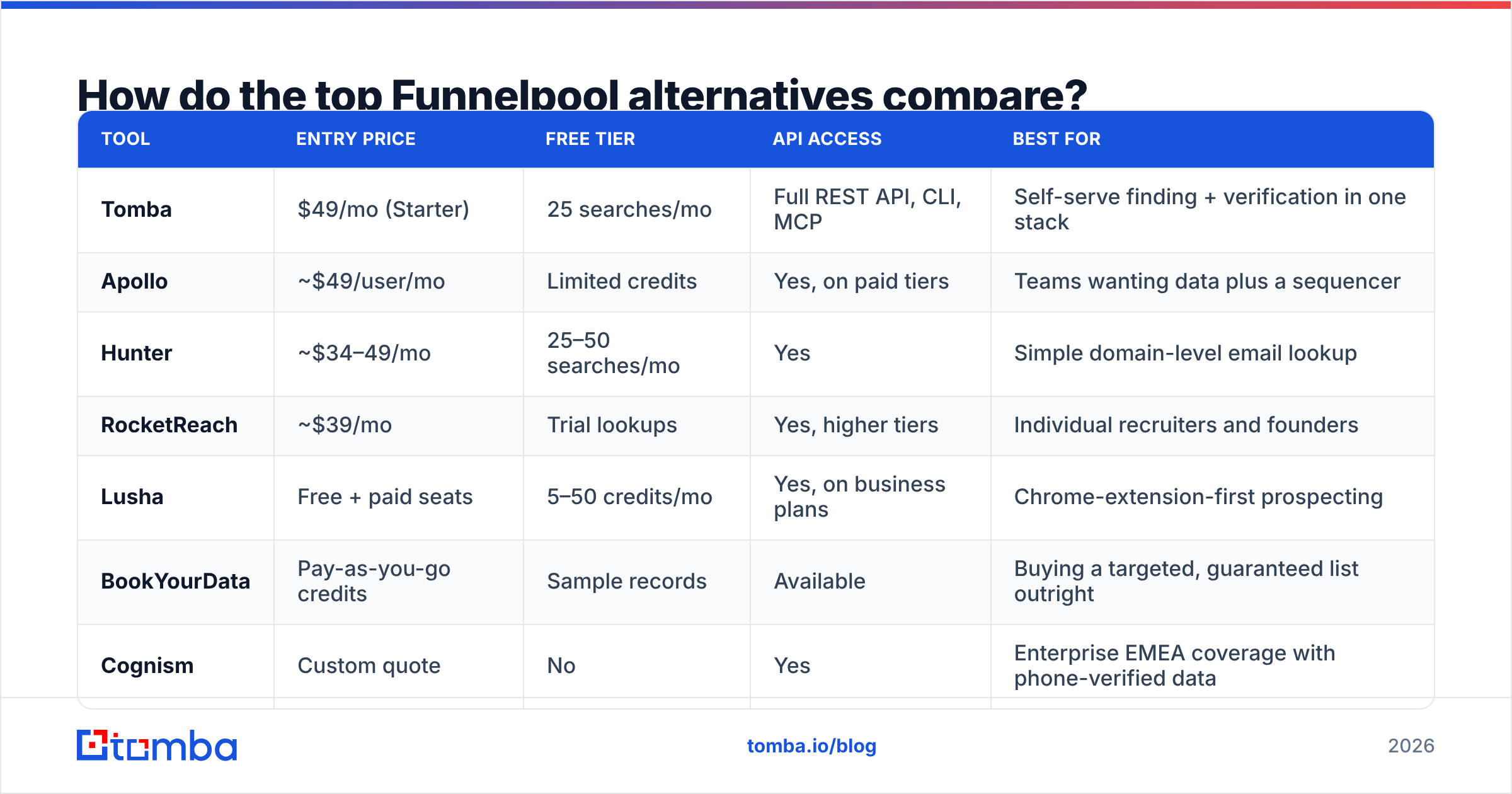
Run the same 500-contact ICP list through three providers and you will typically see bounce rates spread from under 3% to well over 15%. That spread is not cosmetic. Mailbox providers treat hard bounces as a signal of list hygiene, and a sustained bounce rate above roughly 5% starts dragging your sender reputation down. Once reputation drops, your good contacts stop seeing your emails too.

The mechanics behind the spread are simple:
- Guessed vs. verified. Pattern generation (
first.last@domain.com) is cheap and often right — but "often" is doing heavy lifting. A verified provider confirms the mailbox exists before charging you. - Record age. B2B contact data decays roughly 25–30% per year through job changes alone. A provider that refreshes quarterly beats one that bought a dump two years ago, regardless of headline volume.
- Catch-all handling. Catch-all domains accept everything at the SMTP layer, so a naive verifier marks every guess "valid." A catch-all verifier applies additional signals instead of shrugging.
The practical rule: never send to a list you did not verify yourself, even one you paid for. Verification is cheap. Domain reputation repair is not.

How much should you pay for B2B contact data in 2026?#
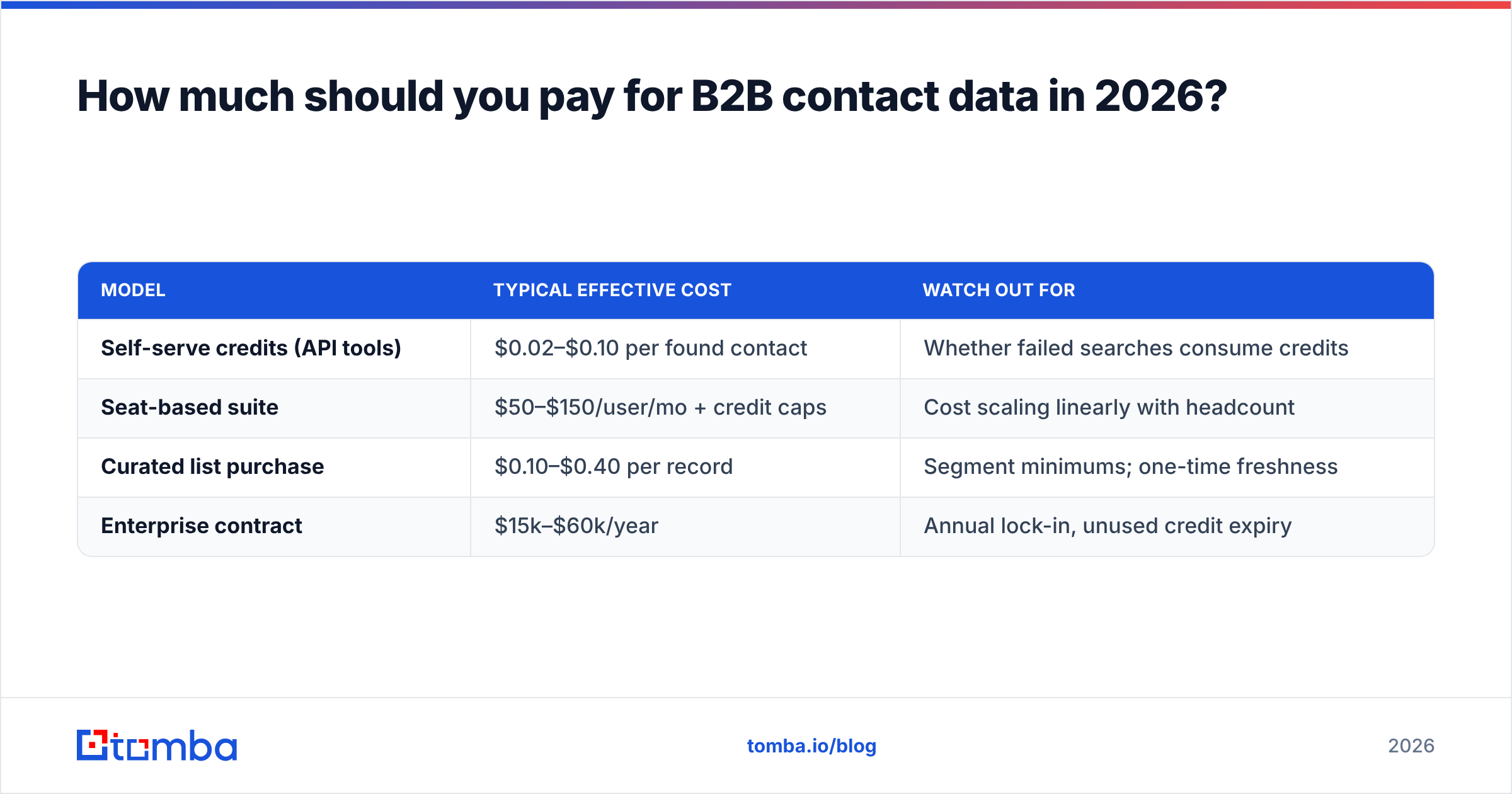
Normalize everything to cost per verified, deliverable contact — not cost per credit, not cost per seat.
| Model | Typical effective cost | Watch out for |
|---|---|---|
| Self-serve credits (API tools) | $0.02–$0.10 per found contact | Whether failed searches consume credits |
| Seat-based suite | $50–$150/user/mo + credit caps | Cost scaling linearly with headcount |
| Curated list purchase | $0.10–$0.40 per record | Segment minimums; one-time freshness |
| Enterprise contract | $15k–$60k/year | Annual lock-in, unused credit expiry |
A four-person SDR team pulling 3,000 contacts a month lands around $99–$249/mo on a credit model, versus several hundred per month on seat-based pricing plus overage. The crossover point favors credits until you genuinely need the sequencer, dialer, and CRM bundled in.
One more line item people forget: the cost of bad data. At a 15% bounce rate on 3,000 sends, you have burned 450 sends, degraded a sending domain, and possibly triggered a spam-folder placement that suppresses the next campaign. That is worth more than the price delta between any two vendors on this list.
How do you migrate off Funnelpool without breaking pipeline?#
Run it as a two-week overlap, not a cutover:
- Export your current data and de-duplicate. Pull everything out of Funnelpool while your contract is live, then run a deduplicate email list pass so you are not benchmarking against your own noise.
- Build a 300-contact control set. Pick one real ICP segment — not a broad sample. Same titles, same geography, same company size band.
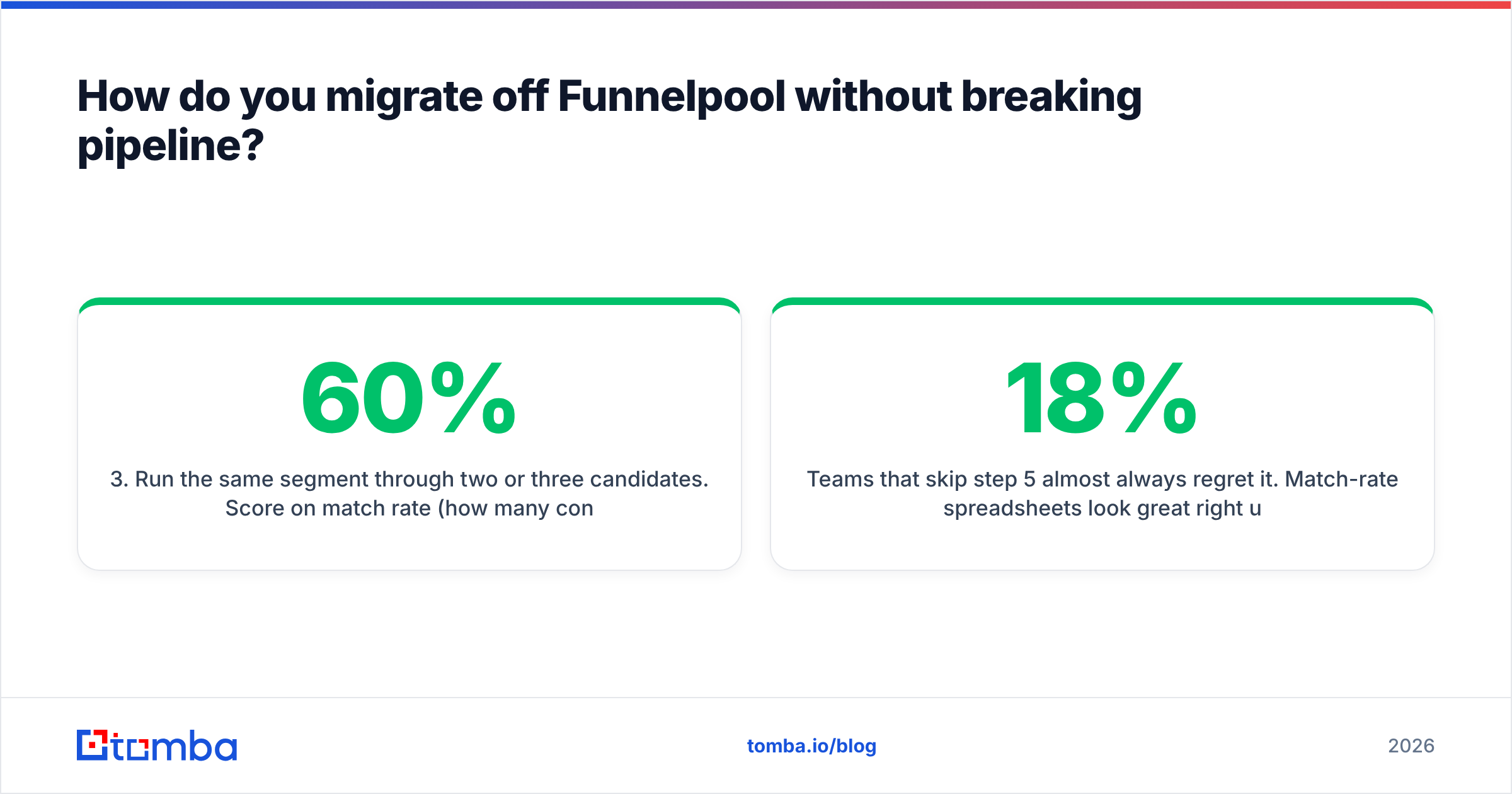
- Run the same segment through two or three candidates. Score on match rate (how many contacts returned) and verified rate (how many survive verification). A tool with 60% match and 97% verified beats 90% match and 70% verified.
- Verify everything independently. Use a neutral verifier so you are not grading each vendor with its own homework.
- Send a small live campaign. 100 contacts per source. Measure bounces, replies, and spam complaints. Real inbox behavior is the only test that counts.
- Wire the winner into your stack before you cancel. Connect the API, HubSpot integration, or Sheets add-on and confirm records flow end to end while the old contract still has runway.
Teams that skip step 5 almost always regret it. Match-rate spreadsheets look great right up until the first campaign bounces at 18%.
Which Funnelpool alternative should you pick?#
- You want infrastructure, not a list → a credit-based finder with an API. You pull contacts on demand, verify in the same call, and never wait on a delivery.
- You want an outbound stack in one seat → Apollo, accepting that you will verify separately.
- You want a guaranteed, ready-to-use segment with zero setup → BookYourData, which handles the curation and the guarantee for you.
- You sell enterprise into EMEA with heavy compliance review → Cognism.
- You live in LinkedIn all day → Lusha, or a LinkedIn finder if you would rather keep credits in one pool.
For most teams leaving a quote-only vendor, the honest answer is the boring one: start self-serve, prove the data on 300 real contacts, and only sign an annual contract once you know your cost per booked meeting.
Ready to benchmark it yourself? Run your own ICP through the Tomba Email Finder on the free tier — 25 searches, no card, no sales call. Verify the results, send a small test, and compare the bounce rate against whatever you are paying for today. If the numbers hold, Starter is $49/mo and the same credits work across the API, Chrome extension, Sheets, and bulk uploads.
Related guides#
Ready to find emails that actually work?
Join 150,000+ professionals who stopped guessing and started sending. Free credits on signup — no credit card required.
Get the Tomba newsletter
Practical outbound tactics and product updates — once every two weeks.
About the author