Generect vs LetsExtract: Which B2B Lead Tool Wins in 2026?
Generect sells fresh LinkedIn-sourced leads through an API; LetsExtract is a desktop scraper you pay for once. We compare accuracy, pricing, compliance, and workflow fit to show which one actually belongs in your stack.
Generect vs LetsExtract is a choice between two very different things. One sells you fresh B2B data. The other sells you a tool that scrapes data yourself. This guide compares both on accuracy, price, and legal risk.
TL;DR
- Generect is a cloud lead platform built on LinkedIn data. You get it live through an API and a web app. You pay each month for fresh contacts and filters.
- LetsExtract is a Windows desktop app. You buy it once, install it, and it pulls emails from web pages, search engines, and mailboxes on your own machine.
- They are not the same kind of product. Generect competes with B2B databases. LetsExtract competes with scrapers.
- On data quality and legal risk, Generect is the safer pick. On raw cost per record at scale, LetsExtract wins — but you pay for it in bounces and a damaged sender reputation.
- Want verified emails per lookup, with no scraping risk? A dedicated email finder with built-in checks is a cleaner third path than either one.
Generect vs LetsExtract: what does each tool do?#
Think of it like buying food. Generect is the grocery delivery service. Someone else picks, sorts, and chills the produce. You pay each month for clean goods. LetsExtract is a foraging kit. You buy it once and use it forever, but everything you gather still needs a wash.
Generect (generect.com) calls itself a real-time B2B lead platform. It pulls contacts from LinkedIn and other public sources when you ask, not from a stale warehouse. You get a web dashboard and an API. Filters cover job title, seniority, company size, industry, and place. Most buyers are agencies and outbound teams. They want a data pipe into Clay, a CRM, or a sequencer.
LetsExtract (letsextract.com) is a different animal. It is a Windows desktop suite, and Email Studio is the flagship. It grabs email addresses from websites, search results, local files, and IMAP mailboxes. It ships with a checker and a bulk mailer. You pay once and keep the software. There is no curated database behind it. You point the crawler at a source, and it returns what it can read.
That one gap drives every other gap. One sells data. The other sells a tool that collects data.

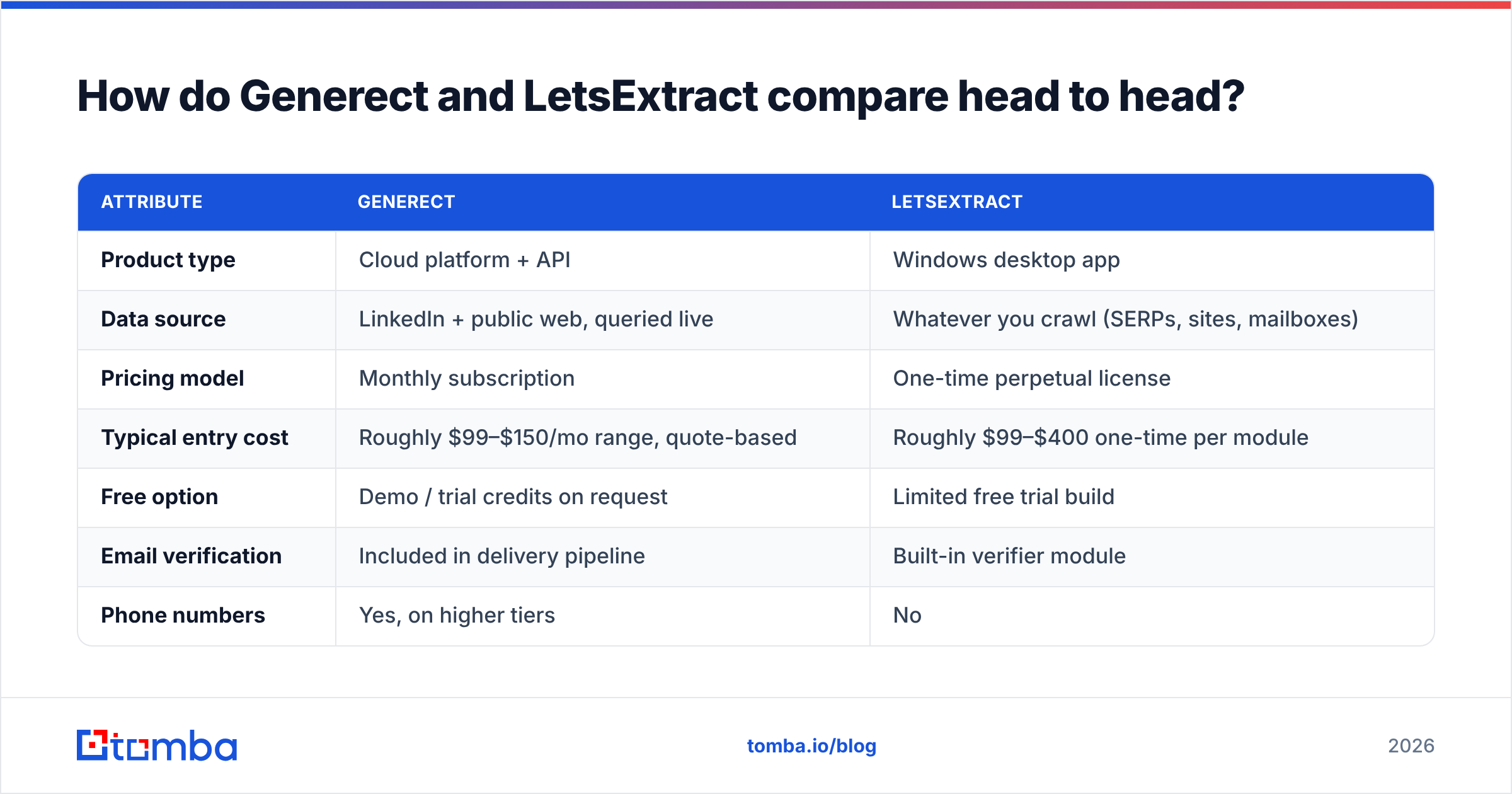
Generect vs LetsExtract: head-to-head comparison#
| Attribute | Generect | LetsExtract |
|---|---|---|
| Product type | Cloud platform + API | Windows desktop app |
| Data source | LinkedIn + public web, queried live | Whatever you crawl (SERPs, sites, mailboxes) |
| Pricing model | Monthly subscription | One-time perpetual license |
| Typical entry cost | Roughly $99–$150/mo range, quote-based | Roughly $99–$400 one-time per module |
| Free option | Demo / trial credits on request | Limited free trial build |
| Email verification | Included in delivery pipeline | Built-in verifier module |
| Phone numbers | Yes, on higher tiers | No |
| Firmographic filters | Extensive (title, size, industry, geo) | None — you filter after extraction |
| API access | Core to the product | No public API |
| macOS / Linux | Browser-based, OS-agnostic | Windows only (Wine at your own risk) |
| Best for | Outbound teams needing filtered ICP lists | Solo operators doing broad, cheap harvesting |
| Main weakness | Cost scales with volume; LinkedIn ToS exposure | Unfiltered output, high bounce risk, no ICP targeting |
Read that table twice before you shortlist either one. The row that matters most is "firmographic filters." Generect lets you ask for VP of Engineering, 200–1000 staff, SaaS, Germany. LetsExtract lets you ask for crawl these 4,000 URLs. If your outbound leans on persona targeting, the second tool leaves the hard part to you. You still have to decide who is worth an email at all.
Which tool gives you more accurate email data?#
Generect, in most real tests. It is not close.
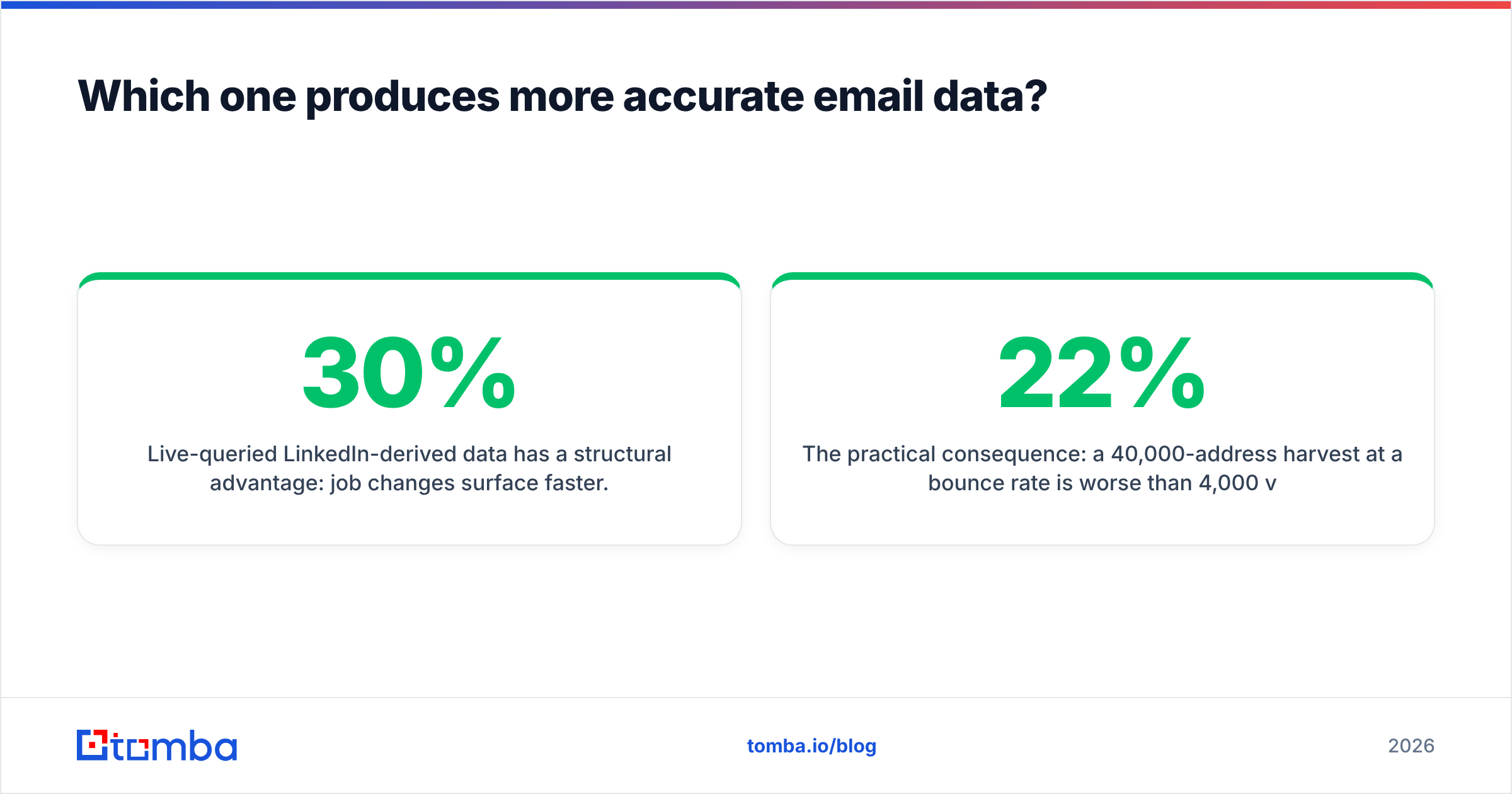
Live LinkedIn data has a built-in edge: job changes show up faster. B2B contact data rots quickly. Gartner and other analyst firms have long put annual B2B data decay at 25–30%. Most of that comes from role changes and company moves. A platform that queries at request time inherits less of that rot than a static list.
LetsExtract's accuracy depends on what you crawl. Harvest a well-kept team page and you get real, current addresses. Harvest search results for "@company.com" and you get a mess. The pile mixes live inboxes, dead aliases, role accounts, spam traps, and addresses someone else already scraped. The built-in checker catches bad syntax and dead MX records. It cannot tell you if info@ is a spam trap. It cannot tell you if a catch-all domain will accept your message and then bin it.
Three failure modes to price in with any harvester:
- Role addresses take over. Crawled sources lean hard on
info@,sales@, andcontact@. They deliver, but they rarely convert. They also pad your "found" count. - Spam traps hide from syntax checks. A recycled trap has valid syntax and a live MX record. It passes a basic checker and burns your sender reputation anyway.
- Catch-all domains lie. About one in five B2B domains accepts every address at the SMTP layer. You need a catch-all verifier to tell a real mailbox from a black hole.
So do the math. A 40,000-address harvest at a 22% bounce rate is worse than 4,000 verified addresses at 2%. The first one gets your sending domain throttled before the campaign ends.
Is Generect's price worth it next to a one-time license?#
It depends on what you are counting: cost per record, or cost per meeting.
LetsExtract's one-time license looks unbeatable on a spreadsheet. Pay a few hundred dollars once. Extract for years. The cost per address rounds to nothing. No credit anxiety, no renewal.
But that spreadsheet leaves things out. Add these:
- Your time. You have to find crawl targets, clean the output, drop duplicates, and check which addresses match your ICP. Budget hours per campaign, not minutes.
- Outside verification. The bundled checker is not enough for cold outbound at volume. You will pay for a real email verifier anyway.
- Deliverability damage. A burned domain costs weeks of warmup. Sometimes it costs you a new domain.
- Legal exposure. Scraping EU addresses with no lawful basis is the classic GDPR problem. A one-time license does not come with a data processing agreement.
Generect's subscription rolls the sourcing, filtering, and freshness work into the price. For a team sending 2,000 targeted touches a month, that trade usually pays off. For someone who blasts a regional directory once a quarter, it does not.
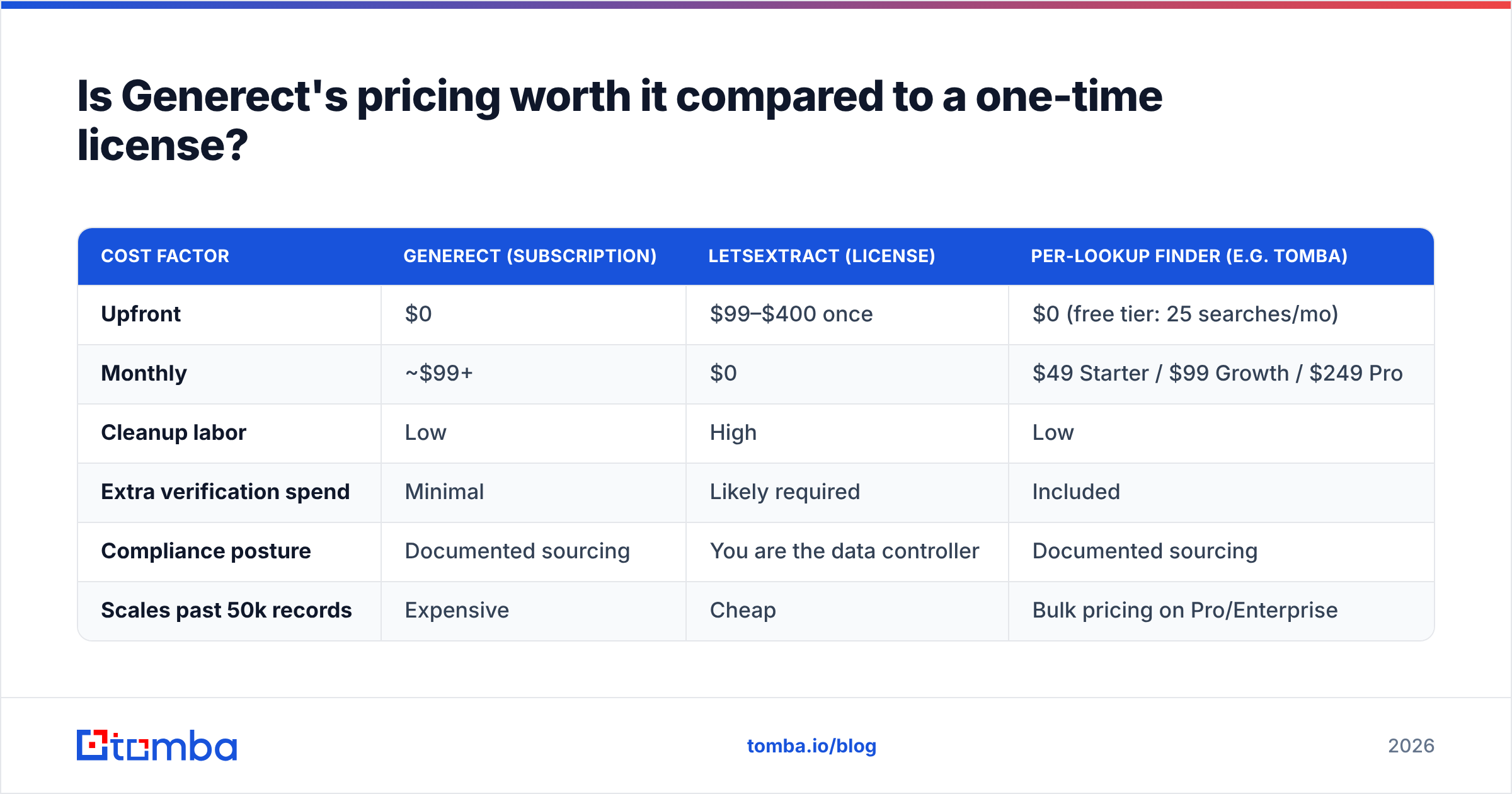
Here is how the three main approaches stack up on total cost of ownership:
| Cost factor | Generect (subscription) | LetsExtract (license) | Per-lookup finder (e.g. Tomba) |
|---|---|---|---|
| Upfront | $0 | $99–$400 once | $0 (free tier: 25 searches/mo) |
| Monthly | ~$99+ | $0 | $49 Starter / $99 Growth / $249 Pro |
| Cleanup labor | Low | High | Low |
| Extra verification spend | Minimal | Likely required | Included |
| Compliance posture | Documented sourcing | You are the data controller | Documented sourcing |
| Scales past 50k records | Expensive | Cheap | Bulk pricing on Pro/Enterprise |
For the third column: Tomba pricing starts free at 25 searches a month. After that it is $49/mo Starter, $99/mo Growth, and $249/mo Pro, with Enterprise quoted. That middle path exists for a reason. Most teams need neither a full LinkedIn database seat nor a raw harvester.
What are the legal risks with each tool?#
Here the two products really split. Most buyers underrate this part.
Generect takes its data from LinkedIn. LinkedIn's User Agreement bans automated scraping, and the company has sued over it more than once. Vendors in this space work on contested legal ground. The hiQ v. LinkedIn cases dealt with CFAA claims over public data. They did not bless scraping that breaks a contract. In practice, the risk sits with the vendor, not with you. If the pipe breaks, your campaigns stall. Ask any LinkedIn-sourced vendor two questions. How do you handle GDPR data subject requests? What is your lawful basis under Article 6(1)(f)?
LetsExtract moves the risk onto you. You run the crawler, on your hardware, against targets you pick. Under GDPR that makes you the data controller for everything it collects. You owe those people notice, access, and deletion. Most solo users of a desktop harvester have no way to do any of that. CAN-SPAM in the US is softer about how you collect addresses. It still demands honest headers, a real physical address, and a working opt-out. It also names address harvesting as a reason to raise penalties.
Neither one is a deal-breaker. But be honest about the shape of it. Generect puts the legal risk in a vendor you can audit and swap. LetsExtract hands it to you, for good, with no paper trail.
Who should choose Generect over LetsExtract?#
Choose Generect if you:
- Need persona-level filters. You sell to a set title band at a set company size. Harvesting cannot do that without a mountain of manual triage.
- Run outbound through an API. The API into Clay, n8n, or your own enrichment flow is the real product. LetsExtract has nothing like it.
- Sell into the EU or a regulated field. You want documented sourcing and a vendor contract, not personal liability.
- Value time over license cost. A subscription that saves ten hours a month pays for itself at any SDR salary.
Choose LetsExtract if you:
- Work local or by vertical, not by persona. Every dentist in a metro. Every supplier in a trade directory. Databases price those lists badly.
- Have a Windows machine and no monthly budget. The one-time cost really is one time.
- Already own verification and warmup tools. You can absorb dirty output because you clean it later.
- Need mailbox and file extraction. Pulling addresses out of your own IMAP archive or a folder of PDFs is a real job. Generect does not do it at all.
Is there a better middle path for most teams?#
Yes, and it is worth saying plainly. For a lot of B2B teams, neither a LinkedIn database seat nor a desktop harvester is the right tool. What they need is verified email lookup on demand, wired into the apps they already use.
The workflow looks like this:
- Pick the account first. Use ICP research, intent signals, or your own site traffic — not a scraped list. Tools like website visitor reveal show which companies already look at you.
- Find the person's email. Use domain search to map a company's contacts and email pattern. For a known target, look up name plus domain.
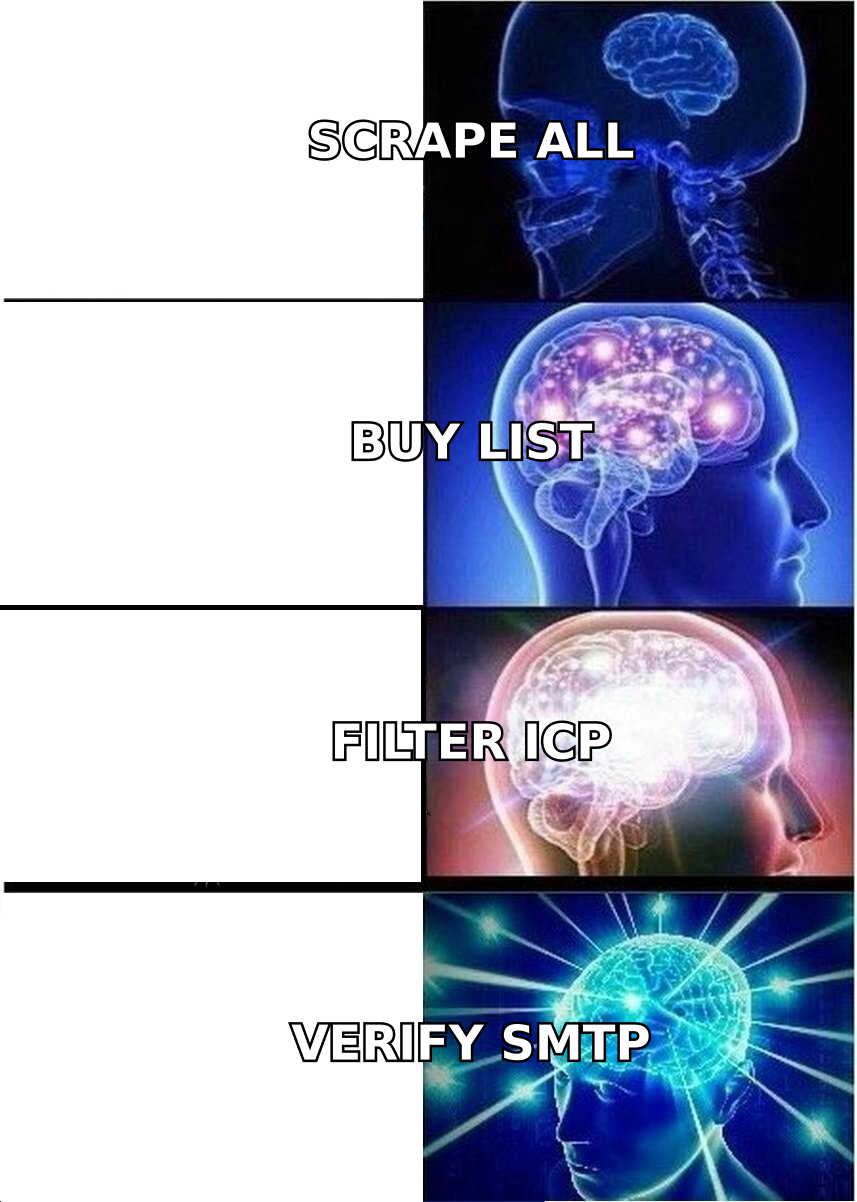
- Verify before you send. Run SMTP checks and catch-all detection, not just a syntax test.
- Enrich and route. Push the data into HubSpot, Salesforce, or Sheets through integrations so it lands where reps work.
At low and mid volume this costs less than a full database seat. It is also far cleaner than harvesting. And it drops both the LinkedIn ToS dependency and the personal-controller problem in one move. Others solve this a different way. BookYourData, for example, sells pre-verified contact lists with a bounce guarantee. That suits teams who would rather buy a finished list than run lookups. Weigh it against per-lookup tools based on your real bottleneck: volume or precision.
How do you test any lead tool before you buy?#
Run the same five steps on Generect, LetsExtract, or anything else:
- Pull 100 records from your real ICP. Not the vendor's demo segment. Your titles, your regions, your company sizes.
- Check them with a neutral third party. Never take a vendor's own check as proof of that vendor's accuracy.
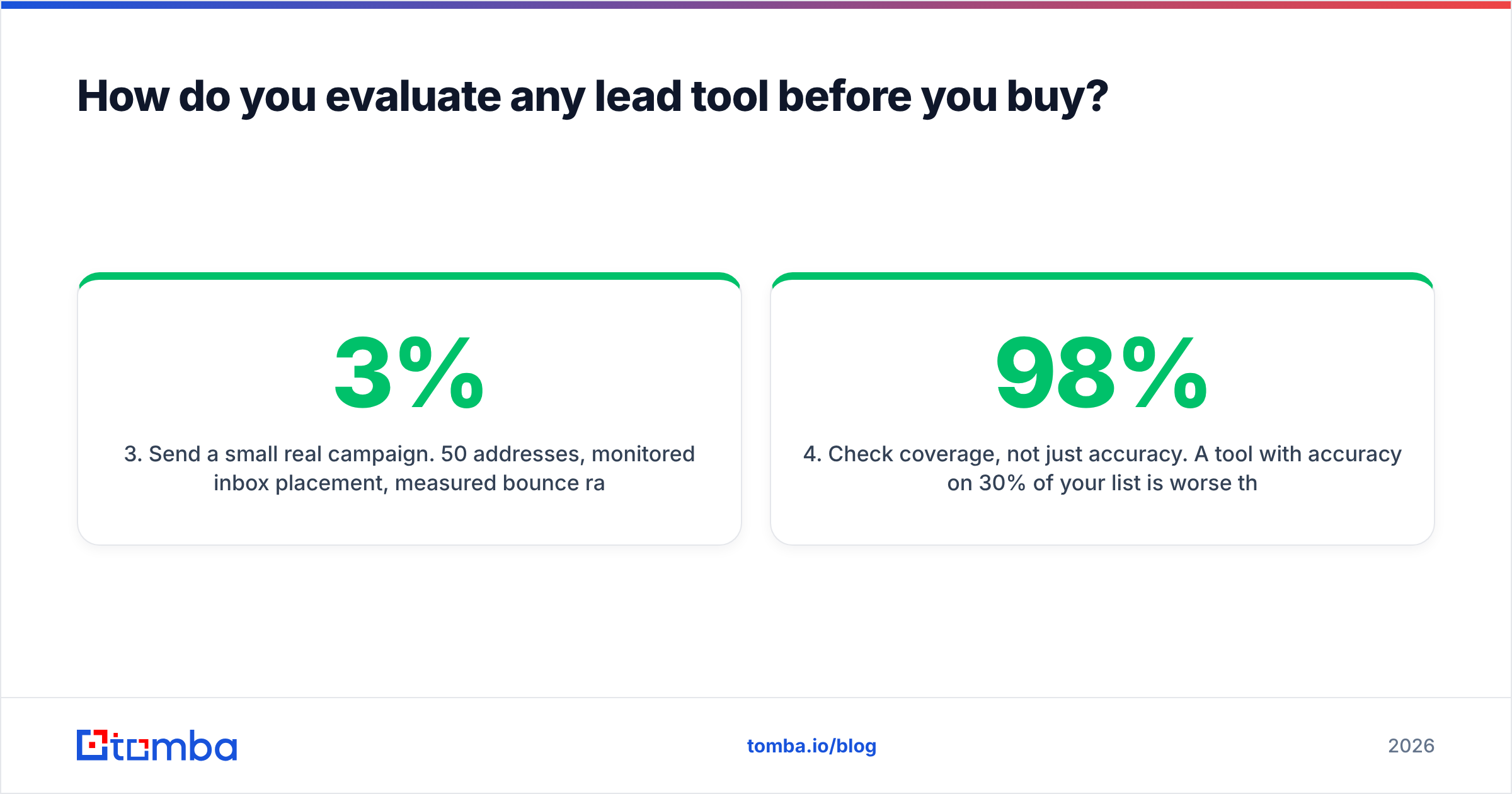
- Send a small real campaign. Fifty addresses. Watch inbox placement. Measure the bounce rate. Anything above 3% is a fail.
- Look at coverage, not just accuracy. A tool with 98% accuracy on 30% of your list is worse than 92% on 85%.
- Read the DPA and the ToS. Ask who the controller is, where the data comes from, and what happens on a deletion request. If there is no answer, that is the answer.
Reviews on G2 and Capterra help with support quality and billing gripes, which vendors never share. Treat accuracy claims there with care. Almost nobody measures them properly.
The verdict on Generect vs LetsExtract#
Generect wins for targeted B2B outbound. Fresher data, real ICP filters, API-first delivery, and a vendor who carries the legal weight. Pay the subscription if your motion is persona-based.
LetsExtract wins on one narrow axis. It is cheaper per raw address for local or directory work, on Windows, when you already own the cleanup stack. Outside that lane, it costs more in labor and bounces than it saves in license fees.
For most teams, though, the honest answer is neither. You do not need a database seat or a harvester. You need verified email lookup that plugs into your workflow and keeps your sending domain safe.
That is what Tomba Email Finder is built for. Find work email addresses by domain, name, or company. Verify them before they hit your sequencer. Pull it all through the Tomba API, a Chrome extension, or Google Sheets. Start free at 25 searches a month. Move to Starter at $49/mo when your pipeline outgrows it. No license to regret, no LinkedIn dependency to break.
Related guides#
Ready to find emails that actually work?
Join 150,000+ professionals who stopped guessing and started sending. Free credits on signup — no credit card required.
Get the Tomba newsletter
Practical outbound tactics and product updates — once every two weeks.
About the author