9 Best Goava Alternatives in 2026 for Nordic and Global B2B Data
Goava is strong on Nordic company data and CRM-native lead recommendations, but it is not the only option. Here are nine Goava alternatives compared on data coverage, contact accuracy, API access, and real cost per seat.

TL;DR
- Goava is a Swedish sales intelligence platform built around Nordic company data, AI lead recommendations, and deep CRM integrations. It is excellent inside Sweden, Norway, Denmark, and Finland, and thin outside them.
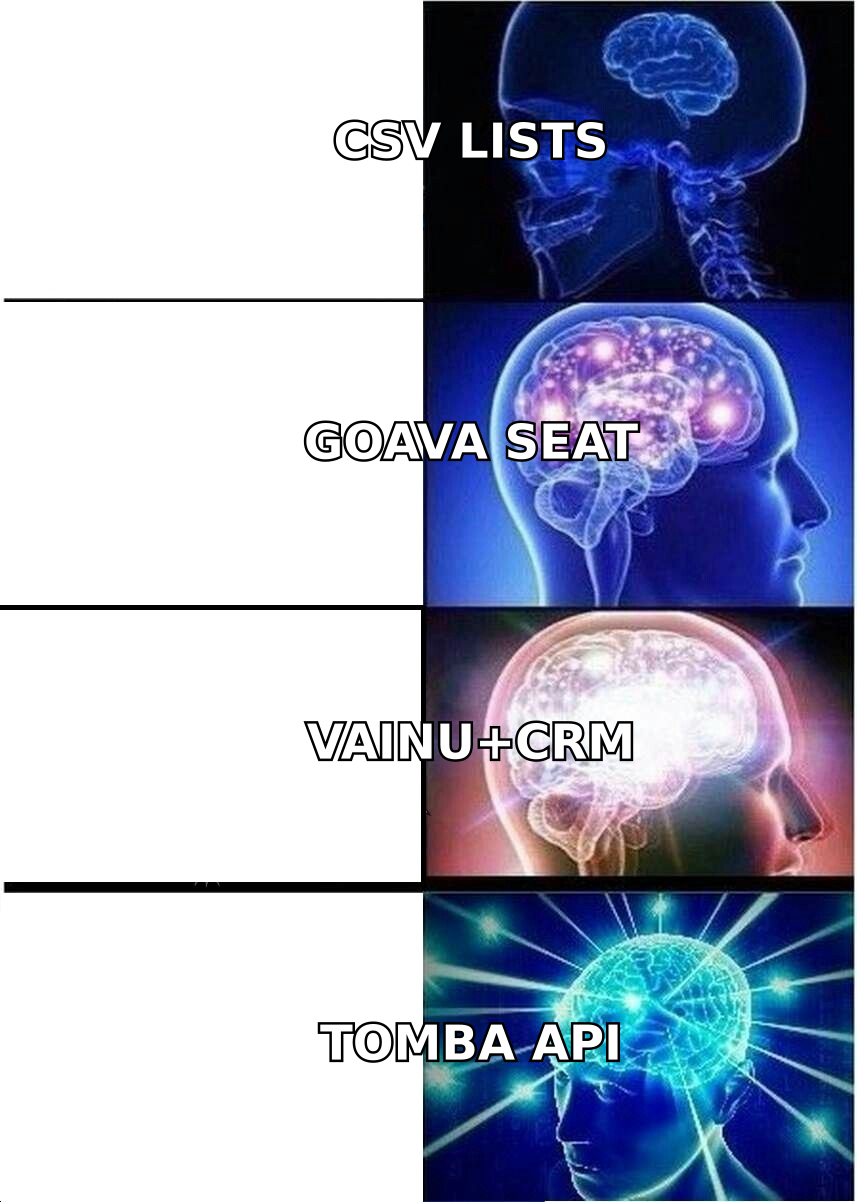
- Most teams shopping for Goava alternatives want one of three things: coverage beyond the Nordics, verified contact-level data (emails and direct dials), or a lower per-seat cost.
- Like-for-like Nordic replacements: Vainu and Dealfront. Global contact data: Cognism, Apollo, Lusha. Contact discovery and verification at API scale: Tomba. Pay-as-you-go lists without a subscription: BookYourData.
- Price ranges vary by an order of magnitude. Enterprise sales-intelligence seats commonly land in the €300–€800/user/month band, while contact-data tools start at $49/mo.
- The right pick depends on whether you need account intelligence (who to target) or contact data (how to reach them). Very few tools are genuinely good at both.
What is Goava and who is it actually for?#
Goava is a Stockholm-based sales intelligence platform. Its pitch: instead of making reps build lists manually, Goava ingests company data — financials, registry filings, technographics, web signals, news — scores it against your existing customers, and pushes recommended accounts straight into your CRM.
The strengths are specific and real:
- Nordic depth. Swedish, Norwegian, Danish, and Finnish company registries, financial filings, and org data at a level of granularity that global vendors rarely match.
- CRM-native workflow. Tight integrations with Upsales, Lime, HubSpot, Salesforce, and Pipedrive, so recommendations appear where reps already work.
- Look-alike scoring. It analyses closed-won accounts and surfaces similar companies, which is genuinely useful for a mature Nordic mid-market team.
The weaknesses are just as specific. Goava is an account intelligence tool first. It tells you which company deserves a call. It is not built to hand you a verified email address for the specific VP of Operations you need to reach, and coverage falls away sharply once your ICP crosses into DACH, UK, or North America. Pricing is quote-based and lands in enterprise territory, which is a hard sell for a three-person outbound team.
If any of those three constraints bite, you are in the market for alternatives.
Why do teams switch away from Goava?#
From what shows up repeatedly in G2 reviews and buyer conversations, the switching triggers cluster into five patterns:
- Geographic expansion. You closed the Nordics and now need Germany, the UK, or the US. Registry-derived Nordic data does not travel.
- Contact-level gaps. Account scores are useless if nobody on the team can find the decision-maker's email. Reps end up paying for a second tool anyway.
- Per-seat economics. Enterprise sales-intelligence licensing scales with headcount, not usage. Adding two SDRs can add five figures annually.
- No usable API. If you are building an automated GTM stack — enrichment on form fill, CRM hygiene jobs, agent-driven prospecting — you need programmatic access, not a dashboard.
- Overlap with existing tools. Teams already running a CRM with data enrichment, a visitor-ID tool, and Sales Navigator often find Goava duplicates 60% of what they own.
What should you compare when evaluating Goava alternatives?#
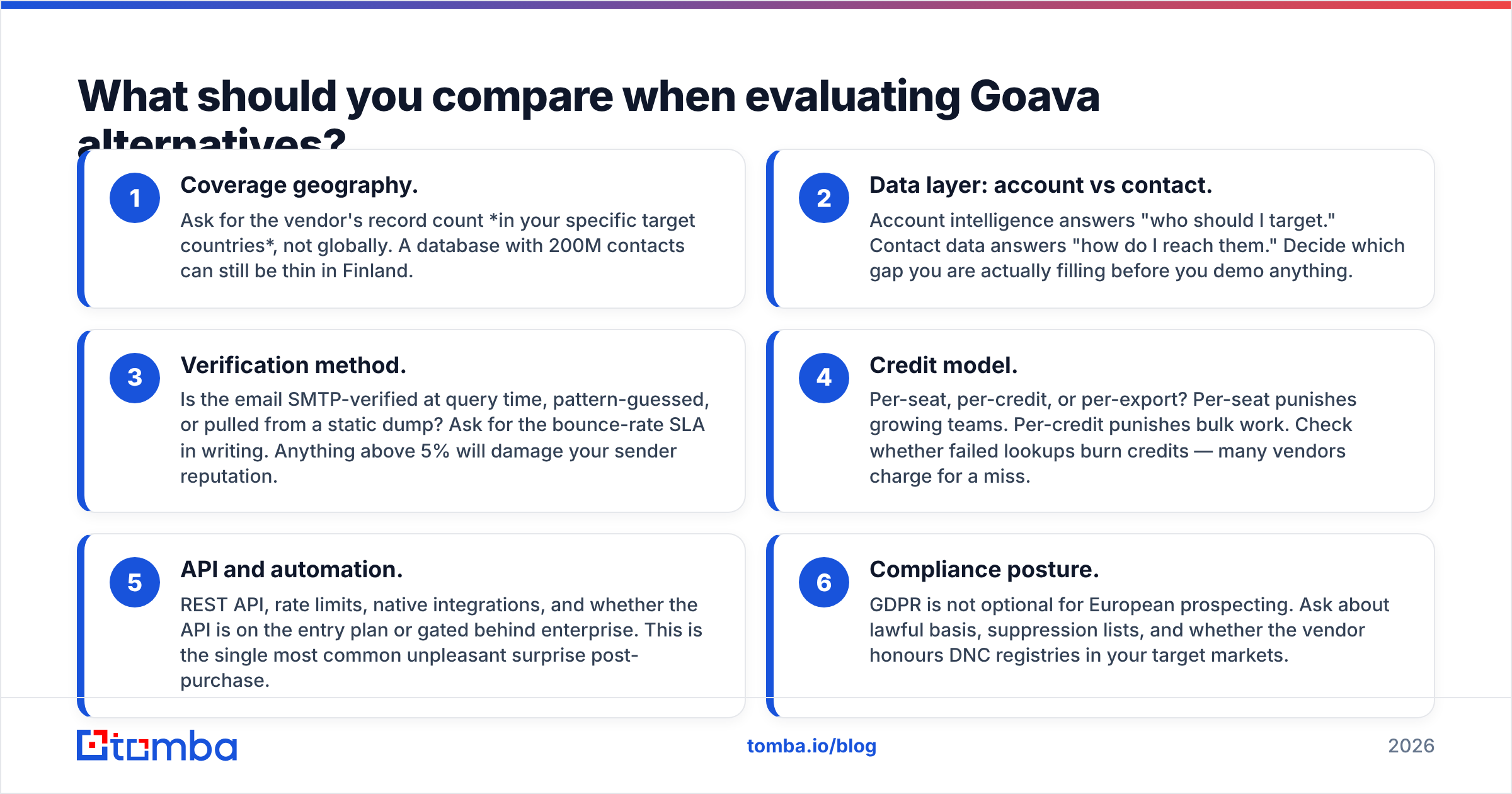
Do not compare on feature-list length. Compare on these six axes, in this order:
- Coverage geography. Ask for the vendor's record count in your specific target countries, not globally. A database with 200M contacts can still be thin in Finland.
- Data layer: account vs contact. Account intelligence answers "who should I target." Contact data answers "how do I reach them." Decide which gap you are actually filling before you demo anything.
- Verification method. Is the email SMTP-verified at query time, pattern-guessed, or pulled from a static dump? Ask for the bounce-rate SLA in writing. Anything above 5% will damage your sender reputation.
- Credit model. Per-seat, per-credit, or per-export? Per-seat punishes growing teams. Per-credit punishes bulk work. Check whether failed lookups burn credits — many vendors charge for a miss.
- API and automation. REST API, rate limits, native integrations, and whether the API is on the entry plan or gated behind enterprise. This is the single most common unpleasant surprise post-purchase.
- Compliance posture. GDPR is not optional for European prospecting. Ask about lawful basis, suppression lists, and whether the vendor honours DNC registries in your target markets.
Write those six down, score each vendor 1–5, and the shortlist usually collapses to two candidates within an afternoon.
Which Goava alternatives are worth testing in 2026?#
Vainu — the closest like-for-like#
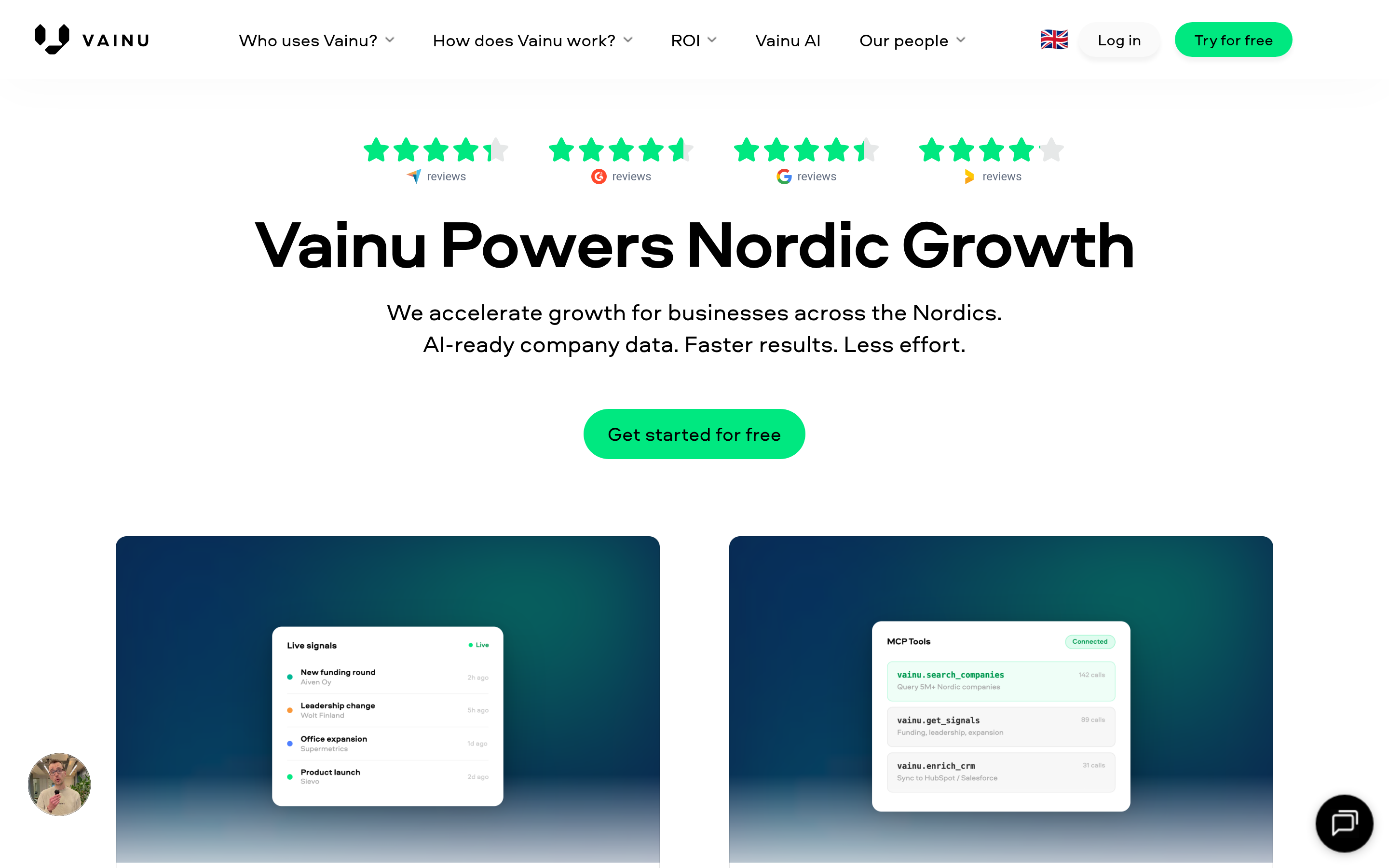
Vainu is the other Nordic sales intelligence heavyweight, Finnish-founded, with company data across the Nordics plus the Netherlands. Real-time company signals (funding, hiring, leadership changes), a strong CRM connector set, and a workflow engine that triggers on signals rather than static lists.
Choose Vainu if you like Goava's model but want signal-based triggers and slightly broader European reach. It is not cheaper, and it shares Goava's contact-data weakness.
Dealfront — European coverage plus visitor identification#
Dealfront is the merged Leadfeeder and Echobot business. You get web-visitor identification (which anonymous companies hit your site) bolted onto a European B2B database with strong DACH coverage. For teams whose ICP spans Nordics and Germany, this covers more ground than Goava alone.
The trade-off is complexity: it is effectively three products in one interface, and pricing scales quickly once you add contact-data seats.
Cognism — global contacts with phone-verified numbers#
Cognism's differentiator is Diamond Data, a set of human-verified mobile numbers, plus a compliance-forward posture in Europe (DNC screening across multiple markets). If your problem is "I have the account list, I cannot reach anyone," this is a strong fit.
Expect enterprise pricing and annual contracts. Cognism is not a self-serve tool.
Apollo.io — volume, sequencing, and a free tier#
Apollo bundles a large global contact database with sequencing and a basic CRM. The free tier makes it the default first stop for early-stage teams. Data quality is variable — strong in US tech, patchier in European mid-market — but the price-to-volume ratio is hard to argue with. If you are already evaluating it, our breakdown of Apollo alternatives covers where it breaks down at scale.
Tomba — contact discovery and verification, API-first#
Tomba solves the layer Goava explicitly does not: turning a company name or domain into a verified, deliverable email address. Run a domain search to pull every published address at a company, use the email finder for a specific first name, last name, and domain, then push everything through the email verifier before it touches your sequencer.
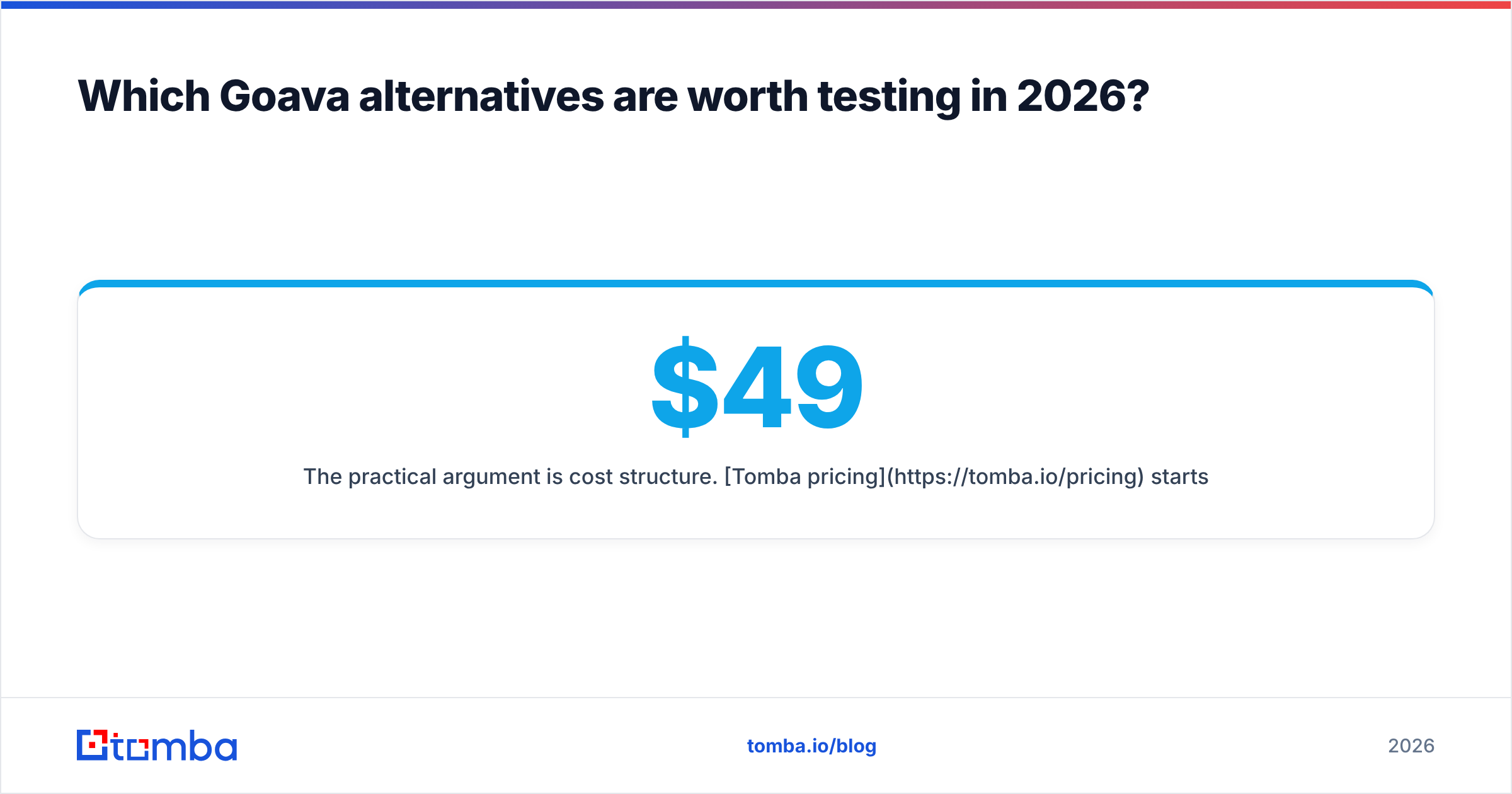
The practical argument is cost structure. Tomba pricing starts with a free tier at 25 searches/month, then Starter at $49/mo, Growth at $99/mo, and Pro at $249/mo. API access is not gated behind an enterprise call, which matters if you are wiring enrichment into HubSpot, Sheets, or an internal script. It is not an account-scoring engine — pair it with Vainu or Sales Navigator if you need that layer too.
BookYourData — pay-as-you-go lists with no subscription#
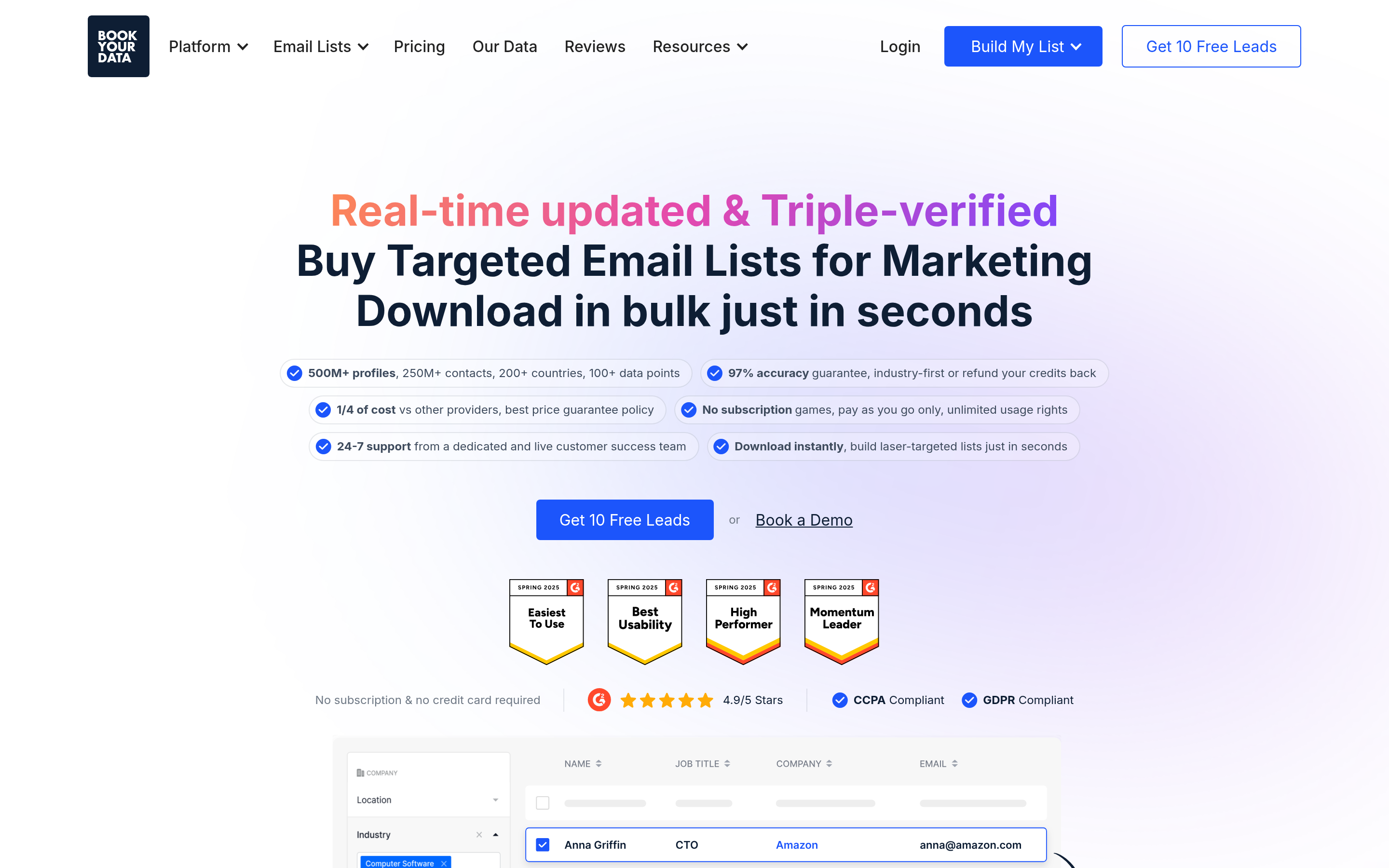
BookYourData sells prebuilt, filterable B2B contact lists on a credit basis with a published accuracy guarantee, and no monthly commitment. That model suits teams running occasional campaigns rather than continuous outbound — you buy 5,000 records for a Q1 push and owe nothing in Q2. It is a genuinely different purchasing motion from every subscription tool on this list, and a sensible peer to keep on the shortlist when procurement resists recurring seats.
Dun & Bradstreet (Bisnode) — the firmographic system of record#
If what you actually valued in Goava was Nordic financial and credit data, the underlying source is often D&B, which absorbed Bisnode. Going direct gives you registry-grade firmographics, credit scores, and corporate hierarchies. What you lose is the reps-friendly interface and the AI recommendation layer. This is a data-team purchase, not a rep-facing one.
Lusha — fast, lightweight contact enrichment#
Lusha is a browser-extension-first tool for grabbing contact details while browsing LinkedIn. Low friction, quick to adopt, decent European coverage. It is a per-rep productivity tool rather than a data platform, and costs mount when the whole team needs seats.
LinkedIn Sales Navigator — the signal layer nobody replaces#
Sales Navigator is not a database you can export, and it should not be your only tool. But for job-change alerts, org mapping, and intent-adjacent signals, nothing else has the same first-party freshness. Most teams that leave Goava keep Sales Navigator and pair it with a contact-data tool.
How do the Goava alternatives compare side by side?#
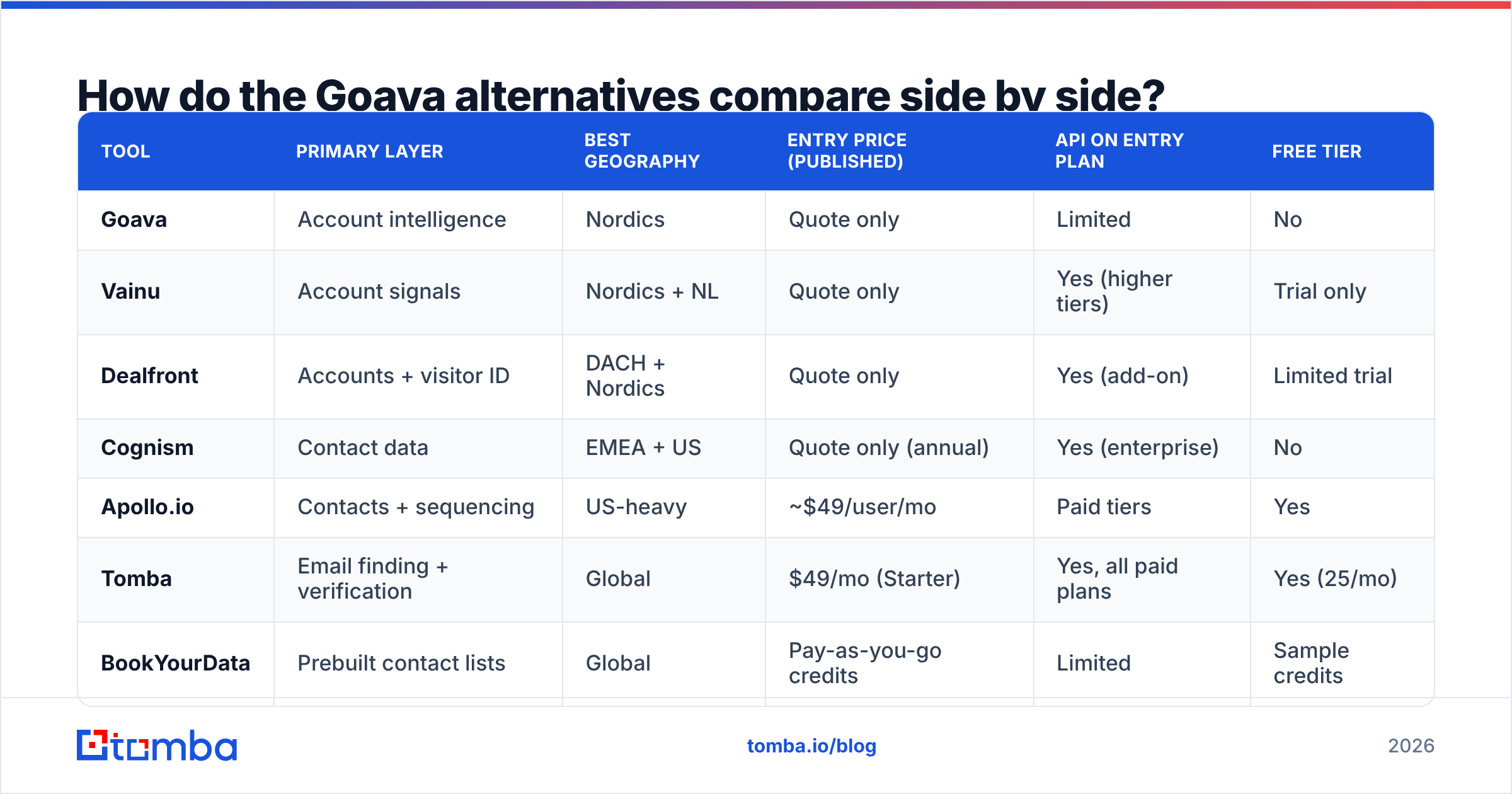
| Tool | Primary layer | Best geography | Entry price (published) | API on entry plan | Free tier |
|---|---|---|---|---|---|
| Goava | Account intelligence | Nordics | Quote only | Limited | No |
| Vainu | Account signals | Nordics + NL | Quote only | Yes (higher tiers) | Trial only |
| Dealfront | Accounts + visitor ID | DACH + Nordics | Quote only | Yes (add-on) | Limited trial |
| Cognism | Contact data | EMEA + US | Quote only (annual) | Yes (enterprise) | No |
| Apollo.io | Contacts + sequencing | US-heavy | ~$49/user/mo | Paid tiers | Yes |
| Tomba | Email finding + verification | Global | $49/mo (Starter) | Yes, all paid plans | Yes (25/mo) |
| BookYourData | Prebuilt contact lists | Global | Pay-as-you-go credits | Limited | Sample credits |
| D&B / Bisnode | Firmographics + credit | Global | Enterprise | Yes | No |
| Lusha | Contact enrichment | EMEA + US | ~$36/user/mo | Higher tiers | Yes (limited) |
Prices are the vendors' published or commonly quoted figures as of early 2026 and change often. Treat quote-only entries as "expect a sales call and an annual commitment."

Which alternative fits your specific situation?#
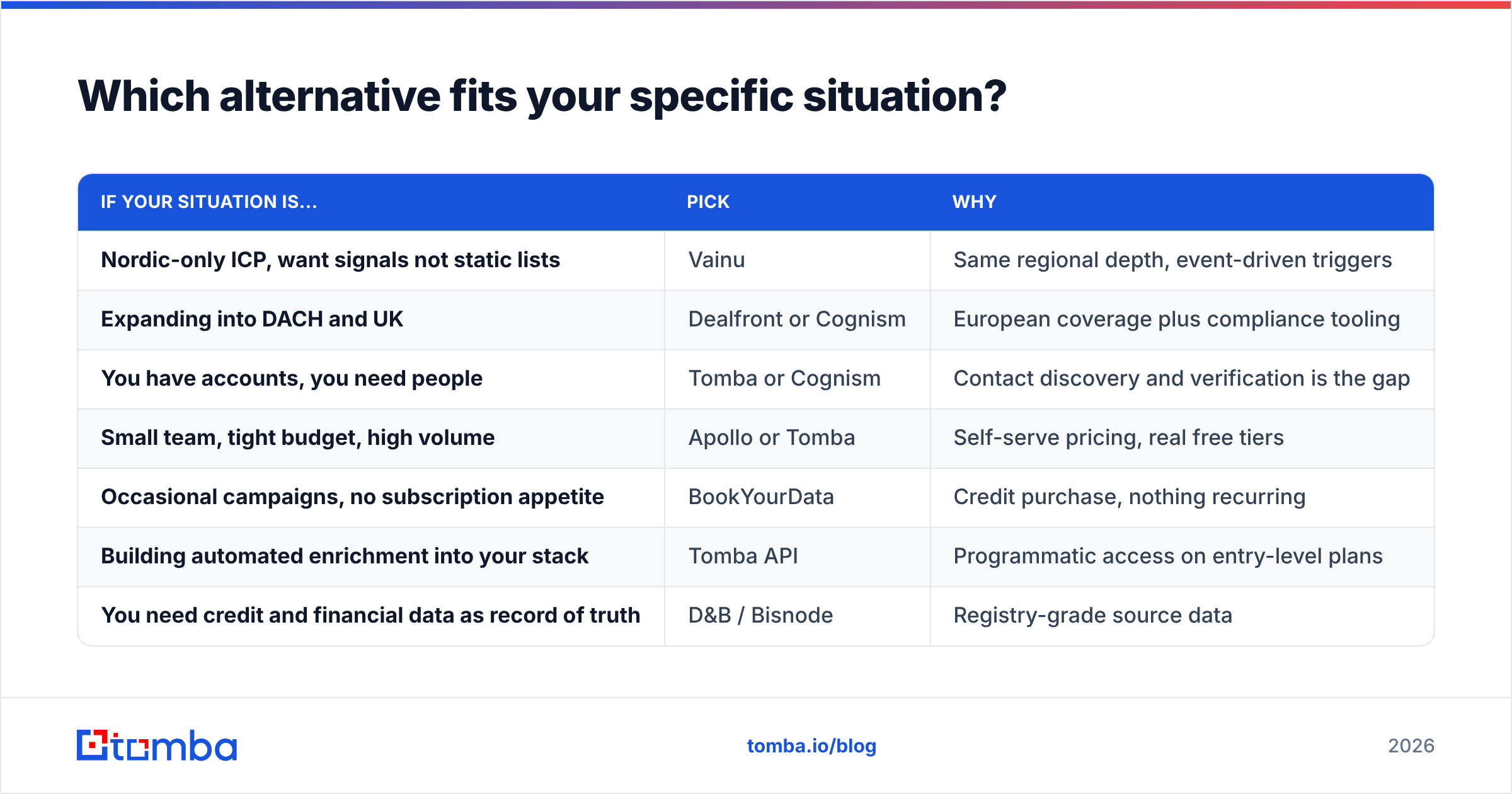
| If your situation is... | Pick | Why |
|---|---|---|
| Nordic-only ICP, want signals not static lists | Vainu | Same regional depth, event-driven triggers |
| Expanding into DACH and UK | Dealfront or Cognism | European coverage plus compliance tooling |
| You have accounts, you need people | Tomba or Cognism | Contact discovery and verification is the gap |
| Small team, tight budget, high volume | Apollo or Tomba | Self-serve pricing, real free tiers |
| Occasional campaigns, no subscription appetite | BookYourData | Credit purchase, nothing recurring |
| Building automated enrichment into your stack | Tomba API | Programmatic access on entry-level plans |
| You need credit and financial data as record of truth | D&B / Bisnode | Registry-grade source data |
What does the switch actually cost you?#
Three costs get underestimated every time.
Data migration. Goava writes fields into your CRM. Before you cancel, export everything and map which fields came from Goava versus your reps. Teams routinely discover that 30% of their account records lose their firmographic layer the day the integration is disconnected.
Workflow rebuild. If your SDR playbook says "work your Goava recommendations queue daily," you need a replacement ritual before the tool goes away, not after. A signal-based tool like Vainu needs different habits than a contact-data tool like Tomba.
List hygiene. New data source means new bounce risk. Whatever you migrate to, verify before you send. Run the imported list through a verifier and, for ambiguous domains, a catch-all verifier rather than assuming every accept-all server means a valid mailbox. One bad send at volume undoes months of sender reputation work.
Do you need to replace Goava at all?#
Honest answer: often, no. If Goava is doing account intelligence well for your Nordic ICP, the cheaper move is to keep it and add the missing layer rather than rip and replace. A common working stack looks like:
- Goava or Vainu for account selection and scoring inside the CRM
- Sales Navigator for org mapping and job-change signals
- Tomba for turning selected accounts into verified, deliverable contacts via API or bulk email finder
- Your sequencer for the send
That composite typically costs less than upgrading a single enterprise platform to cover all four jobs, and each piece is replaceable independently when it stops earning its keep.
Rip-and-replace only makes sense when the geography is wrong. No amount of stacking fixes a database that has no records in your target country.
Where should you start?#
Start with a 50-account test. Take fifty real target accounts, run them through each shortlisted tool, and measure three numbers: match rate, bounce rate on the emails you get back, and minutes per finished contact record. Vendors will show you their own benchmarks. Your fifty accounts are the only benchmark that predicts your results.
If the gap you found is contact data — you know which companies to hit, you just cannot reach the people inside them — start with the Tomba Email Finder. The free tier gives you 25 searches a month, enough to run that fifty-account test across two sessions without a credit card, and the Starter plan at $49/mo includes full API access if the test goes well. Pair it with whichever account-intelligence layer already fits your market, and you get most of what Goava does at a fraction of the seat cost.
Related guides#
Ready to find emails that actually work?
Join 150,000+ professionals who stopped guessing and started sending. Free credits on signup — no credit card required.
Get the Tomba newsletter
Practical outbound tactics and product updates — once every two weeks.
About the author