9 Best GoZen Alternatives in 2026 (Free and Paid Tools)
GoZen bundles forms, popups, AI content, and email automation into one brand. Here are nine alternatives that beat it on data quality, deliverability, or price, plus how to pick per module instead of per suite.
TL;DR
- GoZen is a bundle of products (forms, opt-ins, AI content, email automation), not a single tool. The right replacement depends on which module you actually use.
- If you use GoZen mainly to collect and email inbound leads, Brevo, Kit, Typeform, and OptinMonster cover those jobs with deeper feature sets.
- If you use it to find B2B contacts, a suite is the wrong shape entirely. You want a dedicated data layer: Tomba, BookYourData, or Apollo.
- Suites win on price and single-login simplicity. Specialists win on deliverability, data accuracy, and API depth.
- The cheapest migration path is usually hybrid: keep one suite for capture, add a real data provider for outbound.
What is GoZen and what does it actually do?#
GoZen is a family of marketing products sold under one brand at gozen.io. Rather than a single application, it groups several tools that a small marketing team would otherwise buy separately: interactive and conversational forms, exit-intent and opt-in popups, AI-assisted content generation, and email marketing automation with AI-written sequences.
That bundling is the whole pitch. Instead of paying four vendors, you pay one, and the modules share a login and (in theory) a contact record.
The trade-off is predictable. Every module competes against a category leader that has spent a decade on that single problem. GoZen Forms competes with Typeform. The opt-in module competes with OptinMonster. The email module competes with Brevo, Kit, and Klaviyo. The AI writer competes with Jasper and Copy.ai. And none of the modules solve the problem that most B2B teams hit first: you cannot email prospects who never filled in a form.
That last gap is why "gozen alternatives" gets searched by outbound teams, not just marketers.
Why do teams look for GoZen alternatives?#
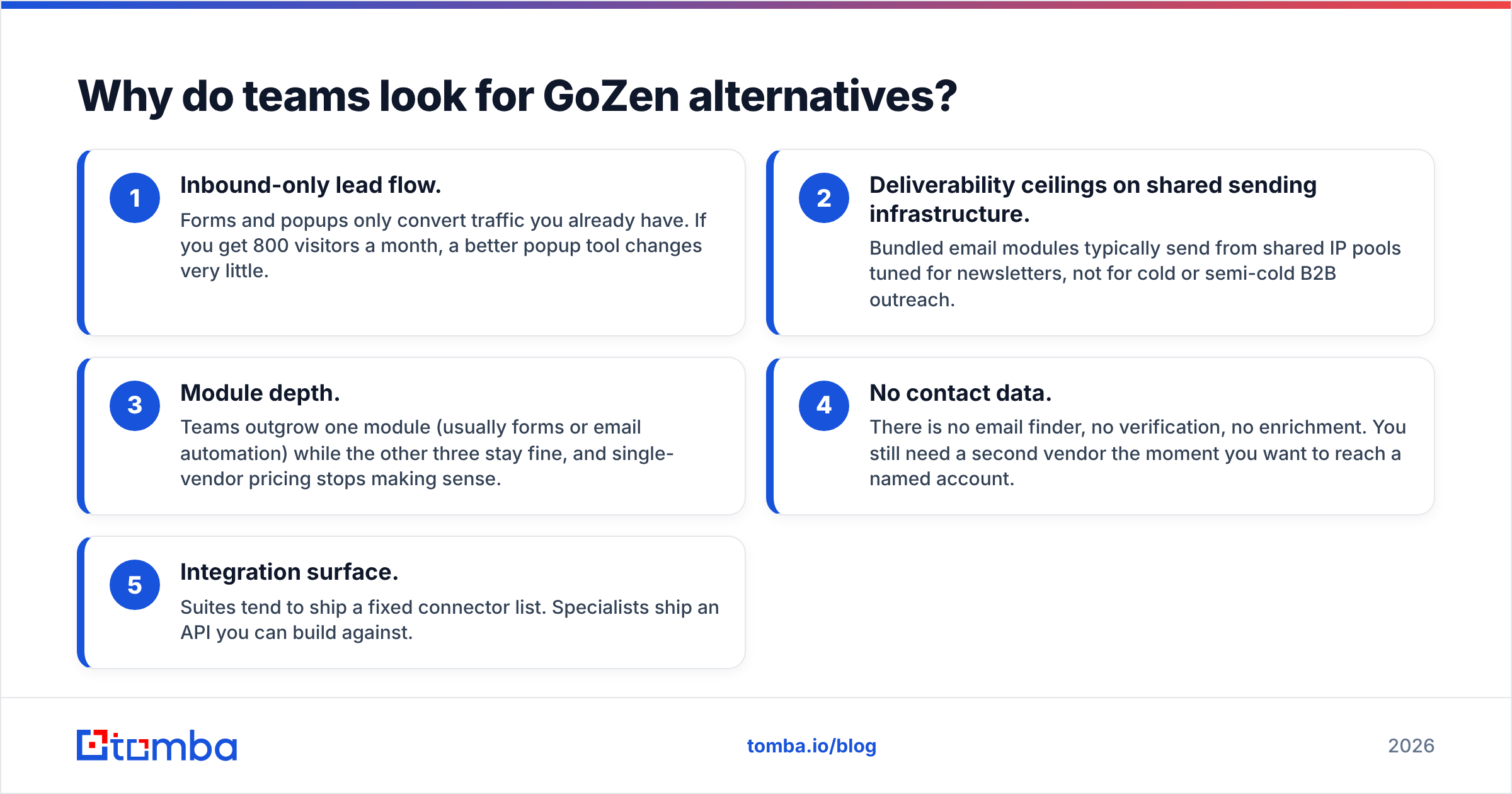
From what shows up in review threads on G2 and in outbound communities, five reasons repeat:
- Inbound-only lead flow. Forms and popups only convert traffic you already have. If you get 800 visitors a month, a better popup tool changes very little.
- Deliverability ceilings on shared sending infrastructure. Bundled email modules typically send from shared IP pools tuned for newsletters, not for cold or semi-cold B2B outreach.
- Module depth. Teams outgrow one module (usually forms or email automation) while the other three stay fine, and single-vendor pricing stops making sense.
- No contact data. There is no email finder, no verification, no enrichment. You still need a second vendor the moment you want to reach a named account.
- Integration surface. Suites tend to ship a fixed connector list. Specialists ship an API you can build against.
If reason 1 or 4 is yours, no other suite will fix it. You need a data source.

What should you compare before switching?#
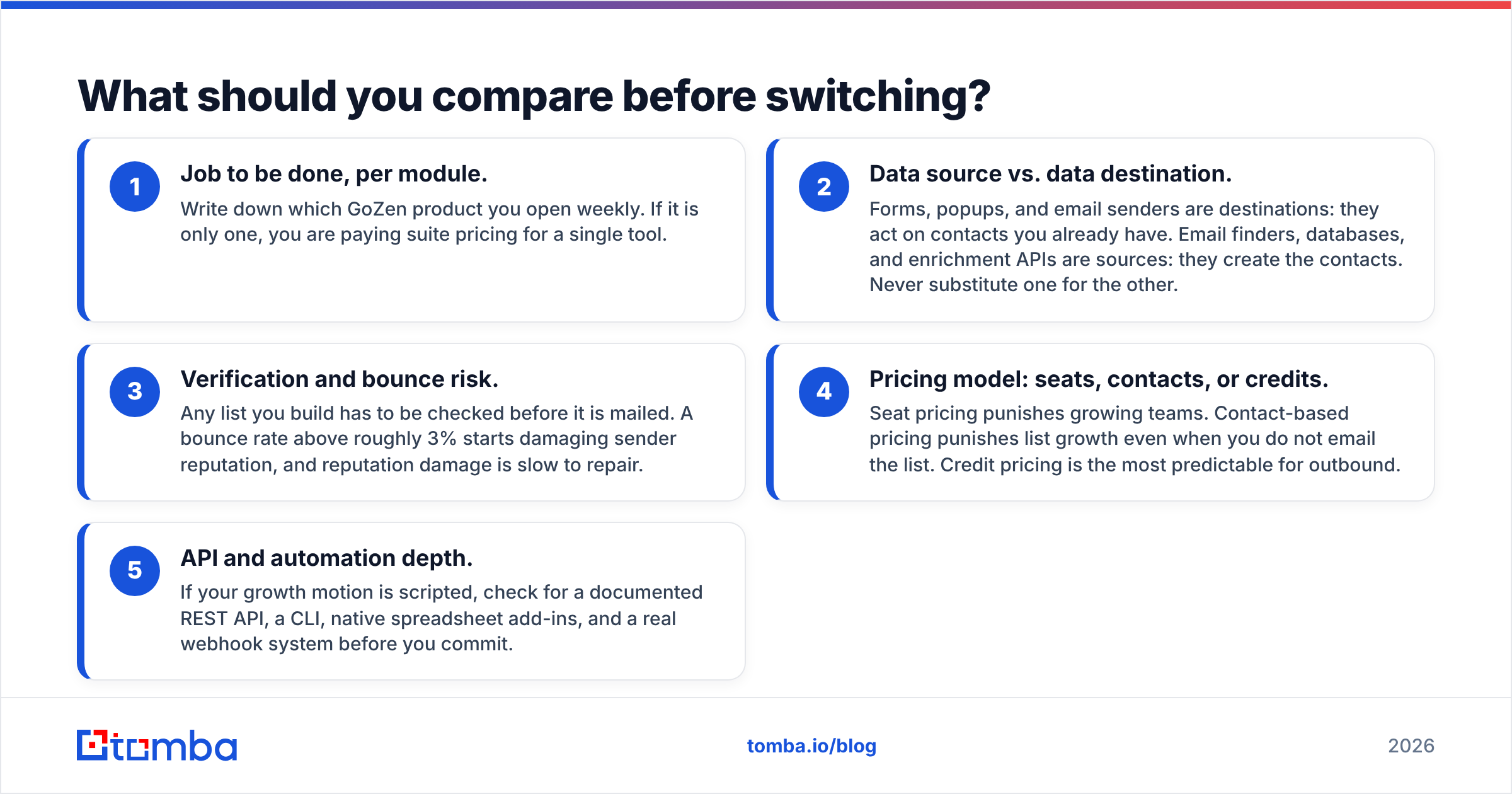
Pick your replacement on these five dimensions, in this order. Most teams pick on price first and regret it within a quarter.
- Job to be done, per module. Write down which GoZen product you open weekly. If it is only one, you are paying suite pricing for a single tool.
- Data source vs. data destination. Forms, popups, and email senders are destinations: they act on contacts you already have. Email finders, databases, and enrichment APIs are sources: they create the contacts. Never substitute one for the other.
- Verification and bounce risk. Any list you build has to be checked before it is mailed. A bounce rate above roughly 3% starts damaging sender reputation, and reputation damage is slow to repair.
- Pricing model: seats, contacts, or credits. Seat pricing punishes growing teams. Contact-based pricing punishes list growth even when you do not email the list. Credit pricing is the most predictable for outbound.
- API and automation depth. If your growth motion is scripted, check for a documented REST API, a CLI, native spreadsheet add-ins, and a real webhook system before you commit.
What are the best GoZen alternatives in 2026?#
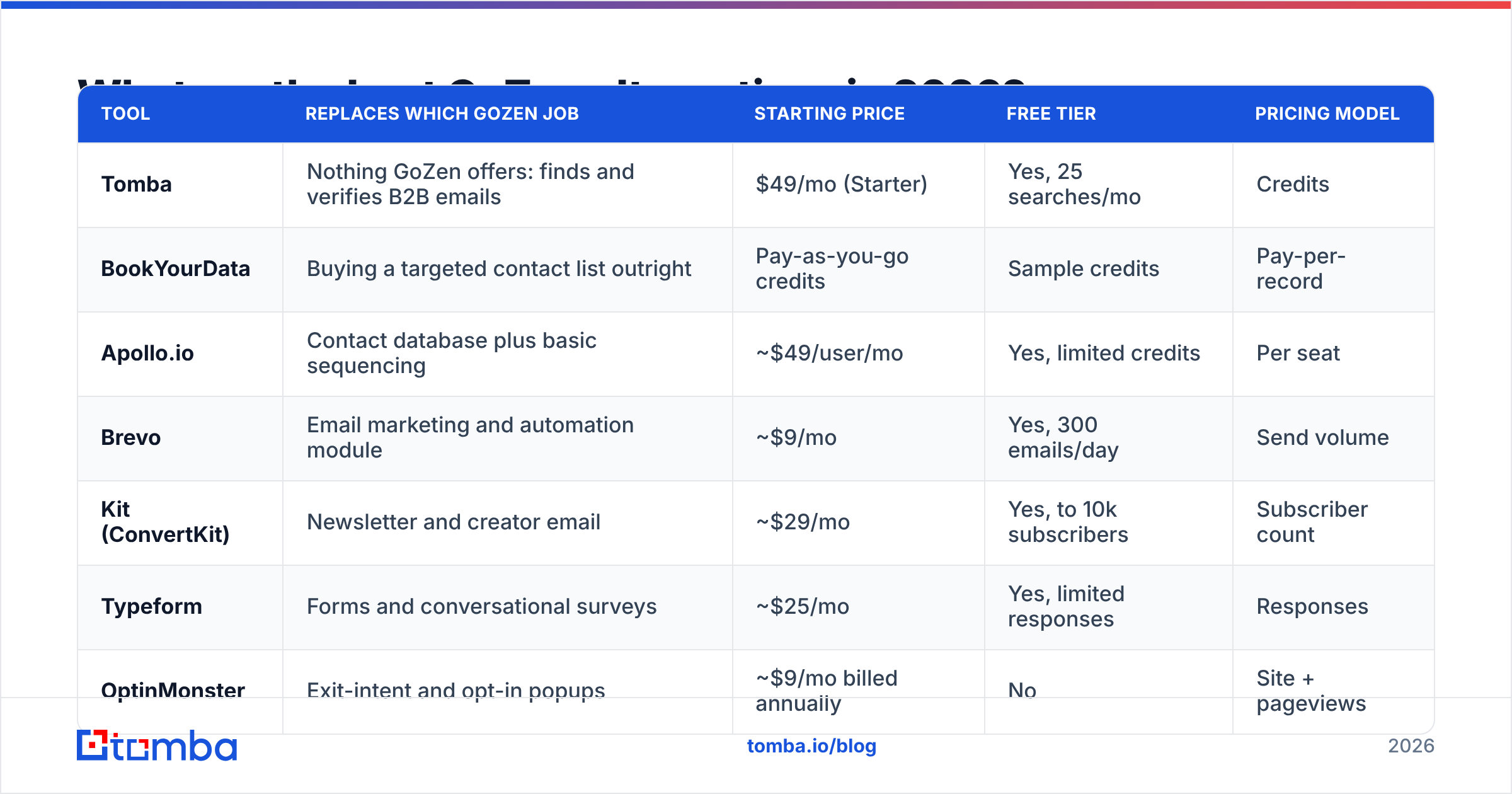
The table below maps each alternative to the GoZen module it replaces. Prices are published list prices at the time of writing; check the vendor page before you buy, since tiers move.
| Tool | Replaces which GoZen job | Starting price | Free tier | Pricing model |
|---|---|---|---|---|
| Tomba | Nothing GoZen offers: finds and verifies B2B emails | $49/mo (Starter) | Yes, 25 searches/mo | Credits |
| BookYourData | Buying a targeted contact list outright | Pay-as-you-go credits | Sample credits | Pay-per-record |
| Apollo.io | Contact database plus basic sequencing | ~$49/user/mo | Yes, limited credits | Per seat |
| Brevo | Email marketing and automation module | ~$9/mo | Yes, 300 emails/day | Send volume |
| Kit (ConvertKit) | Newsletter and creator email | ~$29/mo | Yes, to 10k subscribers | Subscriber count |
| Typeform | Forms and conversational surveys | ~$25/mo | Yes, limited responses | Responses |
| OptinMonster | Exit-intent and opt-in popups | ~$9/mo billed annually | No | Site + pageviews |
| Instantly | Cold outreach sending and inbox rotation | ~$37/mo | No | Contacts + seats |
| Jasper | AI content generation module | ~$39/mo | Trial only | Per seat |
Tomba — best when the missing piece is contact data#
Tomba is not a suite and does not try to be one. It is a B2B contact data layer: an email finder that resolves a name and domain into a verified work address, a domain search that returns every discoverable address at a company, an email verifier that grades deliverability before you send, plus phone lookup and enrichment.
This is the right pick when your GoZen frustration is "we have great emails and nobody to send them to." Forms give you the 2% of visitors who raise a hand. A data layer lets you build the target list first and go find the other 98%.
Practical notes: the free tier gives 25 searches a month, which is enough to test pattern accuracy on your own ICP before paying. Starter is $49/mo, Growth $99/mo, and Pro $249/mo, with credits rather than seats, so adding an SDR does not multiply your bill. There is a Tomba API, a CLI, Google Sheets and Excel add-ins, a Chrome extension, and native integrations into HubSpot, Salesforce, Pipedrive, Zapier, and Make.
Where it is not a fit: it does not send email, host forms, or write copy. You still need a sender.
BookYourData — best for buying a ready-made list#
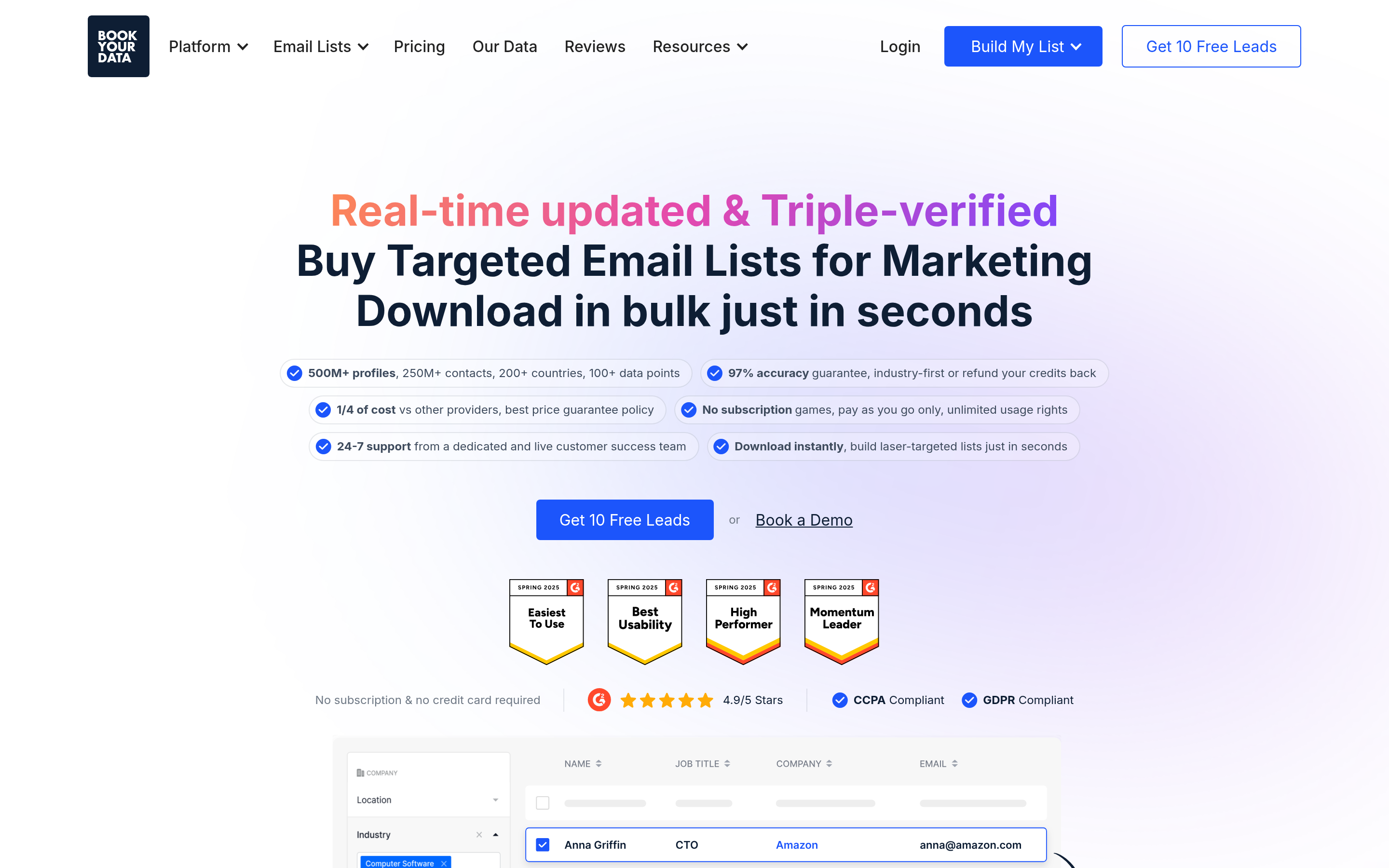
BookYourData takes a different route: instead of finding contacts one at a time, you filter a prebuilt B2B database by industry, title, geography, and company size, then buy exactly the records you want. Its pay-as-you-go model is genuinely useful for one-off campaigns, since you are not signing up for a year to run a single quarter's ABM push.
It is a strong option when your ICP is well defined and stable, and when you would rather download a clean CSV than run a discovery workflow. Pair it with independent verification before your first send, which is standard practice for any purchased list regardless of vendor.
Apollo.io — best all-in-one prospecting suite#
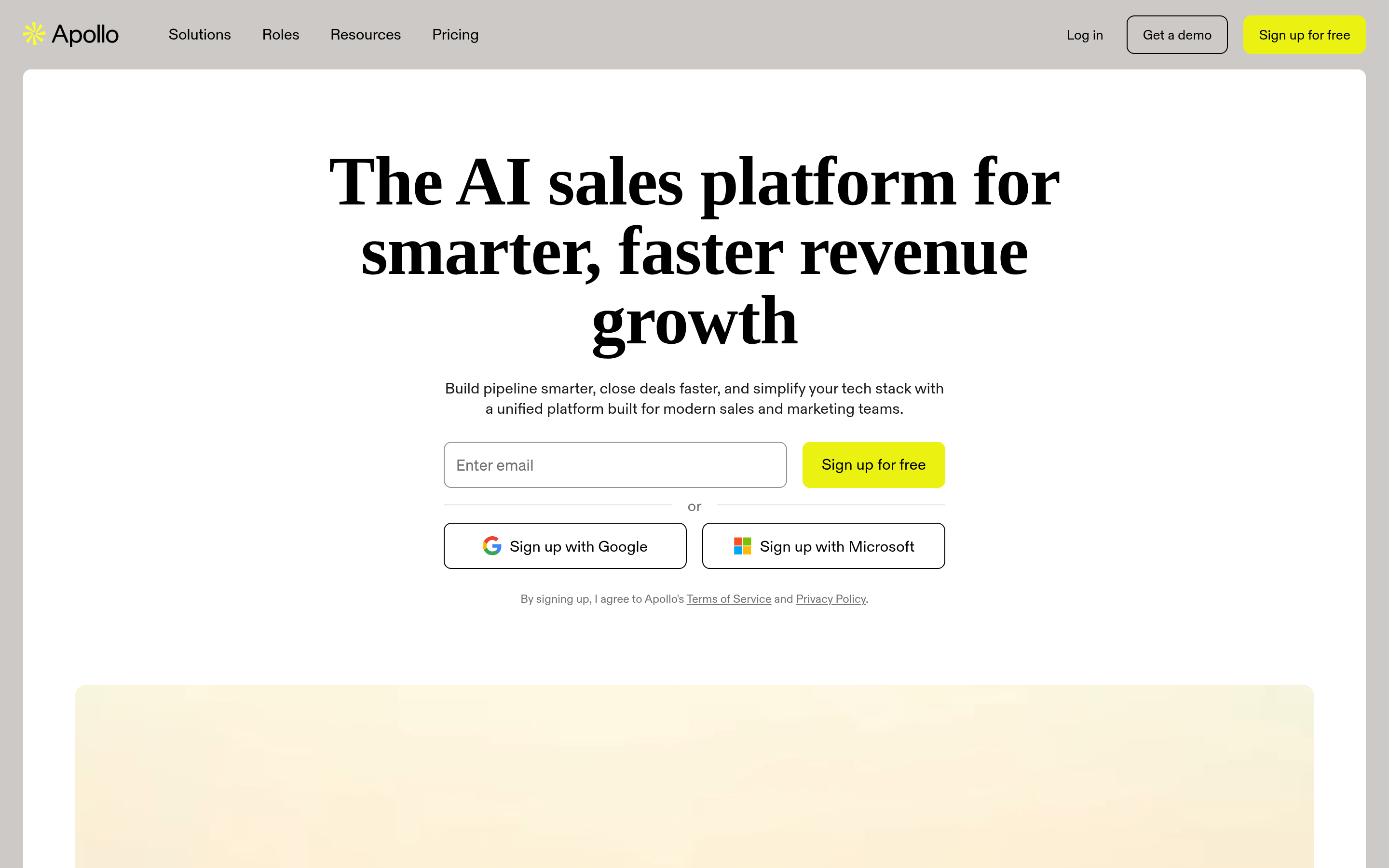
Apollo is the closest thing to a "GoZen for outbound": a large contact database plus sequencing, dialer, and basic CRM features in one seat-priced product. If you want one login covering both data and sending, it is the obvious candidate.
The catch is the same catch as any suite. Seat pricing scales badly, credit limits bite on the lower tiers, and teams routinely report data drift on smaller companies and non-US regions. Many teams end up using Apollo for sequencing and a separate finder for accuracy, which is exactly why Apollo alternatives is a high-volume search in its own right.
Brevo — best replacement for the email automation module#
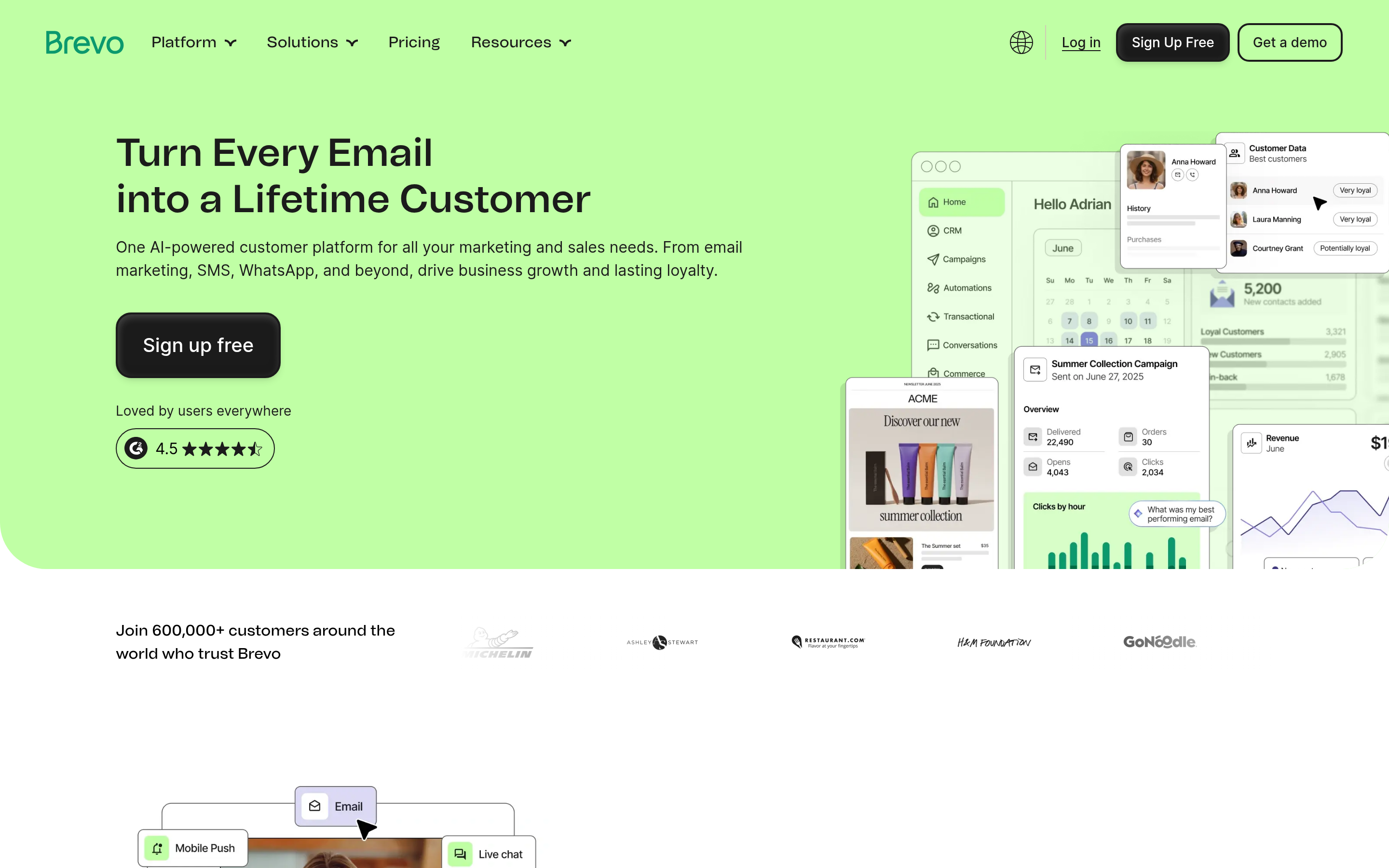
Brevo (formerly Sendinblue) does marketing email, transactional email, SMS, and automation workflows on volume-based pricing rather than contact-count pricing. If your list is large but you email it infrequently, that model is materially cheaper than subscriber-based tools.
It also gives you proper deliverability controls: dedicated IP options on higher tiers, authentication setup, and per-campaign engagement reporting.
Kit — best for newsletter-led and creator businesses#
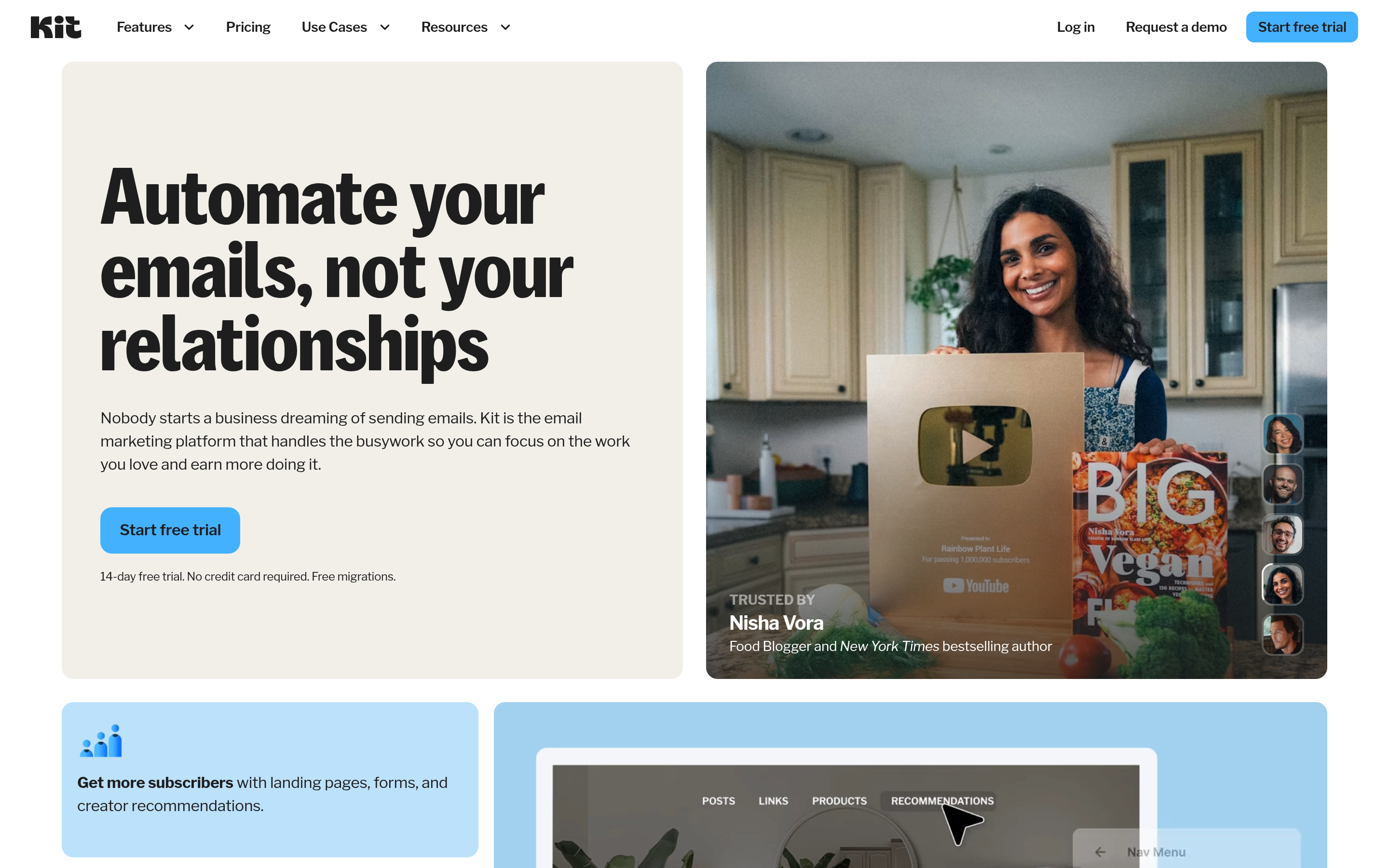
Kit (formerly ConvertKit) is built around tagging, sequences, and a visual automation builder aimed at creators and solo B2B operators. Its free tier runs to 10,000 subscribers, which is unusually generous, and its landing pages and opt-in forms cover the capture job GoZen's forms and popup modules handle.
Typeform — best replacement for the forms module#
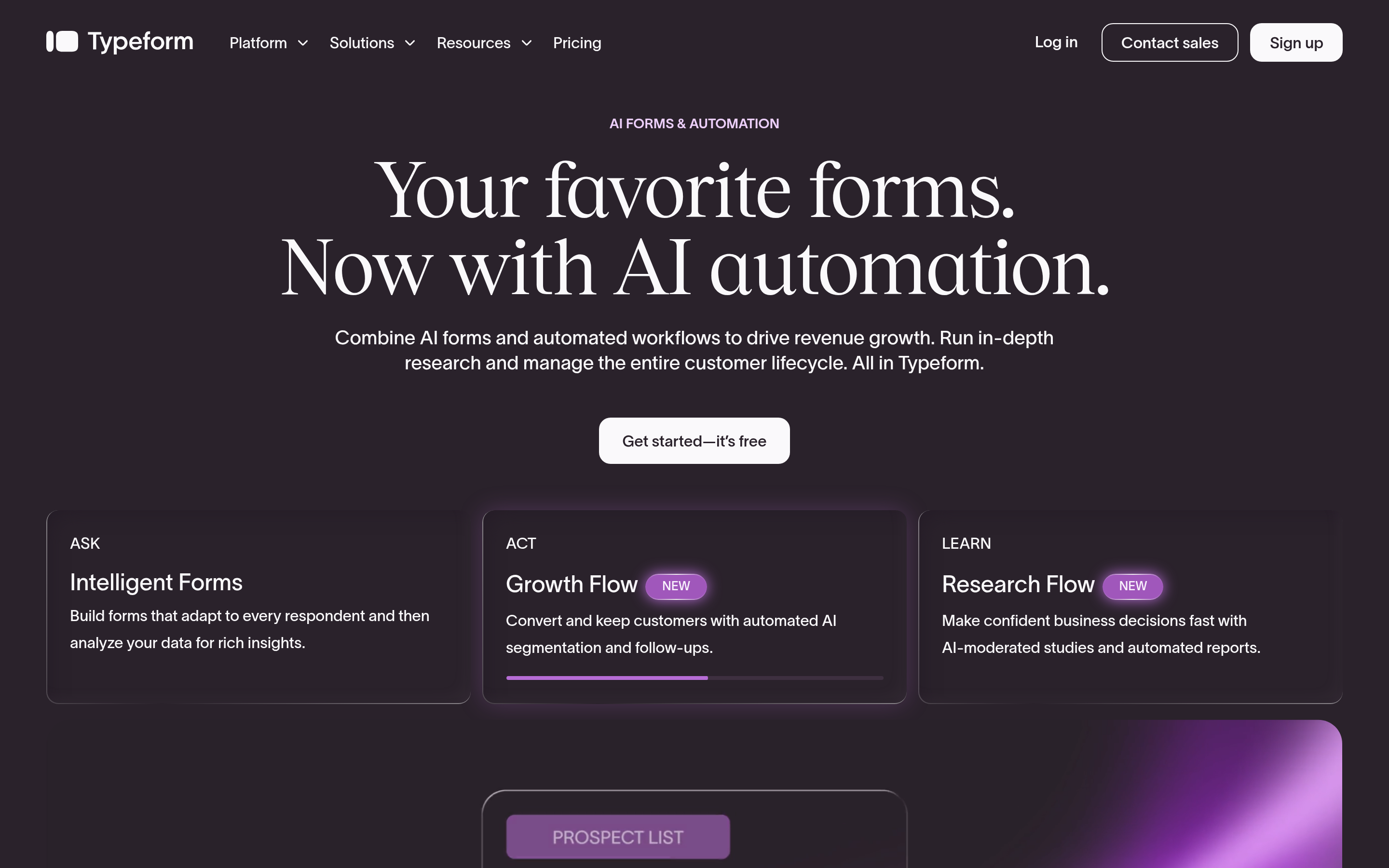
Typeform is the benchmark for conversational forms, and it shows in completion rates. Logic jumps, hidden fields, calculated scores, and a large integration catalogue make it the default upgrade if forms are the module you actually use daily. It is more expensive per response than a bundled form builder, and that is the trade.
OptinMonster — best replacement for the popup module#
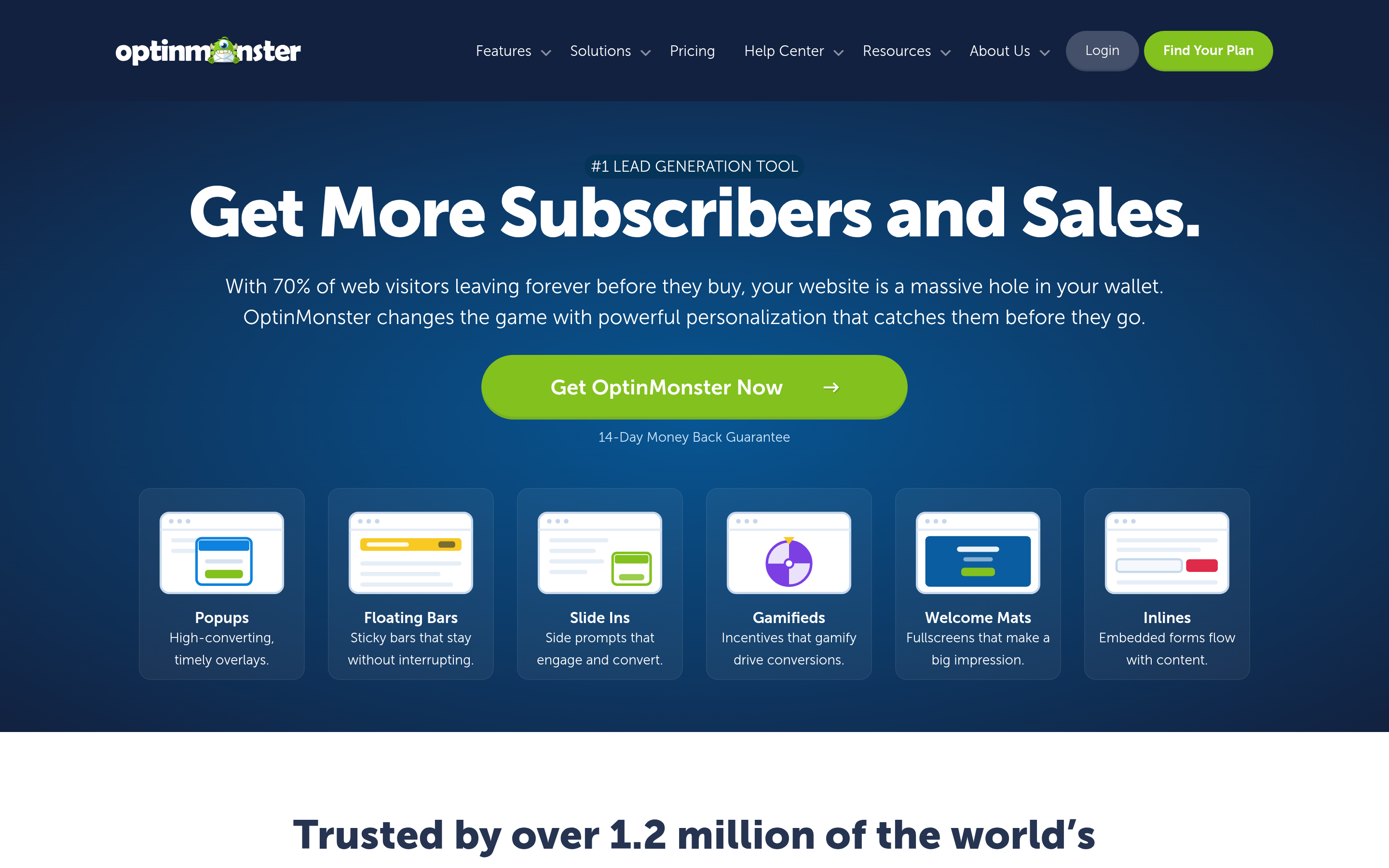
OptinMonster specialises in exit-intent, scroll-triggered, and behavioural campaigns, with real A/B testing and page-level targeting. If lifting on-site conversion is your goal, a dedicated popup tool with mature targeting rules usually pays for itself faster than a bundled equivalent.
Instantly — best for cold outbound sending#
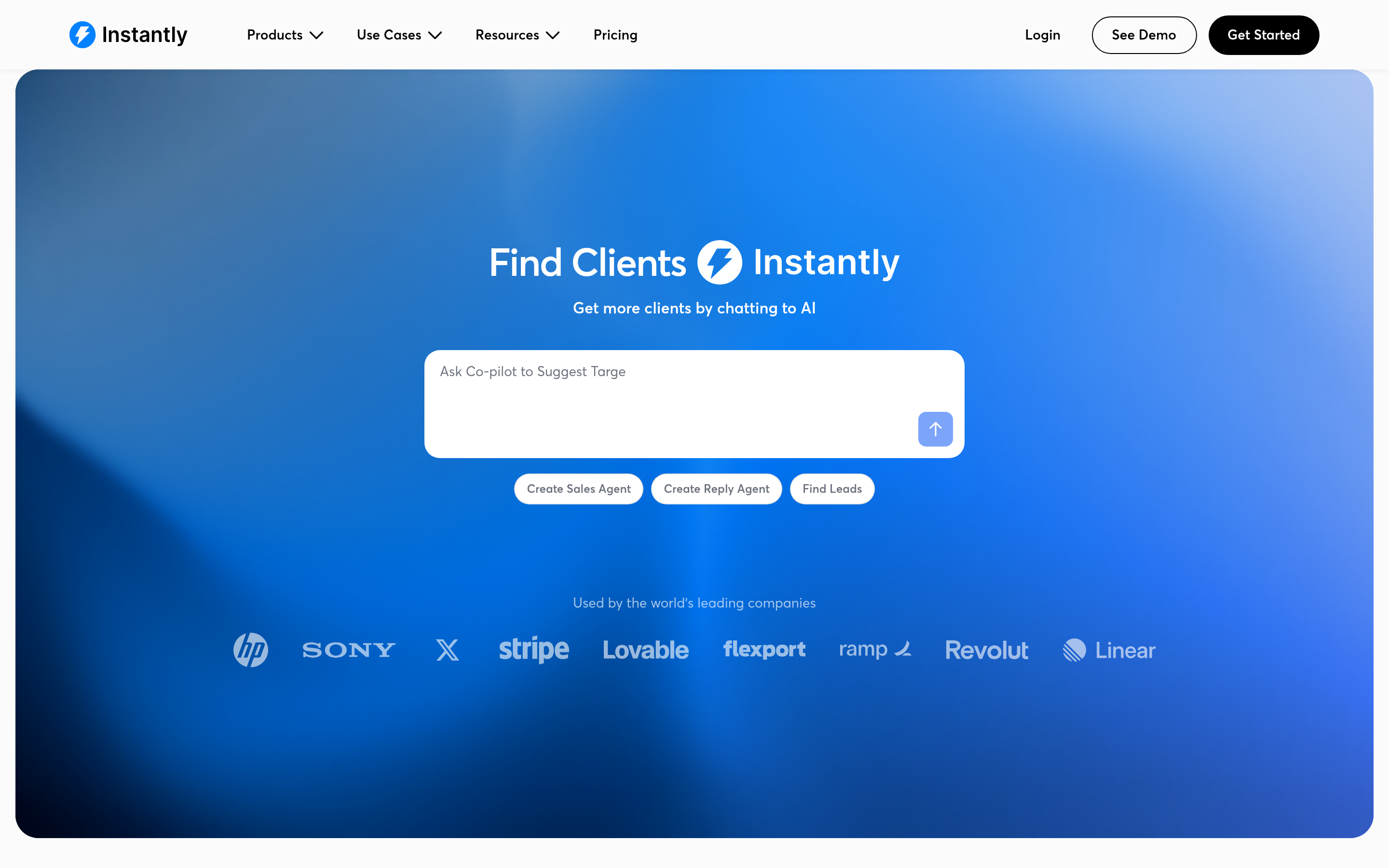
If you plan to run cold sequences rather than newsletters, use infrastructure built for it. Instantly handles inbox rotation, warmup, and reply detection across many sending accounts, which is a different engineering problem from broadcast email. Compare it against the field on Instantly alternatives before committing to an annual plan.
Jasper — best replacement for the AI content module#
Jasper covers the AI writing job with brand-voice training, templates, and team workflows. For most teams, though, a general-purpose LLM plus a good brief covers this cheaply, so treat a dedicated AI writer as optional rather than essential.
Which GoZen alternative is best for lead data and email finding?#
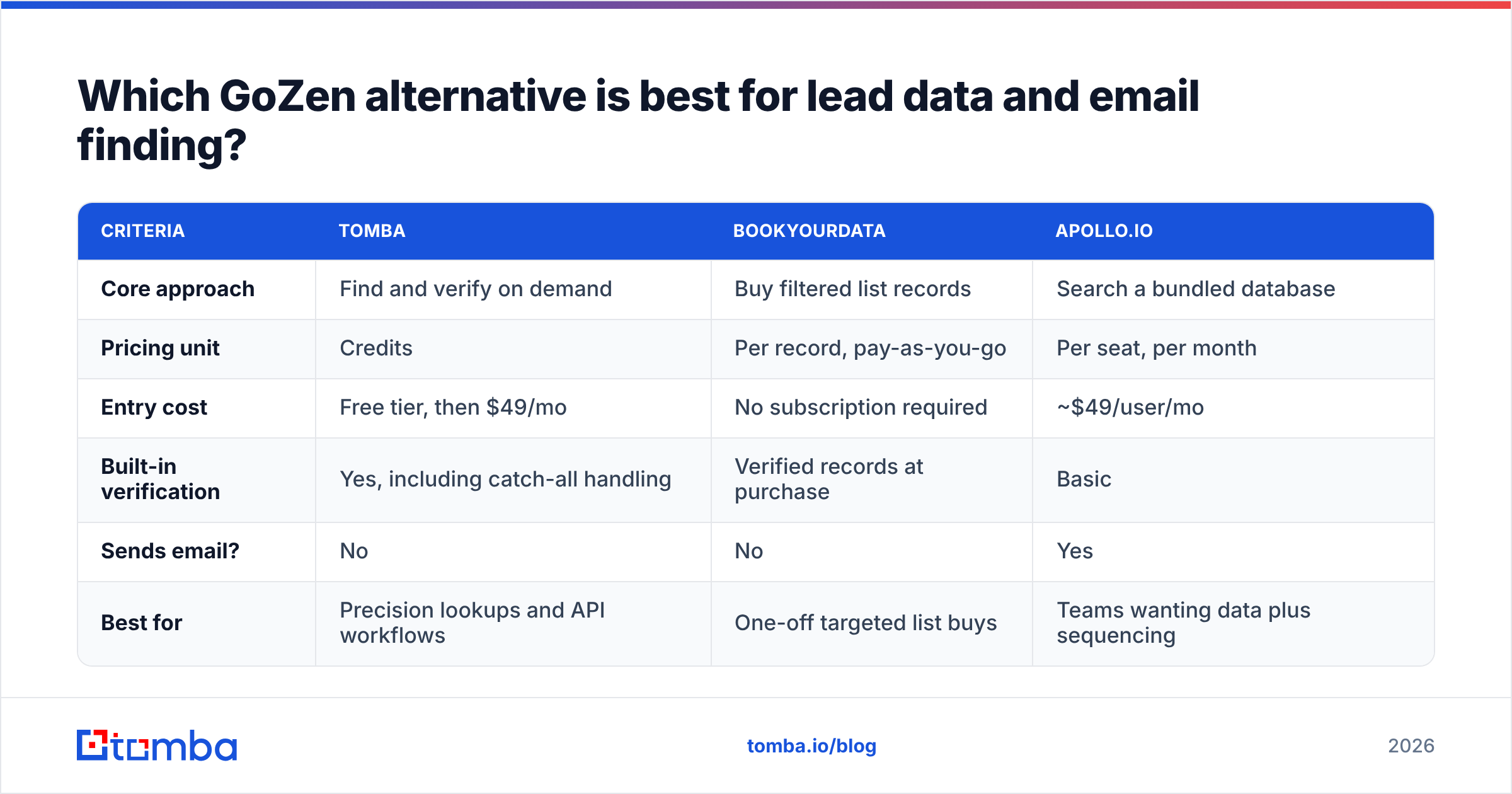
If the gap is contact data, the shortlist is short: Tomba, BookYourData, or Apollo. They solve the same outcome from different angles.
| Criteria | Tomba | BookYourData | Apollo.io |
|---|---|---|---|
| Core approach | Find and verify on demand | Buy filtered list records | Search a bundled database |
| Pricing unit | Credits | Per record, pay-as-you-go | Per seat, per month |
| Entry cost | Free tier, then $49/mo | No subscription required | ~$49/user/mo |
| Built-in verification | Yes, including catch-all handling | Verified records at purchase | Basic |
| Sends email? | No | No | Yes |
| Best for | Precision lookups and API workflows | One-off targeted list buys | Teams wanting data plus sequencing |
The honest read: BookYourData is the fastest path to a usable list when your ICP filters are already clear. Tomba is the better fit when you have named accounts or a scraped domain list and need accurate, verified addresses at scale through an API. Apollo makes sense when you specifically want data and sending in one seat and can absorb per-user pricing.
Is a suite or a stack better for lead generation?#
Suites win on three things: one invoice, one login, and no integration work. That matters when you are a two-person team and every hour of tooling admin is an hour not selling.
Stacks win everywhere else. Each component is best-in-class, you can swap one piece without a full migration, and you avoid the pattern where a vendor's weakest module quietly caps your growth.
A workable middle path for most B2B teams under 20 people:
- Capture: one form or popup tool, chosen for conversion features rather than breadth.
- Data: a dedicated finder and verifier, so outbound is not limited to inbound volume.
- Send: separate infrastructure for marketing email and for cold outreach. Do not mix them on the same domain.
- Enrich: a data enrichment step that fills in role, company size, and tech stack before a contact reaches a rep.
That is four tools, not one, but each one is replaceable independently.
How do you migrate off GoZen without losing leads?#
Run it in this order and nothing breaks:
- Export everything first. Contacts, form responses, automation logic, and templates. Do this before you cancel anything, since export access often disappears with the subscription.
- Clean the export. Deduplicate, then run the whole list through email verification. Old bundled lists usually carry 8–20% dead addresses, and importing that into a new sender starts you on the wrong foot.
- Rebuild capture first. Get forms and popups live on the new tool before you switch senders, so lead flow never stops.
- Warm the new sending domain. Two to three weeks of gradual volume increases, with SPF, DKIM, and DMARC configured before the first campaign.
- Cut over automations one at a time. Move your highest-volume workflow first, verify it end to end with a test contact, then move the rest.
- Keep GoZen live for one billing cycle. Overlap is cheaper than a broken funnel.
What does each option really cost per month?#
Sticker price is not the number that matters. The number that matters is cost per qualified conversation. A $9/mo popup tool that produces four leads a month is more expensive per outcome than a $99/mo data plan that produces sixty verified contacts.
Before you switch, calculate three figures for your current GoZen setup: monthly cost, leads generated, and percentage of those leads that turned into a real conversation. Then require any replacement to beat the third number, not the first. Full Tomba pricing is public if you want to run that comparison against a credit-based model.
FAQ#
Is there a free GoZen alternative? Yes, in parts. Brevo has a free send tier, Kit is free to 10,000 subscribers, Typeform has a limited free plan, and Tomba's free tier covers 25 searches a month. There is no single free product that replaces the whole suite.
Can I keep GoZen and just add a data tool? That is usually the cheapest fix. If the forms and popups work fine, add an email finder and verifier alongside them and route the new contacts into your existing automations through Zapier, Make, or a direct API call.
Do I need a separate tool for cold email? Yes. Keep cold outreach on a separate sending domain and separate infrastructure from your marketing newsletters. Mixing them puts your primary domain reputation at risk, and reputation is much harder to rebuild than it is to protect.
How accurate are purchased or found email addresses? It varies by provider, region, and company size. Regardless of source, verify before sending. Verification is inexpensive relative to the cost of a damaged sending domain.
Where should you start?#
If your GoZen problem is that inbound volume caps how many leads you can generate, no other suite fixes it. Start by fixing the data layer, then decide what to do about the rest of the stack.
Try the Tomba Email Finder on 25 free searches this month. Run it against ten target accounts you already want to reach, verify the results, and compare that list to what your forms produced in the same period. If the finder wins, you have your answer, and you can keep whichever GoZen modules were pulling their weight.
Related guides#
Ready to find emails that actually work?
Join 150,000+ professionals who stopped guessing and started sending. Free credits on signup — no credit card required.
Get the Tomba newsletter
Practical outbound tactics and product updates — once every two weeks.
About the author