9 Best Gryphon AI Alternatives for Compliant Outbound in 2026
Gryphon AI locks compliance, dialing, and conversation intelligence into one enterprise contract. Here are nine alternatives that unbundle it — with honest notes on pricing, fit, and what each one actually gets wrong.
TL;DR
- Gryphon AI is really three products in one contract: real-time DNC/TCPA compliance, a call layer, and conversation intelligence. Most teams only need one or two of those.
- If you left because of price or procurement friction, the fix is usually unbundling — a compliance-only vendor plus a cheaper dialer beats a single enterprise suite for mid-market teams.
- If you left because of call quality or agent throughput, look at Convoso, Orum, or Five9 instead of another compliance-first platform.
- If you left because of weak conversation intelligence, Gong and Salesloft are the honest upgrades — neither one replaces Gryphon's compliance layer.
- None of these tools fix bad phone data. Verified numbers and mobile-vs-landline classification sit upstream of every dialer on this list.
What does Gryphon AI actually do?#
Gryphon.ai sits between your reps and the phone network. Every outbound call passes through its rules engine before it connects, and the engine checks the number against federal and state Do Not Call lists, internal suppression lists, wireless registries, calling-window rules, and consent records. If a call would violate something, it never dials.
The useful analogy: Gryphon is a bouncer at the door of your dialer, not the dialer itself. It also layers conversation intelligence on top — call recording, transcription, keyword scoring — which is where it starts overlapping with Gong and Salesloft.
That combination is genuinely rare. Most vendors do compliance or dialing or revenue intelligence. Gryphon does all three, which is exactly why it wins in regulated industries — insurance, lending, healthcare, financial services — where a single TCPA violation carries statutory damages of $500 to $1,500 per call under rules enforced by the FTC and state AGs.
It is also exactly why teams look for alternatives. You pay for all three whether or not you use all three.
Why do teams look for Gryphon AI alternatives?#
Five patterns show up repeatedly in G2 and Capterra reviews and in procurement conversations:
- Pricing is quote-only and enterprise-shaped. There is no public price list, no self-serve tier, and no month-to-month escape hatch. Annual commitments with seat minimums are standard.
- You are paying for compliance you do not need. If you call B2B numbers on established business relationships, your regulatory exposure is real but far narrower than a consumer lending shop's.
- The dialing layer is not the fastest on the market. Parallel-dialing specialists connect reps to live humans at rates a compliance-first platform is not optimized for.
- Conversation intelligence is a secondary product. It works. It is not Gong.
- Implementation is a project, not a signup. Expect CRM mapping, telephony integration, and a compliance policy review before your first call.
If two or more of those describe you, unbundling is probably cheaper and better.
How do the main Gryphon AI alternatives compare?#
Pricing below reflects publicly listed rates as of early 2026. Quote-only vendors publish nothing — treat any number you hear from a rep as a starting anchor, not a ceiling.
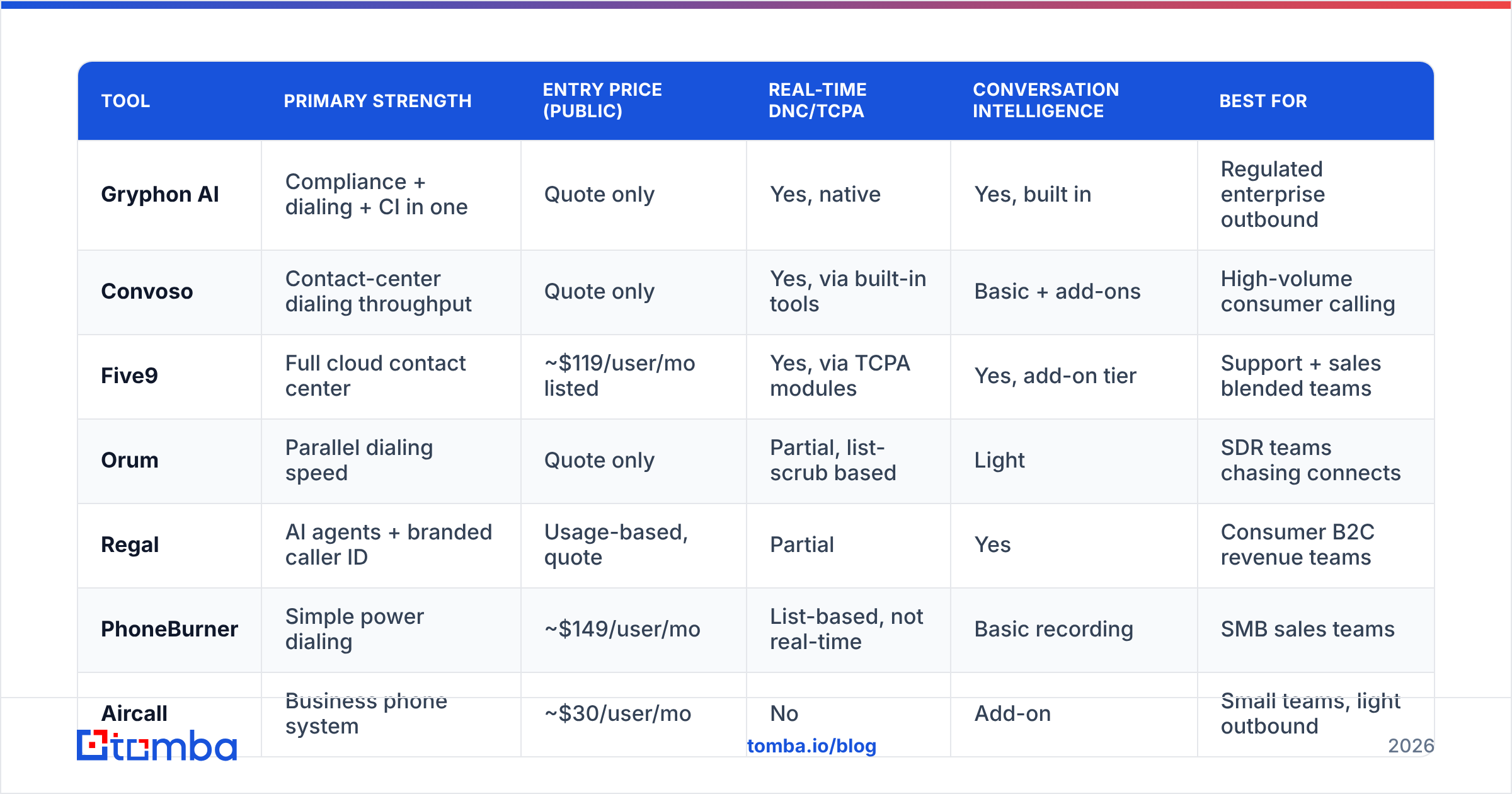
| Tool | Primary strength | Entry price (public) | Real-time DNC/TCPA | Conversation intelligence | Best for |
|---|---|---|---|---|---|
| Gryphon AI | Compliance + dialing + CI in one | Quote only | Yes, native | Yes, built in | Regulated enterprise outbound |
| Convoso | Contact-center dialing throughput | Quote only | Yes, via built-in tools | Basic + add-ons | High-volume consumer calling |
| Five9 | Full cloud contact center | ~$119/user/mo listed | Yes, via TCPA modules | Yes, add-on tier | Support + sales blended teams |
| Orum | Parallel dialing speed | Quote only | Partial, list-scrub based | Light | SDR teams chasing connects |
| Regal | AI agents + branded caller ID | Usage-based, quote | Partial | Yes | Consumer B2C revenue teams |
| PhoneBurner | Simple power dialing | ~$149/user/mo | List-based, not real-time | Basic recording | SMB sales teams |
| Aircall | Business phone system | ~$30/user/mo | No | Add-on | Small teams, light outbound |
| Gong | Revenue intelligence depth | Quote only | No | Best in class | Coaching and forecasting |
| Salesloft | Sequences + cadence + calling | Quote only | No | Yes | Full-cycle outbound orgs |
| DNC.com / Contact Center Compliance | Compliance only, no dialer | From ~$100/mo tiers | Yes, native | No | Teams keeping their dialer |
The last row matters most and gets ignored most. If compliance is the only reason you bought Gryphon, a compliance-only vendor plus the dialer you already like is usually a materially smaller invoice.
Which alternative fits which problem?#
1. Convoso — when throughput is the bottleneck#
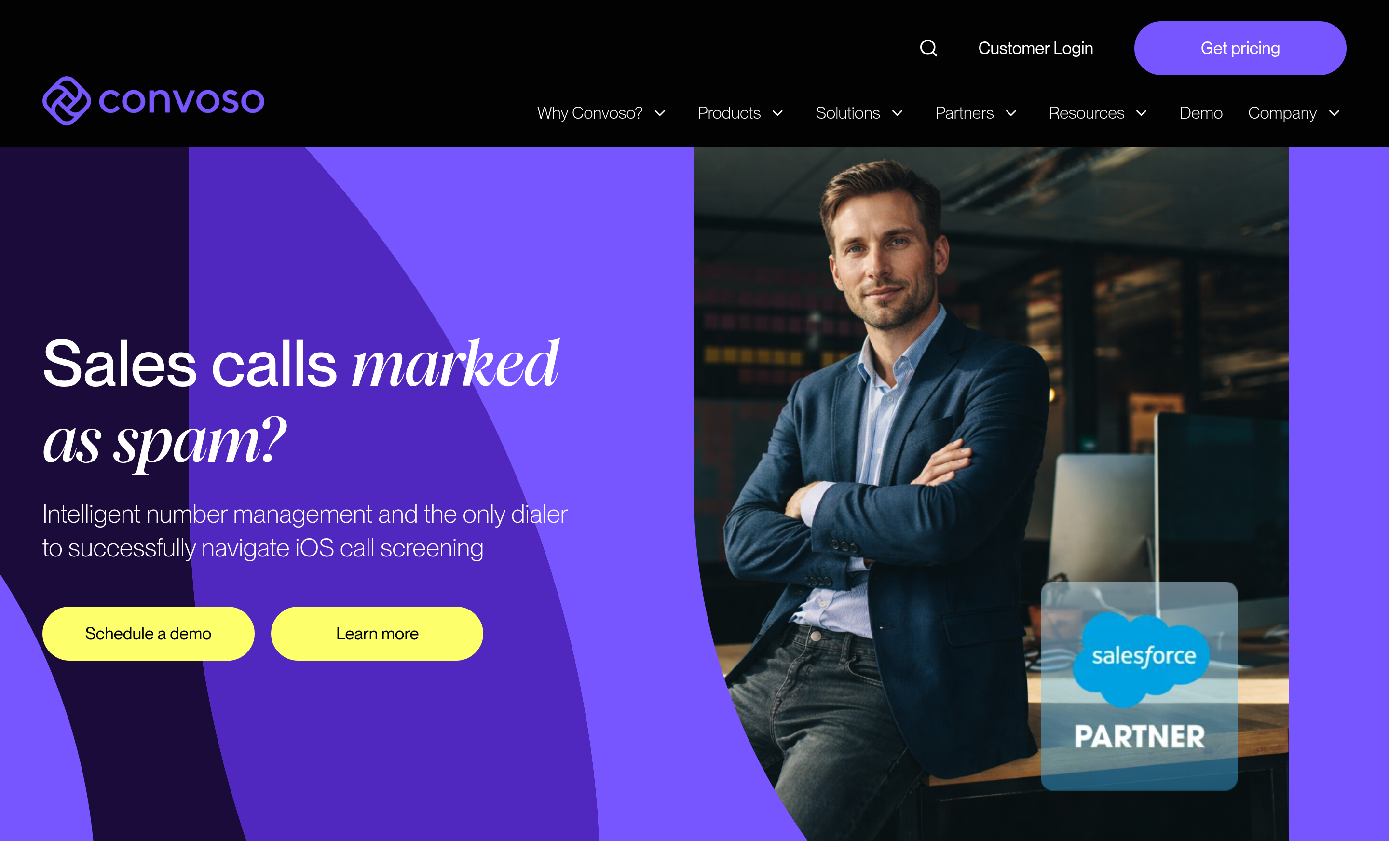
Convoso is built for outbound contact centers running predictive and power dialing at volume. Its answer-rate tooling, caller ID management, and agent scripting are more mature than Gryphon's dialing layer. Compliance features exist and are respectable, but the design center is agent productivity, not regulatory defense. Choose it when your problem is "reps aren't talking to enough people," not "legal is nervous."
Trade-off: heavier admin overhead, and you own more of the compliance configuration yourself.
2. Five9 — when you need a real contact center#
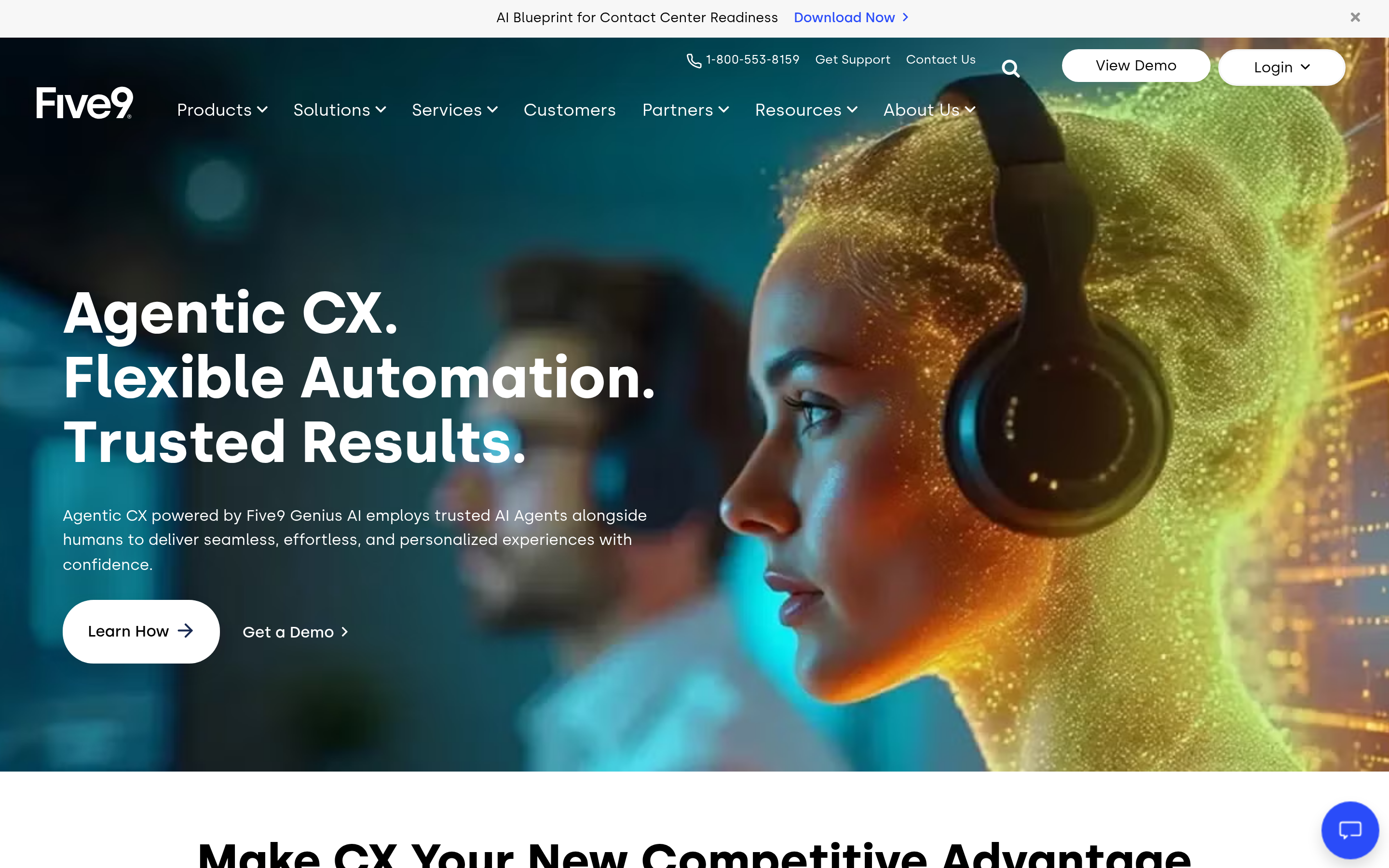
Five9 is a full CCaaS platform: inbound routing, workforce management, IVR, omnichannel, plus outbound dialing with TCPA-oriented modules. If your team handles support and sales on the same phone infrastructure, splitting them across two vendors is waste.
Trade-off: you are buying a contact center to solve a sales problem. Overkill for a 12-rep SDR team.
3. Orum — when you want more live conversations per hour#
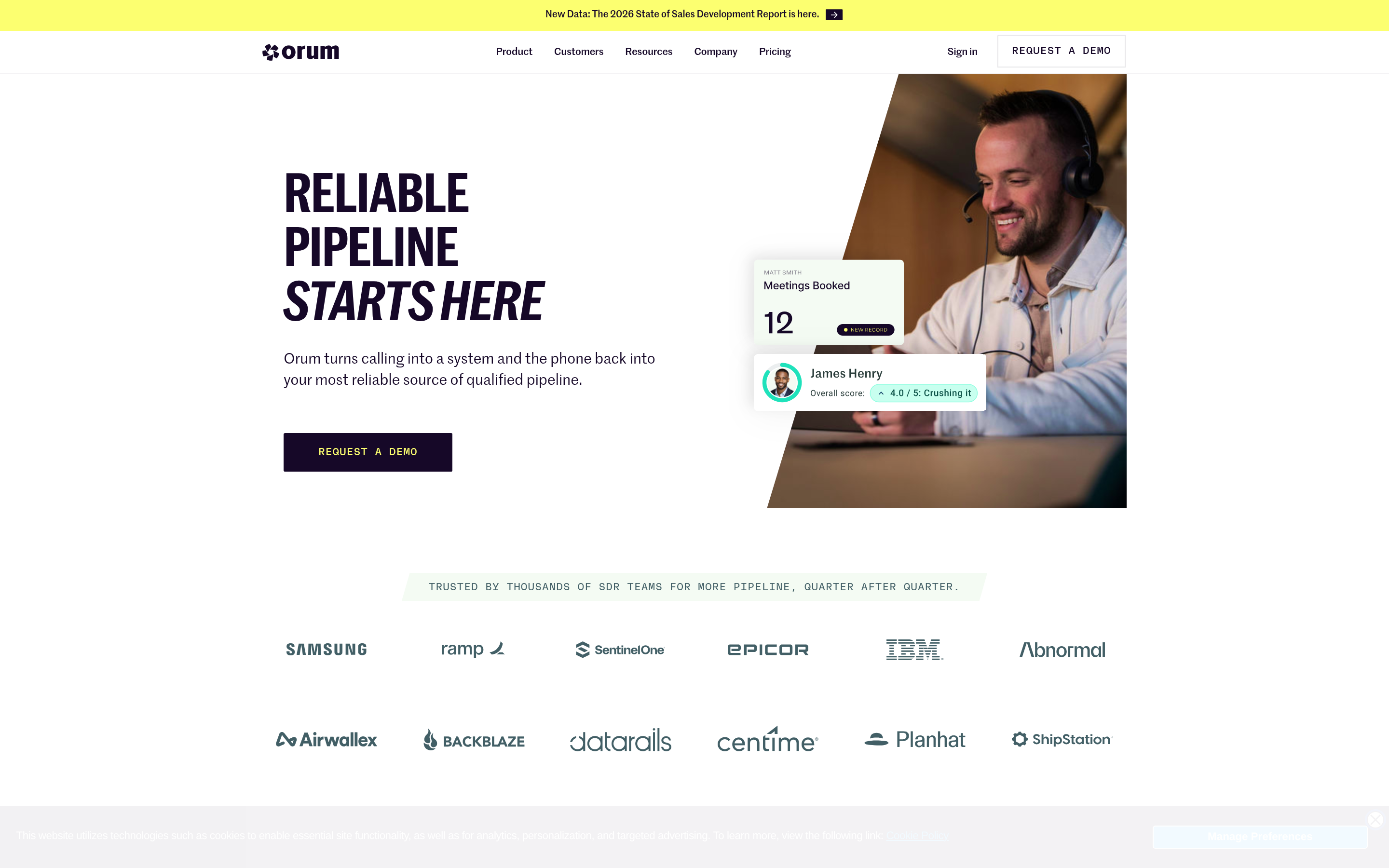
Orum dials multiple numbers in parallel, drops voicemails, filters out IVRs and dead numbers, and only connects the rep when a human answers. For B2B SDR teams the connect-rate lift is the whole pitch and it is a real one.
Trade-off: compliance is list-scrub oriented, not a real-time rules engine. It is not a Gryphon replacement in a regulated vertical — it is a replacement for the dialing half only.
4. Regal — when you sell to consumers with AI agents#
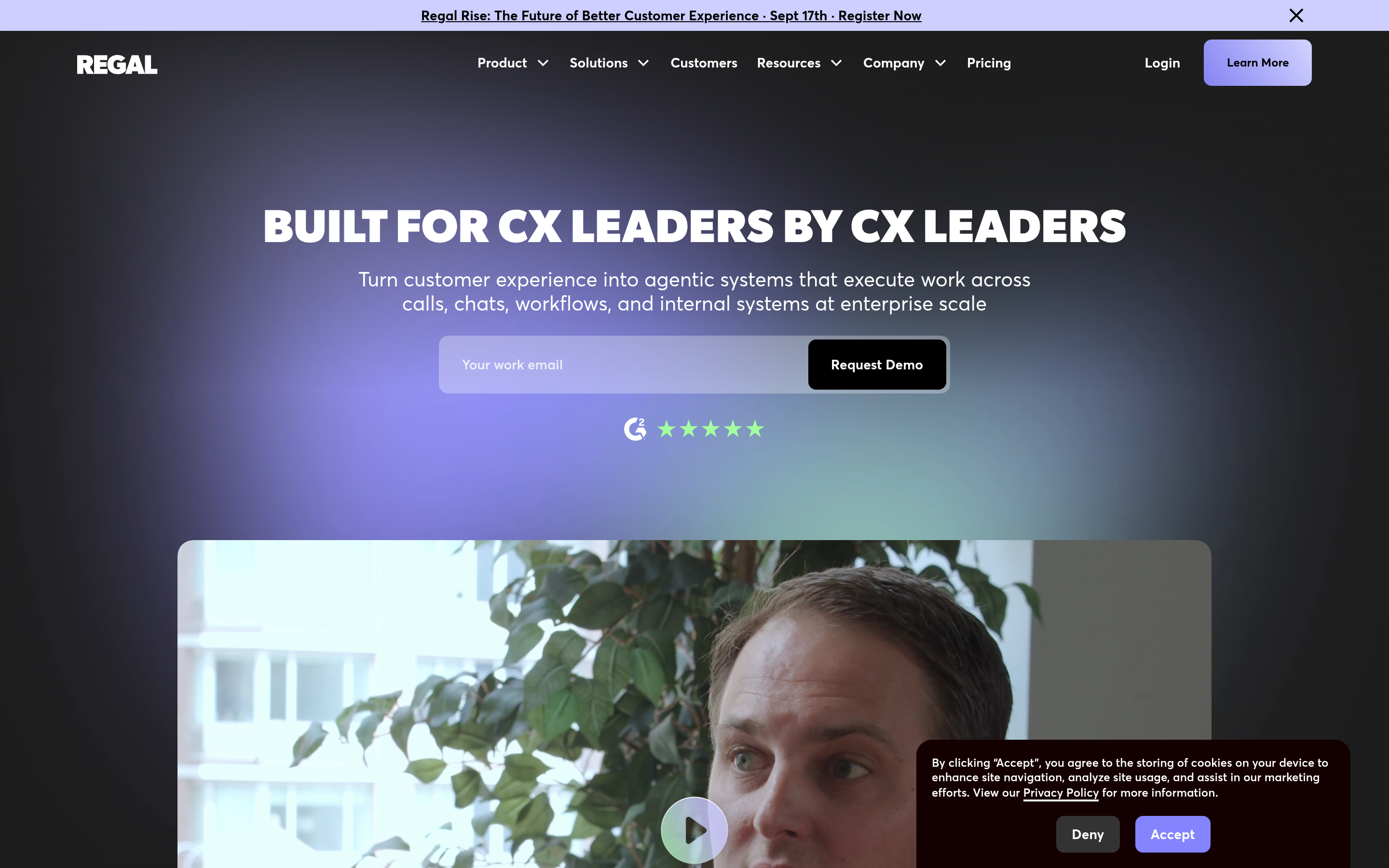
Regal combines branded caller ID, AI voice agents, and event-triggered outreach. Consumer-facing revenue teams with high inbound intent get the most from it.
Trade-off: usage-based pricing gets expensive fast at volume, and the compliance layer expects you to bring your own consent architecture.
5. PhoneBurner — when you want simple and priced publicly#
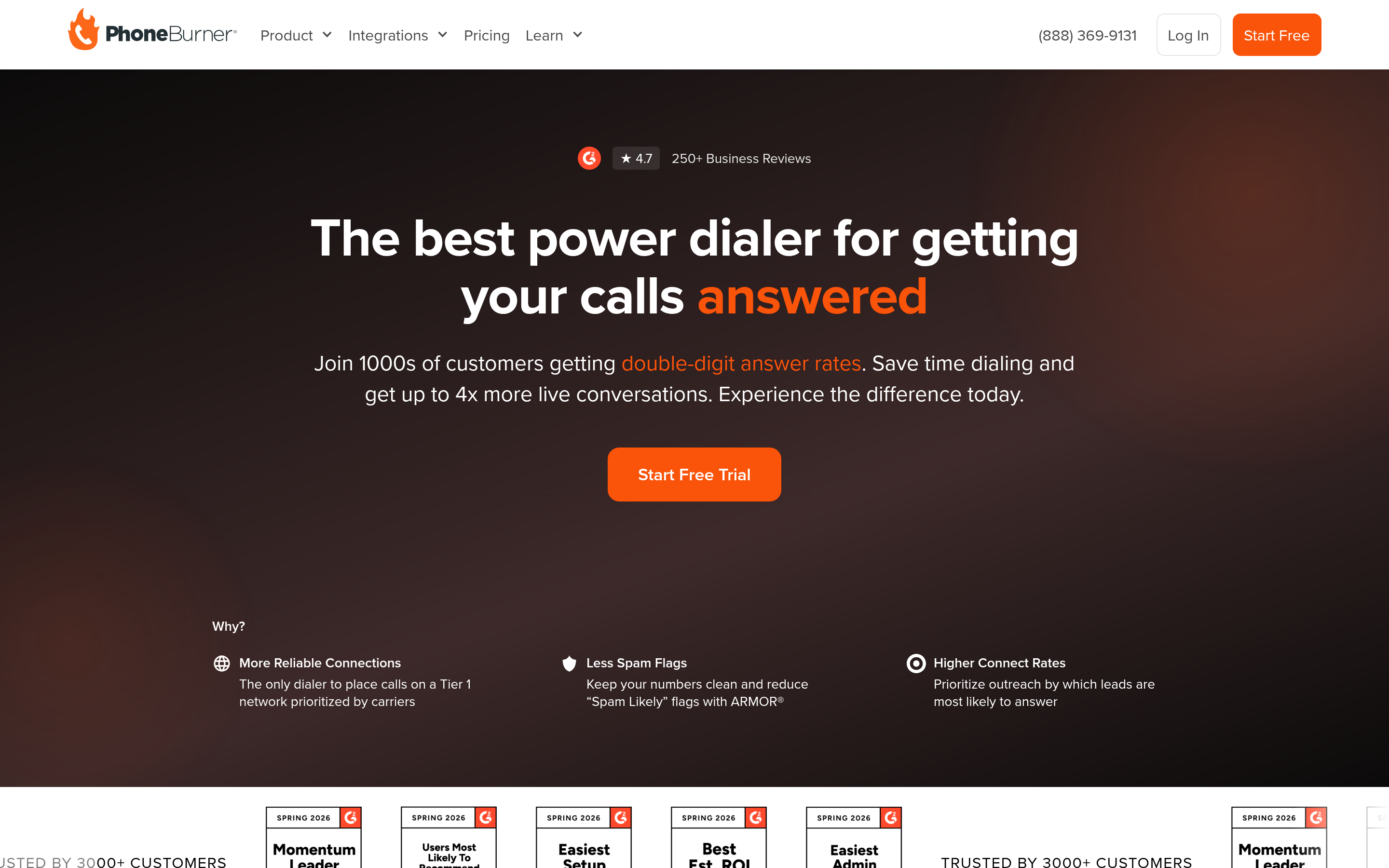
PhoneBurner does one job cleanly: power dialing with local presence, voicemail drop, and email follow-up, at a published per-seat price. No procurement cycle. No quote gymnastics.
Trade-off: list-based suppression only. Not appropriate as your sole compliance control in a heavily regulated vertical.
6. Aircall — when calling is a feature, not the business#
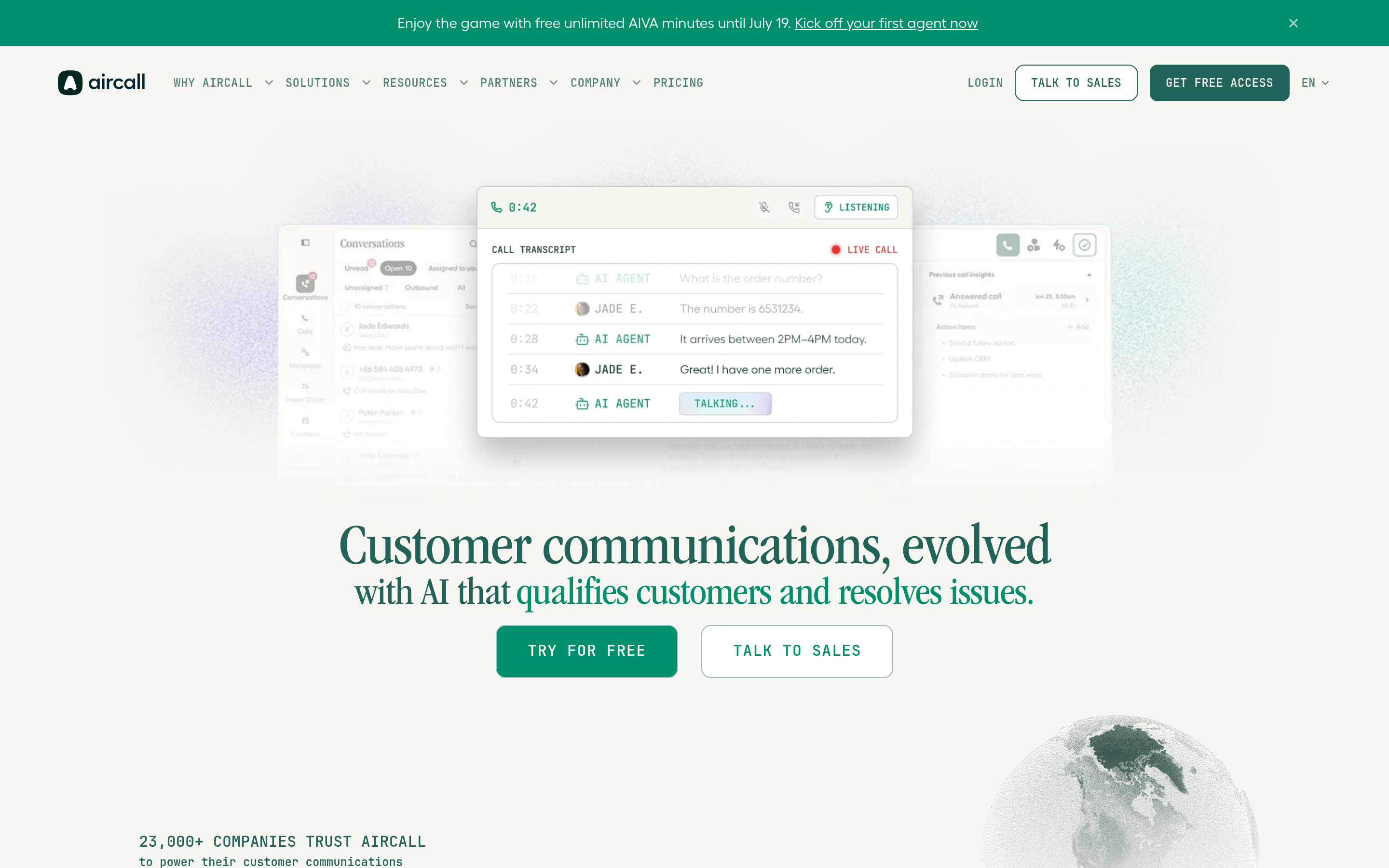
Aircall is a business phone system with a good CRM integration story and the cheapest entry point on this list. Founders and small teams making twenty calls a day should not be evaluating Gryphon at all.
Trade-off: effectively no compliance layer. You are responsible for scrubbing.
7. Gong — when the real gap is coaching#
If you bought Gryphon for its conversation intelligence and find it thin, Gong is the honest answer. Deal intelligence, forecast risk, call scoring, and manager workflows are its entire product surface.
Trade-off: Gong does not dial and does not scrub. It sits alongside a dialer, so it adds cost rather than replacing it.
8. Salesloft — when calls are one channel of many#
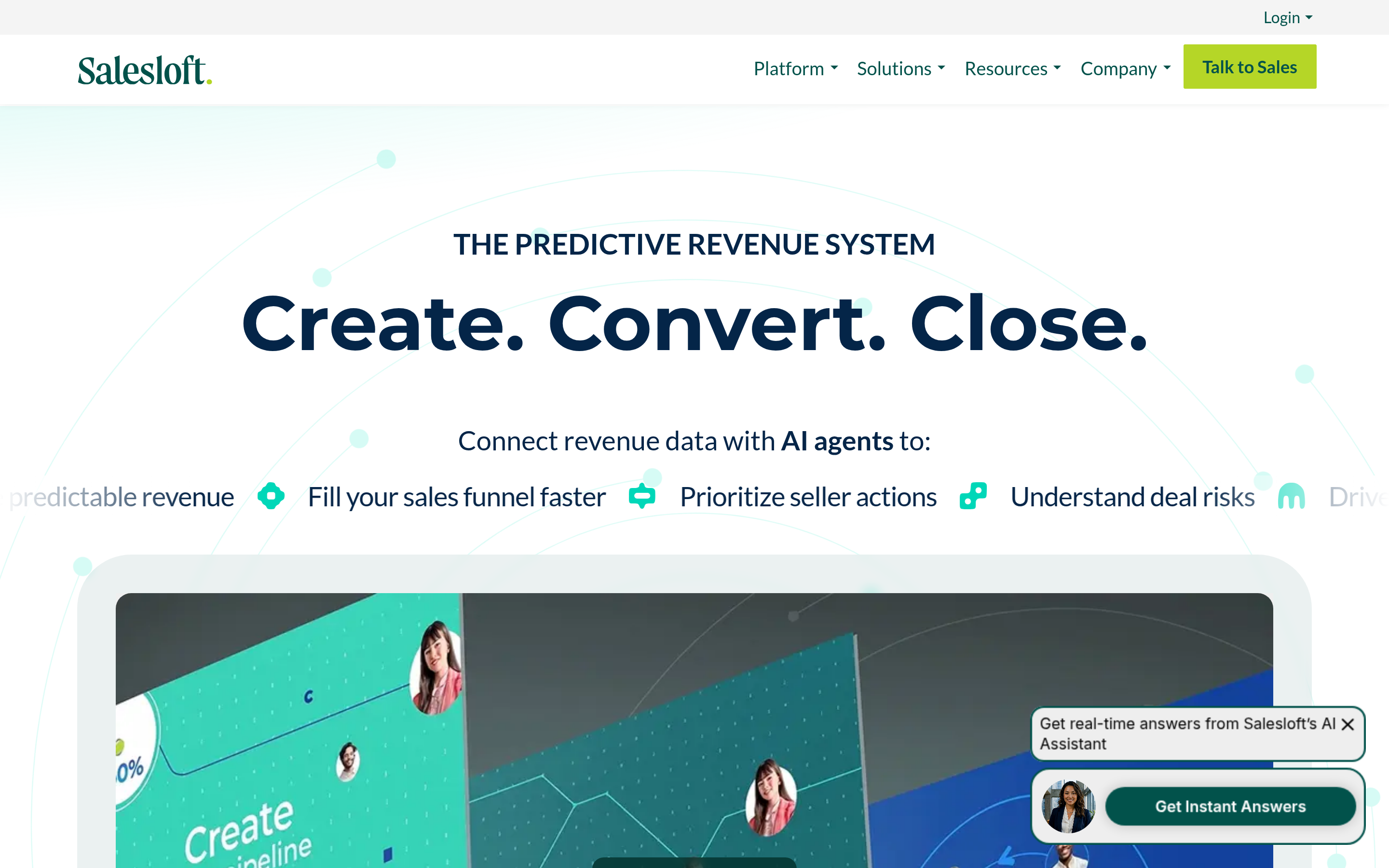
Salesloft ties calling into multichannel cadences with email, LinkedIn, and tasks, plus its own conversation intelligence. For full-cycle B2B teams the sequencing layer often matters more than the dialer.
Trade-off: same as Gong — no real-time regulatory engine. Also, expect a full Salesloft alternative evaluation if seat pricing scares your CFO.
9. Contact Center Compliance / DNC.com — when you only need the bouncer#
Compliance-only vendors scrub against federal DNC, state lists, wireless registries, litigator databases, and your internal suppression list, then hand the clean list back to whatever dialer you already run. This is the unbundling play.
Trade-off: you now manage two vendors and one integration. For most mid-market teams that is a fair price for cutting the bill in half.

Is compliance software enough on its own?#
No — and this is the part most alternative roundups skip.
A compliance engine tells you whether you are allowed to call a number. It does not tell you whether the number is correct, whether it belongs to the person you think it does, or whether it is a mobile line, a landline, or a disconnected DID that has been recycled to a stranger. Those are data problems, and they arrive upstream of every tool in the table above.
The failure mode is expensive in both directions. Dial a stale number and you burn agent minutes on dead air. Dial a recycled number and you have called someone who never consented — which is precisely the scenario TCPA plaintiffs' firms hunt for.
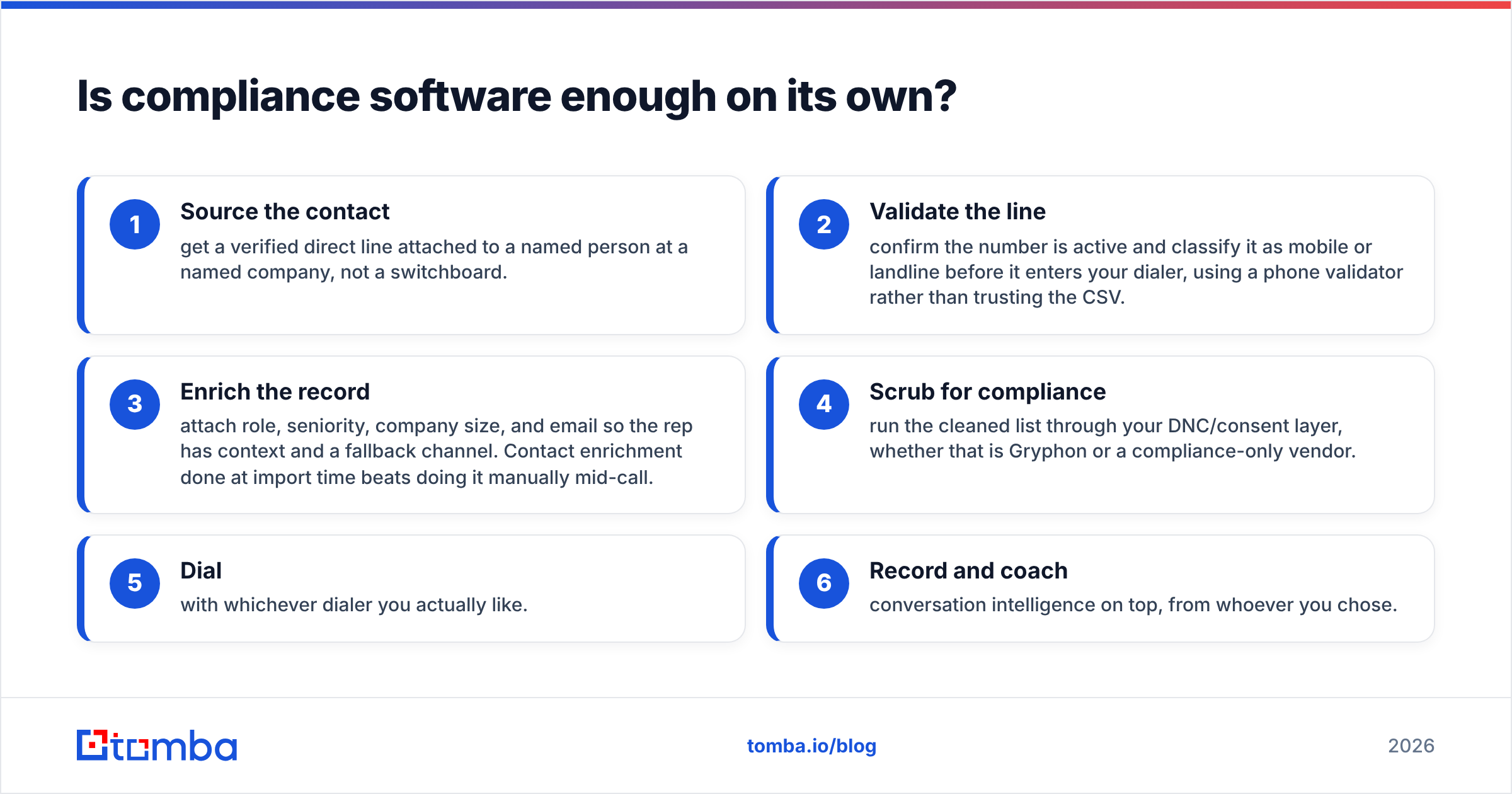
Practical sequence for an outbound calling program:
- Source the contact — get a verified direct line attached to a named person at a named company, not a switchboard.
- Validate the line — confirm the number is active and classify it as mobile or landline before it enters your dialer, using a phone validator rather than trusting the CSV.
- Enrich the record — attach role, seniority, company size, and email so the rep has context and a fallback channel. Contact enrichment done at import time beats doing it manually mid-call.
- Scrub for compliance — run the cleaned list through your DNC/consent layer, whether that is Gryphon or a compliance-only vendor.
- Dial — with whichever dialer you actually like.
- Record and coach — conversation intelligence on top, from whoever you chose.
Steps 1 through 3 are not what Gryphon does, and they are not what any of its alternatives do either. That gap is why a phone finder and a verified data source belong in the stack regardless of which dialer wins your evaluation.
What should you actually evaluate on?#
Run every shortlisted vendor against these six questions before you look at a demo:
- What is my real regulatory exposure? B2B calling to business lines on an established relationship is a different risk profile from consumer lending outreach. Buy for your actual exposure, not the worst case you read about.
- Do I need real-time blocking or pre-call scrubbing? Real-time engines cost more. If your list is static and refreshed weekly, batch scrubbing may be sufficient.
- Where does conversation intelligence rank? If it is a nice-to-have, do not pay suite pricing for it. If it is the point, buy the specialist.
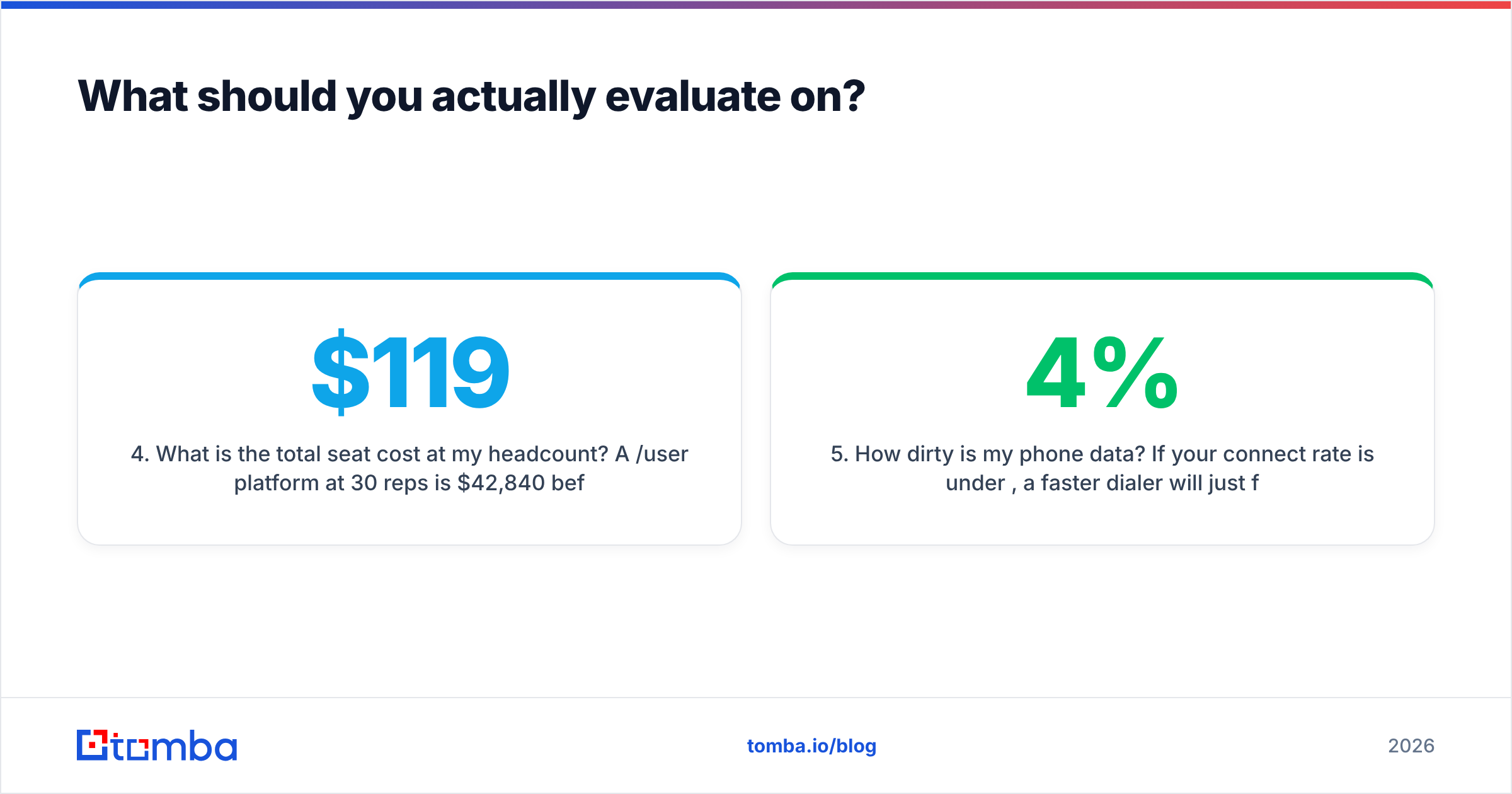
- What is the total seat cost at my headcount? A $119/user/mo platform at 30 reps is $42,840/year before add-ons. Model it out before the discount conversation, not after.
- How dirty is my phone data? If your connect rate is under 4%, a faster dialer will just fail faster. Fix the list first.
- Who owns the integration? Every unbundled stack has a seam. Name the person responsible for it during evaluation, not after go-live.
Independent review sites like G2 are useful for the last mile of this, but weight reviews by company size — enterprise reviewers and 10-person startups describe entirely different products.
What is the honest verdict on Gryphon AI alternatives?#
Gryphon AI is not overpriced for what it is. It is overpriced for what most teams use.
If you operate in insurance, lending, healthcare, or collections at scale, real-time compliance is not a line item you optimize — keep the suite. If you run B2B outbound with a few dozen reps, the winning configuration in 2026 is almost always unbundled: a compliance-only scrubbing vendor, a dialer chosen for throughput or price, a conversation intelligence tool if coaching is a genuine priority, and clean verified contact data feeding all of it.
The unbundled version usually costs less, and each layer is replaceable when a better option ships. The suite version is one contract, one renewal, and one negotiation where you have very little leverage.
Where does Tomba fit in this stack?#
At step one, before any of these platforms touch your list.
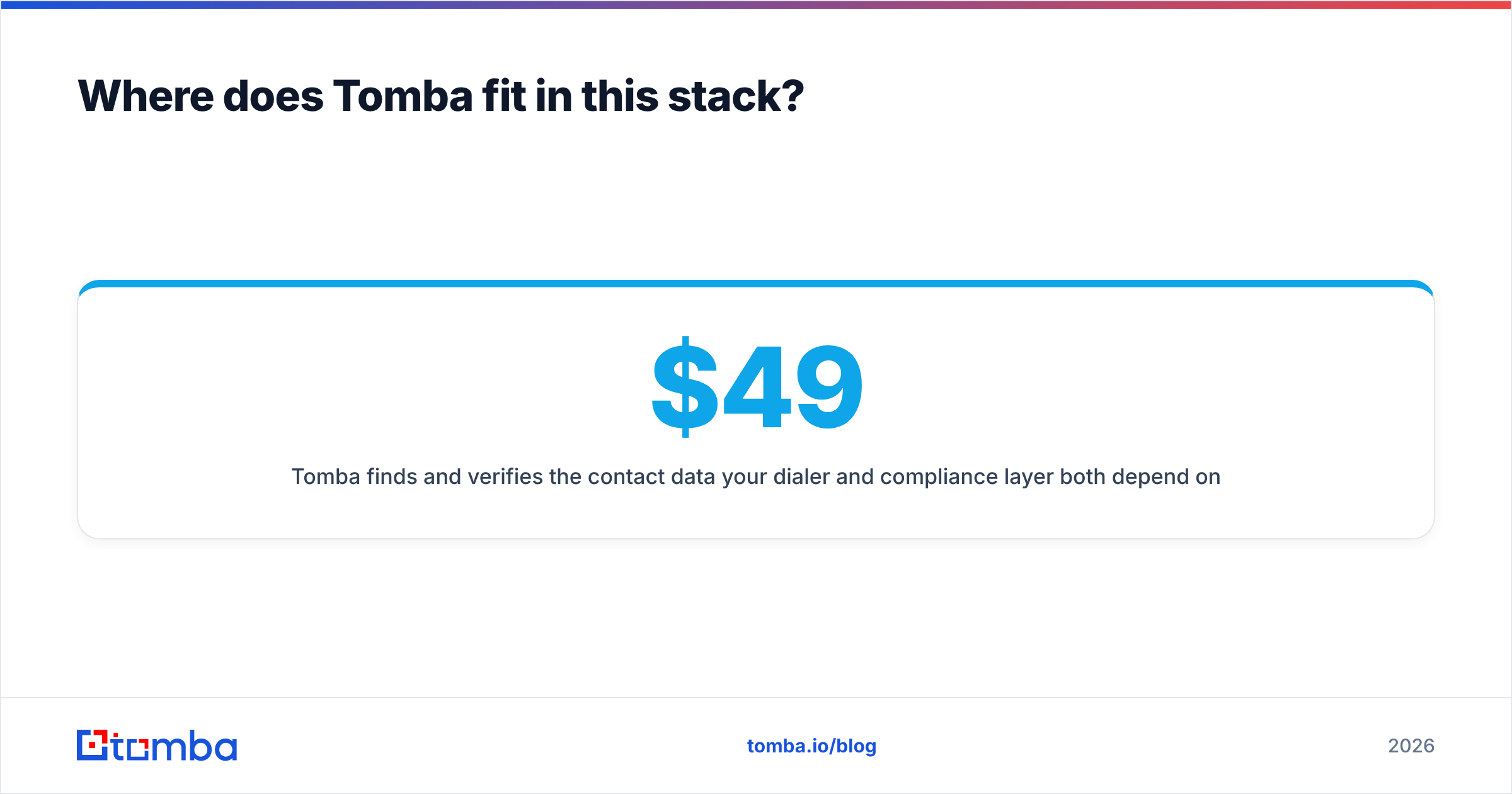
Tomba finds and verifies the contact data your dialer and compliance layer both depend on — direct phone numbers, verified business emails, and enriched company records tied to real named people. Plans start with a free tier at 25 searches a month, Starter at $49/mo, Growth at $99/mo, and Pro at $249/mo, with full Tomba pricing published rather than quote-gated. You can pull data through the UI, in bulk, or via the Tomba API directly into whichever dialer survives your evaluation.
Start with the Tomba Email Finder to build a clean, verified contact base — then let your compliance and dialing layers do their jobs on data that is actually worth calling.
Related guides#
Ready to find emails that actually work?
Join 150,000+ professionals who stopped guessing and started sending. Free credits on signup — no credit card required.
Get the Tomba newsletter
Practical outbound tactics and product updates — once every two weeks.
About the author