How To Ask For An Email Introduction (And Get A Yes)
Warm intros convert 3-5x better than cold outreach, but most intro requests die in the connector's inbox. Here's the forwardable-blurb method, exact templates, and how to find intro paths at scale.
TL;DR
- A warm introduction converts far better than a cold email, but only if you make saying yes effortless for the connector — that means writing the intro for them.
- The single highest-leverage move is the forwardable blurb: a short, copy-paste-ready paragraph your connector can forward without editing.
- Always use double opt-in: ask the connector for permission, then let them ask the target. Never force an intro on someone who didn't agree to it.
- Intro requests fail for predictable reasons — vague asks, no context on why this person, and no easy exit for the connector.
- When you have no intro path, a verified direct email is the fallback. Use a email finder to reach the person yourself instead of burning a weak connection.
Why does an email introduction beat a cold email?#
Because the trust transfer is doing the work, not your copy.
When someone you both know forwards your name, the recipient reads your message inside an existing relationship. The subject line isn't competing with 60 other unread cold emails — it arrives with a colleague's name attached and an implicit endorsement. Reply rates on referred outreach routinely sit several multiples above cold, and the meetings that follow start from a different baseline: you're not proving you're legitimate, you're discussing the actual problem.
That's the upside. The catch is that intros are a scarce, non-renewable resource. Every intro you request spends a little of your connector's social capital. Ask carelessly, ask too often, or ask for someone your connector barely knows, and you don't just lose the intro — you lose future ones.
So the real question isn't whether warm intros work. It's how to ask in a way that makes yes the path of least resistance.
What are the four types of introduction requests?#
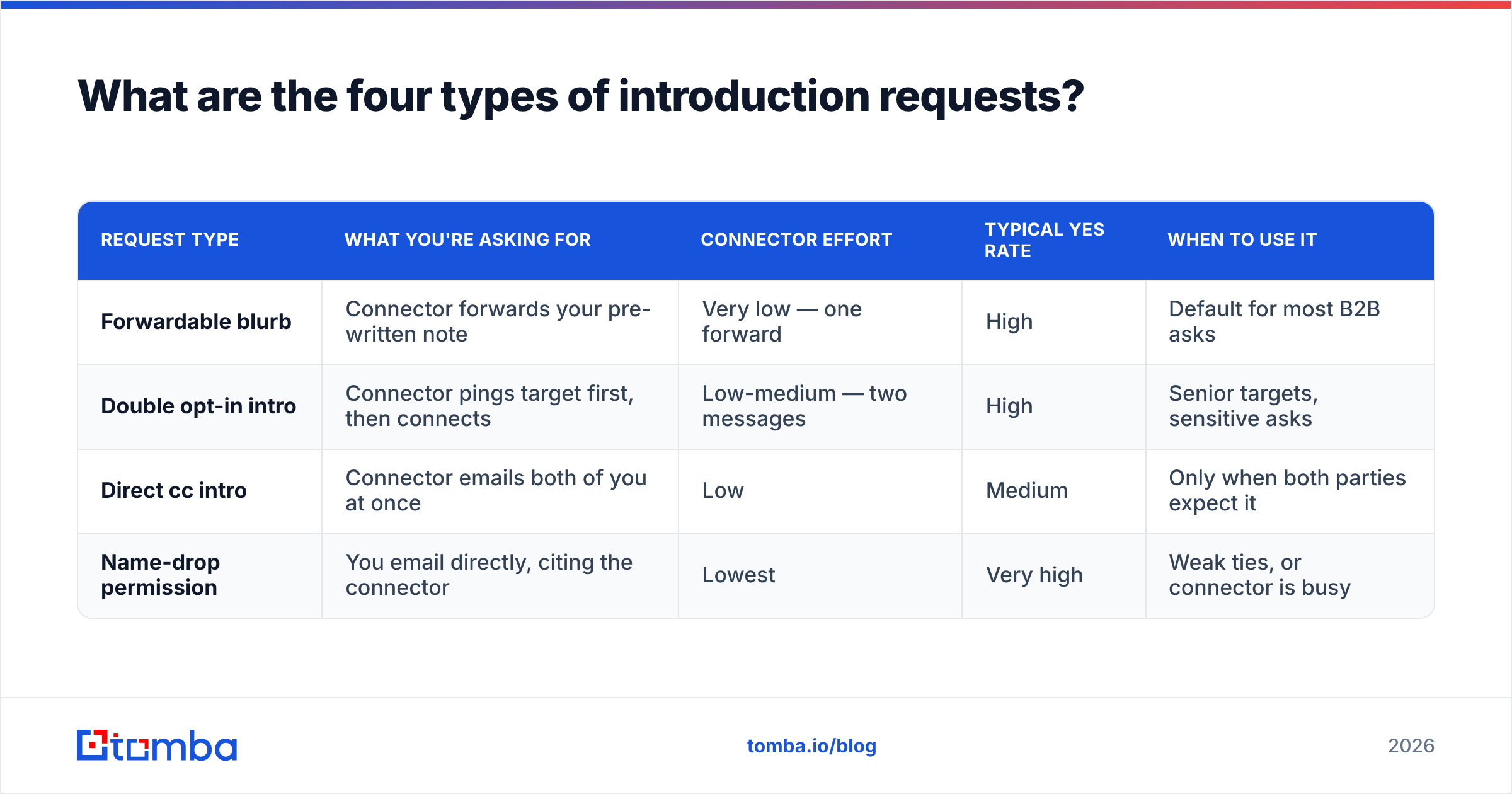
Not all asks carry the same weight. Knowing which one you're making tells you how much you can reasonably expect.
| Request type | What you're asking for | Connector effort | Typical yes rate | When to use it |
|---|---|---|---|---|
| Forwardable blurb | Connector forwards your pre-written note | Very low — one forward | High | Default for most B2B asks |
| Double opt-in intro | Connector pings target first, then connects | Low-medium — two messages | High | Senior targets, sensitive asks |
| Direct cc intro | Connector emails both of you at once | Low | Medium | Only when both parties expect it |
| Name-drop permission | You email directly, citing the connector | Lowest | Very high | Weak ties, or connector is busy |
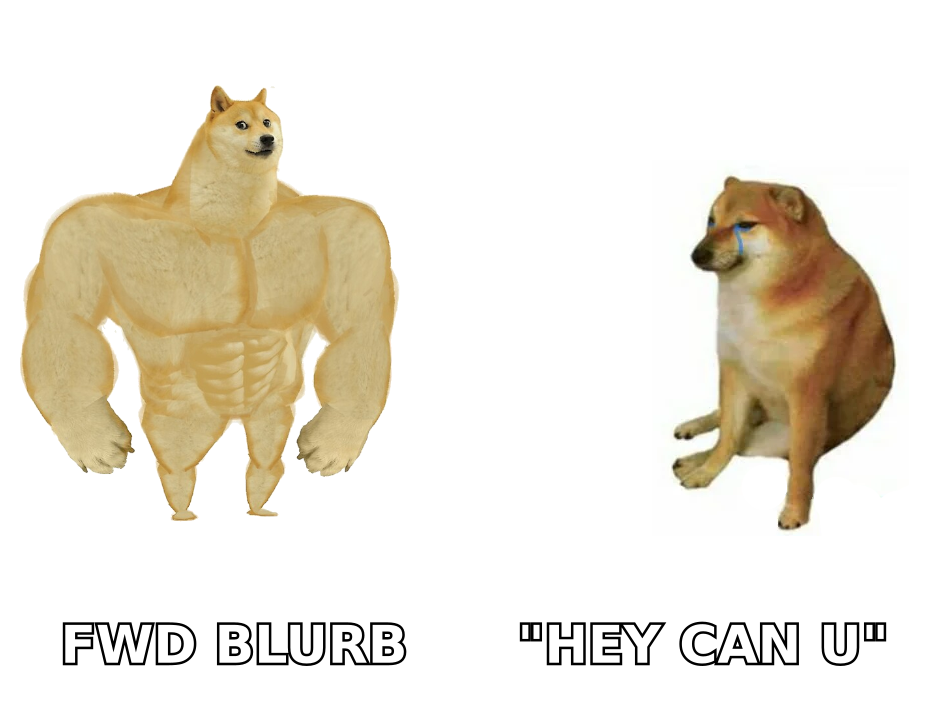
The fourth row is underused. If your connector knows the target only loosely, asking "would you mind if I mentioned you sent me?" costs them nothing and still gives you a warm opening line. Many people default to requesting a full intro when permission to name-drop would have been enough — and would have gotten a faster yes.
The third row is the one to avoid. A direct cc intro without prior consent puts both people on the spot. The target now has to either engage with a stranger or visibly ignore a friend's email. That's the fastest way to make a connector regret helping you.
How do you ask for an email introduction, step by step?#
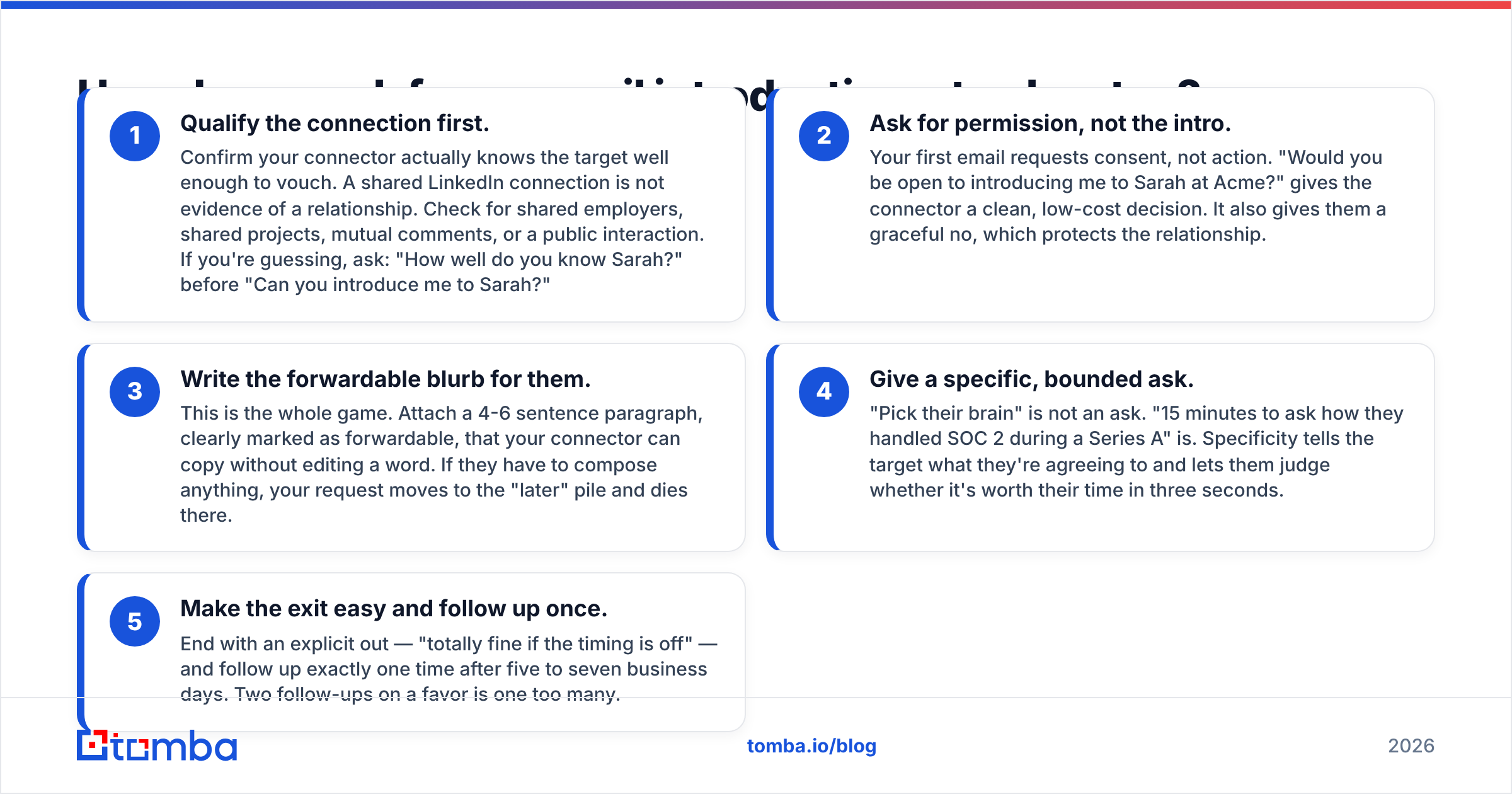
Five steps. Skip any of them and your hit rate drops.
- Qualify the connection first. Confirm your connector actually knows the target well enough to vouch. A shared LinkedIn connection is not evidence of a relationship. Check for shared employers, shared projects, mutual comments, or a public interaction. If you're guessing, ask: "How well do you know Sarah?" before "Can you introduce me to Sarah?"
- Ask for permission, not the intro. Your first email requests consent, not action. "Would you be open to introducing me to Sarah at Acme?" gives the connector a clean, low-cost decision. It also gives them a graceful no, which protects the relationship.
- Write the forwardable blurb for them. This is the whole game. Attach a 4-6 sentence paragraph, clearly marked as forwardable, that your connector can copy without editing a word. If they have to compose anything, your request moves to the "later" pile and dies there.
- Give a specific, bounded ask. "Pick their brain" is not an ask. "15 minutes to ask how they handled SOC 2 during a Series A" is. Specificity tells the target what they're agreeing to and lets them judge whether it's worth their time in three seconds.
- Make the exit easy and follow up once. End with an explicit out — "totally fine if the timing is off" — and follow up exactly one time after five to seven business days. Two follow-ups on a favor is one too many.
That sequence takes about ten minutes to execute properly. Most people spend two minutes and wonder why nobody responds.
What does a good forwardable blurb look like?#
Short, specific, and about the recipient rather than about you.
Here's the permission email you send to the connector:
Subject: Quick ask — intro to Sarah at Acme?
Hi Mark,
I noticed you worked with Sarah Chen at Acme. We're building compliance tooling for Series A teams, and Acme's platform team went through SOC 2 last year — I'd love 15 minutes to hear how they scoped it.
No pressure at all if the timing's bad or you'd rather not. If you're open to it, I've written a blurb below you can forward as-is.
— forwardable below —
Sarah — connecting you with Alex, who runs product at Northwind. They build audit-automation tooling for Series A companies and are specifically curious how you scoped SOC 2 last year rather than pitching you anything. Asked for 15 minutes; said no worries if you're heads-down. Thought the conversation might be useful both directions.
Thanks either way,
Alex
Notice what the blurb does. It names both parties, states the reason for the connection in one clause, explicitly disclaims a pitch, bounds the time, and pre-approves a no. Your connector forwards it in four seconds without thinking.
Notice what it doesn't do. No company boilerplate. No "we're the leading platform for." No three-paragraph background. The blurb is not a pitch deck — its only job is to get a reply that says "sure, send me a time."

When should you skip the intro and email directly?#
More often than you think.
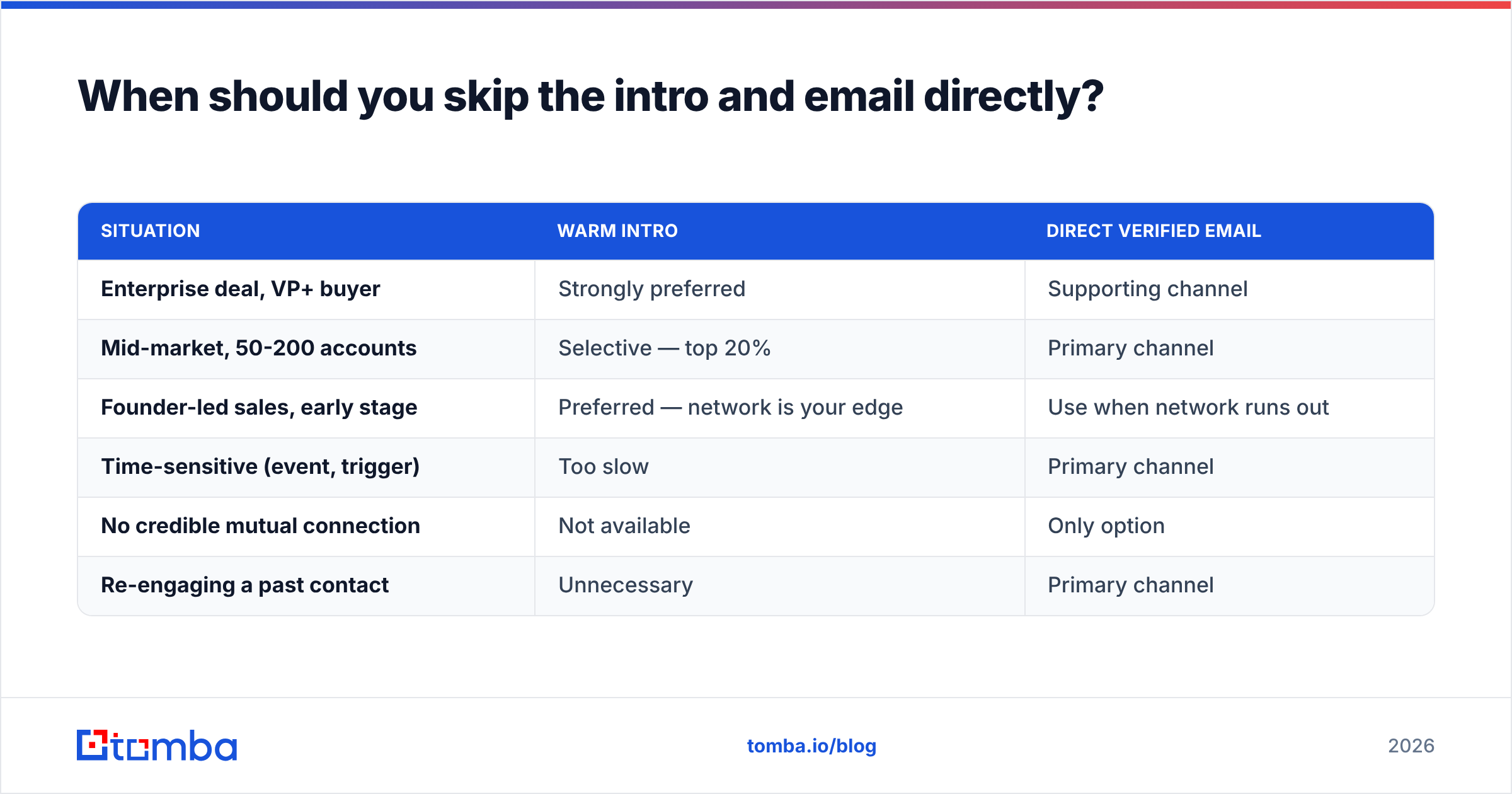
Warm intros have a real cost: latency. An intro chain adds three to ten days before you're even in a conversation. If you're working a defined territory with 200 accounts, waiting on intros for all of them isn't a strategy — it's a bottleneck. Reserve intro requests for accounts where the relationship genuinely changes the odds: enterprise deals, senior buyers, competitive situations.
For everything else, a well-researched direct email with a verified address performs fine. And the two approaches aren't mutually exclusive — you can email directly and mention the mutual connection if you have name-drop permission.
The practical constraint on direct outreach is data quality. Guessed addresses bounce, bounces hurt your email deliverability, and a damaged sending domain undermines every campaign you run afterward. Find the address properly, verify it before sending, and the direct path becomes a legitimate parallel channel rather than a fallback.
| Situation | Warm intro | Direct verified email |
|---|---|---|
| Enterprise deal, VP+ buyer | Strongly preferred | Supporting channel |
| Mid-market, 50-200 accounts | Selective — top 20% | Primary channel |
| Founder-led sales, early stage | Preferred — network is your edge | Use when network runs out |
| Time-sensitive (event, trigger) | Too slow | Primary channel |
| No credible mutual connection | Not available | Only option |
| Re-engaging a past contact | Unnecessary | Primary channel |
How do you find intro paths and contacts at scale?#
You map the graph, then you fill the gaps.
Mapping intro paths means answering one question for every target account: does anyone in my network have a real relationship with someone here? LinkedIn's shared-connection view is the obvious starting point, and it's genuinely useful — LinkedIn surfaces second-degree paths automatically. Your CRM is the underrated one. Past customers, churned accounts, and closed-lost contacts who moved companies are the strongest intro sources most teams never query. HubSpot's research on referrals has consistently shown that referred prospects convert at materially higher rates than self-sourced ones, and existing-customer relationships are the cheapest source of those referrals.
Then there's the gap: accounts where no path exists. That's where contact data does the work.
A workflow that holds up in practice:
- Build the account list first. Firmographics, trigger events, ICP fit — before any contact data.
- Run a network check on each account. Shared connections, CRM history, alumni overlap, portfolio-company overlap if you're VC-backed.
- Split the list. Accounts with a credible path go to the intro queue. Everything else goes to direct outreach.
- Fill contact data on the direct list. Use domain search to pull the people at a company, or the email finder when you already know the name.
- Verify before sending. Run the list through an email verifier so bounces don't damage your sender reputation.
- Track intro requests like pipeline. Requested, accepted, connected, meeting held. If your accept rate is under 50%, your asks are the problem, not your network.
That last point matters. Teams measure cold email reply rates obsessively and never measure intro accept rates. If you're asking ten people a month and three say yes, something in your ask is broken — usually the missing blurb or an unqualified connection.
For teams doing this across hundreds of accounts, doing it one lookup at a time doesn't scale. A bulk email finder handles the direct-outreach half of the list in one pass, which frees your actual thinking time for the intro half — where personalization genuinely pays.
How do you follow up after the introduction lands?#
Fast, and with the connector removed from the thread.
Once the target replies, three things happen in your first response:
Move the connector to bcc. Do this explicitly — "moving Mark to bcc to save his inbox." It's a small courtesy that connectors notice, and it signals you understand the etiquette. Their job is done.
Thank them once, briefly. One sentence. Not a paragraph of gratitude that the target has to scroll past.
Propose a specific time, not a calendar link. After a warm intro, dropping a scheduling link reads as transactional. Offer two concrete windows and let them counter. Save the link for cold outreach where it's expected.
Then close the loop with your connector separately. Send them a short note after the meeting telling them what came of it — whether it went well or not. This is the step almost everyone skips, and it's the reason some people get unlimited intros and others get one. Connectors who see outcomes introduce you again. Connectors who hear nothing assume you wasted their capital.
If the intro stalls — the target never replies to the connector — let it go. Don't ask your connector to nudge. Move that account to your direct-outreach list and reach out yourself with a fresh angle. The connection isn't wasted; it's just not the channel.
What are the most common intro-request mistakes?#
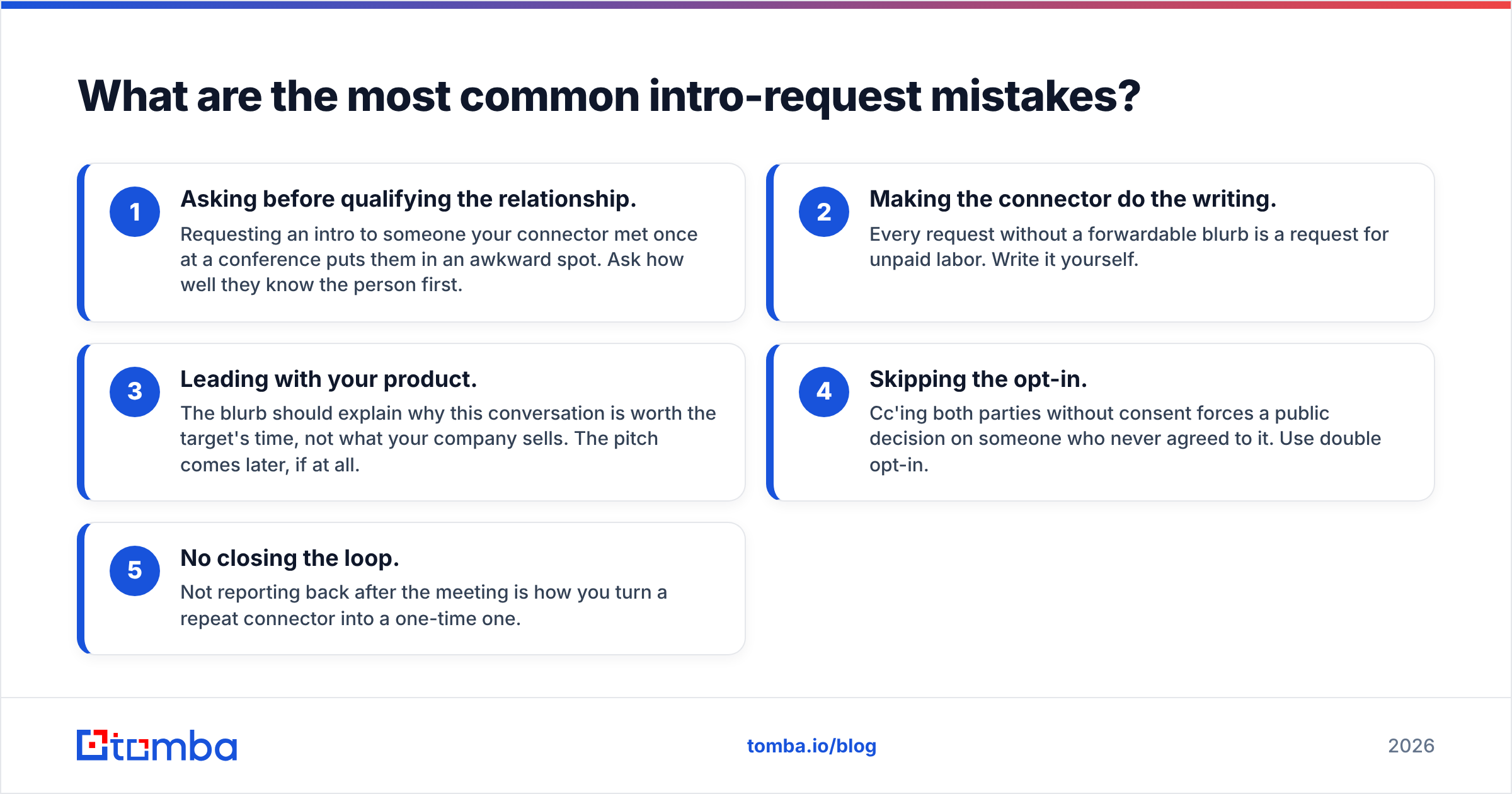
Five failure modes account for most of the no-replies:
- Asking before qualifying the relationship. Requesting an intro to someone your connector met once at a conference puts them in an awkward spot. Ask how well they know the person first.
- Making the connector do the writing. Every request without a forwardable blurb is a request for unpaid labor. Write it yourself.
- Leading with your product. The blurb should explain why this conversation is worth the target's time, not what your company sells. The pitch comes later, if at all.
- Skipping the opt-in. Cc'ing both parties without consent forces a public decision on someone who never agreed to it. Use double opt-in.
- No closing the loop. Not reporting back after the meeting is how you turn a repeat connector into a one-time one.
Fix the blurb and the opt-in and you'll solve most of it. Those two changes alone tend to move accept rates more than any amount of rewriting the request email.
Getting the reach without waiting on the intro#
Warm introductions are the best channel you have and the slowest one you have. The teams that win use both lanes: intros for the accounts where a relationship genuinely tips the deal, and researched direct outreach for the rest — with accurate, verified contact data underneath.
If the direct lane is where your volume lives, start there. Tomba Email Finder locates professional email addresses by name, domain, or company, with verification built in so your bounce rate stays clean and your domain reputation survives contact with reality. The free tier gives you 25 searches a month to test it against your own list, and paid plans start at $49/mo — see Tomba pricing for the full breakdown. Map the intro paths you actually have, then fill every remaining gap with a verified address instead of a guess.
Related guides#
Ready to find emails that actually work?
Join 150,000+ professionals who stopped guessing and started sending. Free credits on signup — no credit card required.
Get the Tomba newsletter
Practical outbound tactics and product updates — once every two weeks.
About the author