How To Identify Quality Leads: A 2026 Scoring Framework
Most pipelines are not short on leads — they are short on good ones. Here is a concrete, five-signal framework for separating buyers from browsers before you waste a single sequence on them.
TL;DR
- A quality lead is not "someone who downloaded something." It is a contact who matches your ICP, shows a buying trigger, holds or influences budget, and has a verified, reachable email or phone.
- Score every lead on five signals: firmographic fit, role fit, intent, timing trigger, and data quality. Weight them — do not treat them equally.
- Disqualification rules matter more than scoring rules. Write down the five conditions that make you drop a lead instantly.
- Bad contact data quietly destroys lead quality metrics. A 12% bounce rate does not mean 12% waste — it means your sender reputation is degrading and your good leads stop seeing you.
- Run a quarterly closed-loop review: pull the leads that actually closed, look at what they had in common, and reweight the model against reality instead of opinion.
What Actually Makes a Lead "Quality"?#
Quality is measurable, and it is not about enthusiasm. A lead is high quality when four conditions hold at the same time:
- They match the profile of accounts you already win. Not the profile in your pitch deck — the profile in your closed-won data.
- A person in a relevant role is involved. A curious intern at a perfect-fit account is not a quality lead. A VP of Ops at a mediocre-fit account might be.
- Something changed recently. New funding, a new hire in the buying role, a tech-stack switch, a compliance deadline. Change creates budget; stability does not.
- You can actually reach them. A perfect lead with a guessed, unverified email is worth zero. Worse than zero, because it costs deliverability.
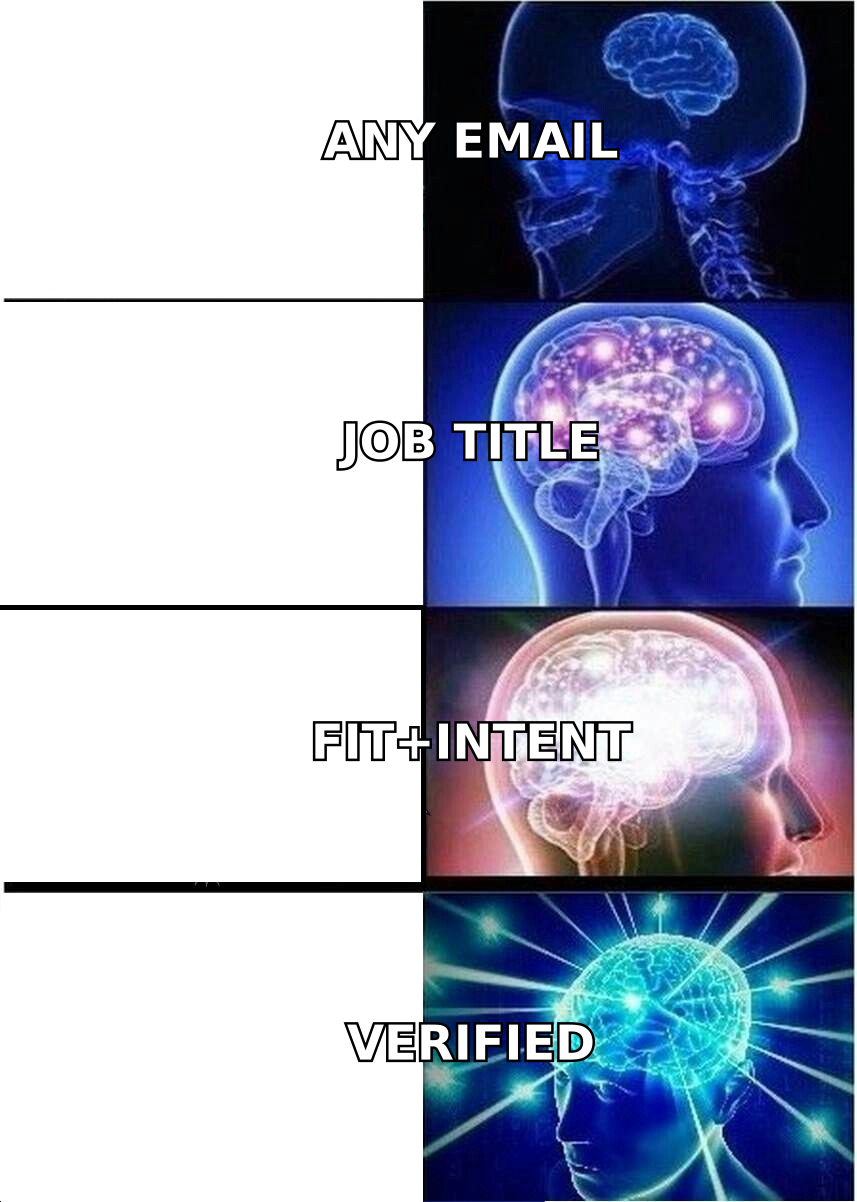
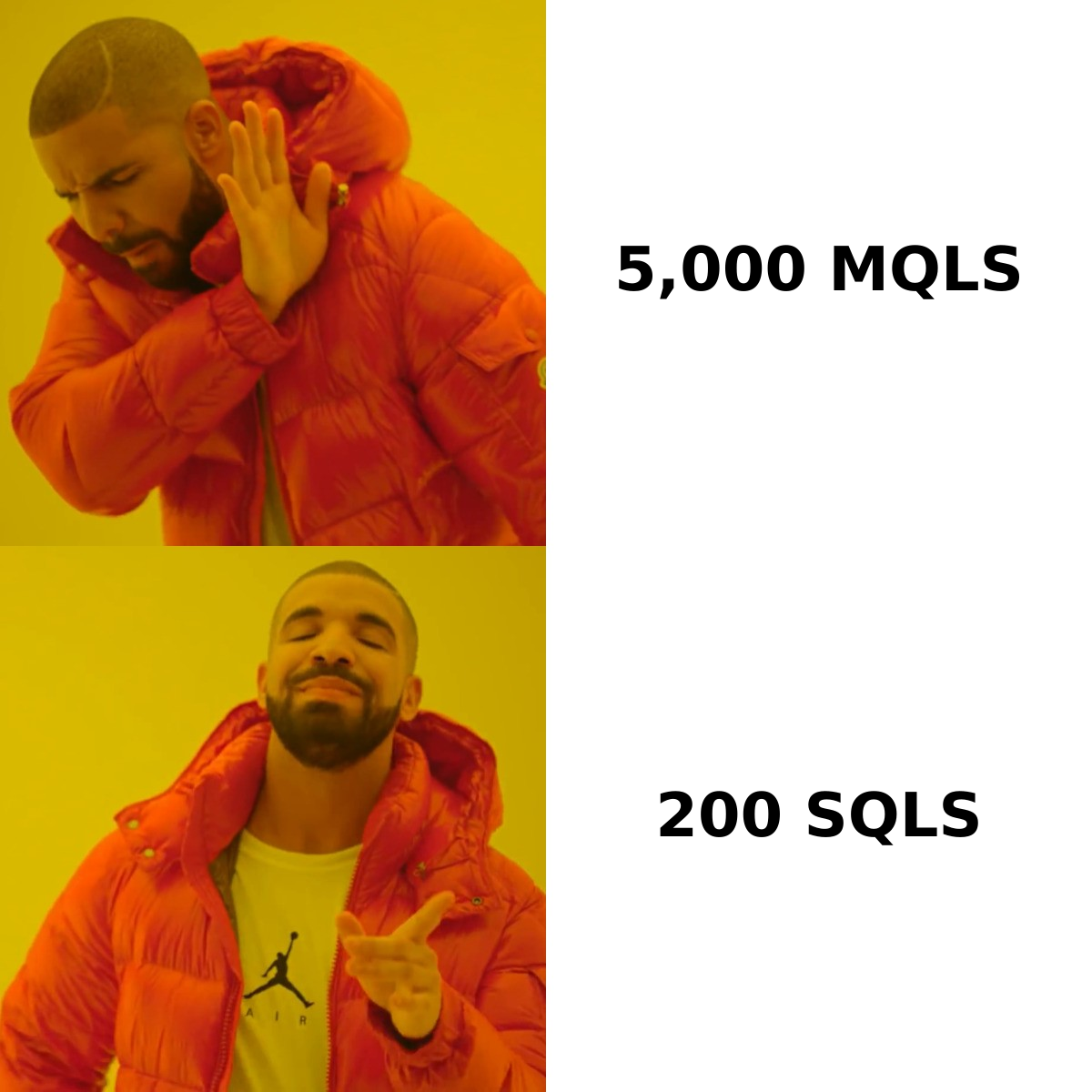
Most teams get the first two right and skip the last two entirely. That is why "we have 5,000 MQLs" and "we have no pipeline" coexist so comfortably in the same quarterly review.
Let me restate that image properly:
How Do You Score Fit, Intent, and Reachability?#
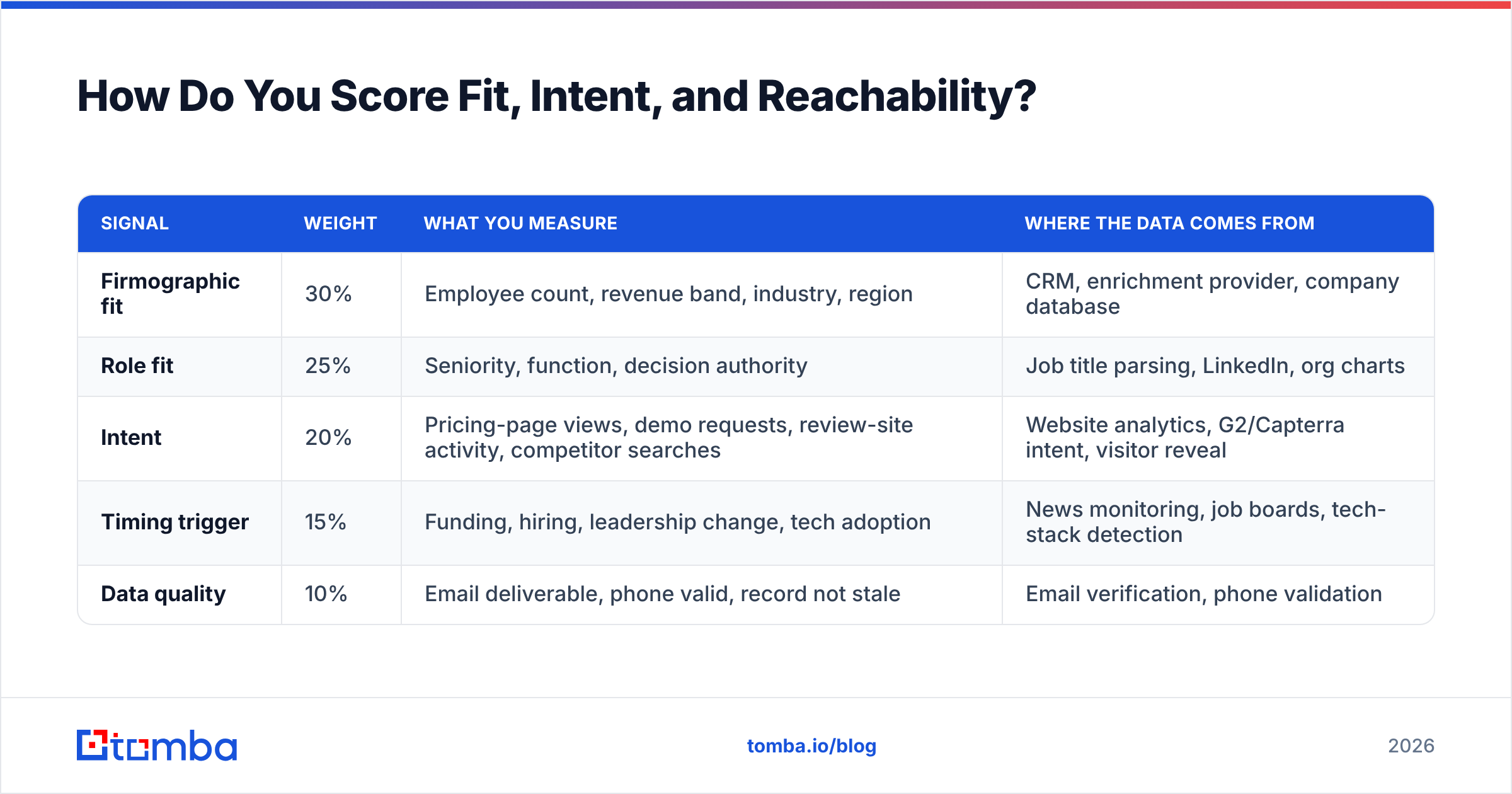
Use a weighted five-signal model. The weights below are a starting point — you will recalibrate them in the closed-loop step later.
| Signal | Weight | What you measure | Where the data comes from |
|---|---|---|---|
| Firmographic fit | 30% | Employee count, revenue band, industry, region | CRM, enrichment provider, company database |
| Role fit | 25% | Seniority, function, decision authority | Job title parsing, LinkedIn, org charts |
| Intent | 20% | Pricing-page views, demo requests, review-site activity, competitor searches | Website analytics, G2/Capterra intent, visitor reveal |
| Timing trigger | 15% | Funding, hiring, leadership change, tech adoption | News monitoring, job boards, tech-stack detection |
| Data quality | 10% | Email deliverable, phone valid, record not stale | Email verification, phone validation |
Two rules make this model work instead of becoming shelfware.
Rule one: data quality is a multiplier, not an additive score. A lead scoring 90 on the first four signals with an unverifiable email is not an 81-point lead. It is a 0-point lead until you fix the contact record. Run it through an email verifier before it enters a sequence, not after it bounces.
Rule two: intent without fit is noise. Competitors, students, and job seekers visit your pricing page constantly. Gate intent scoring behind a minimum fit threshold, or your top-scoring leads will be people who will never buy anything.
What Is the Difference Between Fit and Intent?#
Think of it like a restaurant host reading the door. Fit is whether the party looks like your usual customers — right size, right occasion, right budget. Intent is whether they are actually hungry right now or just ducking in out of the rain. You need both signals, and they fail in different ways.
- High fit, high intent — your ICP account is on the pricing page for the third time this week. Route to a rep within the hour. These are the only leads that deserve instant human response.
- High fit, low intent — perfect account, no activity. This is your nurture and outbound territory. Do not let a scoring model bury them; they convert well once a trigger appears.
- Low fit, high intent — heavy engagement from a company you cannot serve. Send to self-serve or a partner. Reps burn enormous time here because activity feels like progress.
- Low fit, low intent — suppress. Not "nurture forever." Suppress.
This four-box split resolves most arguments between marketing and sales, because it makes the disagreement explicit: marketing usually optimizes for intent volume, sales usually wants fit. Both are half right. The scoring model is where you write the treaty. If your team is still arguing about what counts as a marketing qualified lead, start here rather than with a definition document nobody reads.
How Do You Find Quality Leads Instead of Just Filtering Them?#
Filtering assumes the leads already exist. Outbound teams have the opposite problem: you need to build the list before you can score it. The sequence that works:
- Define the account list first, contacts second. Pull 100–300 companies that match your closed-won firmographics. Resist the urge to start from job titles across the whole market.
- Map the buying committee per account. For most B2B deals that is 3–7 people. Find the economic buyer, the user-champion, and one blocker (usually security, finance, or legal).
- Resolve contact data at the account level. A domain search returns the email pattern and the known contacts for a company in one call, which is far more efficient than guessing names one at a time.
- Verify before you enrich further. There is no point appending phone numbers and technographics to a record whose email does not resolve.
- Score the resulting contacts against the five-signal model and cut the bottom 40% before anyone writes a single line of outreach.
Step five is the one teams skip, and it is the one that protects rep time. If you built 800 contacts and all 800 go into sequence, you did not build a target list — you built a spray.
Which Data Signals Are Worth Paying For?#
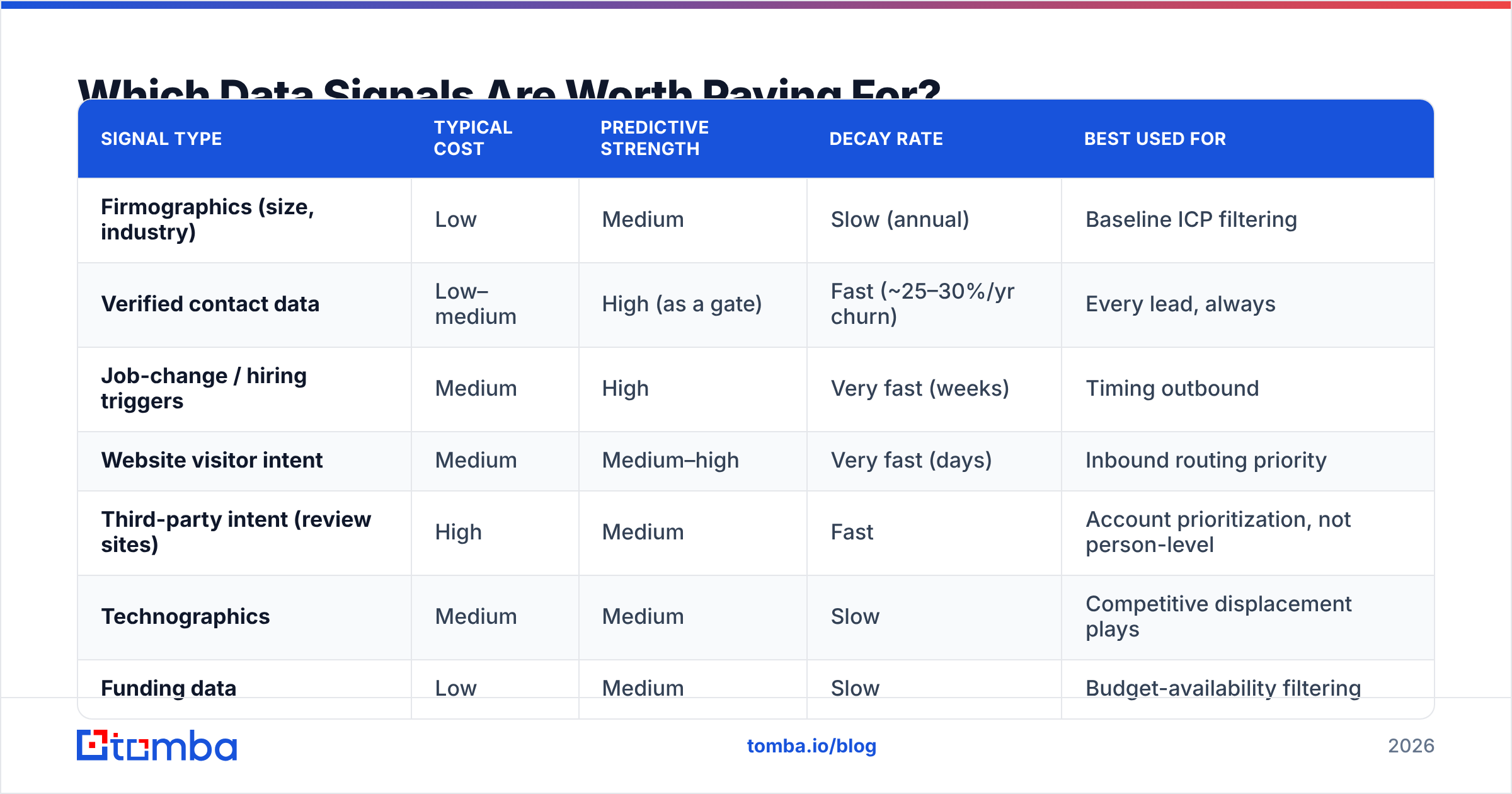
Not all lead data carries the same predictive value. Here is how the common signal types compare on cost, reliability, and how quickly they decay.
| Signal type | Typical cost | Predictive strength | Decay rate | Best used for |
|---|---|---|---|---|
| Firmographics (size, industry) | Low | Medium | Slow (annual) | Baseline ICP filtering |
| Verified contact data | Low–medium | High (as a gate) | Fast (~25–30%/yr churn) | Every lead, always |
| Job-change / hiring triggers | Medium | High | Very fast (weeks) | Timing outbound |
| Website visitor intent | Medium | Medium–high | Very fast (days) | Inbound routing priority |
| Third-party intent (review sites) | High | Medium | Fast | Account prioritization, not person-level |
| Technographics | Medium | Medium | Slow | Competitive displacement plays |
| Funding data | Low | Medium | Slow | Budget-availability filtering |
The pattern: the cheapest signals (firmographics, verified contact data) are the ones you need on 100% of records, and the expensive ones (third-party intent) are worth buying only for a narrow account list. Teams often invert this — they buy expensive intent data while running on a contact database with a 20% bounce rate.
For a sanity check on how third-party providers describe their own coverage, G2's category pages are more useful than vendor sites, because you can read the review filters by company size and see who actually reports value at your scale.
What Should Disqualify a Lead Immediately?#
Scoring tells you what to prioritize. Disqualification rules tell you what to stop touching, and they are far more valuable because they return time rather than reorder it.
Write down five hard disqualifiers. Common ones that hold up across B2B:
- Undeliverable or unverifiable email with no alternative channel. If you cannot reach them, the lead does not exist. Catch-all domains need a separate track — a catch-all verifier can often resolve whether the specific mailbox exists rather than forcing you to guess on the whole domain.
- Company below your minimum viable size. If your product needs 50 seats to be worth the implementation, a 12-person company is not an early-stage opportunity. It is a support ticket in nine months.
- Role with no path to budget. Individual contributors in non-buying functions. You can still use them as a champion route, but they should not score as a lead.
- Recently lost or churned for a structural reason. Price is not structural; a missing compliance certification is.
- Explicit regional or regulatory exclusion. Countries you cannot invoice, industries you cannot serve.
The point of writing these down is that they get applied consistently. A rule that lives in a senior rep's head disqualifies leads inconsistently and cannot be automated.
How Do You Validate the Scoring Model Against Real Outcomes?#
A lead-scoring model built from opinion degrades within two quarters. Run a closed-loop review quarterly:
- Export every closed-won deal from the last 90 days. Include the original lead score at creation.
- Export a same-size sample of closed-lost and never-engaged leads.
- Compare the signal distribution. Which attributes appear disproportionately in wins? Which high-weighted signals appear equally in both groups?
- Reweight. Any signal that appears at the same rate in wins and losses has zero predictive value — its weight belongs to something else.
- Check the score-to-conversion curve. If leads scoring 80 convert at the same rate as leads scoring 60, your model has no resolution in the top band and you are prioritizing at random.
Most teams discover two things in this exercise. First, one or two signals they were sure mattered (webinar attendance, ebook downloads) have no correlation with revenue at all. Second, a signal nobody scored — usually a specific job-title pattern or a specific integration in the tech stack — is present in most wins.
HubSpot's research on lead scoring makes the same point from the marketing side: models that are never recalibrated against closed revenue drift toward measuring engagement enthusiasm rather than purchase probability.
How Does Data Hygiene Affect Lead Quality Metrics?#
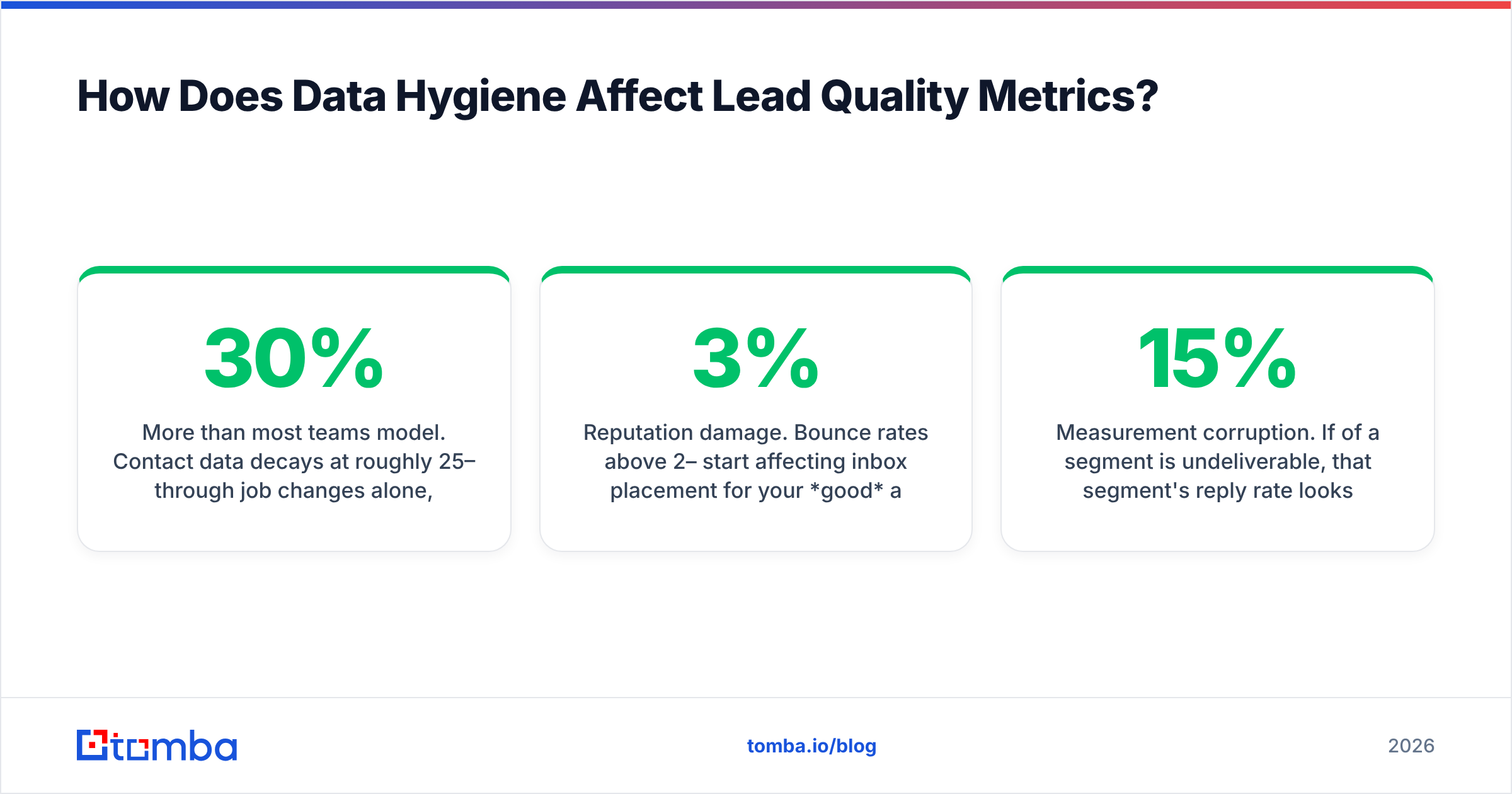
More than most teams model. Contact data decays at roughly 25–30% per year through job changes alone, and the damage compounds in three ways:
- Direct waste. Every sequence sent to a dead address is a wasted slot in your sending capacity.
- Reputation damage. Bounce rates above 2–3% start affecting inbox placement for your good addresses. Your best-fit prospect stops seeing your email because of the low-quality records sitting next to them in the same campaign. This is why email deliverability is a lead-quality problem, not just a technical one.
- Measurement corruption. If 15% of a segment is undeliverable, that segment's reply rate looks terrible, and you will draw the wrong conclusion about the segment rather than about the data.
The fix is procedural, not heroic. Verify at three points: on list build, before every campaign send, and on a rolling 90-day schedule for anything sitting in the CRM. For large lists, a bulk email finder and verification pass is cheaper than a single week of a rep working dead records.
What Does a Working Lead Qualification Workflow Look Like?#
Putting the pieces in order, here is the sequence that holds up in practice:
- Capture or build — inbound form, visitor reveal, or outbound list build from an account list.
- Enrich — append firmographics, role data, and technographics so the record has enough attributes to score.
- Verify — confirm email deliverability and phone validity. Records that fail go to a repair queue, not to sequences.
- Score — apply the weighted five-signal model, gated so intent only counts above a minimum fit threshold.
- Route — high fit + high intent goes to a rep with a same-day SLA; high fit + low intent goes to outbound; low fit goes to self-serve or suppression.
- Feed back — log the score at creation so the quarterly closed-loop review has data to work with.
Step six is trivially cheap to implement and almost universally skipped. Without it, you cannot run the validation step, and you are stuck defending your weights with anecdotes.
Where Should You Start If You Have None of This?#
Do not build the full model in week one. In order of return on effort:
- Week 1: Verify your existing database. You will likely find 10–25% of records are undeliverable. That single pass improves every metric downstream and costs almost nothing.
- Week 2: Write the five disqualification rules and apply them to your active lists. Measure how much rep capacity you just freed.
- Week 3–4: Build the fit score from closed-won firmographics only. Skip intent entirely at this stage — fit alone gets you most of the way.
- Month 2: Layer in intent and timing triggers, gated behind the fit threshold.
- Quarter 2: Run the first closed-loop review and reweight.
Teams that try to build the complete weighted model with intent data on day one usually ship nothing. Teams that start by verifying their contact data see measurable improvement in the first fortnight, which is what buys them the political capital to do the rest.
Start With the Data Layer#
Every lead-scoring model rests on whether you can actually reach the person. That is the layer to fix first, and it is the layer most teams treat as an afterthought.
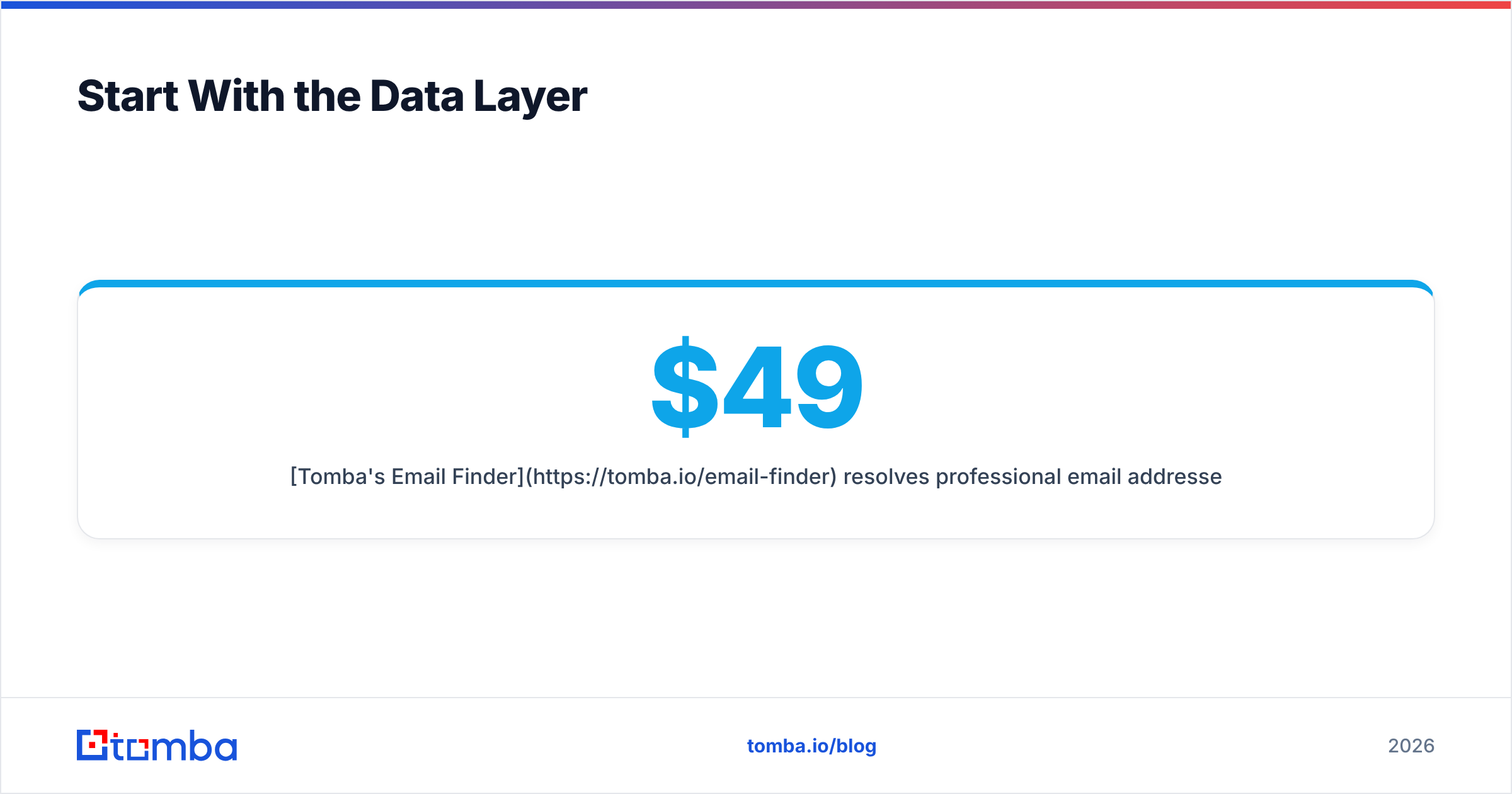
Tomba's Email Finder resolves professional email addresses by name, domain, or company, with verification built into the same workflow — so leads enter your scoring model already gated on reachability rather than failing at send time. The free tier gives you 25 searches a month to test against your own account list; paid plans start at $49/month for Starter, $99/month for Growth, and $249/month for Pro, with full Tomba pricing available if you need higher volume or API access.
Run your top 100 target accounts through it, verify what comes back, and see how much of your current "lead quality" problem is actually a contact data problem.
Related guides#
// get started
Find, verify and enrich your first contacts today
Start on the free plan with 25 searches a month, then scale when your team is ready.
Free plan · No credit card required · GDPR & CCPA
// about the author