InsightSync Alternatives: 8 Better GTM Data Tools for 2026
InsightSync sits in a crowded lane. Here are eight alternatives compared on data depth, pricing model, and where each one actually earns its seat in your GTM stack.
TL;DR
- "InsightSync alternative" almost always means one of three different jobs: contact data, enrichment orchestration, or revenue intelligence. Pick the lane first, then the tool.
- If your real bottleneck is reaching people — not analyzing them — a focused email finder plus verification beats a broad analytics suite at a fraction of the cost.
- Quote-based platforms (ZoomInfo, Gong, Clari) start around enterprise budgets and lock you into annual terms. Credit-based tools (Tomba, BookYourData, Apollo) let you test with real data before committing.
- Tomba starts at $49/mo after a free 25-search tier, and exposes everything through an email finder API so you are not paying per seat to automate.
- The fastest evaluation: run the same 200-contact list through every shortlisted tool, measure valid-send rate after verification, and divide cost by usable contacts.
What is InsightSync, and why are teams looking for alternatives?#
InsightSync is positioned as a GTM data and insights layer — the kind of platform that promises to unify account data, enrich records, and surface signals for sales teams. That category has exploded since 2023, and the products inside it now overlap so heavily that buyers genuinely struggle to tell them apart.
The reasons teams start shopping for InsightSync alternatives are boringly consistent, and they are the same reasons teams churn off any mid-market data platform:
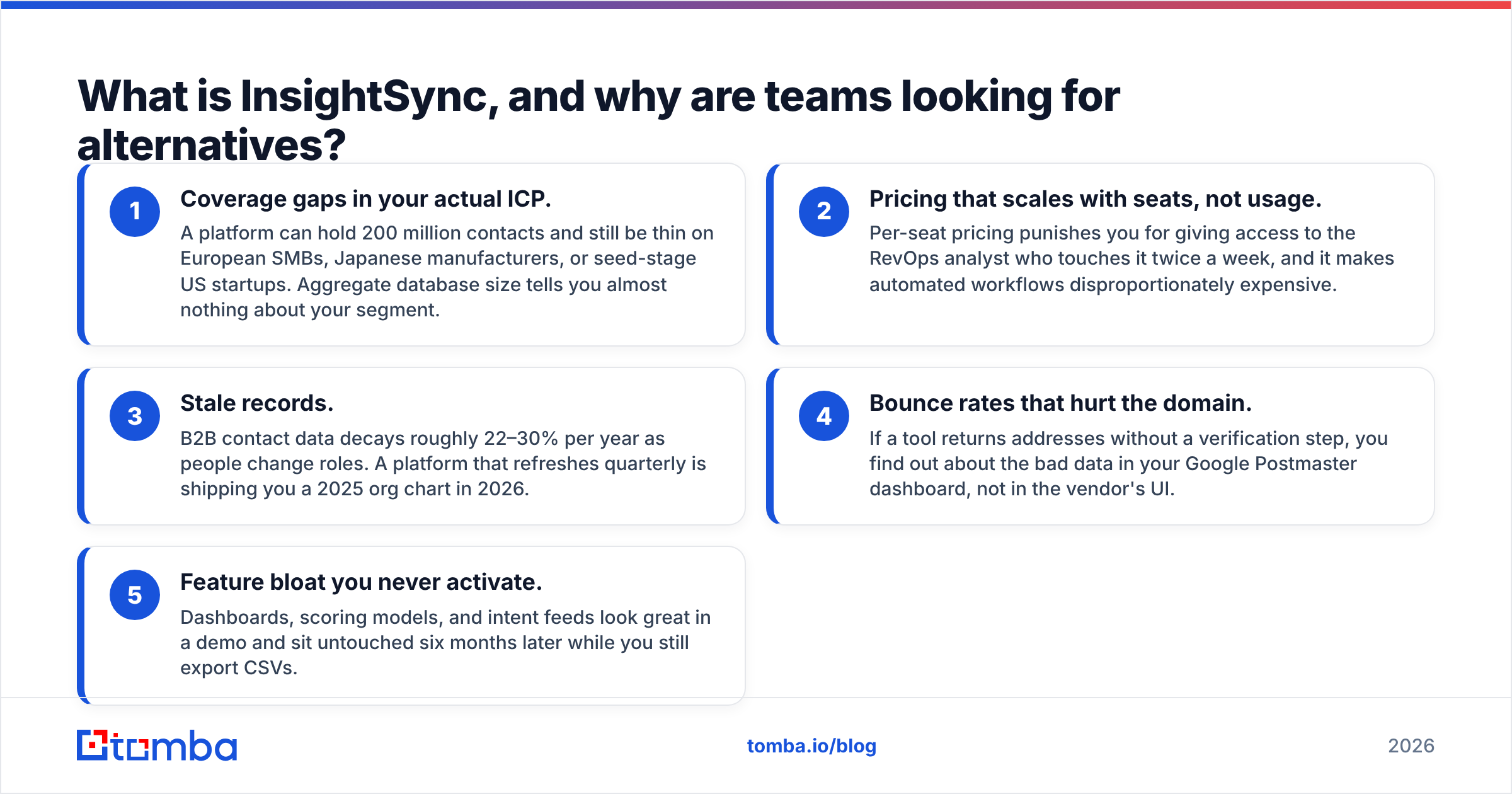
- Coverage gaps in your actual ICP. A platform can hold 200 million contacts and still be thin on European SMBs, Japanese manufacturers, or seed-stage US startups. Aggregate database size tells you almost nothing about your segment.
- Pricing that scales with seats, not usage. Per-seat pricing punishes you for giving access to the RevOps analyst who touches it twice a week, and it makes automated workflows disproportionately expensive.
- Stale records. B2B contact data decays roughly 22–30% per year as people change roles. A platform that refreshes quarterly is shipping you a 2025 org chart in 2026.
- Bounce rates that hurt the domain. If a tool returns addresses without a verification step, you find out about the bad data in your Google Postmaster dashboard, not in the vendor's UI.
- Feature bloat you never activate. Dashboards, scoring models, and intent feeds look great in a demo and sit untouched six months later while you still export CSVs.
Before you replace anything, write down which of those five is actually your problem. Three of them are data problems, one is a pricing problem, and one is a scope problem — and they point to completely different replacements.
How should you evaluate an InsightSync alternative?#
Skip the feature matrix on the vendor's site. It was written to make that vendor win. Use these five criteria instead, in this order:
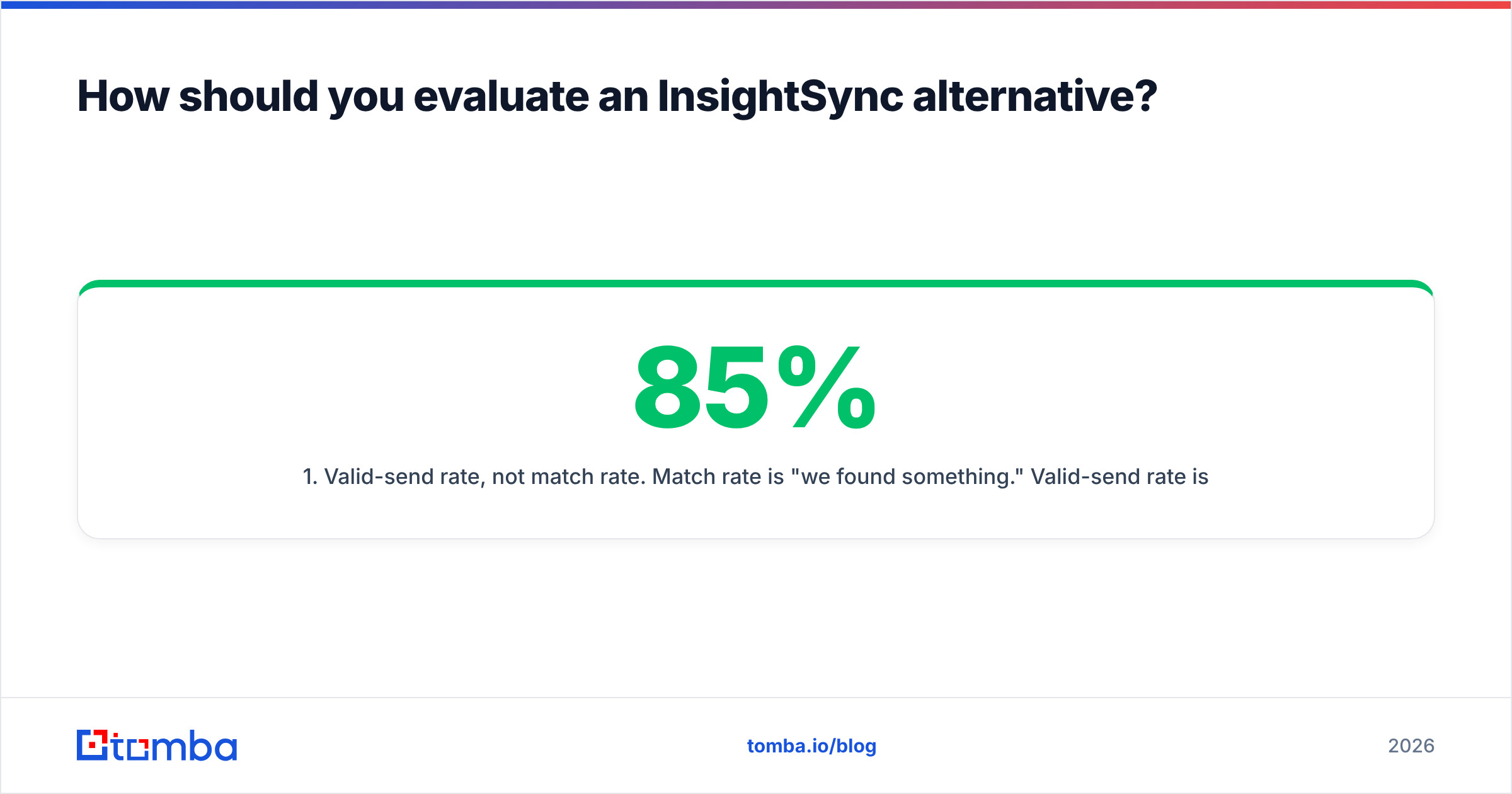
- Valid-send rate, not match rate. Match rate is "we found something." Valid-send rate is "the message arrived." Run 200 known contacts through each tool, verify the output independently, and compare. A tool with an 85% match rate and 95% validity beats a 95% match rate with 70% validity.
- Pricing model over headline price. Credits you can spend on API calls, bulk jobs, and browser lookups are worth more than a cheaper seat that gates automation behind an enterprise tier. Ask specifically: does the API cost extra, and do unused credits roll over?
- Data provenance and compliance posture. Where does the data come from, and can the vendor document it? Ask for the GDPR and CCPA position in writing. Tomba publishes its data sources openly; if a vendor cannot explain provenance in one paragraph, that is your answer.
- Fit with the systems you already run. An enrichment tool that does not write cleanly into your CRM creates a second source of truth, which is worse than no enrichment at all. Check native integrations before you check features.
- Exit cost. Month-to-month or annual? Can you export your enriched records? A platform you cannot leave will quietly stop earning your renewal.
Run those five against any shortlist and most of the market eliminates itself in an afternoon.
What are the best InsightSync alternatives in 2026?#
Here is the shortlist, grouped by the job each one genuinely does well. Prices reflect publicly listed entry tiers at the time of writing and change often — confirm on the vendor's own pricing page before you budget.
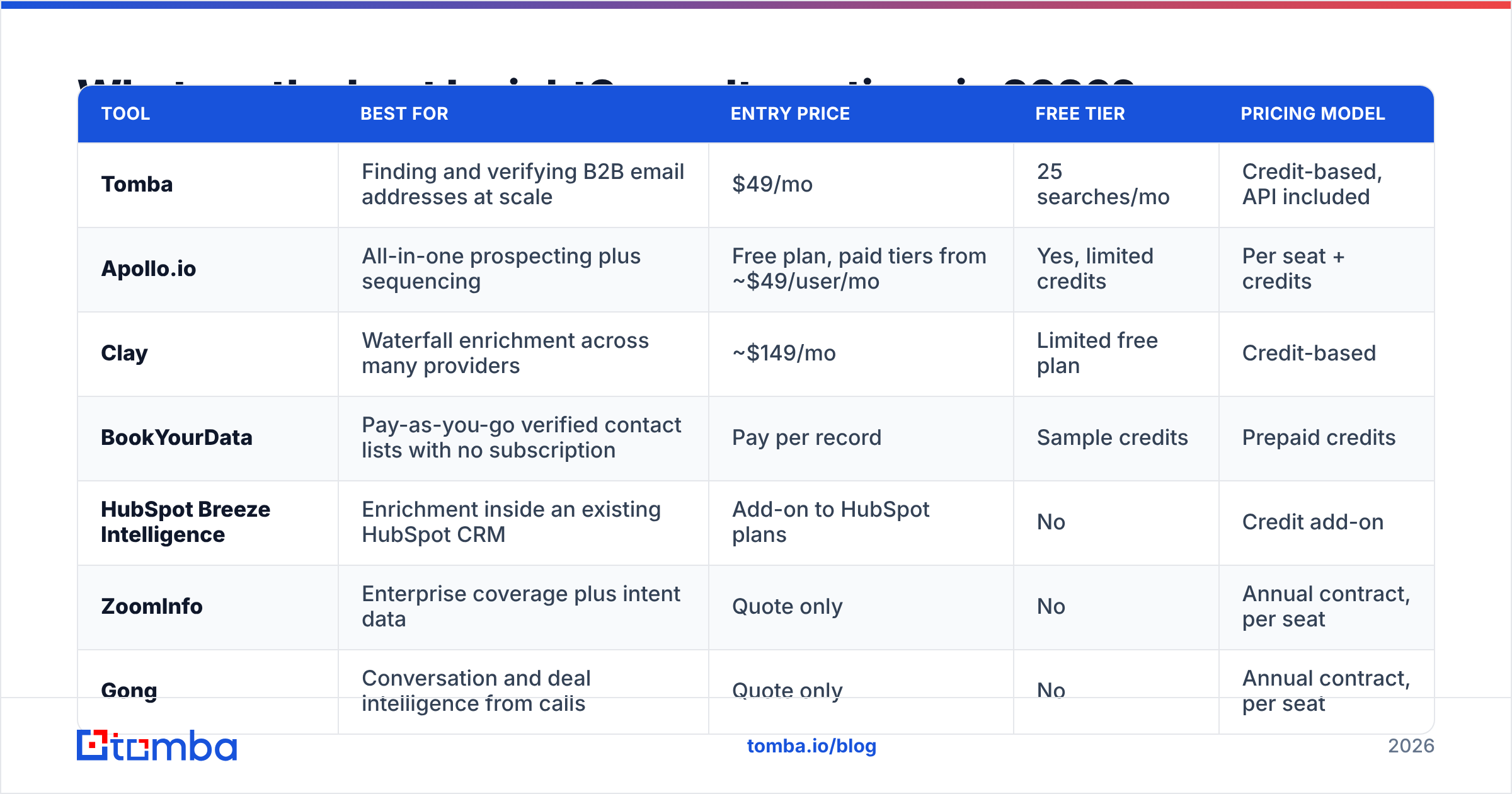
| Tool | Best for | Entry price | Free tier | Pricing model |
|---|---|---|---|---|
| Tomba | Finding and verifying B2B email addresses at scale | $49/mo | 25 searches/mo | Credit-based, API included |
| Apollo.io | All-in-one prospecting plus sequencing | Free plan, paid tiers from ~$49/user/mo | Yes, limited credits | Per seat + credits |
| Clay | Waterfall enrichment across many providers | ~$149/mo | Limited free plan | Credit-based |
| BookYourData | Pay-as-you-go verified contact lists with no subscription | Pay per record | Sample credits | Prepaid credits |
| HubSpot Breeze Intelligence | Enrichment inside an existing HubSpot CRM | Add-on to HubSpot plans | No | Credit add-on |
| ZoomInfo | Enterprise coverage plus intent data | Quote only | No | Annual contract, per seat |
| Gong | Conversation and deal intelligence from calls | Quote only | No | Annual contract, per seat |
| Clari | Forecasting and pipeline inspection for RevOps | Quote only | No | Annual contract, platform fee |
Four of those eight are not really InsightSync competitors at all — they are adjacent products that buyers compare anyway. That is worth naming plainly, because buying Gong when your problem is stale contact data is an expensive category error.
Tomba — when the bottleneck is reaching people#
Tomba is a focused email finder and verification platform rather than a full GTM suite, and for a large share of teams evaluating InsightSync alternatives, that narrower scope is the point. You give it a domain and a name, or just a domain, and it returns professional addresses with a confidence score and the company's detected email pattern.
Around that core sit the tools that turn a found address into a deliverable one: an email verifier, a catch-all verifier for domains that accept everything, domain search for mapping an entire company, and data enrichment to fill in the rest of the record.
Where it wins: cost per usable contact, and automation without seat tax. Everything in the UI is available through the API, CLI, Chrome extension, Google Sheets, and Excel — so a two-person team can run the same volume as a ten-person team without buying eight more seats.
Where it does not compete: Tomba has no call recording, no forecasting model, and no intent feed. If you need those, it is a component of your stack, not a replacement for a platform.
Pricing: Free tier at 25 searches/mo, Starter $49/mo, Growth $99/mo, Pro $249/mo, Enterprise custom. Full Tomba pricing is public, which is itself a differentiator in a category full of "contact sales."
Apollo.io — the all-in-one that replaces three tools badly and two tools well#
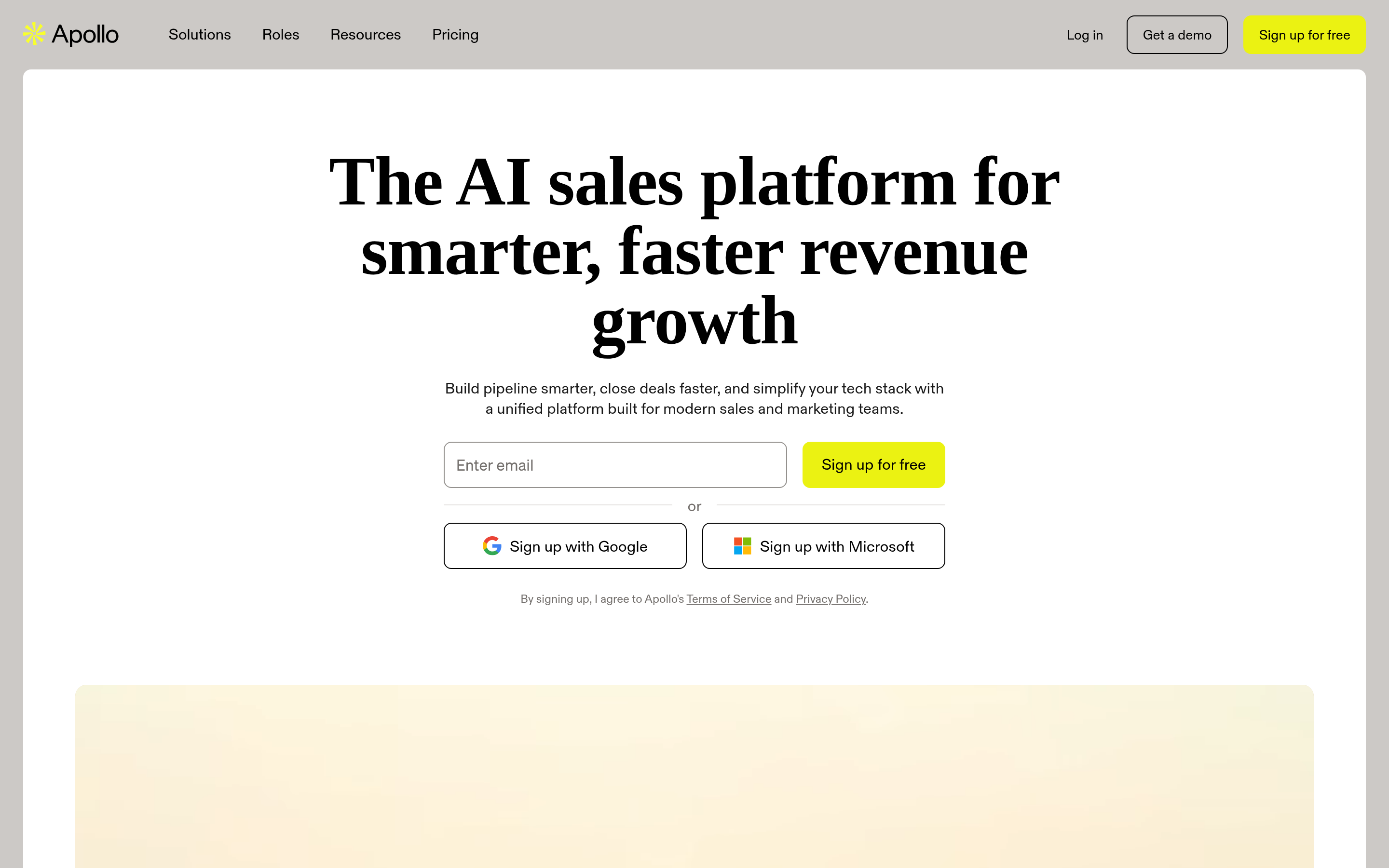
Apollo bundles a contact database, sequencing, dialer, and basic scoring. For a startup with no stack at all, that consolidation is genuinely valuable, and the free plan lets you validate the data before paying.
The trade-offs show up at scale. Data quality on smaller and non-US companies is inconsistent, sequencing is serviceable rather than strong, and costs climb as you add seats and credit packs. Teams that outgrow it typically split it into a dedicated data source plus a dedicated sending tool — which is why Apollo alternatives is such a heavily searched phrase.
Clay — orchestration, not a database#
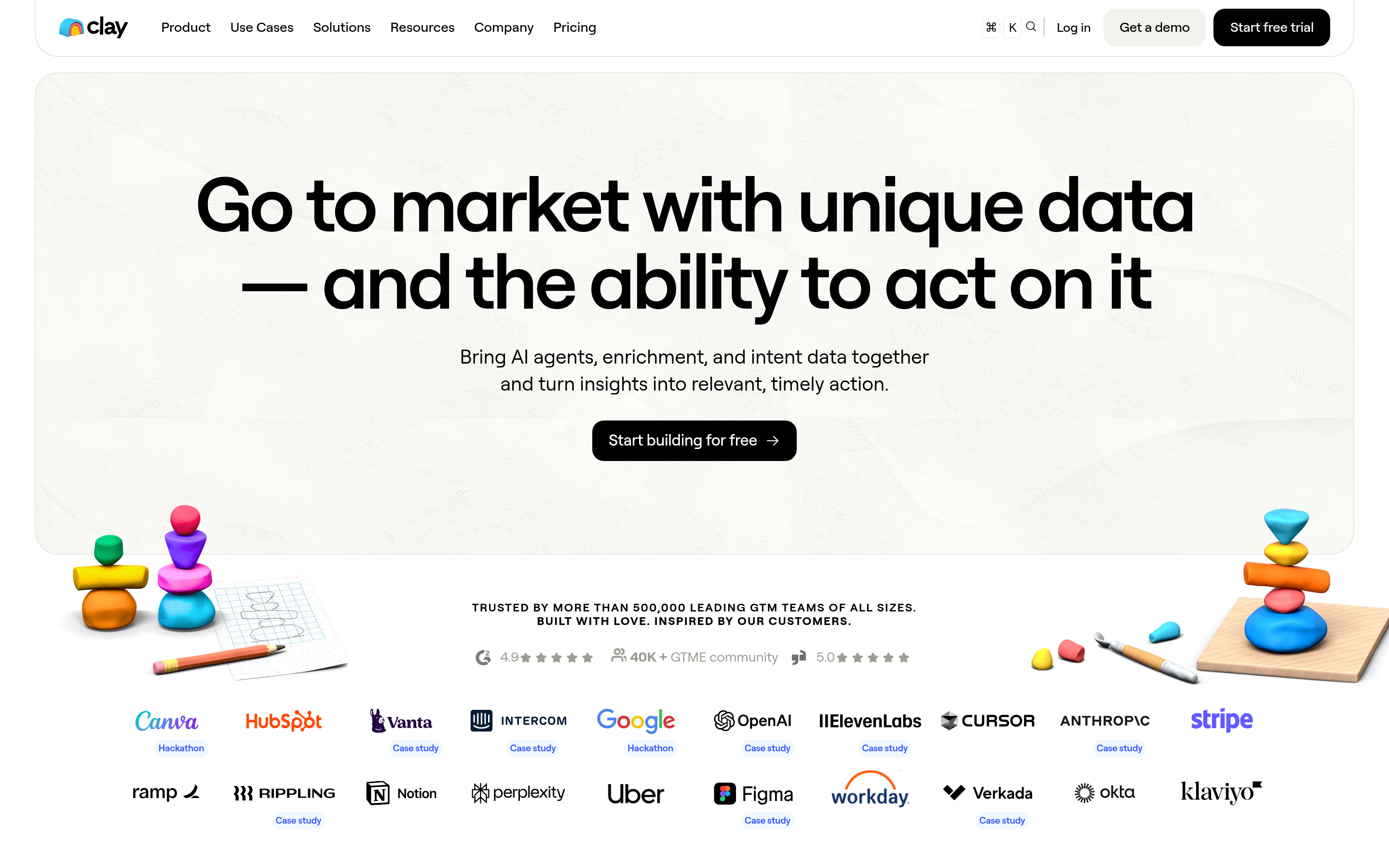
Clay is not a data vendor. It is a spreadsheet-shaped automation layer that calls dozens of data vendors in sequence — a "waterfall" — and keeps the first good answer. If your problem is that no single provider covers your ICP, Clay is the correct answer and nothing else on this list substitutes for it.
The catch: you still pay for the underlying providers, credits burn fast during experimentation, and it rewards operators who enjoy building systems. Hand it to a rep and it will sit idle.
BookYourData — buy the list, skip the subscription#
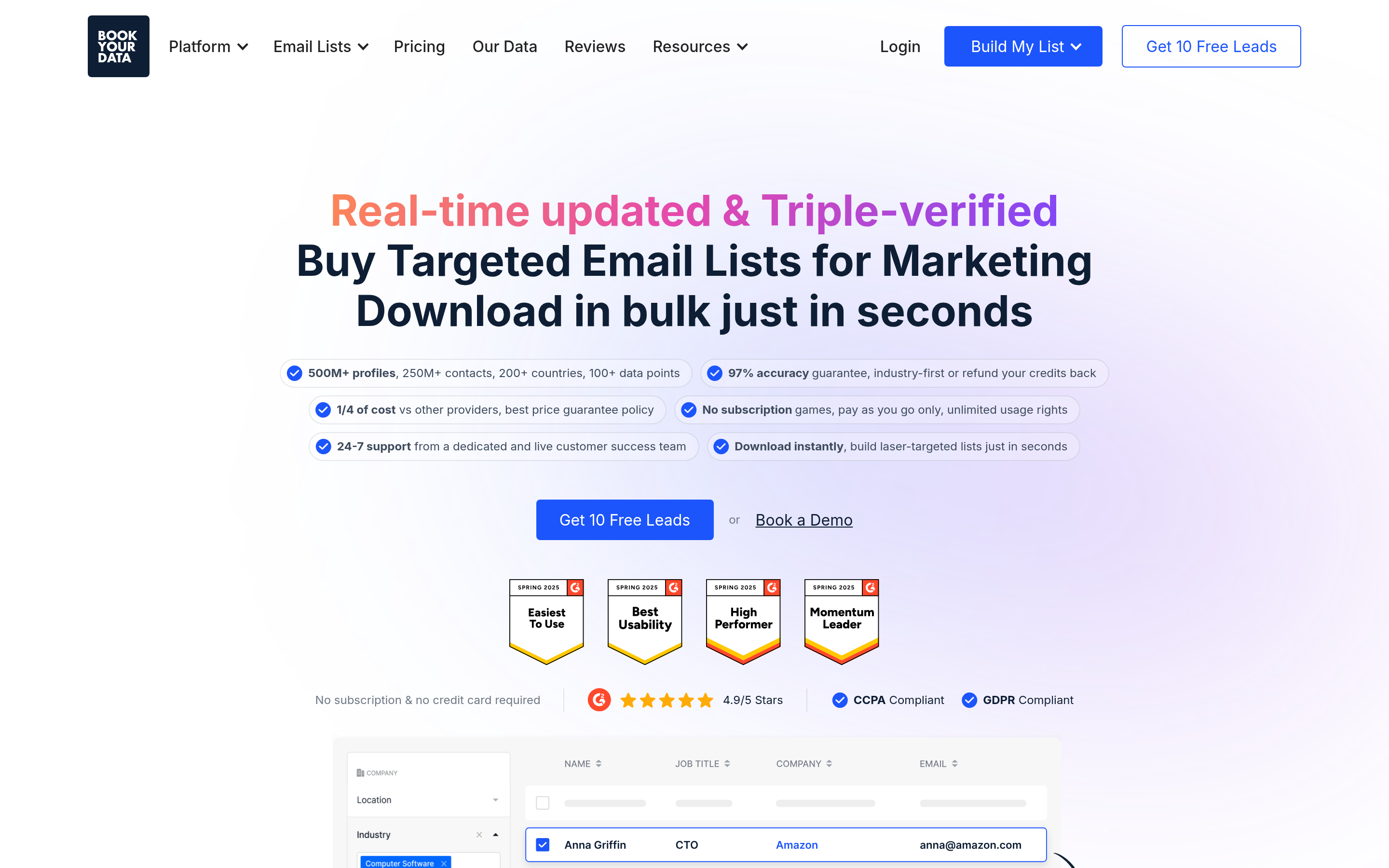
BookYourData takes the opposite approach to everything else here: prepaid credits, no monthly commitment, and a verified-contact guarantee. You build a segment with filters, see the count, and pay for exactly those records.
That model fits a specific and common situation well — a campaign with a defined target list, a one-off event follow-up, a new market test — where committing to a yearly platform makes no sense. If you want a targeted, pre-verified list without adding another recurring line item, it is a sensible peer to evaluate alongside credit-based tools. Check the current terms on bookyourdata.com directly.
HubSpot Breeze Intelligence — enrichment where your CRM already lives#
If you run HubSpot, the enrichment layer built into it removes an entire integration problem. Records enrich in place, workflows trigger on enriched fields, and there is no sync to babysit. Coverage skews toward larger, well-documented companies, and it only makes sense as an add-on — nobody buys the CRM for the data. Details are on hubspot.com.
ZoomInfo, Gong, and Clari — the enterprise tier#
Group these together because they share a buying motion: annual contracts, quote-only pricing, procurement involvement, and real implementation work.
- ZoomInfo buys you breadth and intent signals. It is the coverage benchmark and priced like it.
- Gong analyzes what happens on calls. It replaces nothing about your contact data — it tells you why deals stall.
- Clari forecasts and inspects pipeline. It is a RevOps tool that assumes your CRM hygiene is already decent.
All three are legitimate purchases at the right company size. None of them fixes a bounce rate. Peer reviews on G2 are useful here mainly for reading the one- and two-star reviews, which is where the implementation and renewal complaints live.

Is a focused email finder actually enough to replace a GTM platform?#
For most teams under 50 reps: yes, more often than vendors would like you to believe.
Think of it like a kitchen. A full GTM platform is a restaurant-grade combi oven — it does twelve things, costs a fortune, and needs a trained operator. A focused finder-plus-verifier is a very good pan. If what you actually cook every night is one dish, the pan wins on every dimension that matters.
The honest test is what you do with the output. If the workflow ends with "export a list, load it into a sequencer, send," a platform's dashboards are decoration. If the workflow ends with "the VP of Sales asks why Q3 commit moved," you need revenue operations tooling and no email finder will help.
A middle path works well and costs less than one enterprise seat: a dedicated data source for contacts, your CRM for the record of truth, and a sequencer for sending. Three focused tools, three replaceable parts, no single vendor holding the whole motion hostage.
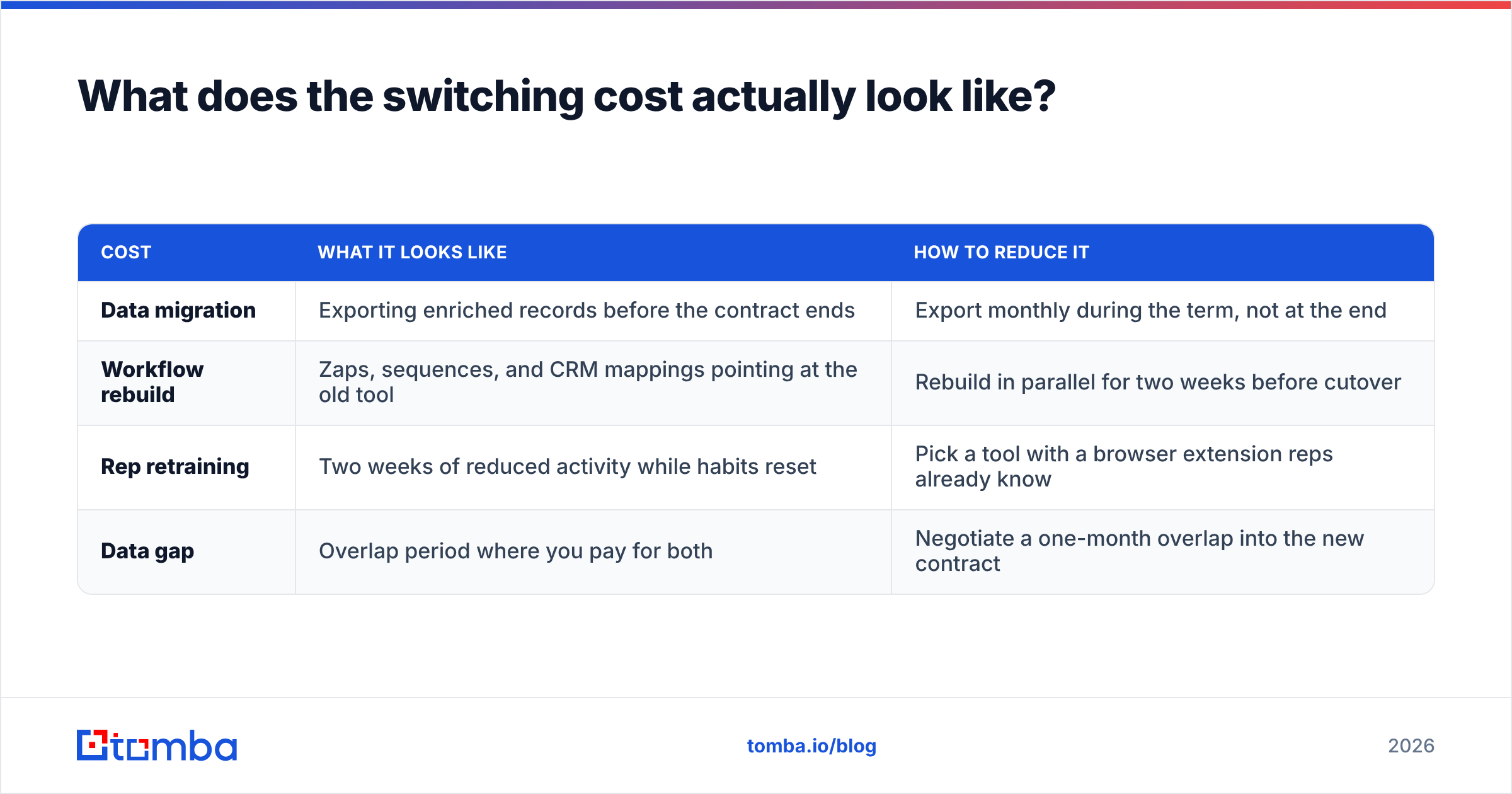
What does the switching cost actually look like?#
Budget for these four, in order of how often they get underestimated:
| Cost | What it looks like | How to reduce it |
|---|---|---|
| Data migration | Exporting enriched records before the contract ends | Export monthly during the term, not at the end |
| Workflow rebuild | Zaps, sequences, and CRM mappings pointing at the old tool | Rebuild in parallel for two weeks before cutover |
| Rep retraining | Two weeks of reduced activity while habits reset | Pick a tool with a browser extension reps already know |
| Data gap | Overlap period where you pay for both | Negotiate a one-month overlap into the new contract |
The single biggest mistake is cancelling before the replacement is proven. Run both for 30 days on the same accounts, compare valid-send rates, then cancel. The overlap cost is trivial next to a quarter of degraded pipeline.
Which InsightSync alternative should you pick?#
- You need deliverable email addresses and nothing else → Tomba. Cheapest path to a clean list, API included at every paid tier.
- You need one tool for a brand-new team → Apollo.io, with the expectation you will split it apart within 18 months.
- Your ICP is niche and no single provider covers it → Clay, run by someone who enjoys building workflows.
- You need one campaign list, not a subscription → BookYourData's prepaid model.
- You live inside HubSpot → Breeze Intelligence, because the integration cost is zero.
- You have enterprise budget and a coverage mandate → ZoomInfo, with a negotiated multi-year rate.
- Your problem is deal execution, not contact data → Gong or Clari. Different category, correct purchase.
The framework that survives every vendor pitch: cost per usable contact, measured on your own list, over 30 days. Analyst frameworks from Gartner are useful for structuring a formal evaluation, but nothing substitutes for running your own 200-record test.
Ready to test the data-first approach?#
If your honest answer is "we do not need more dashboards, we need addresses that do not bounce," start with the free tier. Tomba's Email Finder gives you 25 searches a month at no cost — enough to run the same list you would benchmark any InsightSync alternative against and see the valid-send rate for yourself. If it holds up, Starter is $49/mo with the API included, and you can cancel any month it stops paying for itself.
Run the test before you sign anything. The data will tell you which lane you are actually in.
Related guides#
// get started
Find, verify and enrich your first contacts today
Start on the free plan with 25 searches a month, then scale when your team is ready.
Free plan · No credit card required · GDPR & CCPA
Get the Tomba newsletter
Product and data updates
// about the author