Leadmine Alternatives: 7 Email Finders Compared for 2026
Leadmine is easy to start with, but 10 free credits and capped plans run out quickly. Here are 7 Leadmine alternatives compared on accuracy, pricing, free tiers and the workflow each one suits.
TL;DR
- Leadmine is a simple email finder and verifier with a Chrome extension. Pricing starts at $0 for 10 credits a month, then $29/mo for 250 credits and $99/mo for 1,000.
- People usually go looking for Leadmine alternatives for three reasons: the free tier is tiny, the cost per credit gets expensive, or they need phone numbers, bulk jobs, an API or CRM sync.
- Tomba is the best all-round swap if you want domain search, verification, catch-all handling and an API on one plan (Free 25 searches/mo, Starter $49/mo).
- Hunter and Snov.io suit small teams. Apollo suits teams that want the database and the sequencer in one tool. BookYourData suits people who want pre-verified lists without a subscription.
- Before you commit to a plan, test each tool on the same 50 contacts. Accuracy changes by industry and region far more than vendor marketing admits.
What is Leadmine and why do teams look for alternatives?#
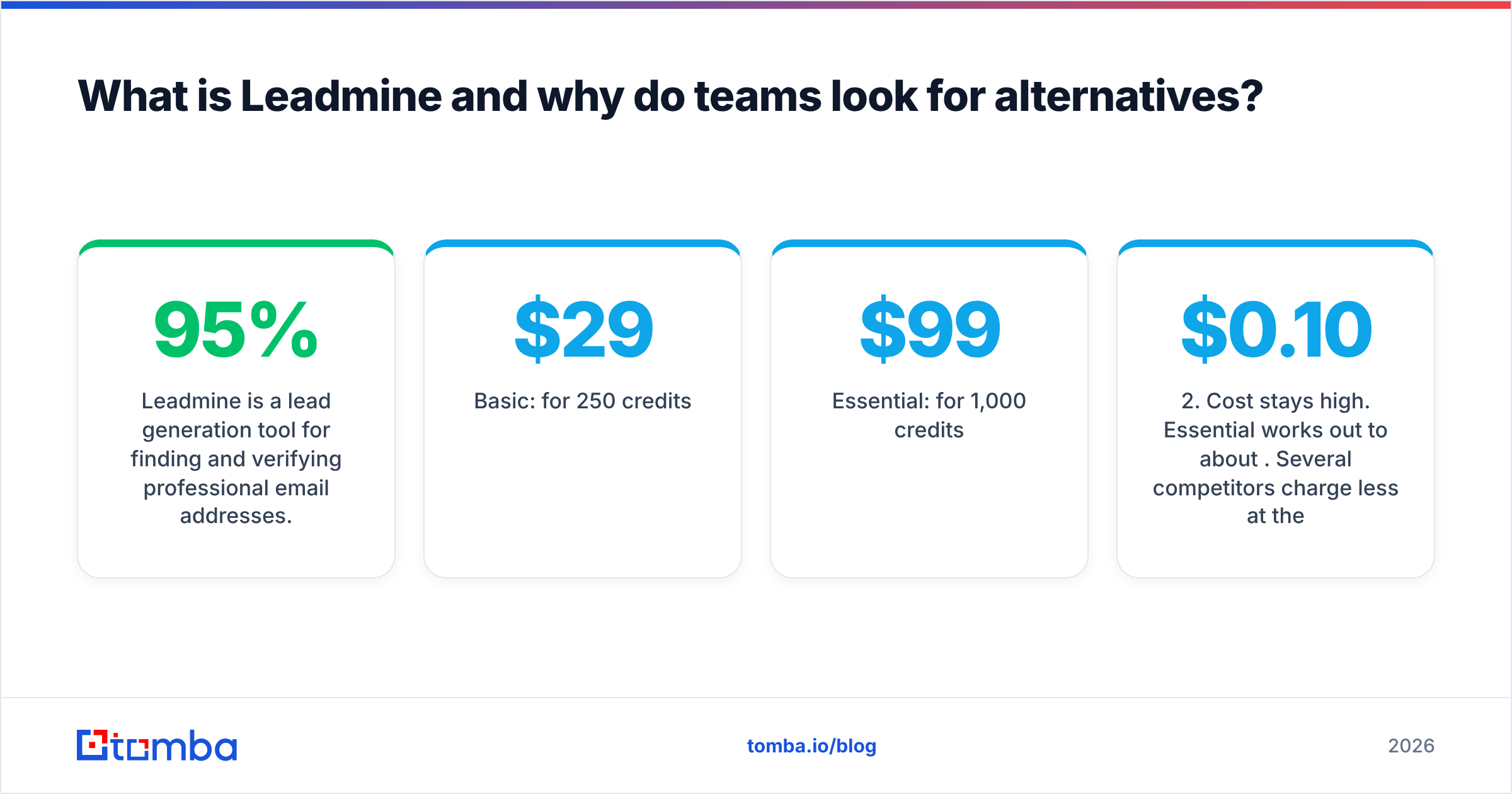
Leadmine is a lead generation tool for finding and verifying professional email addresses. You give it a name and a company domain and it returns a likely address. The built-in verifier checks syntax, MX records and deliverability. A Chrome extension pulls contact details from Google results and Crunchbase profiles. Leadmine says its database holds 200M+ contacts and claims about 95% accuracy.
According to aggregated listings on G2 and directory sites, current pricing looks like this:
- Free: 10 credits/month
- Basic: $29/mo for 250 credits
- Essential: $99/mo for 1,000 credits
- 14-day free trial
For a freelancer sending a few dozen emails a week, that works fine. The friction starts as you scale:
- The free tier is too small to test. Ten credits won't tell you whether a tool's data covers your niche.
- Cost per credit stays high. Essential works out to about $0.10 per credit. Several competitors charge less at the same volume.
- Limited workflow depth. Teams that need bulk enrichment, phone numbers, catch-all verification, an API or native CRM sync often outgrow a lightweight finder.
- Coverage gaps. Any single database has blind spots. EMEA mid-market and non-tech verticals are where most users notice them first.
If any of those sound familiar, the tools below are worth a look.

How did we evaluate these Leadmine alternatives?#
We scored each tool on five criteria that matter once you run outbound at real volume:
- Find rate and accuracy: how often it returns an address, and how often that address doesn't bounce.
- Verification depth: SMTP checks, catch-all detection, and whether verification is built in or a paid add-on.
- Pricing transparency: cost per verified contact at 1,000 and 5,000 lookups a month, and whether the free tier is big enough to test with.
- Workflow coverage: Chrome extension, bulk upload, API, Google Sheets, CRM integrations.
- Data sourcing and compliance: where the data comes from and how GDPR requests are handled.
Pricing below reflects public plan pages at the time of writing (September 2026). Vendors change tiers often, so check before you buy.

What are the best Leadmine alternatives in 2026?#
1. Tomba: best all-in-one email finder for scaling teams#
Tomba is built around its email finder. You can look up an address by name plus domain, by company, or from a LinkedIn profile. Around that core it adds domain search, which lists every public address at a company, plus an email verifier, a catch-all verifier, a phone finder and data enrichment.
Two things set it apart from Leadmine. First, catch-all domains are treated as their own category, so you don't get a vague "unknown" result. Catch-all servers accept every message at the SMTP level, which is where most "verified" lists quietly leak bounces. Second, the same credits work across the web app, Chrome extension, Google Sheets add-on, bulk uploads and the REST API, so you aren't paying separately for each channel.
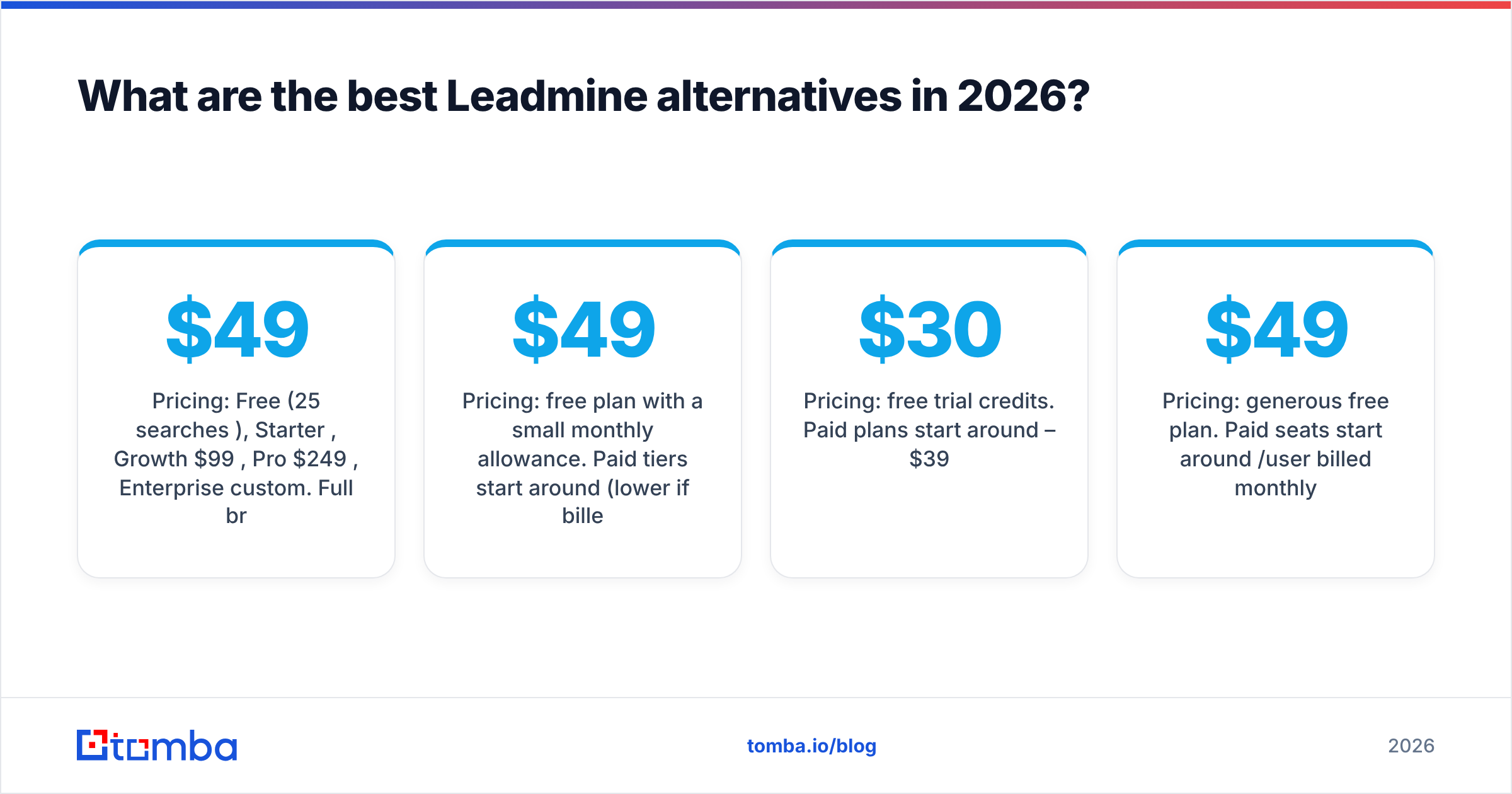
- Pricing: Free (25 searches/mo), Starter $49/mo, Growth $99/mo, Pro $249/mo, Enterprise custom. Full breakdown on the Tomba pricing page.
- Best for: SDR teams, agencies and developers who want finding, verification and enrichment on one bill.
- Watch out for: if all you need is a handful of one-off lookups each month, the free tier may be enough and a paid plan would be more than you need.
2. Hunter: best for simple domain-based prospecting#
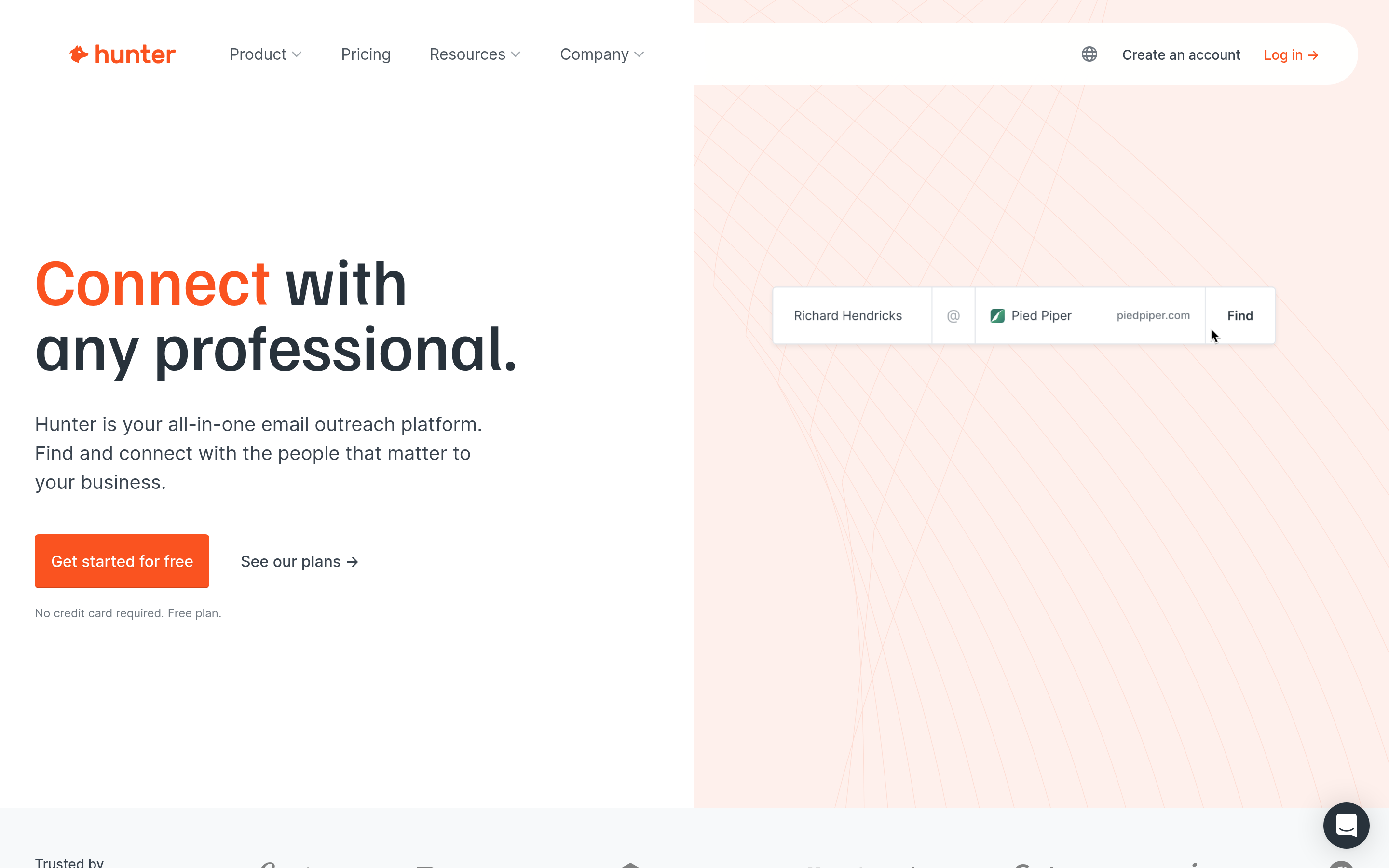
Hunter is the best-known name in the category. Its Domain Search and Email Finder are clean and quick. It shows the public sources behind each address, which helps you judge how much to trust a result. Hunter also has a lightweight campaigns feature for sending straight from Gmail or Outlook.
- Pricing: free plan with a small monthly allowance. Paid tiers start around $49/mo (lower if billed annually).
- Best for: founders and marketers doing low-to-mid volume outreach.
- Watch out for: find rates fall off for small companies with little web footprint, and credits for finding and verifying are counted separately on some plans.
3. Snov.io: best budget pick with built-in sequences#
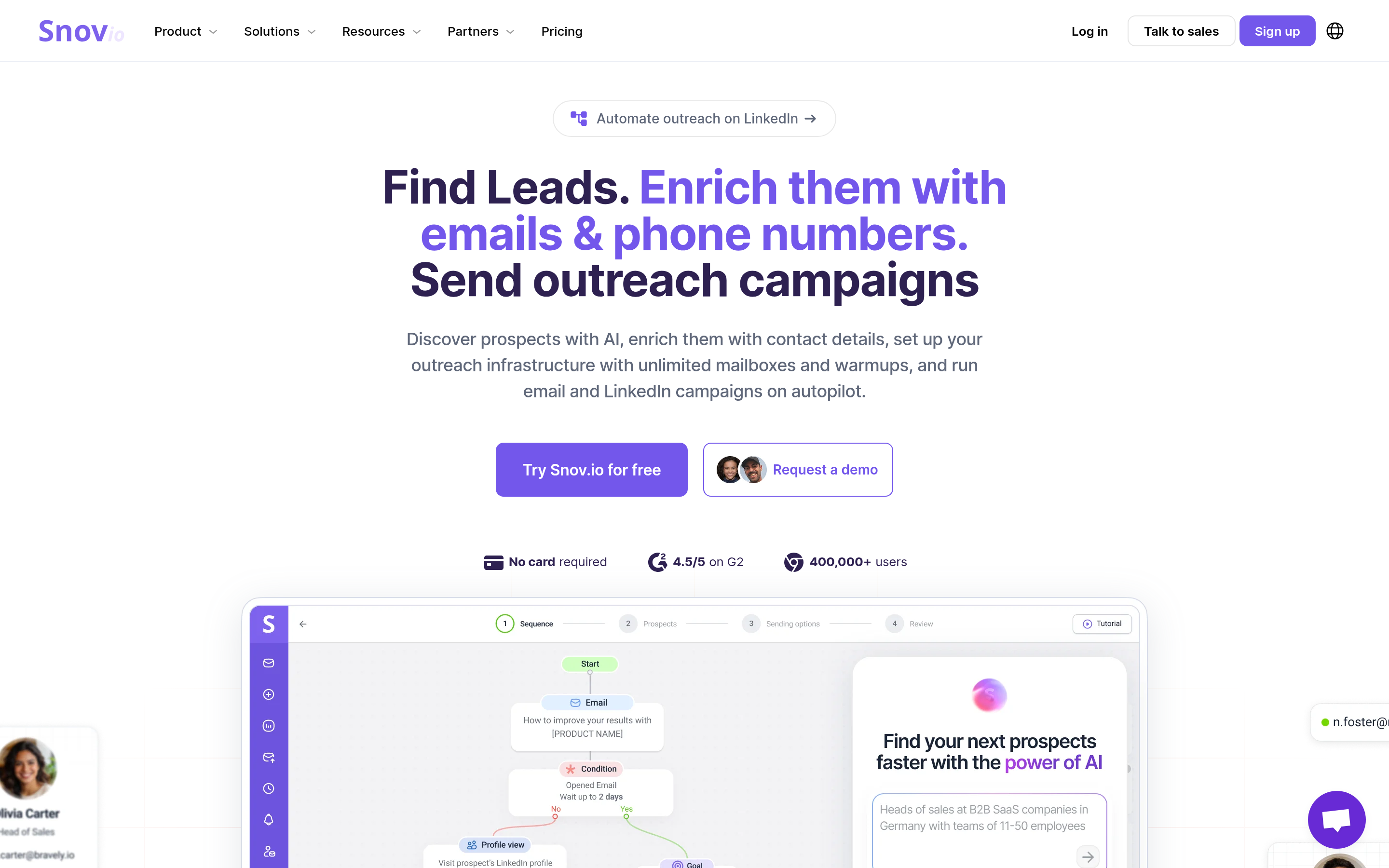
Snov.io bundles an email finder, a verifier, a drip-campaign builder and a basic CRM. If Leadmine's per-credit cost is what bothers you, Snov's entry tiers usually give you more lookups per dollar, and the sequencer lets you skip a separate sending tool.
- Pricing: free trial credits. Paid plans start around $30–$39/mo.
- Best for: solo sellers and small agencies who want finding and sending in one tool.
- Watch out for: verification can be conservative on catch-all domains, and the UI gets busy once you're in the deeper features.
4. Apollo.io: best for database plus engagement in one platform#
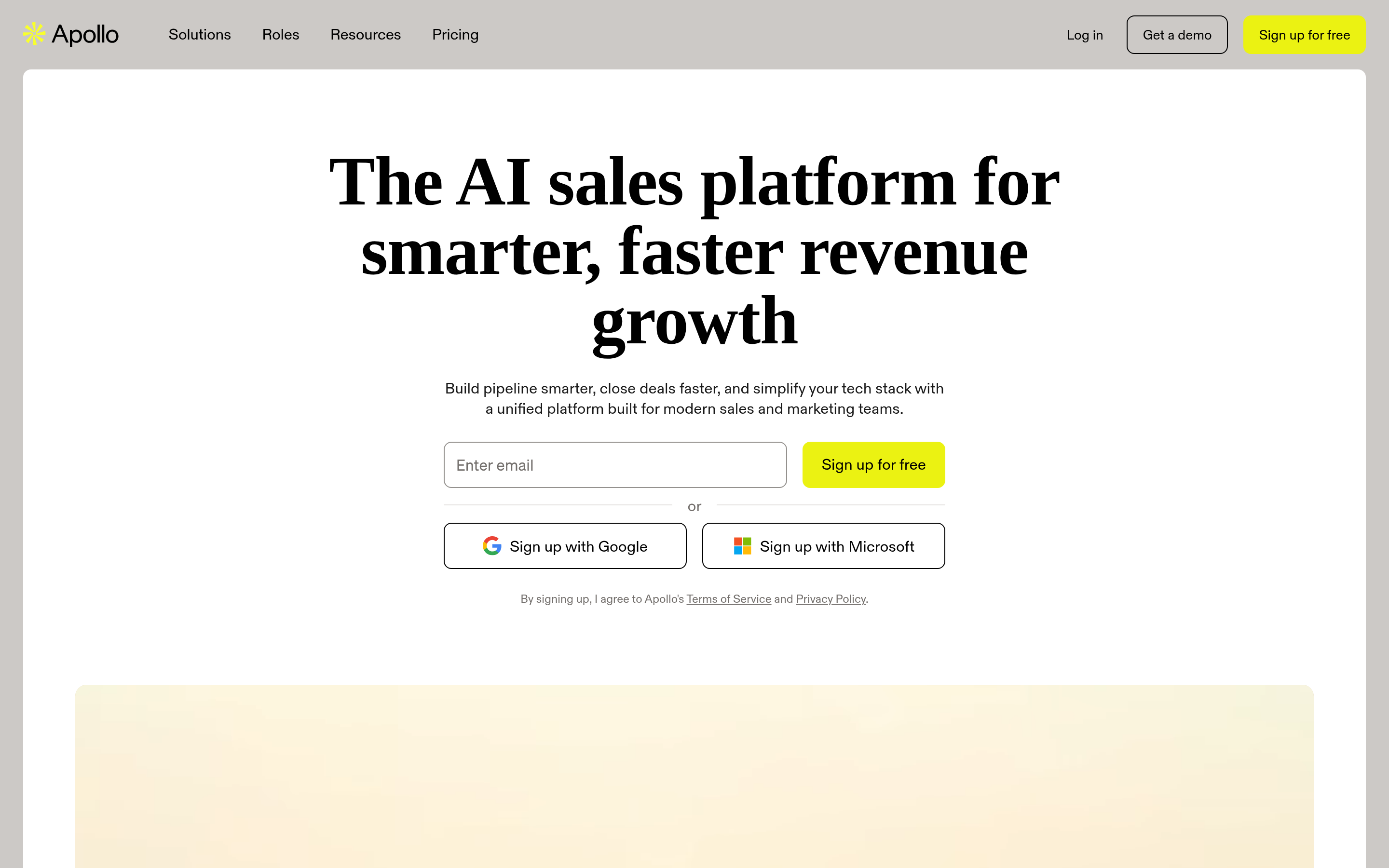
Apollo is less an email finder than a full prospecting platform. You get a large B2B contact database with firmographic filters, intent signals, a sequencer, a dialer and CRM sync. Some teams replace Leadmine and their outreach tool in one move with it.
- Pricing: generous free plan. Paid seats start around $49/user/mo billed monthly.
- Best for: SDR teams that want one login for search, sequencing and call tasks.
- Watch out for: data freshness varies by segment, and per-seat pricing adds up quickly. If that's your concern, see our breakdown of Apollo alternatives.
5. BookYourData: best for pre-verified lists without a subscription#
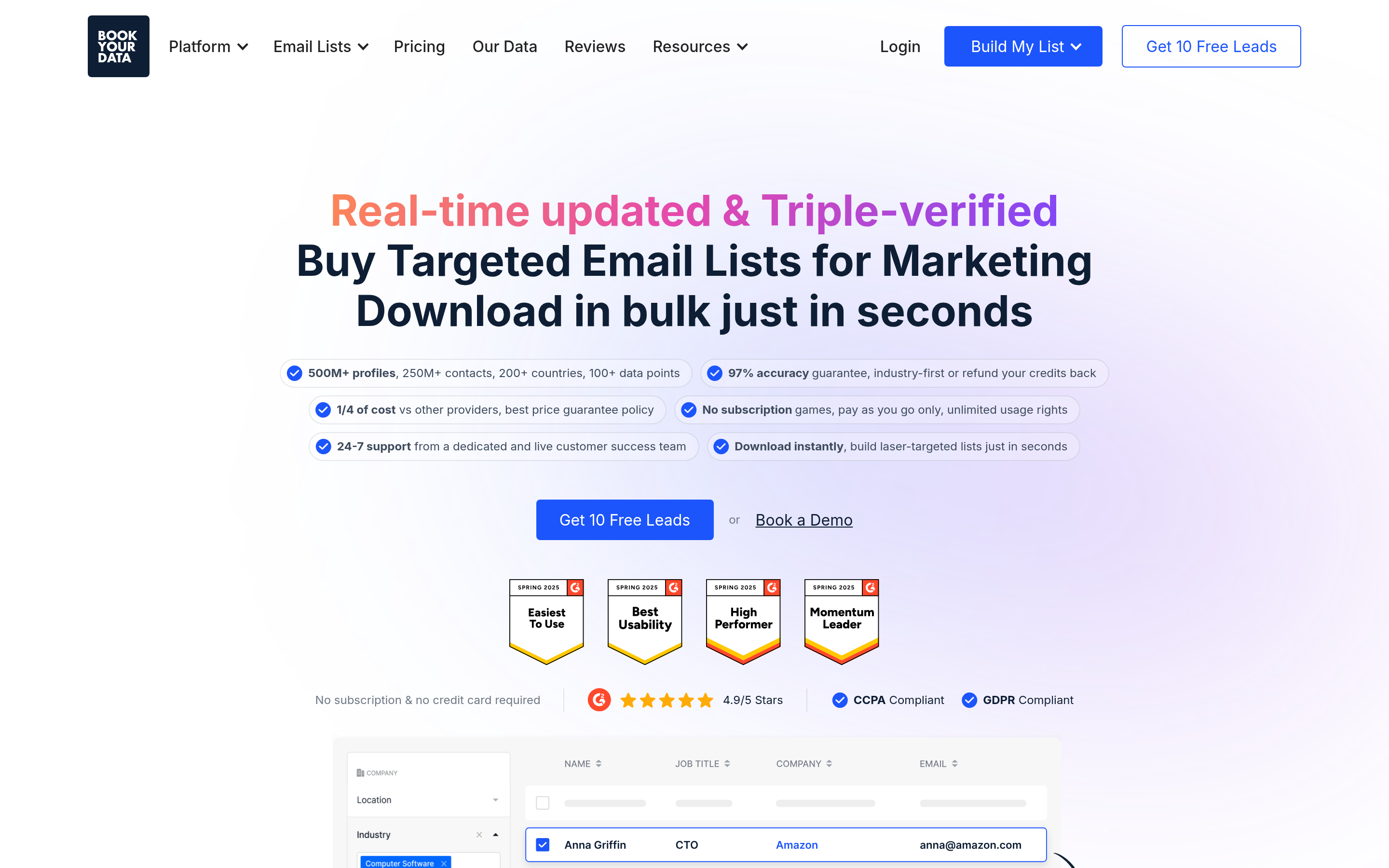
BookYourData takes a different approach. You don't look up contacts one at a time. You filter a B2B database by industry, title, location and company size, then buy the resulting list on a pay-as-you-go basis. Contacts are verified before delivery, and the vendor offers an accuracy guarantee on emails.
- Pricing: credit-based and pay-as-you-go, with no mandatory monthly subscription.
- Best for: marketers and agencies who need a targeted list for a campaign now and don't want another recurring SaaS bill.
- Watch out for: this is a list-building workflow, not a one-off name-plus-domain lookup, so it complements a finder more than it replaces one for ad-hoc searches.
6. RocketReach: best for executive and phone coverage#
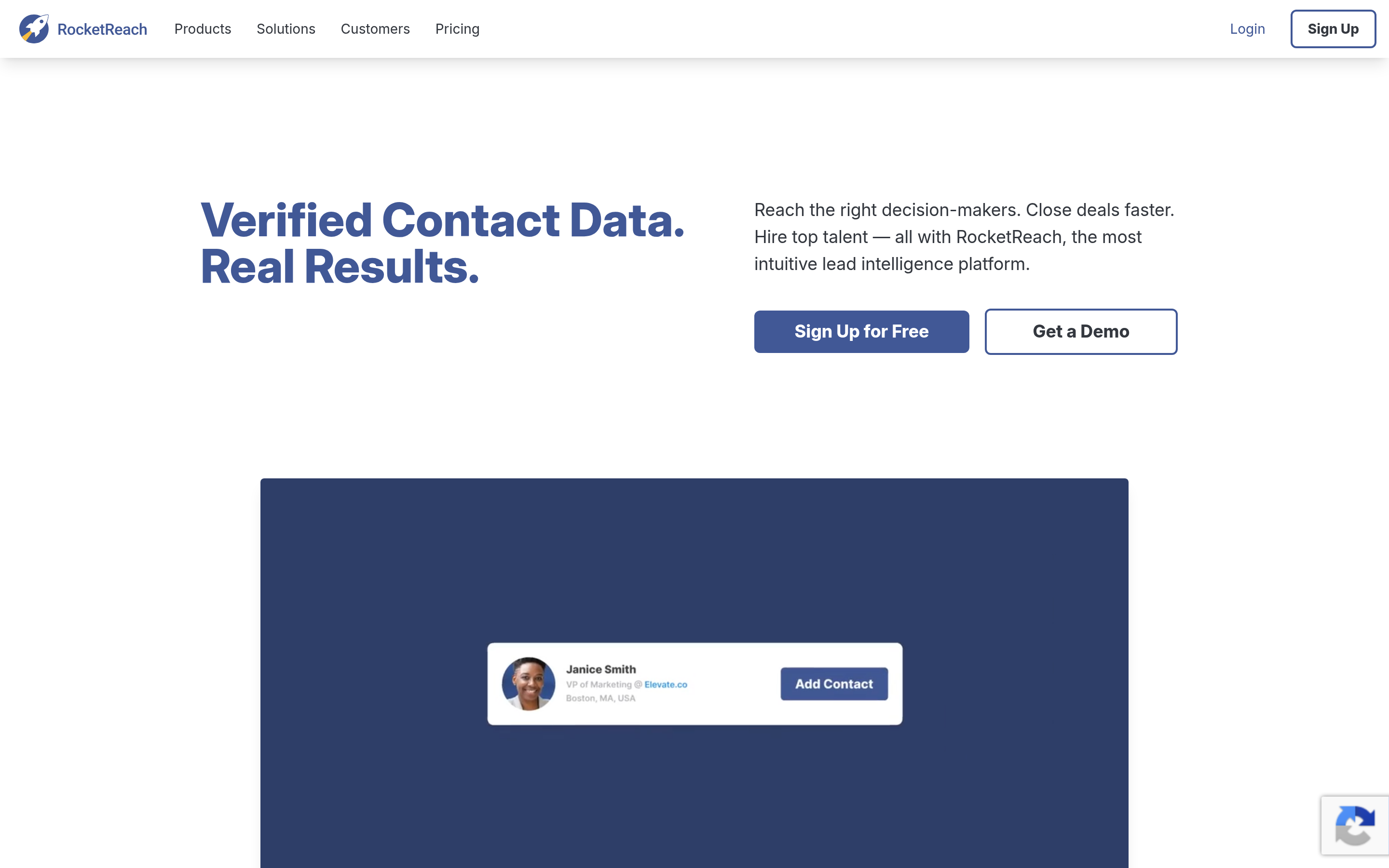
RocketReach is strong on senior titles and direct phone numbers, and its search filters go deep. If Leadmine keeps returning nothing for the VPs and C-level buyers you care about, RocketReach is a common next step.
- Pricing: annual plans start around the high-$30s per month for email-only. Phone access is on higher tiers.
- Best for: enterprise and account-based sellers going after senior stakeholders.
- Watch out for: annual commitments and credit limits on lower tiers. Compare options in our RocketReach alternative guide.
7. Findymail: best for strict verified-only results#
Findymail only returns addresses it has verified, and it doesn't charge for misses. That makes the cost of a bounce very predictable. It works well with LinkedIn Sales Navigator exports and integrates with the main outreach tools.
- Pricing: paid plans start around $49/mo.
- Best for: outbound teams whose top priority is keeping bounce rates under 2%.
- Watch out for: a verified-only policy means lower find rates on catch-all domains, and there's no big free tier.
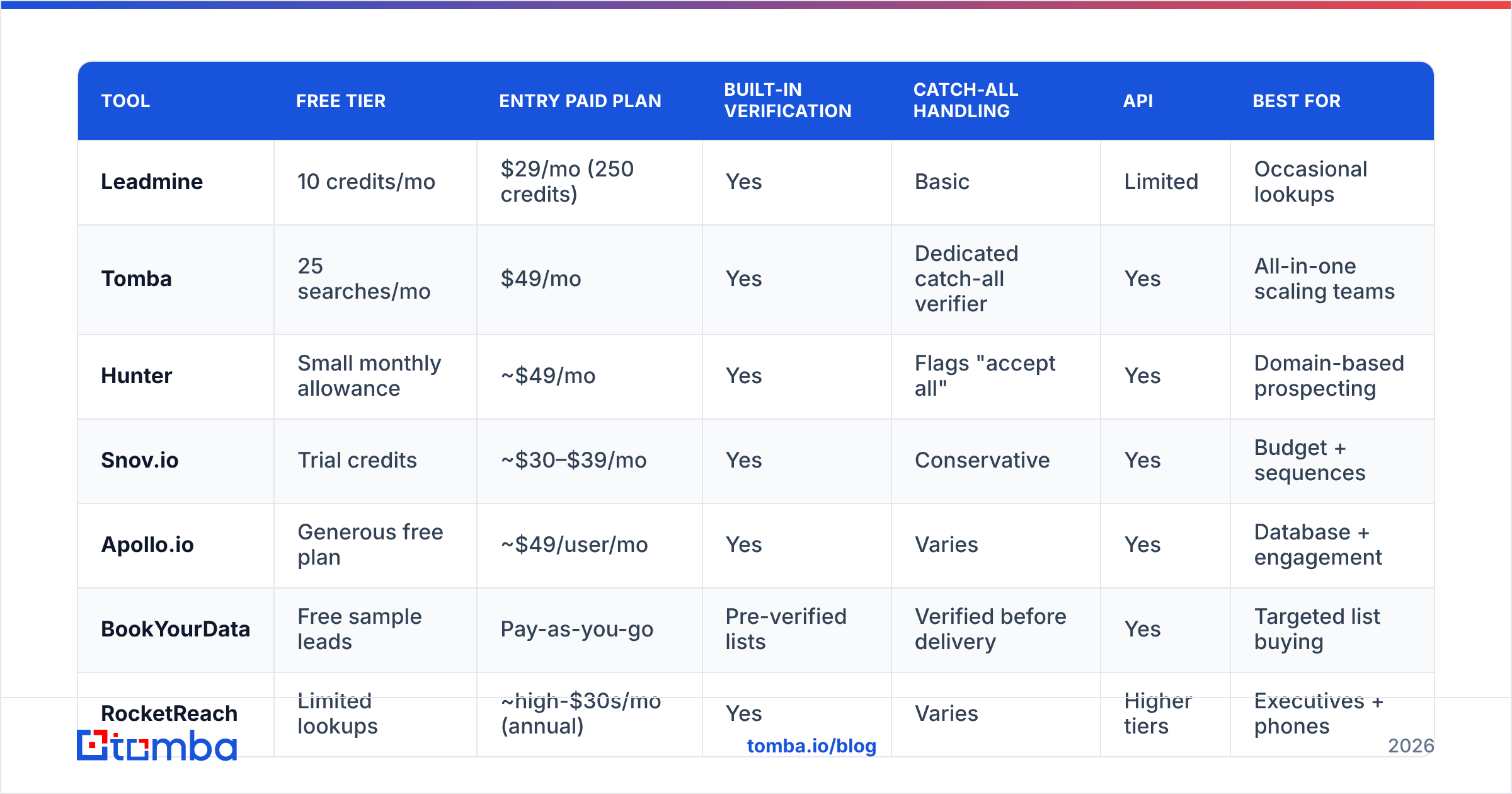
How do Leadmine alternatives compare side by side?#
| Tool | Free tier | Entry paid plan | Built-in verification | Catch-all handling | API | Best for |
|---|---|---|---|---|---|---|
| Leadmine | 10 credits/mo | $29/mo (250 credits) | Yes | Basic | Limited | Occasional lookups |
| Tomba | 25 searches/mo | $49/mo | Yes | Dedicated catch-all verifier | Yes | All-in-one scaling teams |
| Hunter | Small monthly allowance | ~$49/mo | Yes | Flags "accept all" | Yes | Domain-based prospecting |
| Snov.io | Trial credits | ~$30–$39/mo | Yes | Conservative | Yes | Budget + sequences |
| Apollo.io | Generous free plan | ~$49/user/mo | Yes | Varies | Yes | Database + engagement |
| BookYourData | Free sample leads | Pay-as-you-go | Pre-verified lists | Verified before delivery | Yes | Targeted list buying |
| RocketReach | Limited lookups | ~high-$30s/mo (annual) | Yes | Varies | Higher tiers | Executives + phones |
| Findymail | Trial credits | ~$49/mo | Verified-only results | Skips unverifiable | Yes | Lowest bounce rate |

Which Leadmine alternative fits your workflow?#
Most of these tools can find an email. The real difference is what happens before and after the lookup. Match the tool to how your team actually works:
- You prospect account by account. Choose a tool with strong domain search and a solid Chrome extension, such as Tomba or Hunter. You'll spend most of your time on company websites and LinkedIn, so the extension matters more than the database size.
- You build lists in spreadsheets. Prioritise bulk upload plus a Google Sheets add-on. Tomba and Snov.io both handle CSV enrichment well. Run every list through an email verifier before you import it into your sender.
- You want one tool for search and sending. Apollo or Snov.io. You'll give up some data depth in exchange for fewer logins.
- You buy campaign lists, not individual lookups. BookYourData's filter-and-buy model fits better than any per-lookup subscription.
- Bounce rate is your KPI. Findymail's verified-only approach, or any tool with a dedicated catch-all verifier, will protect your sender reputation best.
- Engineers are building the pipeline. Look for a well-documented REST API, predictable rate limits and SDKs. Tomba, Hunter and Apollo are the most developer-friendly here.
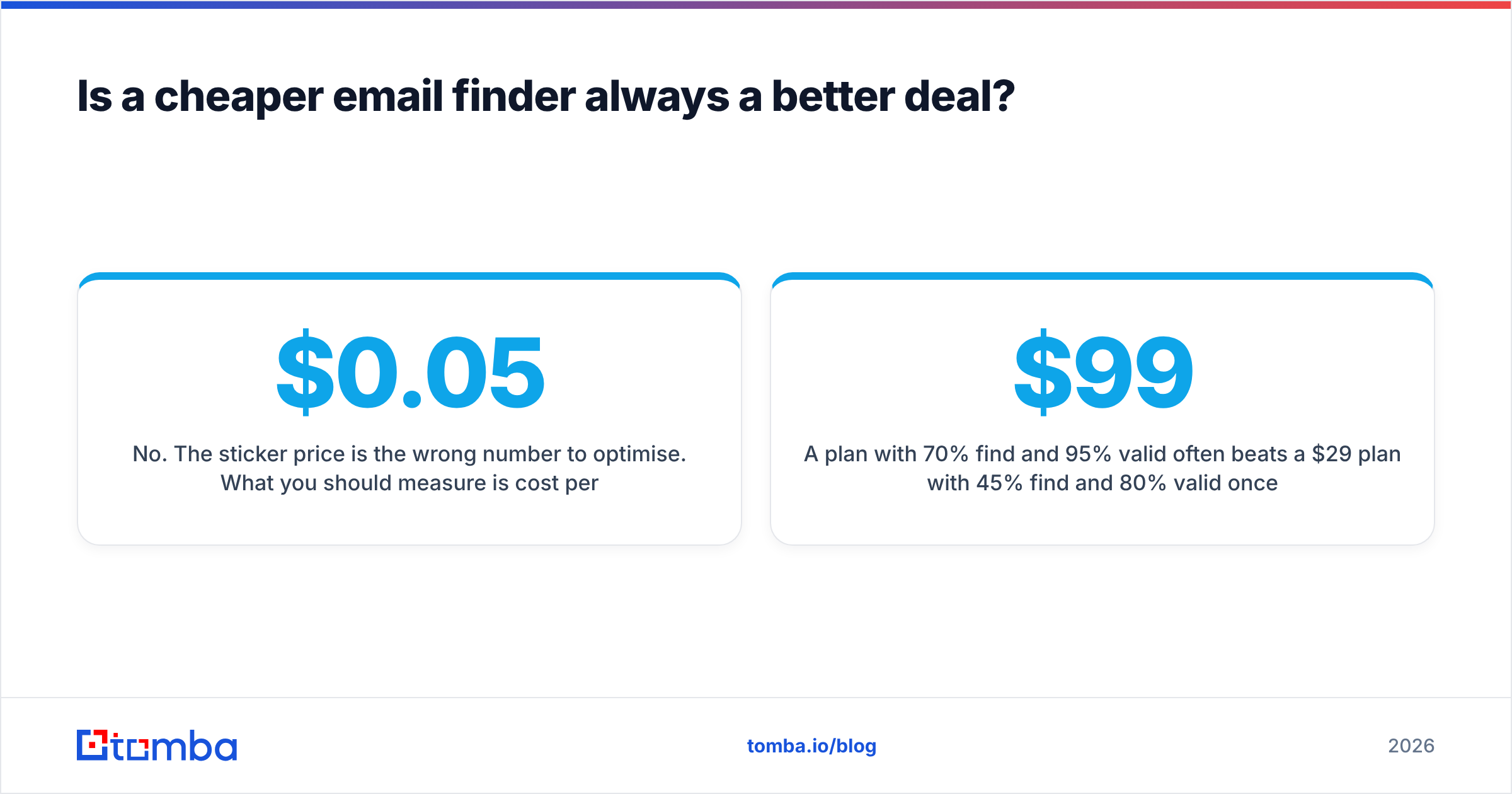
Is a cheaper email finder always a better deal?#
No. The sticker price per credit is the wrong number to optimise. What you should measure is cost per delivered email. Suppose a tool charges $0.05 per lookup but a quarter of its results bounce or land on catch-all servers that silently drop mail. You pay for those failures twice: once in credits, and again in damaged sender reputation that lowers inbox placement for your whole domain.
Here's a quick way to work out the true cost:
- Cost per credit = plan price ÷ monthly credits
- Find rate = addresses returned ÷ contacts searched
- Valid rate = addresses that pass independent verification ÷ addresses returned
- Cost per deliverable contact = cost per credit ÷ (find rate × valid rate)
A $99 plan with 70% find and 95% valid often beats a $29 plan with 45% find and 80% valid once you scale beyond a few hundred contacts a month. Mailbox providers publish their thresholds openly. Google's sender guidelines spell out what happens to bulk senders who exceed complaint and bounce limits.

How should you test Leadmine alternatives before switching?#
Don't pick based on review scores alone. Run a controlled bake-off in one afternoon:
- Build a test set of 50 contacts that represent your ICP: mix company sizes, regions and at least a few catch-all domains.
- Run the same list through two or three tools using their free tiers. Tomba's 25 free monthly searches plus a trial elsewhere is enough to see a pattern.
- Record find rate and confidence scores for each tool in a shared sheet.
- Verify every returned address with one independent verifier, so you're comparing the finders and not their built-in checkers.
- Send a small, personalised test batch from a warmed-up mailbox and track hard bounces over 72 hours.
- Calculate cost per deliverable contact using the formula above, then factor in integrations and seat pricing.
This takes about two hours and protects you from a 12-month contract with a tool that doesn't cover your market.
Do Leadmine alternatives handle GDPR and data sourcing differently?#
Yes, and it matters if you sell into Europe. Tools differ in where they get their data: public web crawling, user-contributed data, partner feeds, or inferred patterns. They also differ in how they handle opt-outs. Before you switch, check three things:
- Published data-sourcing page. Reputable vendors explain where their data comes from. Tomba documents its approach on its data sources page.
- Opt-out and deletion process. Is there a self-serve way for contacts to remove themselves?
- DPA availability. Can your legal team sign a data processing agreement without an enterprise contract?
Using an email finder doesn't make outreach compliant by itself. You still need a legitimate-interest assessment, a clear unsubscribe link and suppression lists that sync across tools.
Which Leadmine alternative should you choose?#
If Leadmine's 10-credit free tier and roughly $0.10-per-credit cost are holding you back, you have better options at every budget:
- Best overall: Tomba, with finder, verifier, catch-all checks, enrichment and API on one plan.
- Best for simple lookups: Hunter.
- Best budget bundle: Snov.io.
- Best all-in-one platform: Apollo.io.
- Best for buying targeted lists: BookYourData.
- Best for executives and phones: RocketReach.
- Best for lowest bounce rate: Findymail.
Pick two, run the 50-contact test, and let the cost-per-deliverable number make the decision.
Ready to see how your own ICP list performs? Start with the Tomba Email Finder. Search by name, domain or company, get a confidence score with each result, and verify catch-all addresses before they reach your sequence. The free plan includes 25 searches a month, which is enough to run the bake-off above, and paid plans start at $49/mo once you're ready to scale.
Related guides#
// get started
Find, verify and enrich your first contacts today
Start on the free plan with 25 searches a month, then scale when your team is ready.
Free plan · No credit card required · GDPR & CCPA
// about the author