Lessonly Seismic Learning Pricing, Reviews, Pros and Cons (2026)
Lessonly is now Seismic Learning, and its price is only shared on a quote. Here is what drives the cost, what reviewers praise and complain about, and when a lighter alternative makes more sense.
- Lessonly is now Seismic Learning. Seismic bought Lessonly in 2021. The product now sits inside the Seismic Enablement Cloud and is sold on quotes, not public price tiers.
- Budget for an enterprise-style contract. Expect annual billing, minimum seat counts, and add-on modules. The final number depends on how many seats you buy, which modules you bundle, and whether you also license Seismic's content platform.
- Reviewers like the ease of use. Most praise goes to the fast lesson builder, role-play "Practice" exercises, and how quickly reps take to it. Most complaints cover reporting depth, bundle pricing after the acquisition, and occasional UI friction.
- It fits best for teams of 50+ reps that already use Seismic or plan to. Smaller teams often do fine with lighter tools like Trainual or WorkRamp.
- Training doesn't replace pipeline. Well-trained reps still need accurate contact data, or they practice perfect talk tracks on bounced emails.
What is Lessonly (now Seismic Learning)?#
Lessonly started in Indianapolis in 2012 as a training tool built for customer-facing teams: sales, support, and success. Its pitch was simple. Classic learning management systems (LMS) were built for HR compliance. Lessonly was built so a frontline manager could create a lesson in 20 minutes and have reps take it before lunch.
In 2021, Seismic acquired Lessonly and rebranded it as Seismic Learning. It now sits next to Seismic's content management, digital sales rooms, and analytics in what Seismic calls its Enablement Cloud. You can still buy the learning product on its own, but the sales motion clearly leans toward bundles.
Here's the easiest way to picture it. If Seismic's content platform is the library where your approved decks and one-pagers live, Seismic Learning is the classroom where reps learn to use them. It also includes a practice room where they rehearse before a real call.
Core capabilities today:
- Lesson builder. Drag-and-drop lessons with text, video, embedded content, and quiz questions.
- Learning paths. Sequenced onboarding programs with due dates and automated enrollment.
- Practice. Role-play scenarios where reps record video, audio, screen, or written answers, and managers score them against a rubric.
- Coaching and scorecards. Structured feedback tied to skills, often fed by call recordings.
- Content integration. Pulls Seismic-managed assets into lessons so training always references the current version.
- Integrations. Salesforce, Zendesk, Slack, Microsoft Teams, and common HRIS and SSO providers.
How much does Lessonly Seismic Learning cost in 2026?#
The short answer: Seismic doesn't publish a price. You request a demo, go through discovery, and get a quote.
Years ago, before the acquisition, Lessonly showed tiered plans on its website. That page is gone. Any specific per-seat figure you see on older blog posts is out of date and was probably list price before any negotiation. We won't repeat a number we can't verify for 2026. Instead, here's what actually moves your quote.

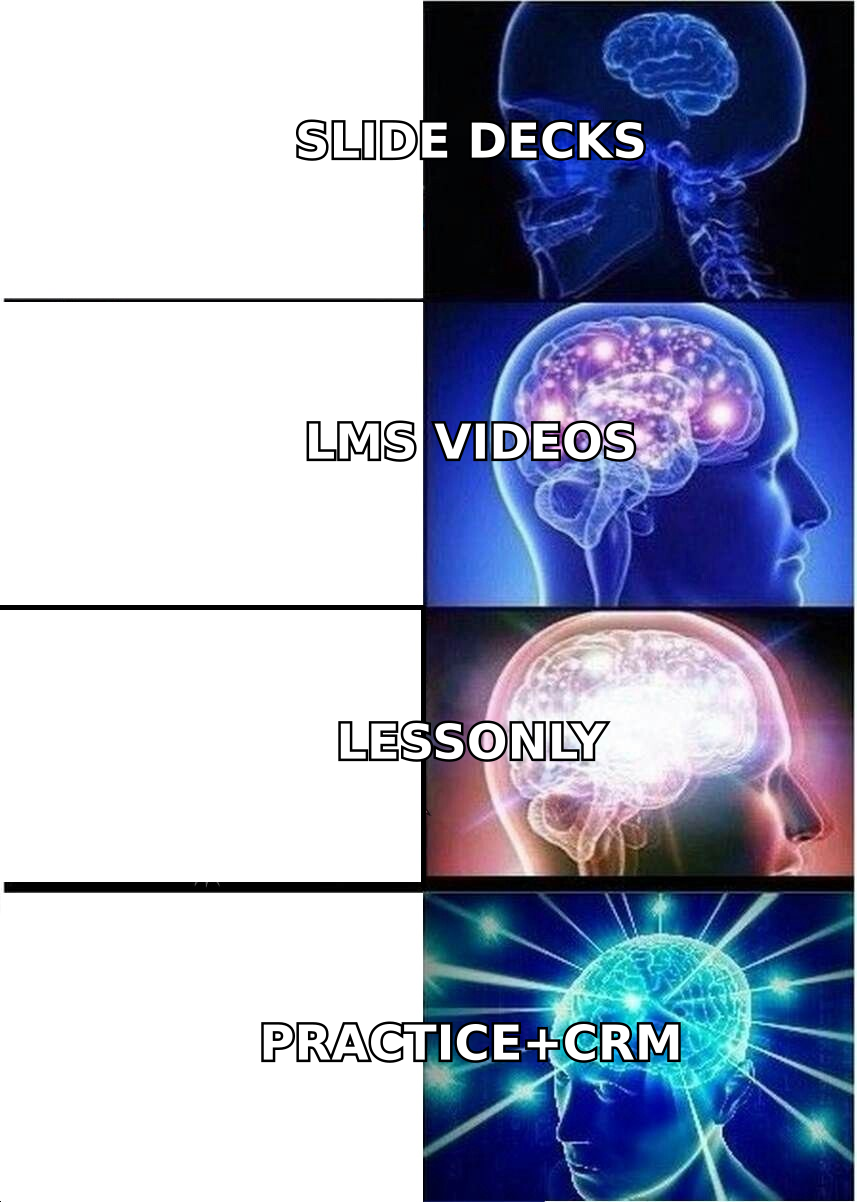
Wait, that's not how we'll do it. Here's the meme:

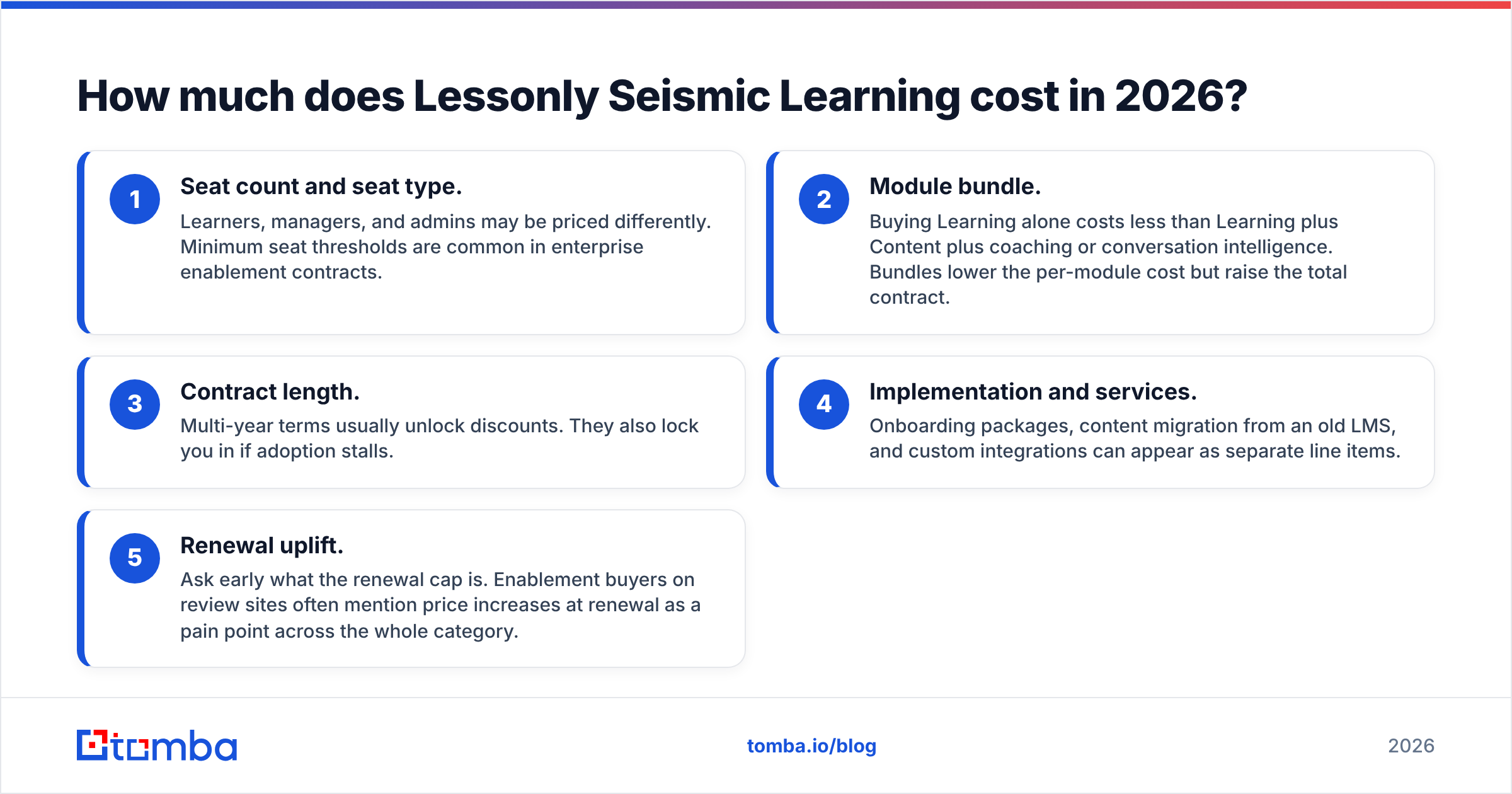
What drives the Seismic Learning quote?#
- Seat count and seat type. Learners, managers, and admins may be priced differently. Minimum seat thresholds are common in enterprise enablement contracts.
- Module bundle. Buying Learning alone costs less than Learning plus Content plus coaching or conversation intelligence. Bundles lower the per-module cost but raise the total contract.
- Contract length. Multi-year terms usually unlock discounts. They also lock you in if adoption stalls.
- Implementation and services. Onboarding packages, content migration from an old LMS, and custom integrations can appear as separate line items.
- Renewal uplift. Ask early what the renewal cap is. Enablement buyers on review sites often mention price increases at renewal as a pain point across the whole category.
If you're comparing vendors, get quotes from at least two competitors in the same quarter. Enablement vendors negotiate hardest when they know a live alternative exists, especially near fiscal quarter-end.
What does Seismic Learning include, and how does it compare to alternatives?#
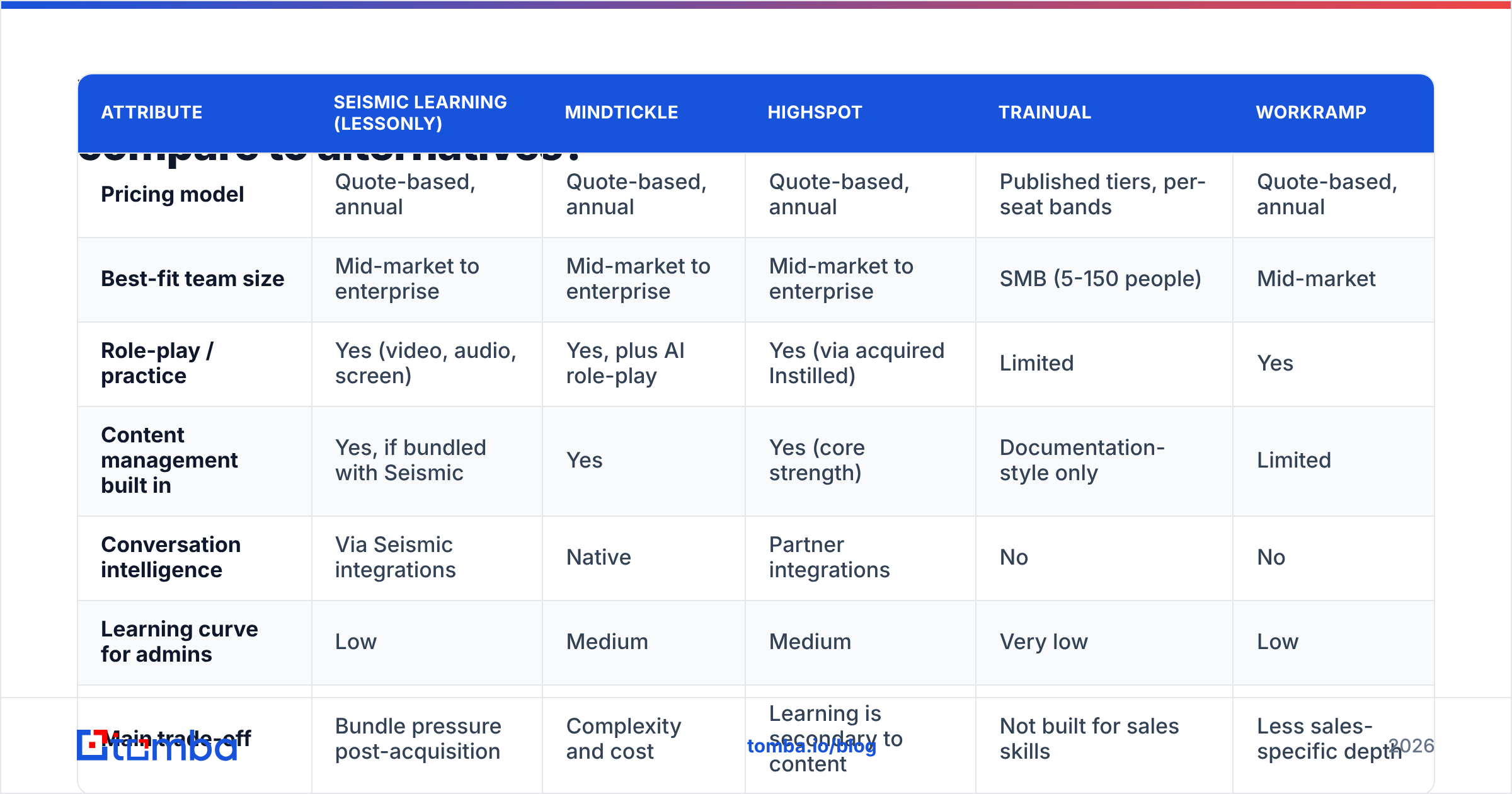
The enablement category has consolidated. Highspot, Mindtickle, Allego, and Showpad all now combine content and training. The table below compares them on attributes that matter at purchase time. Pricing for all of them is quote-based unless noted, so the "pricing model" row is more useful than a dollar figure.
| Attribute | Seismic Learning (Lessonly) | Mindtickle | Highspot | Trainual | WorkRamp |
|---|---|---|---|---|---|
| Pricing model | Quote-based, annual | Quote-based, annual | Quote-based, annual | Published tiers, per-seat bands | Quote-based, annual |
| Best-fit team size | Mid-market to enterprise | Mid-market to enterprise | Mid-market to enterprise | SMB (5-150 people) | Mid-market |
| Role-play / practice | Yes (video, audio, screen) | Yes, plus AI role-play | Yes (via acquired Instilled) | Limited | Yes |
| Content management built in | Yes, if bundled with Seismic | Yes | Yes (core strength) | Documentation-style only | Limited |
| Conversation intelligence | Via Seismic integrations | Native | Partner integrations | No | No |
| Learning curve for admins | Low | Medium | Medium | Very low | Low |
| Main trade-off | Bundle pressure post-acquisition | Complexity and cost | Learning is secondary to content | Not built for sales skills | Less sales-specific depth |
Pay attention to the last row. Every tool here is solid. The real question is which trade-off your team can live with.
What do users say in Lessonly Seismic Learning reviews?#
Reviews on G2 have been positive for years, both for the original Lessonly listing and for Seismic Learning. When you read through them in bulk, the same themes keep coming up.
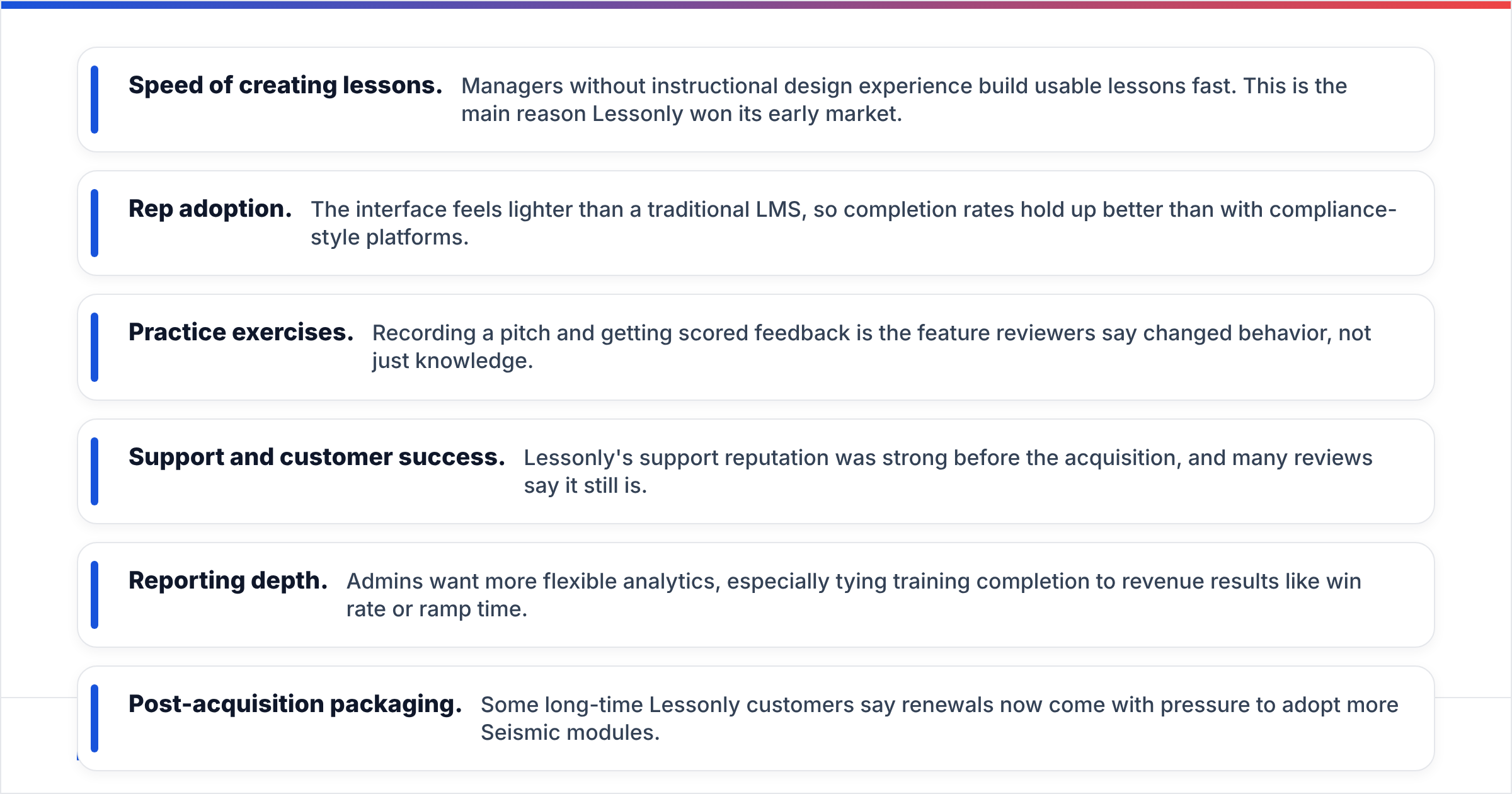
What reviewers consistently praise#
- Speed of creating lessons. Managers without instructional design experience build usable lessons fast. This is the main reason Lessonly won its early market.
- Rep adoption. The interface feels lighter than a traditional LMS, so completion rates hold up better than with compliance-style platforms.
- Practice exercises. Recording a pitch and getting scored feedback is the feature reviewers say changed behavior, not just knowledge.
- Support and customer success. Lessonly's support reputation was strong before the acquisition, and many reviews say it still is.
What reviewers consistently criticize#
- Reporting depth. Admins want more flexible analytics, especially tying training completion to revenue results like win rate or ramp time.
- Post-acquisition packaging. Some long-time Lessonly customers say renewals now come with pressure to adopt more Seismic modules.
- Search and content organization at scale. Once a library holds hundreds of lessons, finding the right one gets harder.
- Occasional UI friction. Reviewers mention small bugs or clunky navigation after platform updates, which is common during a merge into a larger suite.
Treat review sites as a signal, not a verdict. Vendors actively ask happy customers for reviews, so ratings skew high across the whole category. The complaints are usually more informative than the stars.
What are the pros and cons of Lessonly Seismic Learning?#
Here's the condensed verdict, weighted by how much each point matters in a real buying decision.
Pros
- Fast time to first lesson. Managers publish content in hours, not weeks.
- Practice and coaching built in. You can train skills, not just knowledge.
- Strong fit with the Seismic content platform. Lessons always reference current, approved assets.
- Reps actually use it. Adoption is the metric that kills most enablement rollouts, and Lessonly has a good track record there.
- Enterprise-ready. SSO, HRIS sync, permissions, and security reviews are all handled.
Cons
- No public pricing. Budgeting requires a sales cycle, and comparing costs takes more work.
- Best value comes from bundling. Standalone buyers may feel they're paying for the platform's direction, not their needs.
- Analytics lag behind stated ambitions. Linking training to pipeline results often needs BI work or your CRM.
- Overkill for small teams. A 10-rep startup rarely needs rubric-scored video role-play plus content governance.
Is Seismic Learning worth it for your team?#
The fairest answer depends on your team size and what you already use.
It's likely worth it if:#
- You run 50+ customer-facing reps and onboarding is a real bottleneck.
- You already license Seismic for content, or plan to within 12 months.
- Your managers will actually use Practice and score recordings every week. Without that habit, you're paying for a lesson library.
- You need enterprise controls such as SSO, permissions, audit trails, and HRIS sync.
Look elsewhere if:#
- You have fewer than 30 reps and mostly need documented processes. Trainual or a well-organized Notion workspace will do the job.
- Highspot is already your content system. Its native training features will integrate more cleanly.
- You want AI role-play and conversation intelligence in one native stack. Mindtickle is stronger there.
- Your budget can't absorb a multi-year enterprise contract.
A useful stress test: write down the one metric this purchase should move, such as ramp time, quota attainment in the first two quarters, or response rate on first-touch emails. If you can't name it, you're not ready to buy any enablement platform, Lessonly included.
How should you negotiate a Seismic Learning contract?#
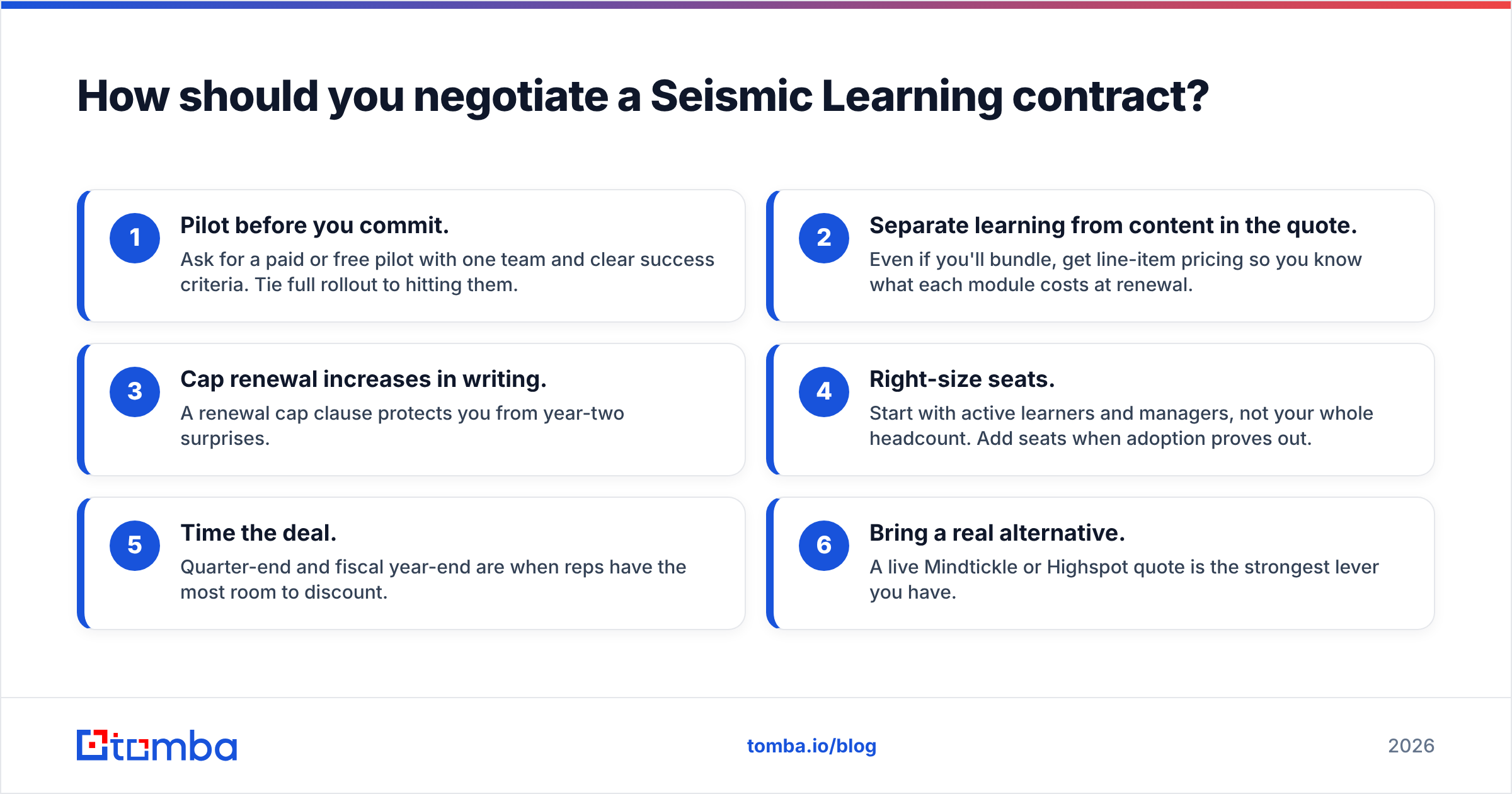
Enablement contracts are negotiable. These moves save money without burning goodwill.
- Pilot before you commit. Ask for a paid or free pilot with one team and clear success criteria. Tie full rollout to hitting them.
- Separate learning from content in the quote. Even if you'll bundle, get line-item pricing so you know what each module costs at renewal.
- Cap renewal increases in writing. A renewal cap clause protects you from year-two surprises.
- Right-size seats. Start with active learners and managers, not your whole headcount. Add seats when adoption proves out.
- Time the deal. Quarter-end and fiscal year-end are when reps have the most room to discount.
- Bring a real alternative. A live Mindtickle or Highspot quote is the strongest lever you have.
Analysts like Gartner publish sales enablement market research that you can cite internally to justify the category. Just don't let a quadrant placement stand in for your own pilot results.
Does enablement software fix pipeline problems?#
It doesn't, and this is where many teams overspend. Seismic Learning makes reps better at conversations. It doesn't create the conversations.
Picture a team that trains reps for weeks on objection handling and a sharp first-touch email. Then the reps load a stale list where one in five addresses bounces. Deliverability suffers, sender reputation drops, and the training investment never gets a fair test.
A healthy outbound stack has three layers:
- Data. Accurate, verified contacts at your target accounts.
- Execution. Sequencing and sales automation that deliver messages at the right cadence.
- Skill. Enablement and coaching, which is where Seismic Learning lives.
Most teams fix layer three first because it's the most visible. The better order is bottom-up. Clean data makes every coaching session count, because reps practice on conversations that actually happen.
Frequently asked questions#
Is Lessonly still available as a separate product?#
The Lessonly brand has been retired. The product is sold as Seismic Learning. You can still buy it without the full Seismic content suite, but expect the sales team to pitch bundles.
Does Seismic Learning offer a free trial?#
There is no self-serve free trial listed publicly. Access comes through a guided demo, and pilots are negotiated case by case.
What are the main Lessonly alternatives?#
Mindtickle, Highspot, Allego, and WorkRamp for mid-market and enterprise teams. Trainual for small businesses that mostly need documented processes rather than skill practice.
How long does Seismic Learning implementation take?#
A basic rollout with a handful of onboarding paths can go live in weeks. Migrating a large LMS library and integrating HRIS, SSO, and CRM usually takes longer. Ask for a written implementation timeline in your quote.
What's the bottom line?#
Lessonly built a well-liked training tool, and as Seismic Learning it's still one of the easiest platforms for frontline managers to adopt. The trade-offs are quote-only pricing, pressure to buy bundles, and reporting that hasn't fully caught up. It's worth the money for mid-market and enterprise teams already committed to Seismic. Smaller teams usually get more value from a lighter tool.
Whatever you choose for training, make sure your reps are practicing on real prospects. Tomba Email Finder finds and verifies professional email addresses by name, domain, or company, so the talk tracks you coach actually reach an inbox. Start on the free plan with 25 searches a month, or see Tomba pricing for paid plans starting at $49/mo.
Related guides#
// get started
Find, verify and enrich your first contacts today
Start on the free plan with 25 searches a month, then scale when your team is ready.
Free plan · No credit card required · GDPR & CCPA
// about the author