7 Best Maestro ABM Alternatives in 2026, Compared by Use Case
Maestro ABM is a capable account-based orchestration tool for Brazilian B2B teams. If you need global intent data, programmatic ads, or cheaper contact data, one of these seven alternatives may suit you better.
TL;DR
- Maestro ABM is a São Paulo-based account-based marketing (ABM) orchestration platform. It's strongest for Brazilian B2B teams that want target-account lists, "plays" and decision-maker mapping in one workspace.
- Teams usually look at Maestro ABM alternatives for three reasons: they need global intent data, they want built-in programmatic or LinkedIn ads, or they want to stop paying platform prices just for contact data.
- 6sense and Demandbase are the enterprise picks for intent data and account-level advertising. HubSpot Marketing Hub and RollWorks make more sense for mid-market teams that already run HubSpot or Salesforce.
- Apollo.io combines data and sequencing at a lower price. Terminus focuses on multichannel account engagement.
- Most ABM tools have weak email coverage outside North America. Pairing your ABM platform with a dedicated email finder like Tomba (free tier, then $49/mo) fills the contact gap without a six-figure contract.
What is Maestro ABM, and why do teams look for alternatives?#
Maestro ABM is an account-based marketing platform founded in Brazil around 2020–2021. It describes itself as the country's first ABM orchestration platform. Instead of running ads or selling a giant intent dataset, it helps marketing and sales agree on target accounts, group contacts into strategic "plays," find the decision-makers who can unlock an opportunity, and track campaign metrics per account. The company has also written publicly about using generative AI on AWS to support complex B2B sales cycles. Its case study on the AWS blog covers the architecture.
For a Brazilian SaaS or services company selling to 200 named accounts, that's a good fit. The platform speaks the local market's language, and its orchestration-first design avoids the bloat of the US enterprise suites.
The reasons teams start comparing Maestro ABM alternatives tend to be practical:
- Global expansion. You start selling into the US, Europe or the rest of LATAM and need intent signals and firmographics with wider coverage.
- Ads in the same tool. Maestro organizes plays, but some teams want account-based display or LinkedIn advertising managed from the same platform.
- Pricing transparency. Maestro's pricing isn't public. You have to talk to sales, which is normal for ABM but frustrating if you're comparing budgets.
- Contact data depth. Mapping a buying committee is only useful if you can reach those people. Many teams find that verified emails and direct dials are the real bottleneck.
- Third-party validation. Review coverage is thin. Maestro's Gartner Peer Insights profile has far fewer reviews than the global incumbents, which makes procurement harder at larger companies.
None of these is a flaw in the product. They're signs that your go-to-market motion has changed.
What should you evaluate in a Maestro ABM alternative?#
Before you look at vendors, decide which layer of the ABM stack you're actually replacing. ABM platforms bundle four layers, and most teams only need to swap one or two:
- Account selection: ICP scoring, firmographic filters, lookalike modeling. Ask yourself whether the tool can tell you which accounts to target, or only store the ones you already chose.
- Intent and engagement signals: third-party research intent, website visitor identification, and engagement scoring. Ask where the intent data comes from and whether it covers your regions.
- Activation: advertising, email sequences, sales alerts and CRM tasks. Ask whether you can act on a signal without exporting a CSV.
- Contact data: emails, phone numbers and job titles for the buying committee. Ask what share of a target account's decision-makers you can actually reach.
Maestro is strongest on orchestration and account selection. If your gap is activation or contact data, you may not need a full platform migration. A cheaper point solution added next to your current stack could close it.
Which Maestro ABM alternatives are worth considering in 2026?#
Here are the seven tools we'd shortlist. They're grouped by the kind of team each one fits, not by ranking.
1. 6sense: best for enterprise intent data and predictive scoring#
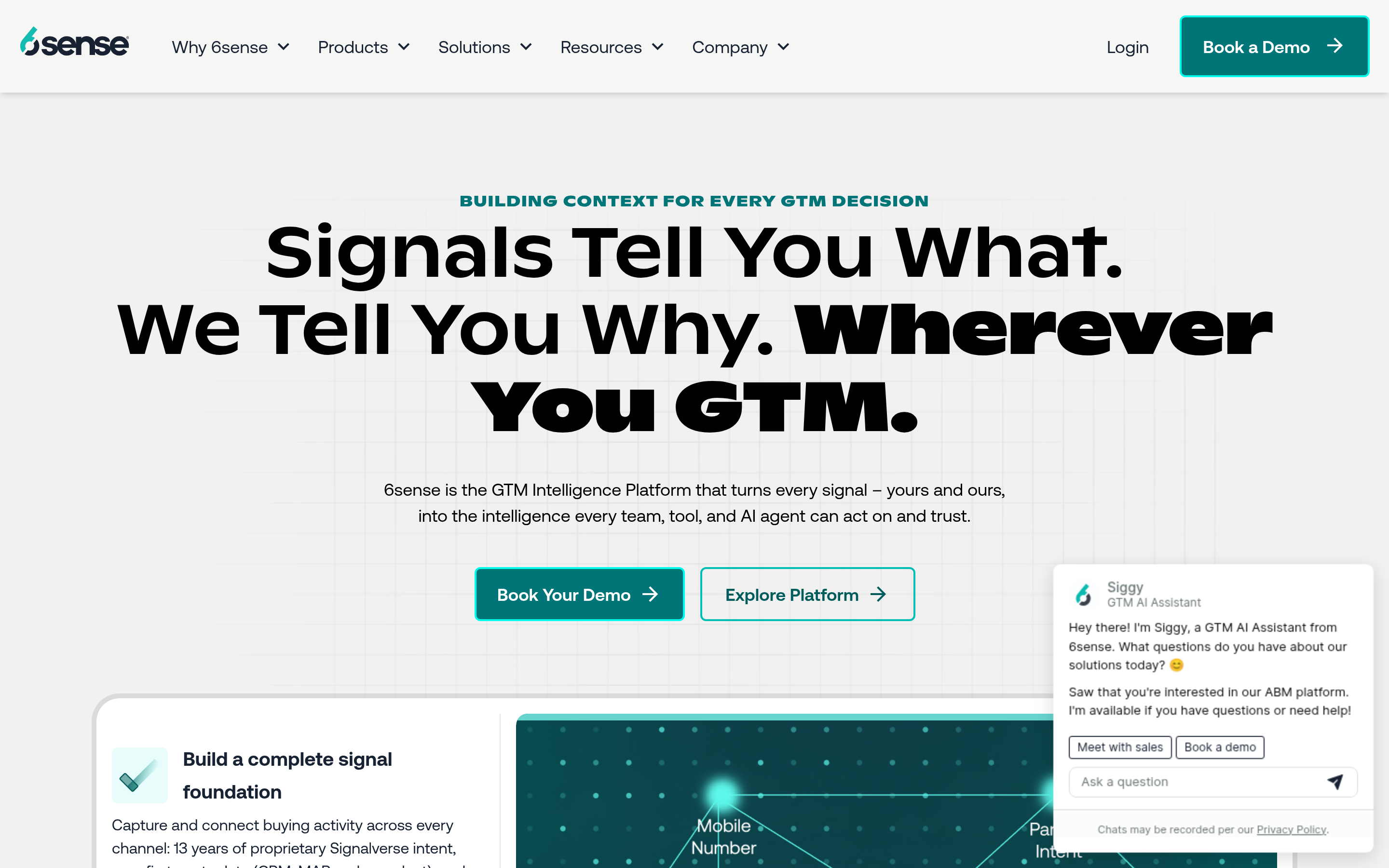
6sense is the category heavyweight. Its Revenue AI platform combines third-party intent, predictive buying-stage models, account-based advertising and sales intelligence. Its main advantage over Maestro is the size of its intent network: 6sense can tell you which accounts are researching your category before they ever visit your website.
- Strengths: predictive buying stages, deep Salesforce and HubSpot integrations, built-in display advertising, and a strong analyst footprint.
- Watch out for: annual contracts that are often five or six figures, a long implementation, and intent coverage that's thinner for Portuguese-language research than for English.
- Best for: global B2B companies with a dedicated RevOps team.
If 6sense is out of budget, see our 6sense alternative breakdown.
2. Demandbase: best for account-based advertising at scale#
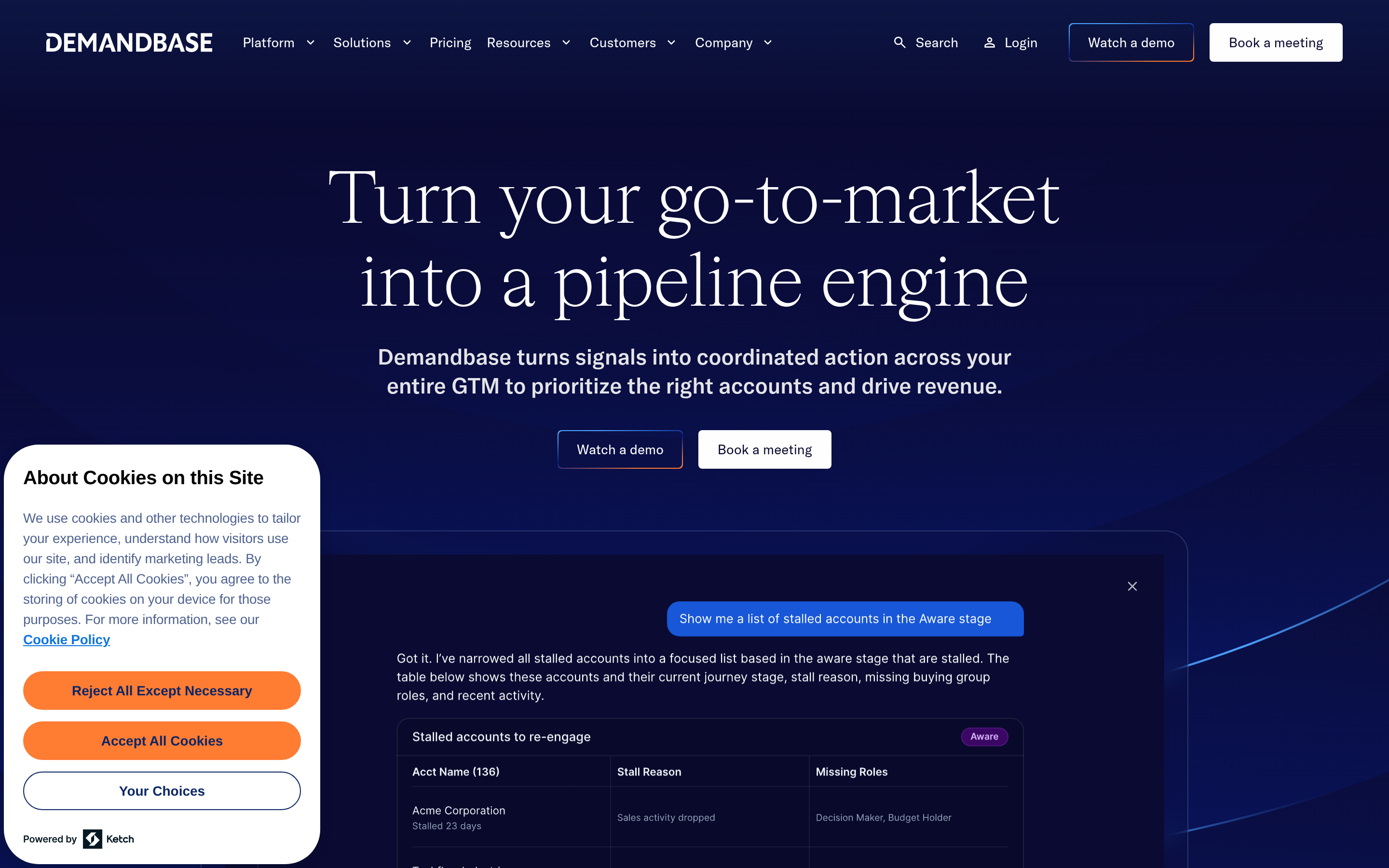
Demandbase One covers the full ABM cycle: account identification, intent, B2B advertising, and sales intelligence (inherited from its InsideView acquisition). Its programmatic advertising engine is one of the most mature in the market.
- Strengths: account-based display ads, strong firmographic and technographic data, and good orchestration across ads and sales.
- Watch out for: enterprise pricing and complexity. Smaller teams often use only a fraction of the platform.
- Best for: marketing-led ABM programs with meaningful paid media budgets.
There's more on cost-effective options in our Demandbase alternative guide.
3. HubSpot Marketing Hub: best for teams already on HubSpot CRM#
If your CRM is already HubSpot, the ABM tools in Marketing Hub Professional and Enterprise may cover most of what you use Maestro for. You get target account properties, buying-role tagging, ideal customer profile tiers, account-level reporting and LinkedIn ad audiences synced from the CRM. See HubSpot's ABM software page for the current feature set.
- Strengths: no extra vendor, native CRM data, strong email and landing page tools, and Portuguese-language support.
- Watch out for: limited third-party intent data and seat-based pricing that rises quickly at the Professional tier and above.
- Best for: mid-market teams that want "good enough ABM" without adding another platform.
4. RollWorks: best mid-market ABM for Salesforce and HubSpot users#
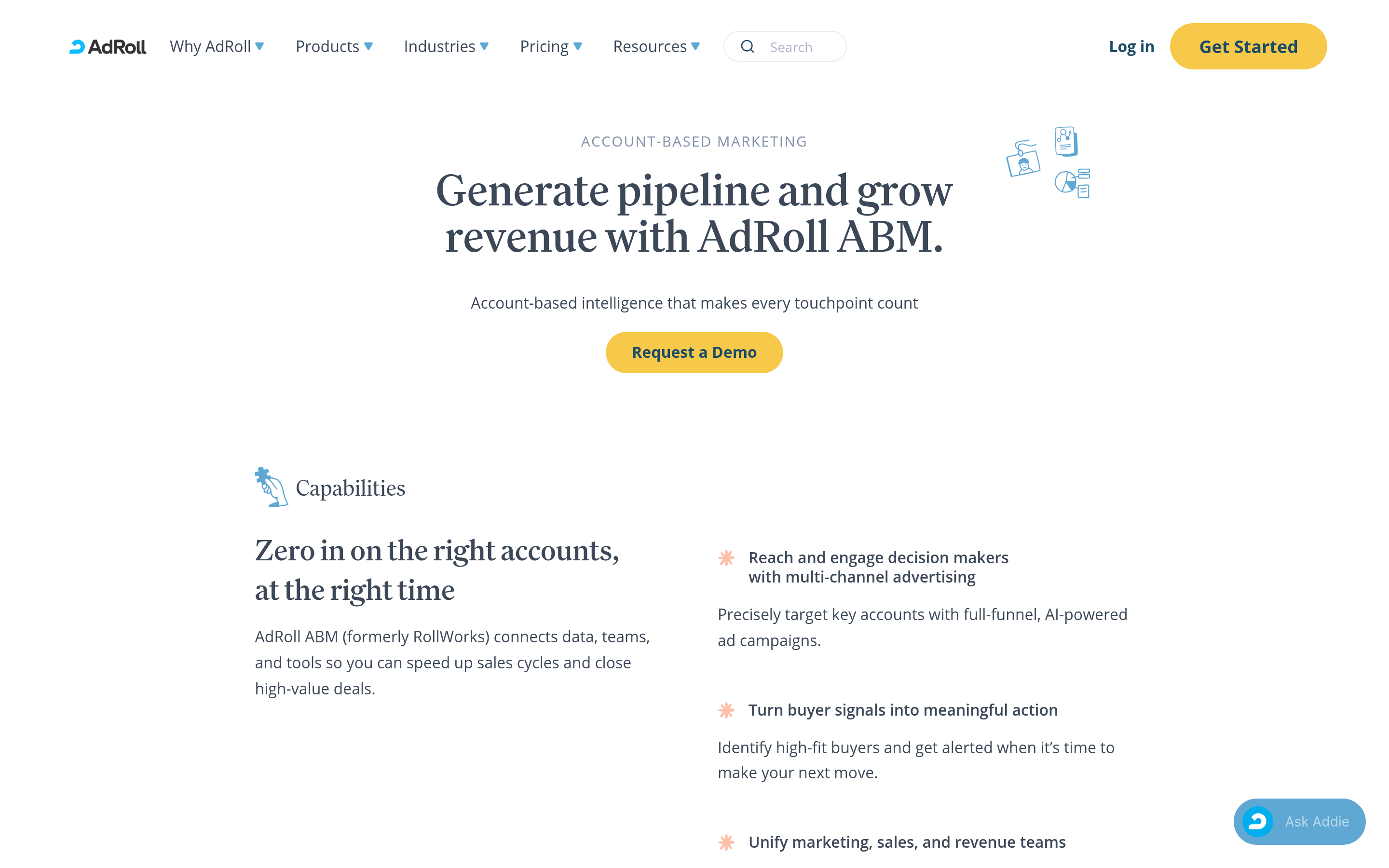
RollWorks, from NextRoll, targets the gap between "HubSpot lists" and "6sense contract." It offers account identification, intent signals, account-based advertising and CRM sync at a lower entry point than the enterprise suites.
- Strengths: fast setup, solid retargeting heritage, clear account journey views.
- Watch out for: a smaller data footprint outside North America, and orchestration features that are lighter than Maestro's "plays" model.
- Best for: US-focused mid-market SaaS teams.
5. Terminus: best for multichannel account engagement#
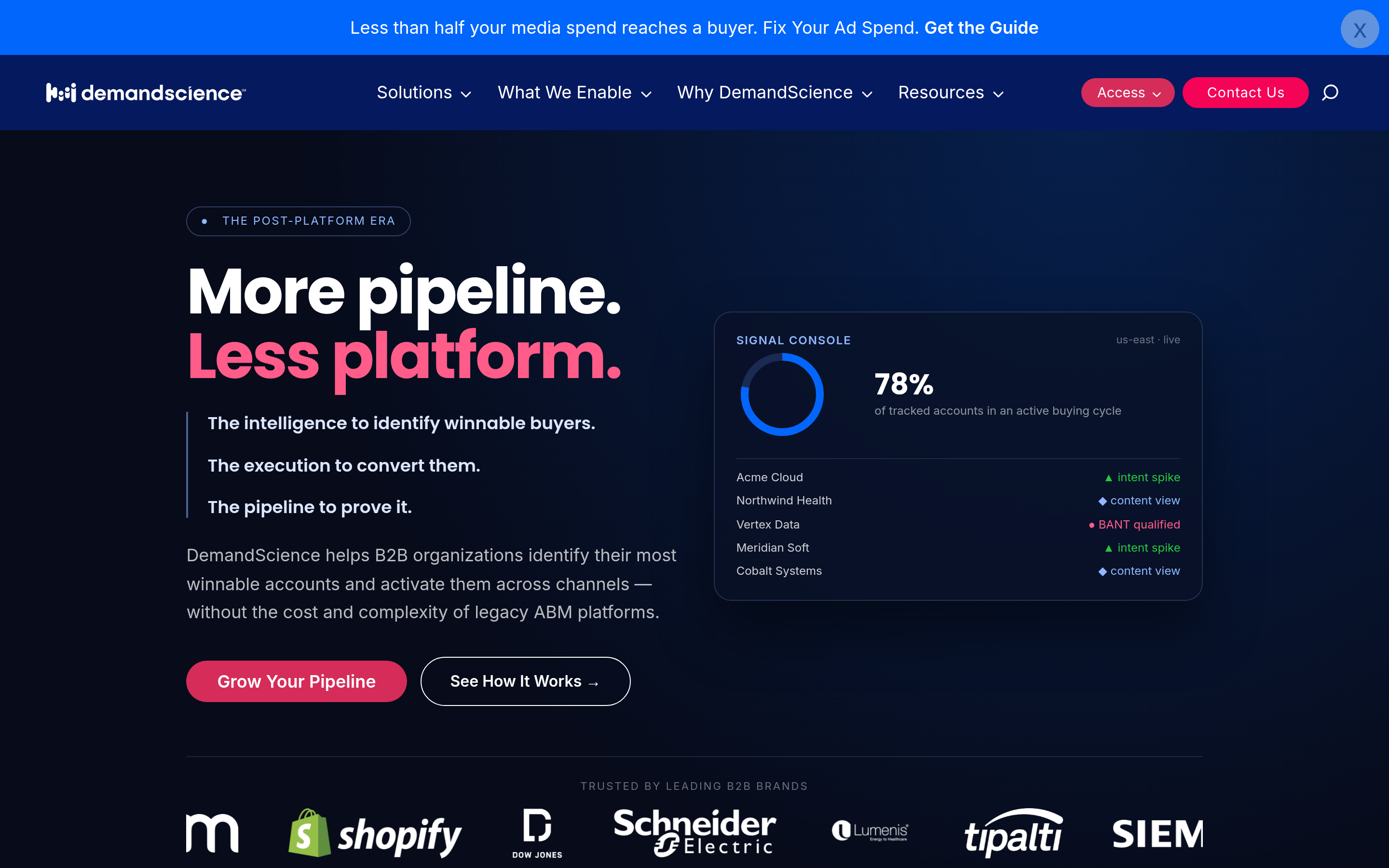
Terminus focuses on engaging target accounts across display ads, email signatures, website personalization and chat. It's less about predicting who to target and more about surrounding chosen accounts with consistent touches.
- Strengths: creative multichannel activation and good engagement analytics.
- Watch out for: you'll likely need a separate intent or contact data source, and the product direction has shifted with recent ownership changes, so confirm the roadmap during evaluation.
- Best for: marketing teams that already know their target list and want to warm it up.
6. Apollo.io: best budget option combining data and outreach#
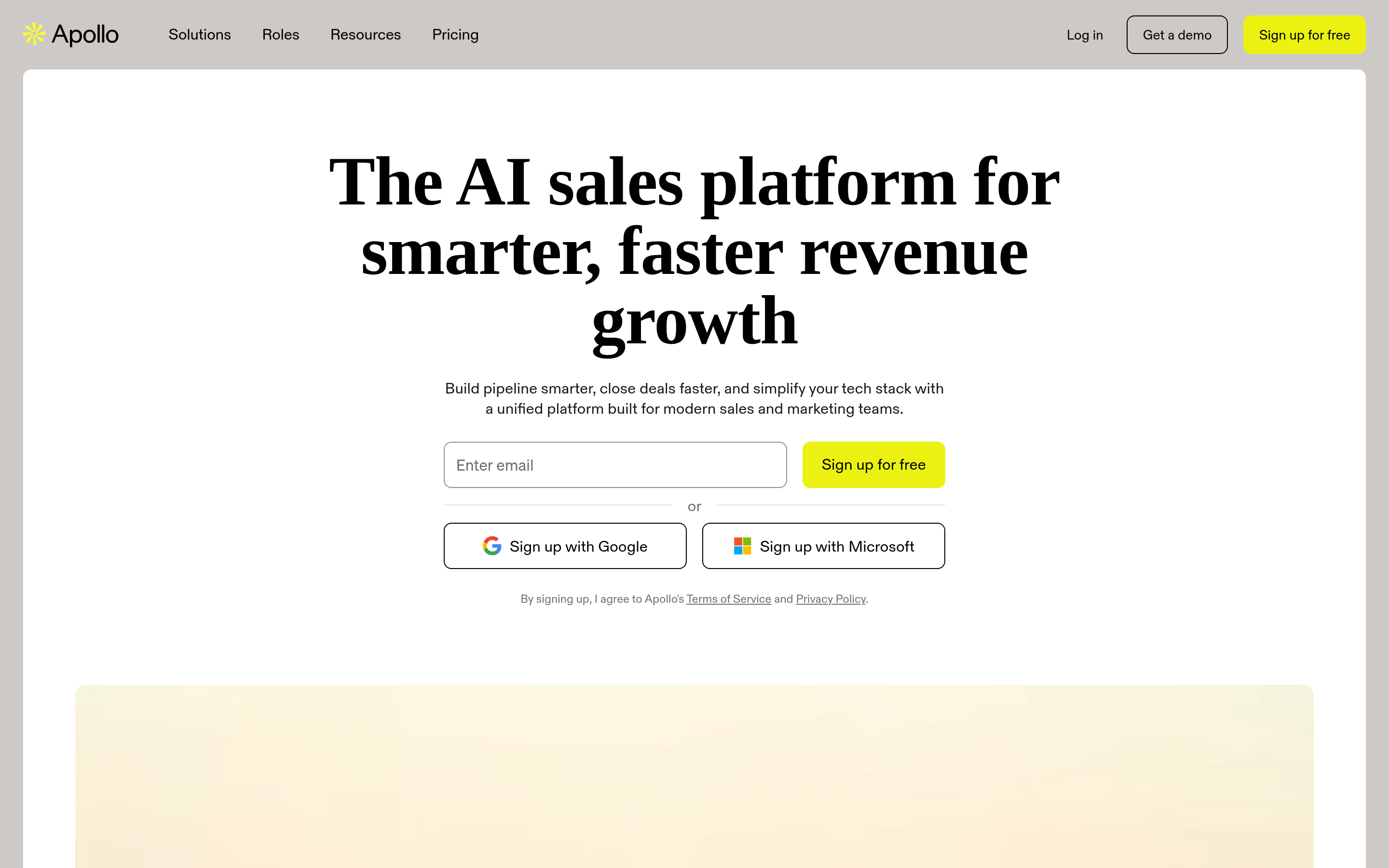
Apollo isn't a pure ABM platform, but many smaller teams use it as one. It offers a large contact database, basic intent filters, sequences, and a dialer, all with transparent self-serve pricing and a free plan.
- Strengths: low entry cost, contact data and sequencing in one place, quick to adopt.
- Watch out for: data accuracy varies by region, and its account orchestration is basic compared with Maestro.
- Best for: early-stage teams running sales-led ABM on a tight budget.
Comparing Apollo against other data tools? Our Apollo alternative page covers the trade-offs.
7. Tomba: best contact-data layer to pair with any ABM platform#
Tomba isn't an ABM orchestration platform, and it doesn't pretend to be one. It's an email finder and enrichment platform that fills the gap most ABM tools leave open: reaching the buying committee once you've identified it. You can search a target account's domain, find and verify emails by name, enrich records with job titles, and push results to HubSpot, Salesforce or Pipedrive.
- Strengths: transparent pricing (free tier with 25 searches/mo, Starter $49/mo, Growth $99/mo, Pro $249/mo), domain search for whole-account mapping, a built-in verifier, and an API.
- Watch out for: no intent data or ad activation. Use it next to Maestro, HubSpot or 6sense, not instead of them.
- Best for: any ABM team whose plays stall because they can't reach the people they've mapped.
How do the Maestro ABM alternatives compare side by side?#
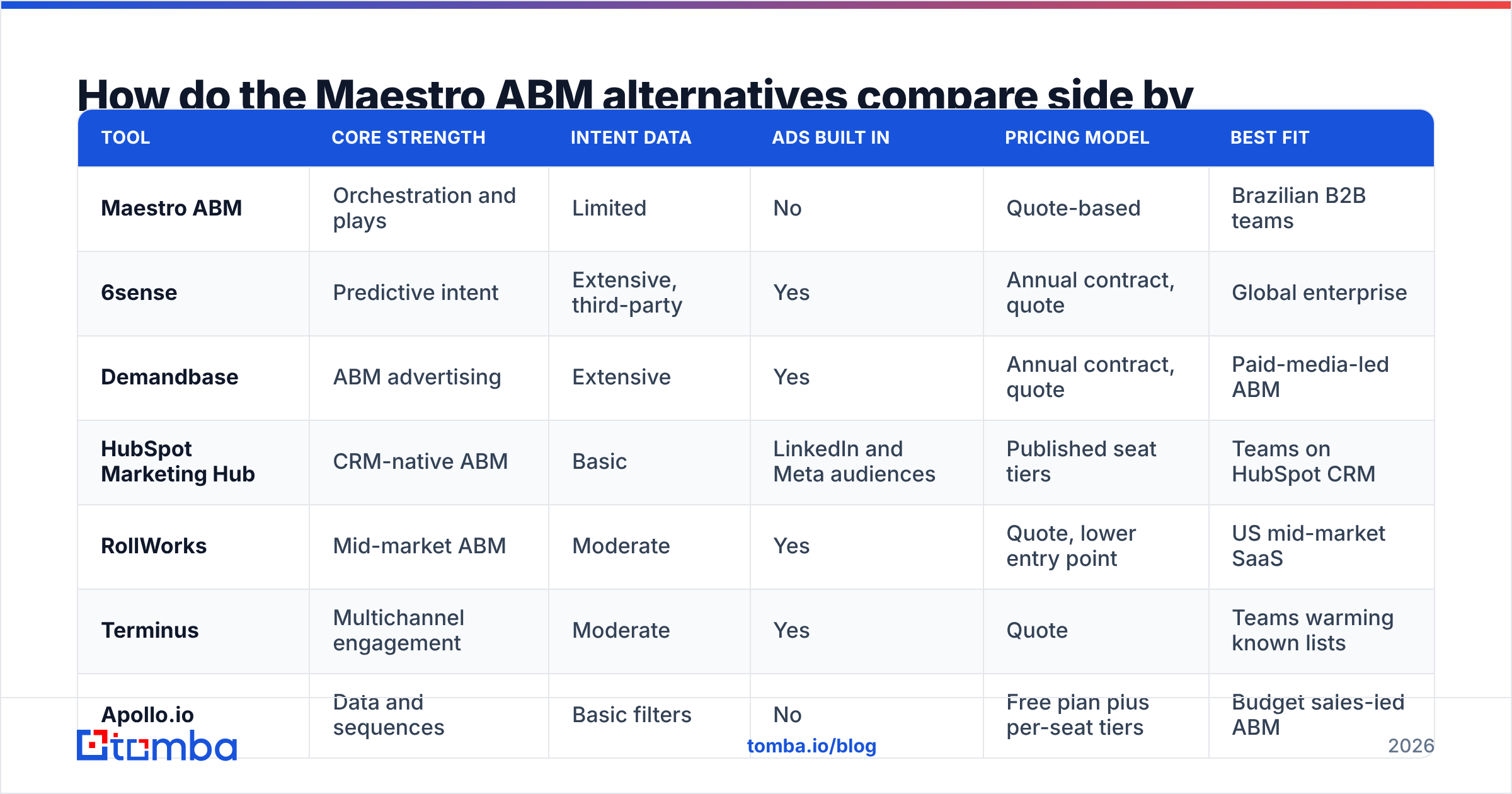
| Tool | Core strength | Intent data | Ads built in | Pricing model | Best fit |
|---|---|---|---|---|---|
| Maestro ABM | Orchestration and plays | Limited | No | Quote-based | Brazilian B2B teams |
| 6sense | Predictive intent | Extensive, third-party | Yes | Annual contract, quote | Global enterprise |
| Demandbase | ABM advertising | Extensive | Yes | Annual contract, quote | Paid-media-led ABM |
| HubSpot Marketing Hub | CRM-native ABM | Basic | LinkedIn and Meta audiences | Published seat tiers | Teams on HubSpot CRM |
| RollWorks | Mid-market ABM | Moderate | Yes | Quote, lower entry point | US mid-market SaaS |
| Terminus | Multichannel engagement | Moderate | Yes | Quote | Teams warming known lists |
| Apollo.io | Data and sequences | Basic filters | No | Free plan plus per-seat tiers | Budget sales-led ABM |
| Tomba | Verified contact data | No | No | Free, then $49–$249/mo | Contact layer for any ABM stack |
Two patterns stand out. First, the tools with the strongest intent data (6sense, Demandbase) cost the most and take the longest to deploy. Second, none of the orchestration platforms treats verified email coverage as its core job. That's why so many ABM programs track the right accounts and then send campaigns to bouncing addresses.
Is it better to replace Maestro ABM or add to it?#
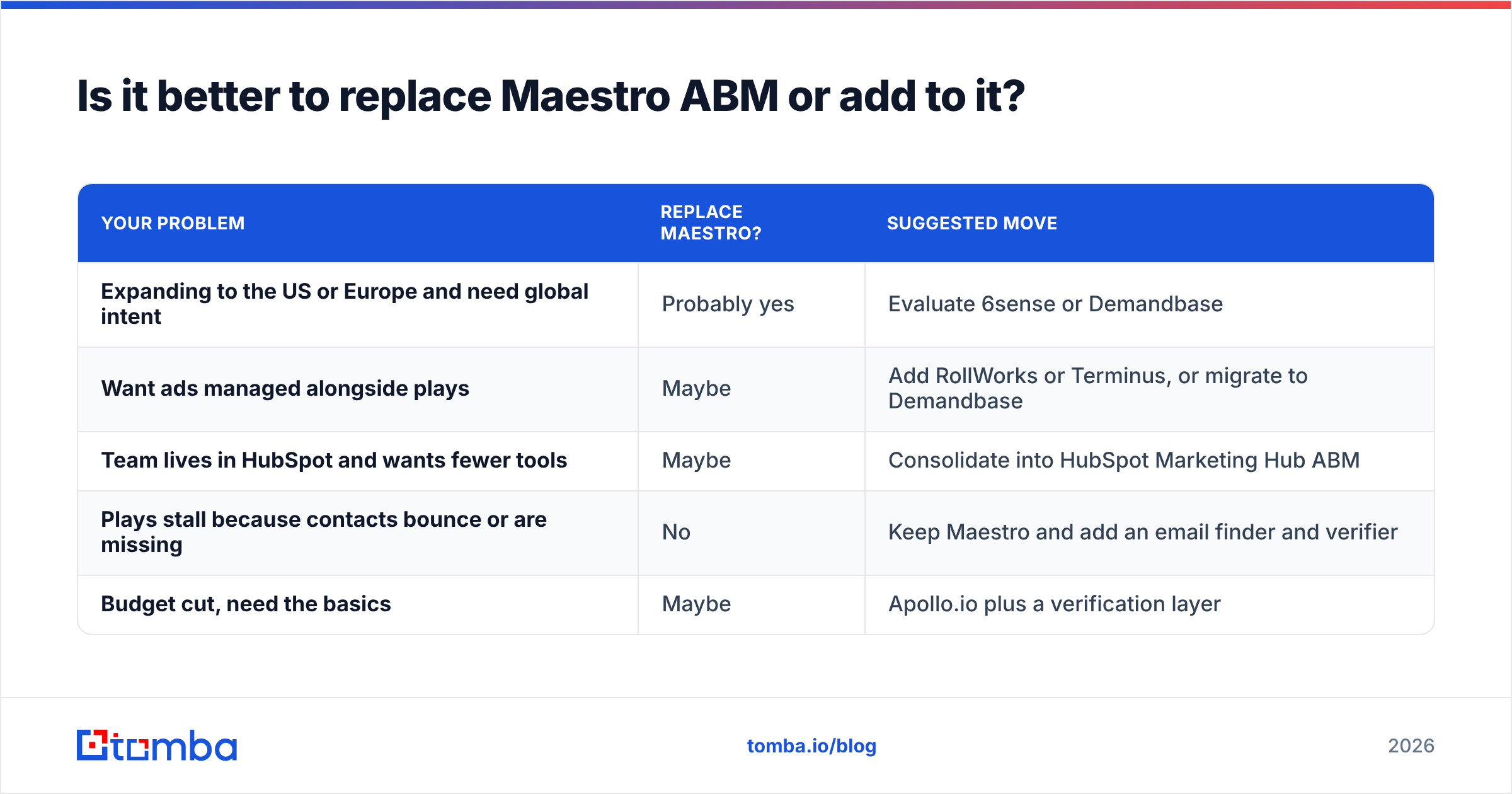
That depends on which layer is failing. Here's a simple way to decide:
| Your problem | Replace Maestro? | Suggested move |
|---|---|---|
| Expanding to the US or Europe and need global intent | Probably yes | Evaluate 6sense or Demandbase |
| Want ads managed alongside plays | Maybe | Add RollWorks or Terminus, or migrate to Demandbase |
| Team lives in HubSpot and wants fewer tools | Maybe | Consolidate into HubSpot Marketing Hub ABM |
| Plays stall because contacts bounce or are missing | No | Keep Maestro and add an email finder and verifier |
| Budget cut, need the basics | Maybe | Apollo.io plus a verification layer |
The last two rows are the most common in practice. A team running 50 target accounts with six to ten stakeholders each needs 300–500 reachable contacts. If 30% of those emails bounce, your sender reputation suffers and the whole program loses momentum, no matter how good your account scoring is.
How do you fill the contact-data gap in an ABM program?#
Whichever platform you choose, this workflow keeps your ABM plays reachable:
- Export your tier-1 account list. Pull domains from Maestro, HubSpot or your ABM tool of choice.
- Map the buying committee by domain. Run each domain through a domain search to see known employees, departments and the company's email pattern.
- Find specific decision-makers by name. For named champions or executives your SDRs identified on LinkedIn, use an email finder with name plus domain.
- Verify before you send. Run every address through an SMTP-level verifier and treat catch-all domains separately, since they're common at large enterprises.
- Enrich and sync. Add titles, seniority and phone numbers, then push the records back into your CRM so plays and sequences use clean data.
This is where data enrichment earns its keep. Steps two through five run in minutes per account, and you only pay for the contacts you actually need instead of a platform-wide data licence.
What does a realistic ABM budget look like in 2026?#
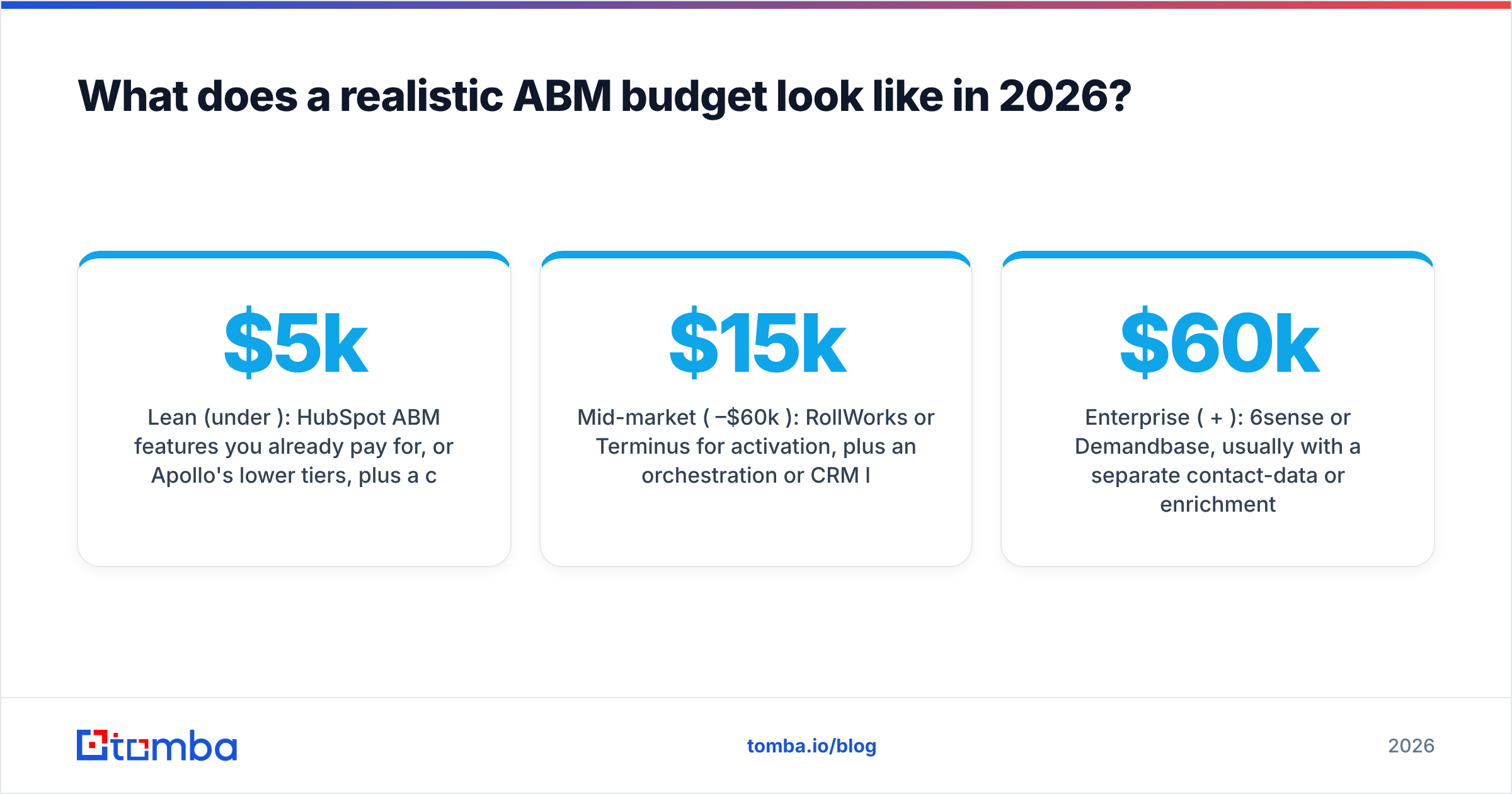
Exact figures vary because most ABM vendors don't publish prices. The budget bands are fairly consistent, though:
- Lean (under $5k/year): HubSpot ABM features you already pay for, or Apollo's lower tiers, plus a contact-data tool like Tomba.
- Mid-market ($15k–$60k/year): RollWorks or Terminus for activation, plus an orchestration or CRM layer and a verification tool.
- Enterprise ($60k+/year): 6sense or Demandbase, usually with a separate contact-data or enrichment vendor anyway, because platform data rarely covers every region.
Maestro ABM generally sits as a regionally focused option between the lean and mid-market bands, but confirm with their sales team because pricing isn't public. Whatever you pick, budget for contact data as its own line item. It costs much less than the platform and decides whether your plays ever reach a human.
Which Maestro ABM alternative should you choose?#
- Choose 6sense if you're going global, have RevOps capacity, and need predictive intent.
- Choose Demandbase if account-based advertising is the center of your program.
- Choose HubSpot Marketing Hub if you already run HubSpot and want to cut a vendor.
- Choose RollWorks if you're a US-focused mid-market team that wants ABM plus ads at a lower entry price.
- Choose Terminus if you know your accounts and need multichannel engagement.
- Choose Apollo.io if budget is the main constraint and you want data plus sequences in one tool.
- Keep Maestro ABM if you're selling mainly in Brazil and its orchestration model works for you. Just fix the contact layer.
Ready to make your ABM plays reachable?#
The ABM platform decides who to target. Your contact data decides whether you can reach them. Before you sign a bigger platform contract, run your tier-1 accounts through the Tomba Email Finder. Search by domain to map each buying committee, find decision-makers by name, and verify every address before it reaches your sequences. It works next to Maestro ABM, HubSpot, 6sense or any other tool on this list, and you can start on the free plan with 25 searches a month. Compare Tomba pricing when you're ready to scale.
Related guides#
// start free
See who Tomba finds at any company
Type a company's domain to see its people, their roles and verified work emails, each with the pages it was found on. Free account, no card.
Free plan · No credit card required · GDPR & CCPA
// about the author