Cold Email Follow Up Sequence: The 2026 Framework That Books Meetings
Most replies come from follow-ups, not the first email. Here's a proven cold email follow up sequence with timing, templates, and reply-rate benchmarks.
You send a cold email. Silence. You assume the prospect isn't interested and move on. That's the single most expensive mistake in outbound — because the data says most positive replies never come from the first email at all.
A cold email follow up sequence is the difference between a 2% reply rate and a 9% one. Below is the exact cadence, timing, and copy structure that consistently books meetings in 2026, plus the mistakes that quietly tank your numbers.
TL;DR#
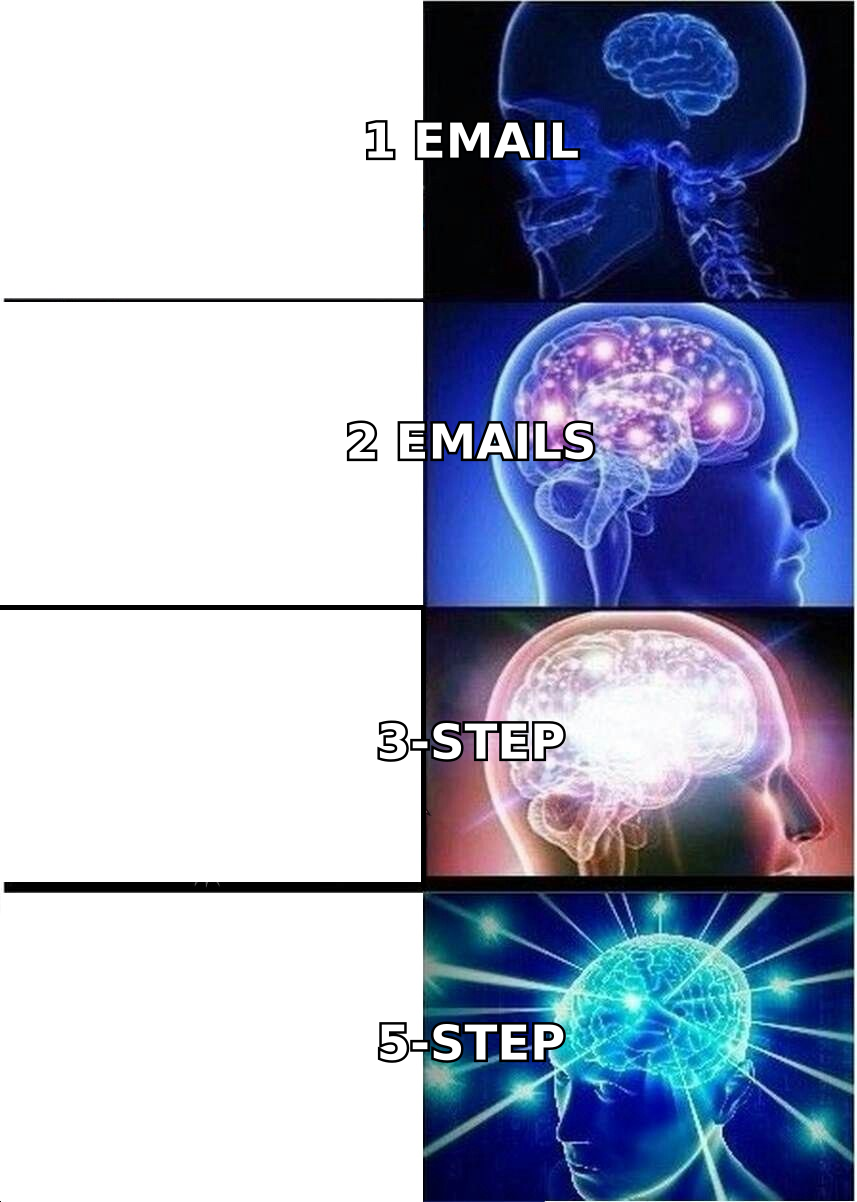
- Most replies come from follow-ups, not the first send. Plan for 4–6 touches, not one.
- Space touches 2–4 days apart over a 12–16 day window — aggressive enough to stay top-of-mind, spaced enough to avoid spam flags.
- Every follow-up must add value, not guilt. "Just bumping this" is a delete trigger.
- Deliverability is the hidden lever. A perfect sequence to an unverified list still lands in spam. Clean your list first.
- Steal the 5-step framework and templates below, then instrument reply rates per step so you know what to cut.
Why does a cold email follow up sequence matter more than the first email?#
Because persistence, done politely, is a signal of relevance. A busy prospect who ignored your Tuesday email isn't rejecting you — they're triaging their inbox. Your second and third touches catch them on a calmer day.
Think of it like knocking on a neighbor's door. One knock and they might be in the shower. Come back twice more at sensible intervals and you'll usually get an answer. Knock eleven times in an hour and you're the weird neighbor. The whole art of a follow-up sequence is finding that rhythm.
Industry benchmarks from vendors like HubSpot and outreach platforms consistently show that sequences with 4–6 touches outperform single sends by a wide margin. The mechanism is simple: more relevant touches, more chances to hit the prospect at the right moment.
What does a high-performing cold email follow up sequence look like?#
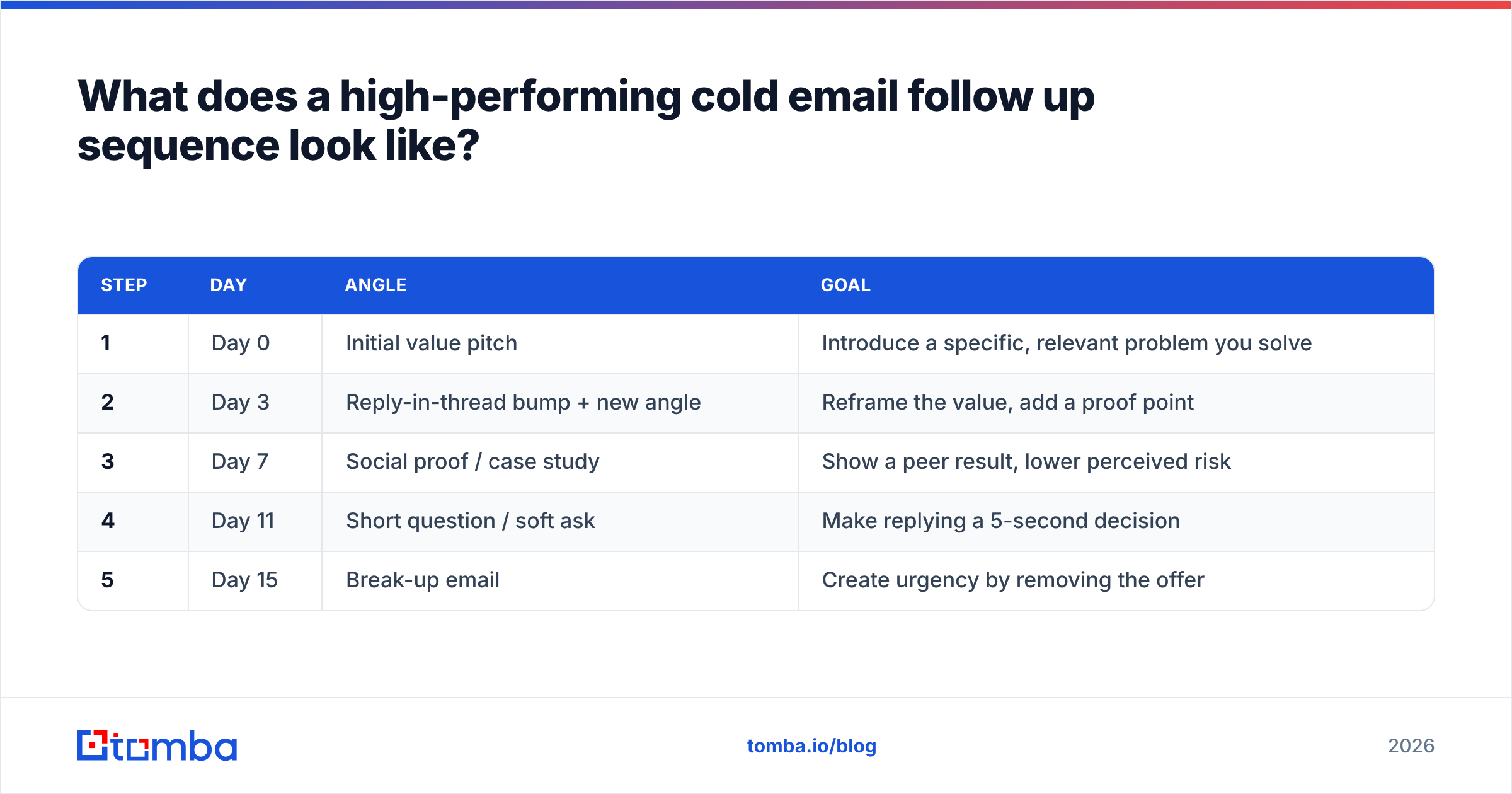
Here's the 5-step cadence that balances persistence with restraint. Days are counted from the first send.
| Step | Day | Angle | Goal |
|---|---|---|---|
| 1 | Day 0 | Initial value pitch | Introduce a specific, relevant problem you solve |
| 2 | Day 3 | Reply-in-thread bump + new angle | Reframe the value, add a proof point |
| 3 | Day 7 | Social proof / case study | Show a peer result, lower perceived risk |
| 4 | Day 11 | Short question / soft ask | Make replying a 5-second decision |
| 5 | Day 15 | Break-up email | Create urgency by removing the offer |
Five touches over 15 days. Each one stands on its own — if a prospect only ever reads step 4, it should still make sense and still be worth a reply.
The five steps in plain language#
- Step 1 — The opener. One specific problem, one line of relevance, one soft call to action. No company brochure.
- Step 2 — The reframe. Reply to your own email so it threads. Lead with a different benefit than step 1; you're testing which angle lands.
- Step 3 — The proof. "We helped [similar company] cut X by Y%." Concrete, peer-relevant, and short.
- Step 4 — The one-liner. A single question they can answer in one word. "Worth a quick chat, or is this off your radar this quarter?"
- Step 5 — The break-up. "I'll close the loop on my end — reach out if timing changes." This one pulls more replies than any other step because loss aversion is real.
How many follow-ups is too many?#
Four to six total touches is the sweet spot for cold outreach. Past six, reply rates flatten and spam complaints climb. The exception is warm or intent-based leads, where a longer, more spaced cadence can work because the relationship already has context.
The bigger risk isn't the count — it's the interval. Fire five emails in five days and you look automated and desperate. Space the same five emails across two weeks and you look like a professional who follows up. Same messages, opposite outcome.
What timing and spacing should you use?#
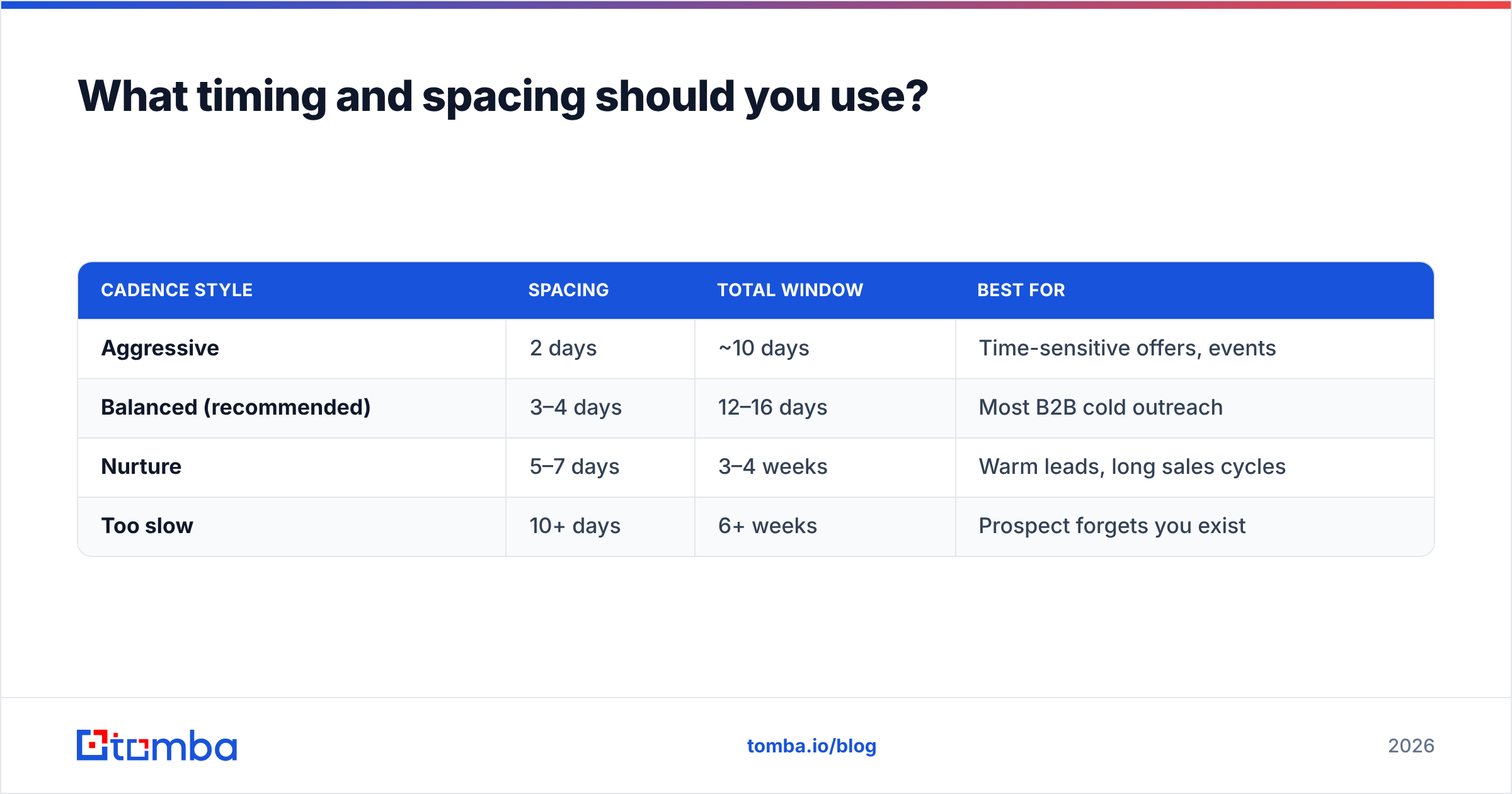
| Cadence style | Spacing | Total window | Best for |
|---|---|---|---|
| Aggressive | 2 days | ~10 days | Time-sensitive offers, events |
| Balanced (recommended) | 3–4 days | 12–16 days | Most B2B cold outreach |
| Nurture | 5–7 days | 3–4 weeks | Warm leads, long sales cycles |
| Too slow | 10+ days | 6+ weeks | Prospect forgets you exist |
For most teams, the balanced cadence wins. It keeps you in memory without crowding the inbox, and it fits inside a typical monthly quota so you can run multiple sequences in parallel.
Send in the prospect's morning, Tuesday through Thursday. Avoid Monday inbox-clearing and Friday checkout. And never send all five steps at the same time of day — vary it, because the person who ignores 9am might reply at 4pm.
Follow-up templates you can steal#
Step 2 — reply-in-thread reframe:
Following up on this, [First name]. Different angle: the teams I talk to usually lose ~[X hours] a week on [manual task]. If that's on your plate too, I can share how [peer company] fixed it in under a month. Worth a look?
Step 4 — the one-liner:
[First name], should I keep this on your radar for Q[X], or is now not the time?
Step 5 — the break-up:
I don't want to clutter your inbox, so I'll close this out. If [problem] becomes a priority later, my door's open — just reply here.
Notice what these don't do: no guilt ("I've reached out three times…"), no fake urgency, no wall of text. If you want a head start, Tomba's cold email templates library and the subject line generator cover openers for common industries.
Why do great sequences still land in spam?#
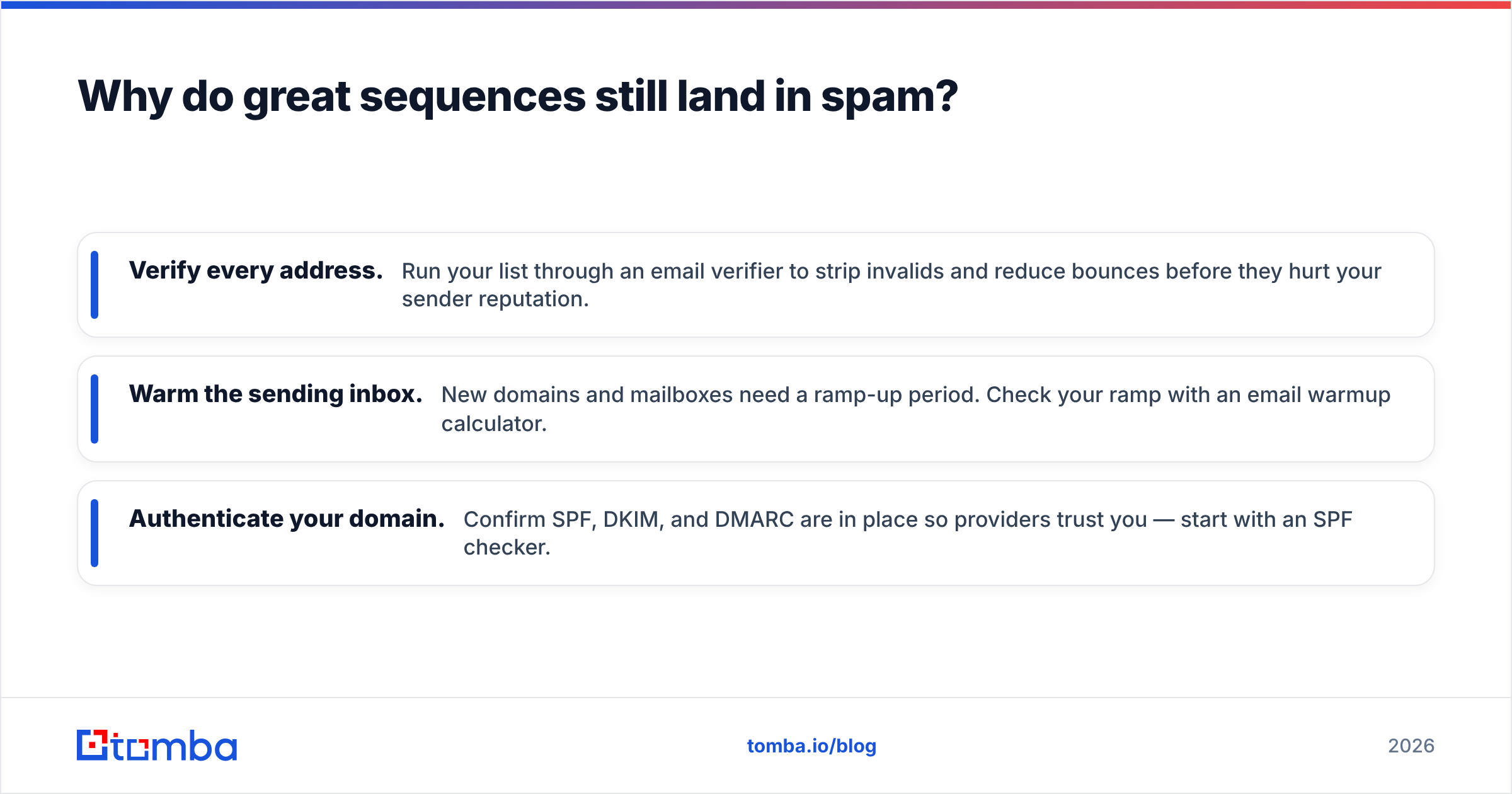
Because a flawless cadence sent to a dirty list is wasted. If 15% of your addresses bounce, mailbox providers flag your domain and even your good emails get filtered. Deliverability is the foundation the whole sequence sits on.
Before you launch a single step, do three things:
- Verify every address. Run your list through an email verifier to strip invalids and reduce bounces before they hurt your sender reputation.
- Warm the sending inbox. New domains and mailboxes need a ramp-up period. Check your ramp with an email warmup calculator.
- Authenticate your domain. Confirm SPF, DKIM, and DMARC are in place so providers trust you — start with an SPF checker.
Skip these and your reply rate is capped no matter how sharp your copy is. It's like tuning a race car and forgetting to inflate the tires.
How do you build a clean, targeted list to sequence?#
A follow-up sequence is only as good as the people receiving it. Blasting a generic list produces low replies and high complaints; a tight, verified list of the right roles produces meetings.
Start from the accounts you actually want, then find the right contacts inside them. Use domain search to pull the verified email patterns for a target company, then narrow to decision-makers. For volume, a bulk email finder lets you enrich a whole account list in one pass, and data enrichment fills in titles and seniority so you can personalize step 1 without manual research.
Reputable B2B data providers — Tomba included, alongside respected peers like BookYourData — all rest on the same principle: accuracy first. A verified, well-segmented list is what lets your sequence feel personal at scale.
What are the biggest cold email follow up mistakes?#
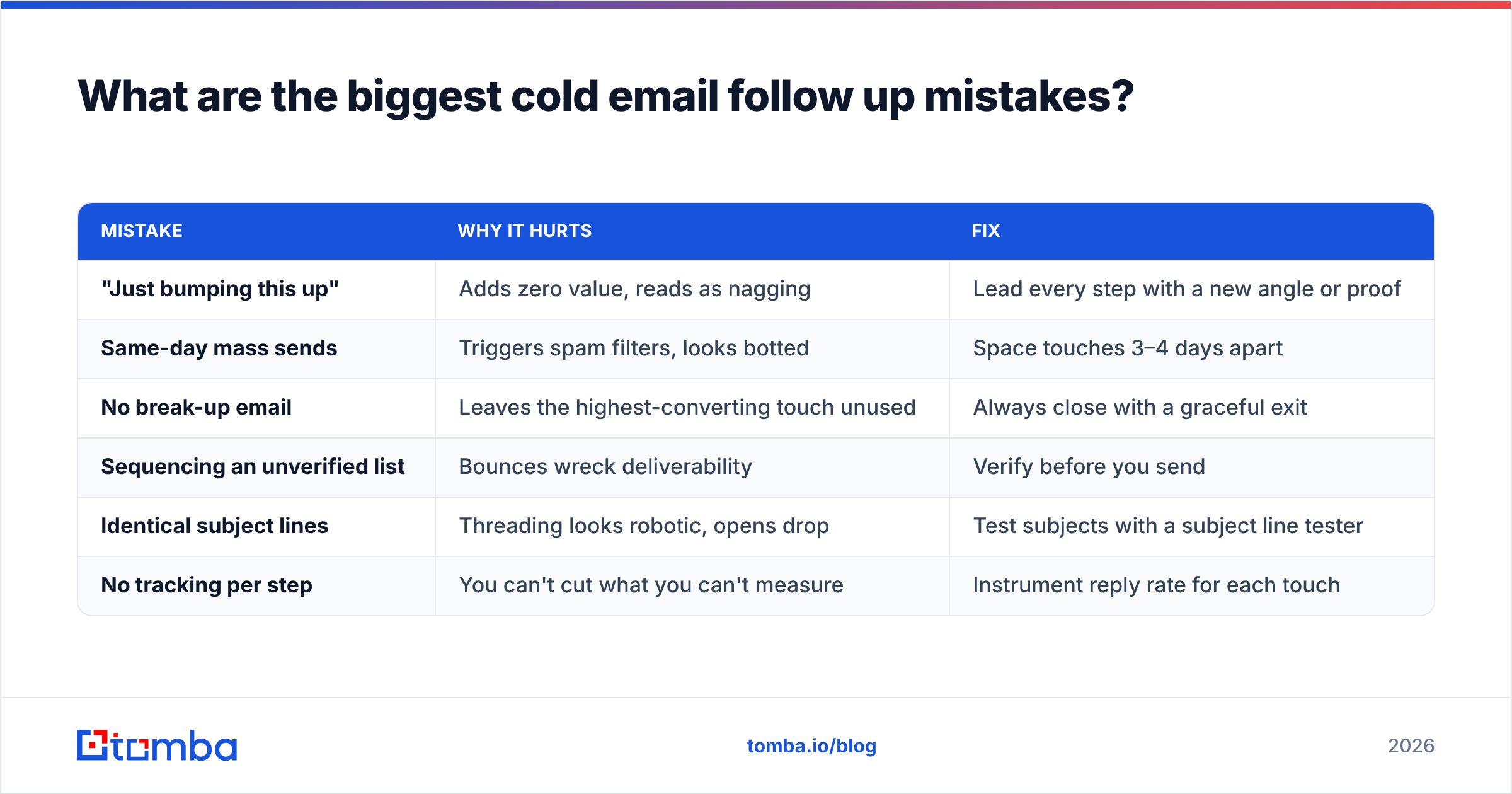
| Mistake | Why it hurts | Fix |
|---|---|---|
| "Just bumping this up" | Adds zero value, reads as nagging | Lead every step with a new angle or proof |
| Same-day mass sends | Triggers spam filters, looks botted | Space touches 3–4 days apart |
| No break-up email | Leaves the highest-converting touch unused | Always close with a graceful exit |
| Sequencing an unverified list | Bounces wreck deliverability | Verify before you send |
| Identical subject lines | Threading looks robotic, opens drop | Test subjects with a subject line tester |
| No tracking per step | You can't cut what you can't measure | Instrument reply rate for each touch |
The meta-mistake is treating the sequence as "set and forget." Track response rate at every step. If step 3 gets no replies across 200 sends, rewrite it — don't keep paying to send a dud.
How should you measure and improve the sequence?#
Watch three numbers per step: open rate (deliverability and subject line), reply rate (copy and relevance), and positive reply rate (targeting). A step can have a high open rate and a dead reply rate — that tells you the subject worked but the body didn't.
Then iterate one variable at a time. Change step 4's subject line for two weeks, measure, keep or revert. Small, isolated tests compound into a sequence that quietly outperforms your competitors' one-and-done blasts.
Putting it together#
A cold email follow up sequence isn't about hounding people. It's about giving the right person enough relevant chances to say yes on a day they have time to. Five value-driven touches, spaced across two weeks, sent to a clean and verified list, will out-book any single-email strategy — every time.
Get the foundation right first: the best cadence in the world can't rescue emails that never reach the inbox. Find and verify the right contacts with Tomba's Email Finder, then feed a clean list into your sequence. Start free with 25 searches a month, and see full Tomba pricing when you're ready to scale your outbound.
Related guides#
// get started
Find, verify and enrich your first contacts today
Start on the free plan with 25 searches a month, then scale when your team is ready.
Free plan · No credit card required · GDPR & CCPA
// about the author