Digital Sales Strategy in 2026: A Practical B2B Playbook
A digital sales strategy is more than a CRM and a cold-email tool. Here's how modern B2B teams build one that actually books meetings and grows pipeline in 2026.
Most "digital sales strategy" articles are a list of buzzwords bolted onto a CRM screenshot. This one is not. A digital sales strategy is the repeatable system you use to find the right accounts, reach the right people through the right channels, and move them to a signed contract — measured end to end. If you can't draw that system on a whiteboard, you don't have a strategy, you have a stack of tools.
TL;DR#
- A digital sales strategy is the documented, measurable system for turning digital signals into revenue — targeting, outreach, conversion, and retention.
- The foundation is clean contact data, not another automation tool. Bad data quietly wrecks every downstream step.
- Modern strategies are multichannel (email, LinkedIn, phone, and intent-based ads) and triggered by buyer behavior, not by calendar cadence alone.
- Pick a small stack that covers data → outreach → CRM → analytics and make the pieces actually talk to each other.
- Measure pipeline created and win rate, not activity vanity metrics like emails sent.
What is a digital sales strategy?#
A digital sales strategy is your plan for using digital channels and data to generate, qualify, and close revenue in a way you can repeat and improve. Think of it like a restaurant's kitchen system: anyone can cook one good meal by luck, but a kitchen with stations, recipes, and timing can serve a full dining room every night without the chef panicking. The strategy is the kitchen — the tools are just the knives.
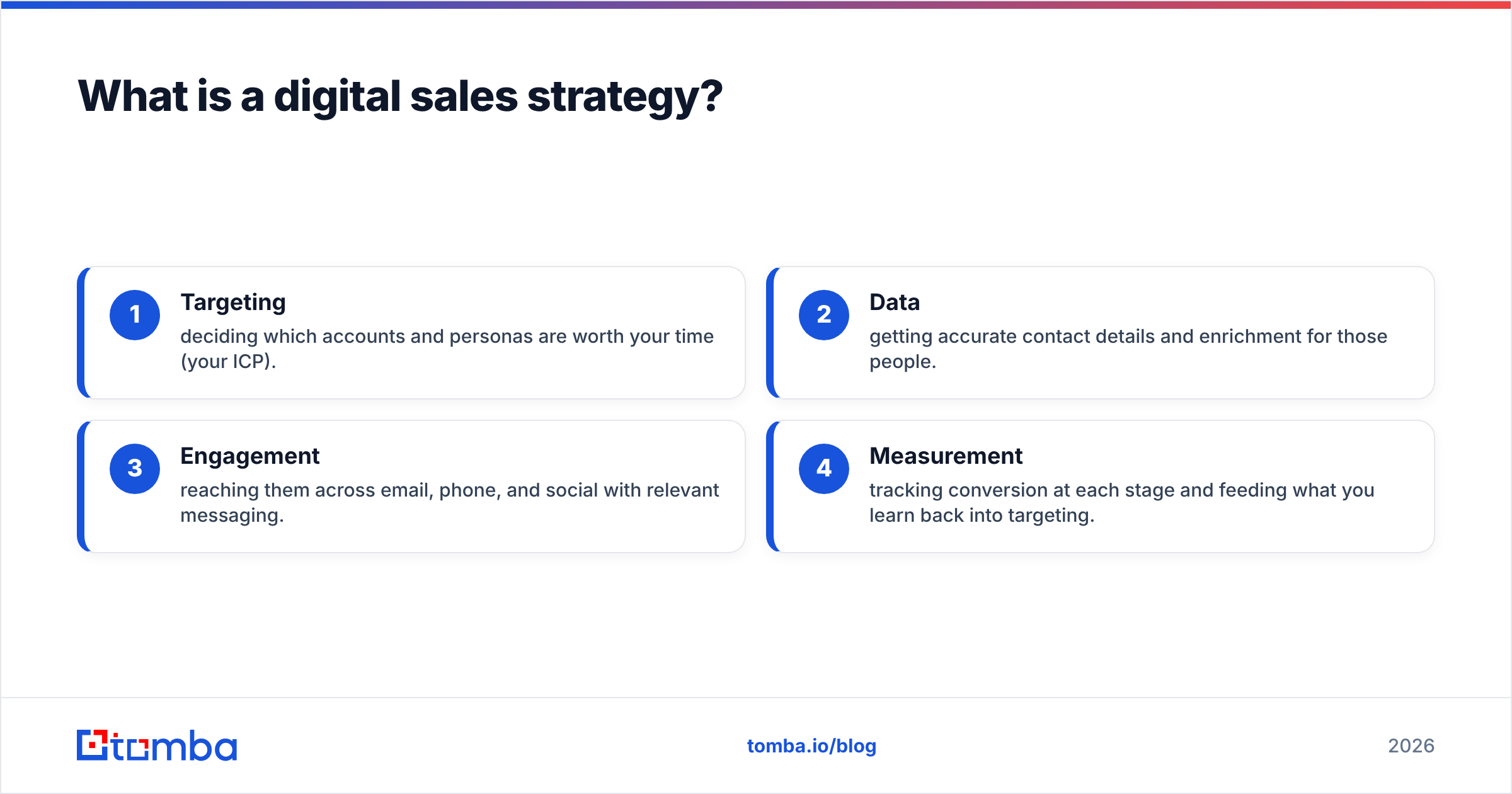
In B2B, that system usually spans four layers:
- Targeting — deciding which accounts and personas are worth your time (your ICP).
- Data — getting accurate contact details and enrichment for those people.
- Engagement — reaching them across email, phone, and social with relevant messaging.
- Measurement — tracking conversion at each stage and feeding what you learn back into targeting.
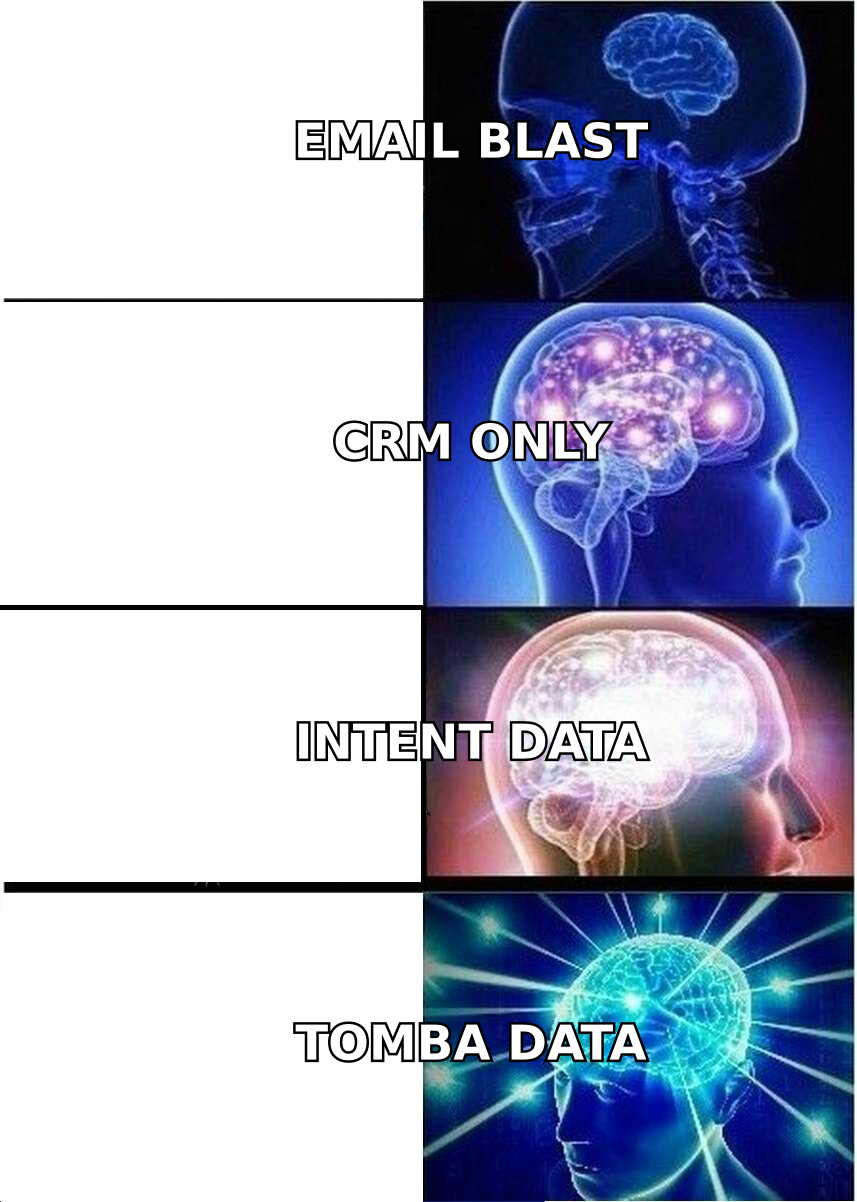
The mistake most teams make is starting at layer three. They buy a sequencing tool, load a scraped list, and blast. Then they blame the copy when replies don't come. The real failure was two layers up.
Why do most digital sales strategies fail?#
They fail on data quality and on measuring the wrong things. According to Gartner, sellers spend a shrinking fraction of their week actually selling — the rest disappears into research, admin, and chasing bad contacts. Every bounced email and wrong phone number is time stolen from real conversations.
Here's the uncomfortable math. If your list is 30% inaccurate, and you're paying reps to work it, you're burning roughly a third of your outbound budget before a single message lands. Worse, high bounce rates damage your sender reputation, which drags down deliverability for the good addresses too. Bad data doesn't just waste the bad records — it poisons the well.
The second failure is measurement. Teams celebrate "10,000 emails sent this month" while pipeline stays flat. Activity is an input, not an outcome. A strategy that optimizes for activity will always drift toward spammy, low-value motion because that's the cheapest way to make the number go up.
What are the core components of a modern digital sales strategy?#
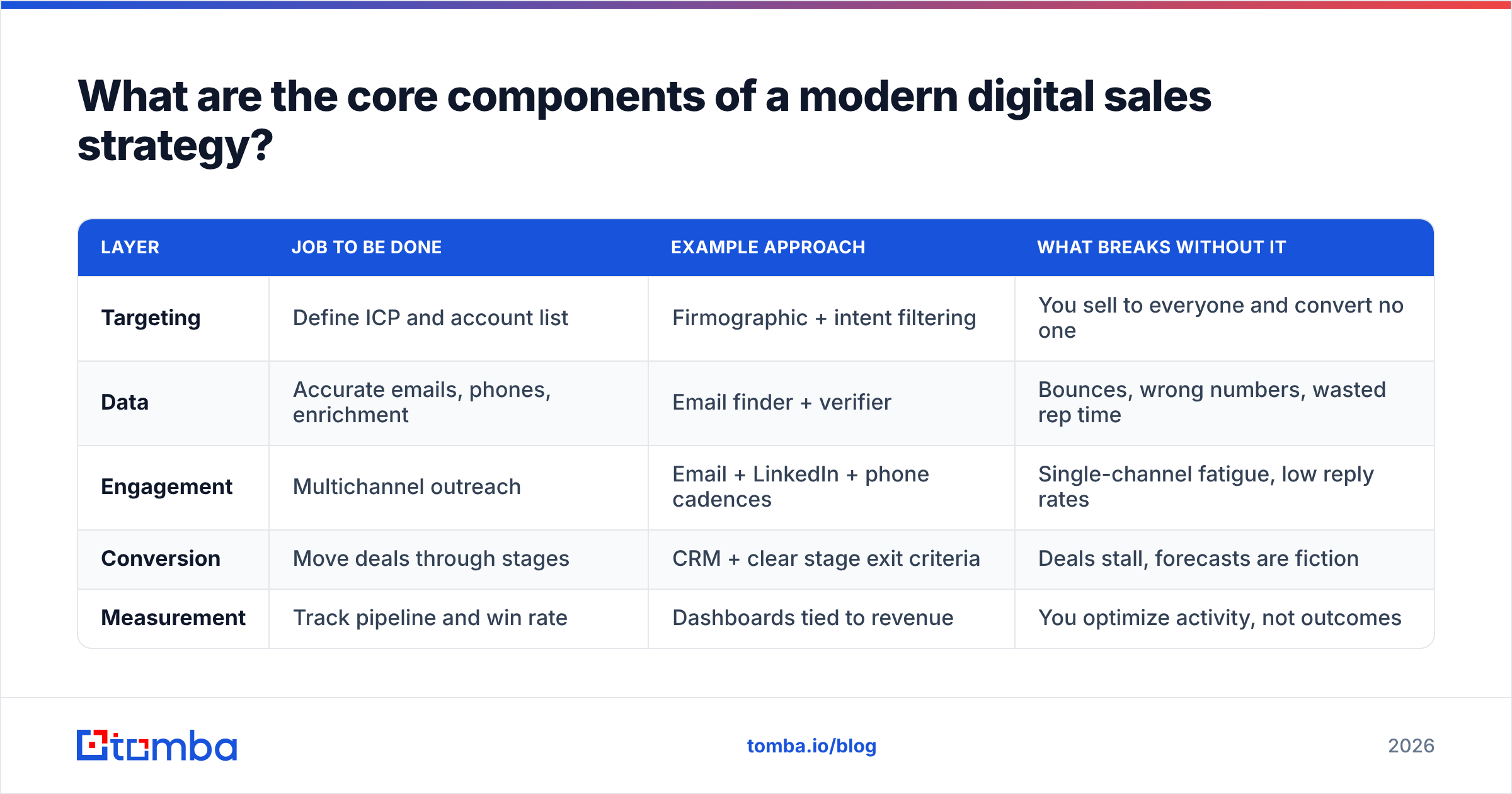
Below is the component map most high-performing B2B teams converge on. Use it as a checklist, not a shopping list — you can cover several boxes with one tool.
| Layer | Job to be done | Example approach | What breaks without it |
|---|---|---|---|
| Targeting | Define ICP and account list | Firmographic + intent filtering | You sell to everyone and convert no one |
| Data | Accurate emails, phones, enrichment | Email finder + verifier | Bounces, wrong numbers, wasted rep time |
| Engagement | Multichannel outreach | Email + LinkedIn + phone cadences | Single-channel fatigue, low reply rates |
| Conversion | Move deals through stages | CRM + clear stage exit criteria | Deals stall, forecasts are fiction |
| Measurement | Track pipeline and win rate | Dashboards tied to revenue | You optimize activity, not outcomes |
Notice that "data" sits directly under "targeting." That order is deliberate. You define who you want first, then you go get accurate ways to reach exactly those people. Reversing it — buying a giant generic list and hoping your ICP is in there somewhere — is how strategies rot.
The data layer is the part everyone underinvests in#
You can have perfect messaging and a beautiful CRM, but if the email address is wrong, none of it fires. This is why the data layer deserves real budget. A solid workflow looks like:
- Find the right contacts by company using domain search or a name-and-company lookup.
- Verify every address before it enters a sequence with an email verifier so you catch invalid and risky addresses up front.
- Enrich records with role, seniority, and company data so reps can personalize at scale.
- Refresh on a schedule — B2B data decays fast as people change jobs.
Get this layer right and everything downstream gets cheaper and more effective at the same time. That's rare in sales.
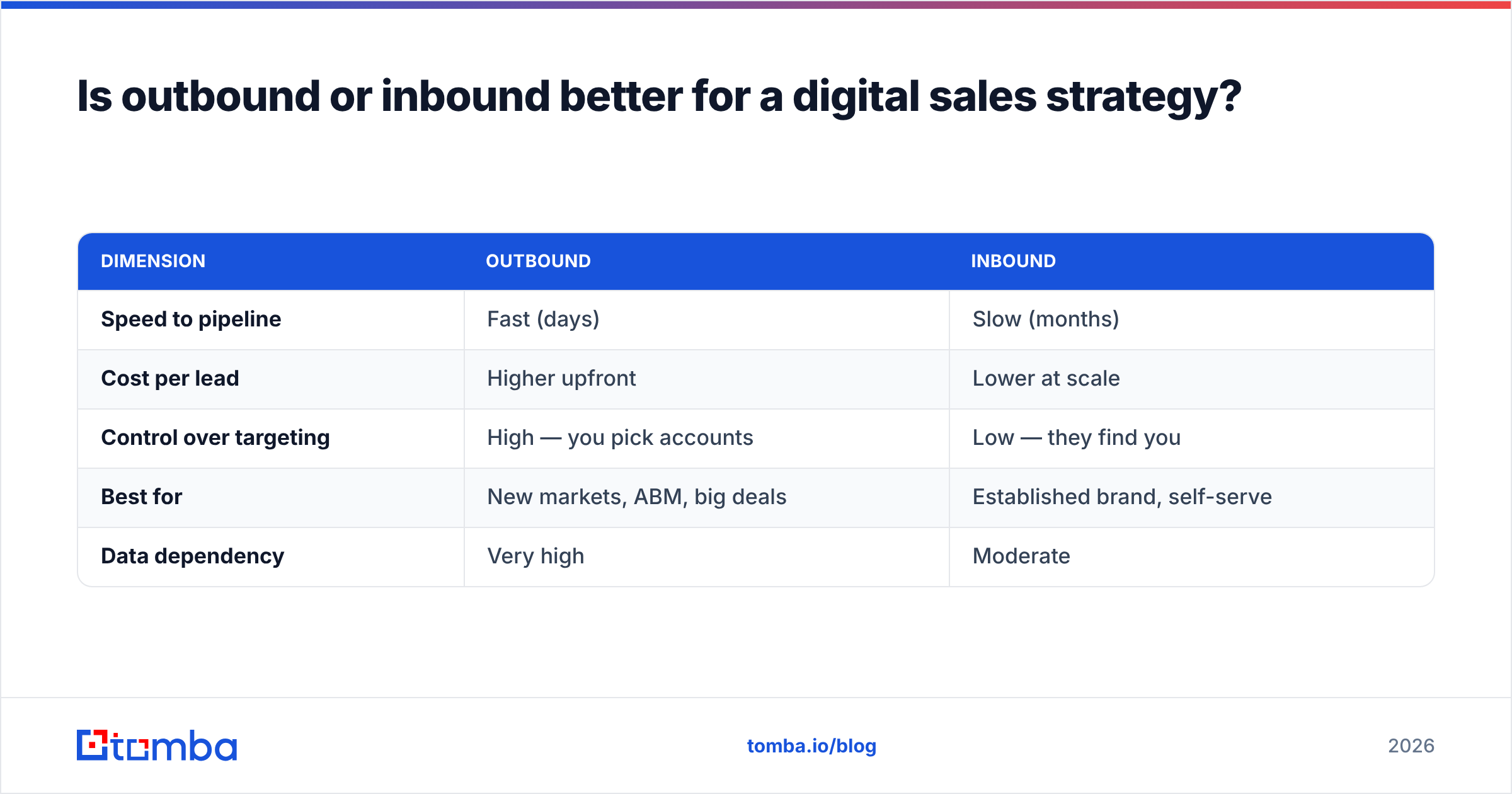
Is outbound or inbound better for a digital sales strategy?#
Neither wins alone — the strongest strategies blend them, and the blend depends on your deal size and sales cycle. Outbound gives you control and speed; inbound gives you compounding trust and lower cost per lead over time.
| Dimension | Outbound | Inbound |
|---|---|---|
| Speed to pipeline | Fast (days) | Slow (months) |
| Cost per lead | Higher upfront | Lower at scale |
| Control over targeting | High — you pick accounts | Low — they find you |
| Best for | New markets, ABM, big deals | Established brand, self-serve |
| Data dependency | Very high | Moderate |
A practical rule: if your average contract value is high and your market is defined, lead with outbound and use content to warm accounts. If you sell to a huge, hard-to-target market, invest more in inbound and use outbound to chase the hand-raisers. Most teams run both and let the data tell them where to shift budget each quarter.
How do you build a multichannel outreach motion?#
Pick two or three channels, sequence them around buyer behavior, and stop treating "more channels" as automatically better. A tired seven-email drip to a dead address is not a strategy. A three-touch sequence that combines a verified email, a relevant LinkedIn note, and a well-timed call is.
A simple, effective structure:
- Trigger — something happened (a role change, funding, a site visit, content download). Start here, not on a random Tuesday.
- Email one — short, specific to the trigger, one clear ask. Send only to verified addresses.
- LinkedIn touch — a light connection or comment that references the same context. Track LinkedIn outreach separately from email.
- Call — reference the email and the trigger; you're now a familiar name, not a cold voice.
- Break-up — a final, low-pressure message that often pulls surprising replies.
The through-line is relevance over volume. Every added channel should say the same coherent thing, not multiply the noise.

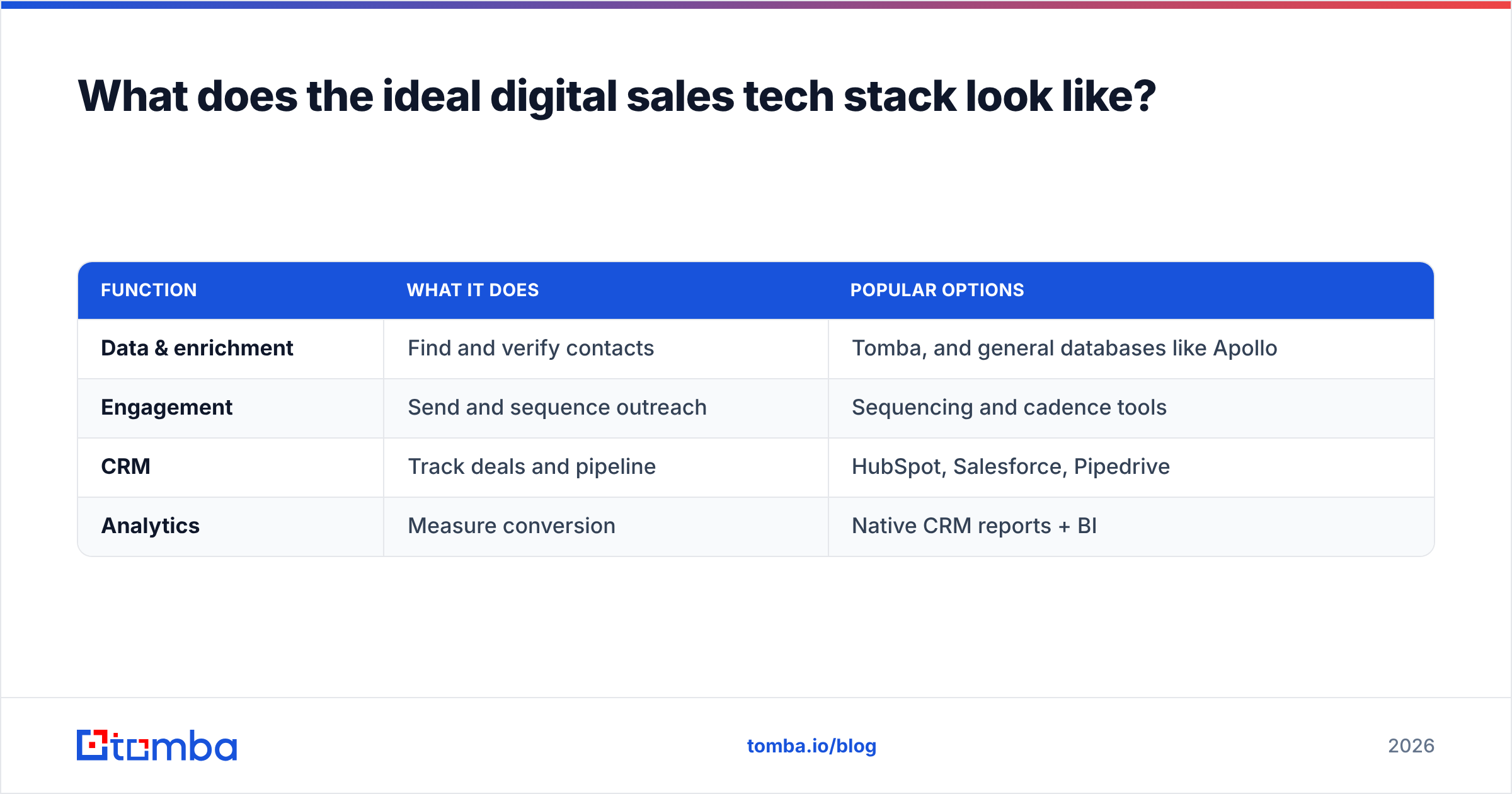
What does the ideal digital sales tech stack look like?#
A good stack covers four functions with the fewest tools that will do the job well: data, engagement, CRM, and analytics. Tool sprawl is a real tax — every integration you bolt on is another thing that breaks and another login your reps ignore.
| Function | What it does | Popular options |
|---|---|---|
| Data & enrichment | Find and verify contacts | Tomba, and general databases like Apollo |
| Engagement | Send and sequence outreach | Sequencing and cadence tools |
| CRM | Track deals and pipeline | HubSpot, Salesforce, Pipedrive |
| Analytics | Measure conversion | Native CRM reports + BI |
The connective tissue matters more than any single logo. If your email finder doesn't push clean records into your CRM, someone is copy-pasting, and that someone will eventually stop. Tomba integrates with tools like HubSpot, Salesforce, and Zapier, plus a Chrome extension and an API for teams that want to wire data into their own workflows. When evaluating options, cross-check real reviews on G2 rather than trusting vendor claims — including ours.
Keep the stack lean. You can always add a tool. It's much harder to rip one out once three workflows depend on it.
Which metrics actually measure a digital sales strategy?#
Measure pipeline created, conversion rate by stage, and win rate — the numbers a CFO cares about — and treat activity metrics as diagnostics only. Here's the hierarchy that keeps teams honest:
- Pipeline created — dollar value of new qualified opportunities. This is the headline.
- Conversion rate by stage — where deals leak. If lead-to-meeting is fine but meeting-to-proposal is terrible, that's a qualification or discovery problem, not a data problem.
- Win rate — of the deals you work, how many close. Rising win rate usually means better targeting.
- Response rate — a fast signal for message and data quality. Low response often means bad data before bad copy.
- Cost per opportunity — ties spend to outcome and exposes tools that don't pay for themselves.
Activity metrics — emails sent, calls dialed, connects — are useful only as a way to explain the outcome numbers. On their own they encourage exactly the spray-and-pray behavior a real strategy is supposed to kill. HubSpot's sales research consistently shows that teams tracking outcome metrics outperform those chasing raw activity.
How do you actually roll this out in 90 days?#
Start small, prove the loop, then scale. Trying to build the whole system at once guarantees nothing gets finished.
- Days 1–15: Define and clean. Write your ICP down in one page. Build a target list of accounts that match it. Verify the contact data before anything else — a clean list of 200 beats a dirty list of 2,000.
- Days 16–45: Launch one motion. Pick a single trigger and a single two-channel sequence. Send only to verified contacts. Track response and meetings booked.
- Days 46–75: Read the data. Find your worst-converting stage and fix that one thing. Usually it's targeting or the opening message, rarely the sixth follow-up.
- Days 76–90: Scale what worked. Add a channel or a second trigger. Wire your data tool into your CRM so the clean records flow automatically. Document the playbook so a new rep can run it.
By day 90 you don't have a perfect machine — you have a working loop you can trust and improve. That's the whole point of a strategy: not one great campaign, but a system that gets better every quarter.
Get the data layer right first#
Every part of a digital sales strategy — targeting, outreach, forecasting — rests on knowing you can actually reach the people you've decided to sell to. That starts with accurate, verified contact data. The Tomba Email Finder helps you find and verify professional email addresses by name, company, or domain, so your sequences hit real inboxes instead of bouncing and burning your sender reputation. It plugs into the CRM and automation tools you already use, and the free tier gives you 25 searches a month to test the fit before you commit; paid plans start at $49/mo, with full Tomba pricing laid out plainly. Build the strategy on clean data, and the rest of the playbook finally has something solid to stand on.
Related guides#
Ready to find emails that actually work?
Join 150,000+ professionals who stopped guessing and started sending. Free credits on signup — no credit card required.
Get the Tomba newsletter
Practical outbound tactics and product updates — once every two weeks.
About the author