DiscoverOrg vs Dun Bradstreet: 2026 B2B Data Showdown
DiscoverOrg (now ZoomInfo) and Dun & Bradstreet sell very different data. One arms your SDRs with direct dials, the other underwrites your credit risk. Here is which one your revenue team actually needs — and what it costs.
DiscoverOrg vs Dun Bradstreet is the wrong fight for most teams. One sells people. The other sells companies. Here is what each one does, what it costs, and when you need neither.
TL;DR
- DiscoverOrg is now ZoomInfo. The two merged in 2019. Its org charts, direct dials, and tech data now ship inside ZoomInfo. A 2026 "DiscoverOrg" pitch means ZoomInfo.
- Dun & Bradstreet is not a prospecting tool. It sells company facts and credit risk, built on the D-U-N-S Number, family trees, and payment history.
- They overlap on about 20% of the job. Both confirm a company exists. Only ZoomInfo tells you who to email today. Only D&B tells you if that company pays its bills.
- Both cost five figures. Plan on $15,000–$40,000 a year for ZoomInfo, and as much or more for D&B.
- Most teams overbuy. If you only need work emails and phone numbers, an email finder at $49–$249/mo covers it.
What happened to DiscoverOrg?#
DiscoverOrg spent a decade as the gold standard for human-checked org charts in IT, marketing, finance, and HR. A research team called into companies and mapped who reported to whom. They re-checked each record every 90 days. That produced fewer records than scraped databases. Each record was worth far more.
In February 2019, DiscoverOrg bought ZoomInfo and took its name. The old data set — org charts, direct dials, scoops, tech stacks — now lives inside ZoomInfo. The product still exists. Only the label changed.
So why do buyers still search for DiscoverOrg vs Dun Bradstreet? Because the real question never went away. Do you need contact data or company data? DiscoverOrg stood for the first camp. D&B still owns the second.
What does Dun & Bradstreet sell?#
Dun & Bradstreet has sold business data since 1841. Its core asset is not a contact list. It is a lasting map of legal business entities.
What you actually buy:
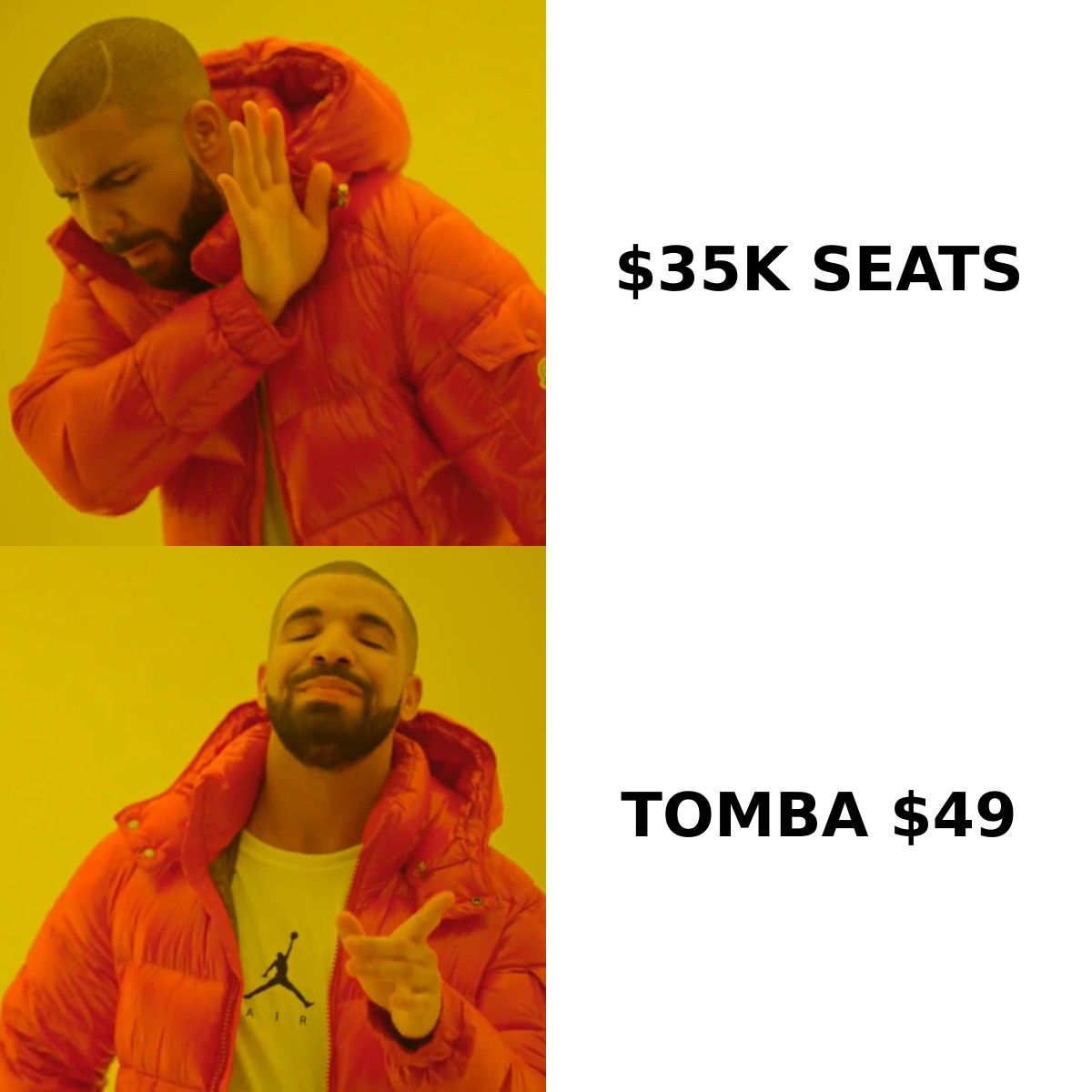
- The D-U-N-S Number — a nine-digit ID for a business location. Banks, governments, and buying teams use it worldwide.
- Corporate family trees — parent, HQ, and global owner. This is what shows that the 40-person team you pitch rolls up to a Fortune 100 parent.
- Paydex and risk scores — payment history and failure risk. Finance and credit teams live here.
- Company facts at scale — revenue, headcount, SIC/NAICS, ownership, and age, across some 500 million entities.
- D&B Hoovers — the sales front end: account search, alerts, some contacts, and CRM push.
- Data Blocks and APIs — the plumbing that enriches your CRM at the company level.
D&B does ship contacts inside Hoovers. But contacts are not the point of the product. Direct dials and current work emails at mid-market SaaS firms are thin, and often stale.
DiscoverOrg vs Dun Bradstreet: head to head#
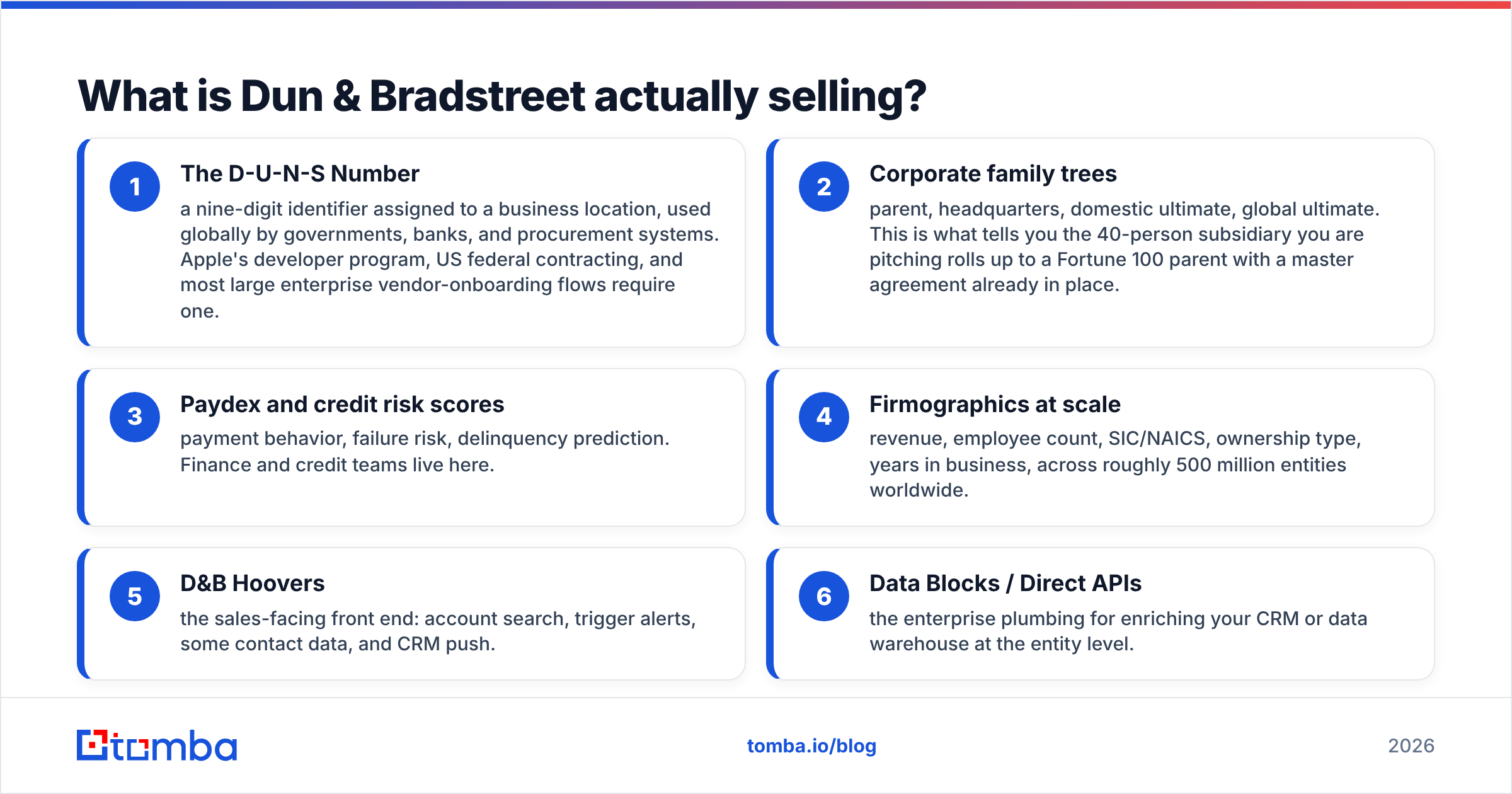
| Dimension | DiscoverOrg / ZoomInfo | Dun & Bradstreet |
|---|---|---|
| Primary unit of data | Person (contact record) | Legal entity (D-U-N-S) |
| Company coverage | ~100M+ companies | ~500M+ entities globally |
| Contact records | ~260M professional profiles | Materially smaller, Hoovers-gated |
| Direct dial phone numbers | Core strength, tens of millions | Limited, mostly switchboard |
| Org charts / reporting lines | Yes — the original DiscoverOrg asset | No |
| Corporate family trees | Basic parent/child | Best in class, multi-level global |
| Credit & risk scoring | No | Yes — Paydex, failure score, delinquency |
| Technographics | Yes, ~30K+ tracked technologies | Limited |
| Intent data | Yes (bidstream + co-op) | Yes (via D&B Buyer Intent) |
| Compliance / KYC use | Not designed for it | Yes — sanctions, beneficial ownership |
| Typical annual contract | $15K–$40K+ | $12K–$50K+ (block-dependent) |
| Free tier | No | No |
| Best buyer | SDR/AE teams doing outbound | Finance, procurement, RevOps, credit |
Read that table twice before you book a demo. Many of these reviews drag on for two months. Most of them end in ten minutes once someone asks one question. Do we need a phone number or a risk score?
Which one is better for outbound?#
ZoomInfo, and it is not close.
Say your reps want VPs of Engineering at SaaS firms with 200 to 2,000 staff who run Kubernetes. The DiscoverOrg data was built for that job. Org charts show the reporting line, so you pick the real buyer. Direct dials skip the front desk. Scoops flag funding rounds and new hires, which gives you a reason to call.
D&B tells you the company exists, what it earns, and who owns it. It will not hand you that VP's mobile number.
D&B does win on account choice at the top end. Sell to global manufacturers, and you need to know that seven oddly named entities are one buying group. The D&B family tree earns its fee there. Nobody maps hierarchy better.
Which one is better for clean data?#
Dun & Bradstreet, by a wide margin.
The D-U-N-S Number works as a primary key. Merge Salesforce, NetSuite, a warehouse, and three CRMs from past deals, and you need an ID that survives name changes, mergers, and address moves. That is why D&B sits inside Salesforce and other large stacks.
ZoomInfo enriches too. Its CRM sync is strong on job title, department, seniority, and tech stack. But it does not fold one corporate group into one record. It was never built for checks like sanctions screening.
Many RevOps teams split the work:
- D&B owns the account object — legal name, hierarchy, industry codes, risk.
- ZoomInfo owns people — titles, phones, emails.
- A cheap point tool fills the gaps that both platforms miss.
That third line is where the wasted spend hides. You do not need a $30K contract to check that first.last@company.com is real.
What do they cost in 2026?#
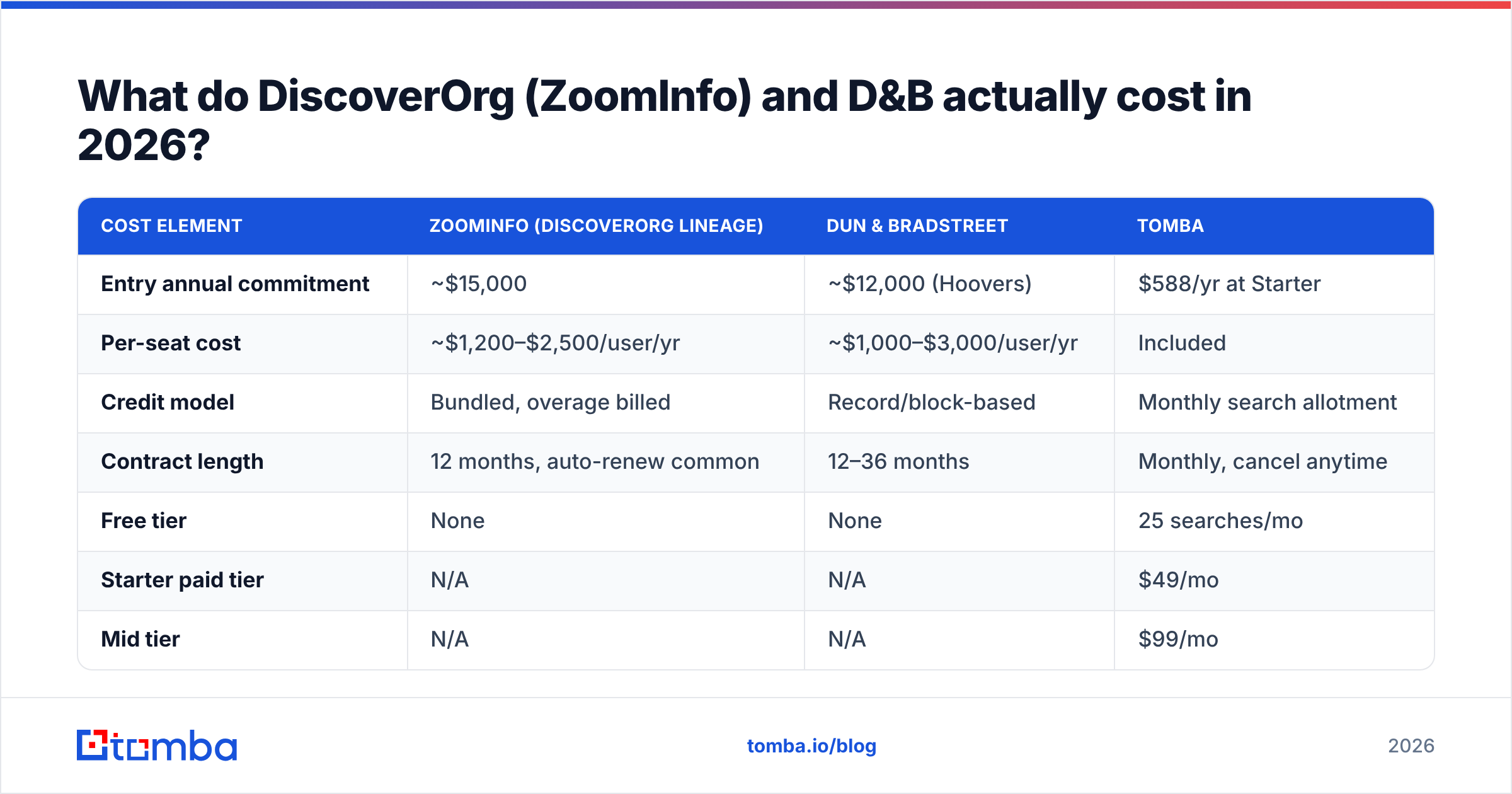
Neither firm posts list prices, which tells you something about the sales motion. Based on public contracts, G2 reviews, and buyer reports:
| Cost element | ZoomInfo (DiscoverOrg lineage) | Dun & Bradstreet | Tomba |
|---|---|---|---|
| Entry annual commitment | ~$15,000 | ~$12,000 (Hoovers) | $588/yr at Starter |
| Per-seat cost | ~$1,200–$2,500/user/yr | ~$1,000–$3,000/user/yr | Included |
| Credit model | Bundled, overage billed | Record/block-based | Monthly search allotment |
| Contract length | 12 months, auto-renew common | 12–36 months | Monthly, cancel anytime |
| Free tier | None | None | 25 searches/mo |
| Starter paid tier | N/A | N/A | $49/mo |
| Mid tier | N/A | N/A | $99/mo |
| Pro tier | N/A | N/A | $249/mo |
| API access | Add-on, often extra | Data Blocks, priced separately | Included on paid plans |
Two things blow up budgets. First, seat minimums. You rarely buy three seats. You buy ten. Second, credit overages. Export caps are tighter than the demo suggests, and going over mid-year costs real money.
Before you renew, price the same workload against Tomba pricing. Most teams find that their usage is just "find and verify a work email."
Are there other options?#
Yes. For most teams under 200 staff, DiscoverOrg vs Dun Bradstreet is a false choice.
- ZoomInfo — deepest contacts and org charts. Highest price. Firm contracts. Best for funded outbound teams.
- Dun & Bradstreet — entity truth, hierarchy, risk. Best when finance or compliance shares the bill.
- Apollo.io — contacts plus sequencing in one seat, at a much lower price. Phone data is weaker. See the Apollo alternative guide.
- Clearbit (now HubSpot Breeze Intelligence) — strong company data by API, weaker on contacts. See the Clearbit alternative page.
- BookYourData — pay-as-you-go contact lists with no annual lock-in. Good when you want to own a list outright.
- Tomba — email finding, verification, catch-all handling, and API access. Free to start, $249/mo at the top.
How should you choose?#
Run this in order. It takes about twenty minutes.
- Name the job in one sentence. "Reach 500 IT directors this quarter" points to ZoomInfo. "Clean 90,000 accounts and score credit risk" points to D&B.
- Count the people who will log in. Under five users, seat minimums get costly. A per-credit tool usually wins.
- Audit what you already own. Many teams pay twice for data their CRM hands them free.
- Test on your own list. Give each vendor 50 real target accounts. Count usable dials and valid emails. Demo lists are cherry-picked.
- Ask for the year-two price in writing. Both vendors price year one low, then lift it on renewal.
Where does an email finder fit?#
Between the two giants sits a large, dull middle. These are teams that already picked their accounts. They just need current, working contact details.
That job needs no research desk and no global risk graph. It needs pattern detection, live SMTP checks, and honest catch-all handling. A domain search returns the people at a company you already chose. An email verifier keeps bounces below the line that protects email deliverability. A catch-all verifier handles the 20% of B2B domains that accept every address and tell you nothing.
Run it next to D&B if you need hierarchy and risk. Run it instead of ZoomInfo if your volume does not justify $30K. Run it as backup if you keep both. Every large database has holes, often at the exact firms your best rep is working.
The verdict#
Buy ZoomInfo if outbound volume is your constraint. Nothing else pairs org charts, direct dials, and tech data at that depth.
Buy Dun & Bradstreet if entity truth is your constraint. Think hierarchy, credit exposure, or compliance screening. The D-U-N-S Number is infrastructure, not a feature.
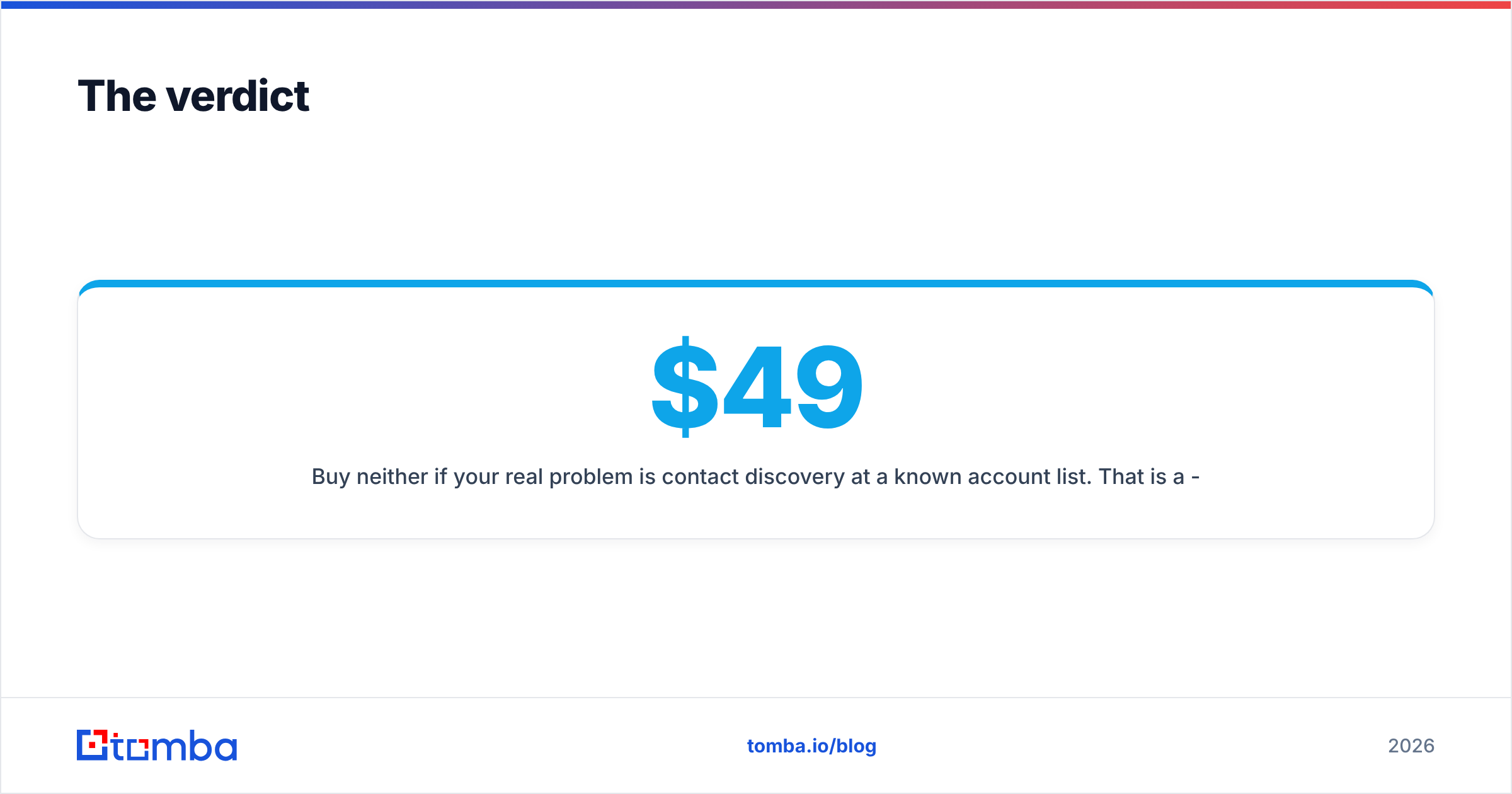
Buy neither if you only need contacts at a known account list. That is a $49 to $249 problem, not a $30,000 one. Mixing up the two is the most common budget mistake in B2B data.
Ready to see how much of your data contract you actually use? Start with the Tomba Email Finder — 25 free searches a month, no contract, no seat minimums. Point it at 50 accounts from your target list. Compare the hit rate to your current vendor. Let the numbers lead the renewal talk.
Related guides#
Ready to find emails that actually work?
Join 150,000+ professionals who stopped guessing and started sending. Free credits on signup — no credit card required.
Get the Tomba newsletter
Practical outbound tactics and product updates — once every two weeks.
About the author