Email Marketing Sequence: The 2026 B2B Playbook That Converts
Most sequences fail on timing and list quality, not copy. Here's the 5-email structure, the send gaps that actually work, and how to tell a nurture sequence from a drip before you build one.
TL;DR
- An email marketing sequence is a pre-built series of emails triggered by a signup, action, or list membership — not a one-off broadcast. The trigger is what makes it a sequence.
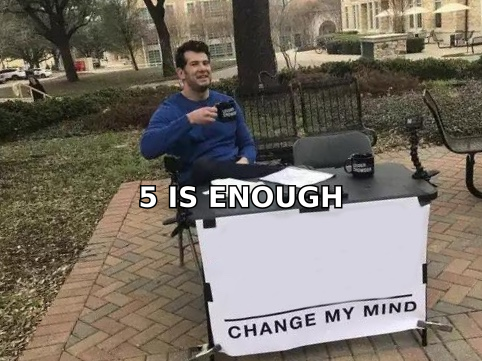
- Five emails is the sweet spot for most B2B nurture flows. Anything past seven without new information trains people to ignore you.
- Timing beats copy. A day-0 / day-2 / day-5 / day-9 / day-14 cadence outperforms every-other-day sending in almost every B2B test we've seen reported.
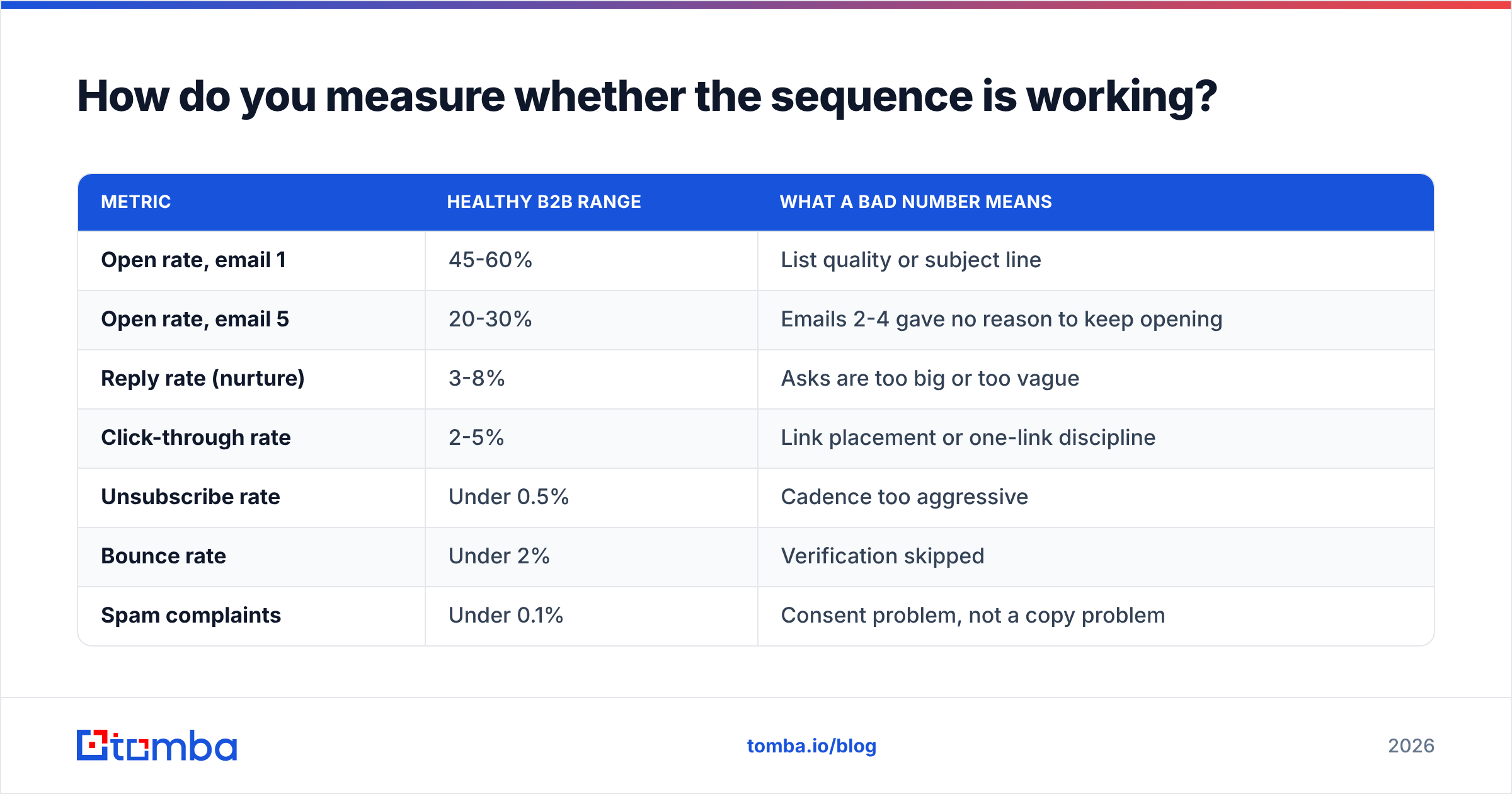
- Your bounce rate is a copy problem in disguise. A 20%+ bounce rate on email one poisons deliverability for emails two through five, no matter how good they are.
- Tool choice matters less than list hygiene. Verify contacts before the first send and half your "sequence isn't working" problems disappear.
What is an email marketing sequence?#
An email marketing sequence is a set of emails sent automatically in a fixed order after a trigger fires. Someone downloads a whitepaper, books a demo, abandons a cart, or gets added to a segment — and the platform starts walking them through a pre-written series on a schedule you defined once.
Think of it like a restaurant tasting menu versus à la carte. A broadcast newsletter is à la carte: everyone gets whatever the kitchen sent out today. A sequence is a tasting menu — each course arrives in a deliberate order, assumes you ate the last one, and builds toward a specific ending. That ordering is the entire value.
Technically, a sequence is a state machine attached to a contact record. The contact enters at step one, waits a defined interval, receives step two unless an exit condition fires (they replied, they booked, they unsubscribed), and continues until the flow ends. Everything else — merge tags, A/B splits, branch logic — is decoration on that core loop.
How is a sequence different from a drip, a campaign, and a newsletter?#
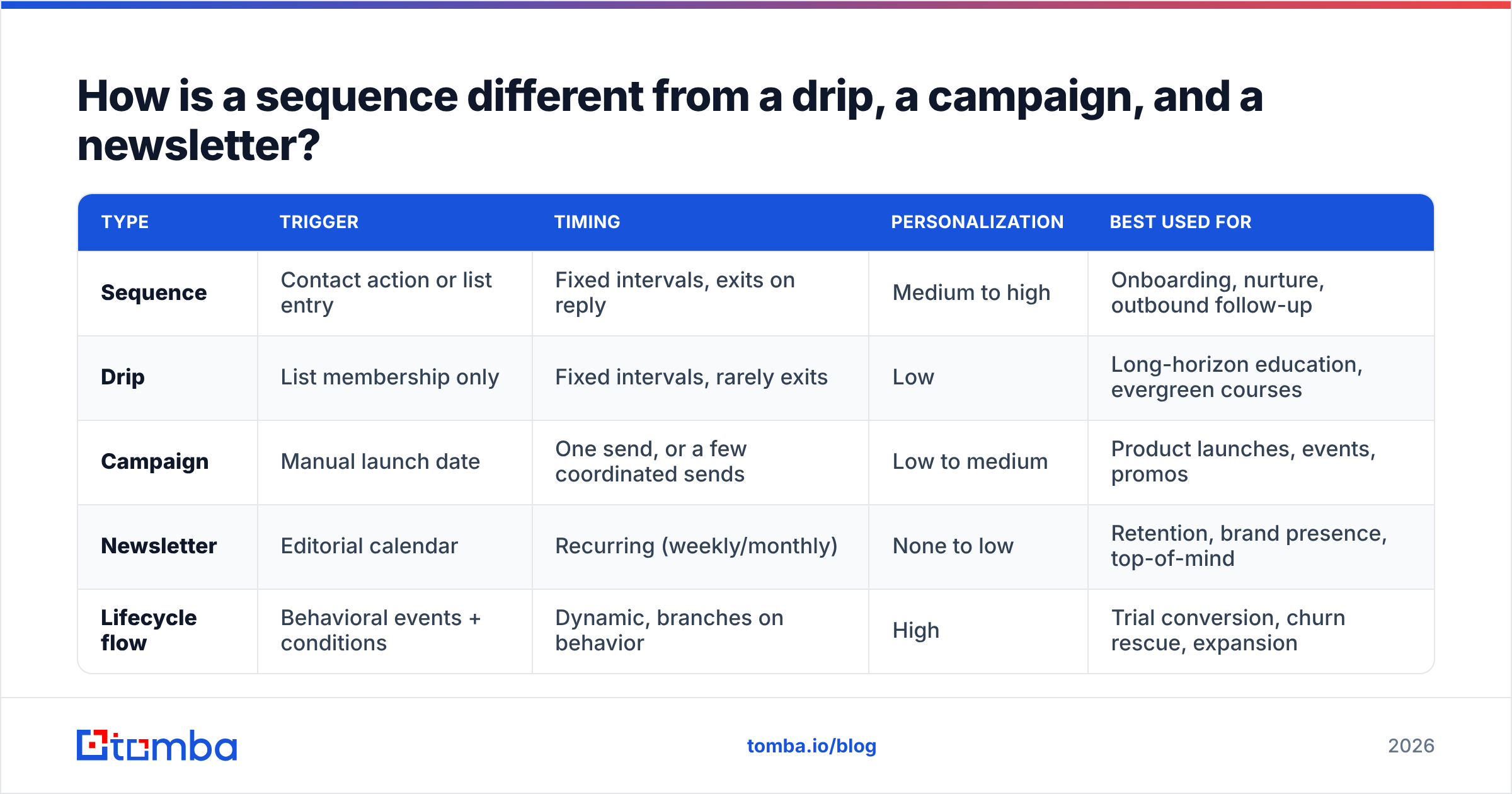
These four words get used interchangeably in sales meetings and they should not be. Here's the practical distinction:
| Type | Trigger | Timing | Personalization | Best used for |
|---|---|---|---|---|
| Sequence | Contact action or list entry | Fixed intervals, exits on reply | Medium to high | Onboarding, nurture, outbound follow-up |
| Drip | List membership only | Fixed intervals, rarely exits | Low | Long-horizon education, evergreen courses |
| Campaign | Manual launch date | One send, or a few coordinated sends | Low to medium | Product launches, events, promos |
| Newsletter | Editorial calendar | Recurring (weekly/monthly) | None to low | Retention, brand presence, top-of-mind |
| Lifecycle flow | Behavioral events + conditions | Dynamic, branches on behavior | High | Trial conversion, churn rescue, expansion |
The confusion costs real money. Teams build a newsletter, call it a nurture sequence, and then wonder why their conversion tracking looks flat. A newsletter has no destination. A sequence does — every email in it should push toward one measurable next action.
What sequences should you actually run in 2026?#
You do not need eleven flows. Most B2B teams get 80% of the value from five, and running fewer well beats running many badly.
Welcome sequence (3-5 emails). Fires on signup or first download. Sets expectations, delivers the promised asset, and establishes what you'll send and how often. This flow reliably posts the highest open rates in your account — 50-60% on email one is normal — so do not waste it on a logo-heavy "welcome to the family" template.
Lead nurture sequence (5-7 emails). Fires when someone shows interest but isn't ready to buy. Each email teaches one thing and earns the next open. No pitch until email three at the earliest.
Outbound follow-up sequence (4-6 emails). Cold, deliverability-sensitive, plain-text. Different discipline entirely — the copy is short, the sending volume per inbox is capped, and the list needs verification before the first send.
Trial-to-paid sequence (4-6 emails). Triggered by product events, not calendar days. "You created a project but haven't invited anyone" outperforms "Day 4 of your trial" every time.
Re-engagement sequence (3 emails). Fires at 90 or 180 days of inactivity. Ends with a clean permission ask, then suppresses non-responders. Painful, necessary, and the single fastest way to lift your domain's sender reputation.
What does a five-email B2B nurture sequence look like?#
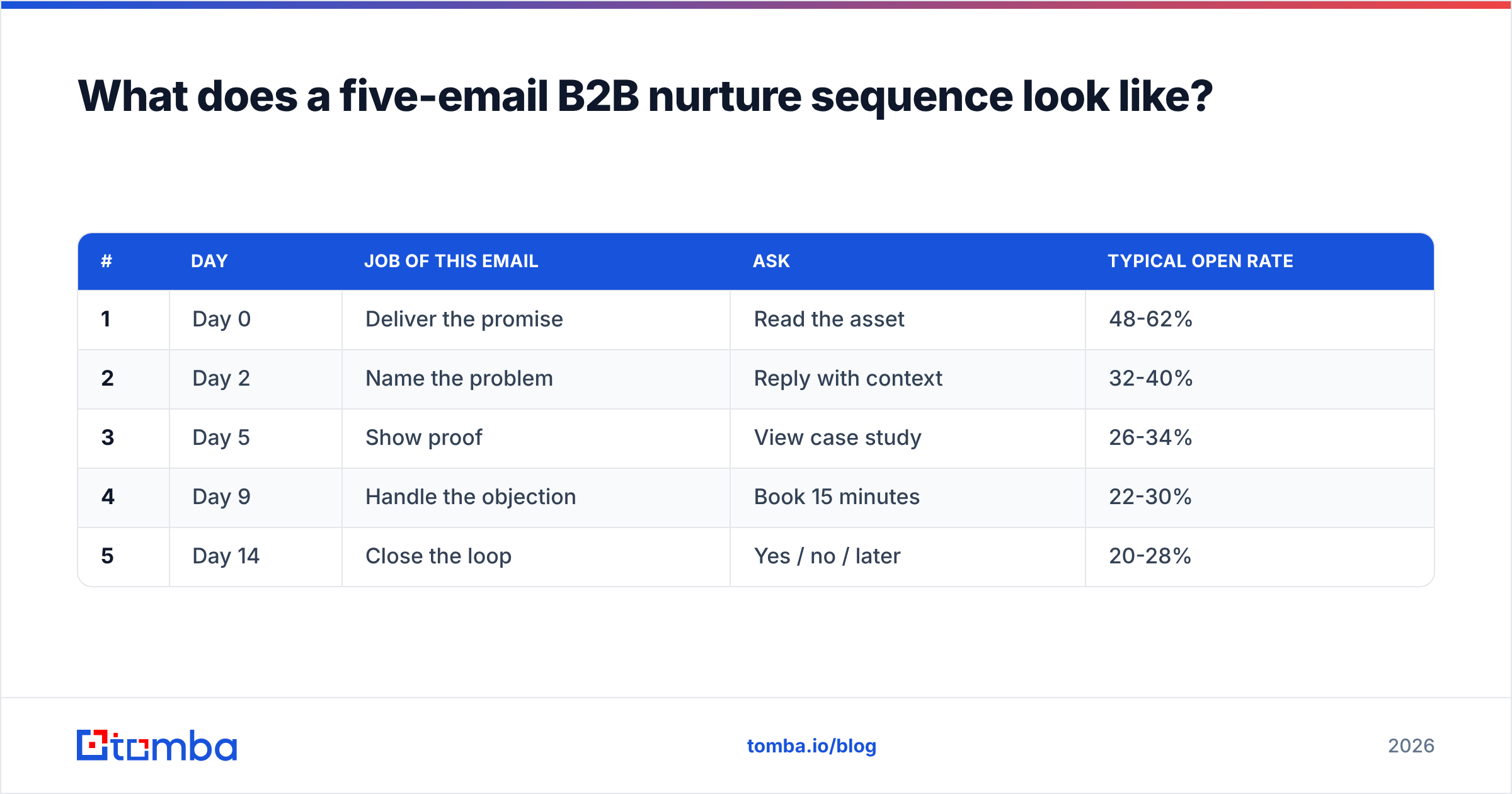
Here's a structure that holds up across most mid-market SaaS and services offers. Each email has one job. If you can't name the job in four words, cut it.
| # | Day | Job of this email | Ask | Typical open rate |
|---|---|---|---|---|
| 1 | Day 0 | Deliver the promise | Read the asset | 48-62% |
| 2 | Day 2 | Name the problem | Reply with context | 32-40% |
| 3 | Day 5 | Show proof | View case study | 26-34% |
| 4 | Day 9 | Handle the objection | Book 15 minutes | 22-30% |
| 5 | Day 14 | Close the loop | Yes / no / later | 20-28% |
Notes on each:
Email 1 — deliver the promise. Send the thing they asked for in the first sentence, above the fold, no marketing preamble. Then, in one line, tell them what's coming next and when. This one line is why your email two open rate holds.
Email 2 — name the problem. Not your product. The specific operational pain the asset implied. End with a genuine question that a human would answer in under ten words. Replies are your deliverability engine.
Email 3 — show proof. One customer, one number, one sentence of context. "Ops team at a 40-person agency cut list-cleaning time from six hours to twenty minutes" beats a three-paragraph case study summary. Link out, don't paste in.
Email 4 — handle the objection. Pick the single objection your sales team hears most and answer it directly in the subject line. "It's probably too expensive for us" as a subject gets opened by exactly the people who think that.
Email 5 — close the loop. The permission-to-close email. Short, unembarrassed, offers an easy exit. Counterintuitively this often gets the highest reply rate in the flow because it costs nothing to answer.
If you want a starting draft for each of these, our cold email templates library covers the same five slots, and the subject line generator is useful for stress-testing the objection email in slot four.
How long should the gaps between emails be?#
Expanding gaps, not fixed ones. The pattern that works is roughly 2 → 3 → 4 → 5 days, and the logic is simple: attention decays, so the earliest emails ride the highest intent while later ones need breathing room to avoid reading as pressure.
Every-day sending is the most common self-inflicted wound in B2B sequences. It reads as automation, spikes unsubscribes around email three, and — worse — concentrates your sending volume in a way that makes mailbox providers suspicious. Every-14-days sending is the opposite failure: by email three nobody remembers who you are and you're starting from zero on every send.
Two practical adjustments:
- Respect the working week. Send Tuesday through Thursday for B2B. A day-2 gap that lands on Saturday should slide to Monday. Most platforms have a "business days only" toggle — turn it on.
- Exit on reply, always. Nothing damages trust faster than an automated follow-up arriving after someone already responded. Verify this setting works before launch by replying to your own test contact.
Why do good sequences still fail?#
Because the list was never clean. This is the part that gets skipped, and it's the part that determines whether the other work matters.
Here's the mechanic. Mailbox providers score your sending domain on bounce rate, spam complaints, and engagement. A sequence sends five times to the same list. If 25% of that list is invalid — stale job changes, typo'd form fills, scraped guesses — you're generating five rounds of hard bounces against the same domain in a two-week window. By email three, your genuinely valid contacts are landing in Promotions or Spam. The copy never got a fair test.
Industry guidance is consistent that bounce rates above roughly 2% start causing problems, and Mailchimp's published benchmark data puts average hard bounces well under 1% across most B2B categories. If you're above 2%, fix the list before you touch the copy.
The pre-launch checklist that prevents this:
- Verify every address through an email verifier before the first send — not after the bounces come back.
- Check catch-all domains separately. They accept everything at the SMTP layer and tell you nothing, which is why a catch-all verifier matters for enterprise lists where catch-all is the default config.
- Confirm SPF, DKIM, and DMARC are aligned on the sending domain. Run a quick SPF checker pass; misaligned records are still the most common invisible cause of Google and Microsoft filtering.
- Warm the domain if it's new. Two to four weeks minimum before any sequence at volume.
- Suppress your existing customers. Obvious, routinely forgotten, and quietly the most expensive mistake on this list.
Which tool should send your email marketing sequence?#
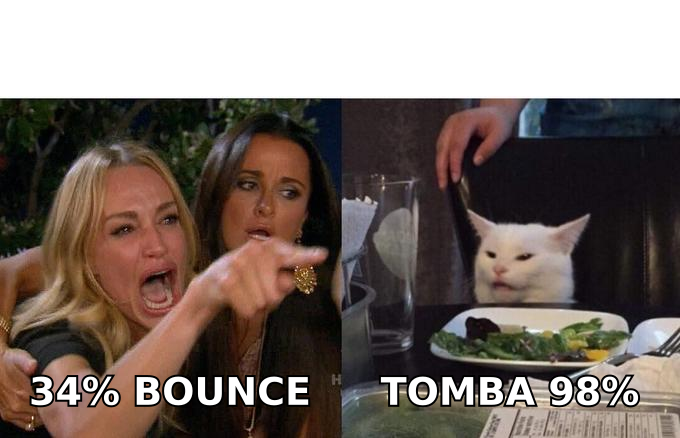
Depends less on features than on which motion you're running. Marketing nurture, product lifecycle, and cold outbound have genuinely different requirements, and tools built for one are usually bad at another.
| Mailchimp | HubSpot Marketing | Customer.io | Cold-outbound tools | |
|---|---|---|---|---|
| Best for | SMB newsletters + simple flows | Full-funnel B2B nurture | Product-event lifecycle | Outbound follow-up at volume |
| Trigger types | List, tag, basic behavior | Form, lifecycle stage, CRM field | Any product event via API | Prospect list import |
| Branch logic | Basic | Strong | Strongest | Minimal |
| CRM depth | Light | Native, deep | Integration-dependent | Usually one-way sync |
| Inbox rotation | No | No | No | Yes — core feature |
| Entry cost | Free tier, paid from ~$13/mo | Free tier, Starter from ~$20/seat | Usually ~$100/mo+ | Typically $30-100/mo |
| Watch out for | Contact-count pricing creep | Marketing Contacts billing model | Requires engineering time | Deliverability risk if list is dirty |
List pricing changes constantly — check each vendor's page before you commit, and read the contact-counting rules carefully, since that's where the surprise invoices come from. HubSpot bills on marketing contacts rather than total contacts, which is either a bargain or a trap depending on how you segment. Cross-shopping on G2's marketing automation category is worth twenty minutes before a annual commitment.
The uncomfortable truth: teams switch sequence tools far more often than they need to. Nine times out of ten the new tool produces the same numbers, because the constraint was never the sender.
How do you measure whether the sequence is working?#
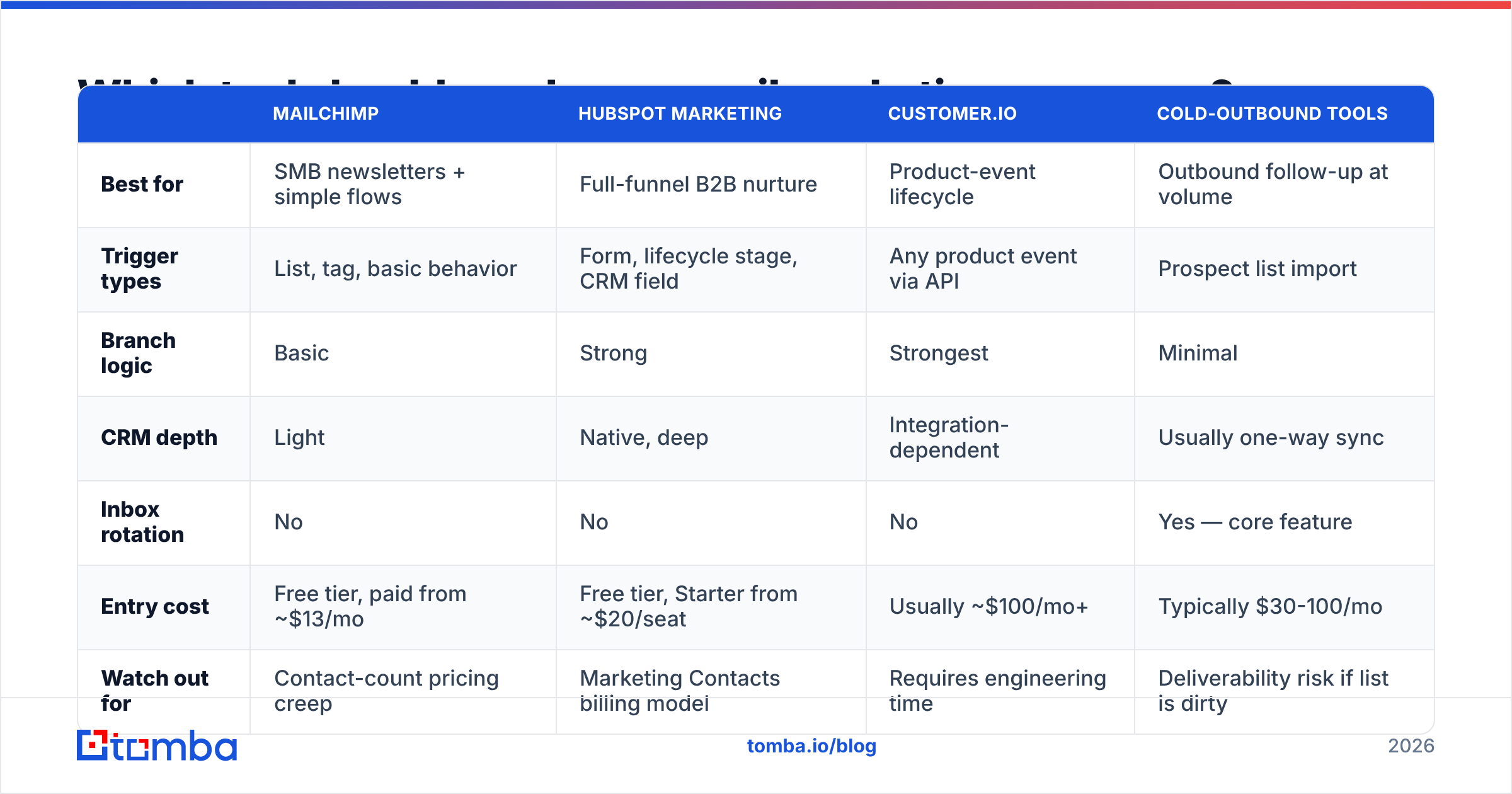
Per-email, not per-sequence. Aggregate numbers hide exactly the step that's broken.
| Metric | Healthy B2B range | What a bad number means |
|---|---|---|
| Open rate, email 1 | 45-60% | List quality or subject line |
| Open rate, email 5 | 20-30% | Emails 2-4 gave no reason to keep opening |
| Reply rate (nurture) | 3-8% | Asks are too big or too vague |
| Click-through rate | 2-5% | Link placement or one-link discipline |
| Unsubscribe rate | Under 0.5% | Cadence too aggressive |
| Bounce rate | Under 2% | Verification skipped |
| Spam complaints | Under 0.1% | Consent problem, not a copy problem |
Read the table left to right and you get a diagnosis, not a report card. Open rate falling off a cliff at email three means email two under-delivered. High clicks with low replies means your CTA is a landing page when it should be a question. High unsubscribes with healthy opens means the content is fine and the cadence isn't.
One caveat worth stating plainly: open rates have been unreliable since Apple's Mail Privacy Protection started pre-fetching images. Treat opens as a directional trend, not a measurement, and weight replies and clicks far more heavily when you're deciding what to change.
What should you fix first?#
In order: list, timing, structure, copy. That order is deliberate and it is the reverse of how most teams work.
Verify the contacts. Space the sends. Give each email one job. Then, and only then, rewrite the subject lines. A five-email sequence with mediocre copy sent to a clean, correctly-timed list will beat brilliant copy sent to a list that's 30% invalid — every time, and it isn't close.
If your sequence is stalling at the top — you have companies you want to reach but not the right people inside them — that's a data problem, not a copy problem. Tomba Email Finder finds verified professional addresses by name, domain, or company, and pipes them straight into whichever platform is running your sequence. Start on the free tier at 25 searches a month, or check Tomba pricing if you're loading a full quarter's list. Clean inputs first — everything downstream gets easier.
Related guides#
Ready to find emails that actually work?
Join 150,000+ professionals who stopped guessing and started sending. Free credits on signup — no credit card required.
Get the Tomba newsletter
Practical outbound tactics and product updates — once every two weeks.
About the author