9 Best Enlyft Alternatives in 2026 for Technographic Data
Enlyft is good at telling you what software an account runs — and weak at telling you who to email. Here are 9 Enlyft alternatives compared on technographic depth, contact coverage, export limits, and real pricing.
TL;DR
Enlyft is an account-intelligence platform. It maps companies to the software they run.
It is strong at answering which companies run Salesforce, AWS, or Shopify. It is weak at answering who do I email there, and will it bounce.
Most teams shopping for Enlyft alternatives hit one of three walls: quote-only pricing with annual terms, thin or stale contact records, and export caps that make the data hard to use.
Need install-base depth? Look at HG Insights, BuiltWith, or 6sense. Need people you can actually email? You need a finder-and-verifier layer instead.
A common 2026 pattern: keep a cheap tech-signal source for targeting. Pair it with a per-lookup contact tool like Tomba ($49/mo Starter). That beats five figures for one platform that does both jobs badly.
None of these Enlyft alternatives is a drop-in clone. Pick based on which half of the job — targeting or reaching — blocks your pipeline today.
What does Enlyft actually do?#
Enlyft (formerly iDatalabs) sells account intelligence. It keeps a database of companies mapped to the technologies they use. On top of that sit firmographics: headcount, revenue band, industry, and region. It also scores accounts by fit for your product. You can see the current product on enlyft.com.
The core use case is simple. Say you sell a tool that plugs into Snowflake. You want every US company with 200+ staff that already runs Snowflake. Enlyft returns that list. Its public technology pages are also a well-known SEO asset. That is how most people first meet the brand.
The next step is where it stops being enough. A list of 4,000 accounts is not a pipeline. You still need named buyers, working email addresses, and ideally direct dials. That is where users report gaps. There are fewer contacts per account than expected. Verification status is missing. And there is no easy way to push clean records into a sequencer without a manual cleanup pass.
Why do teams look for Enlyft alternatives?#
Five reasons come up again and again in G2 review threads and RevOps communities:
Quote-only pricing. There is no public price card. That means a sales cycle, an annual contract, and a renewal talk. You may only need the data one quarter per year.
Contact depth is the weak link. Tech match rates are respectable. The person-level layer under them is where most complaints cluster: outdated titles, missing emails, no bounce guarantee.
Export and credit limits. You can see data in the UI but not export it at volume. That creates a bottleneck right when a campaign is ready to launch.
Stale install data. Tech detection decays fast. A company that uses HubSpot per a crawl from 14 months ago may have migrated twice since.
Overlap with tools you already pay for. If you run ZoomInfo, Apollo, or 6sense, much of Enlyft's value is duplicated. Procurement will notice.

What should you compare when evaluating Enlyft alternatives?#
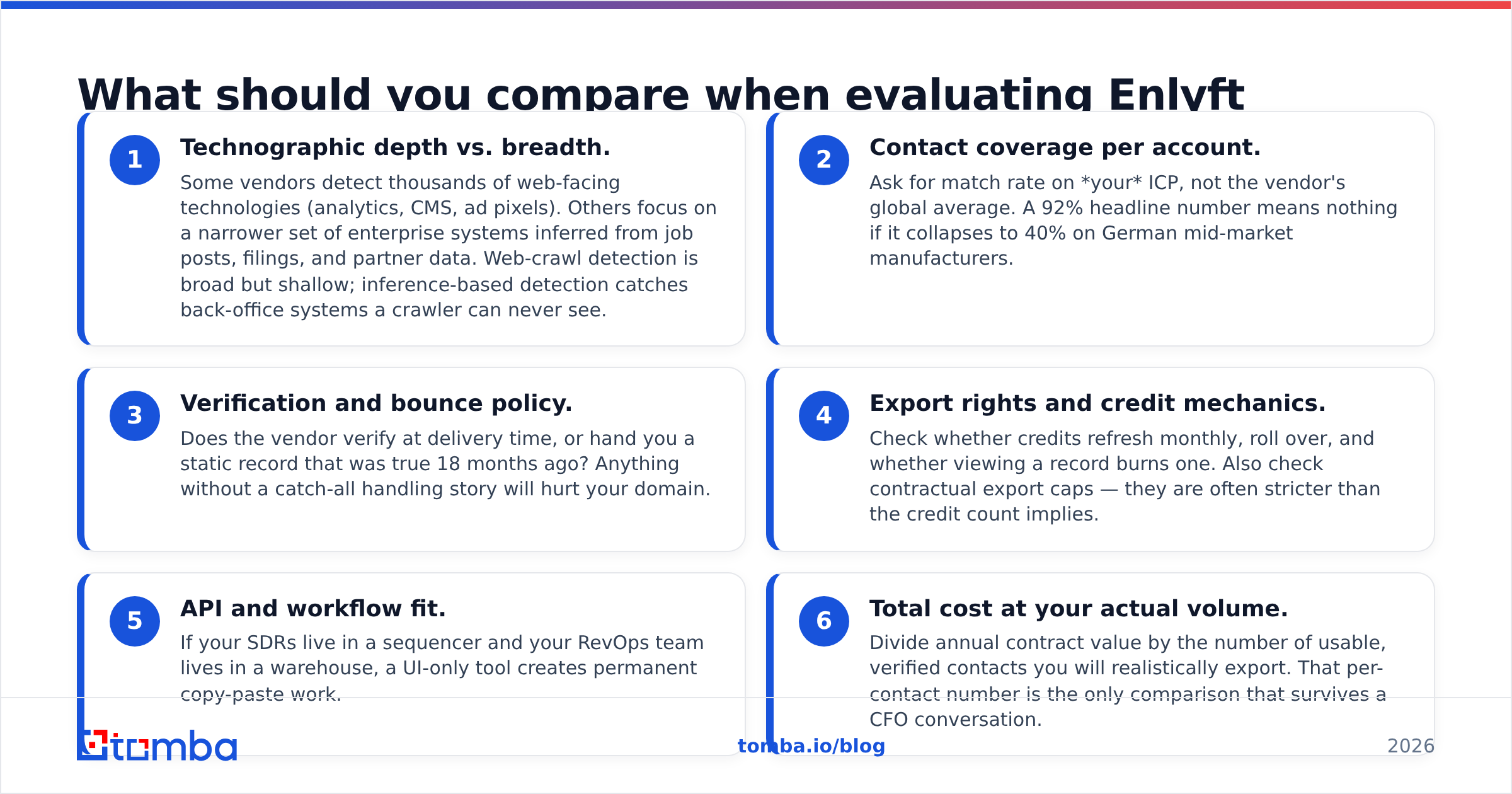
Before you look at logos, decide which of these six dimensions matters for your motion. Most buyers over-weight the first one and ignore the fourth. Then they wonder why reply rates stay flat.
Tech depth vs. breadth. Some vendors detect thousands of web-facing tools: analytics, CMS, ad pixels. Others cover a narrow set of enterprise systems, inferred from job posts, filings, and partner data. Crawl-based detection is broad but shallow. Inference catches back-office systems a crawler can never see.
Contact coverage per account. Ask for the match rate on your ICP, not the vendor's global average. A 92% headline means nothing if it drops to 40% on German mid-market manufacturers.
Verification and bounce policy. Does the vendor verify at delivery time? Or hand you a record that was true 18 months ago? Anything without a catch-all story will hurt your domain.
Export rights and credit rules. Check whether credits refresh monthly and roll over. Check whether viewing a record burns one. Then check the export caps in the contract. They are often stricter than the credit count implies.
API and workflow fit. Your reps live in a sequencer. Your RevOps team lives in a warehouse. A UI-only tool creates permanent copy-paste work.
Total cost at your real volume. Divide the annual price by the verified contacts you will truly export. That per-contact number is the only figure that survives a CFO meeting.
Which are the best Enlyft alternatives in 2026?#
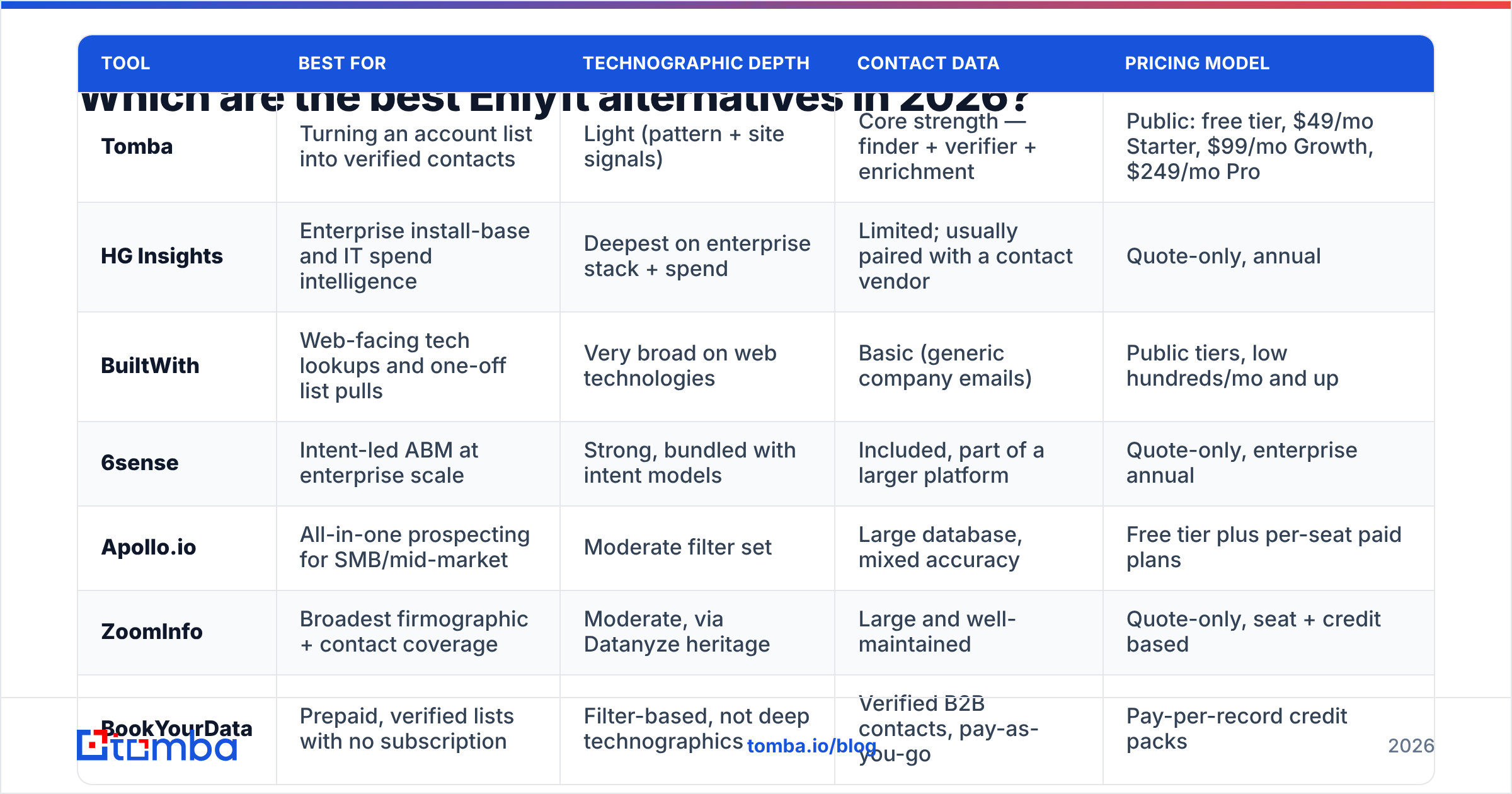
Here are nine Enlyft alternatives, sorted by the job each one does best.
| Tool | Best for | Technographic depth | Contact data | Pricing model |
|---|---|---|---|---|
| Tomba | Turning an account list into verified contacts | Light (pattern + site signals) | Core strength — finder + verifier + enrichment | Public: free tier, $49/mo Starter, $99/mo Growth, $249/mo Pro |
| HG Insights | Enterprise install-base and IT spend intelligence | Deepest on enterprise stack + spend | Limited; usually paired with a contact vendor | Quote-only, annual |
| BuiltWith | Web-facing tech lookups and one-off list pulls | Very broad on web technologies | Basic (generic company emails) | Public tiers, low hundreds/mo and up |
| 6sense | Intent-led ABM at enterprise scale | Strong, bundled with intent models | Included, part of a larger platform | Quote-only, enterprise annual |
| Apollo.io | All-in-one prospecting for SMB/mid-market | Moderate filter set | Large database, mixed accuracy | Free tier plus per-seat paid plans |
| ZoomInfo | Broadest firmographic + contact coverage | Moderate, via Datanyze heritage | Large and well-maintained | Quote-only, seat + credit based |
| BookYourData | Prepaid, verified lists with no subscription | Filter-based, not deep technographics | Verified B2B contacts, pay-as-you-go | Pay-per-record credit packs |
| Wappalyzer | Developer-friendly tech lookups and API checks | Broad on web stack | Thin | Public tiers, self-serve |
| Vainu | European company data and trigger events | Moderate | Decent in Nordics/EU | Subscription, quote-based |
HG Insights#
This is the closest thing to a like-for-like upgrade. Pick it if you loved Enlyft for the install-base data. HG goes deeper on enterprise systems. It also adds IT spend estimates, which help with territory planning and TAM sizing.
The trade-offs are the ones that pushed you off Enlyft. Pricing is enterprise. The term is annual. And the contact layer is thin, so most customers top it up elsewhere.
Pick it if: you sell six-figure deals into large enterprises and need solid spend data for account planning.
BuiltWith#
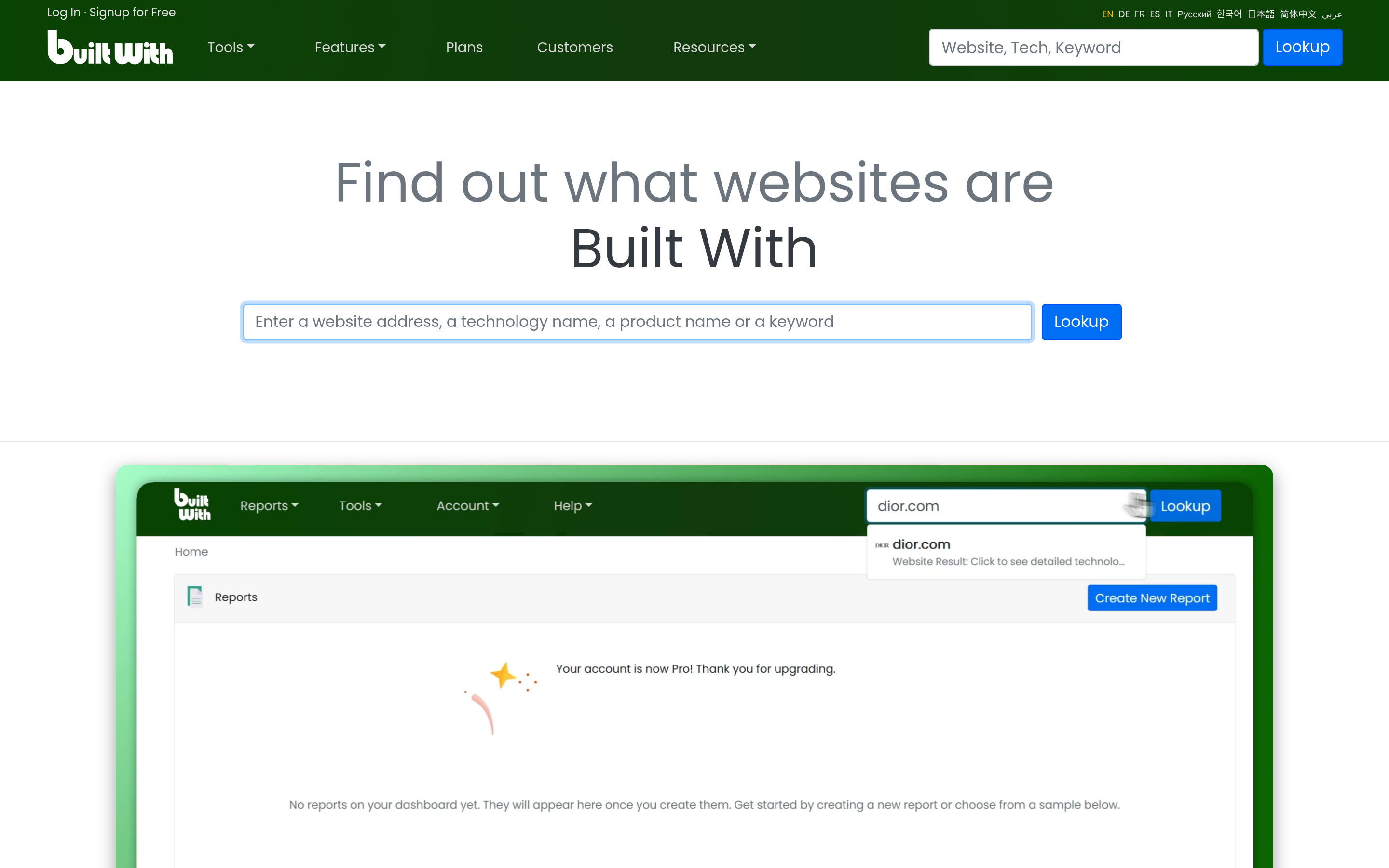
BuiltWith is the pragmatic choice. It crawls the public web and tells you what runs on a domain: CMS, ecommerce platform, analytics, payment processor, ad tech. Pricing is published. Plans start in the low hundreds per month. You can pull a list the same afternoon you sign up.
Its blind spot is anything a browser cannot see. ERP, CRM, data warehouse, HRIS — none of that shows up in page source. If your ICP is defined by back-office software, BuiltWith will not find it.
Pick it if: your target tech is web-facing and you want self-serve pricing with no sales call.
6sense#
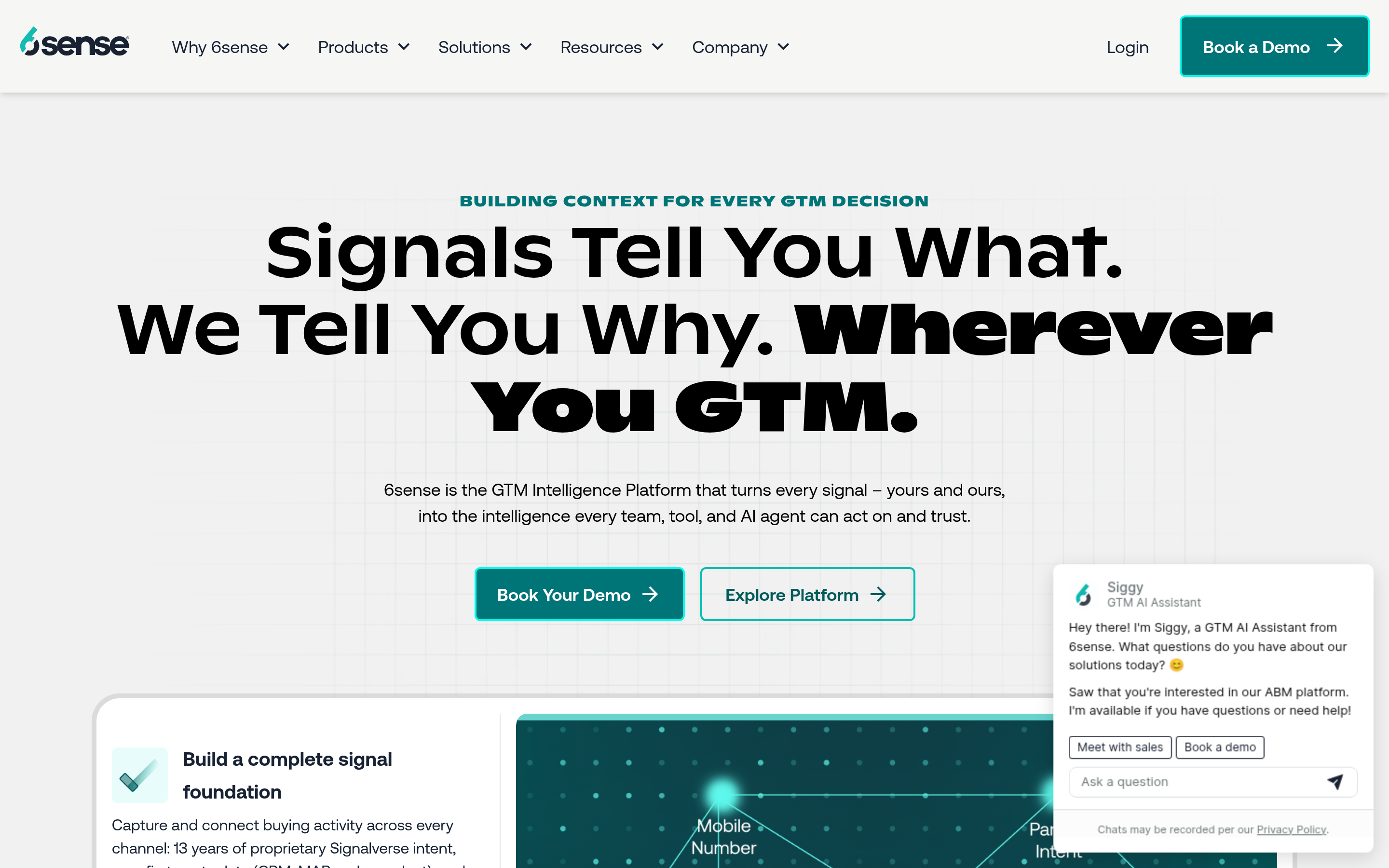
This is a different kind of purchase. 6sense wraps tech signals into a full ABM platform, with intent data, predictive scoring, and orchestration. It replaces Enlyft and several other line items. It also costs enterprise money and needs a real rollout project.
If you are weighing it, run a 6sense alternative comparison first. Most teams buying it are solving a targeting problem that a much cheaper stack also solves.
Pick it if: you already have an ABM motion, a marketing ops team, and a six-figure budget.
Apollo.io#
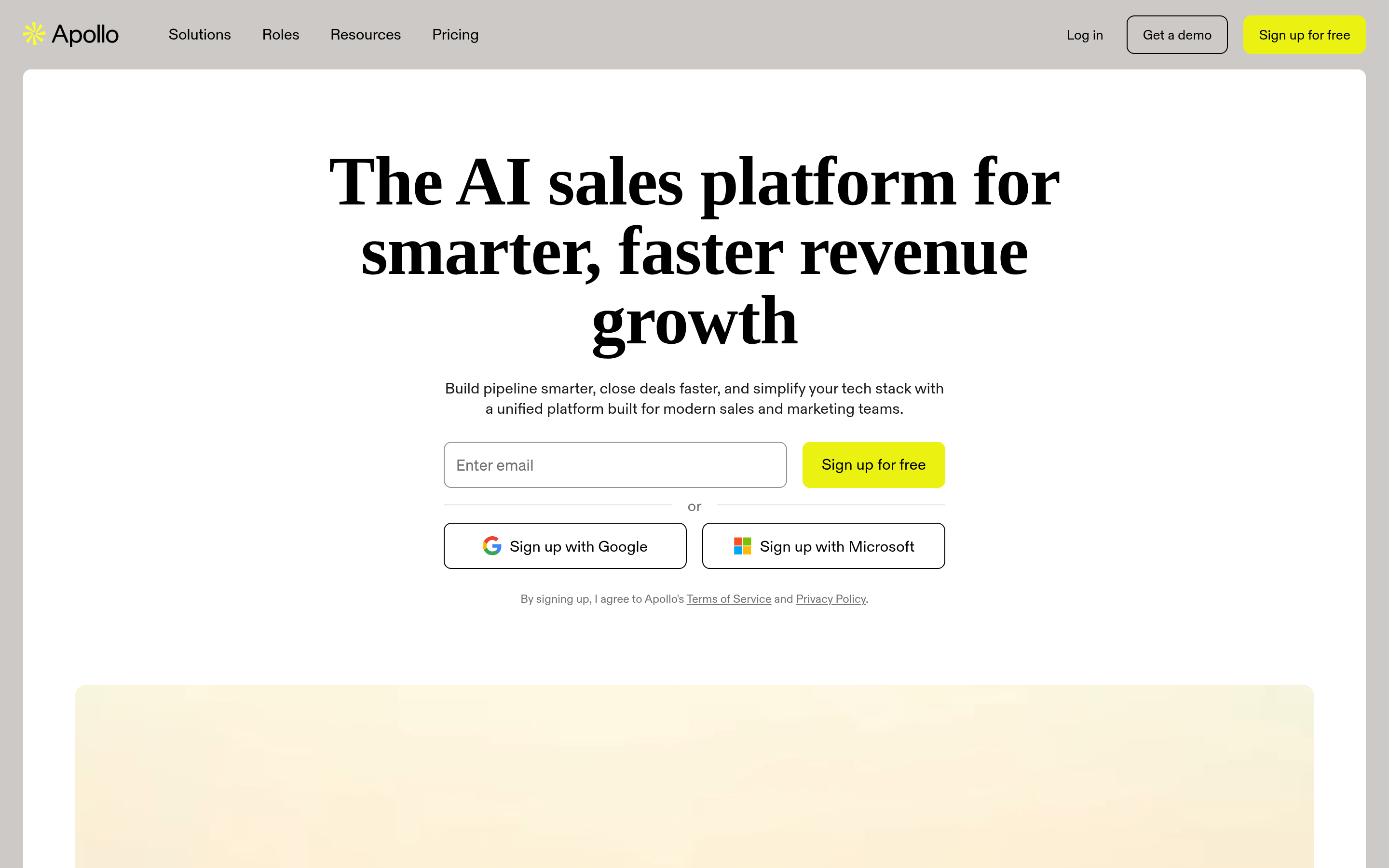
Apollo is the volume play. It has a very large contact database, built-in sequencing, and a free tier to start on. Its tech filters exist, but they are coarse next to HG or BuiltWith. Accuracy is the recurring complaint. Verify before you send, or you will burn your domain. Teams that outgrow it often look for an Apollo alternative that splits data quality from sending.
Pick it if: you want one tool to find and email people, and you will run your own verification pass.
ZoomInfo#

This is the default enterprise answer. It has the broadest company and people coverage in North America, mature integrations, and a tech layer inherited from the Datanyze deal. It is also the priciest option here. You buy seats plus credits on annual terms. That is overkill if tech data was your only reason to use Enlyft.
Pick it if: you want one vendor of record for all B2B data and have the budget for it.
BookYourData#
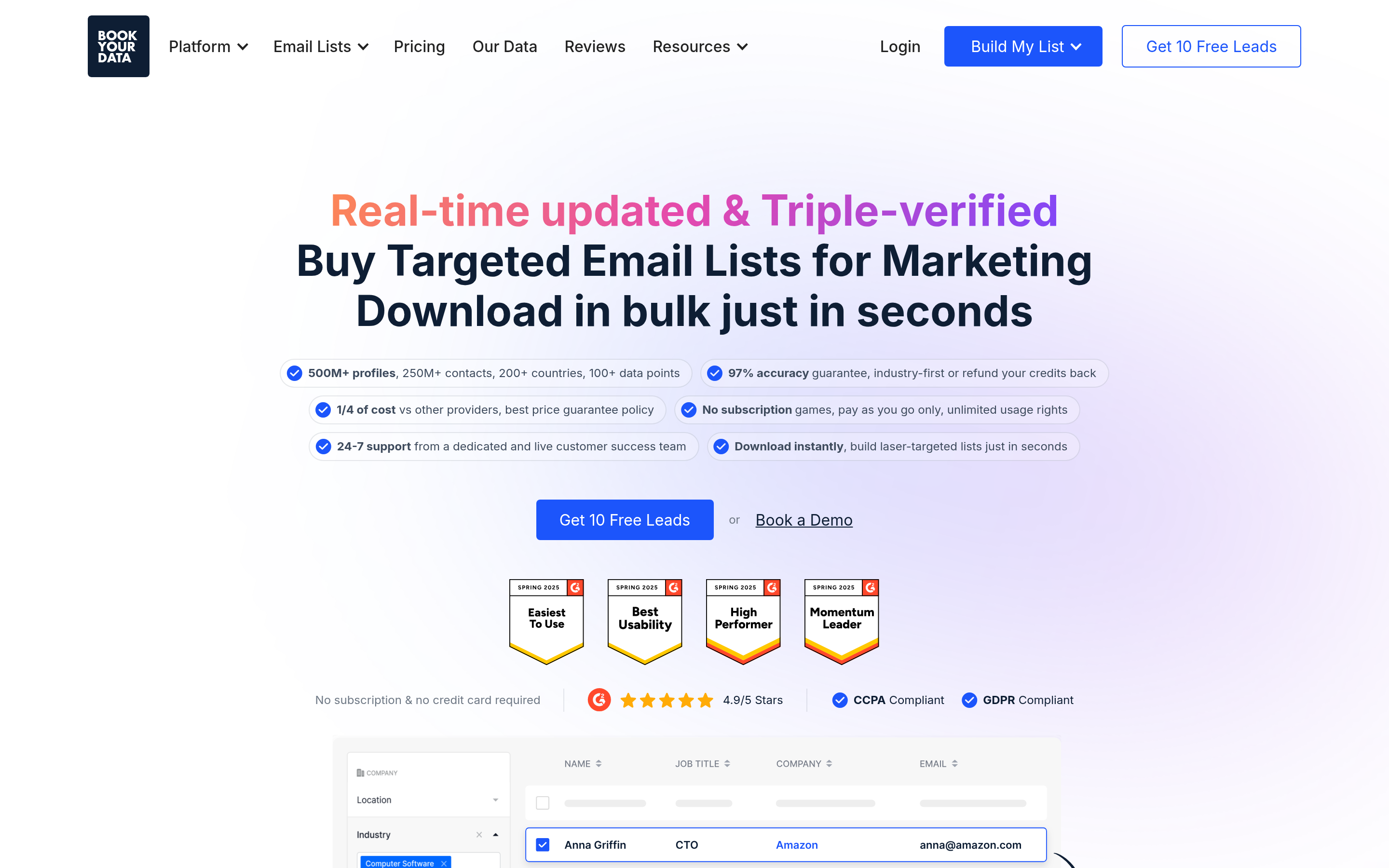
This one is a useful counter-model: prepaid credits, no subscription, verified records, and a bounce guarantee. Buy 5,000 contacts and you get 5,000 contacts. You renew nothing you do not use.
It will not give you deep install-base data. But for a clean, filtered list for one campaign, it is a good fit — and a well-regarded one for teams that hate annual contracts.
Pick it if: you run campaign-based outbound and want a predictable cost per record.
Wappalyzer#
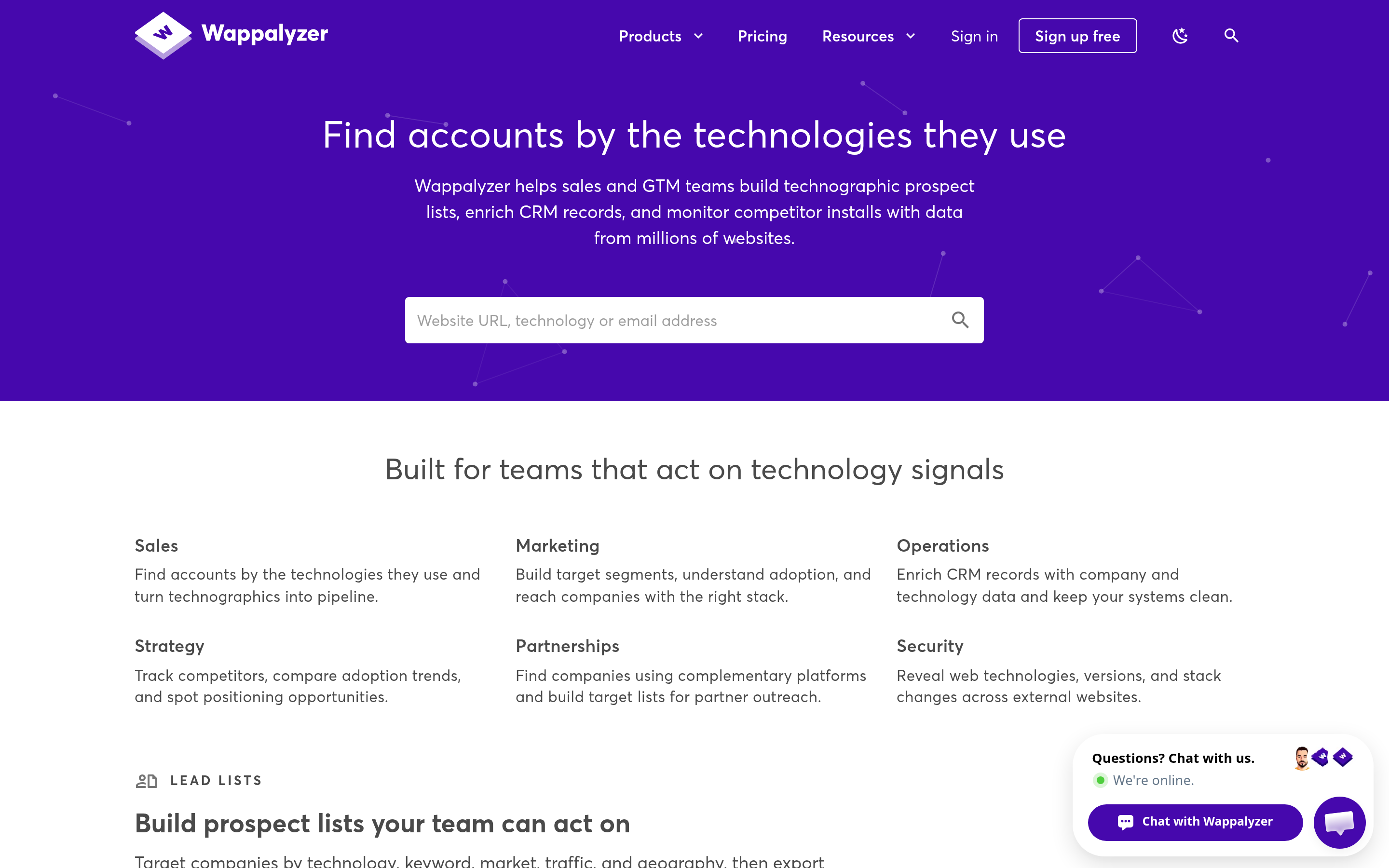
Think of it as BuiltWith's leaner sibling with a developer-first API. It is good for enrichment jobs. Append what stack does this domain run to a list you already have. On its own, it is not an account-discovery platform.
Pick it if: you have engineering resources and want tech detection as a pipeline step, not a UI.
Vainu#
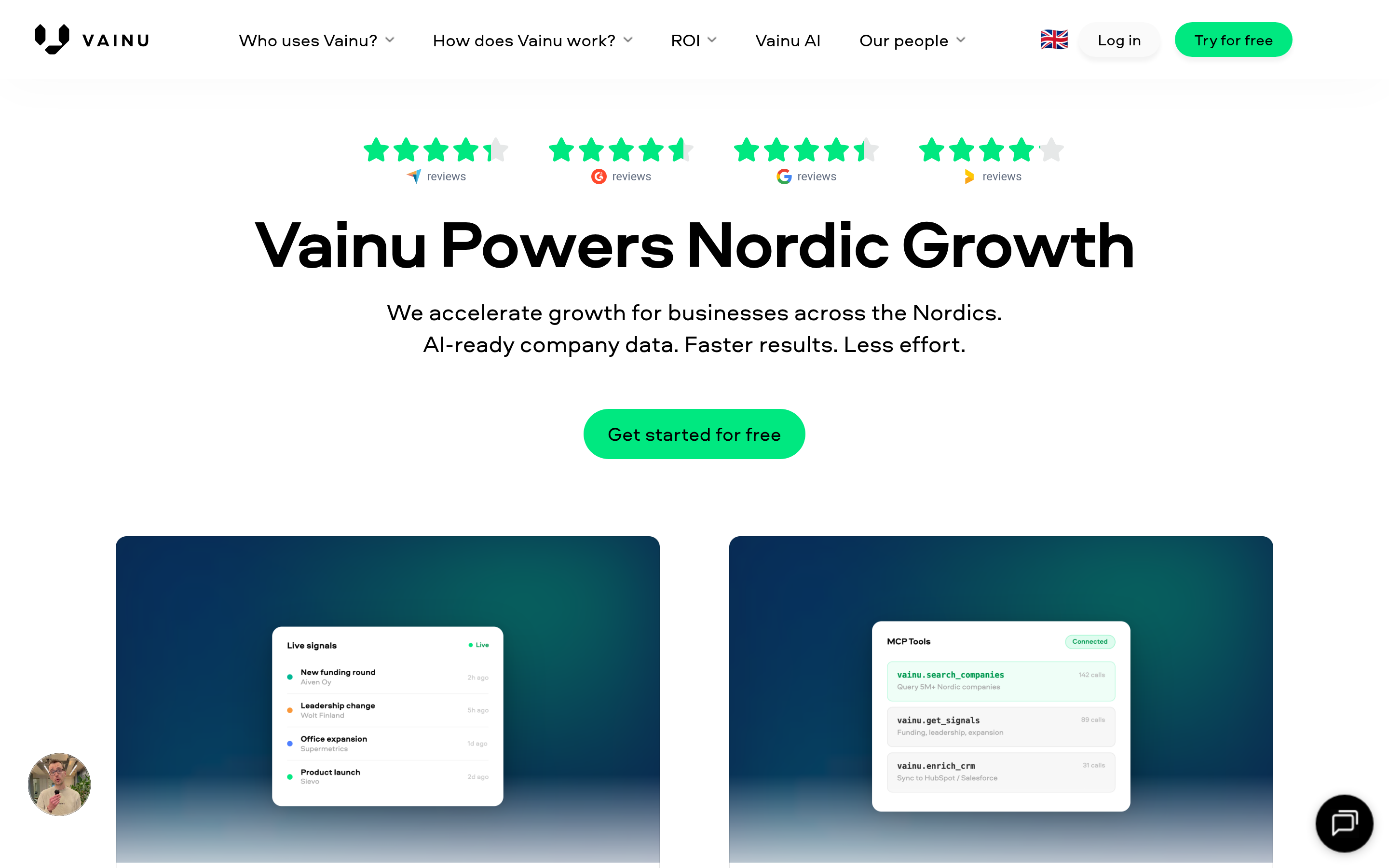
Vainu is strong on European company data, and best of all in the Nordics. It also tracks trigger events like funding, hiring, and leadership changes. If your Enlyft coverage was thin outside the US, look here.
Pick it if: your ICP is EU-based and event triggers matter more than install data.
Tomba#
Tomba does not compete with Enlyft on tech signals. Pretending otherwise would be dishonest. It competes on the step after targeting: take a domain, return verified contacts you can email.
Here is the workflow that replaces a lot of Enlyft spend. Pull your target accounts from a cheap tech-data source. Run domain search to get the people and email patterns at each account. Verify with the email verifier, catch-all handling included. Then push the records into your sequencer with the Tomba API.
Pricing is public and flat. The free tier gives 25 searches a month. Paid plans run $49/mo Starter, $99/mo Growth, and $249/mo Pro, plus custom Enterprise. Full Tomba pricing is on the site, with no sales call.
Pick it if: your account list is fine and your contact data is what fails.
How do these tools compare on cost and commitment?#
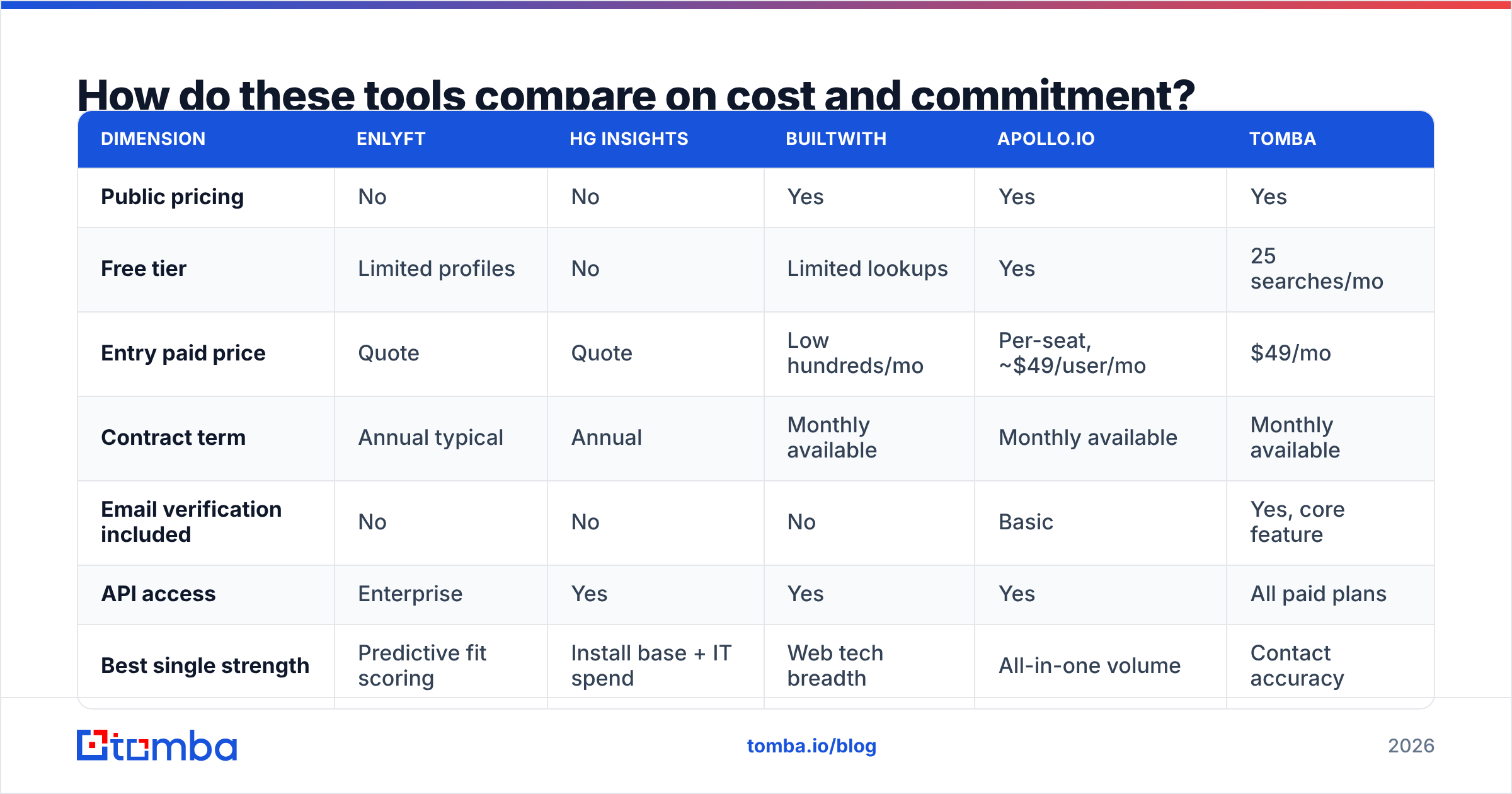
Cost is where most Enlyft alternatives split into two camps: public and self-serve, or quote-only and annual.
| Dimension | Enlyft | HG Insights | BuiltWith | Apollo.io | Tomba |
|---|---|---|---|---|---|
| Public pricing | No | No | Yes | Yes | Yes |
| Free tier | Limited profiles | No | Limited lookups | Yes | 25 searches/mo |
| Entry paid price | Quote | Quote | Low hundreds/mo | Per-seat, ~$49/user/mo | $49/mo |
| Contract term | Annual typical | Annual | Monthly available | Monthly available | Monthly available |
| Email verification included | No | No | No | Basic | Yes, core feature |
| API access | Enterprise | Yes | Yes | Yes | All paid plans |
| Best single strength | Predictive fit scoring | Install base + IT spend | Web tech breadth | All-in-one volume | Contact accuracy |
The pattern is hard to miss. The tools with the deepest tech data will not show you a price. And none of them solve the contact problem. So a two-tool stack usually wins: one source for targeting, one for contacts. It beats the single-platform buy on both cost and quality.
Is Enlyft still worth keeping?#
Sometimes, yes. Keep it if all three of these hold true:
Your ICP is truly defined by software install base, not by industry or headcount.
You have measured win rate on Enlyft-sourced accounts against everything else, and it is clearly higher.
Contract cost divided by closed-won revenue from those accounts still looks sane.
Drop it if you mostly use it as a company list. That describes most accounts we see. Firmographic filters plus a good contact layer get you the same list for far less. And if you only need the odd tech lookup, a website tech stack checker covers that case for free.
One honest note. No vendor here has perfectly fresh tech data. Detection lags reality by weeks or months. Inferred signals lag further. Treat any install-base filter as a hint, not a fact, and confirm it on the call.
How do you actually choose between Enlyft alternatives?#
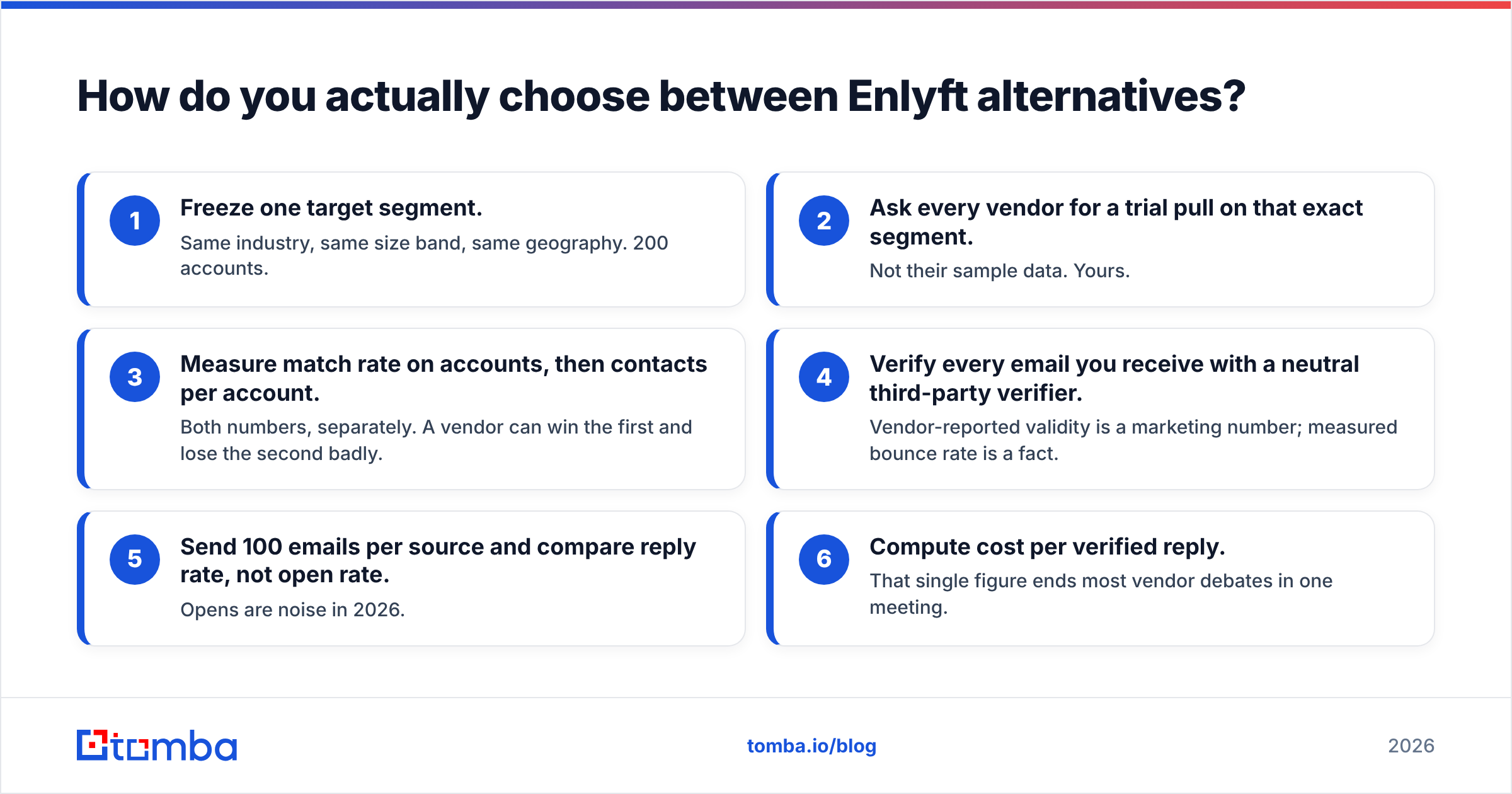
Run a 30-day bake-off instead of a demo tour.
Freeze one target segment. Same industry, same size band, same region. 200 accounts.
Ask every vendor for a trial pull on that exact segment. Not their sample data. Yours.
Measure account match rate, then contacts per account. Keep the two numbers apart. A vendor can win the first and lose the second badly.
Verify every email with a neutral third-party tool. Vendor-reported validity is a marketing number. Measured bounce rate is a fact.
Send 100 emails per source. Compare reply rate, not open rate. Opens are noise in 2026.
Compute cost per verified reply. That one figure ends most vendor debates in a single meeting.
Teams that run this test usually spend less overall. They also split the budget differently: a little on targeting signals, more on making sure the contacts are real. Enrichment beats acquisition when the list already exists. Running data enrichment over accounts you already trust is almost always cheaper than buying that list again.
Where should you start?#
If tech data was never the real problem, start at the contact layer. Maybe the accounts were fine and the outreach kept bouncing. Point the Tomba Email Finder at the domains you already have. Verify what comes back. Then see how much of your reply-rate problem was a data problem.
The free tier gives you 25 searches to test on a segment you know well. Starter is $49/mo with no annual lock-in. Test it on your worst-performing list first, because that is where the gap shows up fastest. Whichever Enlyft alternatives you shortlist, judge them on one number: cost per verified reply.
Related guides#
Ready to find emails that actually work?
Join 150,000+ professionals who stopped guessing and started sending. Free credits on signup — no credit card required.
Get the Tomba newsletter
Practical outbound tactics and product updates — once every two weeks.
About the author